Redefining Professional
Improvisation
How to Turn the Unexpected into a Strength in Your Career
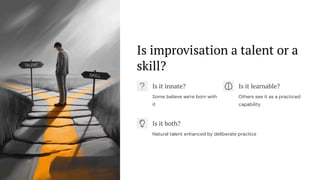
Is improvisation a talent or a
skill?
Is it innate?
Some believe we're born with
it
Is it learnable?
Others see it as a practiced
capability
Is it both?
Natural talent enhanced by deliberate practice
Common Misconceptions
It's Just Comedy
Improvisation is like doing
stand-up comedy
High Risk
It's risky, messy, and only for
extroverts
No Safety Net
Speaking without preparation or structure
Professional Improvisation Defined
Strategic Skill
Professional improvisation is a strategic skill
Not random - purposeful and practiced
Two Core Components
Agile thinking
Reactive communication
Agile Thinking
Rapid Analysis
Quickly assess situations
Mental Flexibility
Adapt to new information
Pattern Recognition
Connect seemingly unrelated concepts
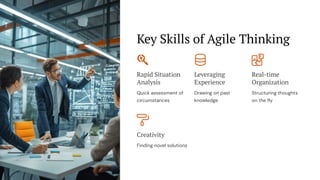
Key Skills of Agile Thinking
Rapid Situation
Analysis
Quick assessment of
circumstances
Leveraging
Experience
Drawing on past
knowledge
Real-time
Organization
Structuring thoughts
on the fly
Creativity
Finding novel solutions
Reactive Communication
Listen
Absorb information carefully
Process
Organize thoughts quickly
Respond
Clear, impactful messaging
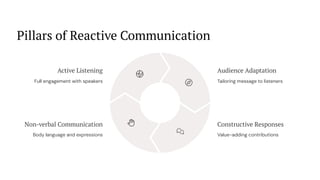
Pillars of Reactive Communication
Active Listening
Full engagement with speakers
Audience Adaptation
Tailoring message to listeners
Constructive Responses
Value-adding contributions
Non-verbal Communication
Body language and expressions
Common Myths About
Improvisation
It's a Gift
"You either have it or not"
It's Risky
"Improvising means no preparation"
It's for Extroverts
"Only outgoing people can improvise well"
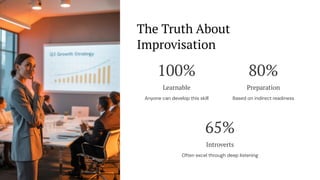
The Truth About
Improvisation
100%
Learnable
Anyone can develop this skill
80%
Preparation
Based on indirect readiness
65%
Introverts
Often excel through deep listening
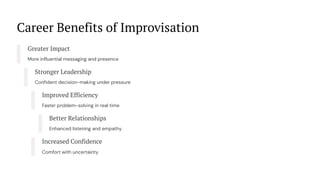
Career Benefits of Improvisation
Greater Impact
More influential messaging and presence
Stronger Leadership
Confident decision-making under pressure
Improved Efficiency
Faster problem-solving in real time
Better Relationships
Enhanced listening and empathy
Increased Confidence
Comfort with uncertainty
Your New Professional Superpower
To improvise is not to be unprepared, it's to be ready for anything
What if this became your new professional superpower?

🎤 Redefining Professional Improvisation - DI - Pro - En - 1

  • 1.
    Redefining Professional Improvisation How toTurn the Unexpected into a Strength in Your Career
  • 2.
    Is improvisation atalent or a skill? Is it innate? Some believe we're born with it Is it learnable? Others see it as a practiced capability Is it both? Natural talent enhanced by deliberate practice
  • 3.
    Common Misconceptions It's JustComedy Improvisation is like doing stand-up comedy High Risk It's risky, messy, and only for extroverts No Safety Net Speaking without preparation or structure
  • 4.
    Professional Improvisation Defined StrategicSkill Professional improvisation is a strategic skill Not random - purposeful and practiced Two Core Components Agile thinking Reactive communication
  • 5.
    Agile Thinking Rapid Analysis Quicklyassess situations Mental Flexibility Adapt to new information Pattern Recognition Connect seemingly unrelated concepts
  • 6.
    Key Skills ofAgile Thinking Rapid Situation Analysis Quick assessment of circumstances Leveraging Experience Drawing on past knowledge Real-time Organization Structuring thoughts on the fly Creativity Finding novel solutions
  • 7.
    Reactive Communication Listen Absorb informationcarefully Process Organize thoughts quickly Respond Clear, impactful messaging
  • 8.
    Pillars of ReactiveCommunication Active Listening Full engagement with speakers Audience Adaptation Tailoring message to listeners Constructive Responses Value-adding contributions Non-verbal Communication Body language and expressions
  • 9.
    Common Myths About Improvisation It'sa Gift "You either have it or not" It's Risky "Improvising means no preparation" It's for Extroverts "Only outgoing people can improvise well"
  • 10.
    The Truth About Improvisation 100% Learnable Anyonecan develop this skill 80% Preparation Based on indirect readiness 65% Introverts Often excel through deep listening
  • 11.
    Career Benefits ofImprovisation Greater Impact More influential messaging and presence Stronger Leadership Confident decision-making under pressure Improved Efficiency Faster problem-solving in real time Better Relationships Enhanced listening and empathy Increased Confidence Comfort with uncertainty
  • 12.
    Your New ProfessionalSuperpower To improvise is not to be unprepared, it's to be ready for anything What if this became your new professional superpower?