RECRUITING FOR PR 2.0

Sarah Williams, Manchester Metropolitan University
Simon Collister, London College of Communication
Jennifer Challenor, English Mutual
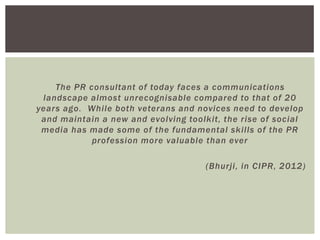
The PR consultant of today faces a communications
 landscape almost unrecognisable compared to that of 20
years ago. While both veterans and novices need to develop
 and maintain a new and evolving toolkit, the rise of social
 media has made some of the fundamental skills of the PR
            profession more valuable than ever

                                      (Bhurji, in CIPR, 2012)
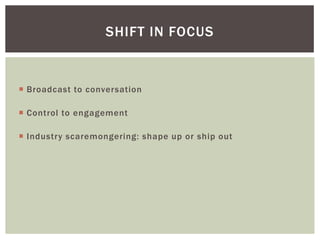
SHIFT IN FOCUS


 Broadcast to conversation

 Control to engagement

 Industry scaremongering: shape up or ship out
AIMS

 How is the phenomenon of social media impacting on the
 practice of public relations?

 Key questions include:
   How are practitioners tackling the transition from old PR practice to
   new?

   Do the changes to the industry in the past few years represent a
   linear transition or a radical break that can be ‘managed’?

   Is it sufficient to be familiar with social media and are practitioners
   sufficiently competent to engage?
KEY THEMES IN LITERATURE

 Literature is mainly functional and practitioner focussed
 Texts considered purport to of fer advice on social media
  management to practitioners
 Dichotomy:
   Solis’ industry in flux (2012) versus Holmes’ (2009) business as
    usual approach
 Bhurji (2012) envisages multi -disciplinary teams rather than
  wonder practitioners
 Discourse of ‘disruption’ risks simplifying the complexities
  of transition
                Reflexive evolution not revolution
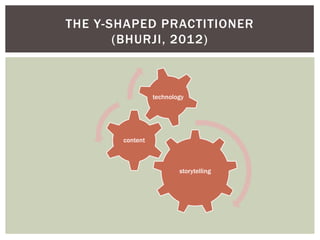
THE Y-SHAPED PRACTITIONER
       (BHURJI, 2012)


                 technology


       content


                         storytelling
METHODOLOGY

•   Social phenomenological research involving eight
    participants working in the field

•   Qualitative interviews aimed at understanding practitioner
    views about how social media is influencing their practice.

•   Interviews analysed for significant statements which were
    then organised into themes.
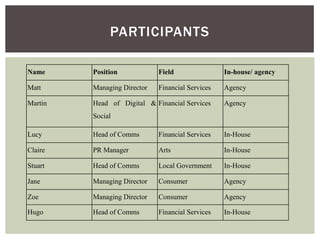
PARTICIPANTS

Name     Position            Field                In-house/ agency

Matt     Managing Director   Financial Services   Agency

Martin   Head of Digital & Financial Services     Agency
         Social

Lucy     Head of Comms       Financial Services   In-House

Claire   PR Manager          Arts                 In-House

Stuart   Head of Comms       Local Government     In-House

Jane     Managing Director   Consumer             Agency

Zoe      Managing Director   Consumer             Agency

Hugo     Head of Comms       Financial Services   In-House
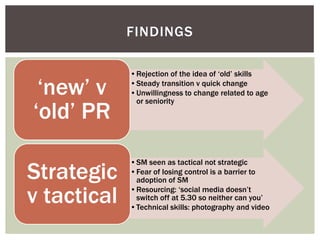
FINDINGS

             •Rejection of the idea of ‘old’ skills

 ‘new’ v     •Steady transition v quick change
             •Unwillingness to change related to age
              or seniority
‘old’ PR

Strategic
             •SM seen as tactical not strategic
             •Fear of losing control is a barrier to
              adoption of SM

v tactical   •Resourcing: ‘social media doesn’t
              switch off at 5.30 so neither can you’
             •Technical skills: photography and video
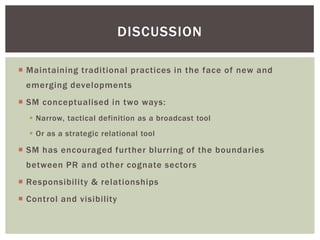
DISCUSSION

 Maintaining traditional practices in the face of new and
 emerging developments
 SM conceptualised in two ways:
   Narrow, tactical definition as a broadcast tool
   Or as a strategic relational tool

 SM has encouraged further blurring of the boundaries
 between PR and other cognate sectors
 Responsibility & relationships
 Control and visibility
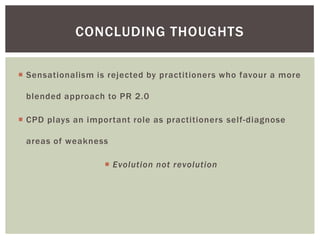
CONCLUDING THOUGHTS

 Sensationalism is rejected by practitioners who favour a more

 blended approach to PR 2.0

 CPD plays an important role as practitioners self-diagnose

 areas of weakness

                    Evolution not revolution
ANY QUESTIONS?

Recruiting for pr 2.0

  • 1.
    RECRUITING FOR PR2.0 Sarah Williams, Manchester Metropolitan University Simon Collister, London College of Communication Jennifer Challenor, English Mutual
  • 2.
    The PR consultantof today faces a communications landscape almost unrecognisable compared to that of 20 years ago. While both veterans and novices need to develop and maintain a new and evolving toolkit, the rise of social media has made some of the fundamental skills of the PR profession more valuable than ever (Bhurji, in CIPR, 2012)
  • 3.
    SHIFT IN FOCUS Broadcast to conversation  Control to engagement  Industry scaremongering: shape up or ship out
  • 4.
    AIMS  How isthe phenomenon of social media impacting on the practice of public relations?  Key questions include:  How are practitioners tackling the transition from old PR practice to new?  Do the changes to the industry in the past few years represent a linear transition or a radical break that can be ‘managed’?  Is it sufficient to be familiar with social media and are practitioners sufficiently competent to engage?
  • 5.
    KEY THEMES INLITERATURE  Literature is mainly functional and practitioner focussed  Texts considered purport to of fer advice on social media management to practitioners  Dichotomy:  Solis’ industry in flux (2012) versus Holmes’ (2009) business as usual approach  Bhurji (2012) envisages multi -disciplinary teams rather than wonder practitioners  Discourse of ‘disruption’ risks simplifying the complexities of transition  Reflexive evolution not revolution
  • 6.
    THE Y-SHAPED PRACTITIONER (BHURJI, 2012) technology content storytelling
  • 7.
    METHODOLOGY • Social phenomenological research involving eight participants working in the field • Qualitative interviews aimed at understanding practitioner views about how social media is influencing their practice. • Interviews analysed for significant statements which were then organised into themes.
  • 8.
    PARTICIPANTS Name Position Field In-house/ agency Matt Managing Director Financial Services Agency Martin Head of Digital & Financial Services Agency Social Lucy Head of Comms Financial Services In-House Claire PR Manager Arts In-House Stuart Head of Comms Local Government In-House Jane Managing Director Consumer Agency Zoe Managing Director Consumer Agency Hugo Head of Comms Financial Services In-House
  • 9.
    FINDINGS •Rejection of the idea of ‘old’ skills ‘new’ v •Steady transition v quick change •Unwillingness to change related to age or seniority ‘old’ PR Strategic •SM seen as tactical not strategic •Fear of losing control is a barrier to adoption of SM v tactical •Resourcing: ‘social media doesn’t switch off at 5.30 so neither can you’ •Technical skills: photography and video
  • 10.
    DISCUSSION  Maintaining traditionalpractices in the face of new and emerging developments  SM conceptualised in two ways:  Narrow, tactical definition as a broadcast tool  Or as a strategic relational tool  SM has encouraged further blurring of the boundaries between PR and other cognate sectors  Responsibility & relationships  Control and visibility
  • 11.
    CONCLUDING THOUGHTS  Sensationalismis rejected by practitioners who favour a more blended approach to PR 2.0  CPD plays an important role as practitioners self-diagnose areas of weakness  Evolution not revolution
  • 12.