RECOUNT TEXT
DOES ICHNATUN DWI S.
WHAT?
tells about something that
happened in the past.
WHAT CAN IT BE?
 factual, such as a news story
 procedural, such as telling someone how you built
something
 personal, such as a family holiday or your opinion on a
subject.
biographies and autobiographies
newspapers or the television news
letters and postcards
textbooks
conversations with friends
WHAT IS IT LIKE?
The details in a recount can include:
what happened,
who was involved,
where it took place,
when it happened and
why it occurred
WHAT FOR?
to tell us about a
story or an event.
HOW?
usually given in the order
that the event occurred
STRUCTURE
 A well-structured recount includes details of the event or topic
and personal opinions.
 Written recounts often start with a heading or title. Letters and
journal entries do not usually have a title. Oral recounts might
have a title if you are giving a presentation. If you are just talking
with friends a title is not usually needed.
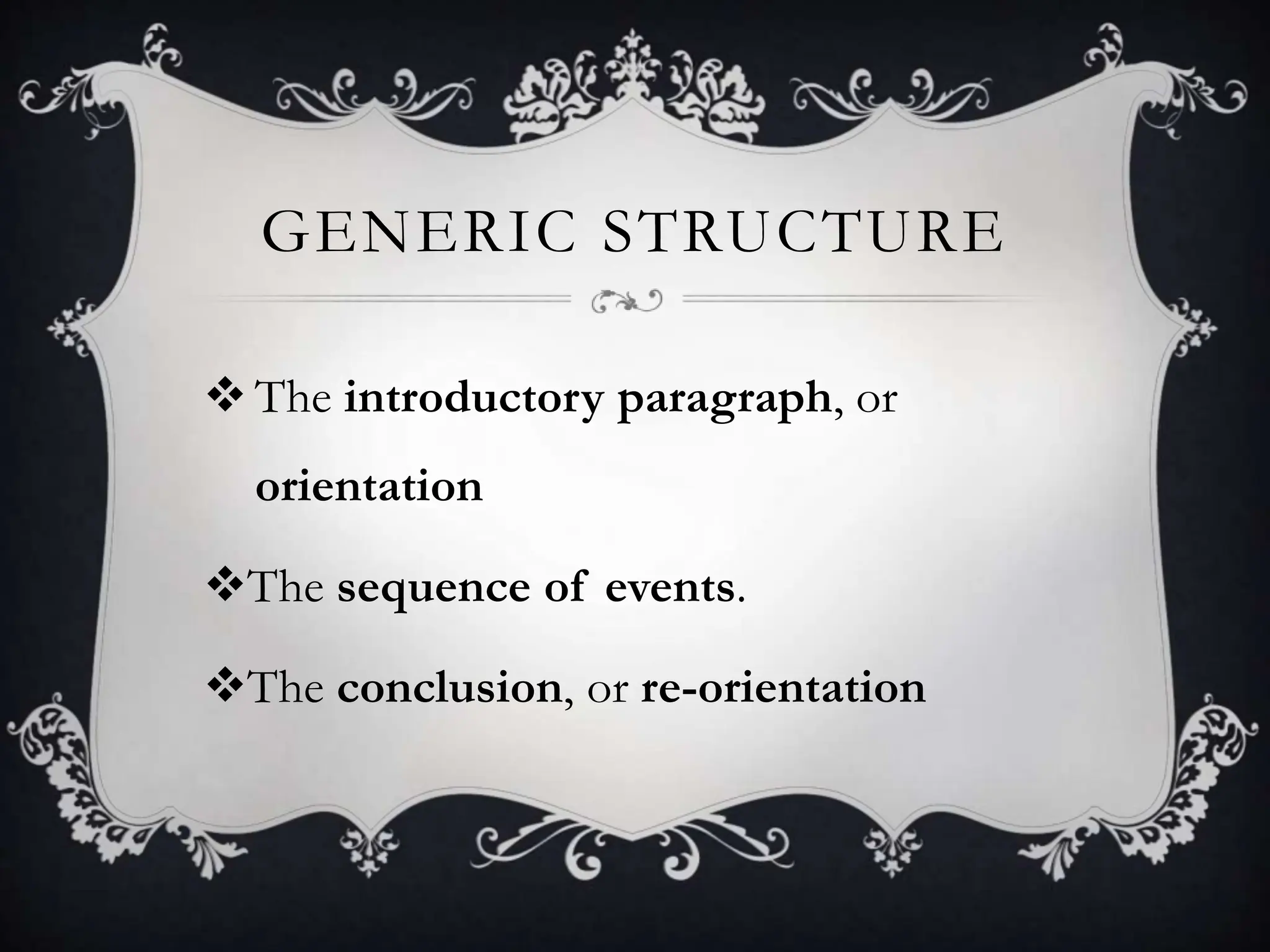
GENERIC STRUCTURE
 The introductory paragraph, or
orientation
The sequence of events.
The conclusion, or re-orientation
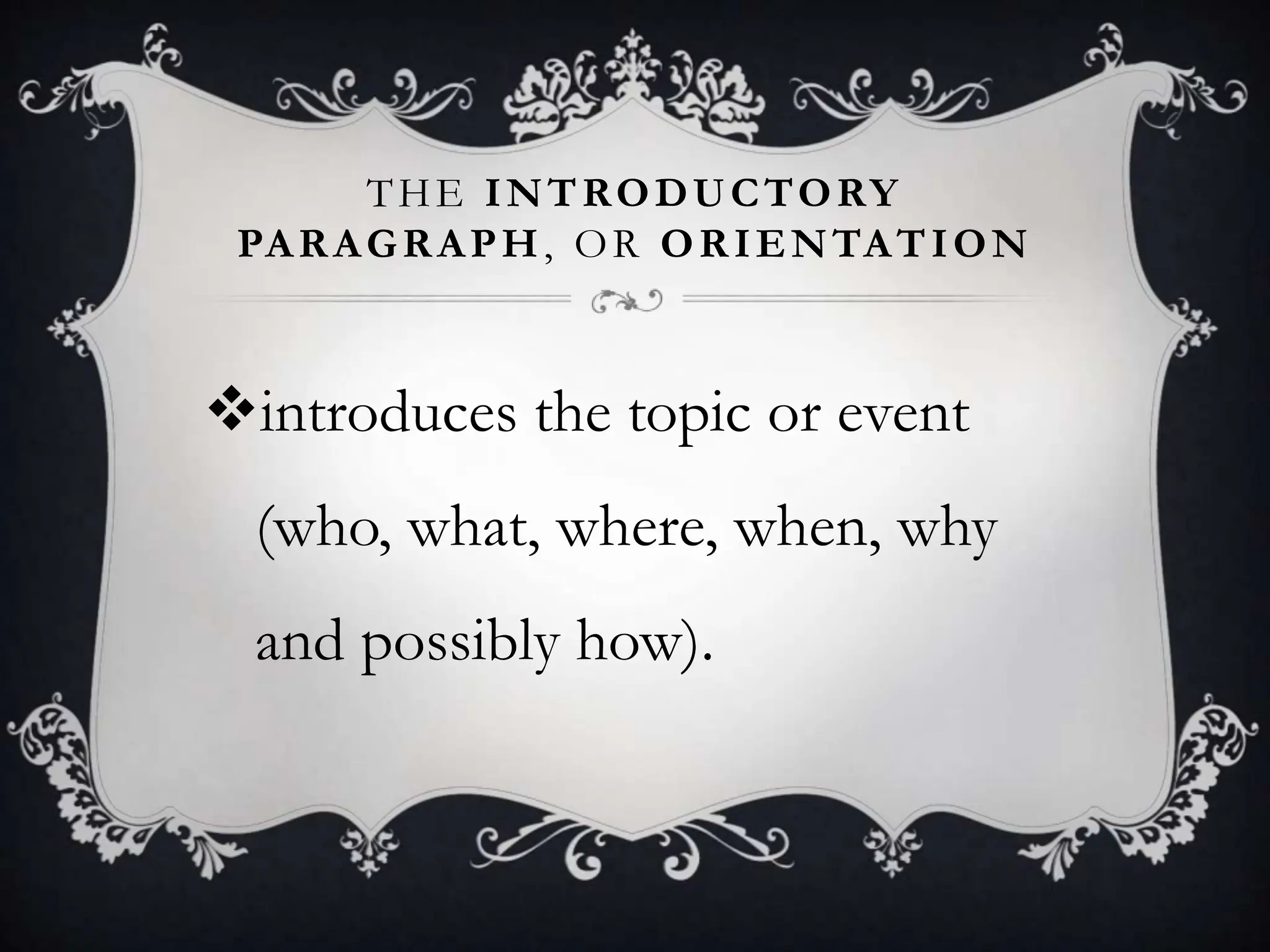
THE INTRODUCTORY
PARAGRAPH, OR ORIENTATION
introduces the topic or event
(who, what, where, when, why
and possibly how).
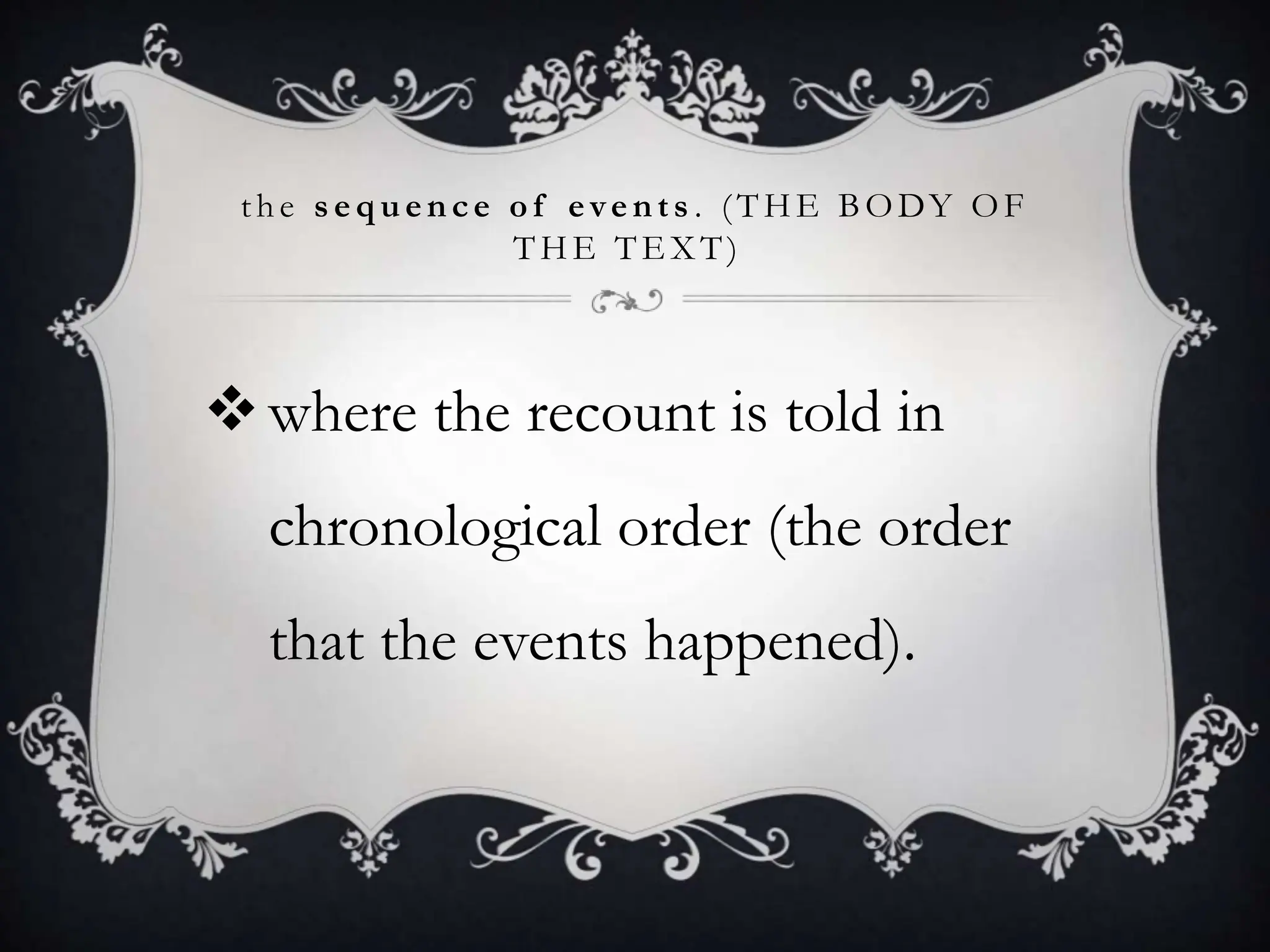
the s equence of events . (THE BODY OF
THE TE X T)
where the recount is told in
chronological order (the order
that the events happened).
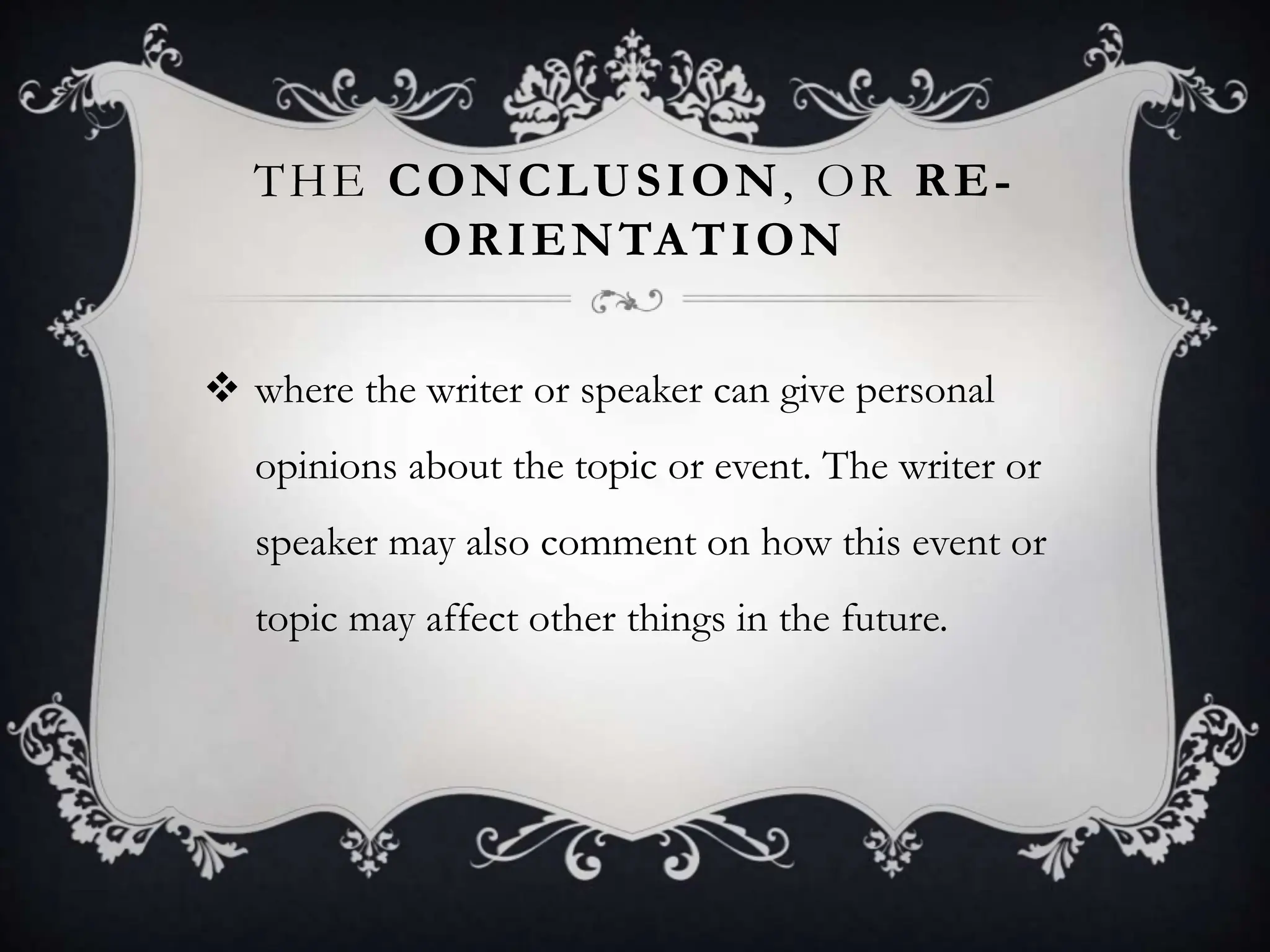
THE CONCLUSION, OR RE-
ORIENTATION
 where the writer or speaker can give personal
opinions about the topic or event. The writer or
speaker may also comment on how this event or
topic may affect other things in the future.
You may also include other
people's opinions or quotes on
the topic or event.
LANGUAGE FEATURES
Written in the past tense because
they tell about something that has
already happened.
Use action verbs.
 The factual information in a recount must be
accurate.
 Recounts can also include the speaker's or
writer's personal thoughts on the event or
topic.
EXAMPLES

recount text that text tell about past event

  • 1.
  • 2.
    WHAT? tells about somethingthat happened in the past.
  • 3.
    WHAT CAN ITBE?  factual, such as a news story  procedural, such as telling someone how you built something  personal, such as a family holiday or your opinion on a subject.
  • 4.
    biographies and autobiographies newspapersor the television news letters and postcards textbooks conversations with friends
  • 5.
    WHAT IS ITLIKE? The details in a recount can include: what happened, who was involved, where it took place, when it happened and why it occurred
  • 6.
    WHAT FOR? to tellus about a story or an event.
  • 7.
    HOW? usually given inthe order that the event occurred
  • 8.
    STRUCTURE  A well-structuredrecount includes details of the event or topic and personal opinions.  Written recounts often start with a heading or title. Letters and journal entries do not usually have a title. Oral recounts might have a title if you are giving a presentation. If you are just talking with friends a title is not usually needed.
  • 9.
    GENERIC STRUCTURE  Theintroductory paragraph, or orientation The sequence of events. The conclusion, or re-orientation
  • 10.
    THE INTRODUCTORY PARAGRAPH, ORORIENTATION introduces the topic or event (who, what, where, when, why and possibly how).
  • 11.
    the s equenceof events . (THE BODY OF THE TE X T) where the recount is told in chronological order (the order that the events happened).
  • 12.
    THE CONCLUSION, ORRE- ORIENTATION  where the writer or speaker can give personal opinions about the topic or event. The writer or speaker may also comment on how this event or topic may affect other things in the future.
  • 13.
    You may alsoinclude other people's opinions or quotes on the topic or event.
  • 14.
    LANGUAGE FEATURES Written inthe past tense because they tell about something that has already happened. Use action verbs.
  • 15.
     The factualinformation in a recount must be accurate.  Recounts can also include the speaker's or writer's personal thoughts on the event or topic.
  • 16.