Blockchain technology has applications across various
industries, offering solutions to long-standing problems.
Blockchain technology has found numerous real-world use cases
across various industries due to its unique features like
decentralization, transparency, and security.
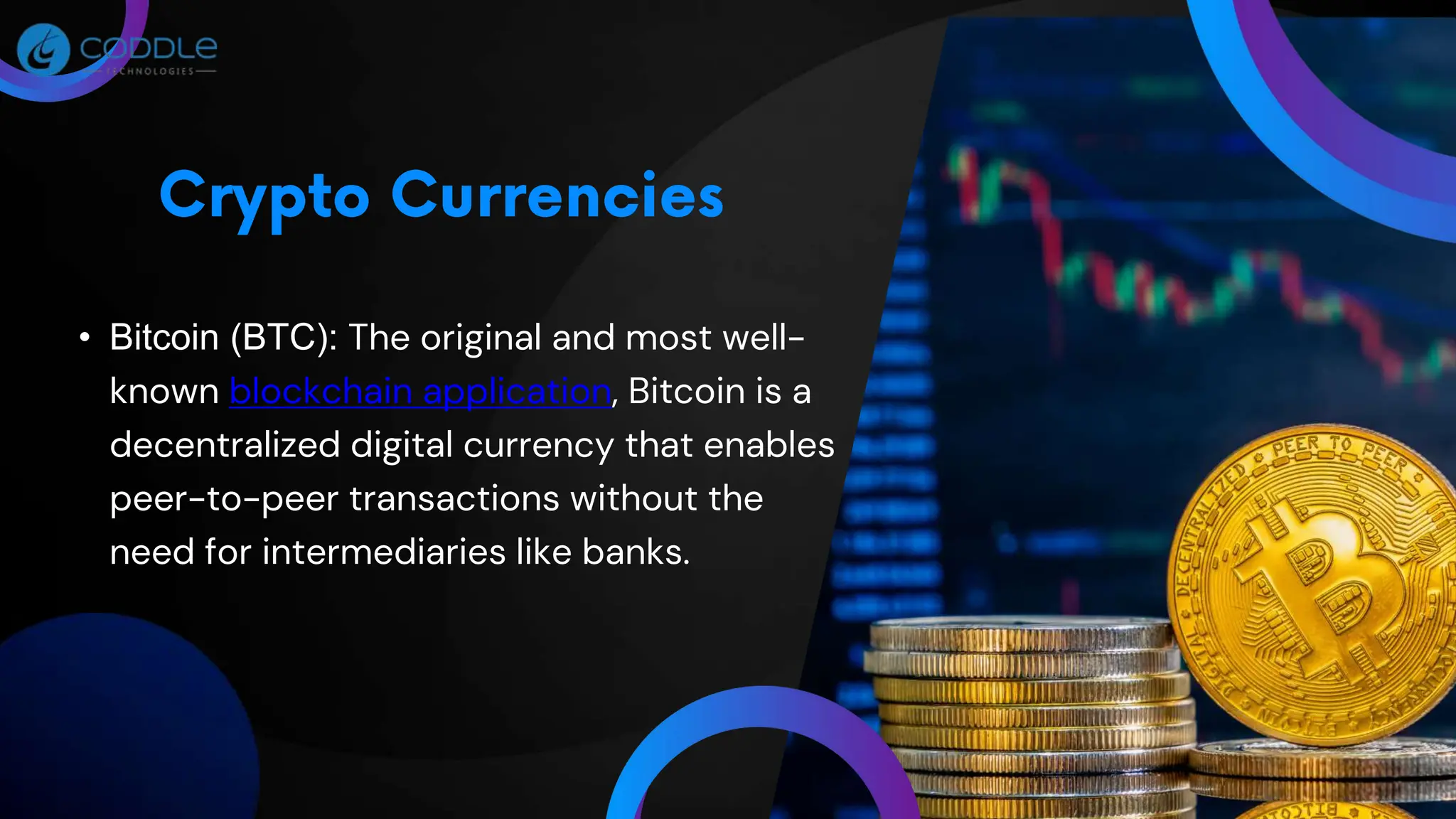
• Bitcoin (BTC): The original and most well-
known blockchain application, Bitcoin is a
decentralized digital currency that enables
peer-to-peer transactions without the
need for intermediaries like banks.
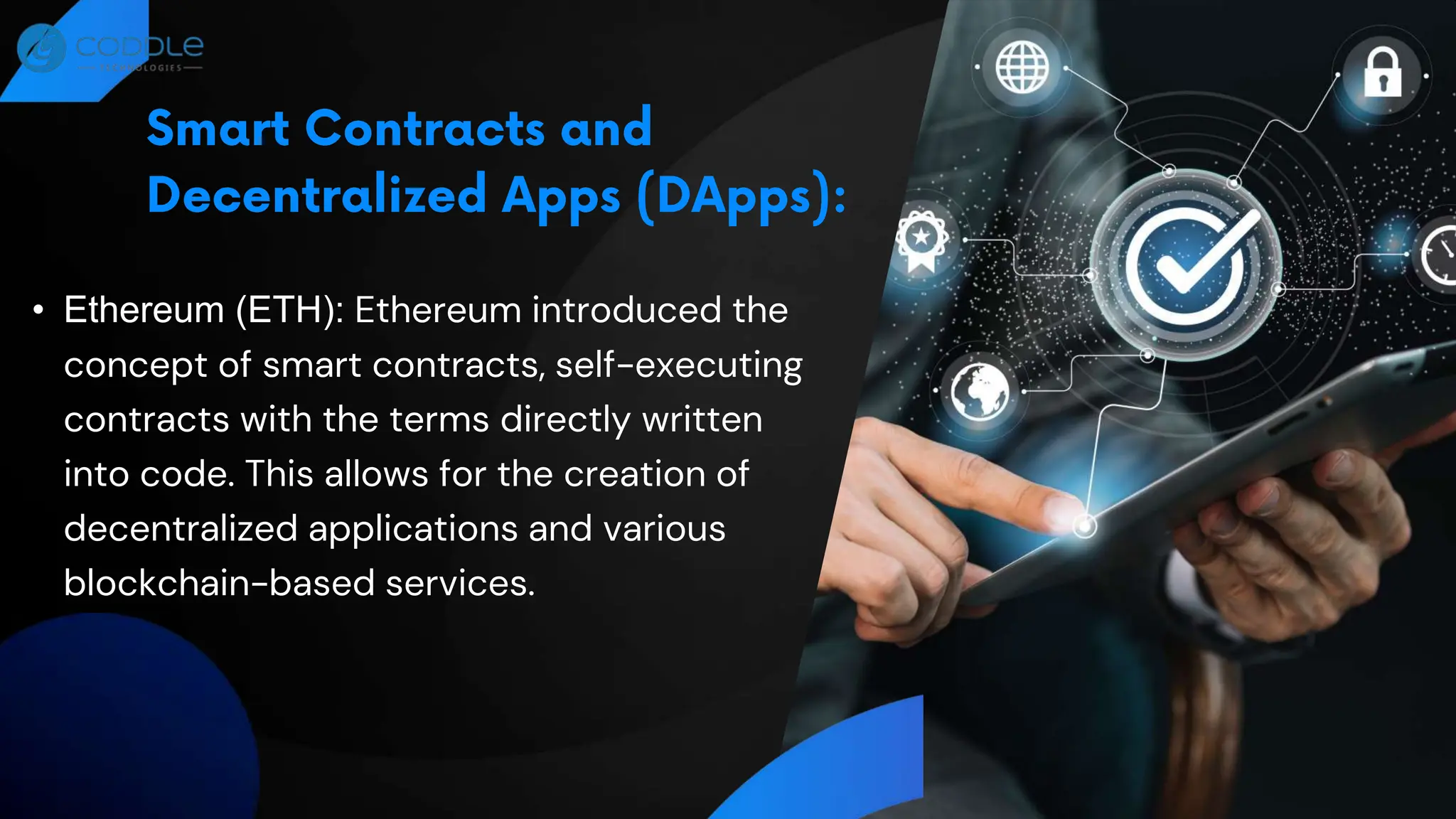
• Ethereum (ETH): Ethereum introduced the
concept of smart contracts, self-executing
contracts with the terms directly written
into code. This allows for the creation of
decentralized applications and various
blockchain-based services.
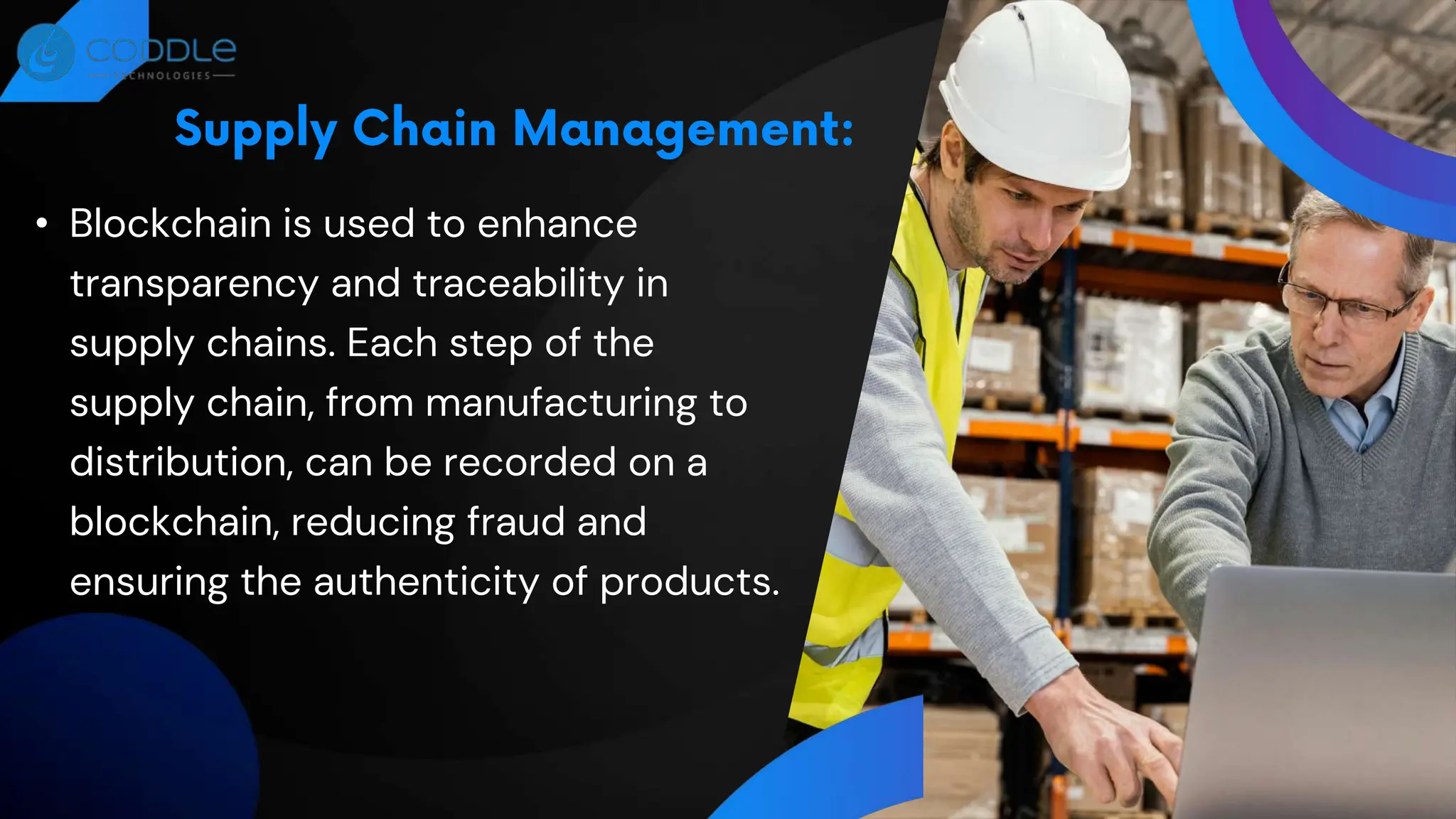
• Blockchain is used to enhance
transparency and traceability in
supply chains. Each step of the
supply chain, from manufacturing to
distribution, can be recorded on a
blockchain, reducing fraud and
ensuring the authenticity of products.
• Blockchain can provide a secure
and decentralized solution for
identity management. Users have
more control over their personal
information, reducing the risk of
identity theft.
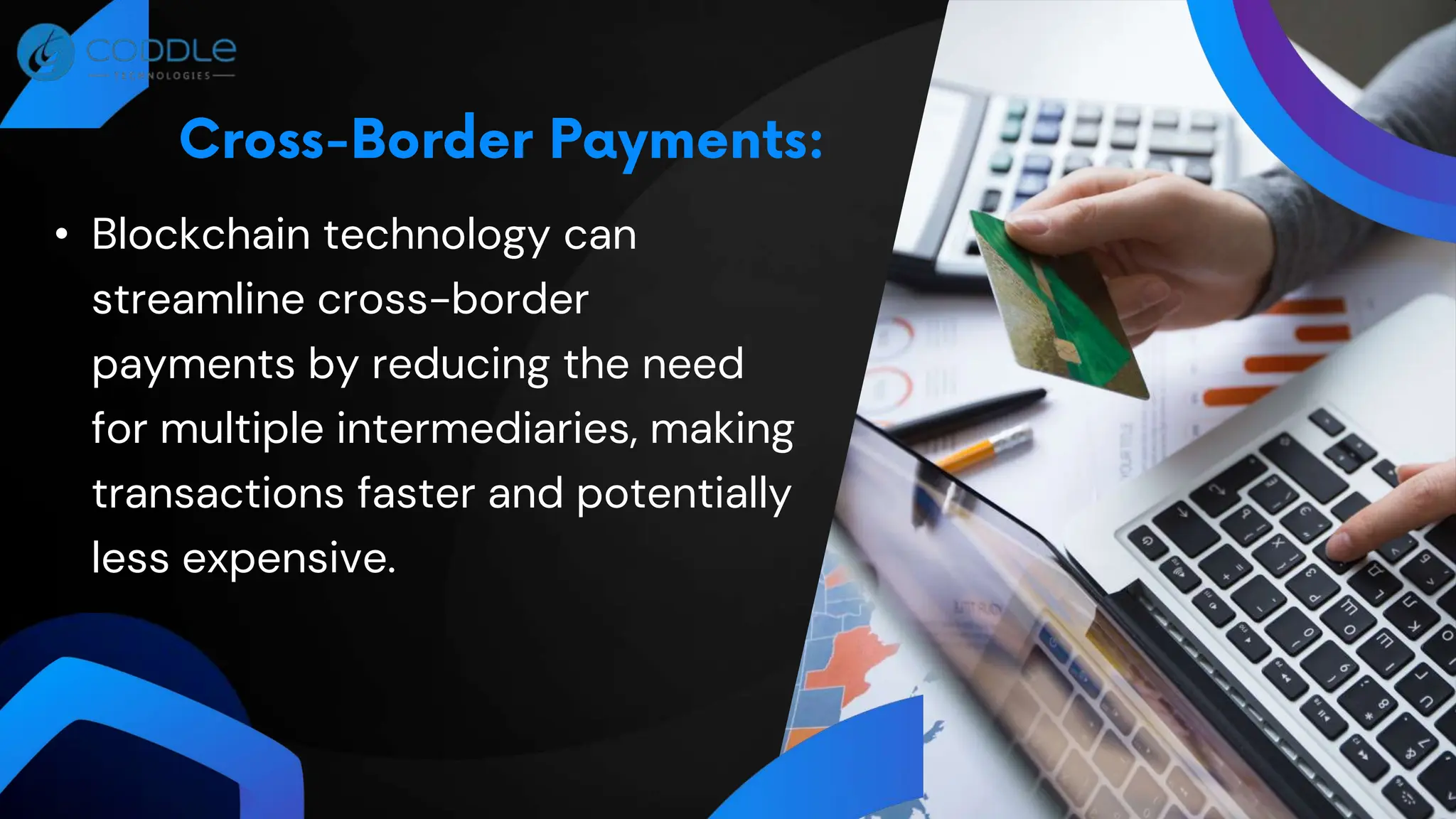
• Blockchain technology can
streamline cross-border
payments by reducing the need
for multiple intermediaries, making
transactions faster and potentially
less expensive.
Blockchain can be applied to
create secure and transparent
voting systems.
This can reduce the risk of fraud
and enhance the integrity of
election processes.
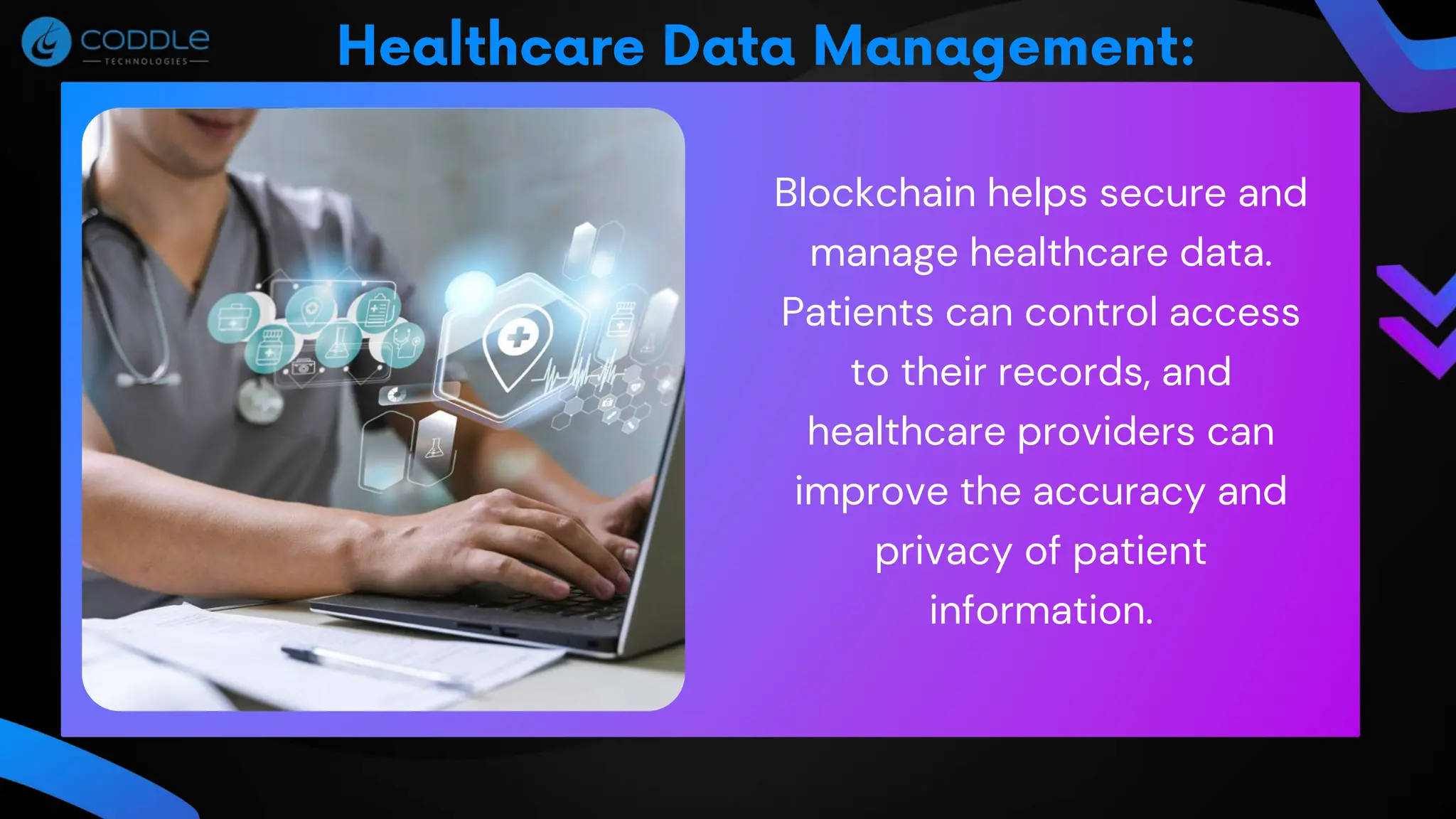
Blockchain helps secure and
manage healthcare data.
Patients can control access
to their records, and
healthcare providers can
improve the accuracy and
privacy of patient
information.
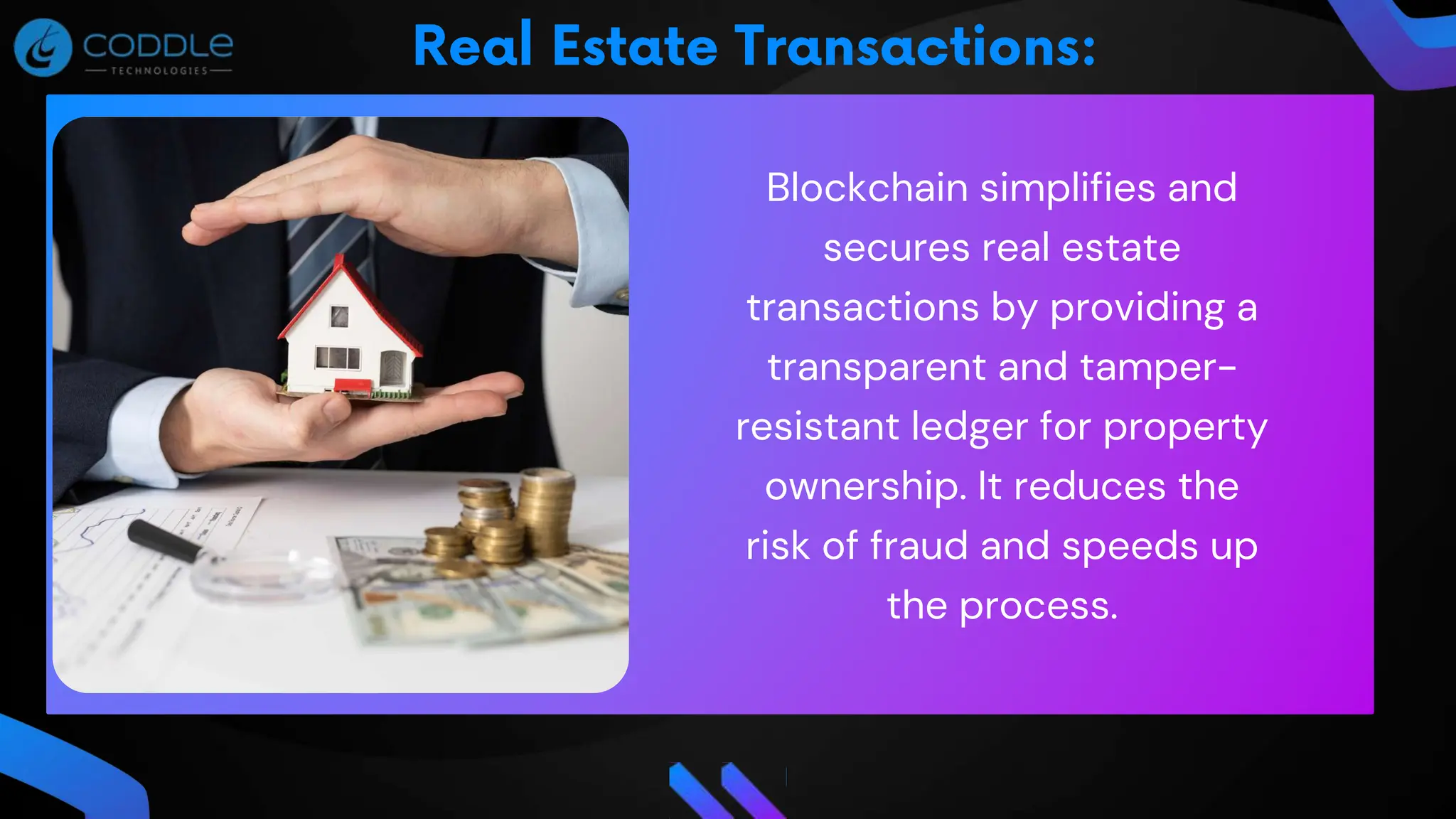
Blockchain simplifies and
secures real estate
transactions by providing a
transparent and tamper-
resistant ledger for property
ownership. It reduces the
risk of fraud and speeds up
the process.
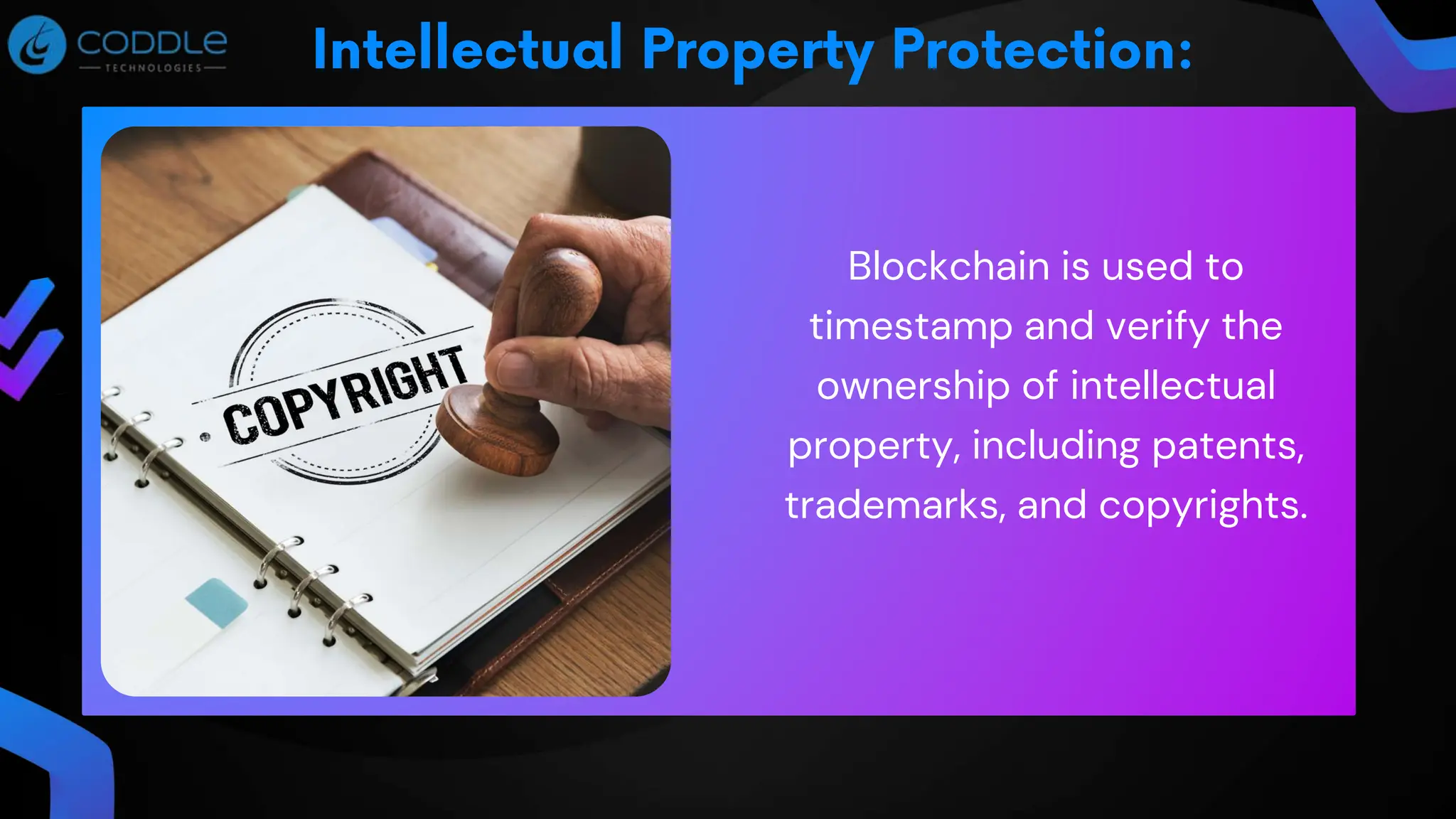
Blockchain is used to
timestamp and verify the
ownership of intellectual
property, including patents,
trademarks, and copyrights.
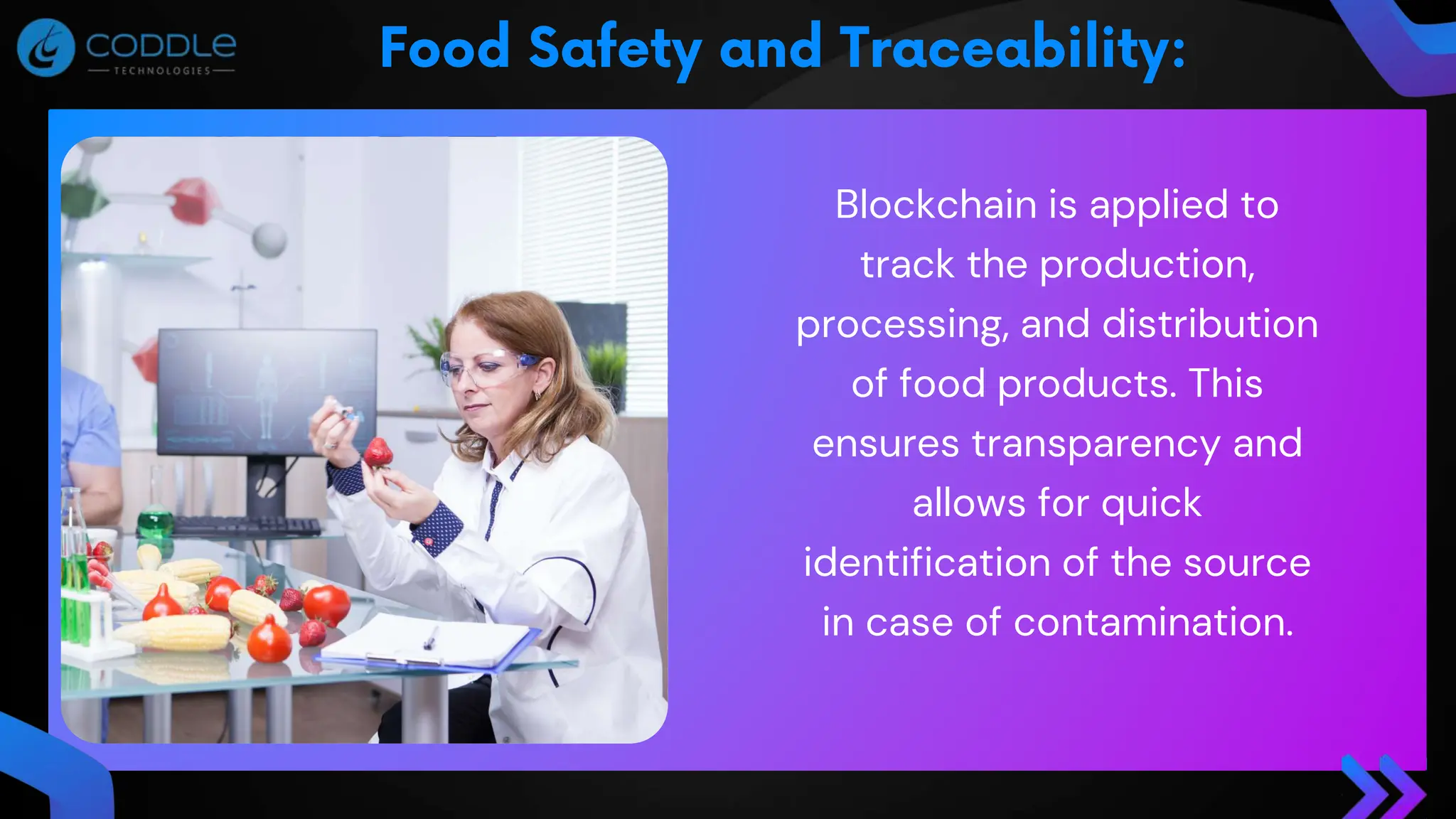
Blockchain is applied to
track the production,
processing, and distribution
of food products. This
ensures transparency and
allows for quick
identification of the source
in case of contamination.
+1-508-455-4488
sales@coddletech.com
www.coddletech.com
#12 Bridle Path, Auburn, MA, 01501

Real World use cases of Blockchain Technology.pptx

  • 2.
    Blockchain technology hasapplications across various industries, offering solutions to long-standing problems. Blockchain technology has found numerous real-world use cases across various industries due to its unique features like decentralization, transparency, and security.
  • 3.
    • Bitcoin (BTC):The original and most well- known blockchain application, Bitcoin is a decentralized digital currency that enables peer-to-peer transactions without the need for intermediaries like banks.
  • 4.
    • Ethereum (ETH):Ethereum introduced the concept of smart contracts, self-executing contracts with the terms directly written into code. This allows for the creation of decentralized applications and various blockchain-based services.
  • 5.
    • Blockchain isused to enhance transparency and traceability in supply chains. Each step of the supply chain, from manufacturing to distribution, can be recorded on a blockchain, reducing fraud and ensuring the authenticity of products.
  • 6.
    • Blockchain canprovide a secure and decentralized solution for identity management. Users have more control over their personal information, reducing the risk of identity theft.
  • 7.
    • Blockchain technologycan streamline cross-border payments by reducing the need for multiple intermediaries, making transactions faster and potentially less expensive.
  • 8.
    Blockchain can beapplied to create secure and transparent voting systems. This can reduce the risk of fraud and enhance the integrity of election processes.
  • 9.
    Blockchain helps secureand manage healthcare data. Patients can control access to their records, and healthcare providers can improve the accuracy and privacy of patient information.
  • 10.
    Blockchain simplifies and securesreal estate transactions by providing a transparent and tamper- resistant ledger for property ownership. It reduces the risk of fraud and speeds up the process.
  • 11.
    Blockchain is usedto timestamp and verify the ownership of intellectual property, including patents, trademarks, and copyrights.
  • 12.
    Blockchain is appliedto track the production, processing, and distribution of food products. This ensures transparency and allows for quick identification of the source in case of contamination.
  • 13.