Reading Is Essential And Serves As A Basic
Building Block For Learning.
Introduction to Reading
Reading is a foundational skill that
impacts all areas of learning.
It enables individuals to access
information across various subjects.
Without reading, comprehension of
concepts and ideas becomes significantly
challenging.
The Importance of Literacy
Literacy is crucial for effective
communication in both personal and
professional settings.
It empowers individuals to engage with
the world around them.
Improving literacy rates can lead to
enhanced economic opportunities for
communities.
Cognitive Development
Reading stimulates cognitive
development in children and adults alike.
It enhances critical thinking and
problem-solving skills.
Engaging with texts encourages deeper
understanding and retention of
information.
Vocabulary Expansion
Reading exposes individuals to new
words and phrases regularly.
A richer vocabulary allows for more
effective expression of thoughts and
ideas.
Improved vocabulary can lead to better
performance in academic and
professional contexts.
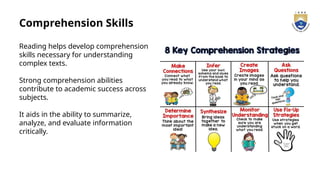
Comprehension Skills
Reading helps develop comprehension
skills necessary for understanding
complex texts.
Strong comprehension abilities
contribute to academic success across
subjects.
It aids in the ability to summarize,
analyze, and evaluate information
critically.
Emotional Intelligence
Engaging with narratives in literature
fosters empathy and emotional
understanding.
Readers can learn to navigate diverse
perspectives through characters and
stories.
This emotional engagement can improve
interpersonal skills and relationships.
Lifelong Learning
Reading instills a habit of lifelong
learning and curiosity.
Individuals who read regularly are often
more informed and engaged citizens.
Lifelong readers benefit from continuous
personal and professional growth.
Academic Achievement
Strong reading skills correlate with
higher academic performance in various
subjects.
Students who read proficiently are more
likely to excel in standardized tests.
Reading is often a requirement for
success in higher education pathways.
Creativity and Imagination
Reading stimulates the imagination and
encourages creative thinking.
Exposure to different genres and styles
can inspire original ideas.
Creative thinking is essential in problem-
solving and innovation across fields.
Social Skills Development
Reading can enhance social skills
through understanding social contexts
and cues.
It provides insights into human behavior
and relationships.
Readers can develop better
communication skills by observing
dialogue in texts.
Cultural Awareness
Reading promotes cultural awareness
and appreciation of diversity.
It allows individuals to explore different
cultures and histories through literature.
This understanding fosters respect and
tolerance in a multicultural society.
Digital Literacy
In the digital age, reading extends to
digital texts and resources.
Understanding how to navigate online
information is crucial for modern
learners.
Digital literacy enhances critical thinking
when evaluating sources and content.
Encouraging Reading Habits
Parents and educators play a vital role in
fostering reading habits from a young
age.
Creating a rich reading environment can
motivate children to explore books.
Reading together can strengthen
relationships and promote a love for
literature.
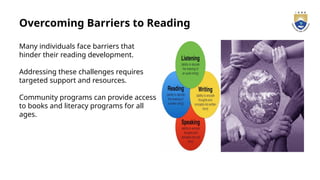
Overcoming Barriers to Reading
Many individuals face barriers that
hinder their reading development.
Addressing these challenges requires
targeted support and resources.
Community programs can provide access
to books and literacy programs for all
ages.
Conclusion: The Power of Reading
Reading is a fundamental building block
for knowledge and understanding.
Its benefits extend far beyond academics
into every aspect of life.
Promoting reading as a lifelong habit is
essential for personal and societal
growth.
Feel free to adjust or expand on any of
the slides to suit your specific needs!

Reading Is Essential And Serves As A Basic Building Block For Learning..pptx

  • 1.
    Reading Is EssentialAnd Serves As A Basic Building Block For Learning.
  • 2.
    Introduction to Reading Readingis a foundational skill that impacts all areas of learning. It enables individuals to access information across various subjects. Without reading, comprehension of concepts and ideas becomes significantly challenging.
  • 3.
    The Importance ofLiteracy Literacy is crucial for effective communication in both personal and professional settings. It empowers individuals to engage with the world around them. Improving literacy rates can lead to enhanced economic opportunities for communities.
  • 4.
    Cognitive Development Reading stimulatescognitive development in children and adults alike. It enhances critical thinking and problem-solving skills. Engaging with texts encourages deeper understanding and retention of information.
  • 5.
    Vocabulary Expansion Reading exposesindividuals to new words and phrases regularly. A richer vocabulary allows for more effective expression of thoughts and ideas. Improved vocabulary can lead to better performance in academic and professional contexts.
  • 6.
    Comprehension Skills Reading helpsdevelop comprehension skills necessary for understanding complex texts. Strong comprehension abilities contribute to academic success across subjects. It aids in the ability to summarize, analyze, and evaluate information critically.
  • 7.
    Emotional Intelligence Engaging withnarratives in literature fosters empathy and emotional understanding. Readers can learn to navigate diverse perspectives through characters and stories. This emotional engagement can improve interpersonal skills and relationships.
  • 8.
    Lifelong Learning Reading instillsa habit of lifelong learning and curiosity. Individuals who read regularly are often more informed and engaged citizens. Lifelong readers benefit from continuous personal and professional growth.
  • 9.
    Academic Achievement Strong readingskills correlate with higher academic performance in various subjects. Students who read proficiently are more likely to excel in standardized tests. Reading is often a requirement for success in higher education pathways.
  • 10.
    Creativity and Imagination Readingstimulates the imagination and encourages creative thinking. Exposure to different genres and styles can inspire original ideas. Creative thinking is essential in problem- solving and innovation across fields.
  • 11.
    Social Skills Development Readingcan enhance social skills through understanding social contexts and cues. It provides insights into human behavior and relationships. Readers can develop better communication skills by observing dialogue in texts.
  • 12.
    Cultural Awareness Reading promotescultural awareness and appreciation of diversity. It allows individuals to explore different cultures and histories through literature. This understanding fosters respect and tolerance in a multicultural society.
  • 13.
    Digital Literacy In thedigital age, reading extends to digital texts and resources. Understanding how to navigate online information is crucial for modern learners. Digital literacy enhances critical thinking when evaluating sources and content.
  • 14.
    Encouraging Reading Habits Parentsand educators play a vital role in fostering reading habits from a young age. Creating a rich reading environment can motivate children to explore books. Reading together can strengthen relationships and promote a love for literature.
  • 15.
    Overcoming Barriers toReading Many individuals face barriers that hinder their reading development. Addressing these challenges requires targeted support and resources. Community programs can provide access to books and literacy programs for all ages.
  • 16.
    Conclusion: The Powerof Reading Reading is a fundamental building block for knowledge and understanding. Its benefits extend far beyond academics into every aspect of life. Promoting reading as a lifelong habit is essential for personal and societal growth. Feel free to adjust or expand on any of the slides to suit your specific needs!

Editor's Notes

  • #2 Image source: https://fi-courses.s3.amazonaws.com
  • #3 Image source: https://selffa.com
  • #4 Image source: https://static.s123-cdn-static-d.com
  • #5 Image source: https://blog.spellquiz.com
  • #6 Image source: https://thelearningdesigncoach.weebly.com
  • #7 Image source: https://www.6seconds.org
  • #8 Image source: https://www.cilc.org
  • #9 Image source: https://openpress.usask.ca
  • #10 Image source: https://static.vecteezy.com
  • #11 Image source: https://helpfulprofessor.com
  • #12 Image source: https://esoftskills.com
  • #13 Image source: https://assets.ltkcontent.com
  • #14 Image source: https://www.homeschoolof1.com
  • #15 Image source: https://assets.thehansindia.com
  • #16 Image source: https://ph-test-11.slatic.net