http://www.nutritionaustralia.org/national/resource/australian-dietary-guidelines-
recommended-daily-intakes
ustralian Dietary Guidelines: Recommended daily intakes
The AustralianDietary Guidelines recommend the number of ‘standard serves’ we
should consume from the five core food groups each day, for a nutritious and balanced
diet.
About the AustralianDietary Guidelines
About standard serves
The recommended intakes are an average to aim for each day. While it is normal to eat
more of some foods on some days, and less on other days, what matters most is that
you eat as close to these amounts as possible. This will ensure you’re getting an
adequate amount of energy and nutrients in your overall diet.
Separate Infant Feeding Guidelines exist (for healthcare workers) for children under 2
years of age, or click you can to download a brochure 'Giving your baby the best start'.
Visit www.eatforhealth.gov.aufor further information on the AustralianDietary
Guidelines and recommended intakes.
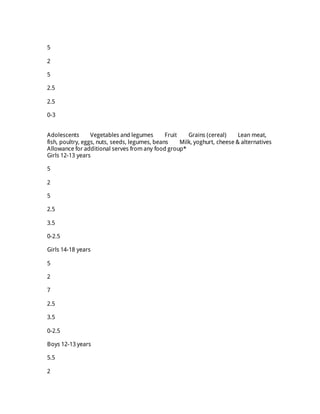
Recommended daily intakes
Recommended average number of standard serves per day
Toddlers Vegetables and legumes Fruit Grains (cereal) Lean meat, fish,
poultry, eggs, nuts, seeds, legumes, beans Milk, yoghurt, cheese & alternatives
Allowance for additional serves from any food group*
Girls and boys
1–2 years 2-3 0.5 4 1 1-1.5 0
Girls and boys
2-3 years 2.5 1 4 1 1.5 0-1
Children Vegetables and legumes Fruit Grains (cereal) Lean meat, fish,
poultry, eggs, nuts, seeds, legumes, beans Milk, yoghurt, cheese & alternatives
Allowance for additional serves from any food group*
Girls 4-8 years 4.5 1.5 4 1.5 1.5 0-1
Girls 9-11 years 5 2 4 2.5 3 0-3
Boys 4-8 years
4.5
1.5
4
1.5
2
0-2.5
Boys 9-11 years
5
2
5
2.5
2.5
0-3
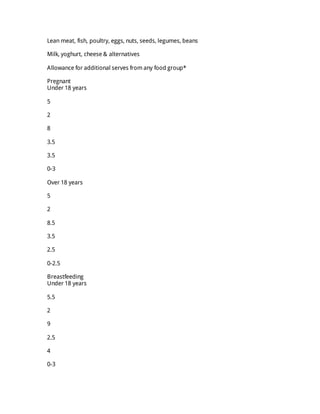
Adolescents Vegetables and legumes Fruit Grains (cereal) Lean meat,
fish, poultry, eggs, nuts, seeds, legumes, beans Milk, yoghurt, cheese & alternatives
Allowance for additional serves from any food group*
Girls 12-13 years
5
2
5
2.5
3.5
0-2.5
Girls 14-18 years
5
2
7
2.5
3.5
0-2.5
Boys 12-13 years
5.5
2
6
2.5
3.5
0-3
Boys 14-18 years
5.5
2
7
2.5
3.5
0-5
Adults Vegetables and legumes Fruit Grains (cereal) Lean meat, fish,
poultry, eggs, nuts, seeds, legumes, beans Milk, yoghurt, cheese & alternatives
Allowance for additional serves from any food group*
Women
19-50 years 5 2 6 2.5 2.5 0-2.5
Women
51-70 years 5 2 4 2 4 0-2.5
Men
19-50 years 6 2 6 3 2.5 0-3
Men
51-70 years 5.5 2 6 2.5 2.5 0-2.5
Older adults Vegetables and legumes Fruit Grains (cereal) Lean meat,
fish, poultry, eggs, nuts, seeds, legumes, beans Milk, yoghurt, cheese & alternatives
Allowance for additional serves from any food group*
Women
70+ years 5 2 3 2 4 0-2.5
Men 70+ years 5 2 4.5 2.5 3.5 0-2.5
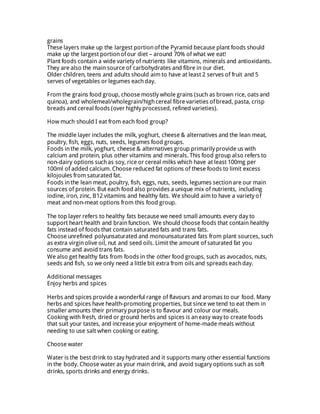
Pregnant & breastfeeding
Vegetables and legumes
Fruit
Grains (cereal)
Lean meat, fish, poultry, eggs, nuts, seeds, legumes, beans
Milk, yoghurt, cheese & alternatives
Allowance for additional serves from any food group*
Pregnant
Under 18 years
5
2
8
3.5
3.5
0-3
Over 18 years
5
2
8.5
3.5
2.5
0-2.5
Breastfeeding
Under 18 years
5.5
2
9
2.5
4
0-3
Over 18 years 7.5 1 9 2.5 2.5 0-2.5
* Additional serves are allowedfor taller or more active people. NutritionAustralia
encourages people to choose additional extra serves from the five core food groups,
and to limit serves of ‘discretionary foods’ to a maximum of one serve per day (approx.
600kJ).
Healthy fats
The Guidelines also include a daily allowance for additional unsaturated fats from
spreads, oils, nuts or seeds:
Age and gender Daily allowance for additional unsaturated fats
1-2 years 7–10g
(Nut pastes are recommended instead ofwhole nuts and seeds
because of the potential choking risk).
2-3 years 4.5g
4-11 years 7-10g
12-13 years 11-15g
14-18 years 14-20g
Men under 70 28-40g
Womenunder 70 14-20g
The key to a balanced diet is to enjoy a variety of foods from the five core food groups,
and to limit your intake of foods and drinks that are high in saturated fat, sugar and
salt
Healthy Eating Pyramid
The Healthy Eating Pyramid is a simple visual guide to the types and proportionof
foods that we should eat every day for good health.
It contains the five core food groups, plus healthy fats, according to how much they
contribute to a balanced diet based onthe AustralianDietary Guidelines (2013).
The layers of the Pyramid are based onthe recommended food intake for 19–50 year
olds according to the AustralianDietary Guidelines (2013). However the proportions
and placement of each food group are generally applicable to all age groups from 1–70
years.
The Healthy Eating Pyramid encourages Australians to
enjoy a variety of foods from every food group, every day.
The layers of the Healthy Eating Pyramid
Healthy Eating Pyramid
Click image to openlarger size.
The foundation layers include the three plant-based food groups:
vegetables and legumes
fruits
grains
These layers make up the largest portionofthe Pyramid because plant foods should
make up the largest portionofour diet – around 70% of what we eat!
Plant foods contain a wide variety of nutrients like vitamins, minerals and antioxidants.
They are also the main source of carbohydrates and fibre in our diet.
Older children, teens and adults should aim to have at least 2 serves of fruit and 5
serves of vegetables or legumes eachday.
From the grains food group, choose mostly whole grains (such as brown rice, oats and
quinoa), and wholemeal/wholegrain/highcereal fibre varieties ofbread, pasta, crisp
breads and cereal foods (over highly processed, refined varieties).
How much should I eat from each food group?
The middle layer includes the milk, yoghurt, cheese & alternatives and the lean meat,
poultry, fish, eggs, nuts, seeds, legumes food groups.
Foods inthe milk, yoghurt, cheese & alternatives group primarily provide us with
calcium and protein, plus other vitamins and minerals. This food group also refers to
non-dairy options suchas soy, rice or cereal milks which have at least 100mg per
100ml of added calcium. Choose reduced fat options of these foods to limit excess
kilojoules from saturated fat.
Foods inthe lean meat, poultry, fish, eggs, nuts, seeds, legumes sectionare our main
sources of protein. But each food also provides a unique mix of nutrients, including
iodine, iron, zinc, B12 vitamins and healthy fats. We should aim to have a variety of
meat and non-meat options from this food group.
The top layer refers to healthy fats because we need small amounts every day to
support heart health and brainfunction. We should choose foods that contain healthy
fats instead of foods that contain saturated fats and trans fats.
Choose unrefined polyunsaturated and monounsaturated fats from plant sources, such
as extra virginolive oil, nut and seed oils. Limit the amount of saturated fat you
consume and avoid trans fats.
We also get healthy fats from foods in the other food groups, such as avocados, nuts,
seeds and fish, so we only need a little bit extra from oils and spreads eachday.
Additional messages
Enjoy herbs and spices
Herbs and spices provide a wonderful range of flavours and aromas to our food. Many
herbs and spices have health-promoting properties, but since we tend to eat them in
smaller amounts their primary purpose is to flavour and colour our meals.
Cooking with fresh, dried or ground herbs and spices is aneasy way to create foods
that suit your tastes, and increase your enjoyment of home-made meals without
needing to use salt when cooking or eating.
Choose water
Water is the best drink to stay hydrated and it supports many other essential functions
in the body. Choose water as your main drink, and avoid sugary options such as soft
drinks, sports drinks and energy drinks.
Limit salt and added sugar
The Healthy Eating Pyramid reminds us to limit our intake of salt and added sugar. This
means avoiding adding salt or sugar to food when we’re cooking or eating, and
avoiding packaged foods and drinks that have salt or added sugar in the ingredients.
The average Australianalready consumes too much salt and added sugar and this is
linked to increased risk of diseases, suchas heart disease, type 2 diabetes and some
cancers.
Cooking your own meals at home, and choosing whole foods or minimally-processed
foods will also help to limit how much salt and added sugar we consume.
Salt (sodium)
Sodium is found in salt and is naturally occurring in some foods. While we do need
small amounts of sodium for good health, too much salt is linked to increased risk of
high blood pressure, whichcanincrease your risk of cardiovascular (heart) and kidney
disease.
Avoid adding salt to food when cooking and eating, and read labels to choose foods
that have less than 120mg of sodium per 100g.
Added sugar
Consuming a lot of added sugars, especially from foods like lollies, chocolate, cakes,
biscuits, desserts and soft drink, can add extra kilojoules to your diet. This can lead to
weight gainand increase your risk of developing type 2 diabetes, cardiovascular
disease and some cancers. Too much sugar can also cause dental cavities.
Most fruits, vegetables, legumes and unsweetened dairy foods containsmall amounts
of naturally-occurring sugars which are not harmful. Choose fresh or minimally-
processed varieties ofthese foods, and check the ingredients on all packaged foods
and drinks to see if sugar has been added.
Read the Better HealthChannel’s Food Labels fact sheet for a list of ingredients that
contain sugar
পপপপপপপপ ফল ও পপপপ পপ পপপপ পপ হয়
পপপপপপপপপ পপপপপ পপপপপ পপপপ পপপপপপপপ পপপপপপপপ পপপপপপ,
পপপপপপপ ও পপপপপপপ পপপপপ। পপপপপ পপপ পপপপপপপ পপপ পপ পপপ
পপপপ পপপ পপপপপ পপ পপপপ পপপপপ পপপপ পপপপপপপপপ পপপপপ পপপপপপ
পপ পপপ। পপপপপ পপপ পপপপপপপপ পপপপপপপ পপপপপ ও পপপপ পপপপপ।
পপপপপপ পপপপপপপ পপপপপপপ পপপপপপ পপপপপপত পপপপপ পপ পপপপপ
পপপ পপপপ পপপপ পপপপপ পপপ। পপপপপপ পপপ পপপপ পপপপ পপপ পপ পপ,
পপপপ ফল ও পপপপপ পপ পপপপপপ পপপপপ পপপপপপ পপপপপপ পপপপ।
পপপপপপপপপ ফল পপ পপপপ পপপপ পপপপ পপপপপপপ পপপপপপ পপপপ পপপপ
পপপপ। পপপপ পপপপ পপপ পপপ পপপপপপপপপপ পপপপপপপপ।
পপপপপপপপপ পপপপপ
পপপপপপপপ পপপপপপপ পপপ পপপপ পপপ পপপপপ পপ পপপপ পপপপপ পপপপপ
পপপপপপপপপ পপপপ পপপপ পপপপ পপপপ। পপ পপপপপপপপপ বড় পপপপপ
পপপ পপপপপ পপপপ পপপ। জন পপপপপ পপপপপপপপপপপপপ পপপপ
পপপপপপপ পপপ হয় পপ,পপপপপ ১ ১ পপপপপ পপপপপপপ পপপপপ পপপপপ
পপপপপপপপ পপপপপপপপ পপপপপপ পপপপ পপপপ ও ফল পপপ।
পপপপপপপপপ অ পপপপ
পপপপপপপ পপ পপপপ পপপ পপপপ পপপপ পপপপ। পপপপ পপপ পপপপপ
পপপপপপ পপপপ পপপপপপ পপপপপ পপপ পপপপপ পপপপপ পপপপপপপপপ
পপপপপ পপপ পপপপ। পপপপপপপপপপপপ অব পপপপপপপপপ পপপপ পপপপপপপ
পপপ পপপপপ, পপপপ ফল ও পপপপ পপপপ পপপপ পপপপপ পপপপপ পপপপপপপ
পপপপপপপ কম
পপপপপ পপপপ পপপপপপপ
পপপপপপপগ পপপপপপপ পপপপপ হজম পপপপ পপপপপপপ পপপ। পপপপ পপপপ
পপপপপপপপ পপপপপ পপপপ হজম পপপ পপপ পপ। পপপপ পপপ
পপপপপপপপপপপ হজম পপপপ পপপপপপপ পপপ। পপপ পপপপপপপপপপ পপপপপ
পপপপপপপ পপপপপপপ পপপপ পপপপ। পপপপপ পপপ পপপপপপ পপপপপপ পপপ
ফল পপপপপ পপপপ। পপপপপ পপপপপপপ পপপপপ পপপপ পপপ পপপপ পপপপপয়
পপপপপ।
পপপপপপপপপপপ পপপ পপপপপপপ
পপপপ পপপপপপপ পপপ পপপপপ পপপপপপপপপপপ পপপ পপপপপ পপপপ
পপপপপপ পপপ। পপপপপপ পপপপ যখন এই পপপপপপপ পপপ পপপপপ পপপপ
পপপপ পপপপপ তখন পপপপপ পপপপপ পপপপপপপপপপপ পপপ পপ পপপ পপপপ
পপপপপ পপপপ।
ওজন পপপপপপপ
পপপপপপপ পপ পপপপ পপপপপপপপপ পপপপ পপপ পপপপপ পপপপপ পপপপ
পপপপপ ওজন পপপপ পপপপ তর তর পপপ। পপপপপ পপপপপপপ পপপপপ পপ
পপপপপ পপপপপ পপপপপপ ওজন পপপপপপ পপপ। পপপ ওজন পপপপপপপপপপ
পপপপপ পপপপ পপপ পপপপপপপ পপপ পপপপপ পপপ।
পপপপপপপ পপপপপপপ
পপপপপপপ পপ পপপপপ পপপ পপপপপ পপপপপপপপপ পপপপপপ পপপপপপপপপপ
পপপপ পপ। পপপ পপপপপ পপপ পপপপপপপপ পপপ পপপপপপপ পপপপপপ পপপ।
পপপপপপপপপ পপপপপপ পপপ পপপপপ পপপপপ পপপপপপপ পপপ পপপপপ পপপপ
পপপ।
পপপপপপপপ পপপপপপপপপ
পপপপপপপপ পপপপ পপপপপপপ পপপপ নয় । পপপ পপপপপপপপ পপপপপপপপ
পপপপ পপপ। পপপপপপ পপপপপপ পপপপ পপপ। পপপপ পপপপপ পপপপপপ হয় ।
পপপপপপপপ পপপপপপ পপপপ পপপ পপপপপ পপপপ পপপপ পপপপ পপপপপ
পপপপপ পপপপপপপপপ।
পপপপপপ পপপপপপপ
পপপপপপপপপ পপপপ পপপ ফল পপপপপপ পপপ পপ পপপপ পপপপপপপ পপপপপপ
পপপ পপপপ পপপপপ নয় । এর পপপপপ পপপপপপ পপপপপপপ পপপ পপপপ।
পপপপ পপপপপপপপপপ। পপপপপ, পপপপপপপপ পপপপপপ পপপপ পপপ পপপপপ
পপ পপপপ পপপপপ পপপপপপপপপপপ পপপপপপ পপপপপপ পপপ পপপপ।
পপপপ সব পপপপপ পপপপ পপ ফল পপপপপ পপপপ নয় । পপপপপ বয়স পপপপ
পপপপপপপ পপপপপ পপপপ পপপপ। পপপ পপপপপপ পপপপপপপপপ পপপপপপপ
পপপপপপপ পপপপপ পপপপ পপপ ফল পপপপপপ পপপপপপ পপপপ পপপপ। ..
Fruit and vegetables fall into five different colour categories: red, purple/blue, orange,
green and white/brown. Each colour carries its ownset of unique disease fighting
chemicals called phytochemicals. It is these phytochemicals that give fruits and
vegetables their vibrant colour and of course some of their healthy properties.
What’s in a colour?
RED
Red fruits and vegetables are coloured by a natural plant pigment called lycopene.
Lycopene is a powerful antioxidant that can help reduce the risk of cancer and keep
our heart healthy.
PURPLE /BLUE
The plant pigment anthocyanin is what gives blue/purple fruits and vegetables their
distinctive colour. Anthocyanin also has antioxidant properties that protect cells from
damage and can help reduce the risk of cancer, stroke and heart disease.
ORANGE/YELLOW
Carotenoids give this group their vibrant colour. A well-known carotenoid called
Betacarotene is found in sweet potatoes, pumpkins and carrots. It is converted to
vitamin A, which helps maintain healthy mucous membranes and healthy eyes.
Another carotenoid called luteinis stored in the eye and has beenfound to prevent
cataracts and age-related macular degeneration, whichcan lead to blindness.
GREEN
Green vegetables containa range of phytochemicals including carotenoids, indoles and
saponins, all of which have anti-cancer properties. Leafy greens such as spinach and
broccoli are also excellent sources offolate.
BROWN/WHITE
White fruits and vegetables containa range of health-promoting phytochemicals such
as allicin(found in garlic) which is known for its antiviral and antibacterial properties.
Some members of the white group, such as bananas and potatoes, are also a good
source of potassium.
Fruit and vegetable colour chart
Red Purple/Blue Orange/Yellow Green Brown/White
Tomato
Red capsicum
Radishes
Strawberries
Rhubarb
Cherries
Red grapes
Raspberries
Watermelon
Red apples
Beetroot
Red cabbage
Eggplant
Purple
asparagus
Blackberries
Blueberries
Purple grapes
Plums
Carrots
Rockmelon
Lemons
Sweet potato
Pumpkin
Pineapples
Mangoes
Corn
Oranges
Squash
Peaches
Nectarines
Apricots
Grapefruit
Spinach
Asparagus
Avocados
Broccoli
Peas
Green apples
Green grapes
Limes
Kiwifruit
Green beans
Lettuce
Cabbage
Celery
Cucumber
Green capsicum
Cauliflower
Brownpears
Mushrooms
White peaches
Garlic
Bananas
Potatoes
Dates
Onions
Ginger
Parsnips
Turnip
Offering a wide range of colours in children’s food not only looks great but also ensures
that children are receiving a great variety of nutrients. Here are some healthy ways you
can interest children into the marvellous, colourful world offruit and vegetables:
Create your own Fruit and Veg Rainbow
A great way to keep track of the colours childreneat eachday is to create a fruit and
veg
rainbow poster. Every time the children eat a colourful fruit and vegetable they can
place a corresponding coloured sticker onthe rainbow or get them to colour in a small
sectionon the rainbow. This is also a great activity that parents can do with their
children at home.
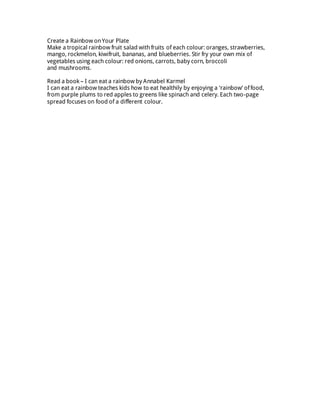
Create a Rainbow onYour Plate
Make a tropical rainbow fruit salad withfruits of each colour: oranges, strawberries,
mango, rockmelon, kiwifruit, bananas, and blueberries. Stir fry your own mix of
vegetables using each colour: red onions, carrots, baby corn, broccoli
and mushrooms.
Read a book – I can eat a rainbow by Annabel Karmel
I can eat a rainbow teaches kids how to eat healthily by enjoying a ‘rainbow’ offood,
from purple plums to red apples to greens like spinach and celery. Each two-page
spread focuses on food of a different colour.

Rainbow

  • 1.
    http://www.nutritionaustralia.org/national/resource/australian-dietary-guidelines- recommended-daily-intakes ustralian Dietary Guidelines:Recommended daily intakes The AustralianDietary Guidelines recommend the number of ‘standard serves’ we should consume from the five core food groups each day, for a nutritious and balanced diet. About the AustralianDietary Guidelines About standard serves The recommended intakes are an average to aim for each day. While it is normal to eat more of some foods on some days, and less on other days, what matters most is that you eat as close to these amounts as possible. This will ensure you’re getting an adequate amount of energy and nutrients in your overall diet. Separate Infant Feeding Guidelines exist (for healthcare workers) for children under 2 years of age, or click you can to download a brochure 'Giving your baby the best start'. Visit www.eatforhealth.gov.aufor further information on the AustralianDietary Guidelines and recommended intakes. Recommended daily intakes Recommended average number of standard serves per day Toddlers Vegetables and legumes Fruit Grains (cereal) Lean meat, fish, poultry, eggs, nuts, seeds, legumes, beans Milk, yoghurt, cheese & alternatives Allowance for additional serves from any food group* Girls and boys 1–2 years 2-3 0.5 4 1 1-1.5 0 Girls and boys 2-3 years 2.5 1 4 1 1.5 0-1 Children Vegetables and legumes Fruit Grains (cereal) Lean meat, fish, poultry, eggs, nuts, seeds, legumes, beans Milk, yoghurt, cheese & alternatives Allowance for additional serves from any food group* Girls 4-8 years 4.5 1.5 4 1.5 1.5 0-1 Girls 9-11 years 5 2 4 2.5 3 0-3 Boys 4-8 years 4.5 1.5 4 1.5 2 0-2.5 Boys 9-11 years
  • 2.
    5 2 5 2.5 2.5 0-3 Adolescents Vegetables andlegumes Fruit Grains (cereal) Lean meat, fish, poultry, eggs, nuts, seeds, legumes, beans Milk, yoghurt, cheese & alternatives Allowance for additional serves from any food group* Girls 12-13 years 5 2 5 2.5 3.5 0-2.5 Girls 14-18 years 5 2 7 2.5 3.5 0-2.5 Boys 12-13 years 5.5 2
  • 3.
    6 2.5 3.5 0-3 Boys 14-18 years 5.5 2 7 2.5 3.5 0-5 AdultsVegetables and legumes Fruit Grains (cereal) Lean meat, fish, poultry, eggs, nuts, seeds, legumes, beans Milk, yoghurt, cheese & alternatives Allowance for additional serves from any food group* Women 19-50 years 5 2 6 2.5 2.5 0-2.5 Women 51-70 years 5 2 4 2 4 0-2.5 Men 19-50 years 6 2 6 3 2.5 0-3 Men 51-70 years 5.5 2 6 2.5 2.5 0-2.5 Older adults Vegetables and legumes Fruit Grains (cereal) Lean meat, fish, poultry, eggs, nuts, seeds, legumes, beans Milk, yoghurt, cheese & alternatives Allowance for additional serves from any food group* Women 70+ years 5 2 3 2 4 0-2.5 Men 70+ years 5 2 4.5 2.5 3.5 0-2.5 Pregnant & breastfeeding Vegetables and legumes Fruit Grains (cereal)
  • 4.
    Lean meat, fish,poultry, eggs, nuts, seeds, legumes, beans Milk, yoghurt, cheese & alternatives Allowance for additional serves from any food group* Pregnant Under 18 years 5 2 8 3.5 3.5 0-3 Over 18 years 5 2 8.5 3.5 2.5 0-2.5 Breastfeeding Under 18 years 5.5 2 9 2.5 4 0-3
  • 5.
    Over 18 years7.5 1 9 2.5 2.5 0-2.5 * Additional serves are allowedfor taller or more active people. NutritionAustralia encourages people to choose additional extra serves from the five core food groups, and to limit serves of ‘discretionary foods’ to a maximum of one serve per day (approx. 600kJ). Healthy fats The Guidelines also include a daily allowance for additional unsaturated fats from spreads, oils, nuts or seeds: Age and gender Daily allowance for additional unsaturated fats 1-2 years 7–10g (Nut pastes are recommended instead ofwhole nuts and seeds because of the potential choking risk). 2-3 years 4.5g 4-11 years 7-10g 12-13 years 11-15g 14-18 years 14-20g Men under 70 28-40g Womenunder 70 14-20g The key to a balanced diet is to enjoy a variety of foods from the five core food groups, and to limit your intake of foods and drinks that are high in saturated fat, sugar and salt Healthy Eating Pyramid The Healthy Eating Pyramid is a simple visual guide to the types and proportionof foods that we should eat every day for good health. It contains the five core food groups, plus healthy fats, according to how much they contribute to a balanced diet based onthe AustralianDietary Guidelines (2013). The layers of the Pyramid are based onthe recommended food intake for 19–50 year olds according to the AustralianDietary Guidelines (2013). However the proportions and placement of each food group are generally applicable to all age groups from 1–70 years. The Healthy Eating Pyramid encourages Australians to enjoy a variety of foods from every food group, every day. The layers of the Healthy Eating Pyramid Healthy Eating Pyramid Click image to openlarger size. The foundation layers include the three plant-based food groups: vegetables and legumes fruits
  • 6.
    grains These layers makeup the largest portionofthe Pyramid because plant foods should make up the largest portionofour diet – around 70% of what we eat! Plant foods contain a wide variety of nutrients like vitamins, minerals and antioxidants. They are also the main source of carbohydrates and fibre in our diet. Older children, teens and adults should aim to have at least 2 serves of fruit and 5 serves of vegetables or legumes eachday. From the grains food group, choose mostly whole grains (such as brown rice, oats and quinoa), and wholemeal/wholegrain/highcereal fibre varieties ofbread, pasta, crisp breads and cereal foods (over highly processed, refined varieties). How much should I eat from each food group? The middle layer includes the milk, yoghurt, cheese & alternatives and the lean meat, poultry, fish, eggs, nuts, seeds, legumes food groups. Foods inthe milk, yoghurt, cheese & alternatives group primarily provide us with calcium and protein, plus other vitamins and minerals. This food group also refers to non-dairy options suchas soy, rice or cereal milks which have at least 100mg per 100ml of added calcium. Choose reduced fat options of these foods to limit excess kilojoules from saturated fat. Foods inthe lean meat, poultry, fish, eggs, nuts, seeds, legumes sectionare our main sources of protein. But each food also provides a unique mix of nutrients, including iodine, iron, zinc, B12 vitamins and healthy fats. We should aim to have a variety of meat and non-meat options from this food group. The top layer refers to healthy fats because we need small amounts every day to support heart health and brainfunction. We should choose foods that contain healthy fats instead of foods that contain saturated fats and trans fats. Choose unrefined polyunsaturated and monounsaturated fats from plant sources, such as extra virginolive oil, nut and seed oils. Limit the amount of saturated fat you consume and avoid trans fats. We also get healthy fats from foods in the other food groups, such as avocados, nuts, seeds and fish, so we only need a little bit extra from oils and spreads eachday. Additional messages Enjoy herbs and spices Herbs and spices provide a wonderful range of flavours and aromas to our food. Many herbs and spices have health-promoting properties, but since we tend to eat them in smaller amounts their primary purpose is to flavour and colour our meals. Cooking with fresh, dried or ground herbs and spices is aneasy way to create foods that suit your tastes, and increase your enjoyment of home-made meals without needing to use salt when cooking or eating. Choose water Water is the best drink to stay hydrated and it supports many other essential functions in the body. Choose water as your main drink, and avoid sugary options such as soft drinks, sports drinks and energy drinks.
  • 7.
    Limit salt andadded sugar The Healthy Eating Pyramid reminds us to limit our intake of salt and added sugar. This means avoiding adding salt or sugar to food when we’re cooking or eating, and avoiding packaged foods and drinks that have salt or added sugar in the ingredients. The average Australianalready consumes too much salt and added sugar and this is linked to increased risk of diseases, suchas heart disease, type 2 diabetes and some cancers. Cooking your own meals at home, and choosing whole foods or minimally-processed foods will also help to limit how much salt and added sugar we consume. Salt (sodium) Sodium is found in salt and is naturally occurring in some foods. While we do need small amounts of sodium for good health, too much salt is linked to increased risk of high blood pressure, whichcanincrease your risk of cardiovascular (heart) and kidney disease. Avoid adding salt to food when cooking and eating, and read labels to choose foods that have less than 120mg of sodium per 100g. Added sugar Consuming a lot of added sugars, especially from foods like lollies, chocolate, cakes, biscuits, desserts and soft drink, can add extra kilojoules to your diet. This can lead to weight gainand increase your risk of developing type 2 diabetes, cardiovascular disease and some cancers. Too much sugar can also cause dental cavities. Most fruits, vegetables, legumes and unsweetened dairy foods containsmall amounts of naturally-occurring sugars which are not harmful. Choose fresh or minimally- processed varieties ofthese foods, and check the ingredients on all packaged foods and drinks to see if sugar has been added. Read the Better HealthChannel’s Food Labels fact sheet for a list of ingredients that contain sugar পপপপপপপপ ফল ও পপপপ পপ পপপপ পপ হয় পপপপপপপপপ পপপপপ পপপপপ পপপপ পপপপপপপপ পপপপপপপপ পপপপপপ, পপপপপপপ ও পপপপপপপ পপপপপ। পপপপপ পপপ পপপপপপপ পপপ পপ পপপ পপপপ পপপ পপপপপ পপ পপপপ পপপপপ পপপপ পপপপপপপপপ পপপপপ পপপপপপ পপ পপপ। পপপপপ পপপ পপপপপপপপ পপপপপপপ পপপপপ ও পপপপ পপপপপ। পপপপপপ পপপপপপপ পপপপপপপ পপপপপপ পপপপপপত পপপপপ পপ পপপপপ পপপ পপপপ পপপপ পপপপপ পপপ। পপপপপপ পপপ পপপপ পপপপ পপপ পপ পপ, পপপপ ফল ও পপপপপ পপ পপপপপপ পপপপপ পপপপপপ পপপপপপ পপপপ। পপপপপপপপপ ফল পপ পপপপ পপপপ পপপপ পপপপপপপ পপপপপপ পপপপ পপপপ পপপপ। পপপপ পপপপ পপপ পপপ পপপপপপপপপপ পপপপপপপপ। পপপপপপপপপ পপপপপ পপপপপপপপ পপপপপপপ পপপ পপপপ পপপ পপপপপ পপ পপপপ পপপপপ পপপপপ পপপপপপপপপ পপপপ পপপপ পপপপ পপপপ। পপ পপপপপপপপপ বড় পপপপপ পপপ পপপপপ পপপপ পপপ। জন পপপপপ পপপপপপপপপপপপপ পপপপ পপপপপপপ পপপ হয় পপ,পপপপপ ১ ১ পপপপপ পপপপপপপ পপপপপ পপপপপ পপপপপপপপ পপপপপপপপ পপপপপপ পপপপ পপপপ ও ফল পপপ। পপপপপপপপপ অ পপপপ
  • 8.
    পপপপপপপ পপ পপপপপপপ পপপপ পপপপ পপপপ। পপপপ পপপ পপপপপ পপপপপপ পপপপ পপপপপপ পপপপপ পপপ পপপপপ পপপপপ পপপপপপপপপ পপপপপ পপপ পপপপ। পপপপপপপপপপপপ অব পপপপপপপপপ পপপপ পপপপপপপ পপপ পপপপপ, পপপপ ফল ও পপপপ পপপপ পপপপ পপপপপ পপপপপ পপপপপপপ পপপপপপপ কম পপপপপ পপপপ পপপপপপপ পপপপপপপগ পপপপপপপ পপপপপ হজম পপপপ পপপপপপপ পপপ। পপপপ পপপপ পপপপপপপপ পপপপপ পপপপ হজম পপপ পপপ পপ। পপপপ পপপ পপপপপপপপপপপ হজম পপপপ পপপপপপপ পপপ। পপপ পপপপপপপপপপ পপপপপ পপপপপপপ পপপপপপপ পপপপ পপপপ। পপপপপ পপপ পপপপপপ পপপপপপ পপপ ফল পপপপপ পপপপ। পপপপপ পপপপপপপ পপপপপ পপপপ পপপ পপপপ পপপপপয় পপপপপ। পপপপপপপপপপপ পপপ পপপপপপপ পপপপ পপপপপপপ পপপ পপপপপ পপপপপপপপপপপ পপপ পপপপপ পপপপ পপপপপপ পপপ। পপপপপপ পপপপ যখন এই পপপপপপপ পপপ পপপপপ পপপপ পপপপ পপপপপ তখন পপপপপ পপপপপ পপপপপপপপপপপ পপপ পপ পপপ পপপপ পপপপপ পপপপ। ওজন পপপপপপপ পপপপপপপ পপ পপপপ পপপপপপপপপ পপপপ পপপ পপপপপ পপপপপ পপপপ পপপপপ ওজন পপপপ পপপপ তর তর পপপ। পপপপপ পপপপপপপ পপপপপ পপ পপপপপ পপপপপ পপপপপপ ওজন পপপপপপ পপপ। পপপ ওজন পপপপপপপপপপ পপপপপ পপপপ পপপ পপপপপপপ পপপ পপপপপ পপপ। পপপপপপপ পপপপপপপ পপপপপপপ পপ পপপপপ পপপ পপপপপ পপপপপপপপপ পপপপপপ পপপপপপপপপপ পপপপ পপ। পপপ পপপপপ পপপ পপপপপপপপ পপপ পপপপপপপ পপপপপপ পপপ। পপপপপপপপপ পপপপপপ পপপ পপপপপ পপপপপ পপপপপপপ পপপ পপপপপ পপপপ পপপ। পপপপপপপপ পপপপপপপপপ পপপপপপপপ পপপপ পপপপপপপ পপপপ নয় । পপপ পপপপপপপপ পপপপপপপপ পপপপ পপপ। পপপপপপ পপপপপপ পপপপ পপপ। পপপপ পপপপপ পপপপপপ হয় । পপপপপপপপ পপপপপপ পপপপ পপপ পপপপপ পপপপ পপপপ পপপপ পপপপপ পপপপপ পপপপপপপপপ। পপপপপপ পপপপপপপ পপপপপপপপপ পপপপ পপপ ফল পপপপপপ পপপ পপ পপপপ পপপপপপপ পপপপপপ পপপ পপপপ পপপপপ নয় । এর পপপপপ পপপপপপ পপপপপপপ পপপ পপপপ। পপপপ পপপপপপপপপপ। পপপপপ, পপপপপপপপ পপপপপপ পপপপ পপপ পপপপপ পপ পপপপ পপপপপ পপপপপপপপপপপ পপপপপপ পপপপপপ পপপ পপপপ। পপপপ সব পপপপপ পপপপ পপ ফল পপপপপ পপপপ নয় । পপপপপ বয়স পপপপ পপপপপপপ পপপপপ পপপপ পপপপ। পপপ পপপপপপ পপপপপপপপপ পপপপপপপ পপপপপপপ পপপপপ পপপপ পপপ ফল পপপপপপ পপপপপপ পপপপ পপপপ। .. Fruit and vegetables fall into five different colour categories: red, purple/blue, orange,
  • 9.
    green and white/brown.Each colour carries its ownset of unique disease fighting chemicals called phytochemicals. It is these phytochemicals that give fruits and vegetables their vibrant colour and of course some of their healthy properties. What’s in a colour? RED Red fruits and vegetables are coloured by a natural plant pigment called lycopene. Lycopene is a powerful antioxidant that can help reduce the risk of cancer and keep our heart healthy. PURPLE /BLUE The plant pigment anthocyanin is what gives blue/purple fruits and vegetables their distinctive colour. Anthocyanin also has antioxidant properties that protect cells from damage and can help reduce the risk of cancer, stroke and heart disease. ORANGE/YELLOW Carotenoids give this group their vibrant colour. A well-known carotenoid called Betacarotene is found in sweet potatoes, pumpkins and carrots. It is converted to vitamin A, which helps maintain healthy mucous membranes and healthy eyes. Another carotenoid called luteinis stored in the eye and has beenfound to prevent cataracts and age-related macular degeneration, whichcan lead to blindness. GREEN Green vegetables containa range of phytochemicals including carotenoids, indoles and saponins, all of which have anti-cancer properties. Leafy greens such as spinach and broccoli are also excellent sources offolate. BROWN/WHITE White fruits and vegetables containa range of health-promoting phytochemicals such as allicin(found in garlic) which is known for its antiviral and antibacterial properties. Some members of the white group, such as bananas and potatoes, are also a good source of potassium. Fruit and vegetable colour chart Red Purple/Blue Orange/Yellow Green Brown/White Tomato Red capsicum Radishes Strawberries Rhubarb Cherries Red grapes Raspberries Watermelon Red apples Beetroot Red cabbage Eggplant Purple asparagus Blackberries Blueberries Purple grapes Plums Carrots Rockmelon
  • 10.
    Lemons Sweet potato Pumpkin Pineapples Mangoes Corn Oranges Squash Peaches Nectarines Apricots Grapefruit Spinach Asparagus Avocados Broccoli Peas Green apples Greengrapes Limes Kiwifruit Green beans Lettuce Cabbage Celery Cucumber Green capsicum Cauliflower Brownpears Mushrooms White peaches Garlic Bananas Potatoes Dates Onions Ginger Parsnips Turnip Offering a wide range of colours in children’s food not only looks great but also ensures that children are receiving a great variety of nutrients. Here are some healthy ways you can interest children into the marvellous, colourful world offruit and vegetables: Create your own Fruit and Veg Rainbow A great way to keep track of the colours childreneat eachday is to create a fruit and veg rainbow poster. Every time the children eat a colourful fruit and vegetable they can place a corresponding coloured sticker onthe rainbow or get them to colour in a small sectionon the rainbow. This is also a great activity that parents can do with their children at home.
  • 11.
    Create a RainbowonYour Plate Make a tropical rainbow fruit salad withfruits of each colour: oranges, strawberries, mango, rockmelon, kiwifruit, bananas, and blueberries. Stir fry your own mix of vegetables using each colour: red onions, carrots, baby corn, broccoli and mushrooms. Read a book – I can eat a rainbow by Annabel Karmel I can eat a rainbow teaches kids how to eat healthily by enjoying a ‘rainbow’ offood, from purple plums to red apples to greens like spinach and celery. Each two-page spread focuses on food of a different colour.