SERVICE QUALITY
Dr. K. Meenakshi,
Associate Professor,
AMET Business School,
AMET University
INTRODUCTION TO SERVICE QUALITY
“Services” was defined with regard to the inherent characteristics of the particular
service and “Quality” was defined by making use of predominantly a user-based
approach.
It is also evident from the previous chapter that service quality is a complex and
ephemeral concept.
It is recognized by businesses that improving service quality is an essential
strategy for success and survival in today’s competitive economic environment.
SERVICE QUALITY
Service quality is crucial for businesses in today's competitive landscape. It
refers to the overall experience a customer has with a service, encompassing all
aspects from initial contact to resolution.
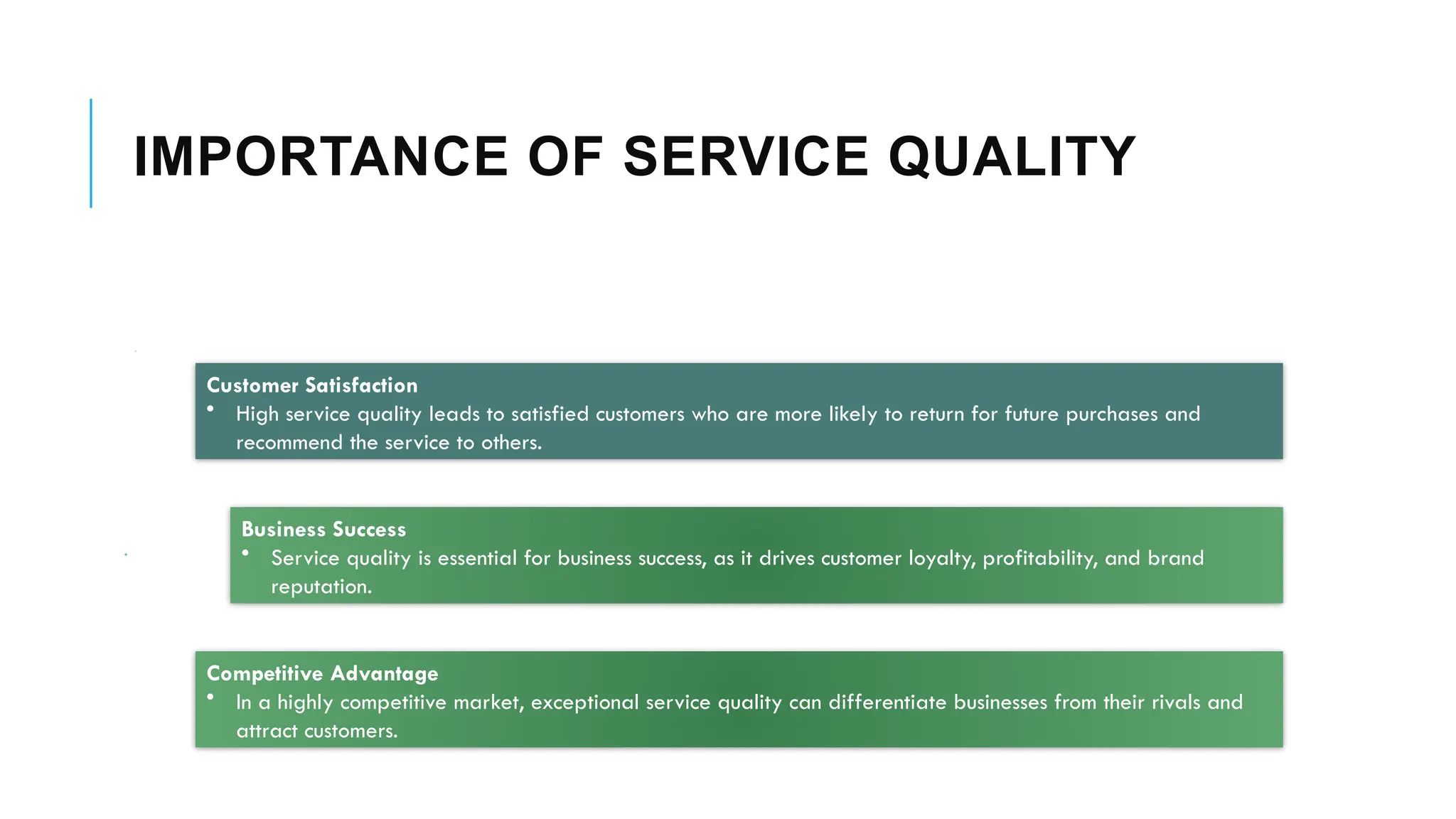
IMPORTANCE OF SERVICE QUALITY
Customer Satisfaction
• High service quality leads to satisfied customers who are more likely to return for future purchases and
recommend the service to others.
Business Success
• Service quality is essential for business success, as it drives customer loyalty, profitability, and brand
reputation.
Competitive Advantage
• In a highly competitive market, exceptional service quality can differentiate businesses from their rivals and
attract customers.
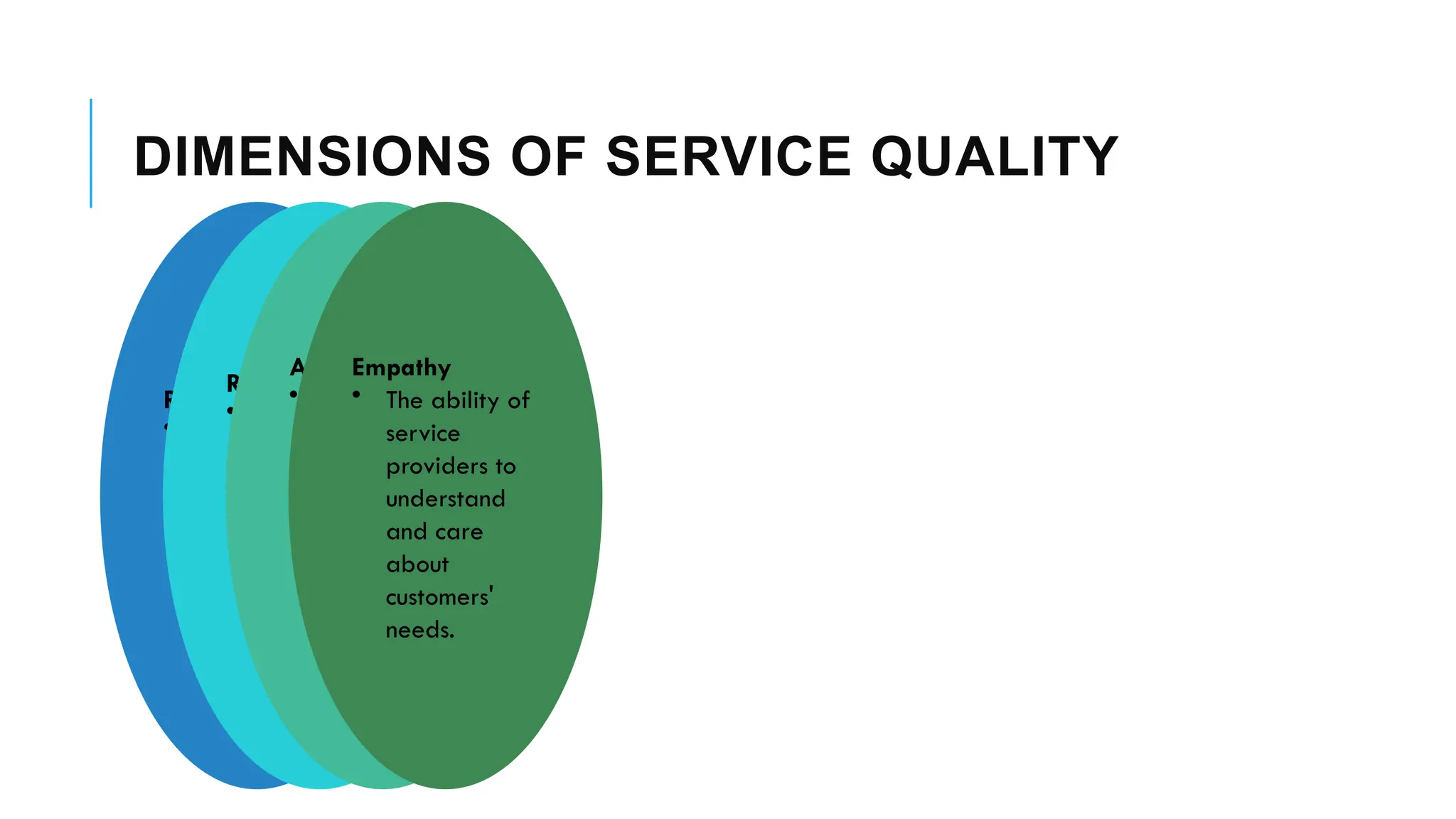
DIMENSIONS OF SERVICE QUALITY
Reliability
• The
consistency
and
dependabilit
y of service
delivery.
Responsiveness
• The
willingness
and ability to
provide
prompt and
helpful
service.
Assurance
• The
knowledge
and courtesy
of service
providers,
inspiring
confidence in
their abilities.
Empathy
• The ability of
service
providers to
understand
and care
about
customers'
needs.
MEASURING SERVICE QUALITY
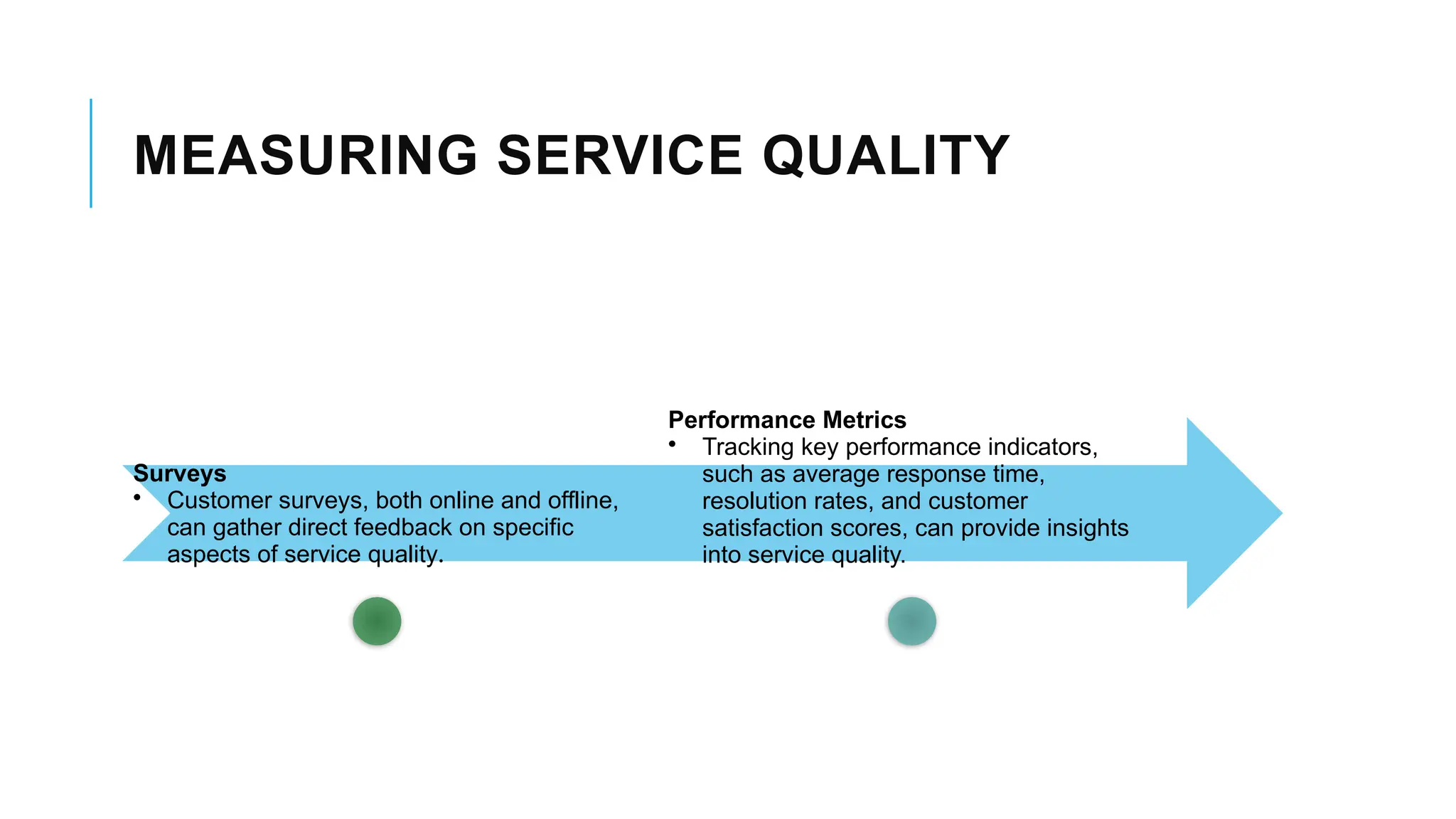
Surveys
• Customer surveys, both online and offline,
can gather direct feedback on specific
aspects of service quality.
Performance Metrics
• Tracking key performance indicators,
such as average response time,
resolution rates, and customer
satisfaction scores, can provide insights
into service quality.
CUSTOMER EXPECTATIONS AND
PERCEPTIONS
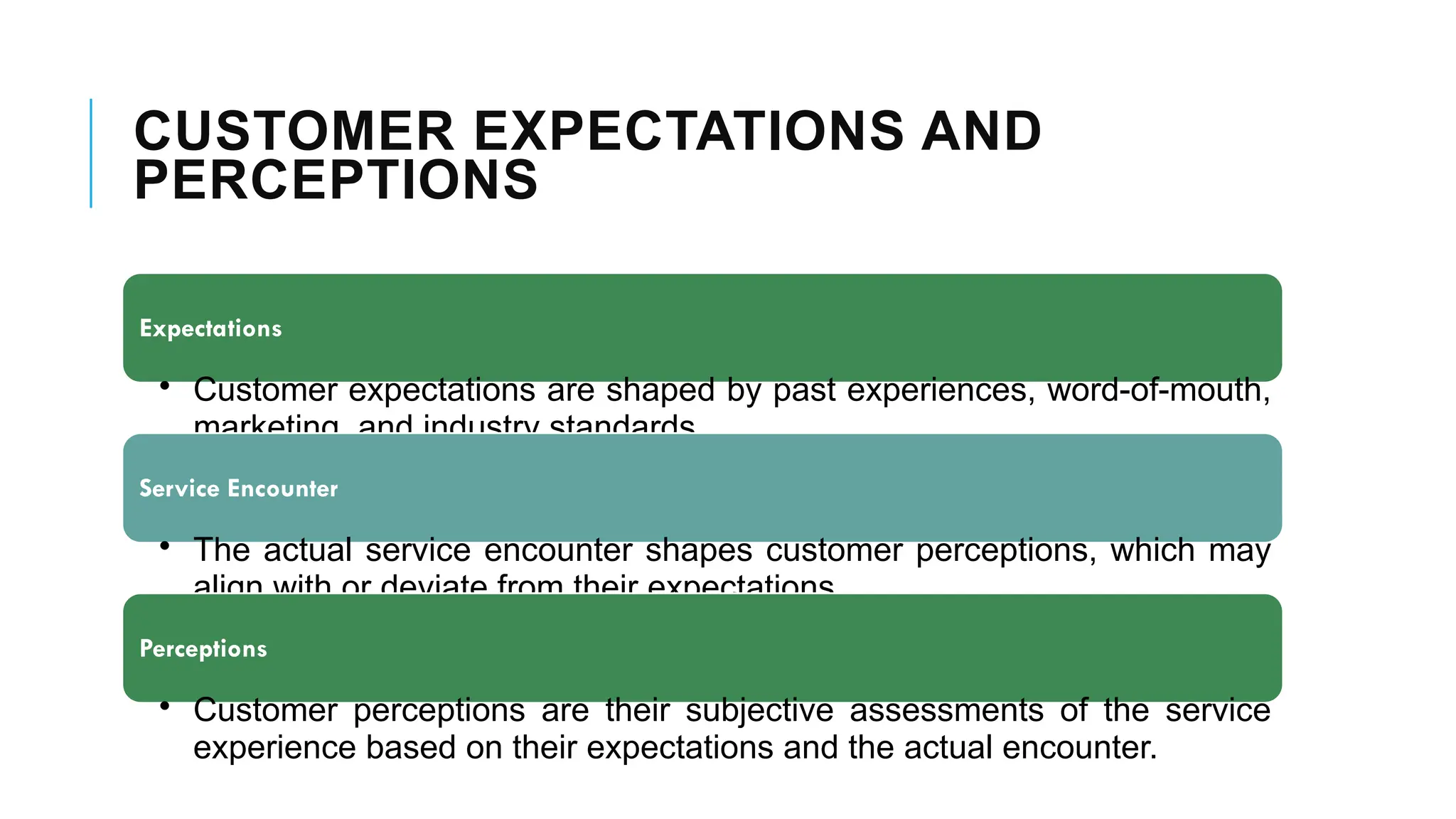
Expectations
• Customer expectations are shaped by past experiences, word-of-mouth,
marketing, and industry standards.
Service Encounter
• The actual service encounter shapes customer perceptions, which may
align with or deviate from their expectations.
Perceptions
• Customer perceptions are their subjective assessments of the service
experience based on their expectations and the actual encounter.
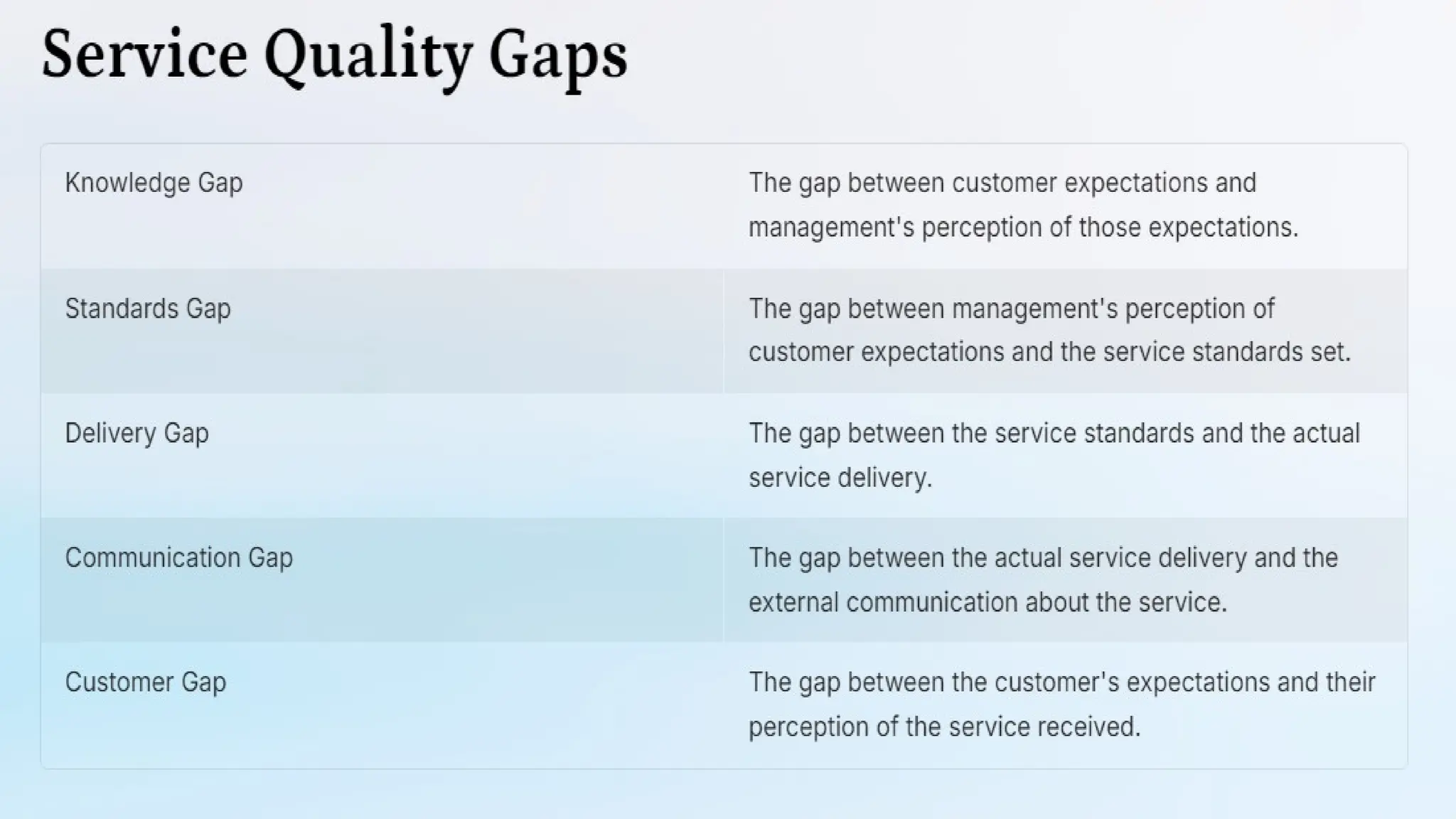
SERVICE QUALITY GAPS
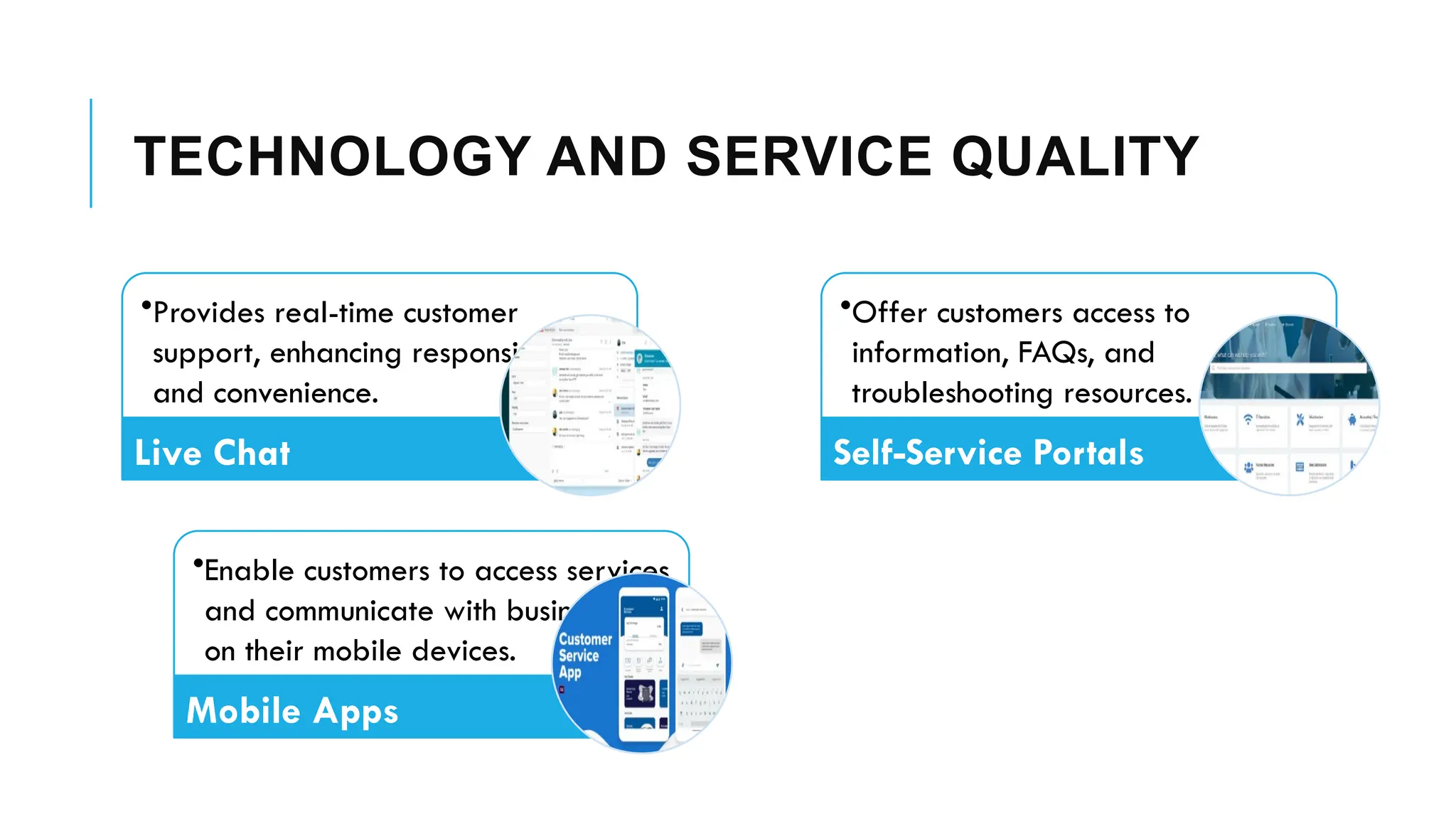
TECHNOLOGY AND SERVICE QUALITY
•Provides real-time customer
support, enhancing responsiveness
and convenience.
Live Chat
•Offer customers access to
information, FAQs, and
troubleshooting resources.
Self-Service Portals
•Enable customers to access services
and communicate with businesses
on their mobile devices.
Mobile Apps
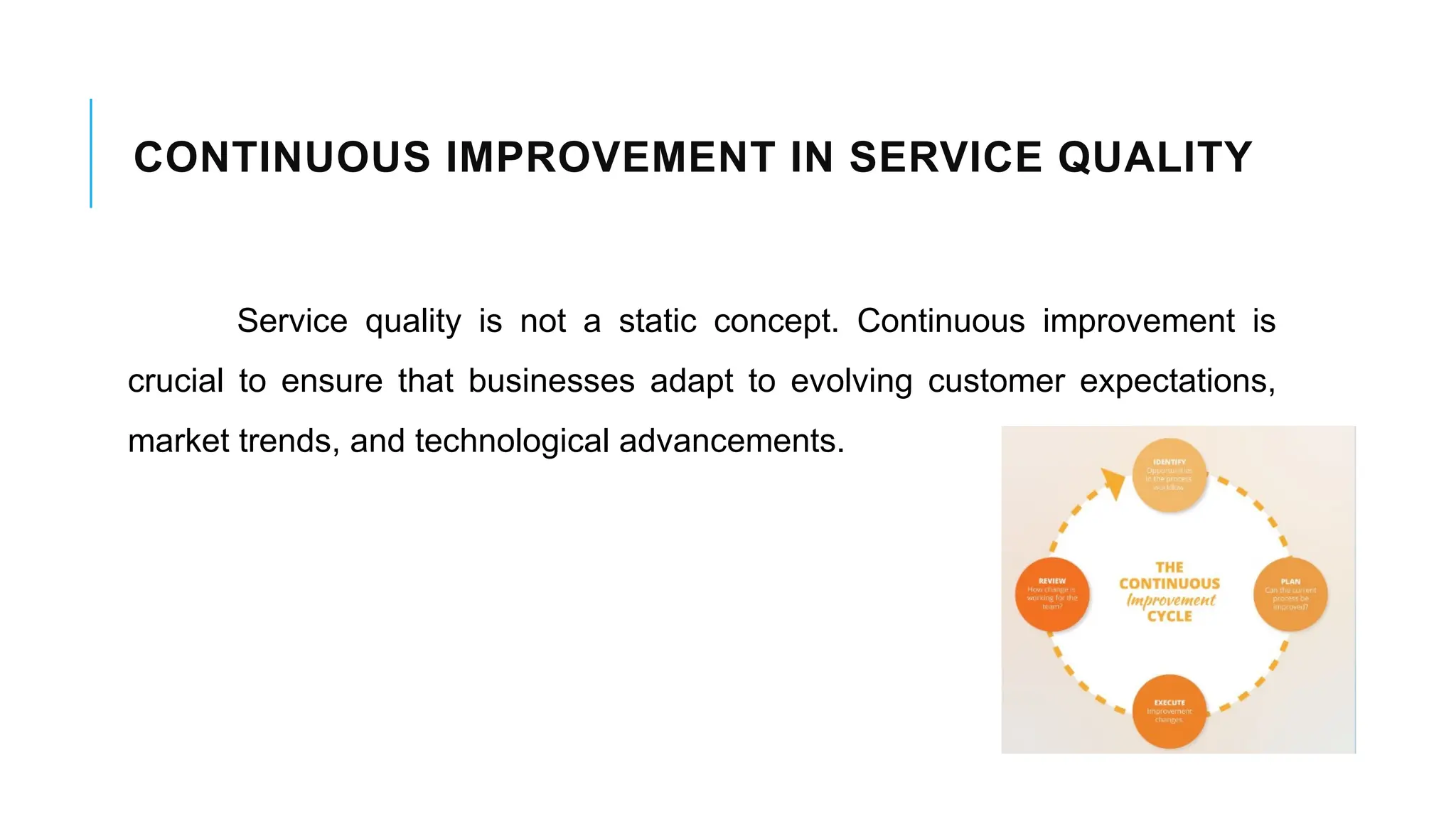
CONTINUOUS IMPROVEMENT IN SERVICE QUALITY
Service quality is not a static concept. Continuous improvement is
crucial to ensure that businesses adapt to evolving customer expectations,
market trends, and technological advancements.
Thank You

Quick Notes on Introduction to Service Quality.pptx

  • 1.
    SERVICE QUALITY Dr. K.Meenakshi, Associate Professor, AMET Business School, AMET University
  • 2.
    INTRODUCTION TO SERVICEQUALITY “Services” was defined with regard to the inherent characteristics of the particular service and “Quality” was defined by making use of predominantly a user-based approach. It is also evident from the previous chapter that service quality is a complex and ephemeral concept. It is recognized by businesses that improving service quality is an essential strategy for success and survival in today’s competitive economic environment.
  • 3.
    SERVICE QUALITY Service qualityis crucial for businesses in today's competitive landscape. It refers to the overall experience a customer has with a service, encompassing all aspects from initial contact to resolution.
  • 4.
    IMPORTANCE OF SERVICEQUALITY Customer Satisfaction • High service quality leads to satisfied customers who are more likely to return for future purchases and recommend the service to others. Business Success • Service quality is essential for business success, as it drives customer loyalty, profitability, and brand reputation. Competitive Advantage • In a highly competitive market, exceptional service quality can differentiate businesses from their rivals and attract customers.
  • 5.
    DIMENSIONS OF SERVICEQUALITY Reliability • The consistency and dependabilit y of service delivery. Responsiveness • The willingness and ability to provide prompt and helpful service. Assurance • The knowledge and courtesy of service providers, inspiring confidence in their abilities. Empathy • The ability of service providers to understand and care about customers' needs.
  • 6.
    MEASURING SERVICE QUALITY Surveys •Customer surveys, both online and offline, can gather direct feedback on specific aspects of service quality. Performance Metrics • Tracking key performance indicators, such as average response time, resolution rates, and customer satisfaction scores, can provide insights into service quality.
  • 7.
    CUSTOMER EXPECTATIONS AND PERCEPTIONS Expectations •Customer expectations are shaped by past experiences, word-of-mouth, marketing, and industry standards. Service Encounter • The actual service encounter shapes customer perceptions, which may align with or deviate from their expectations. Perceptions • Customer perceptions are their subjective assessments of the service experience based on their expectations and the actual encounter.
  • 8.
  • 12.
    TECHNOLOGY AND SERVICEQUALITY •Provides real-time customer support, enhancing responsiveness and convenience. Live Chat •Offer customers access to information, FAQs, and troubleshooting resources. Self-Service Portals •Enable customers to access services and communicate with businesses on their mobile devices. Mobile Apps
  • 13.
    CONTINUOUS IMPROVEMENT INSERVICE QUALITY Service quality is not a static concept. Continuous improvement is crucial to ensure that businesses adapt to evolving customer expectations, market trends, and technological advancements.
  • 14.