Quantum A GuideFor The Perplexed Jim Alkhalili
download
https://ebookbell.com/product/quantum-a-guide-for-the-perplexed-
jim-alkhalili-42723316
Explore and download more ebooks at ebookbell.com
2.
Here are somerecommended products that we believe you will be
interested in. You can click the link to download.
Quantum A Guide For The Perplexed Dr Jim Alkhalili
https://ebookbell.com/product/quantum-a-guide-for-the-perplexed-dr-
jim-alkhalili-2248716
Quantum A Guide For The Perplexed Jim Alkhalili
https://ebookbell.com/product/quantum-a-guide-for-the-perplexed-jim-
alkhalili-46196918
Quantum A Guide For The Perplexed Jim Alkhalili Alkhalili
https://ebookbell.com/product/quantum-a-guide-for-the-perplexed-jim-
alkhalili-alkhalili-26735434
Understanding Quantum Physics An Advanced Guide For The Perplexed Shan
Gao
https://ebookbell.com/product/understanding-quantum-physics-an-
advanced-guide-for-the-perplexed-shan-gao-23771816
3.
Understanding Quantum PhysicsAn Advanced Guide For The Perplexed 3rd
Edition Shan Gao Phd
https://ebookbell.com/product/understanding-quantum-physics-an-
advanced-guide-for-the-perplexed-3rd-edition-shan-gao-phd-4173838
The Universal Coefficient Theorem And Quantum Field Theory A
Topological Guide For The Duality Seeker 1st Edition Andreitudor
Patrascu Auth
https://ebookbell.com/product/the-universal-coefficient-theorem-and-
quantum-field-theory-a-topological-guide-for-the-duality-seeker-1st-
edition-andreitudor-patrascu-auth-5675732
Quantum Physics For Beginners A Comprehensive Guide For The Starter
1st Edition Martinet
https://ebookbell.com/product/quantum-physics-for-beginners-a-
comprehensive-guide-for-the-starter-1st-edition-martinet-32780674
The Complete Handbook Of Quantum Healing An Az Selfhealing Guide For
Over 100 Common Ailments Deanna M Minich
https://ebookbell.com/product/the-complete-handbook-of-quantum-
healing-an-az-selfhealing-guide-for-over-100-common-ailments-deanna-m-
minich-46364092
Essential Mathematics For Quantum Computing A Beginners Guide To Just
The Math You Need Without Needless Complexities Leonard S Woody Iii
https://ebookbell.com/product/essential-mathematics-for-quantum-
computing-a-beginners-guide-to-just-the-math-you-need-without-
needless-complexities-leonard-s-woody-iii-42782302
7.
Contents
Cover
Title page
Dedication
Introduction
1 Nature’sConjuring Trick
Buckyballs and the Dual-Slit Experiment Markus Arndt & Anton Zeilinger
2 Origins
3 Probability and Chance
Radioactive Decay Ron Johnson
4 Spooky Connections
Quantum Chaology Michael Berry
5 The Watchers and the Watched
6 The Great Debate
Quantum Reality, According to de Broglie and Bohm Chris Dewdney
7 The Subatomic World
8.
Elementary Constituents FrankClose
8 The Search for the Ultimate Theory
Accentuating the Negative Paul Davies
9 Putting the Quantum to Work
Bose-Einstein Condensates Ed Hinds
Quantum Mechanics and Biology Johnjoe McFadden
10 Into the New Millennium
Quantum Computing Andrew Steane
Further Reading
Picture Credits
Acknowledgements
Index
Author Biography
Copyright
9.
This book isdedicated to my father, to whom I am indebted for, among
many things, first telling me about some strange theory called quantum
mechanics.
10.
Introduction
During my teens,I was an avid reader of a magazine called The
Unexplained that was full of accounts of UFO sightings, Bermuda
Triangle stories, and assorted other paranormal phenomena. I
remember the tingle of excitement I would feel as I opened each issue to
be reassured that the world was full of weird and wonderful
occurrences that no one understood. Best of all were the fascinating
photographs that seemed to have been taken with a cheap camera, a
shaky hand, in thick fog on a dark night. They would purport to
provide evidence for flying saucers, ghostly apparitions, and Loch Ness
monsters. I particularly remember one morbid picture showing the
charred remains of an old lady’s dismembered feet, still inside their
cosy slippers and lying next to a pile of ash in a living room; all that
remained of the old dear after an incident of ‘spontaneous human
combustion’.
I have no idea whether that magazine is still going – I certainly have not
come across it recently – but the public’s fascination with all manner of
paranormal phenomena that appear to have avoided being neatly labelled,
classified and packaged by science continues unabated. It seems many
people take comfort in the knowledge that there are still corners of our
world that are holding out against science’s inexorable advance, where
magic, mystery, and otherworldliness still survive and thrive.
This is quite a shame; I find it frustrating that all science’s victories in
explaining and rationalizing the multitude of phenomena in our Universe
are sometimes regarded as mundane or lacking in wonder. One physicist
who let this get under his skin was Richard Feynman, who won the Nobel
Prize in 1965 for his contribution to our understanding of the nature of
light. He wrote:
11.
‘Poets say sciencetakes away from the beauty of stars – mere globs of gas
atoms. Nothing is “mere”. I too see the stars on a desert night, and feel
them. But do I see less or more? … What is the pattern, or the meaning, or
the why? It does not do harm to the mystery to know a little more about it.
For far more marvellous is the truth than any artists of the past imagined it.
Why do the poets of the present not speak of it?’
These days, with so many popularizations of science that the public has
access to in books, magazines, television documentaries, and the Internet, I
believe attitudes are changing. But there remains one area of science that
cannot be entirely rationalized using everyday language, or explained in
simple, easily digestible concepts and sound bites. I refer not to any
speculative, half-baked idea based on some pseudo-scientific arguments
such as ESP or, worse still, astrology. On the contrary, this subject is very
much mainstream science. In fact, it is a field of study that is so pervasive,
so fundamental to our understanding of nature, that it underpins a large
fraction of all physical sciences. It is described by a theory the discovery of
which was without doubt the single most important scientific advance of the
twentieth century. By some curious coincidence, it is also the subject of this
book.
Quantum mechanics is remarkable for two seemingly contradictory
reasons. On the one hand, it is so fundamental to our understanding of the
workings of our world that it lies at the very heart of most of the
technological advances made in the past half a century. On the other hand,
no one seems to know exactly what it means!
When it comes to the world of the quantum we really are crossing into a
quite extraordinary domain. A domain where it seems we are free to choose
any one of a number of explanations for what is observed, each of which is
in its way so astonishingly strange that it even makes tales of alien
abductions sound perfectly reasonable.
If only people knew how frustratingly and yet wonderfully un-mundane
the quantum world really is, how our familiar and solid reality ultimately
rests so tenuously on an unfathomable ghostly reality beneath. No need any
longer for tales of the Bermuda Triangle or poltergeist activities; quantum
phenomena are much stranger. And while just about every recorded
paranormal incident can be explained away with no more than a pinch of
common sense, quantum theory has been tested, prodded, and probed in
12.
every imaginable wayfor nearly a hundred years. It is a pity none of the
predictions of quantum mechanics made it, as far as I am aware, into an
issue of The Unexplained.
I must make it clear from the outset that it is not the theory of quantum
mechanics that is weird or illogical. On the contrary, it is a beautifully
accurate and logical mathematical construction that describes Nature
superbly well. In fact, without quantum mechanics we would not be able to
understand the basics of modern chemistry, or electronics, or material
science. Without quantum mechanics we would not have invented the
silicon chip or the laser; there would be no television sets, computers,
microwaves, CD and DVD players, mobile phones, and so much more that
we take for granted in our technological age.
Quantum mechanics accurately predicts and explains the behaviour of the
very building blocks of matter – not just the atoms, but the particles that
make up the atoms – with incredible accuracy. It has led us to a very precise
and almost complete understanding of how subatomic particles interact with
each other and connect up to form the world we see around us, and of
which we are of course a part.
Thus, we seem to be faced with a bit of a contradiction. How can a
scientific theory be so successful in explaining so many ‘how’s and ‘why’s,
and yet still be so obscure?
Most practising physicists who use the rules and mathematical formulae
of quantum mechanics on a daily basis will say that they do not have a
problem with it. After all, they know that it works. It has helped us to
understand a vast array of phenomena in nature, its mathematical
framework and formulation is precise and well understood and, despite the
numerous attempts of many who have doubted it, has survived with flying
colours every conceivable experimental test thrown at it. Indeed, it is not
uncommon for physicists to become irritated by those of their colleagues
who still feel unable to come to terms with the counter-intuitive and bizarre
nature of the subatomic world forced upon us by the theory. After all, what
right do we have to expect nature at the unimaginably tiny scale of atoms to
behave in a way familiar to us from our everyday experiences on the scale
of humans, cars, trees, and buildings? It is not that the theory of quantum
mechanics is a strange description of Nature but that Nature herself behaves
in a surprising and counter-intuitive way. And if quantum mechanics
provides us with the theoretical tools to understand everything we observe
13.
then we haveno right to blame Nature – or the theory – for our intellectual
shortcomings.
Many physicists become impatient with those seeking a more intuitive
interpretation of quantum mechanics, and take what is in my view a rather
unscientific stance. They will say ‘Why don’t you just shut up and simply
use the quantum tools to make predictions about results of experiments? It
is a futile waste of time to seek complete enlightenment about anything that
cannot be checked experimentally.’
In fact, the standard interpretation of quantum mechanics – the one that is
in general taught to all physics students – has built into it strict rules and
conditions that physicists must adhere to regarding the sort of information
they are able to extract from Nature given a particular experimental set-up. I
know this must sound unnecessarily obscure to appear so early on in the
book but you must appreciate from the outset that quantum mechanics is
like no other intellectual human endeavour, either before it or since.
Like most physicists I have spent many years thinking about quantum
mechanics, both from a professional point of view as a practising researcher
and as someone interested in its deeper meaning – a field known as the
foundations of quantum mechanics. Maybe the twenty years or so I have
been grappling with quantum mechanics is not enough time for me to have
‘come to terms’ with it yet. But I feel I have heard enough sides of the
debate (and believe me it is still ongoing despite the optimistic and in some
ways dishonest claims to the contrary by those adhering to a particular
interpretation) for me to at least take a step back from the fray. Most of
what I cover in this book will, I hope, not be controversial, and where I do
touch on issues relating to ‘what is going on’ I hope to adopt a neutral and
objective position. I am not a supporter of any particular interpretation of
quantum mechanics, but I do have clear views on the issue. You are of
course free to disagree with these but I am sure I can win you over – unless
you are one of the ‘shut up and calculate’ brigade, in which case you should
not be reading this book but doing something more useful instead!
All I will say for the time being is that my favoured version is called the
‘shut up while you calculate’ interpretation. This way I am free to worry
about quantum mechanics when I am not busy using it.
But this book is not just about the meaning of quantum mechanics. It is
also about its successes, both in explaining so many phenomena, and in its
many past, present, and future applications in our everyday lives. I will thus
14.
take you ona journey through philosophy, subatomic physics, and theories
of higher dimensions to today’s high-tech world of lasers and microchips
and tomorrow’s remarkable world of quantum magic.
But while I hope this all sounds fascinating, it is natural for the complete
novice to the field to first ask what all the fuss is about. There are many
ways of highlighting the weird nature of quantum mechanics, some from
everyday examples we are familiar with and which we take for granted,
others by employing ‘thought experiments’: idealized situations that do not
need to be realized in the laboratory to be appreciated. Indeed, nothing
brings home so ruthlessly and beautifully the mystery of quantum
mechanics as the experiment with the double slit. So, that is where I will
begin.
15.
Chapter 1
Nature’s ConjuringTrick
Before I start throwing around too much science this early on in the
book I will describe a simple experiment. It will, I predict, sound like
magic. Indeed you may well wish not to believe a word of it; that is up
to you. Like any magician worth his salt, I will not, at this stage, reveal
to you exactly how or why it works. Unlike a conjuring trick, however,
you will slowly begin to appreciate as the story unfolds that there is no
sleight of hand, no hidden mirrors or secret compartments. In fact, you
should be left concluding that there is no rational explanation of how
things could possibly be the way I outline them.
Since I can only use adjectives such as ‘weird’, ‘strange’ and
‘mysterious’ just so many times, I will waste no further time with this
fanfare and get on with it. What I will describe is a real experiment and you
will have to trust me that what is seen is not just theoretical speculation.
The experiment is simple to do given the right apparatus and has been
performed many times in many different ways. It is also important to point
out that I shall describe the experiment, not using the benefit of an
understanding of quantum physics, but from the point of view of the reader
who does not yet know what to expect or how to come to terms with the
astonishing results. I will assume that you will be trying to rationalize the
results logically as we go along according to what you might regard as
common sense, which is quite different to the way a quantum physicist
would explain things. That will come later.
I should first say that the trick, if I may still refer to it as a trick for now,
could be performed simply by shining light on a special screen; and indeed
this is often the way it is described in many texts. However, it turns out that
16.
the nature oflight is itself very strange, and this reduces the dramatic effect.
We learn at school that light behaves as a wave; it can be made up of
different wavelengths (which give the different colours of the spectrum we
see in a rainbow). It exhibits all the properties we expect of waves, such as
interference (when two waves mix), diffraction (the spreading out of waves
when they are squeezed through a narrow gap), and refraction (the bending
of a wave as it travels through different transparent media). These
phenomena are to do with the way waves behave when they encounter a
barrier or when two waves meet. The reason I mention that light is strange
is because this wave-like behaviour is not the whole story. In fact, Einstein
won his Nobel prize for showing that light can sometimes exhibit some
very unwave-like behaviour; but more of that in the next chapter. For the
purposes of the two-slit trick, we can assume that light is a wave, since this
doesn’t ruin the really good part.
First, a beam of light is shone on a screen with two narrow slits in it that
allow some of the light to pass through to a second screen where an
interference pattern is seen. This is a sequence of light and dark bands that
are due to the way the separate light waves emerging from the two slits
spread out, overlap and merge before hitting the back screen. Where two
wave crests (or troughs) meet they combine together to form a higher crest
(or lower trough) that corresponds to more intense light and hence a bright
band on the screen. But where a crest of one wave corresponds with a
trough of the other they cancel out resulting in a dark patch. In between
these two extremes some light survives and there is a gradual blending in of
the pattern on the screen. It is therefore only because light behaves as a
wave washing through both slits simultaneously that the interference pattern
appears. No problem so far I hope.
17.
Light shone throughtwo narrow slits will form a pattern of fringes on the screen due to interference
between the light waves emerging from the slits. This will of course only happen if the light source is
‘monochromatic’ (consisting of light of a single wavelength).
Next, a similar experiment is carried out using sand. This time the second
screen is placed below the one with the slits and gravity does the work. As
the sand falls onto the first screen, separate piles gradually build up on the
lower one beneath the two slits. This is not surprising since each individual
grain of sand must pass through one or other of the two slits; we are not
dealing with waves now and there is no interference. The two piles of sand
will be of the same height provided the two slits are of the same size and
the sand is poured from a position above their mid-point.
Now for the interesting part: repeating the trick with atoms. A special
apparatus – let us call it an atomic gun for want of a better name – fires a
beam of atoms at a screen with two appropriately narrow slits.1 On the other
side, the second screen is treated with a coating that shows up a tiny bright
spot wherever a single atom hits it.
18.
Grains of sanddo not behave as waves of course and form two piles beneath the slits.
Of course I don’t need to tell you that atoms are incredibly tiny entities and
so should clearly behave in a manner similar to the sand, as opposed to
spread-out waves, capable of overlapping both slits at once.
First, we run the experiment with just one slit open. Not surprisingly, we
get a spread of light spots on the back screen behind the open slit. This
slight spreading of the spots might be worrying if you already know
something about wave behaviour since that is what happens to a wave
passing through a narrow slit (diffraction). However, we can quickly
reassure ourselves that we needn’t be too concerned just yet as some of the
atoms may just be bumping off the edges of the slit rather than going
cleanly through and this might account for the spread.
Next, we open the second slit and wait for the spots to appear on the
screen. If I asked you to now predict the distribution of the bright spots that
builds up you would naturally guess that it would look like the two piles of
sand. Namely, that a cluster of spots builds up behind each slit, giving two
distinct patches of light that are brightest in their centre and gradually fade
away as we move out and the ‘hits’ become rarer. The mid-point between
the two bright patches will be dark, corresponding as it does to a region of
the screen that is equally hard to reach for the atoms whichever slit they
manage to get through.
19.
Now repeat thetrick with atoms. When one of the slits is closed the atoms only pass through the open
slit. The distribution of spots indicates where the atoms have landed. While this slight spreading is
actually due to a wave property called diffraction, we can still argue that the atoms are behaving as
particles and the result is no different to one of the sand piles.
Well, surprise, surprise, atoms just don’t behave like this. Instead, we see an
interference pattern of light and dark fringes just as we did with light. The
brightest part of the screen, believe it or not, is in the centre where we
would not expect many atoms to be able to reach!
We could have a stab at explaining how the pattern might be forming in
the following way. Despite an atom being a tiny localized particle (after all,
each atom hits the screen at a single point) it seems that the stream of atoms
have somehow conspired to behave in a way similar to a wave. They wash
up against the first screen, and those that manage to get through the slits
‘interfere’ with each other’s paths, via atomic forces, in a way that mimics
exactly the pattern that is produced when the peaks and troughs of two
waves come together. Maybe the atoms bump into each other in a particular
coordinated way such as to guide each other onto the screen. Atoms, we
would reason, are most certainly not like spread-out waves (such as light, or
water waves, or sound waves); but then maybe we should not expect them
to behave exactly like grains of sand either.
So here is where this comforting prop is knocked away. To begin with,
we see that the pattern of fringes on the back screen is connected somehow
to the way two waves interfere. Just as with normal waves, its details
depend on the width of the slits, the distance between them and how far
away the back screen is.
20.
This in itselfis not proof that the atoms are behaving in a wave-like
fashion. However, not only has the double-slit experiment been performed
with atoms, but it has also been done by firing individual atoms one at a
time! That is, only when we see the flash of light on the back screen
signalling the arrival of the atom do we fire the next one, and so on. There
is only ever one atom travelling through our apparatus at any one time.
Each atom that manages to get through the slits leaves a tiny localized spot
of light somewhere on the screen. In practice, most of the atoms are stopped
by the first screen rather than pass through its narrow slits, and so we are
only interested in those that do get through.
What we see is quite incredible. The spots gradually build up on the
screen and light bands of an interference pattern slowly emerge where there
is a high density of spots. In between these bands are dark regions where no
or very few atoms land.
It seems we can no longer argue that atoms emerging from one slit bump
into atoms emerging from the other. The interference pattern cannot be the
result of a collective behaviour. So what is going on? What makes this
result particularly spectacular is that there are places on the back screen
where atoms were arriving when only one of the slits was open. By opening
the second slit we are providing another route for the atoms to go through,
so you would expect to increase the chances of atoms reaching these places.
Instead, with both slits open no atoms ever arrive at all. Somehow, if the
atom really does only go through one slit then it must already know whether
or not the other one is open, and act accordingly!
To recap, each atom fired from the gun leaves it as a tiny ‘localized’
particle and arrives at the second screen also as a particle, as is evident from
the tiny flash of light when it arrives. But in between, as it encounters the
two slits, there is something mysterious going on, akin to the behaviour of a
spread-out wave that gets split into two components, each emerging from a
slit and interfering with the other on the other side. How else can we
rationalize the way the atom has to be aware of both slits at the same time?
When I used to perform conjuring tricks at my kids’ birthday parties –
and they are now too old for such embarrassments – there were always a
few smart alecs who would announce that they know how the tricks are
performed. They would insist on looking up my sleeves and behind the
screen and under the table to catch me out. Such normally annoying
behaviour is positively encouraged in scientific experiments. So let us try to
21.
look up nature’ssleeve by lying in wait behind one of the two slits to see
what the atoms actually do. This can be achieved by setting up an atom
detector behind one of the slits so that it can catch any atom passing
through that slit. We find that an atom is registered every now and then. We
never catch part of an atom. At least that would prove that the ‘rest of the
atom’ had gone through the other slit. Sometimes of course an atom will go
through the other slit, as witnessed by a spot of light appearing on the
screen. Naturally, the accumulation of many spots on the screen does not
now have the feature of an interference pattern since atoms are only getting
through one of the slits, just as they did in the first part of the experiment
when only one slit was open. Now, instead of closing the second slit we
have caught all the atoms that go through it in our detector.
You should now be beginning to doubt the truth of what I am saying. It is
one thing for atoms to magically transform themselves from tiny particles
into spread-out waves whenever they encounter two possible routes through
the first screen. Maybe there is an as yet unexplained physical process that
takes place. But it is another matter entirely to suggest that the atom can
somehow be aware of the detector hiding behind one of the slits ready to
catch it in the act of its spread-out state. It is as though it knows beforehand
that we are lying in wait ready to ambush it and cunningly maintains its
particle persona!
22.
With both slitsopen, the atoms are fired through one at a time. Only after we see a spot appearing on
the screen do we send the next one through. Each atom seems to land at a random spot on the screen
and, to begin with, there is no obvious pattern. Gradually, as the number of spots builds up, an
interference pattern of bands emerges. What is going on? How can the atoms conspire to form this
pattern that is a result of wave-like behaviour? It seems that each atom is more likely to land in
certain regions than in others. Clearly, some wave-like process is involved in the propagation of a
single atom. But the interference pattern only arises when a wave goes through both slits. How does a
tiny atom, which leaves the gun as a localized particle and hits the screen at a definite point, go
through both slits at once?
But even here we have not really added anything new to the original set-up.
Presumably the detector somehow has the ability to convert a spread-out
‘wave’ atom back to a localized particle just as the back screen does
whenever an atom reaches it.
The detector can be set up in a less intrusive way so as to be able to
simply register a ‘signal’ as an atom passes through that slit on its way to
the screen. If an atom is not detected but a hit is recorded on the back screen
then it must have gone through the other slit.2 Of course, I am over-
simplifying here; we will see later that the detector cannot register a signal
without being very intrusive.
23.
So, you mightthink that we have proof at last that the atoms do indeed
go through either one slit or the other, as we have every right to expect, and
not simultaneously through both like a spread-out wave. But before you get
too smug take a look at the screen. Once enough atoms have registered a
signal in the detector as they pass through the slit that is under surveillance
and you are thus convinced that half went through one slit and half through
the other, you will find that the interference pattern has disappeared! In its
place are just two bright patches due to the collection of a pile of atoms
behind each slit. The atoms are now behaving like particles, just like the
grains of sand. It is as though each atom behaves like a wave when it is
confronted by the slits, unless we are spying on it in which case it
innocently remains as a tiny particle. Crazy, isn’t it?
With a detector in place that records which slit each atom passes through, the interference pattern
disappears. It is as though the atoms do not wish to be caught in the act of going both ways at once,
and only travel through one slit or the other. Two bands form on the screen adjacent to the slits as a
result of particle-like behaviour, similar to what happens with the sand.
24.
With the detectorturned off we now have no knowledge of the route taken by each atom. Now that
their secret is safe, the atoms revert to their mysterious wave-like behaviour and the interference
pattern comes back!
Of course you might be the kind of person who is very hard to please and
even now think this not too surprising. Maybe the mere presence of a large
detector in the path of the atoms might somehow upset its strange and
delicate behaviour. But it seems this is not the problem, for switching the
detector off – and therefore having no knowledge of which slit the atom has
passed through – allows the interference pattern to build up again. It is only
when the atom is being watched that it remains as a particle throughout.
Clearly the act of observing the atom is crucial.
As if all this is not enough, there is one final twist to the trick. Even if we
admit that atoms are crafty little things, maybe they are not crafty enough!
How about if we let the atoms get through the slits, one at a time of course,
and allowing them to do whatever it is that atoms do in order to give the
interference pattern on the back screen. But this time we make sure we
catch them in the act. In what are known as ‘delayed choice’ experiments it
is possible to have a detector in place and only switch it on after the atom
has gone through the slits. We can be sure of this by controlling the energy
of the fired atoms and thus knowing how long it would take for any atom to
reach the first screen.
This sort of experiment has indeed been carried out using photons rather
than atoms, but the argument remains the same. With modern high-speed
25.
electronics the detectorcan be close enough to one of the slits to be able to
tell whether the atom had come through it, and yet it need only be switched
on after the atom, behaving like a spread-out wave, has emerged from both
the slits, but before it reaches the detector. Surely now it is too late for the
atom to suddenly decide to behave like a localized particle that has only
passed through one of the slits. Apparently not. In such experiments, the
interference pattern is nevertheless found to disappear.
What is going on? This seems like magic, and I suspect you probably do
not believe me. Well, physicists have spent many years trying to come up
with a logical explanation for what is seen. Here is where I must be careful
to qualify what I mean by a ‘logical explanation’. I am using it in the loose,
everyday sense, meaning an explanation that sits comfortably within the
bounds of what we might regard as rational, reasonable and sensible, and
not in contradiction or conflict with the behaviour of the other phenomena
of which we have more direct experience.
In fact, quantum mechanics does provide us with a perfectly logical
explanation of the two-slit trick. But it is an explanation only of what we
observe and not of what is going on when we are not looking. But since all
we have to go on is what we can see and measure, maybe it makes no sense
to ask for more. How can we assess the legitimacy or truth of an account of
a phenomenon that we can never, even in principle, check? As soon as we
try, we alter the outcome.
Maybe I am asking too much of the word ‘logical’. After all, there are
many instances in everyday life where we might regard the behaviour of
something as illogical or irrational. All this means is that this behaviour was
unexpected in some sense. Eventually, we should in principle be able to
analyse the behaviour based on the notion of cause and effect; that this
happens and therefore that happens as a consequence and so on. It does not
matter how complex the chain of events are that lead to a certain behaviour,
or even that we can fully understand each step. What matters is that,
somehow, what is observed can be explained. There may be new processes
at work, new forces or properties of nature that have not yet been
understood or even discovered. All that matters is that we can use logic,
however convoluted, to explain what might possibly be going on.
Physicists have been forced to admit that, in the case of the double-slit
trick, there is no rational way out. We can explain what we see but not why.
However strange you may find the predictions of quantum mechanics, it
26.
must be emphasizedthat it is not the theory – mankind’s invention – that is
strange, but rather Nature herself that insists on such a strange kind of
reality on the microscopic scale.
A few years ago I read that Robert Frost’s poem The Road Not Taken had
been voted by Americans as their most popular poem of all time. Frost, long
regarded as America’s best-loved 20th-century poet, spent most of his life
in New England where he wrote mainly about the rural life in the
surrounding countryside of New Hampshire. The somewhat melancholic
The Road Not Taken is a beautiful example of this. It also happens to touch
– quite unintentionally on the part of Frost – on the very essence of what the
quantum world must be like:
Two roads diverged in a yellow wood,
And sorry I could not travel both
And be one traveller, long I stood
And looked down one as long as I could
To where it bent in the undergrowth;
Then took the other as just as fair,
And having perhaps the better claim,
Because it was grassy and wanted wear;
Though as for that the passing there
Had worn them really about the same,
And both that morning equally lay
In leaves no step had trodden black.
Oh, I kept the first for another day!
Yet knowing how way leads to way,
I doubted if I should ever come back.
I shall be telling this with a sigh
Somewhere ages and ages hence:
Two roads diverged in a wood, and I –
I took the one less travelled by,
And that has made all the difference.
While we are often burdened with regrets about the choices we make in life,
quantum mechanics tells of a very different reality at the subatomic level.
27.
Meeting it forthe first time, the quantum world may seem unbelievable to
us when judged according to the prejudiced views of our everyday
experiences – what we call common sense. But the alien way that quantum
objects behave is beyond any doubt. A single atom can travel down both
roads in Frost’s yellow wood… no regrets for atoms; they can sample all
possible experiences simultaneously. Indeed, they follow the advice of the
great American baseball player, Yogi Berra, who said, ‘If you come to a
fork in the road, take it.’
The quantum skier. To highlight just how strange the behaviour of quantum particles really is, it
would be as though a skier, faced with having to go round a tree blocking his path, decided instead to
go both ways at once. Clearly, this would be regarded, in our everyday world of trees and skiers, as
some kind of hoax. But it really does happen in the quantum world.
What we have seen in this chapter is just one example of the way in which
the quantum phenomenon known as ‘superposition’ manifests itself. I could
have described any one of a number of equally baffling ‘tricks’ that rely on
quantum superposition, along with several other fascinating features unique
to the quantum domain. I hope this chapter has not put you off continuing
on the exciting journey ahead.
28.
Buckyballs and theDual-Slit Experiment
Professor Markus Arndt & Professor Anton Zeilinger
Department of Physics, University of Vienna
We usually think of a physical body as a localized object while the
notion of a wave is intimately linked to something extended and
delocalized. Contrary to this common belief quantum physics claims
that both, seemingly contradictory, notions can apply to one and the
same object in one and the same experiment.
We have recently implemented such an experiment with large carbon
molecules called buckyballs. These molecules, known as C60 and C70,
contain sixty or seventy carbon atoms each, arranged to form the smallest
known replica of a soccer ball, with a diameter no bigger than one millionth
of a millimetre. In spite of their small size these molecules are the most
massive objects ever used to demonstrate the wave-like nature of matter to
date.
The experiment is set up as follows. The molecule source is a simple
oven, filled with the carbon powder. The molecules can escape from a hole,
like water vapour escaping from a hot kettle. They then fly through two
collimating slits towards a laser detector with high resolution that can be
shifted to record the spatial distribution of the molecular beam.
On the way towards the detector the molecules may encounter three
different possibilities – either no obstacle at all, or a very narrow slit or a
very fine grating, which is a membrane with several slits.
The molecular beam profile for the first, ‘empty’, case is a single narrow
peak and is in complete agreement with our naïve expectation, assuming
that each molecule can be regarded as a free-flying classical ball.
29.
However, the firstweirdness occurs in the second case: If we place a
single, very narrow slit – 70 nanometres (millionths of a millimetre) wide –
in between the source and the detector we find a profile on the screen that
differs from the empty case. We notice a strong broadening – instead of the
narrowing, which we would have expected if the molecules were just little
soccer balls. This is a consequence of diffraction, a property of waves.
The situation becomes even stranger when we replace the narrow slit by a
grating. This structure is now composed of several openings, slightly
narrower (nominally 50 nanometres) than the first slit. The slits are
regularly spaced (about 50 nanometres apart). If molecules were simple
particles we would expect an increased signal everywhere on the screen.
But – to the surprise of our common sense – we now find that there are
positions where we hardly detect any molecules at all.
Opening two or more pathways in the wall, instead of only one, reduces
the number of detected molecules at certain places. This is very
counterintuitive and can no longer be explained with the model of classical
balls flying along well defined paths, but it is in perfect agreement with a
model based on the wave-nature of single molecules. Here we give up on
the concept of a ‘trajectory’ and allow the molecules to simultaneously
explore an extended space, which is orders of magnitude larger than the
molecule itself, resulting in quantum interference.
It is important to note that the clicks in the detector are well localized and
that the location where an individual molecule arrives is absolutely random,
as far as we can tell. But still, the weird wave-like pattern is built up as
more and more molecules hit the detector.
30.
Chapter 2
Origins
Many bookson popular science, even physics textbooks, tend to
promulgate two myths concerning the origin of quantum mechanics. Of
course, oversimplified accounts of the development of science are quite
common, indeed necessary, in its teaching. Most of scientific progress is
a messy and slow process and it is only with hindsight, and with an
overall understanding of a theory or a phenomenon, that its story can
be told pedagogically instead of chronologically. This necessitates the
distilling of certain events and personalities from the mêlée, often due
to the neat packaging that results from the dishing out of Nobel prizes.
So what are these two myths?
The first is the oversimplified and inaccurate account of the state of
physics at the end of the 19th century. The story goes that the scientists of
the time felt they had most of physics wrapped up and explained; that all
physical phenomena could be completely understood within a worldview
supported by the twin pillars of Isaac Newton’s mechanics and laws of
motion and James Maxwell’s newly completed electromagnetic theory.
There just remained a handful of ‘i’s to dot and ‘t’s to cross.
The second myth is that the German physicist Max Planck proposed a
revolutionary new formula to describe an experimental result in the field of
thermodynamics1 that could not be reproduced by the prevailing theory, and
right away the quantum revolution was born.
How it all began
31.
While this bookis not meant to be about the history of quantum mechanics
or the personalities involved in its development, I will nevertheless tell in
this chapter the story of how and why it all came about. Thus, while I do
not wish to dwell for too long on the state of physics before quantum
mechanics, it is interesting to try and pinpoint exactly when and how it all
began. Regarding the first myth, the truth is that by the time the 19th
century came to a close, there were so many issues to resolve and strange
phenomena to explain that clearly something had to give. Physicists and
chemists could not even agree on whether matter was ultimately composed
of indivisible atoms or whether it was continuous and infinitely divisible.
Nor could they decide on whether or not Newton’s mechanics (equations
that governed how macroscopic objects2 interacted and moved under the
influence of forces) could be cast in terms of Maxwell’s more fundamental
theory of electromagnetism.
And as if such fundamental questions were not enough, relatively new
fields of physics, such as thermodynamics and statistical mechanics,3 were
generating heated debate. On the experimental side, there were the
unexplained phenomena of the photoelectric effect and black body radiation
(both of which I will describe soon), and no one understood how to
interpret the meaning of the patterns of ‘line spectra’ in the light given off
by certain elements. To add to all this, there was worldwide excitement
generated by the newly discovered mysterious phenomena of X-rays (1895)
and radioactivity (1896), not to mention the electron (1897). Basically,
physics was in a glorious mess.
The second myth is that in late 1900 Max Planck revolutionized science
by proposing that energy came in lumps (called ‘quanta’) – a notion he was
forced to introduce in order to understand how warm objects radiated their
heat – and quantum theory was instantly up and running. In truth, it was far
less clear-cut than that. Indeed, some historians of science deny that Planck
deserves any credit at all for ‘discovering’ quantum theory.4 Unlike many
other great revolutions in science, quantum mechanics was not due to the
stroke of genius of one man. Newton had his eureka moment while
contemplating an apple falling from a tree on his mother’s farm, and hit
upon his famous Law of Gravitation (although it is likely that this event was
apocryphal). And no one will deny credit to Darwin for his theory of
evolution, nor to Einstein for his theories of relativity. But the discovery of
quantum mechanics would have been simply too much for one person. Its
32.
development took thirtyyears and the combined intellectual might of the
world’s greatest minds.
Before I proceed, here is a good place to explain why I interchange
between ‘quantum theory’ and ‘quantum mechanics’. The former is used to
refer to the state of affairs during the period 1900–1920 when everything
was at the level of simple postulates and formulae that helped clarify some
issues surrounding the nature of light and the structure of atoms. It wasn’t
until the 1920s that the real revolution took place, and a completely new
worldview (quantum mechanics) replaced Newton’s ‘mechanics’ when it
came to describing the underlying structure of the subatomic world.
But back to the question of how it all got started, and let us be fair about
this. Planck was awarded the Nobel Prize for physics in 1918 with the
citation: ‘in recognition of the services he rendered to the advancement of
physics by his discovery of energy quanta’. So while we will see how others
such as Einstein and Boltzmann can also lay claim to laying the foundations
of the original quantum theory, the key to all this is, after all, the concept of
the ‘quantum’; something that was first introduced in Planck’s simple
formula. So what exactly did he do?
Planck grew up in Munich and studied in Berlin, obtaining his PhD when
he was only 21. Ten years later he was a full professor of physics. But it
was to be a further eleven years before he proposed his famous formula in a
lecture to the Berlin Physical Society. He had come up with it in an ad hoc
manner in order to solve a long-standing problem to do with the way some
objects radiate heat. But he regarded it more as a neat mathematical trick
than as containing a deep truth about nature itself.5
Planck’s constant
According to Planck’s formula, the energy of the smallest bundle of
light of a given frequency (a single quantum) is equal to the frequency
multiplied by a certain constant. This is known as Planck’s constant of
action. It has the symbol h and, like the speed of light c, is one of the
universal constants of nature.
33.
The relation betweenenergy and frequency is very simple. For instance,
the frequency of violet light at one extreme of the visible spectrum is twice
that of red light at the other end, and so a quantum of violet light has twice
as much energy as a quantum of red light.
Today, every student of physics learns about Planck’s constant. In units
of kilograms, metres and seconds it has the incredibly tiny value of 6.63 x
1034, and yet it is one of the most important numbers in science. Despite
this number being so small, the crucial point is that it is not zero, otherwise
there would be no quantum behaviour.
Very often, Planck’s constant is combined with another fundamental
constant of nature, pi (π). This number, as every school kid is taught, is the
ratio of a circle’s circumference to its diameter and crops up all the time in
physics equations. In fact, the quantity h/2π appears so often in quantum
mechanics that a new symbol has been invented to describe it, called HBAR
(pronounced ‘aich-bar’).
Black-body radiation
The Sun’s heat, or thermal radiation, that you feel on your face on a
summer’s day has travelled through the vacuum of space to reach us. What
you might not be aware of is that this radiation has covered the distance
between the Sun and the Earth in exactly the same time (about eight
minutes) that it has taken for the Sun’s light to reach us. The reason for this
is that both the Sun’s thermal and visible radiation are forms of
electromagnetic waves. All that distinguishes them from each other is their
34.
wavelength. The oscillationscorresponding to visible light are squeezed
more closely together (shorter wavelengths – and thus higher frequency)
than those of the waves we feel as heat. The Sun also emits even shorter
wavelength ultraviolet light that is beyond the visible spectrum.
But it is not just the Sun that emits electromagnetic radiation. All bodies
do, and over the whole frequency range of the spectrum. The distribution
over frequency depends on the body’s temperature. If a solid is hot enough
it will glow visibly, but as it cools its glow will diminish as the longer
wavelength radiation – beyond the visible – dominates. This does not mean
that it ceases to emit visible light, but simply that the intensity of the light
will be too weak for us to see. Of course all matter also absorbs and reflects
radiation falling on it. Which wavelengths are absorbed and reflected
defines the colour of everything we see.
Physicists in the second half of the 19th century were very interested in
the way a particular type of warm object, known as a black body, emits
radiation. Black bodies are so called because they are perfect absorbers of
radiation and do not reflect any light or heat. Of course, a black body must
somehow dispose of all the energy it absorbs – otherwise its temperature
would become infinite! Therefore, it radiates off its heat over all possible
wavelengths. The wavelength of the most intense radiation depends of
course on the temperature of the black body.
In almost all physics textbooks you will find a graph showing several
curves (called spectra) produced when the intensity of radiation emitted by
a black body is plotted against the radiation’s wavelength,6 at various
temperatures. These curves all start off at low intensity for the very short
wavelengths, rise to a maximum and fall off again at longer wavelengths. It
was the exact shape of these curves that so interested physicists such as
Max Planck.
It is often the way in scientific research that once new experimental data
become available it is the job of theories to explain it. So it was with the
black-body spectra. In 1896, a colleague of Planck’s, Wilhelm Wien, came
up with a formula that allowed him to plot a curve that was in very good
agreement with his own precisely measured experimental data down at the
short wavelength end, but which didn’t agree very well at the longer
wavelengths.
At around the same time, one of the giants of 19th-century physics, the
Englishman Lord Rayleigh, proposed a different formula based on a more
35.
rigorous theoretical derivationthan Wien’s equation. However, his theory
suffered from the opposite problem: it matched the data perfectly well on
the longer wavelength side of the curve, but broke down completely on the
other side: at radiation wavelengths shorter than those of visible light. This
failure of Rayleigh’s theory manifested itself in a curve which predicted that
the thermal radiation emitted by a black body should increase in intensity as
the wavelength got shorter, and shoot up to infinity in the ultraviolet region
of the spectrum. This problem became known as the ‘ultraviolet
catastrophe’.
Contrary to many popular accounts, Max Planck became interested in
black-body radiation not because of the failure of Rayleigh’s formula,7 but
in order to place Wien’s formula on a firm theoretical foundation. After his
early attempts failed, there followed a period of very intense work after
which he tentatively, and rather reluctantly, arrived at a new and quite
different formula.
Planck was conservative in his views and, in the early part of his career,
did not even believe in the existence of atoms, as advocated by
contemporaries of his such as Ludwig Boltzmann. Planck felt that it would
soon be proved that matter was continuous in the sense that it was not
ultimately composed of fundamental ‘building blocks’, but could be
infinitely divided up and still retain its essence. However, in finding a
solution to the black-body radiation problem, it was Boltzmann’s ideas that
he based his theory on. He presented his results in a seminar to the German
Physical Society on 14 December 1900, a date widely regarded as the
birthday of quantum physics.
His suggestion was this: if a black body is ultimately composed of
vibrating atoms – although it should be stressed that Planck simply referred
to them as ‘oscillators’ (vague elementary entities that oscillate, or vibrate,
at a frequency that depends on the body’s temperature) – then the energy
they give off (the black body’s radiation) depends on their frequency of
vibration. This would mean that the higher their frequency, the more energy
they would emit. But the key point was that such oscillators would only
have certain modes of vibration and their frequencies would have to ramp
up in definite steps rather than smoothly.8 Therefore, the energy given off
could only have certain values since not all possible energies would be
allowed. That is, the energy would come in discrete lumps, or ‘quanta’. This
36.
was a radicaldeparture from Maxwell’s electromagnetic theory, in which
energy is regarded as continuous.
Two things need to be mentioned here. Firstly, Planck did not at first
realize the implications of his revolutionary idea. His introduction of energy
quanta was, in his own words, ‘a purely formal assumption and I really did
not give it much thought except that, no matter what the cost, I must bring
about a positive result’. Secondly, Planck did not regard all energy as being
ultimately composed of irreducible tiny lumps. That had to wait five more
years for the genius of Einstein.
To recap then, Planck’s hypothesis was based on two assumptions: the
first was that the energy of the atoms (or oscillators) can only take on
certain values. These are simple multiples of the vibrating frequency of the
atoms. The second was that emission of radiation by a black body is
associated with the energy of the atoms dropping from one value, or level,
to a lower one. When the energy drops, the atom emits a single quantum of
radiation energy.
The easiest way to visualize this is to think of a ball rolling down a flight
of stairs and hence giving up its ‘potential’ energy in jumps instead of
continuously, as when it rolls down a smooth slope. The difference is that
the quantum jumps between the atomic energy levels happen
instantaneously, whereas the ball’s potential energy does in fact pass
through all energy levels since it takes a short but finite time to drop down
each step.
The importance of Planck’s work was not appreciated right away. In the
words of the historian Helge Kragh:
‘If a revolution occurred in physics in December 1900, nobody seemed to
notice it. Planck was no exception, and the importance ascribed to his work
is largely an historical reconstruction.’
This seems rather harsh, but probably true. I would prefer to be more
generous and put it slightly differently. Planck is rightly the founding father
of the quantum; he just didn’t know it at the time! It took other, deeper and
more original thinkers to really appreciate what he had started. In any case,
Planck’s contribution was just the first small step. Physicists such as
Einstein, Bohr, de Broglie, Schrödinger, and Heisenberg contributed,
individually, more than Planck. It is just that Planck was the first.
37.
I have alwayshad a soft spot for Max Planck, who had a difficult life. As
an elder statesman of science he resisted the Nazis in the 1930s, but great
personal tragedy was to befall him during the Second World War. He had
decided to remain in Germany during the Nazi regime where he openly
opposed many of their policies, particularly the persecution of the Jews.
Three of his children had already died at a young age, and his two
remaining sons did not survive the war. One was killed in action and the
other executed for his part in a failed attempt to assassinate Hitler. Planck
himself suffered great hardship when allied bombs destroyed his house in
1944. He died in 1947 aged 89.
Einstein
Had Einstein not discovered relativity theory, he would no doubt have still
become a household name, partly for his role in the development of
quantum theory. But since he stands head and shoulders above every other
physicist, apart from Isaac Newton, it just seems unfair on all the rest that
he is given credit for both of the great revolutions in 20th-century science
(relativity and quantum theory).
In 1905, while Einstein was only 26 and working as a clerk in the Swiss
Patent office, he published five theoretical papers in physics journals. Three
of these papers were so important that any one of them would have ensured
him a place in history.
The most famous, and indeed the most important, was the last of the five.
It was his paper on special relativity, in which he showed that another
fundamental tenet of Newtonian physics, the notion that space and time
were absolute, was an illusion. He started with two simple postulates. The
first was that the laws of nature remain the same no matter how fast you are
moving, and so no one can claim to be truly at rest and all motion is
relative. The second was that the speed of light through empty space is a
fundamental constant of nature measured to have the same value no matter
what speed the observer is travelling at. With these two ideas we are led to
the conclusion that both time and space are aspects of a grander four-
dimensional spacetime. Einstein also proved that the speed of light is the
maximum speed possible in the Universe. Special relativity forces us to
accept strange notions such as time slowing down when we travel very fast.
38.
It also leadsto Einstein’s best-known equation, relating mass and energy:
E=mc2.
Just before this paper, Einstein published another showing detailed
calculations to describe Brownian motion. This is a phenomenon first
observed by Scottish botanist Robert Brown in 1827, whereby pollen grains
suspended in water are observed under a microscope to bounce around
erratically. Einstein proved mathematically that this was due to the constant
random motion of the water molecules, which was the first real proof of the
existence of atoms. Supporters of the idea of matter being ultimately
composed of tiny indivisible units were well aware that Brownian motion
might be due to the motion of atoms, but it was Einstein who confirmed
this. Experiments based on his work finally convinced the last remaining
opponents of the existence of atoms.
The old wave theory of light predicted that the higher the frequency of the radiation emitted from a
black body, the greater its intensity. This intensity became infinite at ultraviolet frequencies.
Something was clearly wrong with the theory.
Planck’s quantum theory predicted a curve that matched the old wave theory at frequencies through
the visible spectrum, but did not continue to rise as the frequency increased. Instead, his theory
39.
predicted that theintensity should drop back down again to zero, in perfect agreement with
experimental data.
Before Planck, it was assumed that energy radiated from a black body was continuous and that any
value was possible – like a ball rolling down a smooth slope. Planck proposed that energy was
quantized and as such, only certain discrete values would be allowed.
However, it is the first of Einstein’s three major papers of 1905, in which he
explained the origin of a phenomenon known as the ‘photoelectric effect’,
that is of most interest to our story. Planck’s formula had been pretty much
ignored for five years. Einstein resurrected it and took its conclusions an
important step further.
Particles of light
The photoelectric effect was another phenomenon of 19th-century physics
that could not be explained at the time. It involved shining light on an
electrically charged metal plate and knocking out electrons from the
surface. By carefully examining how this took place, scientists found it to
be in even starker contradiction with the prevailing wave theory of light
than the problem of black-body radiation.
There are in fact three puzzling features of this effect. Firstly, you would
think that if light has the ability to knock out particles of matter, then their
energy would presumably depend on the brightness, or intensity, of the
light. Surprisingly, it was found that the ability of the light to kick out the
electrons depended instead on its wavelength. This is a rather unexpected
result if we think of light as a wave, because increasing its intensity, and
hence its energy, would imply increasing the size of its oscillations. Think
of water waves crashing against the seashore; they have more energy the
higher they are, not the faster they break against the shore. In the
40.
photoelectric effect, high-intensitylight did not give rise to higher-energy
ejected electrons, just more of them!
The second, related, puzzling feature was that, according to the wave
theory, the photoelectric effect should occur at any frequency of light as
long as it was intense enough to provide the electrons with the necessary
energy to escape. What was observed, however, is that there is a cut-off
frequency below which no electrons are emitted, no matter how bright the
light is.
Bright, higher intensity light is a result of a larger number of photons than dim light. But the average
energy of a single photon is the same in the two cases.
Finally, if exposed to the energy of a light wave, the wave theory suggests
that electrons would need a finite time to absorb enough energy to break
away from the surface, especially if the light is feeble. No time lag was
detected. Electrons were knocked out as soon as light was shone on the
surface.
Einstein successfully explained this effect by extending Planck’s idea of
lumps of light energy. Remember that Planck had not gone so far as
insisting that all radiation be quantized. Instead, all he proposed was that a
black body radiated energy in packets as a direct consequence of the
properties of matter. But he still believed that, in general, electromagnetic
radiation was continuous. Einstein’s proposal was that all light is ultimately
41.
made up ofenergy quanta,9 now known as photons. This was more than
Planck had been prepared to accept.
The dual nature of light
Planck and Einstein’s contribution to the quantum revolution was the first
step. Looking back today with everything we know about the richness of
quantum mechanics and the phenomena it can explain, we see that the idea
of light being composed of particles is not such a big deal. After all, Isaac
Newton himself believed that light was made up of particles, or
‘corpuscles’ as he called them. A contemporary of Newton’s, the Dutch
astronomer Christiaan Huygens, developed a rival wave theory of light. But
it wasn’t until the beginning of the 19th century that an Englishman by the
name of Thomas Young showed beyond doubt that light had to be treated as
a wave.
Young conducted the two-slit experiment10 with light – in fact it is also
known as the Young’s slits experiment – and as we saw in Chapter 1, there
is no mystery if we are allowed to think of waves going through both slits at
once. We understand how waves do this, and it leads naturally to the
interference pattern we see on the screen. It is no wonder that Young’s
observations banished for one hundred years the notion that light might be
composed of particles. Physicists throughout the 19th century paid homage
to Newton for his great achievements – and he is still rightly regarded as the
greatest scientist who ever lived – but as for his idea of corpuscles of light,
forget it. There was no way this picture could give rise to the interference
pattern.
But then, a century after Young’s experiments, Einstein proved that light
has to be regarded as a stream of particles if we are to explain the
photoelectric effect!
So what is going on? It seems that we cannot think of light as purely a
wave phenomenon, nor merely as composed of particles. It appears to
behave like a wave under some circumstances (Young’s slits) and as a
collection of localized particles under others (photoelectric effect). The
phenomena we have looked at so far all point to the idea that this split
personality of light has to be taken seriously, despite the natural feeling of
42.
discomfort when contemplatingit for the first time. Indeed, today this so-
called wave-particle duality of light is not in doubt.
But wait a minute, could there be two types of light: wavy light and
lumpy light? Can light alter its state depending on how we use it or detect
it? Physicists do find the concept of photons rather baffling. Remember,
each single photon (a particle) is associated with a definite frequency and
wavelength (wave properties). So what does it mean to say that a particle
has a wavelength? Spread-out waves have wavelengths; particles are, well,
not spread out at all!
Einstein’s Nobel Prize
Albert Einstein was awarded the 1921 physics Nobel Prize for his
explanation of the photoelectric effect, which was regarded at the time
as a more significant discovery than his more famous work on relativity
theory.
According to Einstein, each electron is knocked out when it is hit by a
single photon of light, the energy of which depends on its frequency. He
argued that the reason we do not normally see the particle-like nature of
light is due to the large number of photons involved, just as we do not see
individual pixels of ink on a printed image. So let us examine briefly how
this picture solves the three puzzling features of the photoelectric effect.
The first is easy. The dependence of the ejected electron’s energy on the
light’s frequency rather than its intensity is a direct consequence of Planck’s
equation relating the energy of the light to its frequency.
The second feature arises because the threshold for production of the
electrons only occurs when the photon energy is sufficient to release an
electron. Increasing the intensity of the light just means more photons. And
since photons are so minuscule and localized in space, the likelihood that
any one electron could acquire sufficient energy to escape through being hit
by more than one photon is tiny.
43.
The photoelectric effectinvolves knocking electrons off a metal surface by shining light on it.
However, thinking of the light as being made up of waves does not explain observations. Only by
considering it to be composed of individual particles (photons) can we explain what is seen.
Finally, the process is instantaneous because the electrons do not have to
accumulate their energy from a wave that is spread out in space. Instead,
each photon delivers all its energy to an electron in a single collision. If this
energy is above the necessary threshold the electron will escape.
Bohr: physicist, philosopher, phootballer11
The next step in the quantum revolution was taken by a young Danish
physicist by the name of Niels Bohr, who arrived in England in 1911 armed
with a fresh PhD from Copenhagen and the complete works of Charles
Dickens (which he used to learn English). Obviously, Bohr was not yet
famous as a physicist, but he saw it as a more secure career path than
football, which he also excelled at as a keen amateur. However, he was not
quite at the level of his younger brother Harold who played in defence for
the Danish Olympic team that lost the 1908 gold medal to Great Britain.
Harold was later to become a highly respected mathematician.
The lives of Niels Bohr and this author only overlapped by two months
so, unfortunately, I never got to meet him. And if I had, our conversation
would not have been very productive. But I have collaborated over a
number of years with someone who knew him very well. Jens Bang is a
theoretical physicist who was Bohr’s very last scientific assistant, and so
has many stories to recount about the great man as well as a deep
understanding of his philosophical views. Indeed, Bohr the philosopher is
almost as famous as Bohr the scientist.
He began his quantum quest when he went to work in Manchester with
the New Zealander Ernest Rutherford in 1912. Rutherford himself was at
the time one of the world’s leading scientists and had won the 1908 Nobel
Prize for Chemistry, despite being a physicist. Bohr arrived at about the
44.
time that Rutherfordcame up with his model of the atom. He had just
discovered that atoms are comprised of a tiny dense nucleus at the centre,
surrounded by even tinier electrons.
Bohr began by trying to understand the structure of Rutherford’s atomic
model. Thus did he embark on half a century of endeavour and effort to
understand the essence of quantum phenomena, and he is today rightly
regarded as the true father of quantum mechanics. Planck and Einstein may
have started things off, but Bohr was to contribute far more.
His first success was to solve two problems associated with the structure
of atoms: the origin of line spectra and the explanation of atomic stability.
Rutherford’s model atom suggested that electrons exist outside the
nucleus at distances thousands of times further out than the radius of the
nucleus itself. This picture immediately raises the question of the stability
of atoms. Firstly, physicists were certain that electrons could not be at rest
within atoms since the attractive electrical force exerted by the positively
charged nucleus should suck the electrons in towards it. So the simple
answer would be to consider a planetary model in which the electrons are in
continuous orbit around the nucleus, just as the Earth must remain in orbit
around the Sun if it is to avoid plummeting towards it due to its
gravitational pull.
However, Bohr was worried about a crucial difference, apart from size of
course, between an atom and the Solar System. According to classical
electromagnetic theory, an orbiting electron must radiate light.
Consequently, it would spiral in towards the nucleus as it lost its energy.
This process would happen very quickly – in about a thousandth of a
billionth of a second – and atoms would collapse.
With hindsight, Bohr’s idea seems obvious, but at the time it was
revolutionary. He proposed that if all matter gives off radiation in lumps (as
was seen with black bodies), and absorbs it in lumps (the photoelectric
effect) then maybe the atoms that make up the matter simply cannot
accommodate energies in between these discrete lumps.
This idea went further than Planck’s postulate, where the quantization of
the radiation was only due to the oscillations of the atoms in warm black
bodies rather than being a feature common to all atoms due to their internal
structure.
Bohr postulated that the electron energies within atoms are themselves
quantized. That is, the electrons are not free to follow any orbit they like, as
45.
would be possibleaccording to Newton’s laws of motion, but only certain
‘discrete’ orbits, like concentric train tracks. An electron can only drop to
the next lower orbit by emitting a quantum of electromagnetic energy (a
photon). Likewise, it could only jump to the next orbit out by absorbing a
photon. The stability of atoms was later explained more fully by a young
German genius by the name of Wolfgang Pauli, who showed that each
electronic orbit could only accommodate a certain number of electrons.
Thus, electrons can only jump to a lower orbit if there is room for them. We
will see later that electrons cannot be thought of as tiny specks circling
round the nucleus, but as spread-out waves, with each ‘electron wave’
stretching all the way round the nucleus.
Bohr’s model of the hydrogen atom consisted of an electron in a fixed orbit around the atomic
nucleus. If the electron were to absorb a photon of the correct frequency (middle diagram) it would
gain sufficient energy to ‘jump up’ to a higher (further out) orbit. The atom is then said to be in an
excited state. This is generally an unstable situation and the atom soon de-excites (bottom diagram).
The electron spits out a photon of exactly the same energy as the first one and, in so doing, loses
energy and drops back down to its ‘ground state’.
Bohr was also able to explain the meaning of atomic spectra: the fact that
elements tended to give off light at certain precise sets of frequencies
(called spectral lines) – each spectrum being unique to that element. The
characteristic frequencies at which a certain type of atom could emit light
corresponded to certain energies (through Planck’s equation). The energies
of the emitted photons correspond to the energy lost by the electrons in the
atom as they drop to lower orbits.
46.
It is worthstressing that while Bohr had applied Planck’s idea of
quantization to atomic structure, he couldn’t explain how the electrons
jumped between orbits. Just like poor old Planck, Bohr had introduced his
formula in an ad hoc way. He hadn’t derived it from deeper fundamental
principles, as theoretical physicists tend to prefer. And while his atomic
model of a miniature Solar System seemed to work very nicely, it still
contained aspects from Newtonian physics, which turned out to be wrong.
Worst of all, his model only seemed to work for hydrogen, which contained
just the one orbiting electron! It couldn’t cope with anything more
complicated than that. A much more complete understanding of atomic
structure required the development of full quantum mechanics ten years
later.
Physicists today rightly complain that Bohr’s model of the atom is still
taught to schoolchildren. This is not what atoms look like.12 The Bohr
model of the hydrogen atom brought to a close the first phase of the
quantum revolution, known today as the old quantum theory.
A French prince rides in
We now jump forward to the early 1920s and a young French prince by the
name of Louis de Broglie,13 who was working on his PhD. Alright, he
wasn’t exactly a prince (not being the eldest of his siblings) but he was a
nobleman from an aristocratic family, and his ancestors had served the
kings of France as far back as that other famous Louis (the XIV).
De Broglie submitted his thesis in 1924, in which he made a daring
proposal: if light, which we find easier to consider as a wave, can,
according to Planck and Einstein, sometimes behave as a stream of
particles, then it would be a rather nice and symmetric feature of nature if
moving particles could also sometimes behave like waves.
This might sound a little strange at first, but think of it the following way.
By the 1920s physicists were pretty accustomed to Einstein’s idea that
matter and energy were interchangeable through his equation E=mc2. This
states that matter can be considered somewhat like frozen energy and the
two can be transformed into each other. So, since light, or rather
electromagnetic radiation, which is just a form of energy, can have a split
personality, then why could matter not do likewise?
47.
De Broglie suggestedthat every material object could be associated with
a ‘matter wave’, with a wavelength that depended on its mass. The more
massive a particle, the shorter the wavelength of its associated wave. Note
that I use the word ‘associated’ here, implying that de Broglie considered
material objects still as solid ‘lumps’ and that the wave is somehow an
added extra. Whereas for light, we have seen that it is the same ‘stuff’,
sometimes behaving as a wave and sometimes as particles.
De Broglie was inspired by the work of the American physicist Arthur
Compton, who had provided further strong evidence in support of the
particle nature of light. In 1923, a year before de Broglie’s proposal,
Compton had carried out an experiment that provided dramatic
confirmation of the existence of photons. He had shone X-rays (basically
high-frequency light) onto a block of graphite and found that the X-rays
bounced off it at a slightly lower frequency than they had originally. This
was not what was predicted by the old wave theory, in which the frequency
of the light should remain unchanged. But if the X-rays were high-energy
photons colliding with individual electrons in the graphite then some
fraction of their energy would be lost and this, according to the Planck
formula, would result in a drop in their frequency.
The scale of de Broglie matter waves associated with various objects.
48.
Top: The deBroglie wavelength of a cow would be trillions of times smaller than atomic dimensions
and far too tiny to ever be detected. Indeed it would be almost at a scale where the concept of space
itself loses its meaning. So we need not be concerned with wavy cows.
Middle: The de Broglie wavelength of a C60 carbon molecule (buckyball) travelling at a few metres
per second is roughly the size of the molecule itself (about a nanometre).
Bottom: An electron travelling at a few metres per second has a de Broglie wavelength equivalent to
the width of a human hair (a fraction of a millimetre). This is large enough for its quantum wave
nature to easily show up in experiments, and even in everyday life.
De Broglie couldn’t escape the notion that there was an obvious symmetry
here. Why should the photons have both wave and particle features and not
the electrons? After all, Compton scattering, as the process is known today,
suggests a picture of colliding solid balls. So if a photon can be treated on
the same footing as an electron then maybe the reverse might also be true.
Experimental confirmation of the wave nature of electrons had to wait until
1927, when beams of electrons were first shown to give rise to interference
effects – the first successful experimental confirmation of the two-slit trick
with matter particles.
In the mean time, what exactly did de Broglie have in mind? There is
often a good deal of confusion surrounding the issue of the wave nature of
matter. In fact, de Broglie did not suggest that an electron is itself a spread
out wave (though such a suggestion was indeed made by others soon after)
but rather that it was a solid localized particle carried along by what is
known as a wavepacket. This is an isolated piece of a wave, like a pulse,
that can be constructed by superimposing many different waves of varying
wavelengths and amplitudes in such a way that they interfere and cancel
each other out everywhere apart from in the tiny localized region where the
particle happens to be.
De Broglie came up with a formula that related the momentum of a
particle, whether a photon or an electron, with the wavelength of its
associated wave: the more momentum (or ‘oomph’) it has, the shorter its
wavelength. This is why we can never detect wave-like behaviour
associated with everyday objects like humans, footballs, or even grains of
sand. For these objects, which are many orders of magnitude more massive
than electrons, have wavelengths many orders of magnitude shorter than
lengths on the subatomic scale, and so can never be detected. But could the
matter waves associated with electrons, even whole atoms, be measured?
Better still, if they do exist then maybe this explains the two-slit trick? Is it
49.
the atom’s associatedwave that goes through both the slits, while the atom
itself only goes through one?
At the time, Louis de Broglie’s revolutionary proposal was too radical for
his contemporaries to accept. Indeed, it was touch-and-go whether he would
receive his PhD, and only the last minute intervention of Einstein himself,
who’d had a sneak preview of the thesis, swayed the examiners.
Soon after his work became known, events started to happen very
quickly. Physicists around Europe began to piece together the different parts
of a new mathematical framework and argue over what it all meant. Not
only were pieces of the jigsaw rapidly falling into place, but discoveries and
insights were being made simultaneously and independently by different
people, and it was only later that the connections between their ideas were
made.
I will therefore end this historical chapter and move on to concentrate on
what quantum mechanics tells us about the way nature behaves, rather than
on how physicists made their discoveries. There are several ways that
quantum mechanics can be explained, and to follow the way the founding
fathers of the field developed their ideas is probably not the best one. For
instance, many popularizations of quantum mechanics are outmoded in the
way they describe such things as ‘wave-particle duality’ as being the
fundamental concepts underlying the whole theory. These can often lead to
muddled thinking and confusion; and that’s going to be hard enough to
avoid, however carefully I try.
50.
Chapter 3
Probability andChance
Do you believe in fate?
For most of us this question has a quite straightforward meaning: that
certain events were just meant to be, or that two people were destined
to meet. But could there be any truth in the idea?
Maybe you enjoy reading your horoscope – the harmless and quite
unfeasible notion that somehow the positions of the stars and planets might
have an influence on how the week ahead will pan out for you. Of course
while most of us do not take horoscopes seriously, the idea that the future
might somehow be predictable is a very interesting one. In fact, until the
quantum revolution, scientists were confident that this was indeed possible
in principle, suggesting that even if we could not predict them, all future
events were nevertheless somehow preordained and destined to take place.
Isaac Newton believed that every particle in the Universe should obey
simple laws of motion subject to well-defined forces. This mechanistic view
– one that was still shared universally by scientists and philosophers more
than two centuries later – states that no matter how complex the workings
of nature are, everything should be ultimately reducible to interactions
between the fundamental building blocks of matter. A natural process, such
as a stormy sea or the weather, may look random and unpredictable, but this
is just a consequence of its complexity and the huge number of atoms
involved.
But in principle, if we could know the precise position and state of
motion of every particle in a given system, no matter how many are
involved, then we should be able to predict, through Newton’s laws, how
51.
these particles willinteract and move, and hence how the system will look
at any given time in the future. In other words, a precise knowledge of the
present should allow us to predict the future. This led to the Newtonian idea
of a ‘clockwork’ universe; one in which there are, in principle, no surprises
in store, since anything that can ever happen is simply a result of
fundamental interactions between its parts. This is known as determinism,
since the future can be completely determined if we have complete
knowledge of the present.
Of course in practice such determinism is impossible for all but the
simplest systems. We are well aware that forecasters cannot predict
tomorrow’s weather with complete confidence. We cannot even control
whether a tossed coin lands ‘heads’ or ‘tails’, or where a roulette ball
settles. Another current field of study in physics is chaos theory, which
states that we would have to know the initial conditions of a system to
infinite accuracy to be able to determine its future evolution. Chaos theory
complicates the practical issues around determinism.
Indeed, simple mechanistic examples, such as the ones mentioned above,
pale to insignificance when we consider how we might deal with the
immense complexity of the human brain in order to understand the notion
of free will. But the principle is always the same: since humans are
ultimately made up of atoms too then Newton’s laws should also apply in
our brains. So when we make what we perceive to be a free choice about
something, this is simply the mechanical processes and atomic interactions
in our grey matter following deterministic laws just like everything else.
While this is a rather depressing worldview, you might feel it is OK since
the idea of having sufficient information to predict the future is too
incredible to entertain. But the issue is a hypothetical one: if we had a
powerful enough computer with a large enough memory to store the
location and velocity of every particle in the Universe, then presumably it
could calculate how the Universe would evolve.
One of the most profound changes in human thinking brought about by
the quantum revolution was the notion of indeterminism – that is, the
disappearance of determinism, along with the concept of the clockwork
universe. So I am sorry to have to break the news to you, but ‘fate’ as a
scientific idea was proven to be false three-quarters of a century ago.
52.
The outcome ofa game of pool
Consider how a powerful computer might attempt to model what would
happen in a game of pool when the cue ball is struck into the pack. Every
ball on the table will be knocked in a certain direction and most of the balls
will undergo more than one collision, many bouncing off the side cushions.
Of course, the computer would need to know precisely how hard the cue
ball is initially struck and the exact angle it collides with the first ball in the
pack. But is this enough? When all the balls have finally settled – maybe
some were even potted – how close might the computer’s prediction of the
distribution be to reality? While it is perfectly feasible to predict the
outcome when only two balls are involved in a collision, it is impossible to
take into account how the complicated multiple scattering of many balls
will end up. If just one ball moves at a slightly different angle then another
ball, which it might have originally missed, might now glance off it and
both trajectories are dramatically altered. Suddenly, the final outcome looks
very different.
So, it seems we must feed into the computer more than just the initial
conditions of the cue ball, but the precise arrangement of all the other balls
on the table: whether they are touching each other, what the precise
distances between them and the cushions are, and so on. But even this is not
enough. A minute speck of dust on any one of the balls would be enough to
perturb its path by a fraction of a millimetre or cause it to slow down by a
minuscule amount. Again, this will inevitably lead to a knock-on effect that
alters the final arrangement. This is known as the ‘butterfly effect’ in chaos
theory – the idea of a butterfly flapping its wings and causing a tiny change
in air pressure that gradually leads to a very large change from what would
have happened had the butterfly not moved, for instance causing a
thunderstorm on the other side of the world some time later that would
otherwise not have happened.
We would therefore need to give the computer accurate information
about the precise state of the table’s surface. Maybe it is more worn in some
places than others. Even the temperature and humidity of the air will have a
tiny effect.
Still, you can imagine that the task is not impossible. It can, in principle,
be done. Of course, if there is no friction between the balls and the table
then they would continue to collide and scatter for much longer, and we
53.
would therefore needto know the intitial positions of the balls to even
greater accuracy to determine where they end up when they do finally stop.1
But ‘so what?’ you might be thinking. After all, since we will never be
able to know everything about a particular system, we are forced to make
do with assigning probabilities to different outcomes. The more we know,
the more confident we can be about what might happen.
Sometimes, it is more than simply a matter of our ignorance that stops us
from making a reliable prediction, but also our inability to control the initial
conditions. When tossing a coin it is simply too much to ask to be able to
repeat the same action and achieve the same outcome. If I toss a coin and
get ‘heads’, it is too difficult to toss it in exactly the same way again,
making it spin the same number of times so as to land ‘heads’ again.
This is just another way of saying we lack complete information about
the system. In the pool table example, and with absolute knowledge, I could
never repeat the shot by hitting the cue ball in exactly the same way to
achieve an identical final outcome, with all the balls ending up in the same
positions as they did the first time. Nevertheless, this repeatability is the
essence of Newton’s world. Such deterministic behaviour is a feature of
what is known as Newtonian, or classical, mechanics. In quantum
mechanics, things are very different.
Quantum unpredictability
Down in the quantum domain, we find a very serious kind of
unpredictability that cannot be blamed on our ignorance of the details of the
system being studied, or a practical inability to set initial conditions.
Instead, it turns out to be a fundamental feature of nature itself at this level.
We cannot predict with certainty what will happen next in the quantum
world – not because our theories are not good enough or because we lack
sufficient information, but because Nature herself operates in a very
‘unpindownable’ way.
It often turns out that all we can ever do in the realm of atoms is calculate
probabilities for different outcomes. Such probabilities are not however
assigned in the same way that we might assign probabilities to the toss of a
coin or the throw of a die. Rather, quantum probabilities are built into the
theory itself, and we can never, even in principle, do any better.
54.
The radioactive decayof atomic nuclei is a good example of this; that is,
identical initial situations lead to different outcomes. Consider a million
identical radioactive atomic nuclei that are unstable and will, sooner or
later, spontaneously ‘decay’ by emitting a particle and changing into a more
stable form. While quantum mechanics enables us to calculate something
called the half-life (the time after which half of the nuclei will have
decayed) it cannot tell us when any particular nucleus will decay. The half-
life is only meaningful when applied to a statistically large number of
identical nuclei. We can calculate the probability that a nucleus will have
decayed after any given time, but the fact that we cannot do any better than
this is not due to our ignorance.
One way out of this dilemma would simply be to say that quantum
mechanics is not the whole story, and that the unpredictability of
radioactive decay is indeed due to our ignorance. What we are lacking is a
deeper understanding of Nature whereby we are able to predict exactly
when any given nucleus might decay, just as a fuller knowledge of all the
forces involved in the toss of a coin would allow us to predict its outcome.
If this were true we would need to go beyond quantum mechanics to find
the answer. We will see in Chapter 6 how Albert Einstein held this view; he
could not accept what quantum mechanics seemed to be suggesting, that
our world is, at its most fundamental level, inherently unpredictable.
Indeed, one of Einstein’s most famous quotes is that he did not believe ‘that
God plays dice’, in the sense that he could not accept that Nature is
probabilistic. However, Einstein was wrong.
Let us now take a closer look at the origin of quantum unpredictability
and indeterminism.
Banana kicks
It is mostly thanks to Isaac Newton that we are able to understand and
predict how everyday objects move and interact under the influence of
forces. I remember an article in a physics magazine several years ago in
which the curved trajectory of a soccer ball was analysed mathematically.
The Brazilian footballer Roberto Carlos, who appeared on the front cover of
the issue, is famous for his spectacular free kicks in which he is able to
make a ball curl round a defensive wall far more dramatically than most
When this letterof Col. McNab was read in the House of
Representatives (which it was within a few days after it was written),
Mr. Fillmore (afterwards President of the United States, and then a
representative from the State of New York, and, from that part of
the State which included the most disturbed portion of the border),
stood up in his place, and said:
"The letter just read by the clerk, at his colleague's request,
was written in reply to one from the district attorney as to the
reported intention of the British to invade Grand Island; and in it
is the declaration that there was no such intention. Now, Mr. F.
would call the attention of the House to the fact that that letter
was written on the 29th December, and that it was on the very
night succeeding the date of it that this gross outrage was
committed on the Caroline. Moreover, he would call the
attention of the House to the well-authenticated fact, that, after
burning the boat, and sending it over the falls, the assassins
were lighted back to McNab's camp, where he was in person, by
beacons lighted there for that purpose. Mr. F. certainly
deprecated a war with Great Britain as sincerely as any
gentleman on that floor could possibly do: and hoped, as
earnestly, that these difficulties would be amicably adjusted
between the two nations. Yet, he must say, that the letter of
McNab, instead of affording grounds for a palliation, was, in
reality, a great aggravation of the outrage. It held out to us the
assurance that there was nothing of the kind to be
apprehended; and yet, a few hours afterwards, this atrocity was
perpetrated by an officer sent directly from the camp of that
McNab."
At the time that this was spoken the order of Col. McNab to
Captain Drew had not been seen, and consequently it was not
known that the letter and the order were coincident in their
character, and that the perfidy, implied in Mr. Fillmore's remarks, was
not justly attributable to Col. McNab: but it is certain he applauded
57.
the act whendone: and his letter will stand for a condemnation of it,
and for the disavowal of authority to do it.
The invasion of New York was the invasion of the United States,
and the President had immediately demanded redress, both for the
public outrage, and for the loss of property to the owners of the
boat. Mr. Van Buren's entire administration went off without
obtaining an answer to these demands. As late as January, 1839—a
year after the event—Mr. Stevenson, the United States minister in
London, wrote: "I regret to say that no answer has yet been given to
my note in the case of the Caroline." And towards the end of the
same year, Mr. Forsyth, the American Secretary of State, in writing to
him, expressed the belief that an answer would soon be given. He
says: "I have had frequent conversations with Mr. Fox in regard to
this subject—one of very recent date—and from its tone, the
President expects the British government will answer your
application in the case without much further delay."—Delay,
however, continued; and, as late as December, 1840, no answer
having yet been received, the President directed the subject again to
be brought to the notice of the British government; and Mr. Forsyth
accordingly wrote to Mr. Fox:
"The President deems this to be a proper occasion to remind
the government of her Britannic majesty that the case of the
"Caroline" has been long since brought to the attention of her
Majesty's principal Secretary of State for foreign affairs, who, up
to this day, has not communicated its decision thereupon. It is
hoped that the government of her Majesty will perceive the
importance of no longer leaving the government of the United
States uninformed of its views and intentions upon a subject
which has naturally produced much exasperation, and which has
led to such grave consequences. I avail myself of this occasion
to renew to you the assurance of my distinguished
consideration."
58.
This was nearthe close of Mr. Van Buren's administration, and up
to that time it must be noted, first, that the British government had
not assumed the act of Captain Drew in destroying the Caroline;
secondly, that it had not answered (had not refused redress) for that
act. Another circumstance showed that the government, in its own
conduct in relation to those engaged in that affair, had not even
indirectly assumed it by rewarding those who did it. Three years
after the event, in the House of Commons, Lord John Russell, the
premier, was asked in his place, whether it was the intention of
ministers to recommend to her Majesty to bestow any reward upon
Captain Drew, and others engaged in the affair of the Caroline; to
which he replied negatively, and on account of the delicate nature of
the subject. His answer was: "No reward had been resolved upon,
and as the question involved a subject of a very delicate nature, he
must decline to answer it further." Col. McNab had been knighted;
not for the destruction of the Caroline on United States territory
(which his order did not justify, and his letter condemned), but for
his services in putting down the revolt.
Thus the affair stood till near the close of Mr. Van Buren's
administration, when an event took place which gave it a new turn,
and brought on a most serious question between the United States
and Great Britain, and changed the relative positions of the two
countries—the United States to become the injured party, claiming
redress. The circumstances were these: one Alexander McLeod,
inhabitant of the opposite border shore, and a British subject, had
been in the habit of boasting that he had been one of the destroyers
of the Caroline, and that he had himself killed one of the "damned
Yankees." There were enough to repeat these boastings on the
American side of the line; and as early as the spring of 1838 the
Grand Jury for the county in which the outrage had been committed,
found a bill of indictment against him for murder and arson. He was
then in Canada, and would never have been troubled upon the
indictment if he had remained there; but, with a boldness of conduct
which bespoke clear innocence, or insolent defiance, he returned to
the seat of the outrage—to the county in which the indictment lay—
59.
and publicly exhibitedhimself in the county town. This was three
years after the event; but the memory of the scene was fresh, and
indignation boiled at his appearance. He was quickly arrested on the
indictment, also sued for damages by the owner of the destroyed
boat, and committed to jail—to take his trial in the State court of the
county of Niagara. This arrest and imprisonment of McLeod
immediately drew an application for his release in a note from Mr.
Fox to the American Secretary of State. Under date of the 13th
December, 1840, he wrote:
"I feel it my duty to call upon the government of the United
States to take prompt and effectual steps for the liberation of
Mr. McLeod. It is well known that the destruction of the
steamboat 'Caroline' was a public act of persons in her Majesty's
service, obeying the order of their superior authorities.—That
act, therefore, according to the usages of nations, can only be
the subject of discussion between the two national
governments; it cannot justly be made the ground of legal
proceedings in the United States against the individuals
concerned, who were bound to obey the authorities appointed
by their own government. I may add that I believe it is quite
notorious that Mr. McLeod was not one of the party engaged in
the destruction of the steamboat 'Caroline,' and that the
pretended charge upon which he has been imprisoned rests
only upon the perjured testimony of certain Canadian outlaws
and their abettors, who, unfortunately for the peace of that
neighborhood, are still permitted by the authorities of the State
of New York to infest the Canadian frontier. The question,
however, of whether Mr. McLeod was or was not concerned in
the destruction of the 'Caroline,' is beside the purpose of the
present communication. That act was the public act of persons
obeying the constituted authorities of her Majesty's province.
The national government of the United States thought
themselves called upon to remonstrate against it; and a
remonstrance which the President did accordingly address to
her Majesty's government is still, I believe, a pending subject of
60.
diplomatic discussion betweenher Majesty's government and
the United States legation in London. I feel, therefore, justified
in expecting that the President's government will see the justice
and the necessity of causing the present immediate release of
Mr. McLeod, as well as of taking such steps as may be requisite
for preventing others of her Majesty's subjects from being
persecuted, or molested in the United States in a similar manner
for the future."
This note of Mr. Fox is fair and unexceptionable—free from
menace—and notable in showing that the demand for redress for
the affair of the Caroline was still under diplomatic discussion in
London, and that the British government had not then assumed the
act of Captain Drew. The answer of Mr. Forsyth was prompt and
clear—covering the questions arising out of our duplicate form of
government, and the law of nations—and explicit upon the rights of
the States, the duties of the federal government, and the principles
of national law. It is one of the few answers of the kind which
circumstances have arisen to draw from our government, and
deserves to be well considered for its luminous and correct
expositions of the important questions of which it treats. Under date
of the 28th of December, and writing under the instructions of the
President, he says:
"The jurisdiction of the several States which constitute the
Union is, within its appropriate sphere, perfectly independent of
the federal government. The offence with which Mr. McLeod is
charged was committed within the territory, and against the
laws and citizens of the State of New York, and is one that
comes clearly within the competency of her tribunals. It does
not, therefore, present an occasion where, under the
constitution and laws of the Union, the interposition called for
would be proper, or for which a warrant can be found in the
powers with which the federal executive is invested. Nor would
the circumstances to which you have referred, or the reasons
you have urged, justify the exertion of such a power, if it
61.
existed. The transactionout of which the question arises,
presents the case of a most unjustifiable invasion, in time of
peace, of a portion of the territory of the United States, by a
band of armed men from the adjacent territory of Canada, the
forcible capture by them within our own waters, and the
subsequent destruction of a steamboat, the property of a citizen
of the United States, and the murder of one or more American
citizens. If arrested at the time, the offenders might
unquestionably have been brought to justice by the judicial
authorities of the State within whose acknowledged territory
these crimes were committed; and their subsequent voluntary
entrance within that territory, places them in the same situation.
The President is not aware of any principle of international law,
or, indeed, of reason or justice, which entitles such offenders to
impunity before the legal tribunals, when coming voluntarily
within their independent and undoubted jurisdiction, because
they acted in obedience to their superior authorities, or because
their acts have become the subject of diplomatic discussion
between the two governments. These methods of redress, the
legal prosecution of the offenders, and the application of their
government for satisfaction, are independent of each other, and
may be separately and simultaneously pursued. The avowal or
justification of the outrages by the British authorities might be a
ground of complaint with the government of the United States,
distinct from the violation of the territory and laws of the State
of New York. The application of the government of the Union to
that of Great Britain, for the redress of an authorized outrage of
the peace, dignity, and rights of the United States, cannot
deprive the State of New York of her undoubted right of
vindicating, through the exercise of her judicial power, the
property and lives of her citizens. You have very properly
regarded the alleged absence of Mr. McLeod from the scene of
the offence at the time when it was committed, as not material
to the decision of the present question. That is a matter to be
decided by legal evidence; and the sincere desire of the
President is, that it may be satisfactorily established. If the
62.
destruction of theCaroline was a public act of persons in her
Majesty's service, obeying the order of their superior authorities,
this fact has not been communicated to the government of the
United States by a person authorized to make the admission;
and it will be for the court which has taken cognizance of the
offence with which Mr. McLeod is charged, to decide upon its
validity when legally established before it."
This answer to Mr. Fox, was read in the two Houses of Congress,
on the 5th of January, and was heard with great approbation—
apparently unanimous in the Senate. It went to London, and on the
8th and 9th of February, gave rise to some questions and answers,
which showed that the British government did not take its stand in
approving the burning of the Caroline, until after the presidential
election of 1840—until after that election had ensured a change of
administration in the United States. On the 8th of February, to
inquiries as to what steps had been taken to secure the liberation of
McLeod, the answers were general from Lord Palmerston and Lord
Melbourne, "That her Majesty's ministers would take those measures
which, in their estimation, would be best calculated to secure the
safety of her Majesty's subjects, and to vindicate the honor of the
British nation." This answer was a key to the instructions actually
given to Mr. Fox, showing that they were framed upon a calculation
of what would be most effective, and not upon a conviction of what
was right. They would do what they thought would accomplish the
purpose; and the event showed that the calculation led them to
exhibit the war attitude—to assume the offence of McLeod, and to
bully the new administration. And here it is to be well noted that the
British ministry, up to that time, had done nothing to recognize the
act of Captain Drew. Neither to the American minister in London, nor
to the Secretary of State here, had they assumed it. More than that:
they carefully abstained from indirect, or implied assumption, by
withholding pensions to their wounded officers in that affair—one of
whom had five severe wounds. This fact was brought out at this
time by a question from Mr. Hume in the House of Commons to Lord
John Russell, in which—
63.
"He wished toask the noble lord a question relating to a
matter of fact. He believed that, in the expedition which had
been formed for the destruction of the Caroline, certain officers,
who held commissions in her Majesty's army and navy, were
concerned in that affair, and that some of these officers had, in
the execution of the orders which were issued, received
wounds. The question he wished to ask was, whether or not her
Majesty's government had thought proper to award pensions to
those officers, corresponding in amount with those which were
usually granted for wounds received in the regular service of her
Majesty."
This was a pointed question, and carrying an argument along with
it. Had the wounded officers received the usual pension? If not,
there must be a reason for departing from the usual practice; and
the answer showed that the practice had been departed from. Lord
John Russell replied:
"That he was not aware of any pensions having been granted
to those officers who were wounded in the expedition against
the Caroline."
This was sufficiently explicit, and showed that up to the 8th day of
February, 1841, the act of Captain Drew had not been even
indirectly, or impliedly recognized. But the matter did not stop there.
Mr. Hume, a thoroughly business member, not satisfied with an
answer which merely implied that the government had not
sanctioned the measure, followed it up with a recapitulation of
circumstances to show that the government had not answered, one
way or the other, during the three years that the United States had
been calling for redress; and ending with a plain interrogatory for
information on that point.
"He said that the noble lord (Palmerston), had just made a
speech in answer to certain questions which had been put to
him by the noble lord, the member for North Lancashire; but he
64.
(Mr. Hume) wishedto ask the House to suspend their opinion
upon the subject until they had the whole of the papers laid
before the House. He had himself papers in his possession, that
would explain many things connected with this question, and
which, by-the-bye, were not exactly consistent with the
statement which had just been made. It appeared by the papers
which he had in his possession, that in January, 1838, a motion
was made in the U. S. House of Representatives, calling upon
the President to place upon the table of the House, all the
papers respecting the Caroline, and all the correspondence
which had passed between the government of the United States
and the British government on the subject of the destruction of
the Caroline. In consequence of that motion, certain papers
were laid upon the table, including one from Mr. Stevenson, the
present minister here from the U. States. These were
accompanied by a long letter, dated the 15th of May, 1838, from
that gentleman, and in that letter, the burning of the Caroline
was characterized in very strong language. He also stated, that
agreeably to the orders of the President, he had laid before the
British government the whole of the evidence relating to the
subject, which had been taken upon the spot, and Mr.
Stevenson denied he had ever been informed that the
expedition against the Caroline was authorized or sanctioned by
the British government. Now, from May, 1838, the time when
the letter had been written, up to this hour, no answer had been
given to that letter, nor had any satisfaction been given by the
British government upon this subject. In a letter dated from
London, the 2d of July, Mr. Stevenson stated that he had not
received any answer upon the subject, and that he did not wish
to press the subject further; but if the government of the United
States wished him to do so, he prayed to be informed of it. By
the statement which had taken place in the House of Congress,
it appeared that the government of the United States had been
ignorant of any information that could lead them to suppose
that the enterprise against the Caroline had been undertaken by
the orders of the British government, or by British authority.
65.
That he believedwas the ground upon which Mr. Forsyth acted
as he had done. He takes his objections, and denies the
allegation of Mr. Fox, that neither had he nor her Majesty's
government made any communication to him or the authorities
of the United States, that the British government had authorized
the destruction of the Caroline. He (Mr. Hume) therefore hoped
that no discussion would take place, until all the papers
connected with the matter were laid before the House. He
wished to know what the nature of those communications was
with Mr. Stevenson and her Majesty's government which had
induced him to act as he had done."
Thus the ministry were told to their faces, and in the face of the
whole Parliament, that for the space of three years, and under
repeated calls, they had never assumed the destruction of the
Caroline: and to that assertion the ministry then made no answer.
On the following day the subject was again taken up, "and in the
course of it Lord Palmerston admitted that the government approved
of the burning of the Caroline." So says the Parliamentary Register
of Debates, and adds: "The conversation was getting rather warm,
when Sir Robert Peel interposed by a motion on the affairs of
Persia." This was the first knowledge that the British parliament had
of the assumption of that act, which undoubtedly had just been
resolved upon. It is clear that Lord Palmerston was the presiding
spirit of this resolve. He is a bold man, and a man of judgment in his
boldness. He probably never would have made such an assumption
in dealing with General Jackson: he certainly made no such
assumption during the three years he had to deal with the Van
Buren administration. The conversation was "getting warm;" and
well it might: for this pregnant assumption, so long delayed, and so
given, was entirely gratuitous, and unwarranted by the facts. Col.
McNab was the commanding officer, and gave all the orders that
were given. Captain Drew's report to him shows that his orders were
to destroy the vessel at Navy Island: McNab's letter of the same day
to the United States District Attorney (Rodgers), shows that he
would not authorize an expedition upon United States territory; and
66.
his sworn testimonyon the trial of McLeod shows that he did not do
it in his orders to Captain Drew. That testimony says:
"I do remember the last time the steamboat Caroline came
down previous to her destruction; from the information I
received, I had every reason to believe that she came down for
the express purpose of assisting the rebels and brigands on
Navy Island with arms, men, ammunition, provisions, stores,
&c.; to ascertain this fact, I sent two officers with instructions to
watch the movements of the boat, to note the same, and report
to me; they reported they saw her land a cannon (a six or nine-
pounder), several men armed and equipped as soldiers, and
that she had dropped her anchor on the east side of Navy
Island; on the information I had previously received from highly
respectable persons in Buffalo, together with the report of these
gentlemen, I determined to destroy her that night. I intrusted
the command of the expedition for the purposes aforesaid, to
Capt. A. Drew, royal navy; seven boats were equipped, and left
the Canadian shore; I do not recollect the number of men in
each boat; Captain Drew held the rank of commander in her
Majesty's royal navy; I ordered the expedition, and first
communicated it to Capt. Andrew Drew, on the beach, where
the men embarked a short time previous to their embarkation;
Captain Drew was ordered to take and destroy the Caroline
wherever he could find her; I gave the order as officer in
command of the forces assembled for the purposes aforesaid;
they embarked at the mouth of the Chippewa river; in my
orders to Captain Drew nothing was said about invading the
territory of the United States, but such was their nature that
Captain Drew might feel himself justified in destroying the boat
wherever he might find her."
From this testimony it is clear that McNab gave no order to invade
the territory of the United States; and the whole tenor of his
testimony agrees with Captain Drew's report, that it was "expected"
to have found the Caroline at Navy Island, where she was in fact
67.
immediately before, andwhere McNab saw her while planning the
expedition. No such order was then given by him—nor by any other
authority; for the local government in Quebec knew no more of it
than the British ministry in London. Besides, Col. McNab was only
the military commander to suppress the insurrection. He had no
authority, for he disclaimed it, to invade an American possession;
and if the British government had given such authority, which they
had not, it would have been an outrage to the United States, not to
be overlooked. They then assumed an act which they had not done;
and assumed it! and took a war attitude! and all upon a calculation
that it was the most effectual way to get McLeod released. It was in
the evening of the 4th day of March that all Washington city was
roused by the rumor of this assumption and demand: and on the
12th day of that month they were all formally communicated to our
government. It was to the new administration that this formidable
communication was addressed—and addressed at the earliest
moment that decency would permit. The effect was to the full extent
all that could have been calculated upon; and wholly reversed the
stand taken under Mr. Van Buren's administration. The burning of
the Caroline was admitted to be an act of war, for which the
sovereign, and not the perpetrators, was liable: the invasion of the
American soil was also an act of war: the surrender of McLeod could
not be effected by an order of the federal government, because he
was in the hands of a State court, charged with crimes against the
laws of that State: but the United States became his defender and
protector, with a determination to save him harmless: and all this
was immediately communicated to Mr. Fox in unofficial interviews,
before the formal communication could be drawn up and delivered.
Lord Palmerston's policy was triumphant; and it is necessary to show
it in order to show in what manner the Caroline affair was brought to
a conclusion; and in its train that of the northeastern boundary, so
long disputed; and that of the north-western boundary, never before
disputed; and that of the liberated slaves on their way from one
United States port to another: and all other questions besides which
England wished settled. For, emboldened by the success of the
Palmerstonian policy in the case of the Caroline, it was incontinently
68.
applied in allother cases of dispute between the countries—and with
the same success. But of this hereafter. The point at present is, to
show, as has been shown, that the assumption of this outrage was
not made until three years after the event, and then upon a
calculation of its efficiency, and contrary to the facts of the case; and
when made, accompanied by large naval and military
demonstrations—troops sent to Canada—ships to Halifax—
newspapers to ourselves, the Times especially—all odorous of
gunpowder and clamorous for war.
This is dry detail, but essential to the scope of this work, more
occupied with telling how things were done than what was done:
and in pursuing this view it is amazing to see by what arts and
contrivances—by what trifles and accidents—the great affairs of
nations, as well as the small ones of individuals, are often decided.
The finale in this case was truly ridiculous: for, after all this
disturbance and commotion—two great nations standing to their
arms, exhausting diplomacy, and inflaming the people to the war
point—after the formal assumption of McLeod's offence, and war
threatened for his release, it turned out that he was not there! and
was acquitted by an American jury on ample evidence. He had slept
that night in Chippewa, and only heard of the act the next morning
at the breakfast table—when he wished he had been there. Which
wish afterwards ripened into an assertion that he was there! and,
further, had himself killed one of the damned Yankees—by no means
the first instance of a man boasting of performing exploits in a fight
which he did not see. But what a lesson it teaches to nations! Two
great countries brought to angry feelings, to criminative diplomacy,
to armed preparation, to war threats—their governments and people
in commotion—their authorities all in council, and taxing their skill
and courage to the uttermost: and all to settle a national quarrel as
despicable in its origin as the causes of tavern brawls; and
exceedingly similar to the origin of such brawls. McLeod's false and
idle boast was the cause of all this serious difficulty between two
great Powers.
69.
Mr. Fox haddelivered his formal demand and threat on the 12th
day of March: the administration immediately undertook McLeod's
release. The assumption of his imputed act had occasioned some
warm words in the British House of Commons, where it was known
to be gratuitous: its communication created no warmth in our
cabinet, but a cold chill rather, where every spring was immediately
put in action to release McLeod. Being in the hands of a State court,
no order could be given for his liberation; but all the authorities in
New York were immediately applied to—governor, legislature,
supreme court, local court—all in vain: and then the United States
assumed his defence, and sent the Attorney-General, Mr. Crittenden,
to manage his defence, and General Scott, of the United States
army, to protect him from popular violence; and hastened to lay all
their steps before the British minister as fast as they were taken.
The acquittal of McLeod was honorable to the jury that gave it;
and his trial was honorable to the judge, who, while asserting the
right to try the man, yet took care that the trial should be fair. The
judges of the Supreme Court (Bronson, Nelson, and Cowan) refused
the habeas corpus which would take him out of the State: the Circuit
judge gave him a fair trial. It was satisfactory to the British; and put
an end to their complaint against us: unhappily it seemed to put an
end to our complaint against them. All was postponed for a future
general treaty—the invasion of territory, the killing of citizens, the
arson of the boat, the impressment and abduction of a supposed
British subject—all, all were postponed to the day of general
settlement: and when that day came all were given up.
The conduct of the administration in the settlement of the affair
became a subject of discussion in both Houses of Congress, and was
severely censured by the democracy, and zealously defended by the
whigs. Mr. Charles Jared Ingersoll, after a full statement of the
extraordinary and successful efforts of the administration of Mr. Van
Buren to prevent any aid to the insurgents from the American side,
proceeded to say:
70.
"Notwithstanding, however, everyexertion that could be and
was made, it was impossible altogether to prevent some
outbreaks, and among the rest a parcel of some seventy or
eighty Canadians, as I have understood, with a very few
Americans, took possession of a place near the Canadian shore,
called Navy Island, and fortified themselves in defiance of
British power. If I have not been misinformed there were not
more than eight or ten Americans among them. An American
steamboat supplied them with a cannon and perhaps other
munitions of war: for I have no disposition to diminish whatever
was the full extent of American illegality, but, in this statement
of the premises, desire to present the argument with the most
unreserved concessions. I am discussing nothing as the member
of a party. I consider the Secretary of State as the
representative of his government and country. I desire to be
understood as not intending to say one word against that
gentleman as an individual; as meaning to avoid every thing like
personality, and addressing myself to the position he has
assumed for the country, without reference to whether he is
connected with one administration or another; viewing this as a
controversy between the United States and a foreign
government, in which all Americans should be of one party,
acknowledging no distinction between the acts of Mr. Forsyth
and Mr. Webster, but considering the whole affair, under both
the successive administrations, as one and indivisible; and on
many points, I believe this country is altogether of one and the
same sentiment concerning this controversy. It seems to be
universally agreed that British pirates as they were, as I will
show according to the strictest legal definition of the term, in
the dead of night, burglariously invaded our country, murdered
at least one of our unoffending fellow-citizens, were guilty of the
further crime of arson by burning what was at least the
temporary dwelling of a number of persons asleep in a
steamboat moored to the wharf, and finally cutting her loose,
carried her into the middle of the stream, where, by romantic
atrocity, unexampled in the annals of crime, they sent her over
71.
the Falls ofNiagara, with how many persons in her, God only
will ever know.
"Now Mr. Speaker, this, in its national aspect, was precisely
the same as if perpetrated in your house or mine, and should be
resented and punished accordingly. Some time afterwards one
of the perpetrators, named McLeod, in a fit of that sort of
infatuation with which Providence mostly betrays the guilty,
strayed over from Canada to the American shore, like a fool, as
he was, and there was soon arrested and imprisoned by that
popular police, which is always on the alert to administer justice
upon malefactors. First proceeded against, as it appears, for
civil redress for the loss of the vessel, he was soon after indicted
by the appropriate grand jury, and has remained ever since in
custody, awaiting the regular administration of justice. Guilty or
innocent, however, there he was, under the ægis of the law of
the sovereign State of New York, with the full protection of
every branch of the government of that State, when the present
administration superseded the last, and the first moment after
the late President's inauguration was ungenerously seized by
the British minister to present the new Secretary of State with a
letter containing the insolent, threatening, and insufferable
language which I am about to read from it:
"'The undersigned is instructed to demand from the
government of the United States, formally, in the name of the
British government, the immediate release of Mr. Alexander
McLeod. The transaction in question may have been, as her
Majesty's government are of opinion that it was, a justifiable
employment of force for the purpose of defending the British
territory from the unprovoked attack of a band of British rebels
and American pirates, who, having been permitted to arm and
organize themselves within the territory of the United States,
had actually invaded and occupied a portion of the territory of
her Majesty; or it may have been, as alleged by Mr. Forsyth, in
his note to the undersigned of the 26th of December, a most
72.
unjustifiable invasion intime of peace, of the territory of the
United States.'"
"Finally, after a tissue of well elaborated diplomatic
contumely, the very absurdity of part of which, in the application
of the term pirates to the interfering Americans, is
demonstrated by Mr. Webster—the British minister reiterates,
towards the conclusion of his artfully insulting note—that 'be
that as it may, her Majesty's government formally demands,
upon the grounds already stated, the immediate release of Mr.
McLeod; and her Majesty's government entreats the President
of the United States—I pray the House to mark the sarcasm of
this offensive entreaty—to take into his deliberate consideration
the serious nature of the consequences which must ensue from
a rejection of this demand.'
"Taken in connection with all the actual circumstances of the
case—the tone of the British press, both in England and
Canada, the language of members in both Houses of
Parliament, and the palpable terms of Mr. Fox's letter itself, it is
impossible, I think, not to see we cannot wink so hard as not to
perceive that Mr. Fox's is a threatening letter. It surprises me
that this should have been a subject of controversy in another
part of this building, while I cannot doubt that Mr. Webster was
perfectly satisfied of the menacing aspect of the first letter he
received from the British minister. Anxious—perhaps laudably
anxious—to avoid a quarrel so very unpromising at the very
outset of a new administration, he seems to have shut his eyes
to what must flash in every American face. And here was his
first mistake; for his course was perfectly plain. He had nothing
to do but, by an answer in the blandest terms of diplomatic
courtesy, to send back the questionable phrases to Mr. Fox, with
a respectful suggestion that they looked to him as if conveying a
threat; that he hoped not, he believed not; he trusted for the
harmony of their personal relations, and the peace of their
respective nations, that he was laboring under a mistake; but he
could not divest his mind of the impression, that there were in
73.
this note ofMr. Fox, certain phrases which, in all controversies
among gentlemen as well as nations, inevitably put an end to
further negotiation. Mr. Fox must have answered negatively or
affirmatively, and the odious indignity which now rankles in the
breast of at least a large proportion of the country, interpreting
it as the meaning of the British communication, would have
been avoided. Mr. Webster had Mr. Fox absolutely in the hollow
of his hand. He had an opportunity of enlisting the manly feeling
of all his countrymen, the good will of right-minded Englishmen
themselves, to a firm and inoffensive stand like this, on the
threshold of the correspondence. Why he did not, is not for me
to imagine. With no feeling of personal disparagement to that
gentleman, I charge this as an obvious, a capital, and a
deplorable lapse from the position he should have assumed, in
his very first attitude towards the British minister.
"The British argument addressed to him was, that 'the
transaction in question was a justifiable employment of public
force, with the sanction, or by order of the constituted
authorities of a State, engaging individuals in military or naval
enterprises in their country's cause, when it would be contrary
to the universal practice of civilized nations to fix individual
responsibility upon the persons engaged.' This, as I do not
hesitate to pronounce it, false assumption of law, is, at once,
conceded by Mr. Webster, in the remarkable terms, that the
'government of the United States,' by which he must mean
himself, entertains no doubt of the asserted British principle. Mr.
Webster had just before said, that 'the President is not certain
that he understands precisely the meaning intended to be
conveyed by her Majesty's government,' 'which doubt,' he adds,
'has occasioned with the President some hesitation.' Thus while
the President entertained a doubt, the government entertained
no doubt at all; which I cannot understand, otherwise, than that
while the President hesitated to concede, the Secretary of State
had no hesitation whatever to concede at once the whole British
assumption, and surrender at discretion the whole American
74.
case. For whereis the use of Mr. Webster's posterior, elaborated
argument, when told by the British minister that this transaction
was justifiable, and informed by the public prints that at a very
early day, one of the British Secretaries, Lord John Russell,
declared in open Parliament that the British government justified
what is called the transaction of McLeod. The matter was ended
before Mr. Webster set his powerful mind to produce an
argument on the subject. The British crown had taken its
position. Mr. Webster knew it had; and he may write the most
elegant and pathetic letters till doomsday, with no other effect
than to display the purity of his English to admiring fellow-
citizens, and the infirmity of his argument to Great Britain and
the world. By asserting the legal position which they assume,
and justifying the transaction, together with Mr. Webster's
concession of their legal position, the transaction is settled.
Nothing remains to be done. Mr. Webster may write about it if
he will, but Mr. Fox and the British minister hold the written
acknowledgment of the American Secretary of State, that the
affair is at an end. I call this, sir, a terrible mistake, a fatal
blunder, irrecoverable, desperate, leaving us nothing but Mr.
Webster's dreadful alternative of cold-blooded, endless,
causeless war.
"Our position is false, extremely and lamentably false. The
aggrieved party, as we are, and bound to insist upon redress, to
require the punishment of McLeod, Drew, and McNab, and the
other pirates who destroyed the Caroline, we have been brought
to such a reverse of the true state of things, as to be menaced
with the wrong-doer's indignation, unless we yield every thing. I
care not whose fault it is, whether of this administration or that.
In such an affair I consider both the present and the past, as
presenting one and the same front to one and the same
assailant. I cannot refrain, however, from saying, that whatever
may have been our position, it has been greatly deteriorated by
Mr. Webster's unfortunate concession.
75.
"Never did manlose a greater occasion than Mr. Webster cast
away, for placing himself and his country together, upon a
pinnacle of just renown. Great Britain had humbled France,
conquered Egypt, subdued vast tracts of India, and invaded the
distant empire of China—there was nothing left but our
degradation, to fill the measure of her glory, if it consists in such
achievements; and she got it by merely demanding, without
expecting it. And why have we yielded? Was there any occasion
for it? Did she intend to realize her threat? Were the
consequences which Mr. Webster was entreated to take into his
consideration, the immediate and exterminating warfare, servile
war and all, which belligerent newspapers, peers, and other
such heralds of hostilities have proclaimed? No such thing. We
may rely, I think, with confidence, upon the common good
sense of the English nation, not to rush at once upon such
extremities, and for such a cause. Mr. Fox took Mr. Webster in
the melting mood, and conquered by a threat; that is to say,
conquered for the moment; because the results, at some distant
day, unless his steps are retraced, will and must be
estrangement between kindred nations, and cold-blooded
hostilities. I have often thought, Mr. Speaker, that this affair of
McLeod is what military men call a demonstration, a feint, a
false attack, to divert us from the British design on the State of
Maine; of which I trust not one inch will ever be given up. And
truly, when we had the best cause in the world, and were the
most clearly in the right, it has been contrived, some how or
other, to put us in false position, upon the defensive, instead of
the offensive, and to perplex the plainest case with vexatious
complication and concession."
The latter part of this speech was prophetic—that which related to
the designs on the State of Maine. Successful in this experiment of
the most efficacious means for the release of McLeod, the British
ministry lost no time in making another trial of the same experiment,
on the territory of that State—and again successfully: but of this in
its proper place. Mr. John Quincy Adams, and Mr. Caleb Cushing,
76.
were the prominentdefenders of the administration policy in the
House of Representatives—resting on the point that the destruction
of the Caroline was an act of war. Mr. Adams said:
"I take it that the late affair of the Caroline was in hostile
array against the British government, and that the parties
concerned in it were employed in acts of war against it: and I
do not subscribe to the very learned opinion of the chief justice
of the State of New York (not, I hear, the chief justice, but a
judge of the Supreme Court of that State), that there was no
act of war committed. Nor do I subscribe to it that every nation
goes to war only on issuing a declaration or proclamation of
war. This is not the fact. Nations often wage war for years,
without issuing any declaration of war. The question is not here
upon a declaration of war, but acts of war. And I say that in the
judgment of all impartial men of other nations, we shall be held
as a nation responsible; that the Caroline, there, was in a state
of war against Great Britain; for purposes of war, and the worst
kind of war—to sustain an insurrection; I will not say rebellion,
because rebellion is a crime, and because I heard them talked
of as patriots."
Mr. Cushing said:
"It is strange enough that the friends of Mr. Van Buren should
deny that the attack on the Caroline was an act of war. I reply
to them not only by exhibiting the reason and the principle of
the thing, but by citing the authority of their own President. I
hold in my hand a copy of the despatch addressed by Mr.
Stevenson to Lord Palmerston, under the direction of Mr. Van
Buren, making demand of reparation for the destruction of the
Caroline, and in that despatch, which has been published, Mr.
Stevenson pursues the only course he could pursue; he
proceeds to prove the hostile nature of the act by a full
exhibition of facts, and concludes and winds up the whole with
declaring in these words: 'The case then is one of open,
77.
undisguised, and unwarrantablehostility.' After this, let no one
complain of Mr. Webster for having put the case of the Caroline
on the same precise ground which Mr. Van Buren had assumed
for it, and which, indeed, is the only ground upon which the
United States could undertake to hold the British government
responsible. And when the gentleman from Pennsylvania is
considering the first great negotiation of Mr. Webster, how does
he happen to forget the famous, or rather infamous, first great
negotiation undertaken by Mr. Van Buren? And is it not an act of
mere madness on the part of the friends of Mr. Van Buren, to
compel us to compare the two? Here is a despatch before us,
addressed in a controversy between the United States and Great
Britain, containing one of the ablest vindications of the honor
and integrity of the United States that ever was written. Mr. Van
Buren began, also, with the discussion of the question between
us and Great Britain. And in what spirit?—that of a patriot, a
man of honor, and an American? Is not that despatch, on the
contrary, a monument of ignominy in the history of the United
States? Instead of maintaining the interests of this country, did
not Mr. Van Buren, on that occasion, utterly sacrifice them? Did
he not dictate in that despatch, a disposition of the great
question of the colony trade between the United States and
Great Britain, which, from that time to this, has proved most
disastrous in its effects on the commercial and navigating
interests of the United States? And pernicious as was the object
of the despatch, was not the spirit of it infinitely worse? in
which, for the first time, party quarrels of the people of the
United States were carried into our foreign affairs—in which a
preceding administration was impliedly reproached for the zeal
with which it had defended our interests—in which it was
proclaimed that the new administration started in the world with
a set purpose of concession toward Great Britain—in which the
honor of the United States was laid prostrate at the foot of the
British throne, and the proud name of America, to sustain which
our fathers had carried on a first and a second war, as we may
have to do a third—that glory which the arms of our enemy
78.
could not reach,was, in this truckling despatch, laid low for the
first, and, I trust in God, the last time, before the lion of
England."
The ground taken by Mr. Adams and Mr. Cushing for the defence
of Mr. Webster (for they seemed to consider him, and no doubt truly,
as the whole administration in this case) was only shifting the
defence from one bad ground to another. The war ground they
assumed could only apply between Great Britain and the insurgents:
she had no war with the United States: the attack on the Caroline
was an invasion of the territory of a neutral power—at peace with
the invader. That is a liberty not allowed by the laws of nations—not
allowed by the concern which any nation, even the most
inconsiderable, feels for its own safety, and its own self-respect. A
belligerent party cannot enter the territory of a neutral, even in fresh
pursuit of an enemy. No power allows it. That we have seen in our
own day, in the case of the Poles, in their last insurrection, driven
across the Austrian frontier by the Russians; and the pursuers
stopped at the line, and the fugitive Poles protected the instant they
had crossed it: and in the case of the late Hungarian revolt, in which
the fugitive Hungarians driven across the Turkish frontier, were
protected from pursuit. The Turks protected them, Mahometans as
they were; and would not give up fugitive Christians to a Christian
power; and afterwards assisted the fugitives to escape to Great
Britain and the United States. The British then had no right to invade
the United States even in fresh pursuit of fugitive belligerents: but
the Caroline and crew were not belligerents. She was an American
ferry-boat carrying men and supplies to the insurgents, but she was
not a combatant. And if she had been—had been a war-vessel
belonging to the insurgents, and fighting for them, she could not be
attacked in a neutral port. The men on board of her were not
Canadian insurgents, but American citizens, amenable to their own
country for any infraction of her neutrality laws: and if they had
been Canadian insurgents they could not have been seized on
American soil; nor even demanded under the extradition clause in
the treaty of 1796, even if in force. It did not extend to political
79.
offences, either oftreason or war. It only applied to the common law
offences of murder and forgery. How contradictory and absurd then
to claim a right to come and take by violence, what could not be
demanded under any treaty or the law of nations. No power gives up
a political fugitive. Strong powers protect them openly, while they
demean themselves orderly: weak powers get them to go away
when not able to protect them. None give them up—not even the
weakest. All the countries of Europe—the smallest kingdom, the
most petty principality, the feeblest republic, even San Marino—scorn
to give up a political fugitive, and though unable to chastise, never
fail to resent any violation of its territory to seize them. We alone,
and in the case of the Caroline, acknowledge the right of Great
Britain to invade our territory, seize and kill American citizens
sleeping under the flag of their country, to cut out an American
vessel moored in our port, and send her in flames over the Falls of
Niagara. We alone do that! but we have done it but once! and
history places upon it the stigma of opprobrium.
Mr. William O. Butler of Kentucky, replied to Mr. Cushing, especially
to his rehash of the stale imputations, worn out at the time of Mr.
Van Buren's senatorial rejection as minister to Great Britain, and
said:
"He expected from the gentleman a discussion on national
law; but how much was he astonished the next day, on reading
his speech in the Intelligencer, and finding him making a most
virulent attack on the conduct and reputation of Mr. Van Buren.
The gentleman referred to the letter of instructions of Mr. Van
Buren to our Minister at the Court of St. James, and compared it
with the instructions of Mr. Webster to the Attorney-general;
speaking of the latter as breathing the statesman and patriot
throughout, while he characterizes the former as infamous. Mr.
B. said he would not repeat the harsh and offensive terms in
which the gentleman had spoken of Mr. Van Buren's letter; he
would read what the gentleman said from his printed speech, in
order that the House might see the length to which his
80.
invectives were carried.[Here Mr. B. read extracts from Mr.
Cushing's speech.] The gentleman spoke of comparing the two
letters together. But did he think of comparing the thing we
complain of with the thing he complains of? No: that would be
next to madness. The gentleman shrinks from that comparison,
and goes on to compare not the thing we complain of with the
letter of Mr. Van Buren, but the beautiful composition of Mr.
Webster, written forty days after complying with the British
minister's insulting demands, and intended to cover over the
instructions to Mr. Crittenden, after which he characterizes Mr.
Van Buren's letter as a monument of ignominy. Now Mr. B. said
he would make the same reply that a dignified farmer of
Kentucky did to a lawyer. The lawyer prosecuted the farmer for
a slander, and in the course of the trial took occasion to heap on
him all the abuse and invective of which the Billingsgate
vocabulary is capable. Yet the jury, without leaving their box,
pronounced a verdict of acquittal. The verdict of an honest and
intelligent jury, said the farmer, is a sufficient answer to all your
abuse. Just so it was with Mr. Van Buren. His letter had made a
great noise in the country; had been extensively circulated and
read, and had been assailed with the utmost virulence by the
opposite party. Yet the highest jury on earth, the American
people, had pronounced the acquittal of Mr. Van Buren by
electing him to the Chief Magistracy. The gentleman complained
that the patriotism of Mr. Webster not only had been assailed,
but that the gentleman from Pennsylvania had had the temerity
to attack that most beautiful of letters which the patriotic
Secretary wrote to Mr. Fox. Now he (Mr. B.) would admit that it
was a beautiful piece of composition, and he knew of but one
that would compare with it, and that was the proclamation of
General Hull, just before surrendering the Northwestern army to
the British."
The friends of Mr. Webster had a fashion of extolling his intellect
when his acts were in question; and on no occasion was that fashion
more largely indulged in than on the present one. His letter,
81.
superscribed to Mr.Fox—brought out for home consumption forty
days after the satisfactory answer had been given—was exalted to
the skies for the harmony of its periods, the beauty of its
composition, the cogency of its reasons! without regarding the
national honor and interest which it let down into the mud and mire;
and without considering that the British imperious demand required
in the answer to it, nerve as well as head—and nerve most. It was a
case for an iron will, more than for a shining intellect: and iron will
was not the strong side of Mr. Webster's character. His intellect was
great—his will small. His pursuits were civil and intellectual; and he
was not the man, with a goose quill in his hand, to stand up against
the British empire in arms. Throughout the debate, in both Houses
of Congress, the answer to Mr. Fox was treated by Mr. Webster's
friends, as his own; and, no doubt, justly—his supremacy as a jurist
being so largely deferred to.
The debate in the House was on the adoption of a resolution
offered by Mr. John G. Floyd, of New York, calling on the President
for information in relation to the steps taken to aid the liberation of
McLeod; and the fate of the resolution was significant of the temper
of the House—a desire to get rid of the subject without a direct vote.
It was laid upon the table by a good majority—110 to 70. The nays,
being those who were for prosecuting the inquiry, were:
Messrs. Archibald H. Arrington, Charles G. Atherton, Linn
Banks, Henry W. Beeson, Benjamin A. Bidlack, Samuel S.
Bowne, Linn Boyd, Aaron V. Brown, Charles Brown, Edmund
Burke, Reuben Chapman, James G. Clinton, Walter Coles,
Edward Cross, John R. J. Daniel, Richard D. Davis, Ezra Dean,
William Doan, Andrew W. Doig, Ira A. Eastman, John C.
Edwards, Charles G. Ferris, John G. Floyd, Charles A. Floyd,
Joseph Fornance, James Gerry, William O. Goode, Samuel
Gordon, William A. Harris, John Hastings, Samuel L. Hays, Isaac
E. Holmes, Jacob Houck, jr., George S. Houston, Edmund W.
Hubard, Charles J. Ingersoll, William Jack, Cave Johnson, John
W. Jones, George M. Keim, Abraham McClellan, Robert
82.
McClellan, James J.McKay, John McKeon, Albert G. Marchand,
Alfred Marshall, John Thompson Mason, James Mathews,
William Medill, John Miller, Christopher Morgan, Peter Newhard,
William Parmenter, Samuel Patridge, William W. Payne, Arnold
Plumer, John Reynolds, Lewis Riggs, Tristram Shaw, John
Snyder, Lewis Steenrod, George Sweeny, Thomas A. Tomlinson,
Hopkins L. Turney, John Van Buren, Aaron Ward, Harvey M.
Watterson, John Westbrook, James W. Williams, Henry A. Wise,
Fernando Wood.
The same subject was largely debated in the Senate—among
others by Mr. Benton—some extracts from whose speech will
constitute the next chapter.
83.
Welcome to ourwebsite – the perfect destination for book lovers and
knowledge seekers. We believe that every book holds a new world,
offering opportunities for learning, discovery, and personal growth.
That’s why we are dedicated to bringing you a diverse collection of
books, ranging from classic literature and specialized publications to
self-development guides and children's books.
More than just a book-buying platform, we strive to be a bridge
connecting you with timeless cultural and intellectual values. With an
elegant, user-friendly interface and a smart search system, you can
quickly find the books that best suit your interests. Additionally,
our special promotions and home delivery services help you save time
and fully enjoy the joy of reading.
Join us on a journey of knowledge exploration, passion nurturing, and
personal growth every day!
ebookbell.com





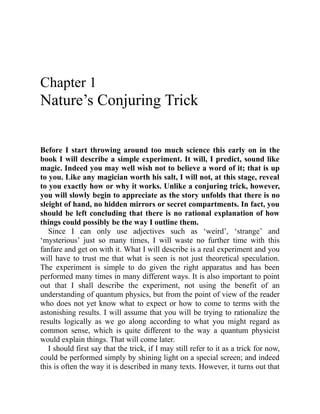
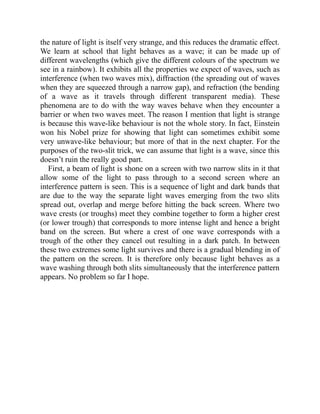
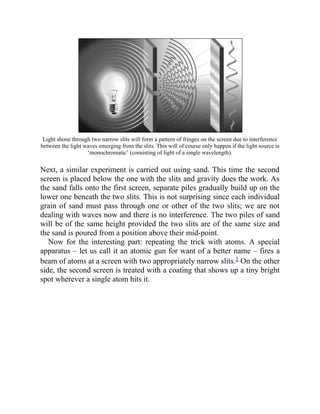
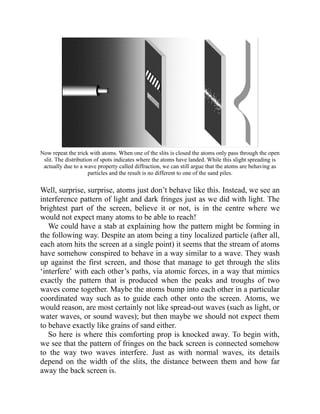
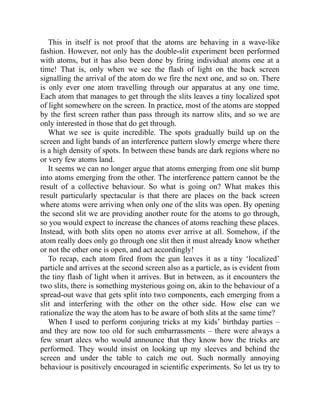
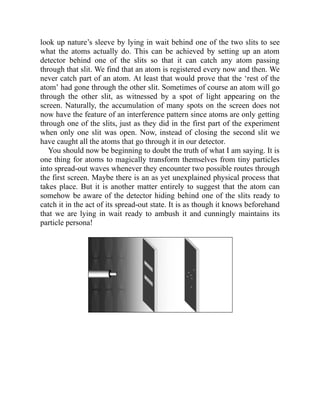
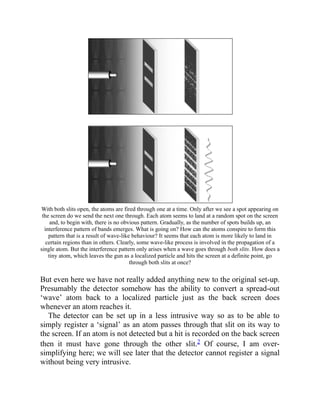
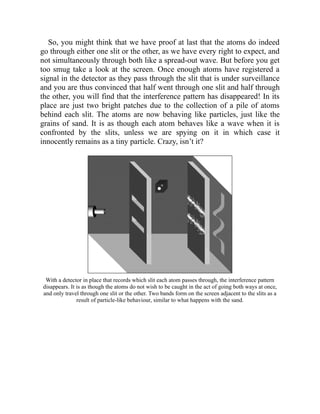
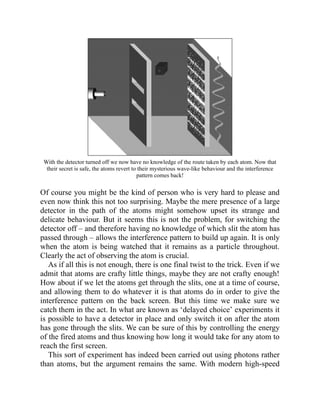
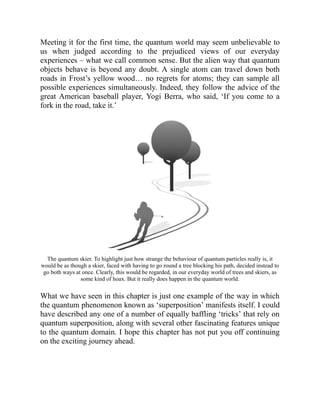
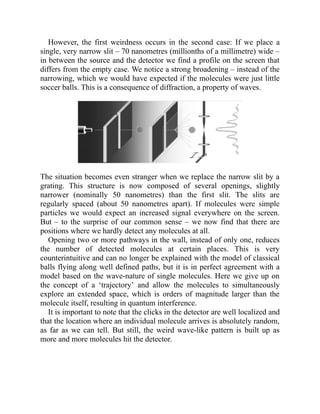
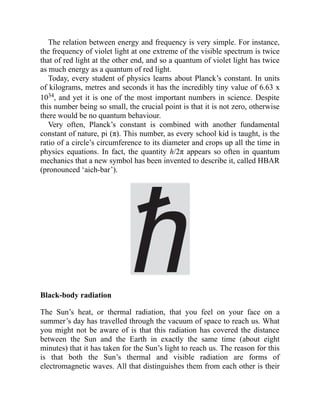
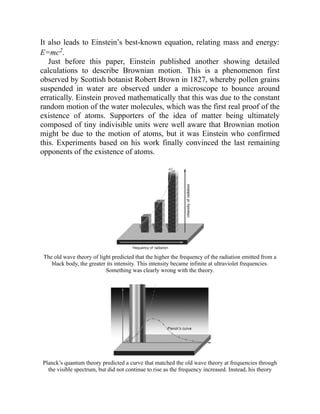
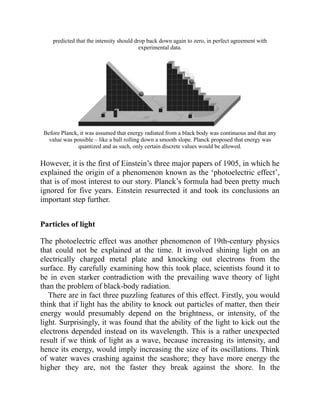
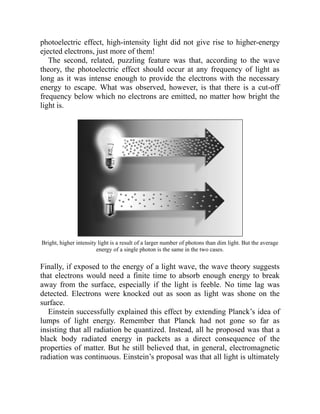
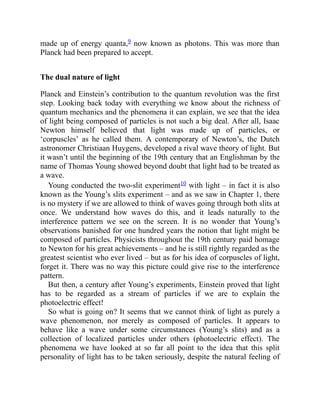
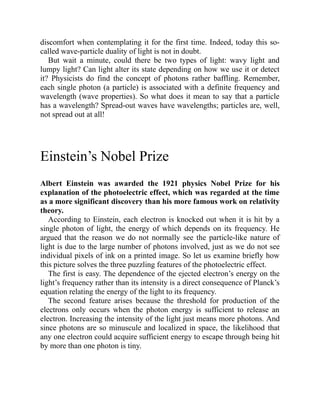
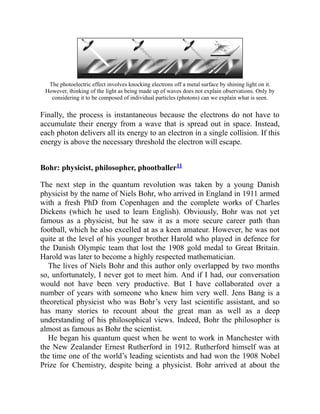
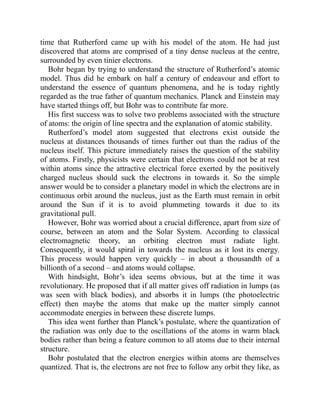
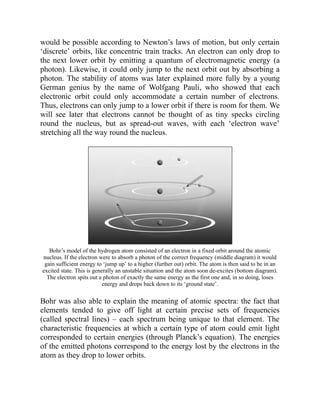
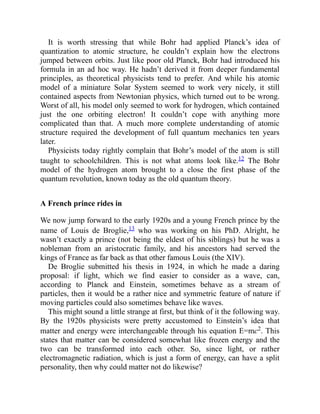
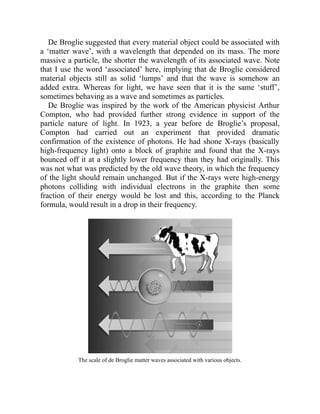
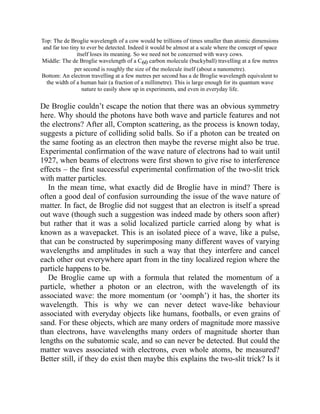

![invectives were carried. [Here Mr. B. read extracts from Mr.
Cushing's speech.] The gentleman spoke of comparing the two
letters together. But did he think of comparing the thing we
complain of with the thing he complains of? No: that would be
next to madness. The gentleman shrinks from that comparison,
and goes on to compare not the thing we complain of with the
letter of Mr. Van Buren, but the beautiful composition of Mr.
Webster, written forty days after complying with the British
minister's insulting demands, and intended to cover over the
instructions to Mr. Crittenden, after which he characterizes Mr.
Van Buren's letter as a monument of ignominy. Now Mr. B. said
he would make the same reply that a dignified farmer of
Kentucky did to a lawyer. The lawyer prosecuted the farmer for
a slander, and in the course of the trial took occasion to heap on
him all the abuse and invective of which the Billingsgate
vocabulary is capable. Yet the jury, without leaving their box,
pronounced a verdict of acquittal. The verdict of an honest and
intelligent jury, said the farmer, is a sufficient answer to all your
abuse. Just so it was with Mr. Van Buren. His letter had made a
great noise in the country; had been extensively circulated and
read, and had been assailed with the utmost virulence by the
opposite party. Yet the highest jury on earth, the American
people, had pronounced the acquittal of Mr. Van Buren by
electing him to the Chief Magistracy. The gentleman complained
that the patriotism of Mr. Webster not only had been assailed,
but that the gentleman from Pennsylvania had had the temerity
to attack that most beautiful of letters which the patriotic
Secretary wrote to Mr. Fox. Now he (Mr. B.) would admit that it
was a beautiful piece of composition, and he knew of but one
that would compare with it, and that was the proclamation of
General Hull, just before surrendering the Northwestern army to
the British."
The friends of Mr. Webster had a fashion of extolling his intellect
when his acts were in question; and on no occasion was that fashion
more largely indulged in than on the present one. His letter,](https://image.slidesharecdn.com/21361658-250523144037-5715f1c3/85/Quantum-A-Guide-For-The-Perplexed-Jim-Alkhalili-80-320.jpg)