Download as PDF, PPTX











![Method
◼ Seventy-two participants, 24 men and 48 women. Age range 18- 53years,
mean 22.4years
◼ Design 3 x 2 between subjects (left-handedness, right-handedness, no
handedness) x (previous conviction, no previous conviction) [6 conditions]
◼ Materials: The same scenario and measures either with or without a
previous conviction and sort of handedness:
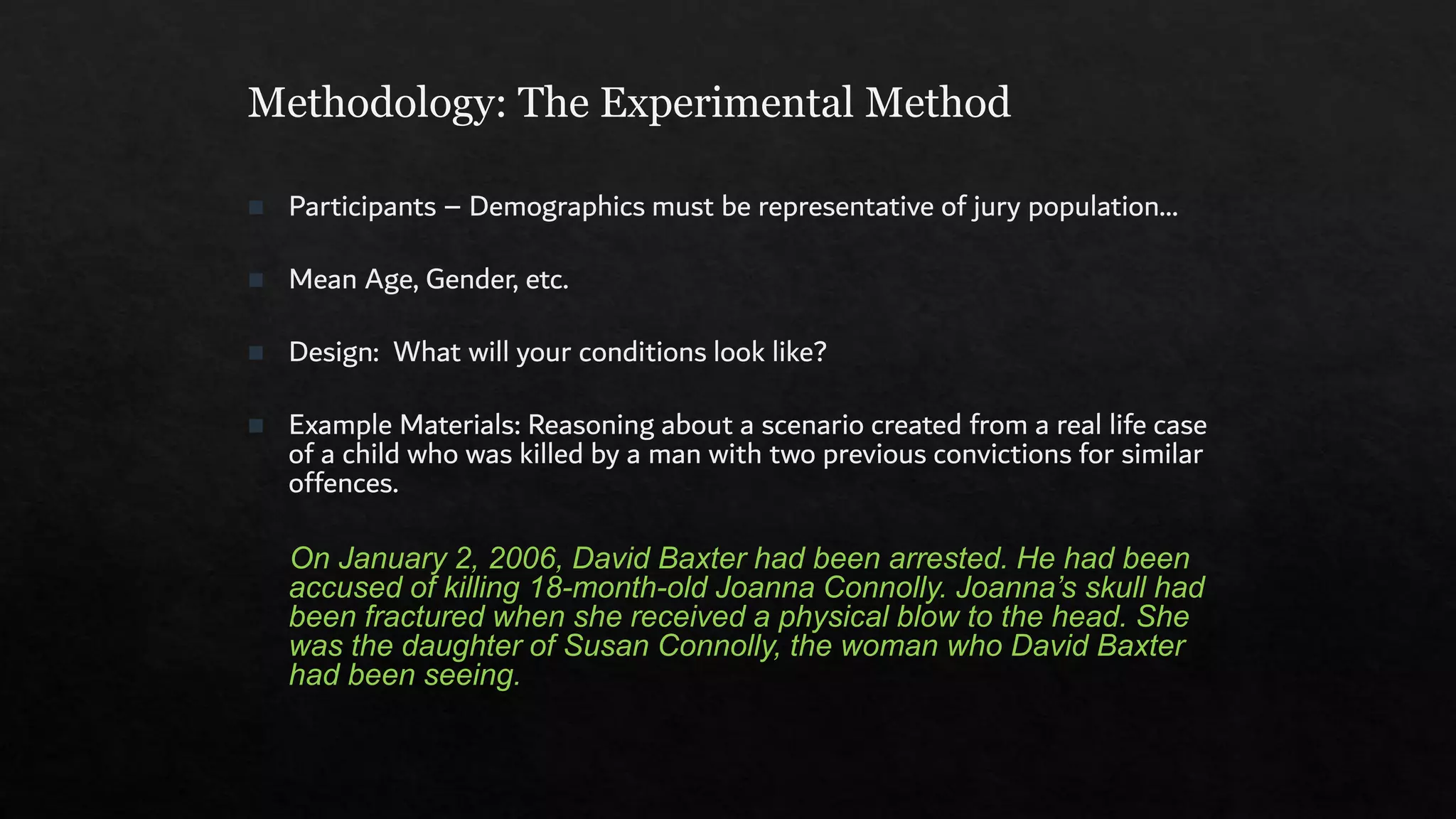
Forensic evidence showed that the blow was delivered by a left-handed
person. David Baxter is left-handed
or
Forensic evidence showed that the blow was delivered by a right-handed
person. David Baxter is right-handed](https://image.slidesharecdn.com/quantitativemethodsinsocio-legalstudiesrevised-191102084532/75/Quantitative-Methods-in-Socio-Legal-Studies-A-Methodology-Clinic-Workbook-CSLS-University-of-Oxford-20-2048.jpg)



![Percentage risk of being a victim based on British Crime Survey interviews in the 12 months
to September 2005 compared with the previous 12 months [adapted from the Home Office
Statistical Bulletin, (Kara & Upson, Jan 2006)]. See infographic below:
0
5
10
15
20
25
30
Interviews in Oct 2003 to Sept 2004 Interviews in Oct 2004 to Sept 2005
All household crime Domestic burglary All vehicle thefts All personal crime
With injury With no injury All BCS crime
‘All personal crime’ dropped significantly at the p = .05 level, two tail tests
Domestic burglary
did not drop 7%
according to the
BCS! PS. Use
multiple sources of
official statistics…](https://image.slidesharecdn.com/quantitativemethodsinsocio-legalstudiesrevised-191102084532/75/Quantitative-Methods-in-Socio-Legal-Studies-A-Methodology-Clinic-Workbook-CSLS-University-of-Oxford-35-2048.jpg)
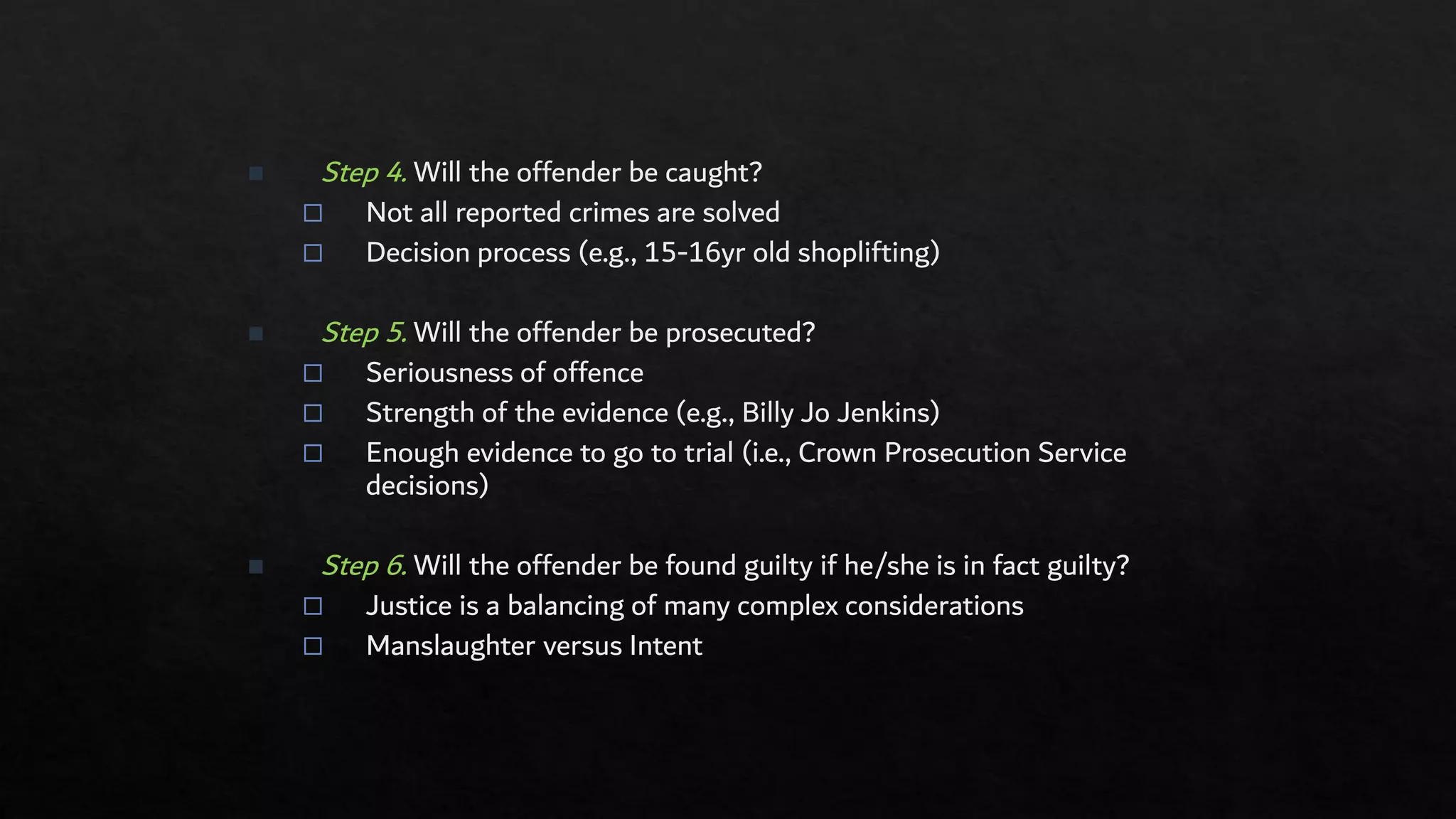


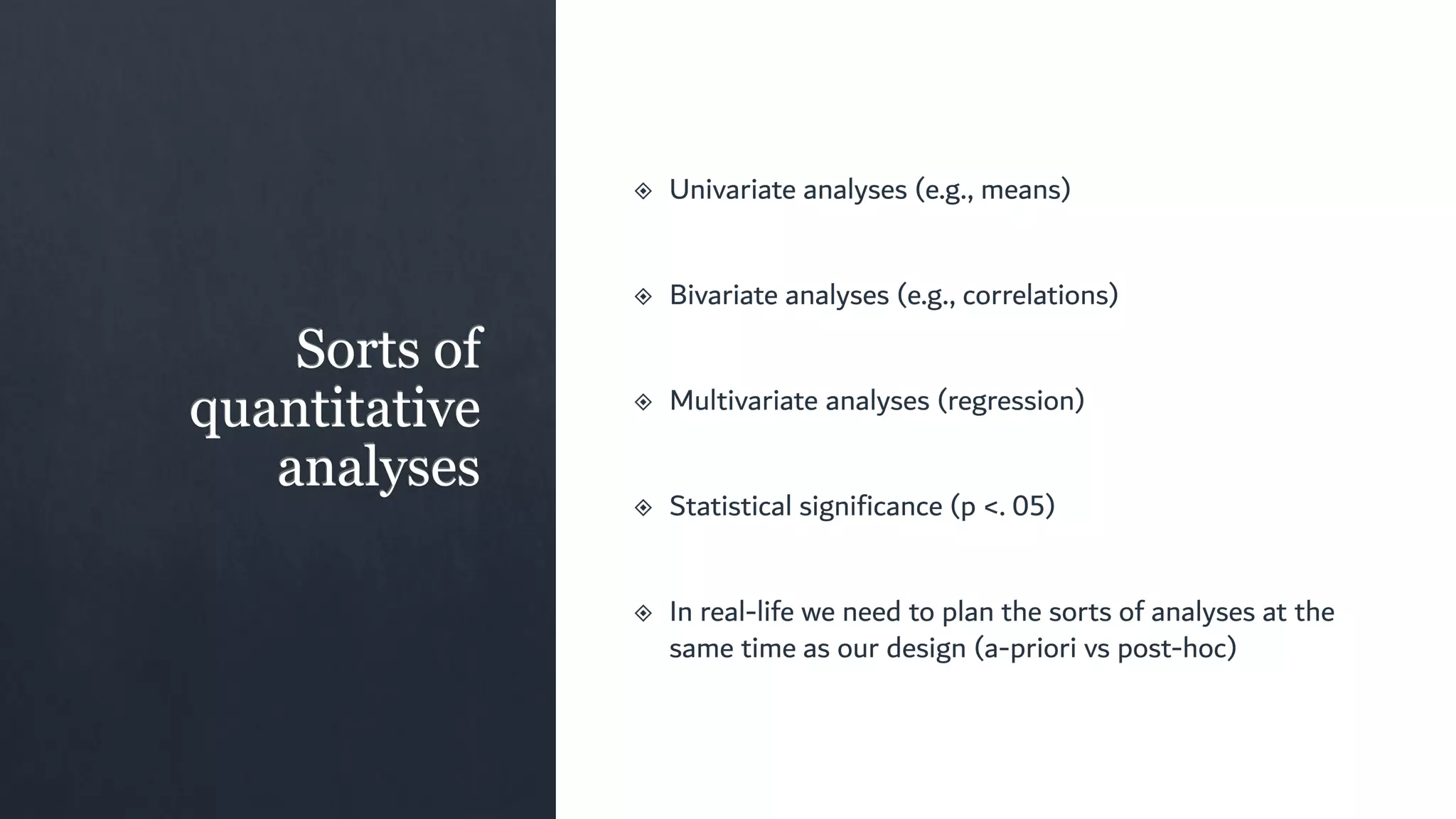
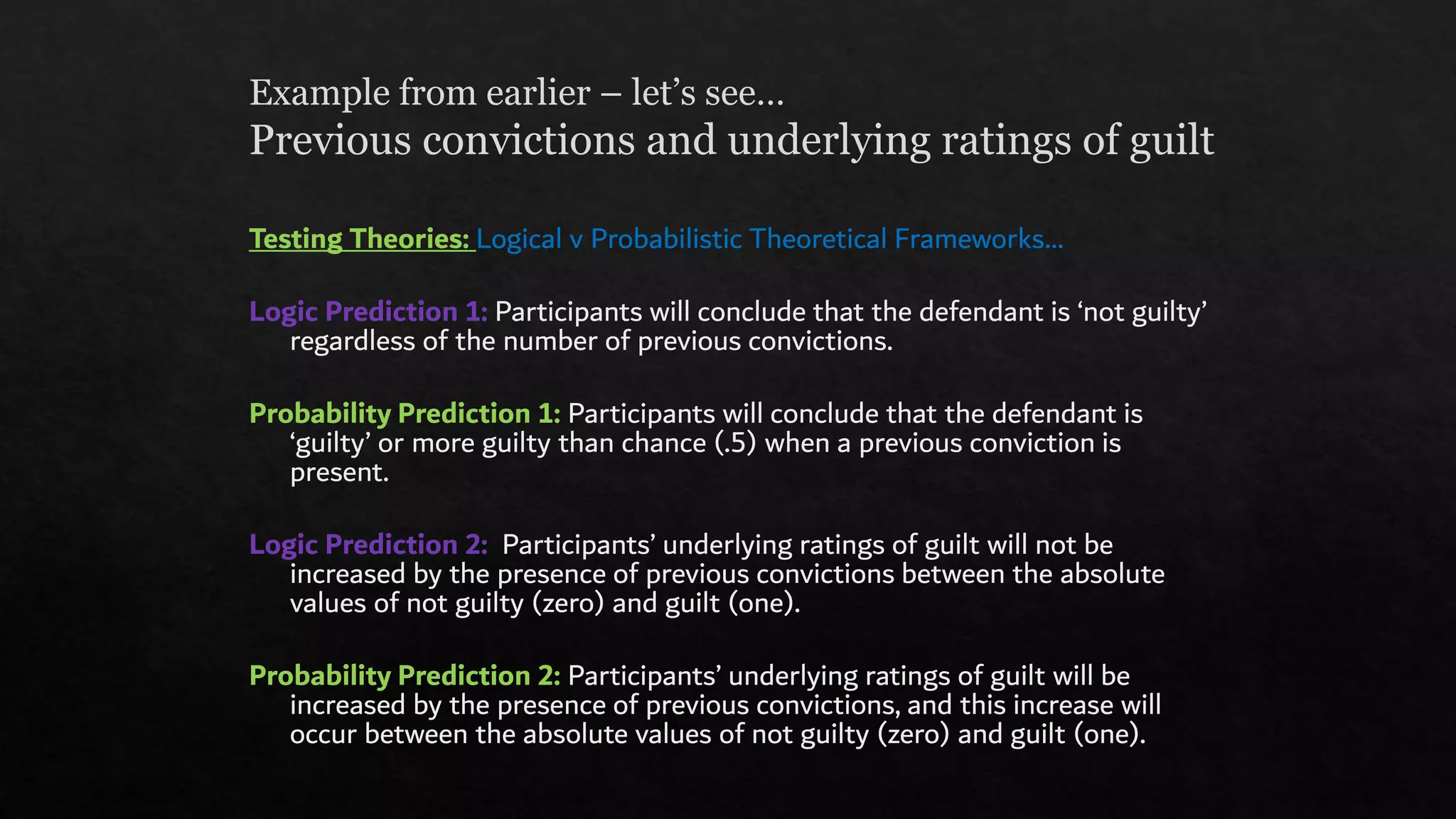
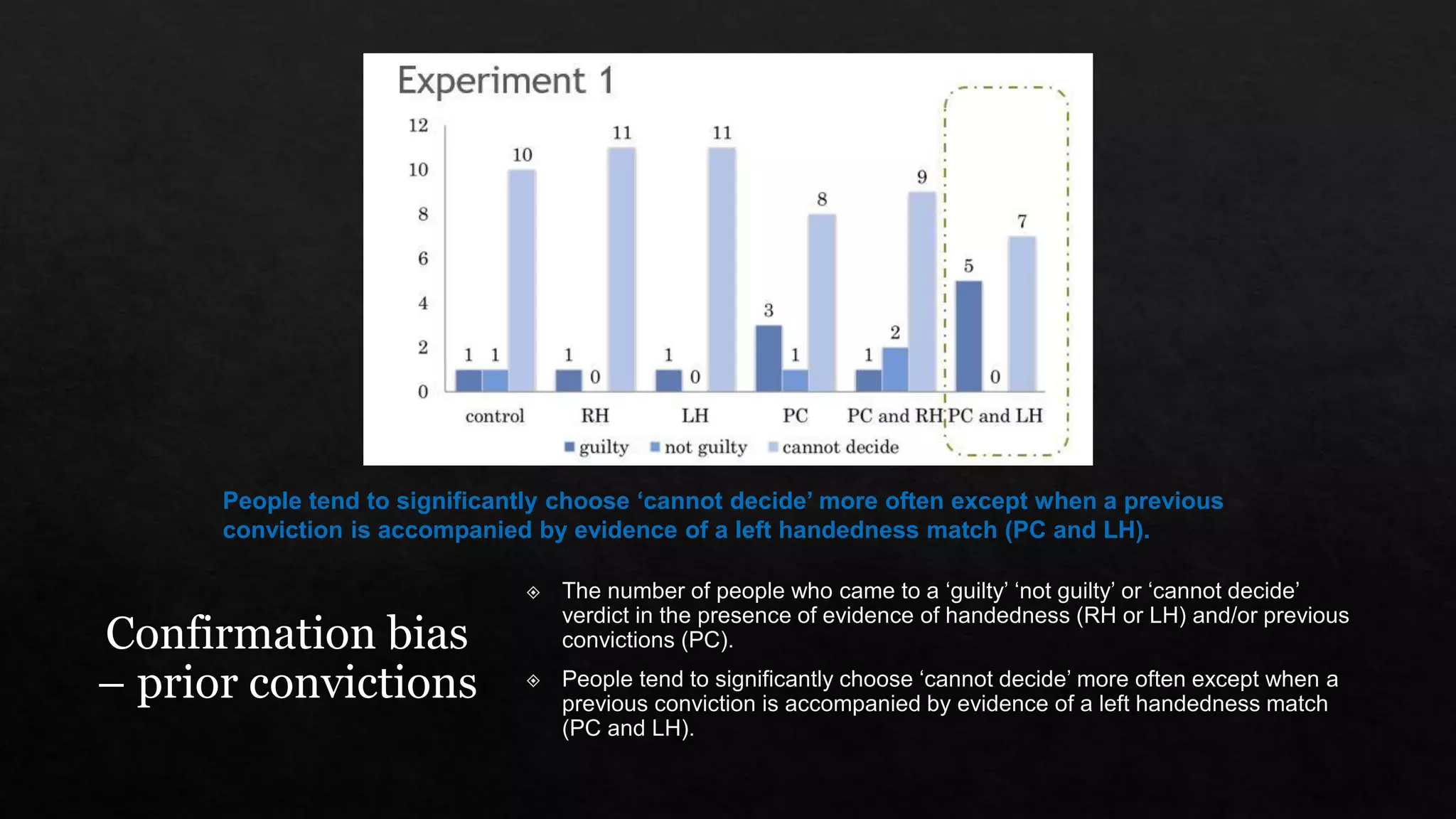
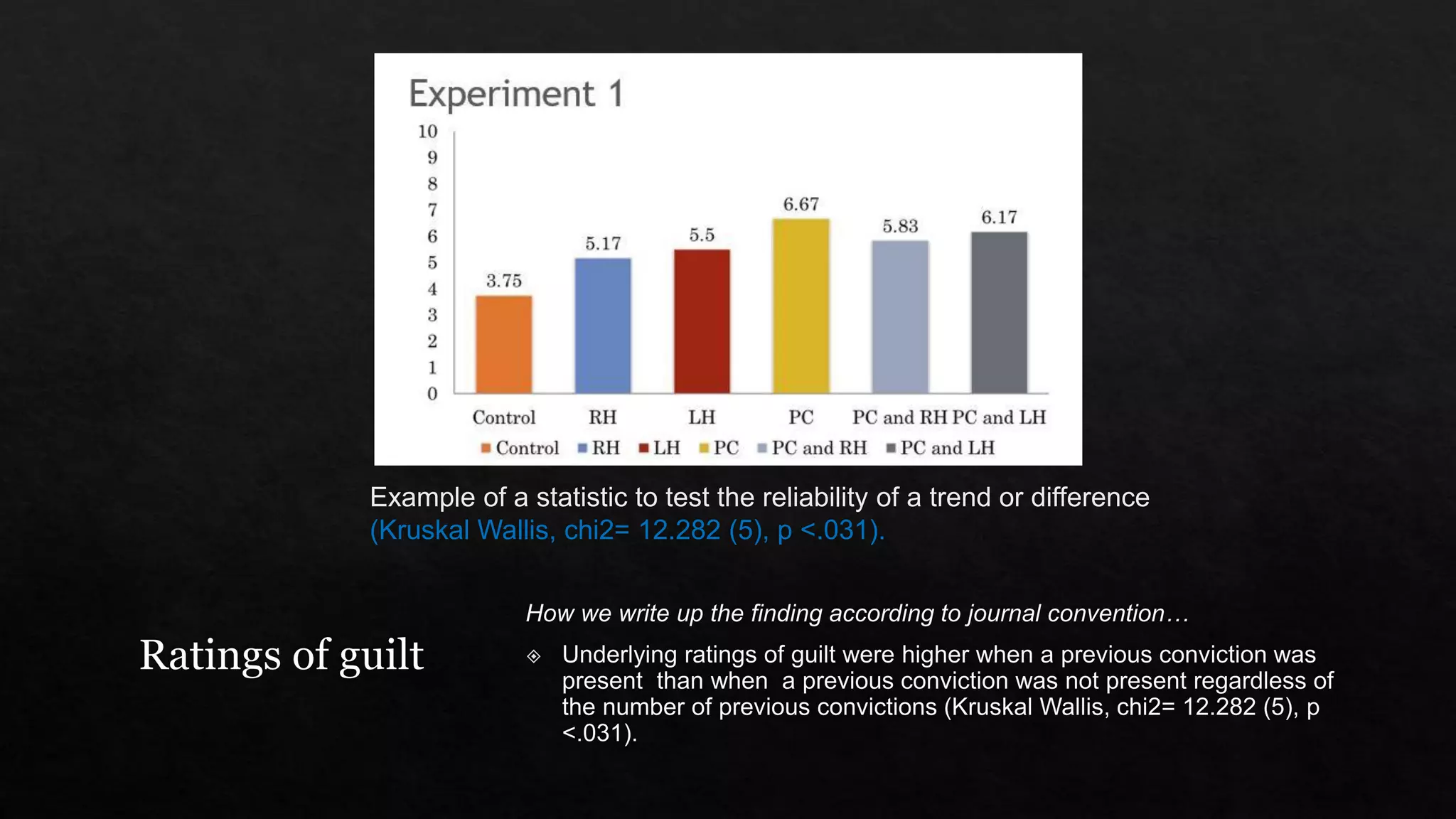
The document discusses a study that tested how knowledge of previous convictions influences judgments of guilt. It describes two predictions: 1) those with a logical framework will conclude "not guilty" regardless of convictions, while those with a probabilistic framework will conclude guilt is more likely with convictions; and 2) underlying guilt ratings will not/will be increased by convictions depending on the framework. The methodology involved a scenario of a child's death with/without mention of previous convictions. Results showed convictions biased verdicts and guilt ratings, indicating probabilistic rather than logical reasoning. The implications for law and theory are discussed.


