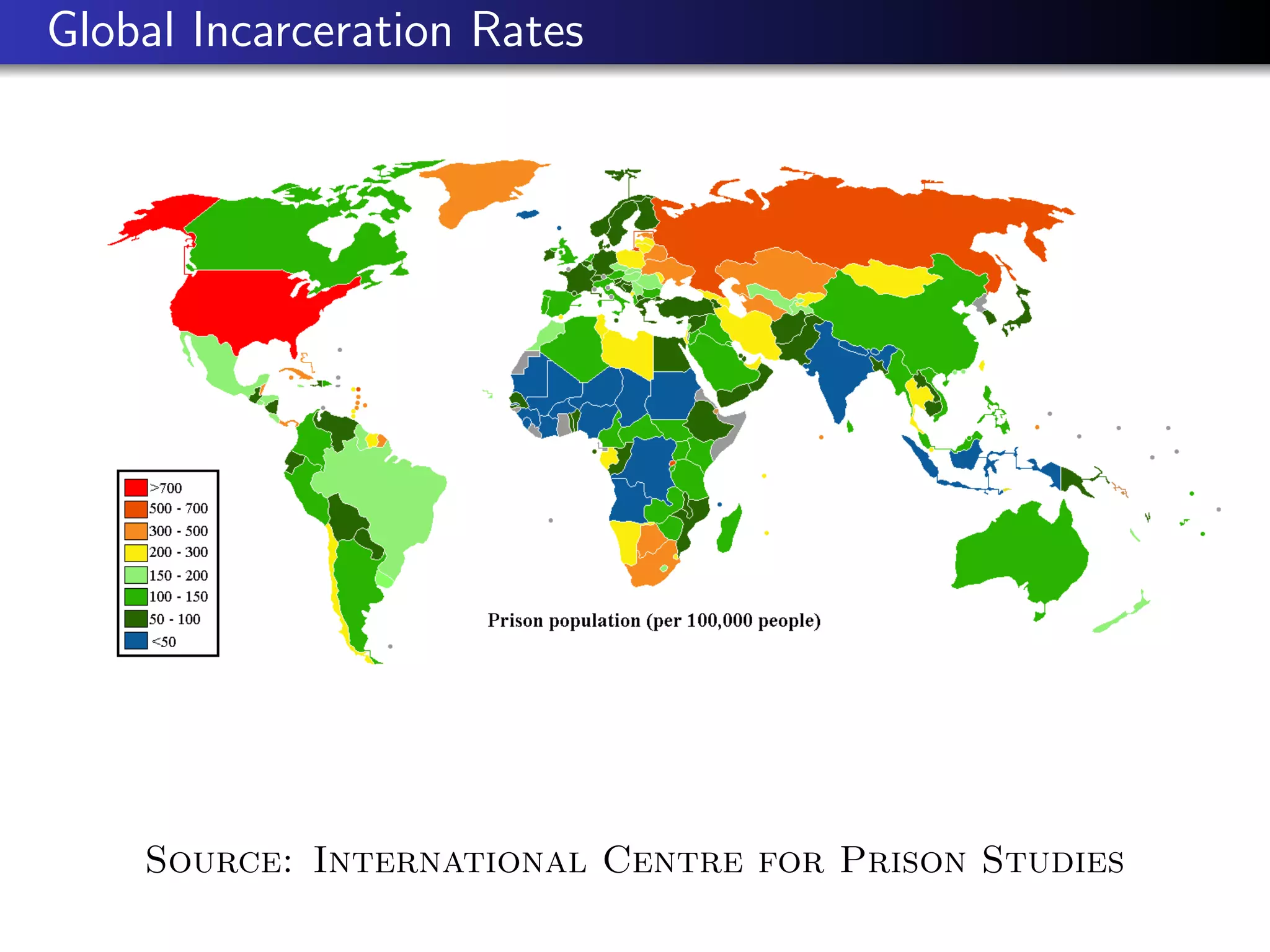
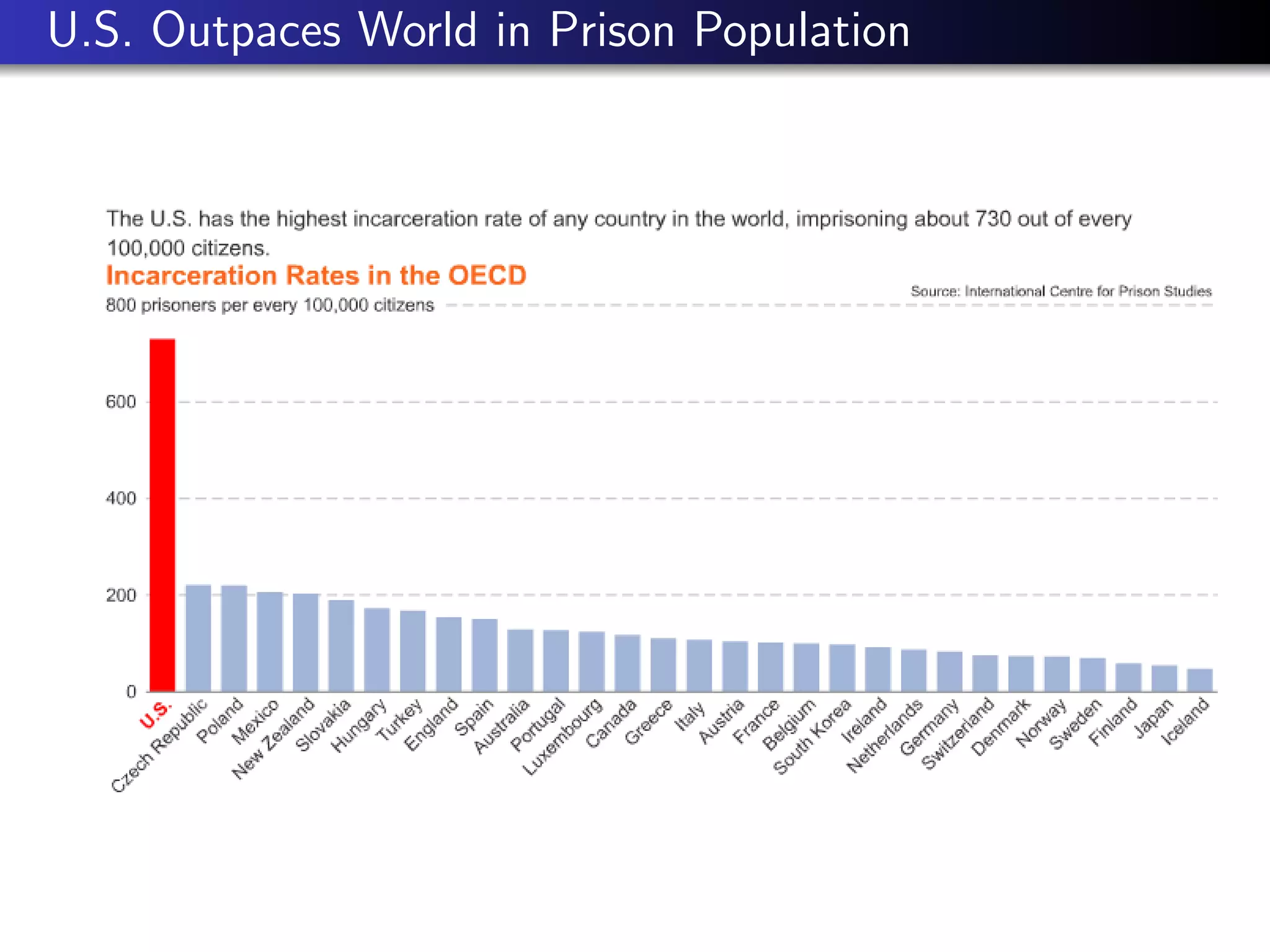
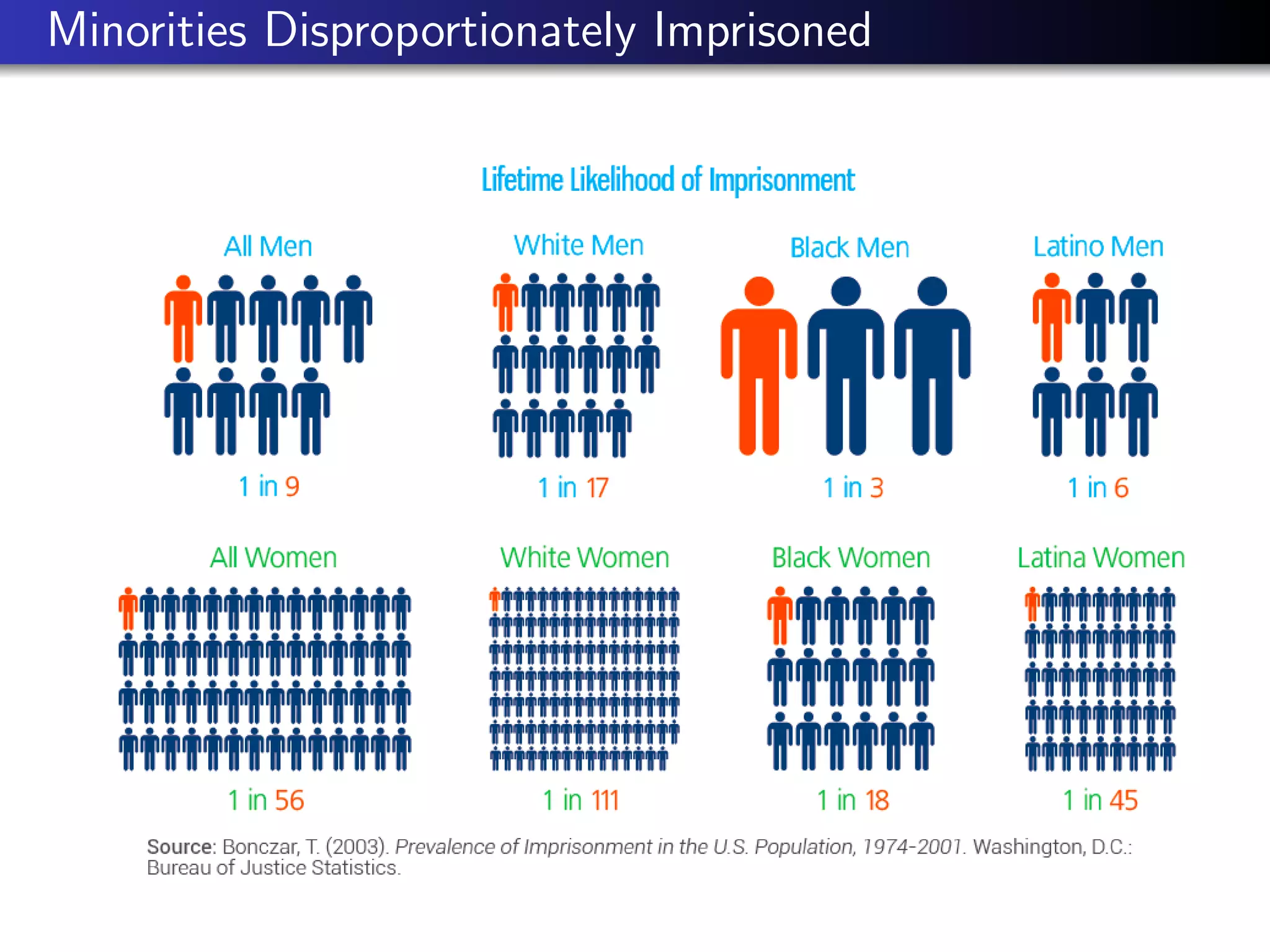
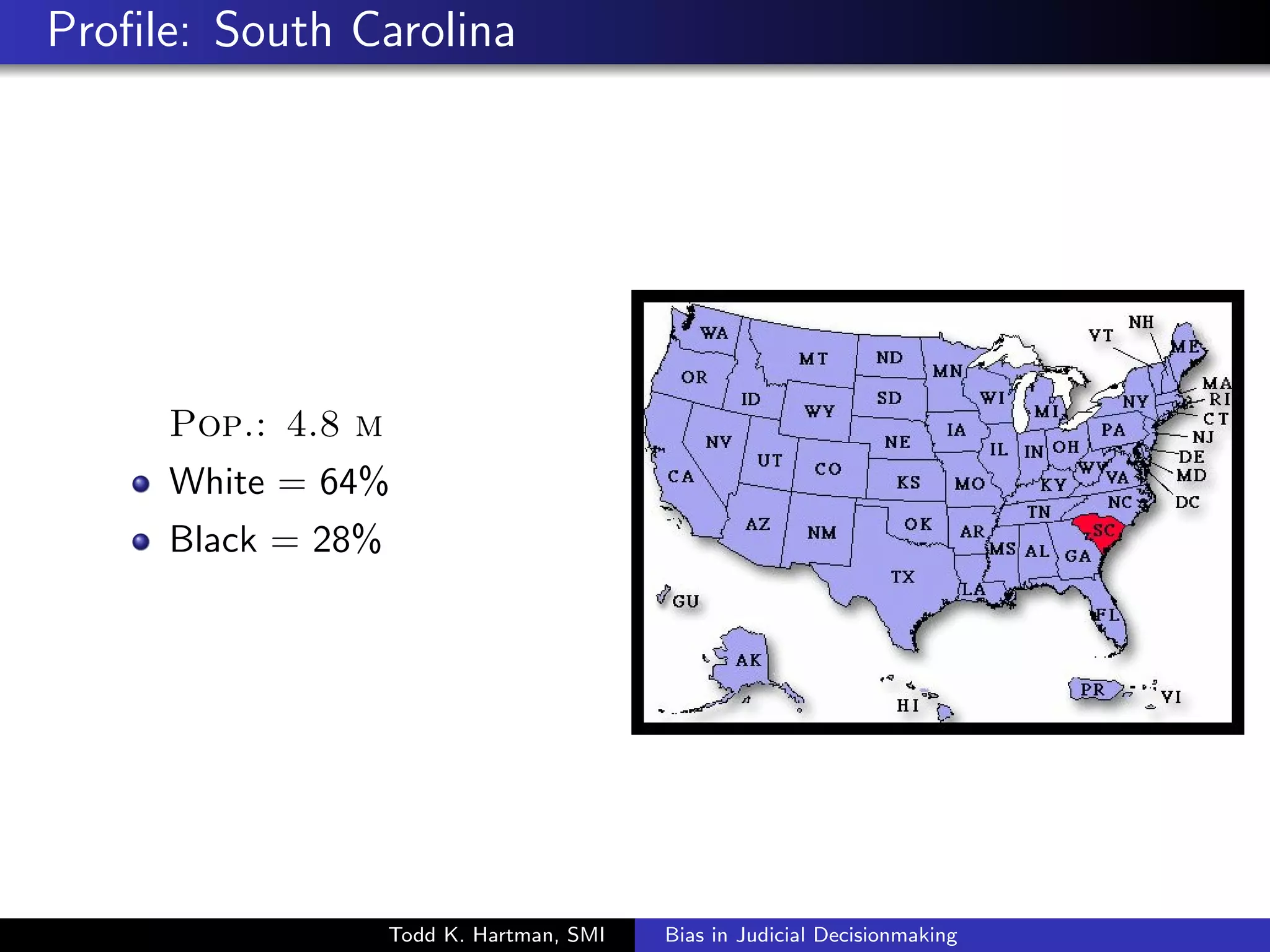
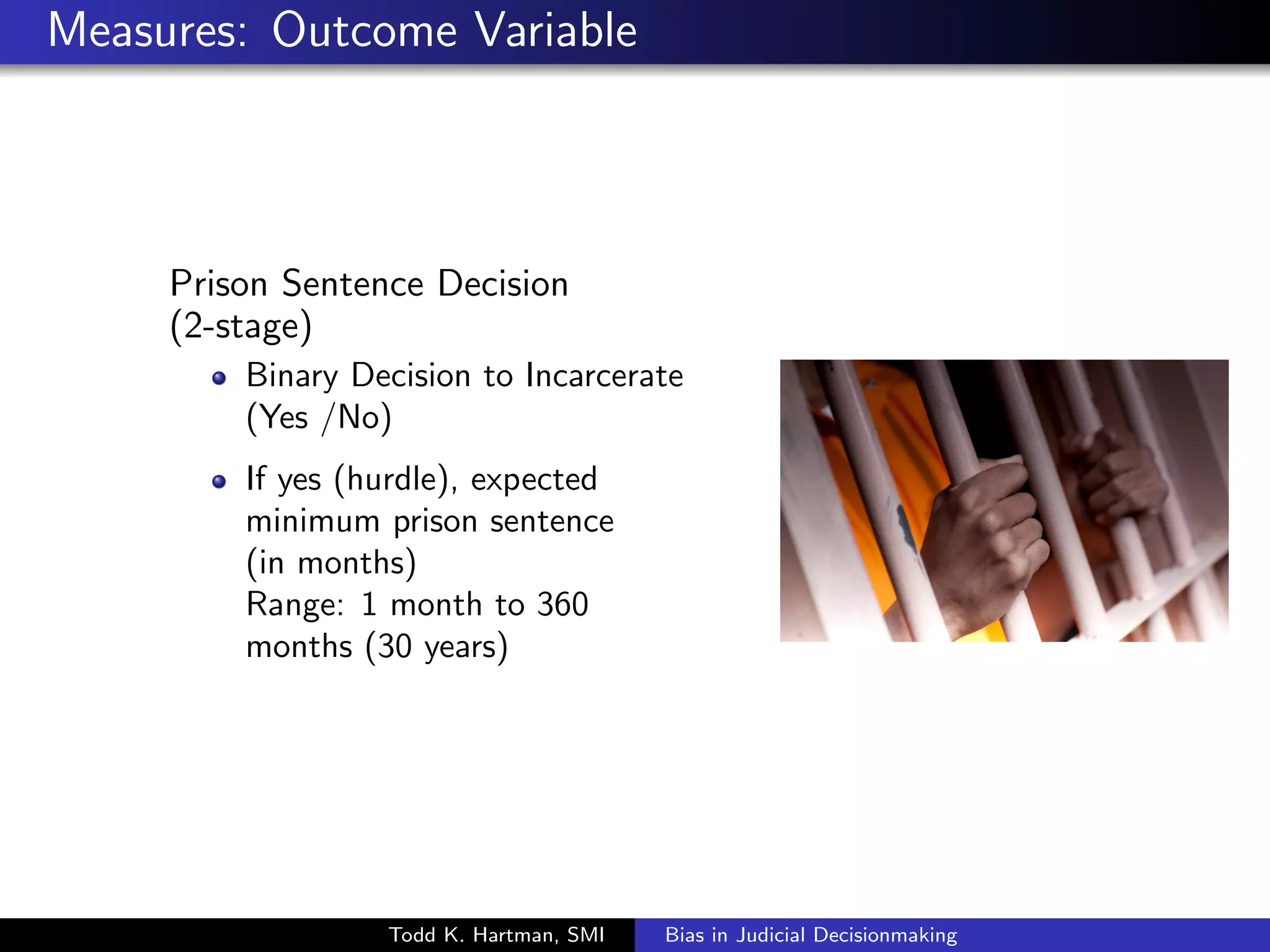
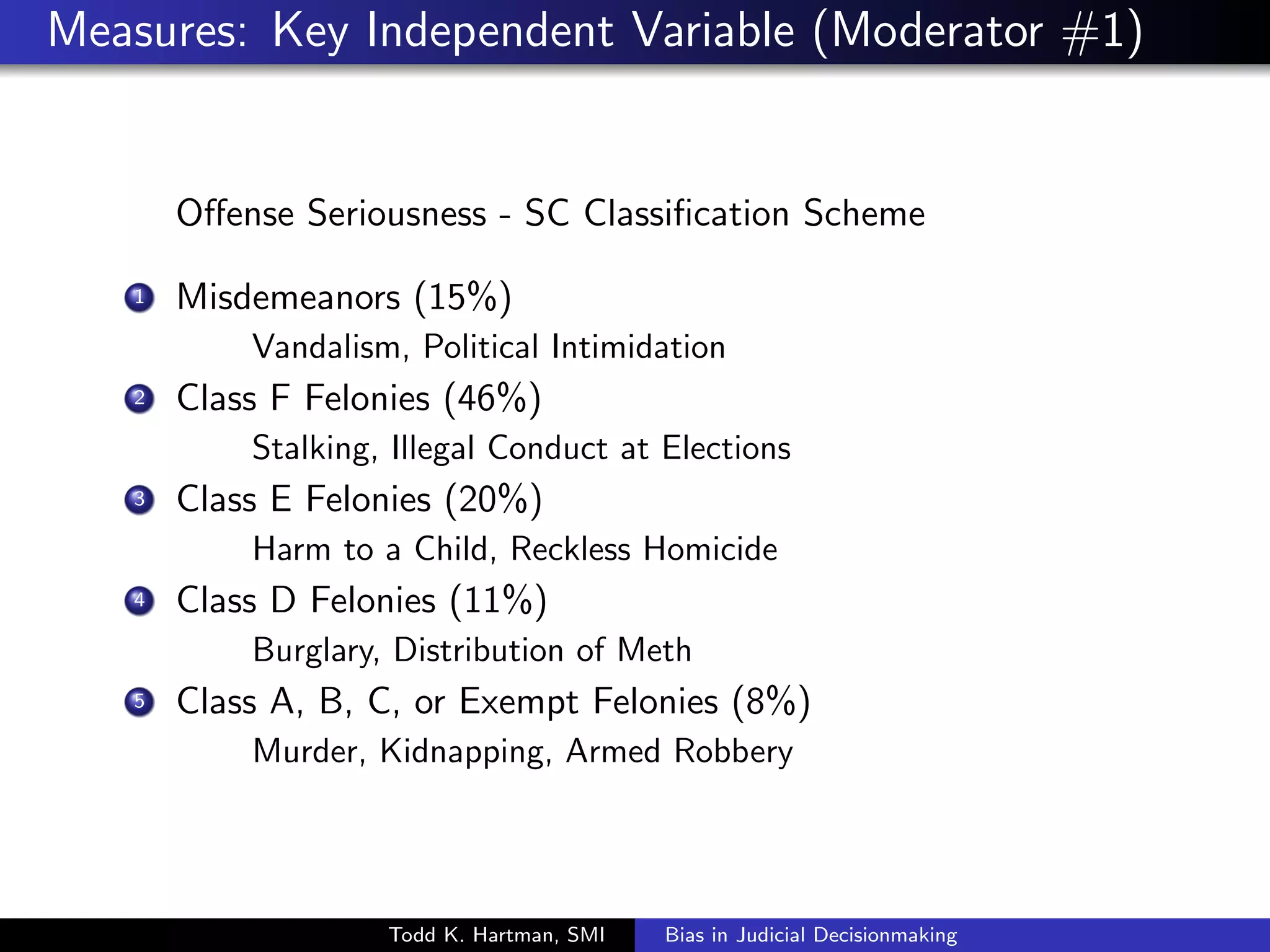
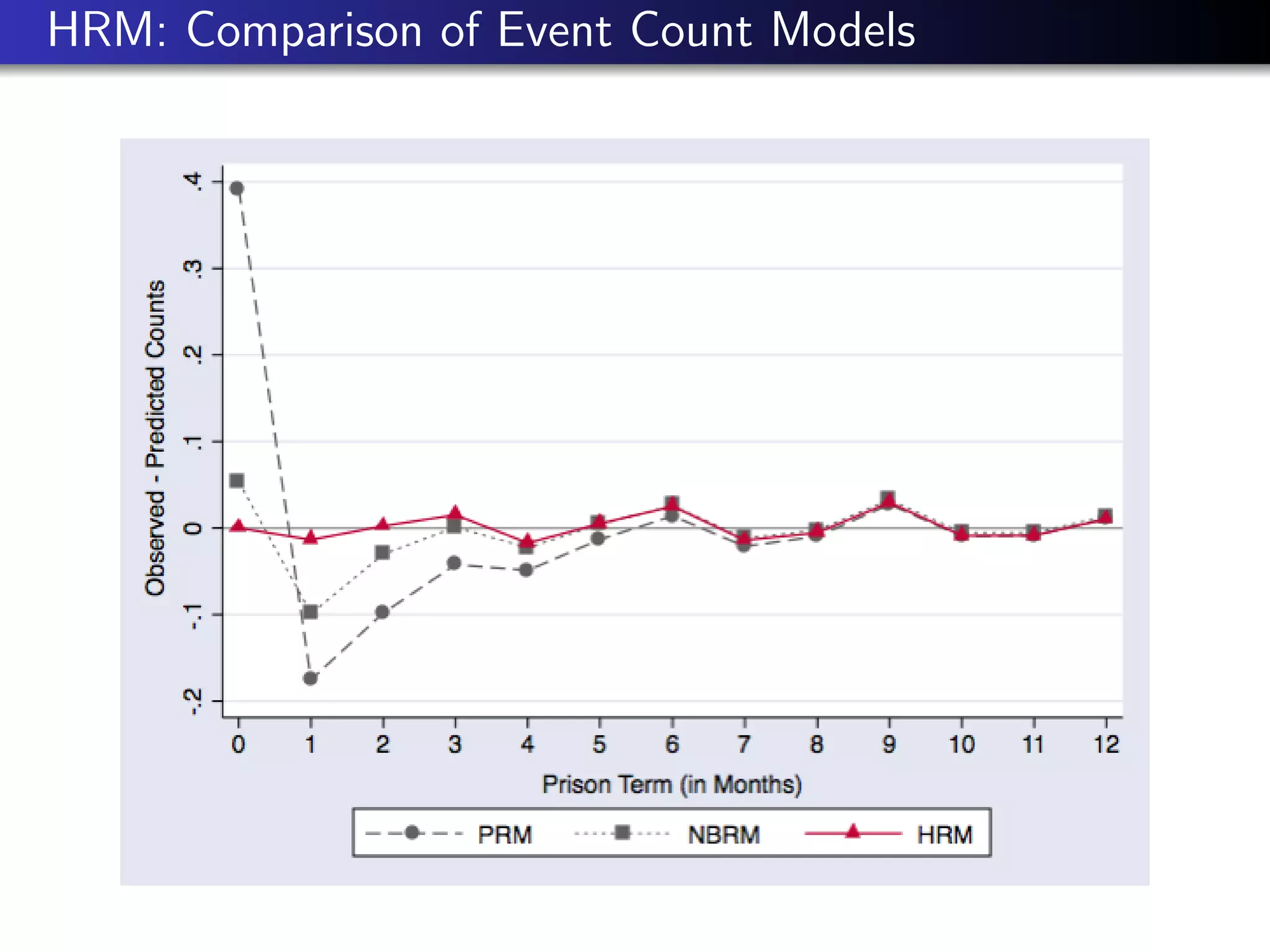
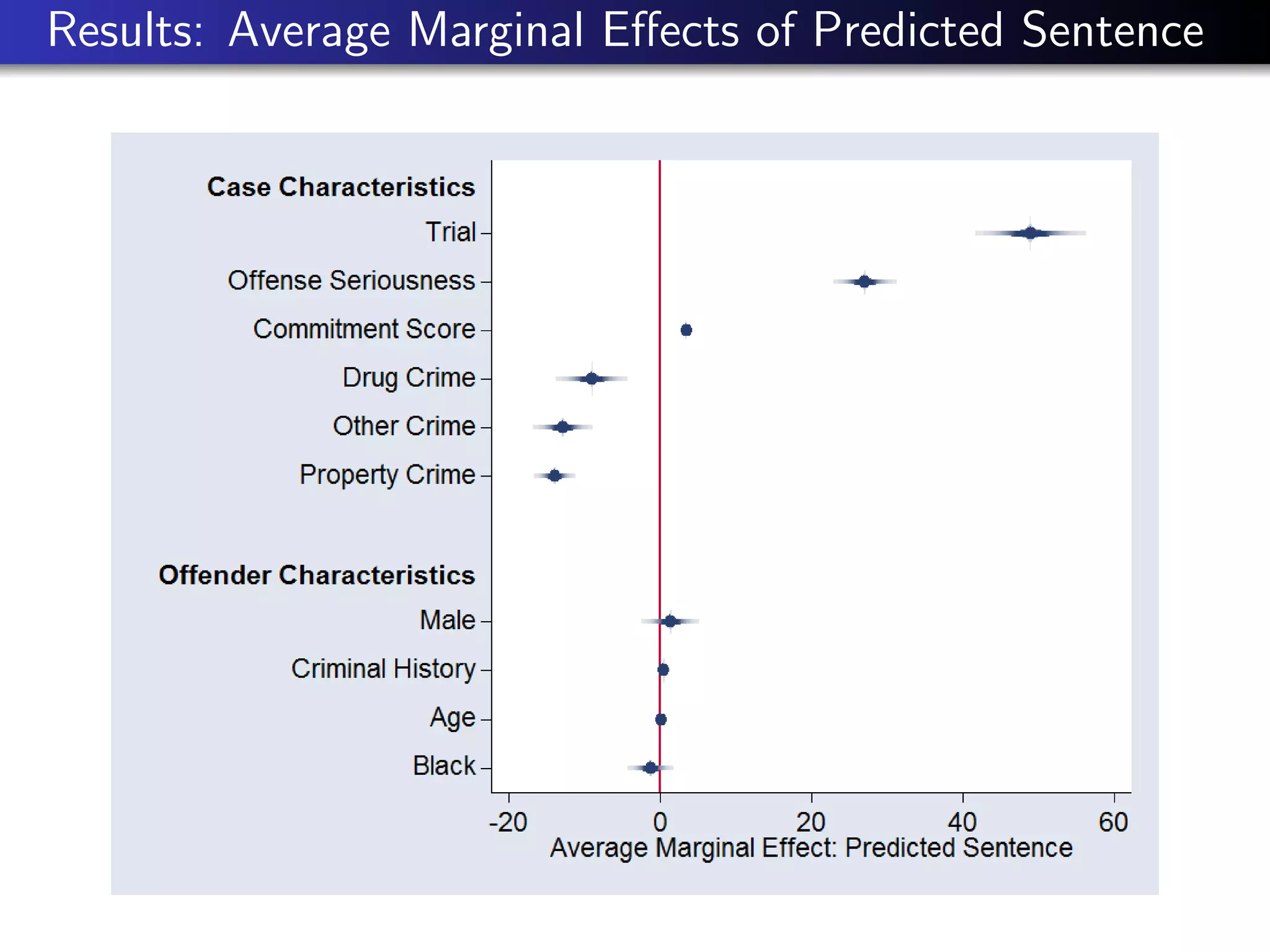
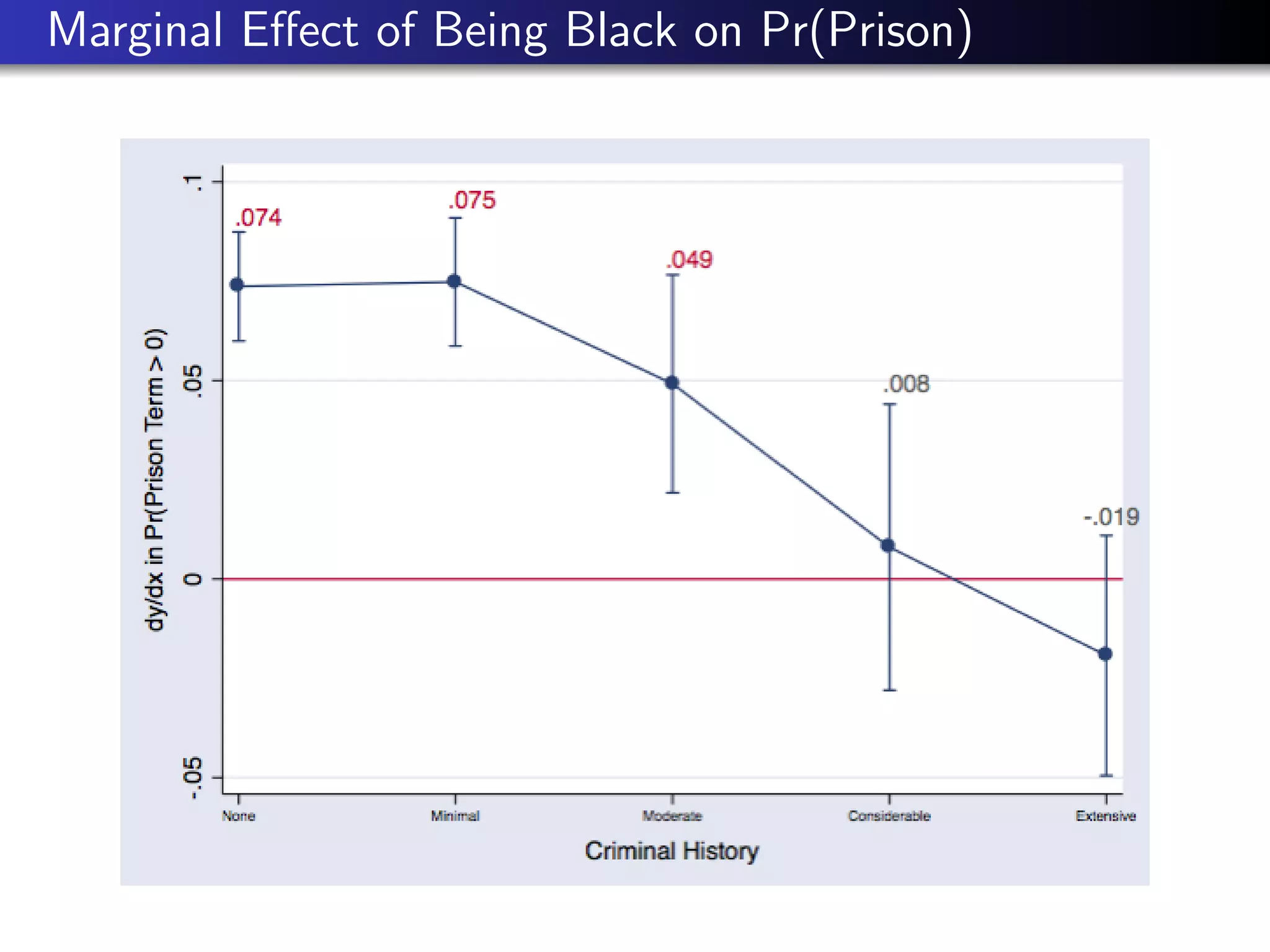
This document summarizes a study that tested the "liberation hypothesis" in criminal sentencing decisions. The hypothesis predicts that when evidence is ambiguous, extra-legal factors like race are more likely to influence judgments. The study used data on over 17,000 criminal cases in South Carolina. It found that black offenders had a higher likelihood of being incarcerated and receiving longer sentences for minor crimes compared to whites, supporting the hypothesis that bias occurs when public scrutiny is lowest.






![Theory
`Liberation Hypothesis' [Kalven Zeisel (1966)]
Todd K. Hartman, SMI Bias in Judicial Decisionmaking](https://image.slidesharecdn.com/hartman-141104145619-conversion-gate02/75/Racial-Bias-in-Criminal-Sentencing-12-2048.jpg)
![Theory
`Liberation Hypothesis' [Kalven Zeisel (1966)]
Clear evidence; favours one side
Jurors constrained; decisionmaking on relevant case facts
Todd K. Hartman, SMI Bias in Judicial Decisionmaking](https://image.slidesharecdn.com/hartman-141104145619-conversion-gate02/75/Racial-Bias-in-Criminal-Sentencing-13-2048.jpg)
![Theory
`Liberation Hypothesis' [Kalven Zeisel (1966)]
Clear evidence; favours one side
Jurors constrained; decisionmaking on relevant case facts
Ambiguous evidence; no easy favourite
Jurors 'liberated' to consider extra-legal factors
Todd K. Hartman, SMI Bias in Judicial Decisionmaking](https://image.slidesharecdn.com/hartman-141104145619-conversion-gate02/75/Racial-Bias-in-Criminal-Sentencing-14-2048.jpg)
![Hypothesis
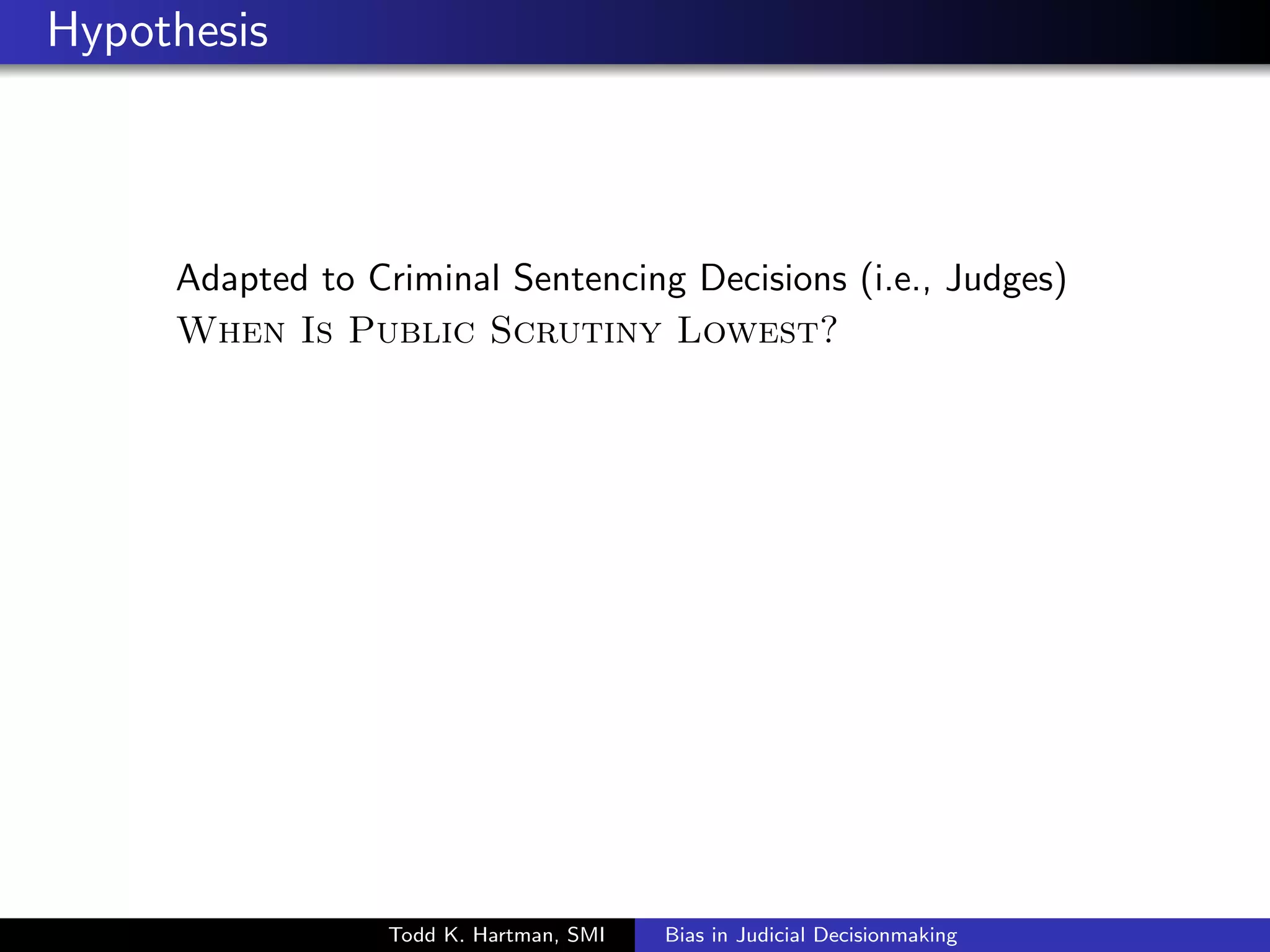
Adapted to Criminal Sentencing Decisions (i.e., Judges)
When Is Public Scrutiny Lowest?
Severity of Crime: Minor vs. Major Crimes
[Spohn Cederblom (1991); Spohn DeLone (2000)]
Todd K. Hartman, SMI Bias in Judicial Decisionmaking](https://image.slidesharecdn.com/hartman-141104145619-conversion-gate02/75/Racial-Bias-in-Criminal-Sentencing-16-2048.jpg)
![Hypothesis
Adapted to Criminal Sentencing Decisions (i.e., Judges)
When Is Public Scrutiny Lowest?
Severity of Crime: Minor vs. Major Crimes
[Spohn Cederblom (1991); Spohn DeLone (2000)]
Severity of Crime AND Oender
Todd K. Hartman, SMI Bias in Judicial Decisionmaking](https://image.slidesharecdn.com/hartman-141104145619-conversion-gate02/75/Racial-Bias-in-Criminal-Sentencing-17-2048.jpg)
![Hypothesis
Adapted to Criminal Sentencing Decisions (i.e., Judges)
When Is Public Scrutiny Lowest?
Severity of Crime: Minor vs. Major Crimes
[Spohn Cederblom (1991); Spohn DeLone (2000)]
Severity of Crime AND Oender
For minor oenses, Blacks more likely to be sentenced to
longer prison terms than whites.
Todd K. Hartman, SMI Bias in Judicial Decisionmaking](https://image.slidesharecdn.com/hartman-141104145619-conversion-gate02/75/Racial-Bias-in-Criminal-Sentencing-18-2048.jpg)
![Hypothesis
Adapted to Criminal Sentencing Decisions (i.e., Judges)
When Is Public Scrutiny Lowest?
Severity of Crime: Minor vs. Major Crimes
[Spohn Cederblom (1991); Spohn DeLone (2000)]
Severity of Crime AND Oender
For minor oenses, Blacks more likely to be sentenced to
longer prison terms than whites.
Blacks with limited criminal history more likely to be
incarcerated than whites.
Todd K. Hartman, SMI Bias in Judicial Decisionmaking](https://image.slidesharecdn.com/hartman-141104145619-conversion-gate02/75/Racial-Bias-in-Criminal-Sentencing-19-2048.jpg)











![Wrongful_Convections[1]](https://cdn.slidesharecdn.com/ss_thumbnails/87d6cb48-58af-4ef4-99fd-aaeeebcc1dd9-150925133711-lva1-app6891-thumbnail.jpg?width=640&height=640&fit=bounds)


