POLLFISH PRESENTS
QUALITATIVE
VS
QUANTITATIVE
SURVEY QUESTIONS
Table of Contents
Topics to be discussed
Definitions
Benefits
Examples
When To Use Each
Quantitative
Research
Collecting Information that can be
expressed numerically.
If your questions have a definitive set of answer choices,
you are performing quantitative research. This research
type allows you to have an exact number of responses for
each answer choice, giving you definitive groupings for
each type of respondent.
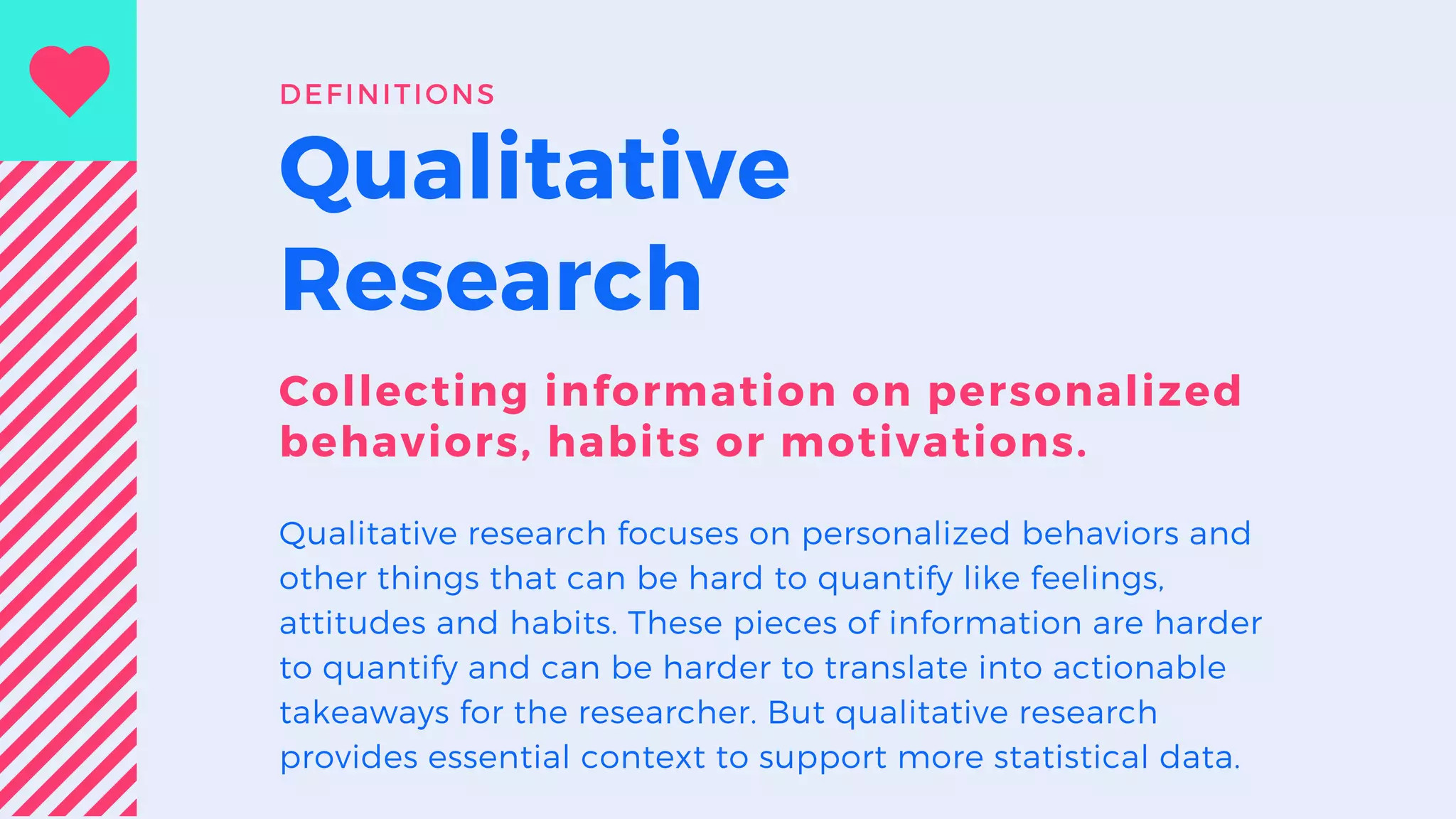
DEFINITIONS
Qualitative
Research
Collecting information on personalized
behaviors, habits or motivations.
Qualitative research focuses on personalized behaviors and
other things that can be hard to quantify like feelings,
attitudes and habits. These pieces of information are harder
to quantify and can be harder to translate into actionable
takeaways for the researcher. But qualitative research
provides essential context to support more statistical data.
DEFINITIONS
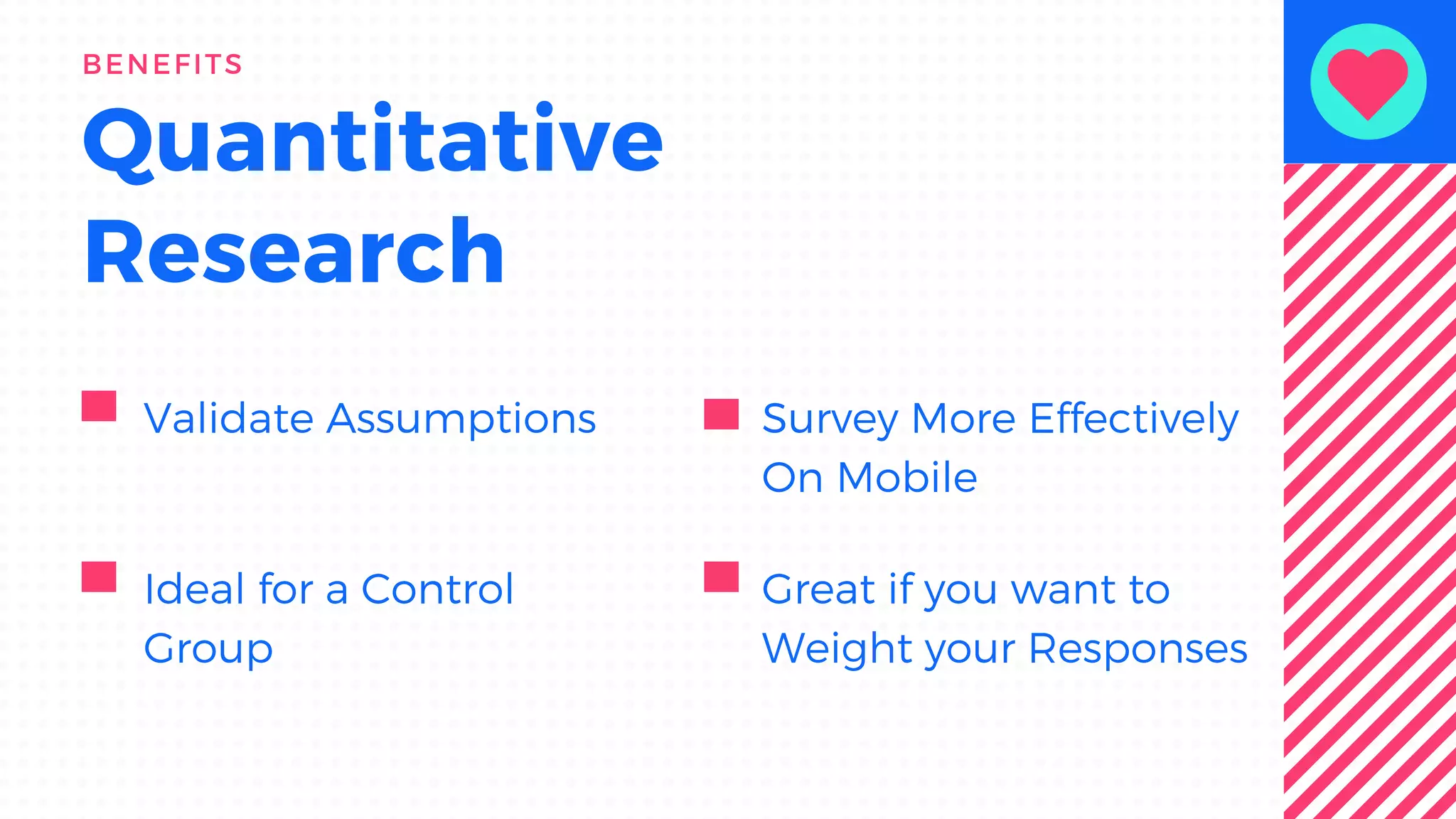
Quantitative
Research
BENEFITS
Validate Assumptions Survey More Effectively
On Mobile
Ideal for a Control
Group
Great if you want to
Weight your Responses
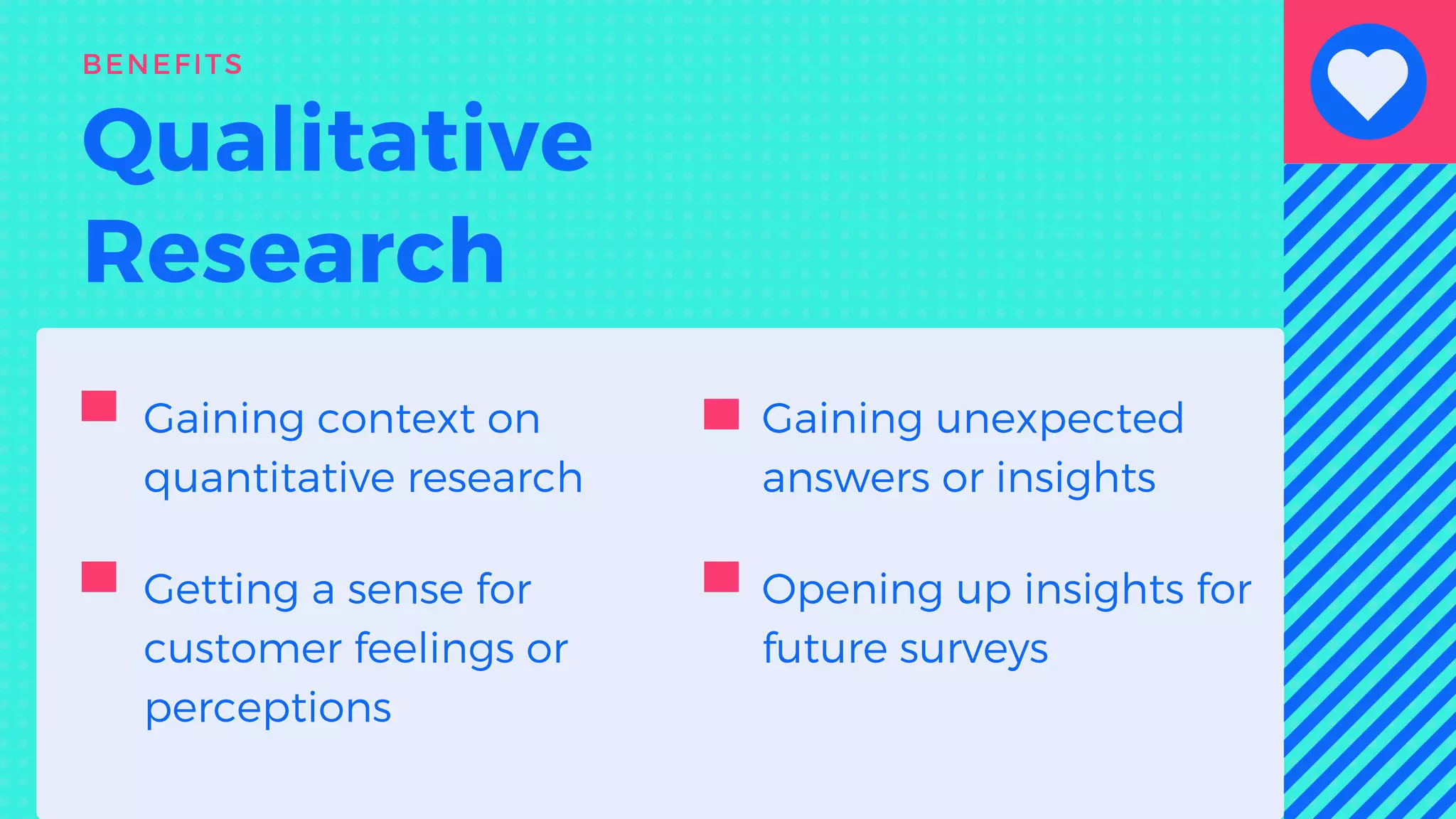
Qualitative
Research
BENEFITS
Gaining context on
quantitative research
Gaining unexpected
answers or insights
Getting a sense for
customer feelings or
perceptions
Opening up insights for
future surveys
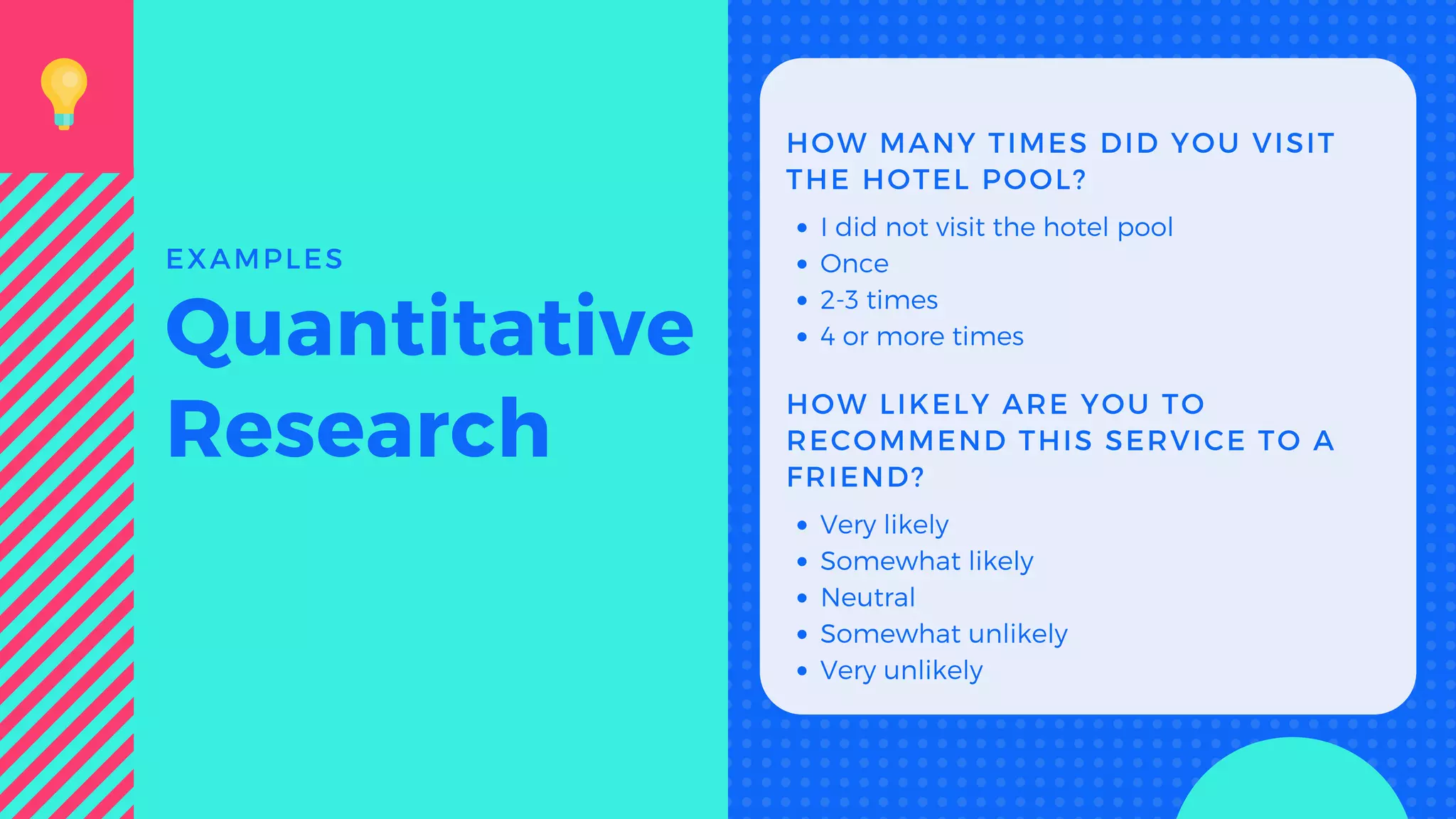
HOW MANY TIMES DID YOU VISIT
THE HOTEL POOL?
I did not visit the hotel pool
Once
2-3 times
4 or more times
HOW LIKELY ARE YOU TO
RECOMMEND THIS SERVICE TO A
FRIEND?
Very likely
Somewhat likely
Neutral
Somewhat unlikely
Very unlikely
Quantitative
Research
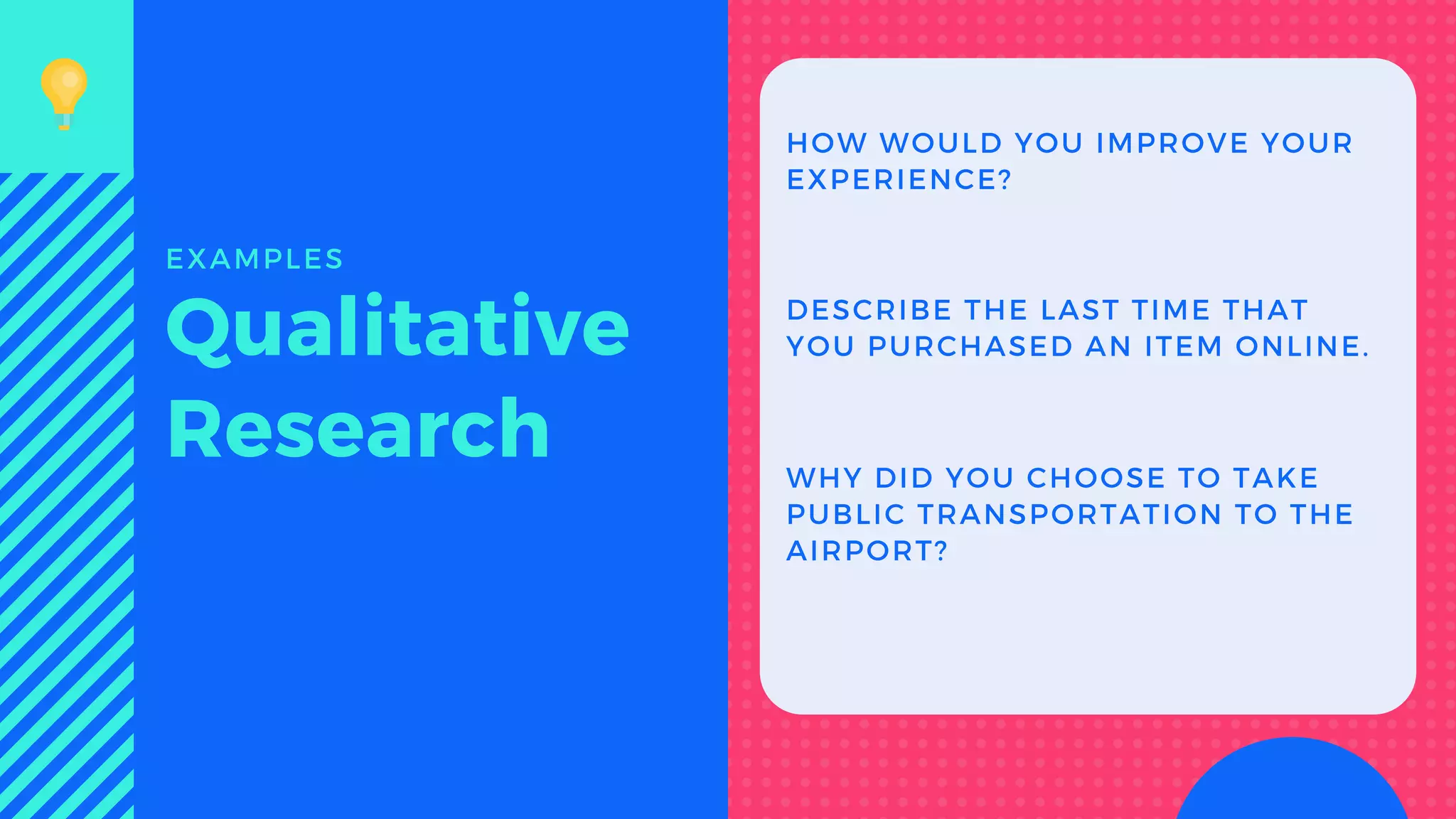
EXAMPLES
HOW WOULD YOU IMPROVE YOUR
EXPERIENCE?
DESCRIBE THE LAST TIME THAT
YOU PURCHASED AN ITEM ONLINE.Qualitative
Research
EXAMPLES
WHY DID YOU CHOOSE TO TAKE
PUBLIC TRANSPORTATION TO THE
AIRPORT?
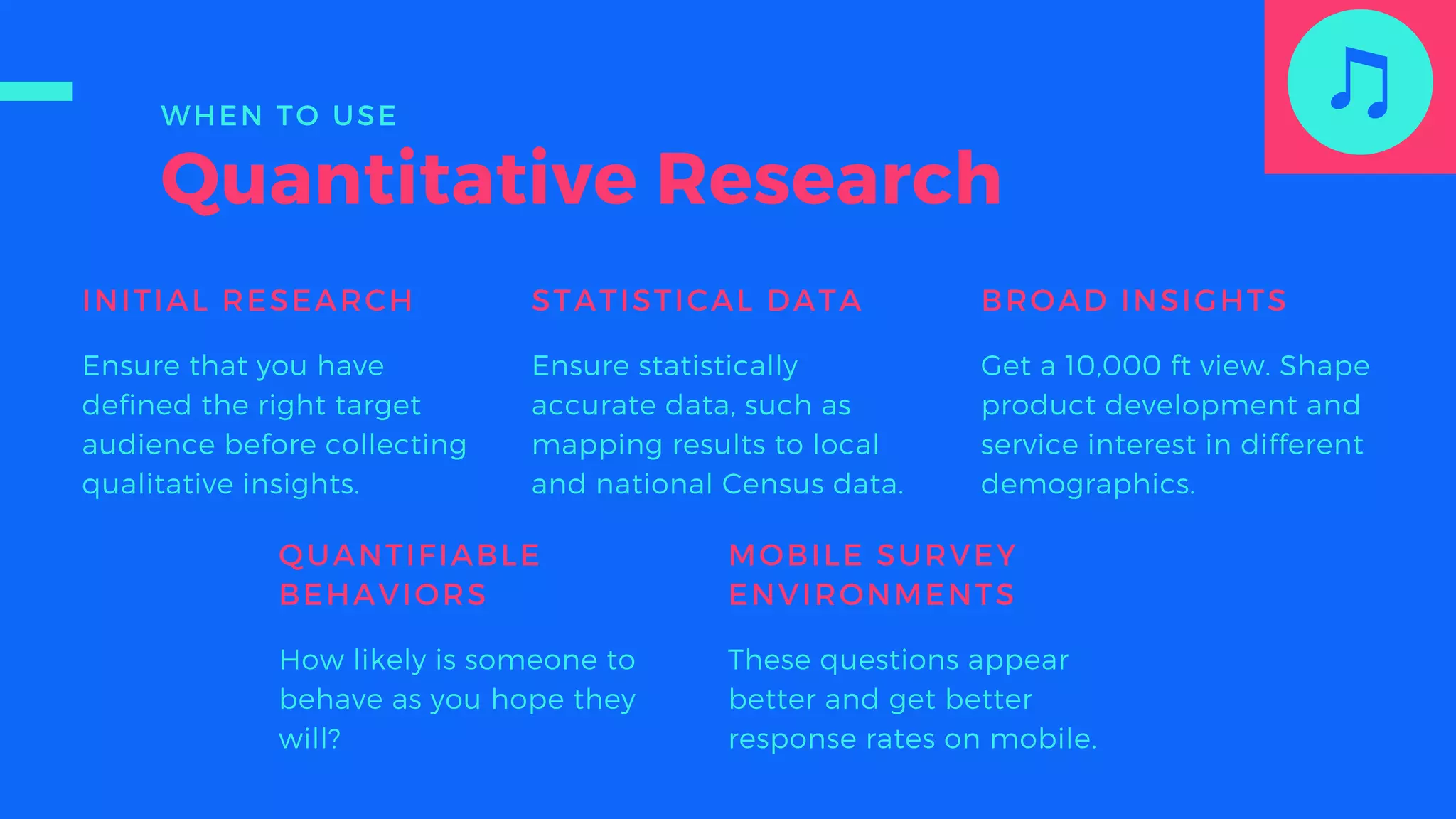
Quantitative Research
INITIAL RESEARCH
Ensure that you have
defined the right target
audience before collecting
qualitative insights.
STATISTICAL DATA
Ensure statistically
accurate data, such as
mapping results to local
and national Census data.
BROAD INSIGHTS
Get a 10,000 ft view. Shape
product development and
service interest in different
demographics.
QUANTIFIABLE
BEHAVIORS
How likely is someone to
behave as you hope they
will?
MOBILE SURVEY
ENVIRONMENTS
These questions appear
better and get better
response rates on mobile.
WHEN TO USE
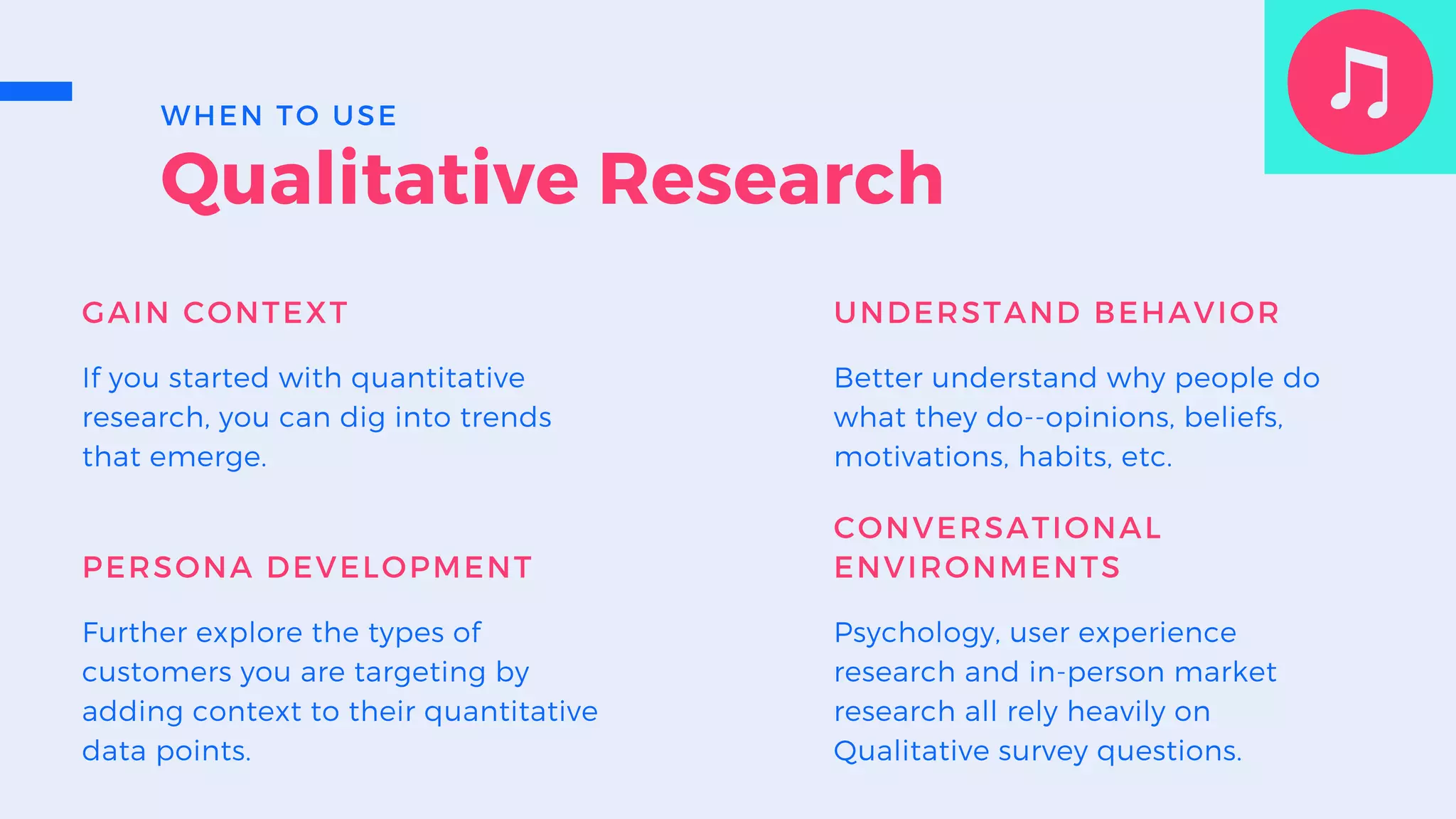
Qualitative Research
GAIN CONTEXT
If you started with quantitative
research, you can dig into trends
that emerge.
UNDERSTAND BEHAVIOR
Better understand why people do
what they do--opinions, beliefs,
motivations, habits, etc.
PERSONA DEVELOPMENT
Further explore the types of
customers you are targeting by
adding context to their quantitative
data points.
CONVERSATIONAL
ENVIRONMENTS
Psychology, user experience
research and in-person market
research all rely heavily on
Qualitative survey questions.
WHEN TO USE
SOCIAL PAGES
TWITTER INSTAGRAM FACEBOOK
FOR MORE INFORMATION
VISIT RESOURCES.POLLFISH.COM

Qualitative vs quantitative survey questions

  • 1.
  • 2.
    Table of Contents Topicsto be discussed Definitions Benefits Examples When To Use Each
  • 3.
    Quantitative Research Collecting Information thatcan be expressed numerically. If your questions have a definitive set of answer choices, you are performing quantitative research. This research type allows you to have an exact number of responses for each answer choice, giving you definitive groupings for each type of respondent. DEFINITIONS
  • 4.
    Qualitative Research Collecting information onpersonalized behaviors, habits or motivations. Qualitative research focuses on personalized behaviors and other things that can be hard to quantify like feelings, attitudes and habits. These pieces of information are harder to quantify and can be harder to translate into actionable takeaways for the researcher. But qualitative research provides essential context to support more statistical data. DEFINITIONS
  • 5.
    Quantitative Research BENEFITS Validate Assumptions Survey MoreEffectively On Mobile Ideal for a Control Group Great if you want to Weight your Responses
  • 6.
    Qualitative Research BENEFITS Gaining context on quantitativeresearch Gaining unexpected answers or insights Getting a sense for customer feelings or perceptions Opening up insights for future surveys
  • 7.
    HOW MANY TIMESDID YOU VISIT THE HOTEL POOL? I did not visit the hotel pool Once 2-3 times 4 or more times HOW LIKELY ARE YOU TO RECOMMEND THIS SERVICE TO A FRIEND? Very likely Somewhat likely Neutral Somewhat unlikely Very unlikely Quantitative Research EXAMPLES
  • 8.
    HOW WOULD YOUIMPROVE YOUR EXPERIENCE? DESCRIBE THE LAST TIME THAT YOU PURCHASED AN ITEM ONLINE.Qualitative Research EXAMPLES WHY DID YOU CHOOSE TO TAKE PUBLIC TRANSPORTATION TO THE AIRPORT?
  • 9.
    Quantitative Research INITIAL RESEARCH Ensurethat you have defined the right target audience before collecting qualitative insights. STATISTICAL DATA Ensure statistically accurate data, such as mapping results to local and national Census data. BROAD INSIGHTS Get a 10,000 ft view. Shape product development and service interest in different demographics. QUANTIFIABLE BEHAVIORS How likely is someone to behave as you hope they will? MOBILE SURVEY ENVIRONMENTS These questions appear better and get better response rates on mobile. WHEN TO USE
  • 10.
    Qualitative Research GAIN CONTEXT Ifyou started with quantitative research, you can dig into trends that emerge. UNDERSTAND BEHAVIOR Better understand why people do what they do--opinions, beliefs, motivations, habits, etc. PERSONA DEVELOPMENT Further explore the types of customers you are targeting by adding context to their quantitative data points. CONVERSATIONAL ENVIRONMENTS Psychology, user experience research and in-person market research all rely heavily on Qualitative survey questions. WHEN TO USE
  • 11.
  • 12.
    FOR MORE INFORMATION VISITRESOURCES.POLLFISH.COM