Qualitative Methods in CSCW
Research
Luigina Ciolfi
Professor of Human Centred Computing
Sheffield Hallam University, UK
http://luiginaciolfi.net
https://blogs.shu.ac.uk/c3riimpact/
CSCW Asia Winter School 2019, Kyoto, Dec 2019
Who’s Talking?
Background in Communication Studies and HCI…My work moved to CSCW
during my PhD
Qualitative researcher. Domains: cultural heritage and mobile/nomadic work
Learning from service: I read a lot of CSCW papers!
Also experience in supporting regional CSCW communities (EUSSET – European
Society for Socially Embedded Technologies; SIGCHI Ireland)
Teaching to CS students
Some questions I get asked all the time
● Why do we need to know about qualitative research?
● Is qualitative research objective?
● Why should I spend so much time studying people when they could just be
saying one thing and doing another?
● How can qualitative results be generalised?
● How do I know my research findings are valid?
● Is qualitative better than quantitative? Or the other way around?
“The two hardest problems in computer science are: (i) people,
and (ii) convincing computer scientists that the hardest
problem in computer science is people.”
Jeff Bigham, Carnegie Mellon University
They change their mind
They are complicated
They are part of complicated organisations and groups
They are busy and might not want to talk to you
They often say one thing but mean, or think, another
They often want what experts know will not work
They change their mind
They are complicated
They are part of complicated organisations and groups
They are busy and might not want to talk to you
They often say one thing but mean, or think, another
They often want what experts know will not work
They are smart and adaptable
They can empathise
They make very complicated systems work, using very complex tools
They like to be and work with other humans
They can figure things out
They find ingenious workarounds, solutions, or alternatives
What This Tutorial is NOT About
A step-by-step guide to ethnography…
…or interview design in a nutshell…
…or a pocket guide to qualitative data analysis
What This Tutorial IS About
Some history of qualitative enquiry in CSCW: why do we do it? And why do we do
it in this way?
Some key approaches and milestones shaping qualitative CSCW research
Challenges and opportunities
Some experiences in doing qualitative work in CSCW… Let’s share some food for
thought!
Qualitative Research in CSCW
Qualitative methods are mainly concerned with the ‘how’ and ‘why’ of research on
collaborative computing and computer-supported collaboration
Examples going back to the inception of the discipline, applied to several domains
But, why is so much CSCW work based on qualitative methods?
CSCW and Qualitative Methods: A bit of history
From Human Factors to Human Actors
“Understanding the user's needs, and the tasks performed by the user is basic to
the system development process. However, it is a mistake to think that simply
having a human factors person on the design team is by itself sufficient to ensure
that the "human factor" has been adequately taken into account” (Bannon, 1991)
CSCW and Qualitative Methods: A bit of history
CSCW researchers were advocating moving away from lab-centred, one-user
focused studies, which “have deliberately stripped away the supporting context of
the everyday world, in an effort to study 'pure' internal processes" (G. Olson 1990)
CSCW and Qualitative Methods
Systems were certainly providing users with collaborative functionalities, but what
about the “articulation work” of coordination and cooperation?
Studies of cooperation in actual work settings were required – “second order work”
“Situated” character of cooperative work (Suchman, 1983; Gershon & Star, 1986)
Looking at the complexity of people, artefacts, spaces, contextual and cultural
settings: “assumption that the social and material are ‘constitutively entangled’ “
(Orlikowski, 2007)
CSCW and Qualitative Methods: A bit of history
“The indigenous CSCW research program implies an approach to technology
development radically different from that of the previous development of
interactive and collaborative computing, namely, an approach to technology
development in which ethnographic and other forms of in-depth workplace studies
play an essential and proactive role.” (Schmidt & Bannon, 2013)
CSCW and Qualitative Methods: A bit of history
Early work on Control Rooms and ‘centres of coordination’
The “turn to ethnography” in human-centred computing
A “practice-focused” approach: “CSCW was the first research community in
applied computer science which stressed the importance of an in-depth
understanding of practices when designing ICT artefacts” (Wulf et al, 2011)
Schmidt, K (2014), “The Concept of ‘Practice’: What’s the point?”
Data Presentation and Analysis
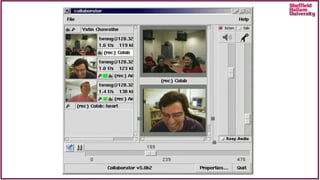
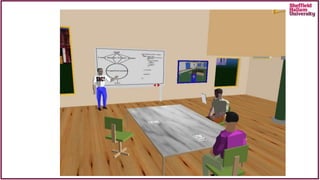
From Heath & Luff, 1992
CSCW and Qualitative Methods: A bit of history
‘Studies of the social organisation of work will need to proceed in a manner which
recognises this heterogeneity of domains and develops analytic tools which are
capable of exhibiting the relevant scope of this variety’ (J. Hughes et al 1994)
Ethnography in CSCW
Fieldwork in HCI draws heavily from the ethnographic tradition, which “seeks to
present a portrait of life as seen and understood by those who live and work
within the domain concerned” (D. Randall, R. Harper and M. Rouncefield,
Fieldwork for Design, emphasis added)
Ethnography in CSCW (and HCI) is now widespread, including variations such as
“quick and dirty ethnography” and “design ethnography” (about which we
could debate!)
Recommended reading: “Reflections on 25 Years of Ethnography in CSCW”, by
Jeanette Blomberg and Helena Karasti, JCSCW 22: 4-6 (2013)
Ethnography in CSCW
We “borrowed” ethnography and other qualitative methods from social science…
…but we do things quite differently:
- Not so interested in creating theory or expanding existing theory out of
qualitative work
- Not so interested in generalising at the macro scale
- We are quite much more fond of mixed methods than social scientists
- “Implications for design”
Domains of Ethnographic study in CSCW
“Centres of Coordination”
Workplace studies
“Diagnostic Work”
“Mobility Work”
“Centres of Coordination”
Workplace studies
“Diagnostic Work”
“Mobility Work”
Disaster response
Health and clinical settings (many aspects of it)
Collaborative software development
Collaborative writing
Museum visiting
Domains of Ethnographic study in CSCW
Key outlooks provided to the broader field of HCI/HCC:
- Unanticipated use
- Appropriation practices
- Concerns for social context/social dimension of technology use (well before
social became “paradigm”)
- Domain-specific knowledge and understanding
- Ethnographic methods now belong in HCI
Domains of Ethnographic study in CSCW
Moving away from “work”
Leisure domains
Education (CSCL)
“Work” as the serious business of getting things done
“Work” (intended as paid labour is also changing…organizational and culture
changes, including micro-work)
Domains of Ethnographic study in CSCW
Doing qualitative research when you cannot be in the field…or has the field
moved?
“it has become increasingly problematic in CSCW to conceptualize the field site
as single-sited. The field site has become a multifaceted and intricate
constellation of people, technologies, activities, entities, and relations; and the
boundaries of the field site are less clear, even unbounded, involving
extended spatial and temporal scope” (Blomberg and Karasti, 2013)
Other methods for qualitative inquiry
Not just ethnography, other qualitative methodologies trying to capture the
complexity of “situated collaboration”
Well-known examples:
Interviews
Action research
Questionnaires
…often in combination (triangulation)
Social media and online collaboration
● Online ethnography (“digital ethnography”)
● Trace ethnography (Geiger and Ribes, 2011; Østerlund, Crowston and
Jackson, 2019)
Other methods for qualitative inquiry
Design/Creative methodologies in CSCW
● Another important aspect of qualitative research in CSCW
● Not only for designing or for generating design requirements
● E.g. “workshops” as ways to construct field sites (Rosner, Kawas, Li, Tilly and
Sung, “Out of Time, Out of Place: Reflections on Design Workshops as a
Research Method”, CSCW 2016)
● Influence by (and often convergence with) Participatory Design (Greenbaum
and Kyng (1991) “Design at Work”)
● The “Interaction Design” turn, early 2000s
● The “Fiction Turn” (late 2010s)
CSCW and Qualitative Methods
“The steps through which CSCW became institutionalized were rather practical
steps in a process of interlinking a range of research activities and communities
that participants began to see as converging or in some other sense related.
CSCW emerged more as a bazaar than as a cathedral…there is a sense in which
CSCW is continually being formed” (Schmidt & Bannon, 2013)
Doing qualitative research in CSCW: Challenges?
● Access to field
● …linked to research design
● Collecting data
● Analysis
● Writing up (it takes a lot of space and time)
Some Challenges from My Research
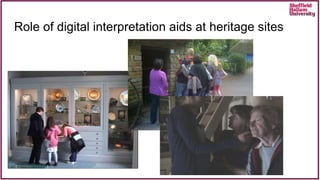
Role of digital interpretation aids at heritage sites
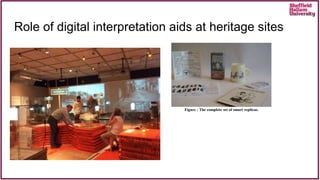
Figure : The complete set of smart replicas.
Role of digital interpretation aids at heritage sites
Figure : The complete set of smart replicas.
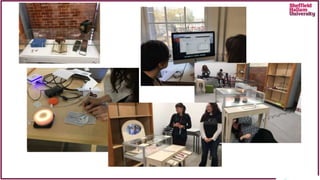
Beyond “running a study”: Action Research
PhD projects:
Dr Laura Maye at the
Hunt Museum (Limerick,
Ireland)
Dr Caroline Claisse at
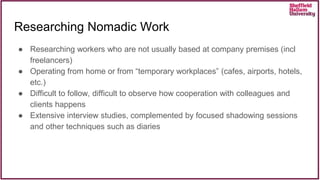
Bishop’s House (Sheffield,
UK)
Researching Nomadic Work
● Researching workers who are not usually based at company premises (incl
freelancers)
● Operating from home or from “temporary workplaces” (cafes, airports, hotels,
etc.)
● Difficult to follow, difficult to observe how cooperation with colleagues and
clients happens
● Extensive interview studies, complemented by focused shadowing sessions
and other techniques such as diaries
Some books I found useful
● “Fieldwork for Design”, by Richard Harper, David Randall and Mark
Rouncefield
● “Digital Ethnography”, by Sarah Pink
● “My Life as a Night Elf Priest” by Bonnie Nardi
● “Workplace Studies”, “Video in Qualitative Research”, J Hindmarsh, P Luff
and C. Heath
● “Convivial Toolbox”, by L. Sanders and P. Stappers
● “Critical Fabulations” by Daniela Rosner
● …many “role model” papers using qualitative research and data presentation
in CSCW
Questions or Comments?

Qualitative methods in CSCW research

  • 1.
    Qualitative Methods inCSCW Research Luigina Ciolfi Professor of Human Centred Computing Sheffield Hallam University, UK http://luiginaciolfi.net https://blogs.shu.ac.uk/c3riimpact/ CSCW Asia Winter School 2019, Kyoto, Dec 2019
  • 2.
    Who’s Talking? Background inCommunication Studies and HCI…My work moved to CSCW during my PhD Qualitative researcher. Domains: cultural heritage and mobile/nomadic work Learning from service: I read a lot of CSCW papers! Also experience in supporting regional CSCW communities (EUSSET – European Society for Socially Embedded Technologies; SIGCHI Ireland) Teaching to CS students
  • 3.
    Some questions Iget asked all the time ● Why do we need to know about qualitative research? ● Is qualitative research objective? ● Why should I spend so much time studying people when they could just be saying one thing and doing another? ● How can qualitative results be generalised? ● How do I know my research findings are valid? ● Is qualitative better than quantitative? Or the other way around?
  • 4.
    “The two hardestproblems in computer science are: (i) people, and (ii) convincing computer scientists that the hardest problem in computer science is people.” Jeff Bigham, Carnegie Mellon University
  • 5.
    They change theirmind They are complicated They are part of complicated organisations and groups They are busy and might not want to talk to you They often say one thing but mean, or think, another They often want what experts know will not work
  • 6.
    They change theirmind They are complicated They are part of complicated organisations and groups They are busy and might not want to talk to you They often say one thing but mean, or think, another They often want what experts know will not work They are smart and adaptable They can empathise They make very complicated systems work, using very complex tools They like to be and work with other humans They can figure things out They find ingenious workarounds, solutions, or alternatives
  • 7.
    What This Tutorialis NOT About A step-by-step guide to ethnography… …or interview design in a nutshell… …or a pocket guide to qualitative data analysis
  • 8.
    What This TutorialIS About Some history of qualitative enquiry in CSCW: why do we do it? And why do we do it in this way? Some key approaches and milestones shaping qualitative CSCW research Challenges and opportunities Some experiences in doing qualitative work in CSCW… Let’s share some food for thought!
  • 9.
    Qualitative Research inCSCW Qualitative methods are mainly concerned with the ‘how’ and ‘why’ of research on collaborative computing and computer-supported collaboration Examples going back to the inception of the discipline, applied to several domains But, why is so much CSCW work based on qualitative methods?
  • 10.
    CSCW and QualitativeMethods: A bit of history From Human Factors to Human Actors “Understanding the user's needs, and the tasks performed by the user is basic to the system development process. However, it is a mistake to think that simply having a human factors person on the design team is by itself sufficient to ensure that the "human factor" has been adequately taken into account” (Bannon, 1991)
  • 11.
    CSCW and QualitativeMethods: A bit of history CSCW researchers were advocating moving away from lab-centred, one-user focused studies, which “have deliberately stripped away the supporting context of the everyday world, in an effort to study 'pure' internal processes" (G. Olson 1990)
  • 12.
    CSCW and QualitativeMethods Systems were certainly providing users with collaborative functionalities, but what about the “articulation work” of coordination and cooperation? Studies of cooperation in actual work settings were required – “second order work” “Situated” character of cooperative work (Suchman, 1983; Gershon & Star, 1986) Looking at the complexity of people, artefacts, spaces, contextual and cultural settings: “assumption that the social and material are ‘constitutively entangled’ “ (Orlikowski, 2007)
  • 13.
    CSCW and QualitativeMethods: A bit of history “The indigenous CSCW research program implies an approach to technology development radically different from that of the previous development of interactive and collaborative computing, namely, an approach to technology development in which ethnographic and other forms of in-depth workplace studies play an essential and proactive role.” (Schmidt & Bannon, 2013)
  • 14.
    CSCW and QualitativeMethods: A bit of history Early work on Control Rooms and ‘centres of coordination’ The “turn to ethnography” in human-centred computing A “practice-focused” approach: “CSCW was the first research community in applied computer science which stressed the importance of an in-depth understanding of practices when designing ICT artefacts” (Wulf et al, 2011) Schmidt, K (2014), “The Concept of ‘Practice’: What’s the point?”
  • 15.
    Data Presentation andAnalysis From Heath & Luff, 1992
  • 16.
    CSCW and QualitativeMethods: A bit of history ‘Studies of the social organisation of work will need to proceed in a manner which recognises this heterogeneity of domains and develops analytic tools which are capable of exhibiting the relevant scope of this variety’ (J. Hughes et al 1994)
  • 17.
    Ethnography in CSCW Fieldworkin HCI draws heavily from the ethnographic tradition, which “seeks to present a portrait of life as seen and understood by those who live and work within the domain concerned” (D. Randall, R. Harper and M. Rouncefield, Fieldwork for Design, emphasis added) Ethnography in CSCW (and HCI) is now widespread, including variations such as “quick and dirty ethnography” and “design ethnography” (about which we could debate!) Recommended reading: “Reflections on 25 Years of Ethnography in CSCW”, by Jeanette Blomberg and Helena Karasti, JCSCW 22: 4-6 (2013)
  • 18.
    Ethnography in CSCW We“borrowed” ethnography and other qualitative methods from social science… …but we do things quite differently: - Not so interested in creating theory or expanding existing theory out of qualitative work - Not so interested in generalising at the macro scale - We are quite much more fond of mixed methods than social scientists - “Implications for design”
  • 19.
    Domains of Ethnographicstudy in CSCW “Centres of Coordination” Workplace studies “Diagnostic Work” “Mobility Work”
  • 22.
    “Centres of Coordination” Workplacestudies “Diagnostic Work” “Mobility Work” Disaster response Health and clinical settings (many aspects of it) Collaborative software development Collaborative writing Museum visiting Domains of Ethnographic study in CSCW
  • 23.
    Key outlooks providedto the broader field of HCI/HCC: - Unanticipated use - Appropriation practices - Concerns for social context/social dimension of technology use (well before social became “paradigm”) - Domain-specific knowledge and understanding - Ethnographic methods now belong in HCI Domains of Ethnographic study in CSCW
  • 24.
    Moving away from“work” Leisure domains Education (CSCL) “Work” as the serious business of getting things done “Work” (intended as paid labour is also changing…organizational and culture changes, including micro-work) Domains of Ethnographic study in CSCW
  • 25.
    Doing qualitative researchwhen you cannot be in the field…or has the field moved? “it has become increasingly problematic in CSCW to conceptualize the field site as single-sited. The field site has become a multifaceted and intricate constellation of people, technologies, activities, entities, and relations; and the boundaries of the field site are less clear, even unbounded, involving extended spatial and temporal scope” (Blomberg and Karasti, 2013) Other methods for qualitative inquiry
  • 26.
    Other methods forqualitative inquiry Not just ethnography, other qualitative methodologies trying to capture the complexity of “situated collaboration” Well-known examples: Interviews Action research Questionnaires …often in combination (triangulation)
  • 27.
    Social media andonline collaboration ● Online ethnography (“digital ethnography”) ● Trace ethnography (Geiger and Ribes, 2011; Østerlund, Crowston and Jackson, 2019) Other methods for qualitative inquiry
  • 28.
    Design/Creative methodologies inCSCW ● Another important aspect of qualitative research in CSCW ● Not only for designing or for generating design requirements ● E.g. “workshops” as ways to construct field sites (Rosner, Kawas, Li, Tilly and Sung, “Out of Time, Out of Place: Reflections on Design Workshops as a Research Method”, CSCW 2016) ● Influence by (and often convergence with) Participatory Design (Greenbaum and Kyng (1991) “Design at Work”) ● The “Interaction Design” turn, early 2000s ● The “Fiction Turn” (late 2010s)
  • 29.
    CSCW and QualitativeMethods “The steps through which CSCW became institutionalized were rather practical steps in a process of interlinking a range of research activities and communities that participants began to see as converging or in some other sense related. CSCW emerged more as a bazaar than as a cathedral…there is a sense in which CSCW is continually being formed” (Schmidt & Bannon, 2013)
  • 30.
    Doing qualitative researchin CSCW: Challenges? ● Access to field ● …linked to research design ● Collecting data ● Analysis ● Writing up (it takes a lot of space and time)
  • 31.
  • 32.
    Role of digitalinterpretation aids at heritage sites
  • 33.
    Figure : Thecomplete set of smart replicas. Role of digital interpretation aids at heritage sites
  • 34.
    Figure : Thecomplete set of smart replicas.
  • 35.
    Figure : Thecomplete set of smart replicas.
  • 37.
    Beyond “running astudy”: Action Research PhD projects: Dr Laura Maye at the Hunt Museum (Limerick, Ireland) Dr Caroline Claisse at Bishop’s House (Sheffield, UK)
  • 38.
    Researching Nomadic Work ●Researching workers who are not usually based at company premises (incl freelancers) ● Operating from home or from “temporary workplaces” (cafes, airports, hotels, etc.) ● Difficult to follow, difficult to observe how cooperation with colleagues and clients happens ● Extensive interview studies, complemented by focused shadowing sessions and other techniques such as diaries
  • 40.
    Some books Ifound useful ● “Fieldwork for Design”, by Richard Harper, David Randall and Mark Rouncefield ● “Digital Ethnography”, by Sarah Pink ● “My Life as a Night Elf Priest” by Bonnie Nardi ● “Workplace Studies”, “Video in Qualitative Research”, J Hindmarsh, P Luff and C. Heath ● “Convivial Toolbox”, by L. Sanders and P. Stappers ● “Critical Fabulations” by Daniela Rosner ● …many “role model” papers using qualitative research and data presentation in CSCW
  • 41.

Editor's Notes

  • #3 One of the first students in Italy to pursue a major in HCI. Then research assistant working with some prominent HCI researchers, using mixed methods, including some qual but with a strong cognitive psychology and cognitive science frame: a lot of studies in the lab, focusing on single users, focusing on specific instances of technology use rather than “the bigger picture” PhD, working with Liam Bannon, one of the pioneers of CSCW, and European CSCW in particular Associate editor, CSCW journal; papers chair, CSCW 2015 & COOP 2014; general chair, ECSCW 2017, CSCW 2021; Subcommittee chair “Beyond the Individual”, CHI 2018-2019 One of those people working across Europe and USA communities
  • #4 Questions that could have been asked to CSCW researchers in the early days How many of you use qualitative methods in your research? How many of you have attended courses/programmes on qualitative research?
  • #6 Very frustrating to study! Easier to create controlled conditions to focus on particular aspects of behaviour – and sometimes this is true Easier to study large scale phenomena on the basis of selected indicators and work around greater trends and patterns – and sometimes that is also true
  • #7 Enough reasons to want to study qualitatively how technology becomes part of their lives
  • #8 There isn’t enough time and there are plenty of ways to learn that
  • #9 I will mention examples of CSCW work but these are by no means exhaustive, just highlights, things that I know and find useful
  • #10 Qualitative research is about smaller samples, yet nuance and depth of analysis, a lot of focus on context of activity
  • #11 Very foundation of CSCW as a discipline, critique of other approaches, such as HCI and Human Factors Users are experts who operate in complex contexts, including the social context Other methods left those things out and they are often crucial
  • #12 Relationship to HCI
  • #13 Situated is not just about context and the modelling of context, it’s about how intra-action is constantly producing practices: “recursive interweaving of the social and material“ (Orlikowski)
  • #14 Influence from social science, more so than psychology and social psychology
  • #15 Unique proposition about in-depth understanding of the complexities of human collaboration and its context
  • #16 Not only ethnography…Ethnomethodological studies in CSCW Research with Hideaki
  • #17 Not so concerned with applying the same analytic or theoretical tools, important bit is capturing the complexity of practices in use
  • #18 Accounts of those who are immersed in those practices
  • #19 Accounts of those who are immersed in those practices
  • #20 Ref to Jonathan’s talk yesterday about “cycles of popularity” of topics
  • #25 Mention work on turkers Work to make AI work Work in field that is difficult to access, Bjorn and Boulus work on Palestinian entrepreneurs
  • #26 The “fluid” workplace, or the social media platform “space”, etc.
  • #28 Documentation practices (Geiger, 2017); online communications such as Whatsapp messages (Tenório and Bjørn, 2019); traces of collaborative use in collaborative writing software (Larsen-Ledet and Korsgaard, 2019)
  • #29 Why? Moving away from work, more creative, inspiration-centred methods PD brought another qual dimension to research in CSCW: understanding how design is collaboratively done and through which tools
  • #30 Applies to methodology too
  • #31 Work in field that is difficult to access, Bjorn and Boulus work on Palestinian entrepreneurs
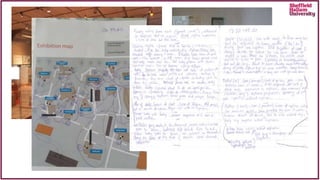
  • #33 Even if the technique is the same, different challenges: e.g. fixed camera set up to shadowing in spaces of different size
  • #35 Fixed cameras, plus
  • #36 Fixed cameras, plus…and system’s logs – so some quant!
  • #40 Working with small sample can lead to depth of understanding; presenting rich, complex pictures of how sociotechnical systems are practiced, in a way that formal methods cannot grasp. While this this challenging it is a necessary complement to other methodologies