RHIO Dashboard
July 2015
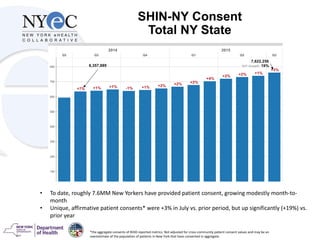
SHIN-NY Consent
Total NY State
• To date, roughly 7.6MM New Yorkers have provided patient consent, growing modestly month-to-
month
• Unique, affirmative patient consents* were +3% in July vs. prior period, but up significantly (+19%) vs.
prior year
*the aggregate consents of RHIO reported metrics. Not adjusted for cross-community patient consent values and may be an
overestimate of the population of patients in New York that have consented in aggregate.
Consent Distribution By County
• Consent as a % of county population is very high in upstate, urban areas where fewer participant
organizations cover a high proportion of the patient population
• Strong opportunity to improve consent the Southern Tier and Taconic regions.
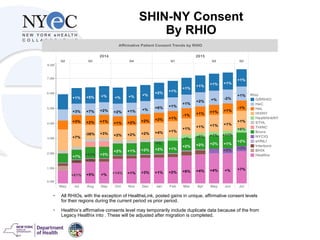
• All RHIOs, with the exception of HealtheLink, posted gains in unique, affirmative consent levels
for their regions during the current period vs prior period.
• Healthix’s affirmative consents level may temporarily include duplicate data because of the from
Legacy Healthix into . These will be adjusted after migration is completed.
SHIN-NY Consent
By RHIO
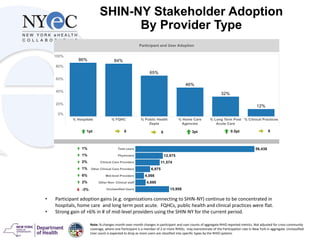
SHIN-NY Stakeholder Adoption
By Provider Type
• Participant adoption gains (e.g. organizations connecting to SHIN-NY) continue to be concentrated in
hospitals, home care and long term post acute. FQHCs, public health and clinical practices were flat.
• Strong gain of +6% in # of mid-level providers using the SHIN-NY for the current period.
Note: % changes month-over-month changes in participant and user counts of aggregate RHIO reported metrics. Not adjusted for cross-community
coverage, where one Participant is a member of 2 or more RHIOs; may overestimate of the Participation rate in New York in aggregate. Unclassified
User count is expected to drop as more users are classified into specific types by the RHIO systems
Number of Queries by RHIO
• Overall, Queries continue to increase
• This data still reflects differences in how RHIOs count queries. Thus, RHIOs cannot be compared yet
to each other. Comparisons can only be made on a month-to-month basis for each RHIO

QE Dashboard July 24, 2015

  • 1.
  • 2.
    SHIN-NY Consent Total NYState • To date, roughly 7.6MM New Yorkers have provided patient consent, growing modestly month-to- month • Unique, affirmative patient consents* were +3% in July vs. prior period, but up significantly (+19%) vs. prior year *the aggregate consents of RHIO reported metrics. Not adjusted for cross-community patient consent values and may be an overestimate of the population of patients in New York that have consented in aggregate.
  • 3.
    Consent Distribution ByCounty • Consent as a % of county population is very high in upstate, urban areas where fewer participant organizations cover a high proportion of the patient population • Strong opportunity to improve consent the Southern Tier and Taconic regions.
  • 4.
    • All RHIOs,with the exception of HealtheLink, posted gains in unique, affirmative consent levels for their regions during the current period vs prior period. • Healthix’s affirmative consents level may temporarily include duplicate data because of the from Legacy Healthix into . These will be adjusted after migration is completed. SHIN-NY Consent By RHIO
  • 5.
    SHIN-NY Stakeholder Adoption ByProvider Type • Participant adoption gains (e.g. organizations connecting to SHIN-NY) continue to be concentrated in hospitals, home care and long term post acute. FQHCs, public health and clinical practices were flat. • Strong gain of +6% in # of mid-level providers using the SHIN-NY for the current period. Note: % changes month-over-month changes in participant and user counts of aggregate RHIO reported metrics. Not adjusted for cross-community coverage, where one Participant is a member of 2 or more RHIOs; may overestimate of the Participation rate in New York in aggregate. Unclassified User count is expected to drop as more users are classified into specific types by the RHIO systems
  • 6.
    Number of Queriesby RHIO • Overall, Queries continue to increase • This data still reflects differences in how RHIOs count queries. Thus, RHIOs cannot be compared yet to each other. Comparisons can only be made on a month-to-month basis for each RHIO