Age
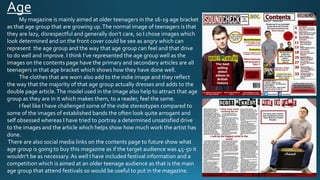
My magazine is mainly aimed at older teenagers in the 16-19 age bracket
as that age group that are growing up.The normal image of teenagers is that
they are lazy, disrespectful and generally don’t care, so I chose images which
look determined and on the front cover could be see as angry which can
represent the age group and the way that age group can feel and that drive
to do well and improve. I think I’ve represented the age group well as the
images on the contents page have the primary and secondary articles are all
teenagers in that age bracket which shows how they have done well.
The clothes that are worn also add to the indie image and they reflect
the way that the majority of that age group actually dresses and adds to the
double page article.The model used in the image also help to attract that age
group as they are in it which makes them, to a reader, feel the same.
I feel like I have challenged some of the indie stereotypes compared to
some of the images of established bands the often look quite arrogant and
self obsessed whereas I have tried to portray a determined unsatisfied drive
to the images and the article which helps show how much work the artist has
done.
There are also social media links on the contents page to future show what
age group is going to buy this magazine as if the target audience was 45-50 it
wouldn’t be as necessary.As well I have included festival information and a
competition which is aimed at an older teenage audience as that is the main
age group that attend festivals so would be useful to put in the magazine.
Gender
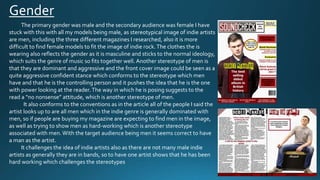
The primary gender was male and the secondary audience was female I have
stuck with this with all my models being male, as stereotypical image of indie artists
are men, including the three different magazines I researched, also it is more
difficult to find female models to fit the image of indie rock.The clothes the is
wearing also reflects the gender as it is masculine and sticks to the normal ideology,
which suits the genre of music so fits together well. Another stereotype of men is
that they are dominant and aggressive and the front cover image could be seen as a
quite aggressive confident stance which conforms to the stereotype which men
have and that he is the controlling person and it pushes the idea that he is the one
with power looking at the reader.The way in which he is posing suggests to the
read a “no nonsense” attitude, which is another stereotype of men.
It also conforms to the conventions as in the article all of the people I said the
artist looks up to are all men which in the indie genre is generally dominated with
men, so if people are buying my magazine are expecting to find men in the image,
as well as trying to show men as hard-working which is another stereotype
associated with men.With the target audience being men it seems correct to have
a man as the artist.
It challenges the idea of indie artists also as there are not many male indie
artists as generally they are in bands, so to have one artist shows that he has been
hard working which challenges the stereotypes
Q2 teenagers

Q2 teenagers

  • 2.
    Age My magazine ismainly aimed at older teenagers in the 16-19 age bracket as that age group that are growing up.The normal image of teenagers is that they are lazy, disrespectful and generally don’t care, so I chose images which look determined and on the front cover could be see as angry which can represent the age group and the way that age group can feel and that drive to do well and improve. I think I’ve represented the age group well as the images on the contents page have the primary and secondary articles are all teenagers in that age bracket which shows how they have done well. The clothes that are worn also add to the indie image and they reflect the way that the majority of that age group actually dresses and adds to the double page article.The model used in the image also help to attract that age group as they are in it which makes them, to a reader, feel the same. I feel like I have challenged some of the indie stereotypes compared to some of the images of established bands the often look quite arrogant and self obsessed whereas I have tried to portray a determined unsatisfied drive to the images and the article which helps show how much work the artist has done. There are also social media links on the contents page to future show what age group is going to buy this magazine as if the target audience was 45-50 it wouldn’t be as necessary.As well I have included festival information and a competition which is aimed at an older teenage audience as that is the main age group that attend festivals so would be useful to put in the magazine.
  • 3.
    Gender The primary genderwas male and the secondary audience was female I have stuck with this with all my models being male, as stereotypical image of indie artists are men, including the three different magazines I researched, also it is more difficult to find female models to fit the image of indie rock.The clothes the is wearing also reflects the gender as it is masculine and sticks to the normal ideology, which suits the genre of music so fits together well. Another stereotype of men is that they are dominant and aggressive and the front cover image could be seen as a quite aggressive confident stance which conforms to the stereotype which men have and that he is the controlling person and it pushes the idea that he is the one with power looking at the reader.The way in which he is posing suggests to the read a “no nonsense” attitude, which is another stereotype of men. It also conforms to the conventions as in the article all of the people I said the artist looks up to are all men which in the indie genre is generally dominated with men, so if people are buying my magazine are expecting to find men in the image, as well as trying to show men as hard-working which is another stereotype associated with men.With the target audience being men it seems correct to have a man as the artist. It challenges the idea of indie artists also as there are not many male indie artists as generally they are in bands, so to have one artist shows that he has been hard working which challenges the stereotypes