Understanding basic datatypes such as integers, strings, and lists. Variables
are used to store data to be referenced later in the program, making it easier
to manage and manipulate information.
Data Types and Variables
5.
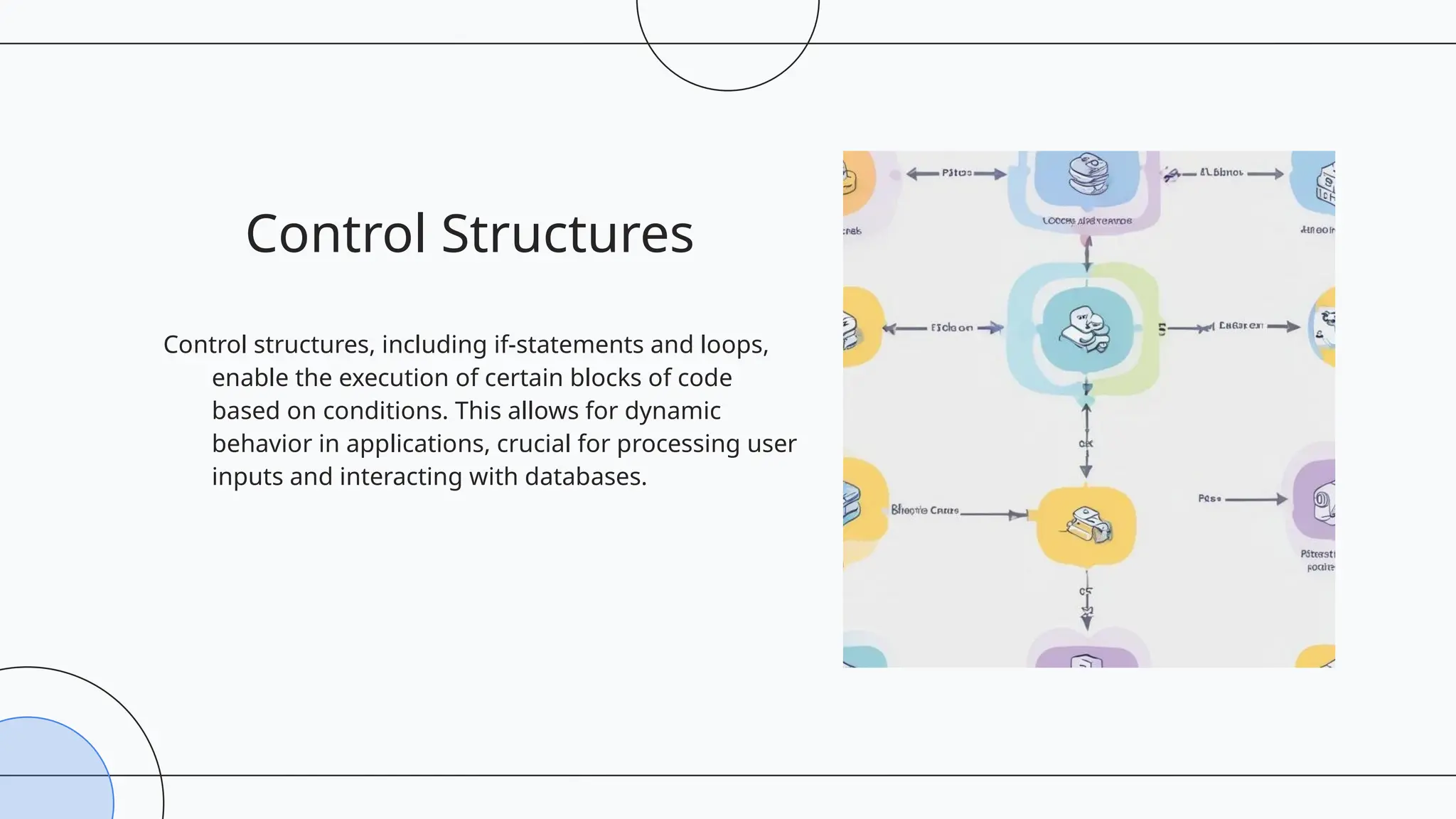
Control Structures
Control structures,including if-statements and loops,
enable the execution of certain blocks of code
based on conditions. This allows for dynamic
behavior in applications, crucial for processing user
inputs and interacting with databases.
6.
Functions and Modules
Functionsare reusable blocks of code that perform specific tasks. Modules are files
containing functions that help organize code into manageable sections.
Understanding how to create and use functions and modules is essential for
efficient programming, especially in larger applications.
Popular Python webframeworks like Django and Flask aid in developing e-
commerce sites quickly and efficiently. They provide tools and libraries that
reduce boilerplate code and facilitate rapid development while promoting
best practices.
Web Frameworks
9.
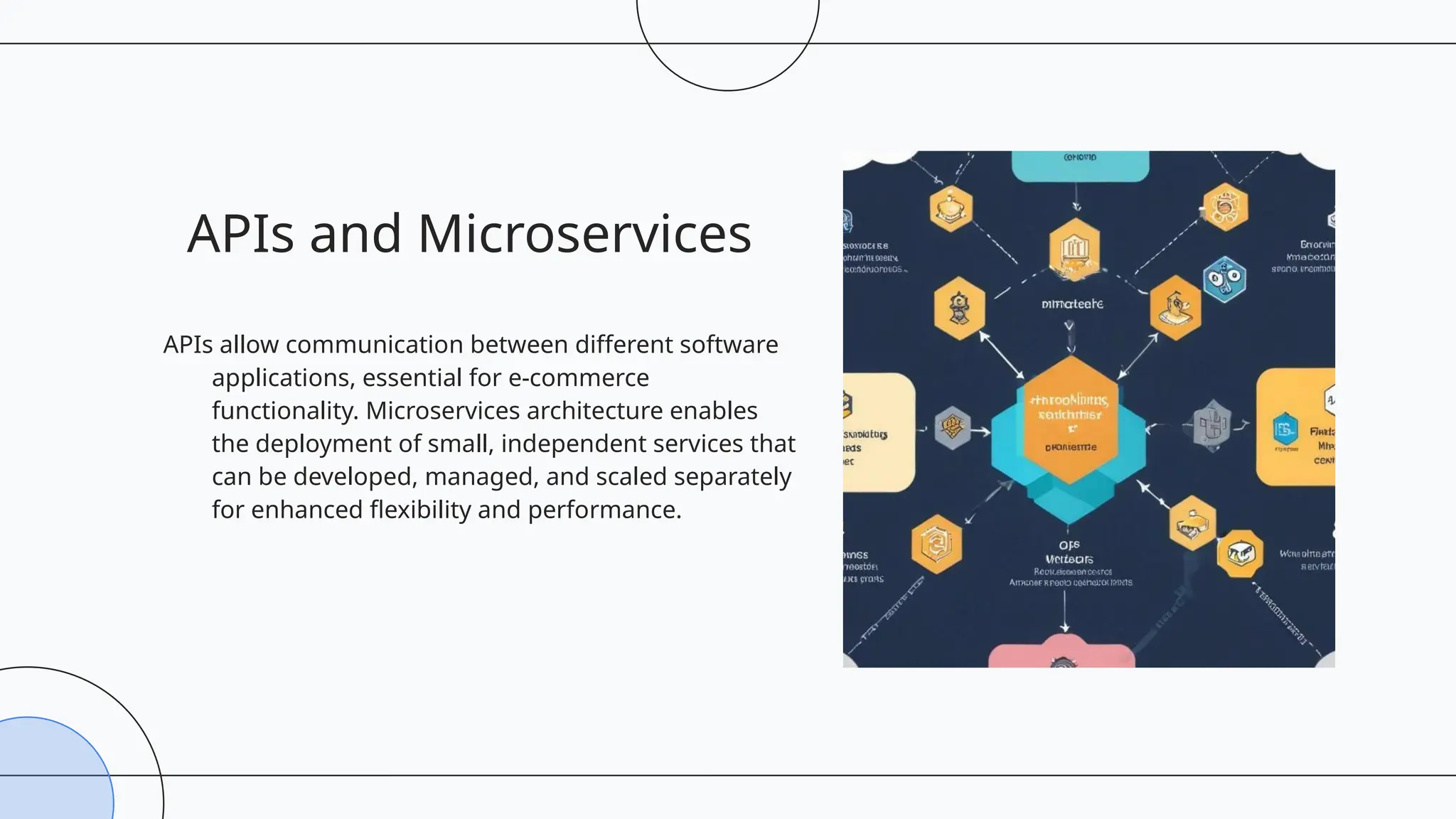
APIs and Microservices
APIsallow communication between different software
applications, essential for e-commerce
functionality. Microservices architecture enables
the deployment of small, independent services that
can be developed, managed, and scaled separately
for enhanced flexibility and performance.
10.
Database Management
Managing databasesis crucial for e-commerce applications. Python libraries like
SQLAlchemy and Django ORM facilitate interactions with databases for CRUD
operations. Understanding how to effectively use databases ensures that product
information, user data, and transaction details are stored securely.
11.
Conclusions
Python provides robusttools and frameworks for building effective e-
commerce applications, from basic programming constructs to sophisticated
integrations. Mastery of these skills is vital for developers in this field.
12.
CREDITS: This presentationtemplate was created by Slidesgo, and
includes icons by Flaticon, and infographics & images by Freepik
Thank you!
Do you have any questions?


![Internship_FULL_STACK_DEVELOPMENT[1].pptx](https://cdn.slidesharecdn.com/ss_thumbnails/internshipfullstackdevelopment1-250415040432-2b23cdbc-thumbnail.jpg?width=640&height=640&fit=bounds)
![Internship_FULL_STACK_DEVELOPMENT[1].pptx](https://cdn.slidesharecdn.com/ss_thumbnails/internshipfullstackdevelopment1-250415040804-d709bf1f-thumbnail.jpg?width=640&height=640&fit=bounds)


