Swipe
Python - Functions
A function is a block of organized, reusable code
that is used to perform a single, related action.
Functions provide better modularity for your
application and a high degree of code reusing.
As you already know, Python gives you many
built-in functions like print(), etc.
but you can also create your own functions.
These functions are called user-defined functions.
Python - Functions
You can define functions to provide the required
functionality. Here are simple rules to define a
function in Python.
Function blocks begin with the keyword def
followed by the function name and
parentheses ( ( ) ).
Any input parameters or arguments should be
placed within these parentheses. You can also
define parameters inside these parentheses.
Defining a Function
The first statement of a function can be an
optional statement - the documentation string
of the function or docstring.
The code block within every function starts
with a colon (:) and is indented.
The statement return [expression] exits a
function, optionally passing back an
expression to the caller. A return statement
with no arguments is the same as return None.
Syntax
def functionname( parameters ):
"function_docstring"
function_suite
return [expression]
Calling a Function
Defining a function only gives it a name, specifies
the parameters that are to be included in the
function and structures the blocks of code.
Once the basic structure of a function is finalized,
you can execute it by calling it from another
function or directly from the Python prompt.
Pass by reference vs value
All parameters (arguments) in the Python
language are passed by reference.
It means if you change what a parameter refers to
within a function, the change also reflects back in
the calling function
Function Arguments
Required arguments
Keyword arguments
Default arguments
Variable-length arguments
You can call a function by using the following types of
formal arguments:-
Required arguments are the arguments passed to
a function in correct positional order.
Here, the number of arguments in the function
call should match exactly with the function
definition.
To call the function printme(), you definitely need
to pass one argument, otherwise it gives a syntax
error
Required arguments
Keyword arguments
Keyword arguments are related to the function
calls.
When you use keyword arguments in a function
call, the caller identifies the arguments by the
parameter name.
This allows you to skip arguments or place them
out of order because the Python interpreter is
able to use the keywords provided to match the
values with parameters.
You can also make keyword calls to the printme()
function
Default arguments
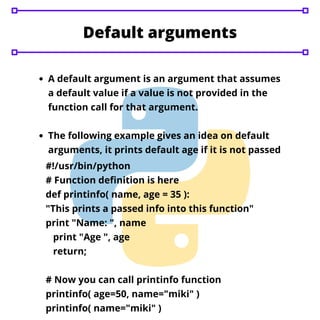
A default argument is an argument that assumes
a default value if a value is not provided in the
function call for that argument.
The following example gives an idea on default
arguments, it prints default age if it is not passed
#!/usr/bin/python
# Function definition is here
def printinfo( name, age = 35 ):
"This prints a passed info into this function"
print "Name: ", name
print "Age ", age
return;
# Now you can call printinfo function
printinfo( age=50, name="miki" )
printinfo( name="miki" )
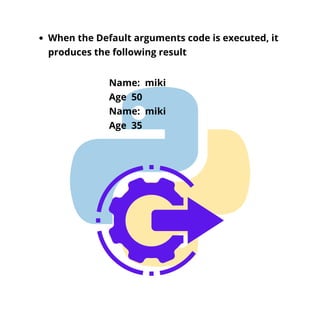
When the Default arguments code is executed, it
produces the following result
Name: miki
Age 50
Name: miki
Age 35
Variable-length arguments
You may need to process a function for more
arguments than you specified while defining the
function.
These arguments are called variable-length
arguments and are not named in the function
definition, unlike required and default arguments.
Syntax
def functionname([formal_args,] *var_args_tuple ):
"function_docstring"
function_suite
return [expression]
Python - Modules
Python - Object Oriented
Stay Tuned with
Topics for next Post

Python functions

  • 1.
  • 2.
    A function isa block of organized, reusable code that is used to perform a single, related action. Functions provide better modularity for your application and a high degree of code reusing. As you already know, Python gives you many built-in functions like print(), etc. but you can also create your own functions. These functions are called user-defined functions. Python - Functions
  • 3.
    You can definefunctions to provide the required functionality. Here are simple rules to define a function in Python. Function blocks begin with the keyword def followed by the function name and parentheses ( ( ) ). Any input parameters or arguments should be placed within these parentheses. You can also define parameters inside these parentheses. Defining a Function
  • 4.
    The first statementof a function can be an optional statement - the documentation string of the function or docstring. The code block within every function starts with a colon (:) and is indented. The statement return [expression] exits a function, optionally passing back an expression to the caller. A return statement with no arguments is the same as return None. Syntax def functionname( parameters ): "function_docstring" function_suite return [expression]
  • 5.
    Calling a Function Defininga function only gives it a name, specifies the parameters that are to be included in the function and structures the blocks of code. Once the basic structure of a function is finalized, you can execute it by calling it from another function or directly from the Python prompt.
  • 6.
    Pass by referencevs value All parameters (arguments) in the Python language are passed by reference. It means if you change what a parameter refers to within a function, the change also reflects back in the calling function
  • 7.
    Function Arguments Required arguments Keywordarguments Default arguments Variable-length arguments You can call a function by using the following types of formal arguments:-
  • 8.
    Required arguments arethe arguments passed to a function in correct positional order. Here, the number of arguments in the function call should match exactly with the function definition. To call the function printme(), you definitely need to pass one argument, otherwise it gives a syntax error Required arguments
  • 9.
    Keyword arguments Keyword argumentsare related to the function calls. When you use keyword arguments in a function call, the caller identifies the arguments by the parameter name. This allows you to skip arguments or place them out of order because the Python interpreter is able to use the keywords provided to match the values with parameters. You can also make keyword calls to the printme() function
  • 10.
    Default arguments A defaultargument is an argument that assumes a default value if a value is not provided in the function call for that argument. The following example gives an idea on default arguments, it prints default age if it is not passed #!/usr/bin/python # Function definition is here def printinfo( name, age = 35 ): "This prints a passed info into this function" print "Name: ", name print "Age ", age return; # Now you can call printinfo function printinfo( age=50, name="miki" ) printinfo( name="miki" )
  • 11.
    When the Defaultarguments code is executed, it produces the following result Name: miki Age 50 Name: miki Age 35
  • 12.
    Variable-length arguments You mayneed to process a function for more arguments than you specified while defining the function. These arguments are called variable-length arguments and are not named in the function definition, unlike required and default arguments. Syntax def functionname([formal_args,] *var_args_tuple ): "function_docstring" function_suite return [expression]
  • 13.
    Python - Modules Python- Object Oriented Stay Tuned with Topics for next Post