Purposes, Step and
Factors affecting
Administrative
Planning
Purposes of
Administrative Planning
1 Goal Setting
Establish clear objectives
aligned with
organization's mission.
2 Resource Utilization
Ensure optimal allocation
of human, financial,
material resources.
3 Risk Management
Anticipate challenges and
develop contingency
plans.
4 Coordination
Enhance
interdepartmental
alignment and task
interlinking.
5 Performance Measurement
6 Adaptability
Define metrics for evaluating success and allow
for continuous assessment of progress towards
goals.
Increase the organization’s flexibility to adapt to
changing environments and unexpected
challenges.
Steps in Administrative
Planning Process
1 Situation Analysis
Review current state, conduct SWOT analysis.
2 Goal Definition
Define short-term and long-term goals.
3 Strategy
Development
Create action plans, prioritize tasks, outline timelines.
4 Resource Planning
Determine required budget, personnel, and technology.
Steps in Administrative
Planning Process
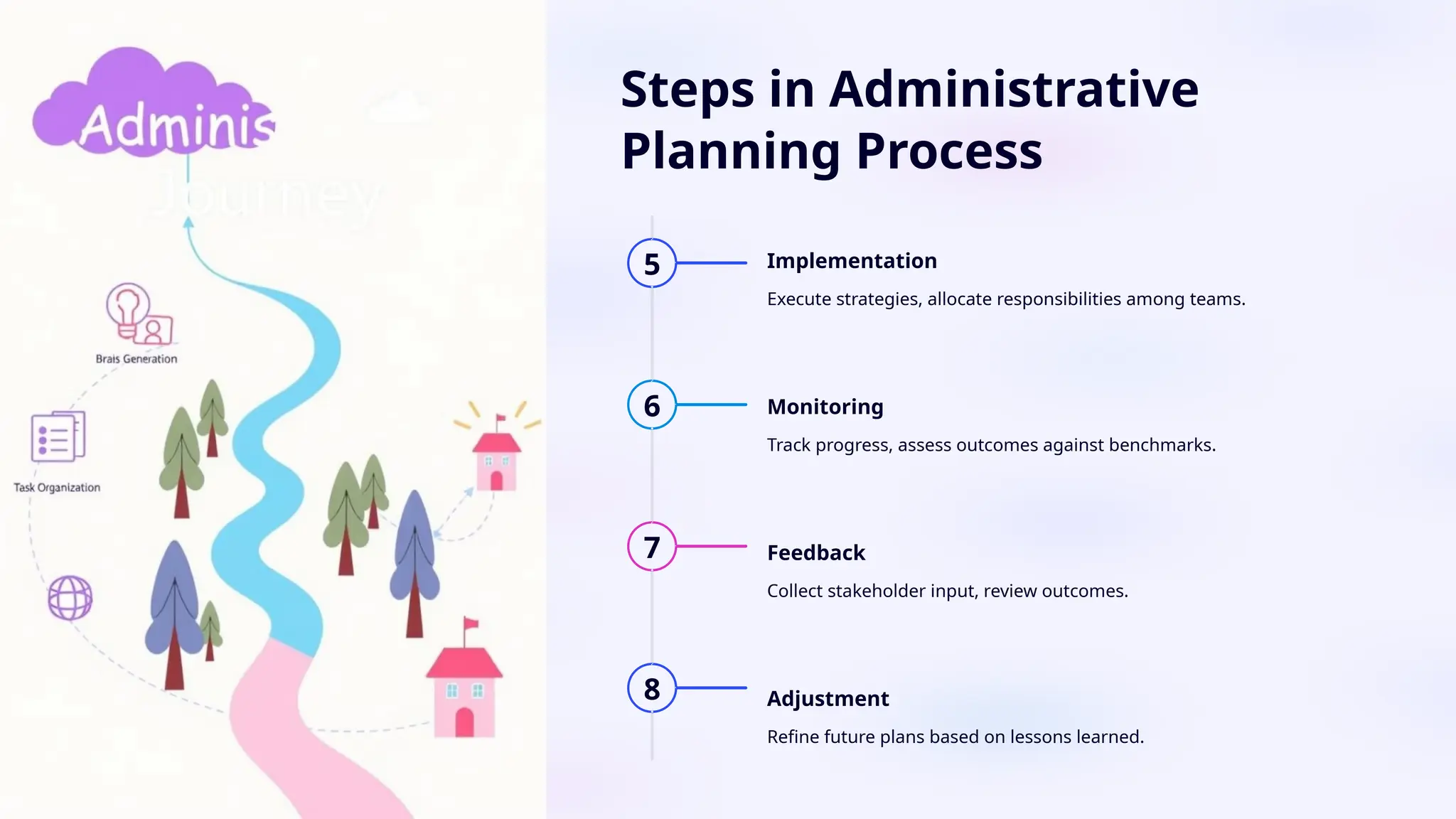
5
6
7
8
Implementation
Execute strategies, allocate responsibilities among teams.
Monitoring
Track progress, assess outcomes against benchmarks.
Feedback
Collect stakeholder input, review outcomes.
Adjustment
Refine future plans based on lessons learned.
FACTORS
AFFECTING
ADMINISTRATIVE
PLANNIG
Internal Factors Affecting
Planning
Leadership
Leadership style influences goal-
setting and strategic alignment.
Culture
Organizational values impact
adaptability and employee
commitment.
Resources
Workforce skills and technology
affect implementation capacity.
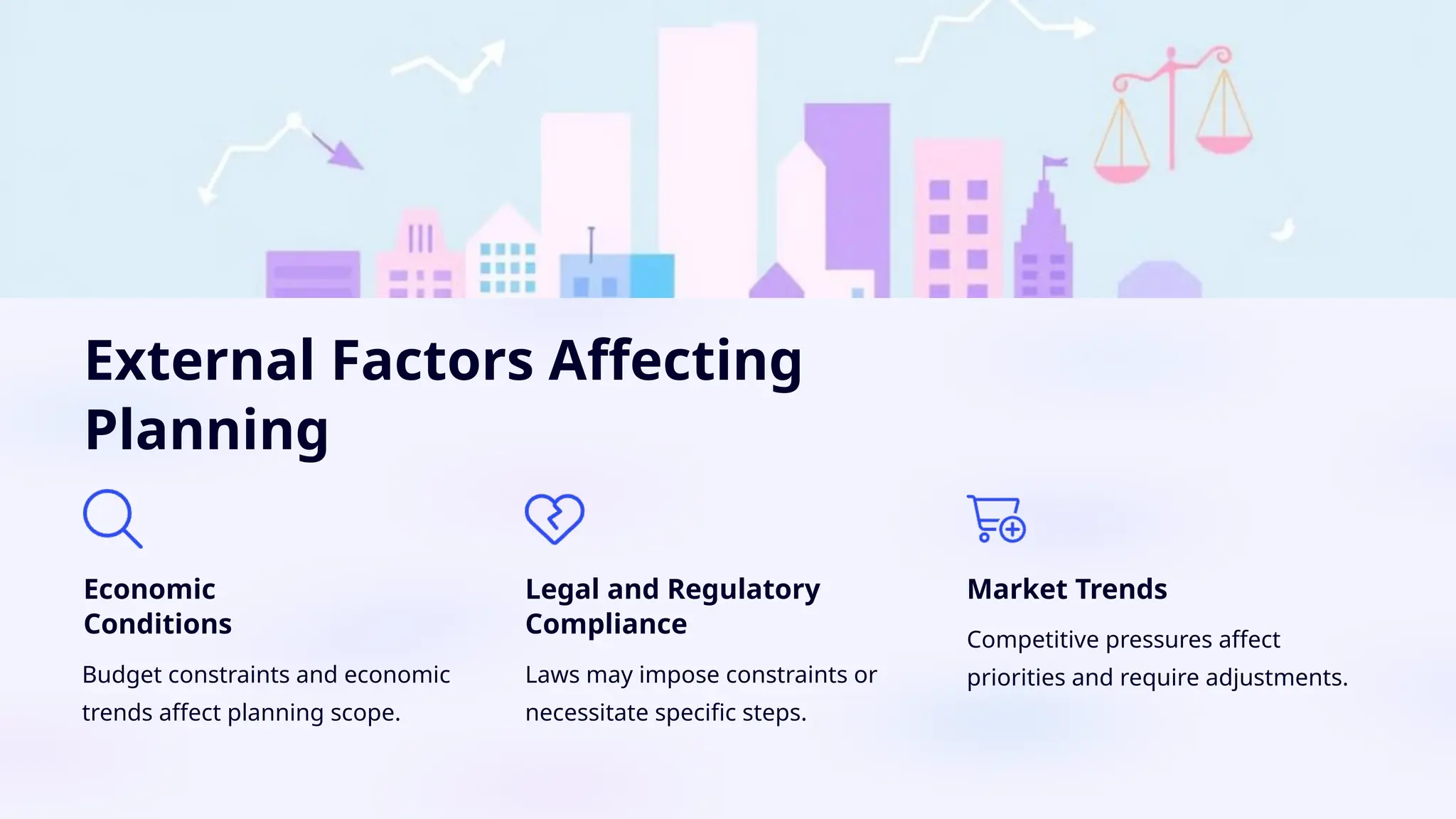
External Factors Affecting
Planning
Economic
Conditions
Budget constraints and economic
trends affect planning scope.
Legal and Regulatory
Compliance
Laws may impose constraints or
necessitate specific steps.
Market Trends
Competitive pressures affect
priorities and require adjustments.

purposesstep-and-factors-affecting-Administrative-planning.pptx

  • 1.
    Purposes, Step and Factorsaffecting Administrative Planning
  • 2.
    Purposes of Administrative Planning 1Goal Setting Establish clear objectives aligned with organization's mission. 2 Resource Utilization Ensure optimal allocation of human, financial, material resources. 3 Risk Management Anticipate challenges and develop contingency plans. 4 Coordination Enhance interdepartmental alignment and task interlinking.
  • 3.
    5 Performance Measurement 6Adaptability Define metrics for evaluating success and allow for continuous assessment of progress towards goals. Increase the organization’s flexibility to adapt to changing environments and unexpected challenges.
  • 4.
    Steps in Administrative PlanningProcess 1 Situation Analysis Review current state, conduct SWOT analysis. 2 Goal Definition Define short-term and long-term goals. 3 Strategy Development Create action plans, prioritize tasks, outline timelines. 4 Resource Planning Determine required budget, personnel, and technology.
  • 5.
    Steps in Administrative PlanningProcess 5 6 7 8 Implementation Execute strategies, allocate responsibilities among teams. Monitoring Track progress, assess outcomes against benchmarks. Feedback Collect stakeholder input, review outcomes. Adjustment Refine future plans based on lessons learned.
  • 6.
  • 7.
    Internal Factors Affecting Planning Leadership Leadershipstyle influences goal- setting and strategic alignment. Culture Organizational values impact adaptability and employee commitment. Resources Workforce skills and technology affect implementation capacity.
  • 8.
    External Factors Affecting Planning Economic Conditions Budgetconstraints and economic trends affect planning scope. Legal and Regulatory Compliance Laws may impose constraints or necessitate specific steps. Market Trends Competitive pressures affect priorities and require adjustments.

Editor's Notes