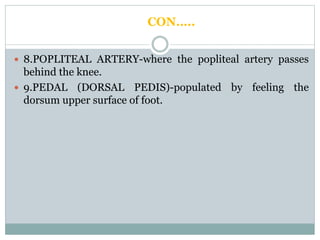
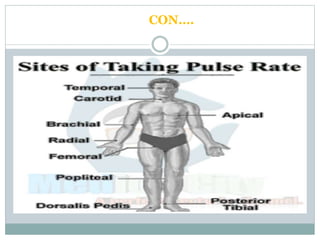
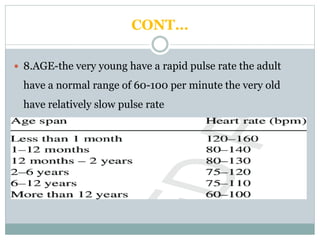
This document defines pulse and discusses its assessment and characteristics. It defines pulse as the alternating expansion and recoil of arteries after each heartbeat. The common sites to take a pulse include the temporal, carotid, apical, radial, femoral, brachial, posterior tibial, popliteal, and pedal arteries. A pulse is normally assessed via palpation or auscultation and is measured in beats per minute, with a normal adult rate of 60-100 bpm. Factors that can affect the pulse rate include medications, exercise, dehydration, stress, temperature, diseases, food intake, and age. Characteristics of a pulse include its rate, rhythm, volume, and the elasticity of the