• What Enterprises Really Need
Private vs Public Blockchains
Choosing the Right Path for Long-Term Scalability & Security
Introduction to Blockchain in the Enterprise
• Enterprises are exploring
blockchain to modernize
operations.
• From finance to logistics,
blockchain offers data integrity,
automation, and transparency.
• Choosing the right type of
blockchain is foundational to long-
term success.
Blockchain Types
01
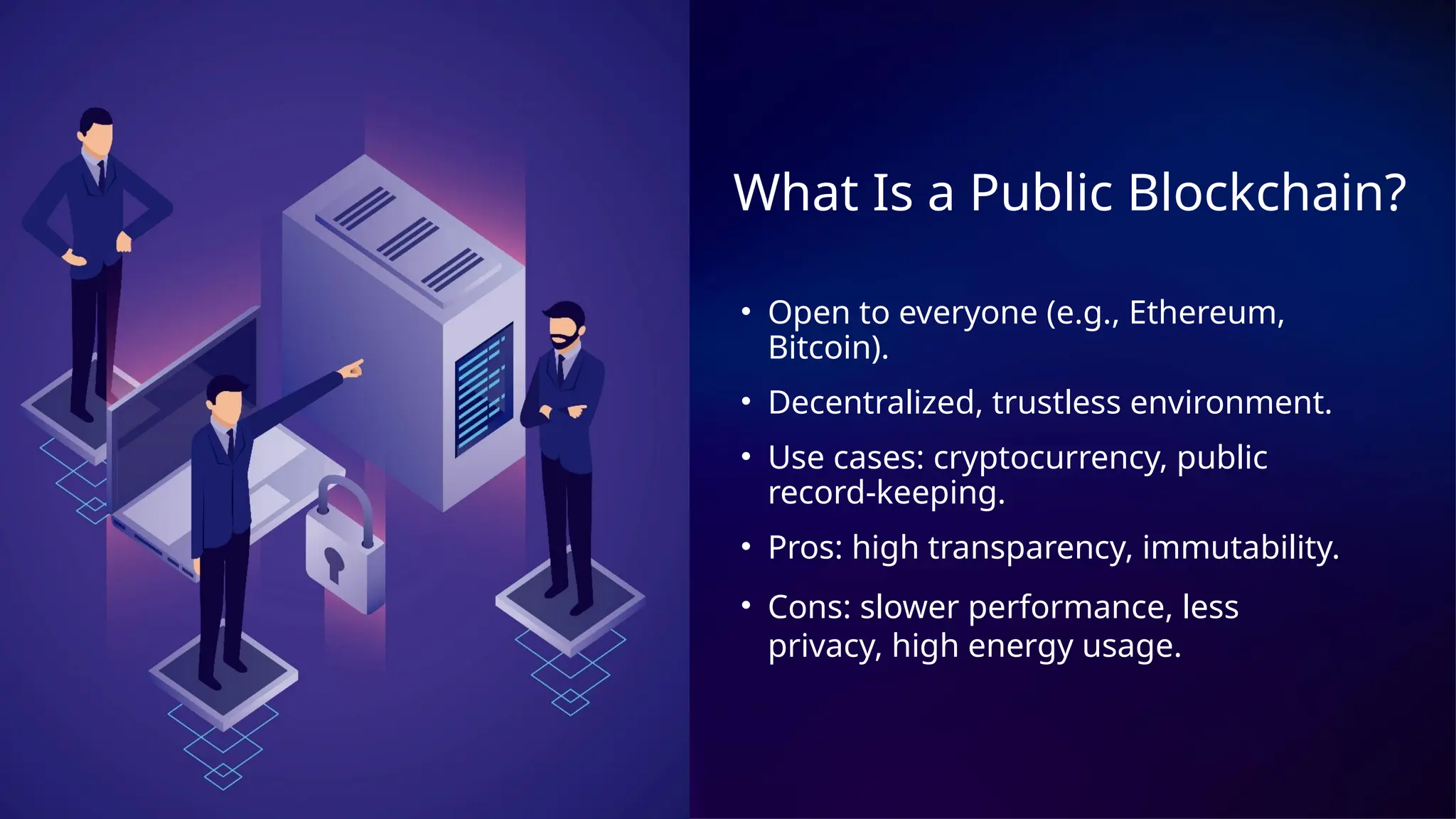
What Is a Public Blockchain?
• Open to everyone (e.g., Ethereum,
Bitcoin).
• Decentralized, trustless environment.
• Use cases: cryptocurrency, public
record-keeping.
• Pros: high transparency, immutability.
• Cons: slower performance, less
privacy, high energy usage.
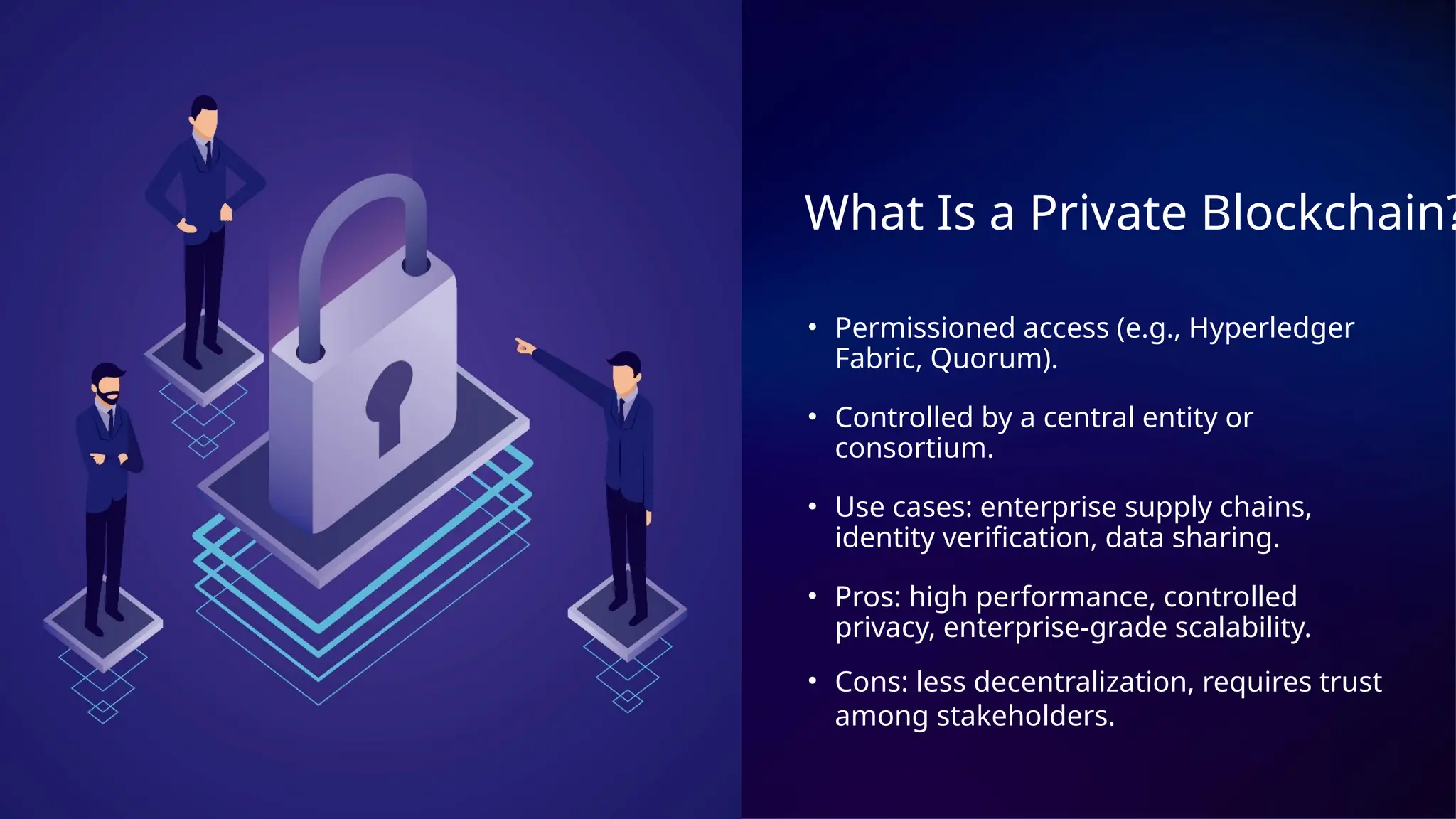
What Is a Private Blockchain?
• Permissioned access (e.g., Hyperledger
Fabric, Quorum).
• Controlled by a central entity or
consortium.
• Use cases: enterprise supply chains,
identity verification, data sharing.
• Pros: high performance, controlled
privacy, enterprise-grade scalability.
• Cons: less decentralization, requires trust
among stakeholders.
Key Differences Between Private and Public Blockchains
Private blockchains limit access to a select group, enhancing security and control, while public
blockchains allow unrestricted participation, fostering transparency. Private chains often prioritize
data privacy and faster transaction speeds, whereas public chains focus on decentralization and wide
participation, leading to potential scalability challenges.
Enterprise Considerations
02
Scalability Needs
Scalability is critical for enterprises as they grow. Private blockchains can offer tailored
solutions, handling higher transaction volumes efficiently due to their controlled
environment. In contrast, public blockchains may experience slower transaction speeds
during peak times due to network congestion, impacting their suitability for large
organizations.
Security Requirements
Security is paramount for enterprises, often leaning toward private blockchains, which
offer greater control over data access and protocols. Public blockchains, while secure
through decentralization, may expose sensitive corporate data, necessitating robust
encryption and cybersecurity measures to protect against attacks.
Compliance and Regulation Factors
Enterprises must navigate various compliance and regulatory landscapes.
Private blockchains allow organizations to implement necessary regulations
within a controlled setting, ensuring adherence to industry standards. Public
blockchains, however, may face challenges in regulatory compliance due to
their decentralized and open nature, making governance more complex.
Conclusions
In conclusion, the choice between private and public blockchains hinges on an
enterprise's specific needs, including scalability, security, and regulatory compliance.
Private blockchains offer refined control and performance, while public blockchains
provide transparency and inclusivity, making the decision crucial for aligning with
business objectives.

Public vs Private Blockchain in 2025: What Enterprises Need to Know for Scalable, Secure Solutions

  • 1.
    • What EnterprisesReally Need Private vs Public Blockchains Choosing the Right Path for Long-Term Scalability & Security
  • 2.
    Introduction to Blockchainin the Enterprise • Enterprises are exploring blockchain to modernize operations. • From finance to logistics, blockchain offers data integrity, automation, and transparency. • Choosing the right type of blockchain is foundational to long- term success.
  • 3.
  • 4.
    What Is aPublic Blockchain? • Open to everyone (e.g., Ethereum, Bitcoin). • Decentralized, trustless environment. • Use cases: cryptocurrency, public record-keeping. • Pros: high transparency, immutability. • Cons: slower performance, less privacy, high energy usage.
  • 5.
    What Is aPrivate Blockchain? • Permissioned access (e.g., Hyperledger Fabric, Quorum). • Controlled by a central entity or consortium. • Use cases: enterprise supply chains, identity verification, data sharing. • Pros: high performance, controlled privacy, enterprise-grade scalability. • Cons: less decentralization, requires trust among stakeholders.
  • 6.
    Key Differences BetweenPrivate and Public Blockchains Private blockchains limit access to a select group, enhancing security and control, while public blockchains allow unrestricted participation, fostering transparency. Private chains often prioritize data privacy and faster transaction speeds, whereas public chains focus on decentralization and wide participation, leading to potential scalability challenges.
  • 7.
  • 8.
    Scalability Needs Scalability iscritical for enterprises as they grow. Private blockchains can offer tailored solutions, handling higher transaction volumes efficiently due to their controlled environment. In contrast, public blockchains may experience slower transaction speeds during peak times due to network congestion, impacting their suitability for large organizations.
  • 9.
    Security Requirements Security isparamount for enterprises, often leaning toward private blockchains, which offer greater control over data access and protocols. Public blockchains, while secure through decentralization, may expose sensitive corporate data, necessitating robust encryption and cybersecurity measures to protect against attacks.
  • 10.
    Compliance and RegulationFactors Enterprises must navigate various compliance and regulatory landscapes. Private blockchains allow organizations to implement necessary regulations within a controlled setting, ensuring adherence to industry standards. Public blockchains, however, may face challenges in regulatory compliance due to their decentralized and open nature, making governance more complex.
  • 11.
    Conclusions In conclusion, thechoice between private and public blockchains hinges on an enterprise's specific needs, including scalability, security, and regulatory compliance. Private blockchains offer refined control and performance, while public blockchains provide transparency and inclusivity, making the decision crucial for aligning with business objectives.