SCHOOL OF COMMERCE,DAVV
SESION - 2023-2024
COURSE - B.COM [ATM] 4th SEM
TOPIC - PUBLIC DEBT AND ITS OBJECTIVES
SUBMITTED TO:- BHARTI ARYA Mam SUBMITTED BY:- KAJAL MALVIYA
ROLL NO. - BATM/22/2056
Public Debt and Its
Objectives
Public debt, the total amount of money a government owes, plays a
crucial role in a nation's economic landscape. Understanding the
definition, historical trends, and key objectives of public debt
management is essential for policymakers and citizens alike.
by Kajal Malviya
Definition and Importance of Public Debt
1 What is Public Debt?
Public debt refers to the total
amount of money a
government has borrowed
from both domestic and
foreign sources to finance its
operations and spending.
2 Importance of Public Debt
Governments use public debt
to fund essential public
services, stimulate the
economy, and invest in long-
term infrastructure projects.
3 Responsible Management
Effectively managing public
debt is crucial for maintaining
financial stability, economic
growth, and the country's
creditworthiness.
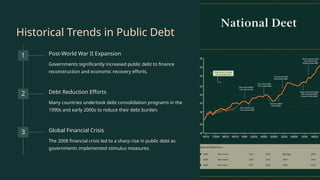
Historical Trends in Public Debt
1 Post-World War II Expansion
Governments significantly increased public debt to finance
reconstruction and economic recovery efforts.
2 Debt Reduction Efforts
Many countries undertook debt consolidation programs in the
1990s and early 2000s to reduce their debt burden.
3 Global Financial Crisis
The 2008 financial crisis led to a sharp rise in public debt as
governments implemented stimulus measures.
Drivers of Public Debt Growth
Economic Factors
Recessions, low economic growth,
and high unemployment can
increase the need for government
spending and lead to rising debt
levels.
Political Decisions
Government policies, such as tax
cuts or increased social welfare
spending, can contribute to the
growth of public debt.
Financing Needs
Governments may borrow to fund
essential public services,
infrastructure projects, or to
finance budget deficits.
Objectives of Public Debt Management
Financing Needs
Governments borrow to cover budget deficits and fund
essential public services and infrastructure projects.
Risk Mitigation
Debt management aims to minimize the risks associated with
debt, such as refinancing, interest rate, and exchange rate
risks.
Debt Sustainability
Policymakers strive to ensure that the level of public debt is
manageable and does not compromise long-term economic
stability.
Promoting Market Development
Governments may use public debt management to develop
domestic bond markets and support financial sector growth.
Financing Deficit Spending
Budget Deficit
When government expenditures
exceed revenues, a budget deficit is
created, which needs to be financed.
Debt Issuance
Governments issue bonds, bills, and
other debt instruments to raise funds
and cover the budget deficit.
Debt Servicing
The government must make regular
interest payments and eventually
repay the principal on the debt it has
issued.
Debt Sustainability and Fiscal Policy
Debt Sustainability
Governments aim to maintain a
level of public debt that can be
serviced without compromising
economic growth or financial
stability.
Fiscal Policy
Policymakers use fiscal tools, such
as taxation and government
spending, to manage the size and
composition of public debt.
Debt Reduction Strategies
Governments may implement
policies to reduce the debt burden,
such as budget surpluses, asset
sales, or debt restructuring.
Challenges and Considerations in
Public Debt Management
Global Factors
Governments must consider the impact
of international economic conditions,
such as interest rates and exchange rates,
on their debt management strategies.
Demographic Changes
Aging populations and shifting spending
patterns can affect the long-term
sustainability of public debt and the
government's ability to service it.
Transparency and Accountability
Effective public debt management
requires transparent communication and
accountability to ensure public trust and
confidence.
Risk Management
Governments must carefully manage
various risks, such as refinancing, interest
rate, and exchange rate risks, to maintain
a sustainable debt portfolio.

Public-Debt-and-Its-Objectives (5).pptx.

  • 1.
    SCHOOL OF COMMERCE,DAVV SESION- 2023-2024 COURSE - B.COM [ATM] 4th SEM TOPIC - PUBLIC DEBT AND ITS OBJECTIVES SUBMITTED TO:- BHARTI ARYA Mam SUBMITTED BY:- KAJAL MALVIYA ROLL NO. - BATM/22/2056
  • 2.
    Public Debt andIts Objectives Public debt, the total amount of money a government owes, plays a crucial role in a nation's economic landscape. Understanding the definition, historical trends, and key objectives of public debt management is essential for policymakers and citizens alike. by Kajal Malviya
  • 3.
    Definition and Importanceof Public Debt 1 What is Public Debt? Public debt refers to the total amount of money a government has borrowed from both domestic and foreign sources to finance its operations and spending. 2 Importance of Public Debt Governments use public debt to fund essential public services, stimulate the economy, and invest in long- term infrastructure projects. 3 Responsible Management Effectively managing public debt is crucial for maintaining financial stability, economic growth, and the country's creditworthiness.
  • 4.
    Historical Trends inPublic Debt 1 Post-World War II Expansion Governments significantly increased public debt to finance reconstruction and economic recovery efforts. 2 Debt Reduction Efforts Many countries undertook debt consolidation programs in the 1990s and early 2000s to reduce their debt burden. 3 Global Financial Crisis The 2008 financial crisis led to a sharp rise in public debt as governments implemented stimulus measures.
  • 5.
    Drivers of PublicDebt Growth Economic Factors Recessions, low economic growth, and high unemployment can increase the need for government spending and lead to rising debt levels. Political Decisions Government policies, such as tax cuts or increased social welfare spending, can contribute to the growth of public debt. Financing Needs Governments may borrow to fund essential public services, infrastructure projects, or to finance budget deficits.
  • 6.
    Objectives of PublicDebt Management Financing Needs Governments borrow to cover budget deficits and fund essential public services and infrastructure projects. Risk Mitigation Debt management aims to minimize the risks associated with debt, such as refinancing, interest rate, and exchange rate risks. Debt Sustainability Policymakers strive to ensure that the level of public debt is manageable and does not compromise long-term economic stability. Promoting Market Development Governments may use public debt management to develop domestic bond markets and support financial sector growth.
  • 7.
    Financing Deficit Spending BudgetDeficit When government expenditures exceed revenues, a budget deficit is created, which needs to be financed. Debt Issuance Governments issue bonds, bills, and other debt instruments to raise funds and cover the budget deficit. Debt Servicing The government must make regular interest payments and eventually repay the principal on the debt it has issued.
  • 8.
    Debt Sustainability andFiscal Policy Debt Sustainability Governments aim to maintain a level of public debt that can be serviced without compromising economic growth or financial stability. Fiscal Policy Policymakers use fiscal tools, such as taxation and government spending, to manage the size and composition of public debt. Debt Reduction Strategies Governments may implement policies to reduce the debt burden, such as budget surpluses, asset sales, or debt restructuring.
  • 9.
    Challenges and Considerationsin Public Debt Management Global Factors Governments must consider the impact of international economic conditions, such as interest rates and exchange rates, on their debt management strategies. Demographic Changes Aging populations and shifting spending patterns can affect the long-term sustainability of public debt and the government's ability to service it. Transparency and Accountability Effective public debt management requires transparent communication and accountability to ensure public trust and confidence. Risk Management Governments must carefully manage various risks, such as refinancing, interest rate, and exchange rate risks, to maintain a sustainable debt portfolio.