Post traumatic
stress disorder
By
Aastha Bhat, Group 9624Ma, IV course (Medicine); Dr. Natalia
Definition
PTSD is a pathological anxiety
that usually occurs after an
individual experiences or
witnesses severe trauma that
constitutes a threat to the
physical integrity or life of the
individual or of another person
It is a debilitating psychological
condition trigged by a traumatic
event, such as rape, war, a
terrorist act, sudden or violent
death of a loved one, natural
disaster, or catastrophic accident
Traumas leading to PTSD
include,
 War
 Natural disasters
 Car or plane crash
 Terrorist attack
 Childhood neglect
 Kidnapping
 Assault
 Rape
 Physical abuse
 Sudden death of a loved one
 Sexual abuse
Signs and symptoms
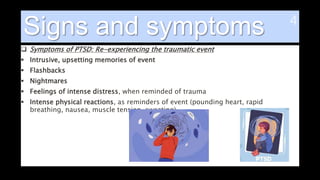
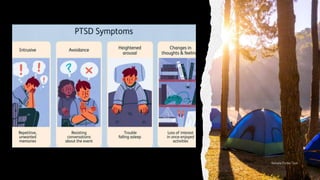
 Symptoms of PTSD: Re-experiencing the traumatic event
 Intrusive, upsetting memories of event
 Flashbacks
 Nightmares
 Feelings of intense distress, when reminded of trauma
 Intense physical reactions, as reminders of event (pounding heart, rapid
breathing, nausea, muscle tension, sweating)
Signs and symptoms
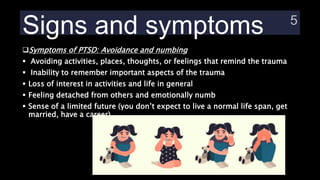
Symptoms of PTSD: Avoidance and numbing
 Avoiding activities, places, thoughts, or feelings that remind the trauma
 Inability to remember important aspects of the trauma
 Loss of interest in activities and life in general
 Feeling detached from others and emotionally numb
 Sense of a limited future (you don’t expect to live a normal life span, get
married, have a career)
Signs and Symptoms
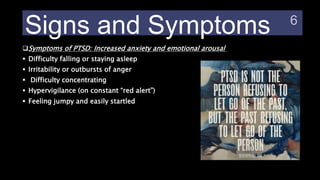
Symptoms of PTSD: Increased anxiety and emotional arousal
 Difficulty falling or staying asleep
 Irritability or outbursts of anger
 Difficulty concentrating
 Hypervigilance (on constant “red alert”)
 Feeling jumpy and easily startled
Other common
symptoms
 Anger and irritability
 Guilt, shame or self blame
 Substance abuse
 Feelings of mistrust
 Depression and hopelessness
 Suicidal thoughts and feelings
 Feeling alienated and alone
 Physical aches and pains
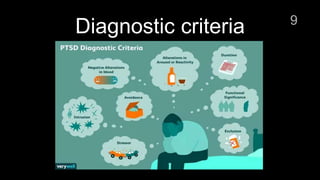
Diagnostic criteria
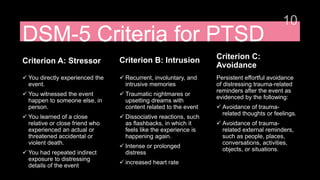
DSM-5 Criteria for PTSD
Criterion A: Stressor
 You directly experienced the
event.
 You witnessed the event
happen to someone else, in
person.
 You learned of a close
relative or close friend who
experienced an actual or
threatened accidental or
violent death.
 You had repeated indirect
exposure to distressing
details of the event
Criterion B: Intrusion
 Recurrent, involuntary, and
intrusive memories
 Traumatic nightmares or
upsetting dreams with
content related to the event
 Dissociative reactions, such
as flashbacks, in which it
feels like the experience is
happening again.
 Intense or prolonged
distress
 increased heart rate
Criterion C:
Avoidance
Persistent effortful avoidance
of distressing trauma-related
reminders after the event as
evidenced by the following:
 Avoidance of trauma-
related thoughts or feelings.
 Avoidance of trauma-
related external reminders,
such as people, places,
conversations, activities,
objects, or situations.
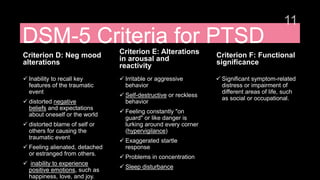
DSM-5 Criteria for PTSD
Criterion D: Neg mood
alterations
 Inability to recall key
features of the traumatic
event
 distorted negative
beliefs and expectations
about oneself or the world
 distorted blame of self or
others for causing the
traumatic event
 Feeling alienated, detached
or estranged from others.
 inability to experience
positive emotions, such as
happiness, love, and joy.
Criterion E: Alterations
in arousal and
reactivity
 Irritable or aggressive
behavior
 Self-destructive or reckless
behavior
 Feeling constantly "on
guard" or like danger is
lurking around every corner
(hypervigilance)
 Exaggerated startle
response
 Problems in concentration
 Sleep disturbance
Criterion F: Functional
significance
 Significant symptom-related
distress or impairment of
different areas of life, such
as social or occupational.
DSM-5 Criteria for PTSD
 The disturbance is not due to
medication, substance use, or other
illness.
Criterion H: Exclusion
Criterion G: Duration
 Persistence of symptoms in Criteria B,
C, D, and E for more than one month.
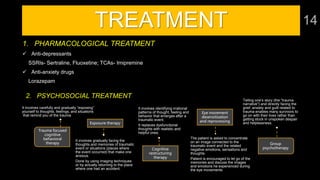
Trauma focused
cognitive
behavioral
therapy
2. PSYCHOSOCIAL TREATMENT
It involves carefully and gradually “exposing”
yourself to thoughts, feelings, and situations
that remind you of the trauma
Exposure therapy
It involves gradually facing the
thoughts and memories of traumatic
event or situations (places where
the event occurred) that make one
anxious.
Done by using imaging techniques
or by actually returning to the place
where one had an accident.
Cognitive
restructuring
therapy
It involves identifying irrational
patterns of thought, feeling and
behavior that emerges after a
traumatic event.
It replaces dysfunctional
thoughts with realistic and
helpful ones.
Eye movement
desensitization
and reprocessing
The patient is asked to concentrate
on an image connected to the
traumatic event and the related
negative emotions, sensations and
thoughts
Patient is encouraged to let go of the
memories and discuss the images
and emotions he experienced during
the eye movements
Group
psychotherapy
Telling one’s story (the “trauma
narrative”) and directly facing the
grief, anxiety and guilt related to
trauma enables many survivors to
go on with their lives rather than
getting stuck in unspoken despair
and helplessness.
TREATMENT
1. PHARMACOLOGICAL TREATMENT
 Anti-depressants
SSRIs- Sertraline, Fluoxetine; TCAs- Imipremine
 Anti-anxiety drugs
Lorazepam
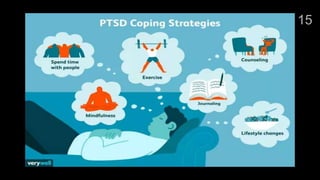
Self help in
PTSD
 PTSD self-help tip 1: Reach out to
others for support
 PTSD self-help tip 2: Avoid alcohol and
drugs
 PTSD self-help tip 3: Challenge your
sense of helplessness
Thank
you
AASTHA BHAT
PTSD- Aastha Bhat, Group 24.pptx

PTSD- Aastha Bhat, Group 24.pptx

  • 1.
    Post traumatic stress disorder By AasthaBhat, Group 9624Ma, IV course (Medicine); Dr. Natalia
  • 2.
    Definition PTSD is apathological anxiety that usually occurs after an individual experiences or witnesses severe trauma that constitutes a threat to the physical integrity or life of the individual or of another person It is a debilitating psychological condition trigged by a traumatic event, such as rape, war, a terrorist act, sudden or violent death of a loved one, natural disaster, or catastrophic accident
  • 3.
    Traumas leading toPTSD include,  War  Natural disasters  Car or plane crash  Terrorist attack  Childhood neglect  Kidnapping  Assault  Rape  Physical abuse  Sudden death of a loved one  Sexual abuse
  • 4.
    Signs and symptoms Symptoms of PTSD: Re-experiencing the traumatic event  Intrusive, upsetting memories of event  Flashbacks  Nightmares  Feelings of intense distress, when reminded of trauma  Intense physical reactions, as reminders of event (pounding heart, rapid breathing, nausea, muscle tension, sweating)
  • 5.
    Signs and symptoms Symptomsof PTSD: Avoidance and numbing  Avoiding activities, places, thoughts, or feelings that remind the trauma  Inability to remember important aspects of the trauma  Loss of interest in activities and life in general  Feeling detached from others and emotionally numb  Sense of a limited future (you don’t expect to live a normal life span, get married, have a career)
  • 6.
    Signs and Symptoms Symptomsof PTSD: Increased anxiety and emotional arousal  Difficulty falling or staying asleep  Irritability or outbursts of anger  Difficulty concentrating  Hypervigilance (on constant “red alert”)  Feeling jumpy and easily startled
  • 8.
    Other common symptoms  Angerand irritability  Guilt, shame or self blame  Substance abuse  Feelings of mistrust  Depression and hopelessness  Suicidal thoughts and feelings  Feeling alienated and alone  Physical aches and pains
  • 9.
  • 10.
    DSM-5 Criteria forPTSD Criterion A: Stressor  You directly experienced the event.  You witnessed the event happen to someone else, in person.  You learned of a close relative or close friend who experienced an actual or threatened accidental or violent death.  You had repeated indirect exposure to distressing details of the event Criterion B: Intrusion  Recurrent, involuntary, and intrusive memories  Traumatic nightmares or upsetting dreams with content related to the event  Dissociative reactions, such as flashbacks, in which it feels like the experience is happening again.  Intense or prolonged distress  increased heart rate Criterion C: Avoidance Persistent effortful avoidance of distressing trauma-related reminders after the event as evidenced by the following:  Avoidance of trauma- related thoughts or feelings.  Avoidance of trauma- related external reminders, such as people, places, conversations, activities, objects, or situations.
  • 11.
    DSM-5 Criteria forPTSD Criterion D: Neg mood alterations  Inability to recall key features of the traumatic event  distorted negative beliefs and expectations about oneself or the world  distorted blame of self or others for causing the traumatic event  Feeling alienated, detached or estranged from others.  inability to experience positive emotions, such as happiness, love, and joy. Criterion E: Alterations in arousal and reactivity  Irritable or aggressive behavior  Self-destructive or reckless behavior  Feeling constantly "on guard" or like danger is lurking around every corner (hypervigilance)  Exaggerated startle response  Problems in concentration  Sleep disturbance Criterion F: Functional significance  Significant symptom-related distress or impairment of different areas of life, such as social or occupational.
  • 12.
    DSM-5 Criteria forPTSD  The disturbance is not due to medication, substance use, or other illness. Criterion H: Exclusion Criterion G: Duration  Persistence of symptoms in Criteria B, C, D, and E for more than one month.
  • 14.
    Trauma focused cognitive behavioral therapy 2. PSYCHOSOCIALTREATMENT It involves carefully and gradually “exposing” yourself to thoughts, feelings, and situations that remind you of the trauma Exposure therapy It involves gradually facing the thoughts and memories of traumatic event or situations (places where the event occurred) that make one anxious. Done by using imaging techniques or by actually returning to the place where one had an accident. Cognitive restructuring therapy It involves identifying irrational patterns of thought, feeling and behavior that emerges after a traumatic event. It replaces dysfunctional thoughts with realistic and helpful ones. Eye movement desensitization and reprocessing The patient is asked to concentrate on an image connected to the traumatic event and the related negative emotions, sensations and thoughts Patient is encouraged to let go of the memories and discuss the images and emotions he experienced during the eye movements Group psychotherapy Telling one’s story (the “trauma narrative”) and directly facing the grief, anxiety and guilt related to trauma enables many survivors to go on with their lives rather than getting stuck in unspoken despair and helplessness. TREATMENT 1. PHARMACOLOGICAL TREATMENT  Anti-depressants SSRIs- Sertraline, Fluoxetine; TCAs- Imipremine  Anti-anxiety drugs Lorazepam
  • 16.
    Self help in PTSD PTSD self-help tip 1: Reach out to others for support  PTSD self-help tip 2: Avoid alcohol and drugs  PTSD self-help tip 3: Challenge your sense of helplessness
  • 17.