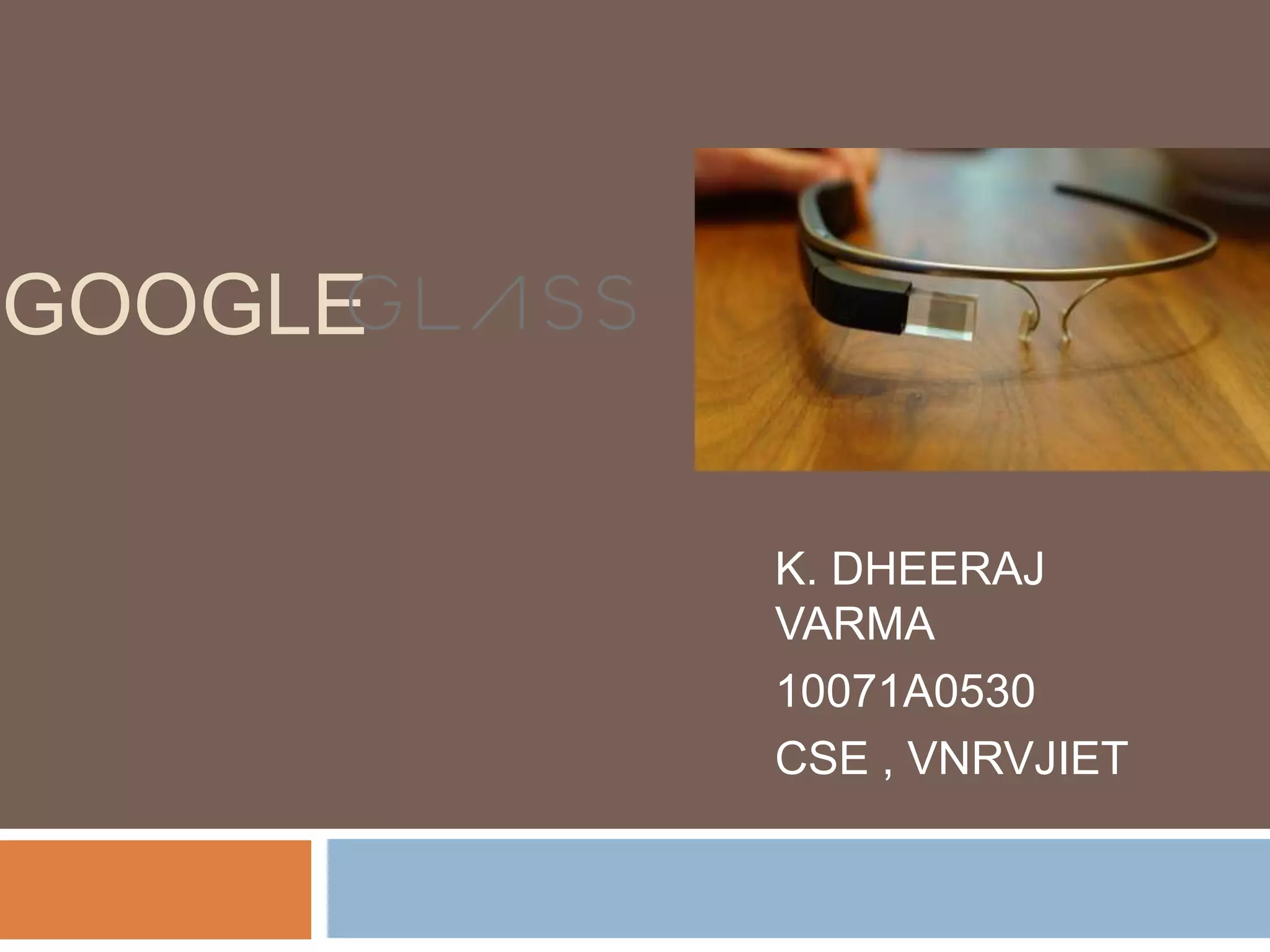
GOOGLE
K. DHEERAJ
VARMA
10071A0530
CSE , VNRVJIET
Content
s









Introduction
Features
Technologies and Standards
How it works?
Advantages
Disadvantages
Future scope
Conclusion
Introductio
n


Project Glass is a research and development program

by Google



The intended purpose of Project Glass products



Displaying of information currently available to most smart
phones users



Allowing for interaction with the Internet via natural
language voice commands.
Features












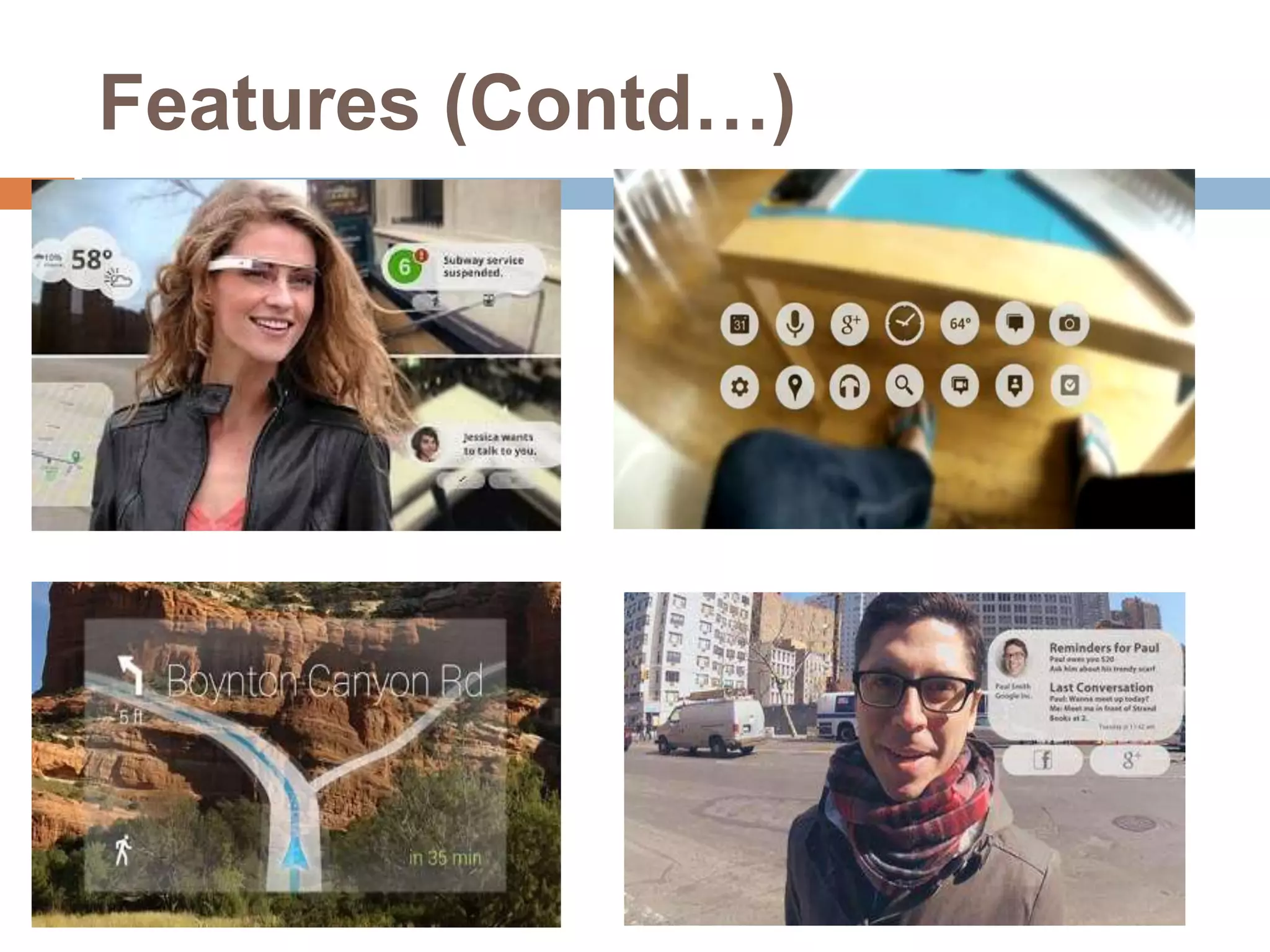
Tiny & Powerful
Menu
Reminders
Weather
Travel Alerts
Google Glass’ Voice Input
Take Photos & Videos
Get Location On-The-Go
Interior Map
Easy Sharing
Features (Contd…)
Technologies
Used









Wearable computing
Ambient Intelligence
Smart clothing
Eye Tap technology
Smart Grid Technology
4G Technology
Android Technology
Augmented Reality
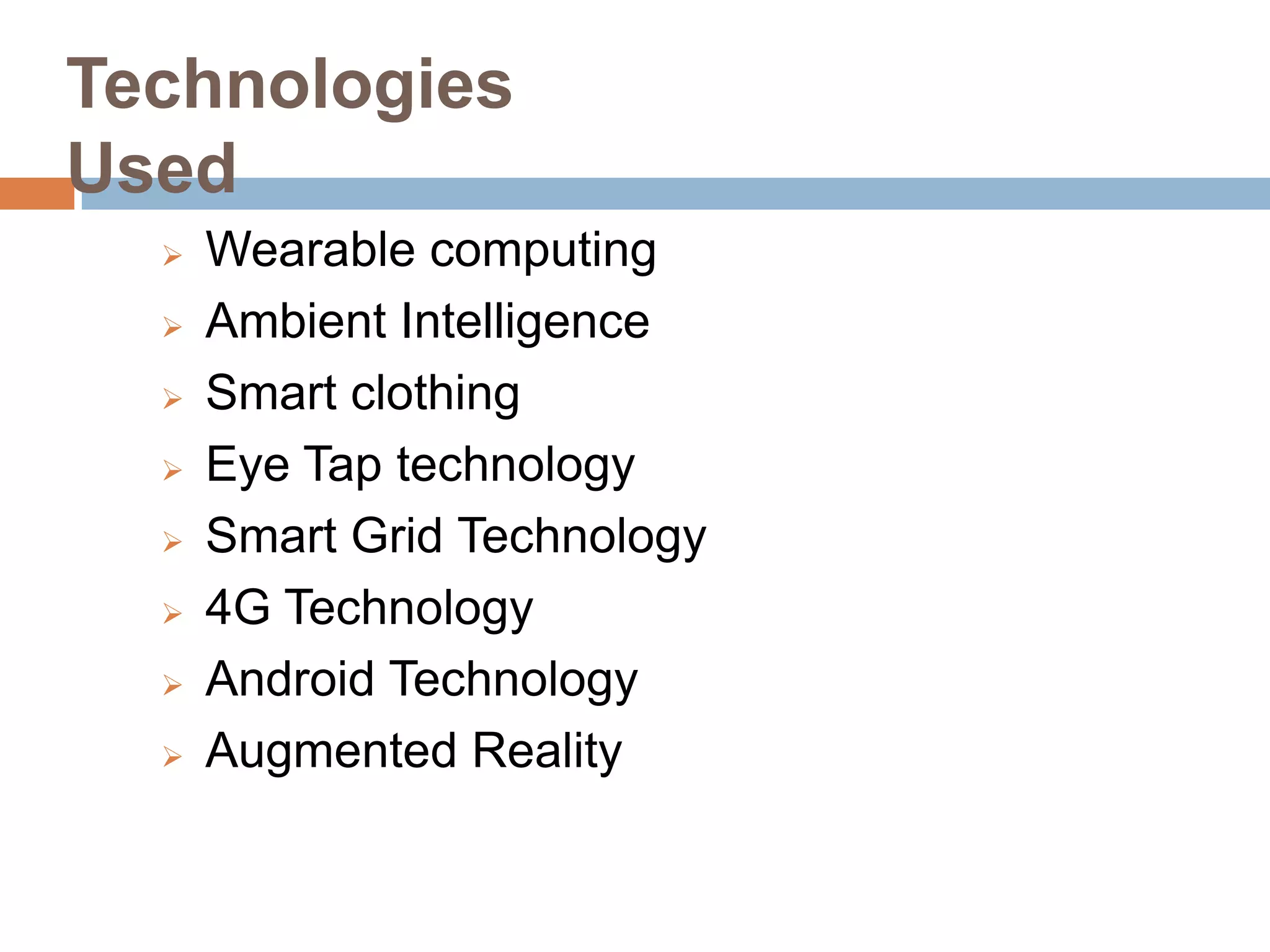
Wearable
Computing



Worn by the bearer under, with or on top of clothing.



Developed

for

general

or

special

purpose

information technologies and media development.
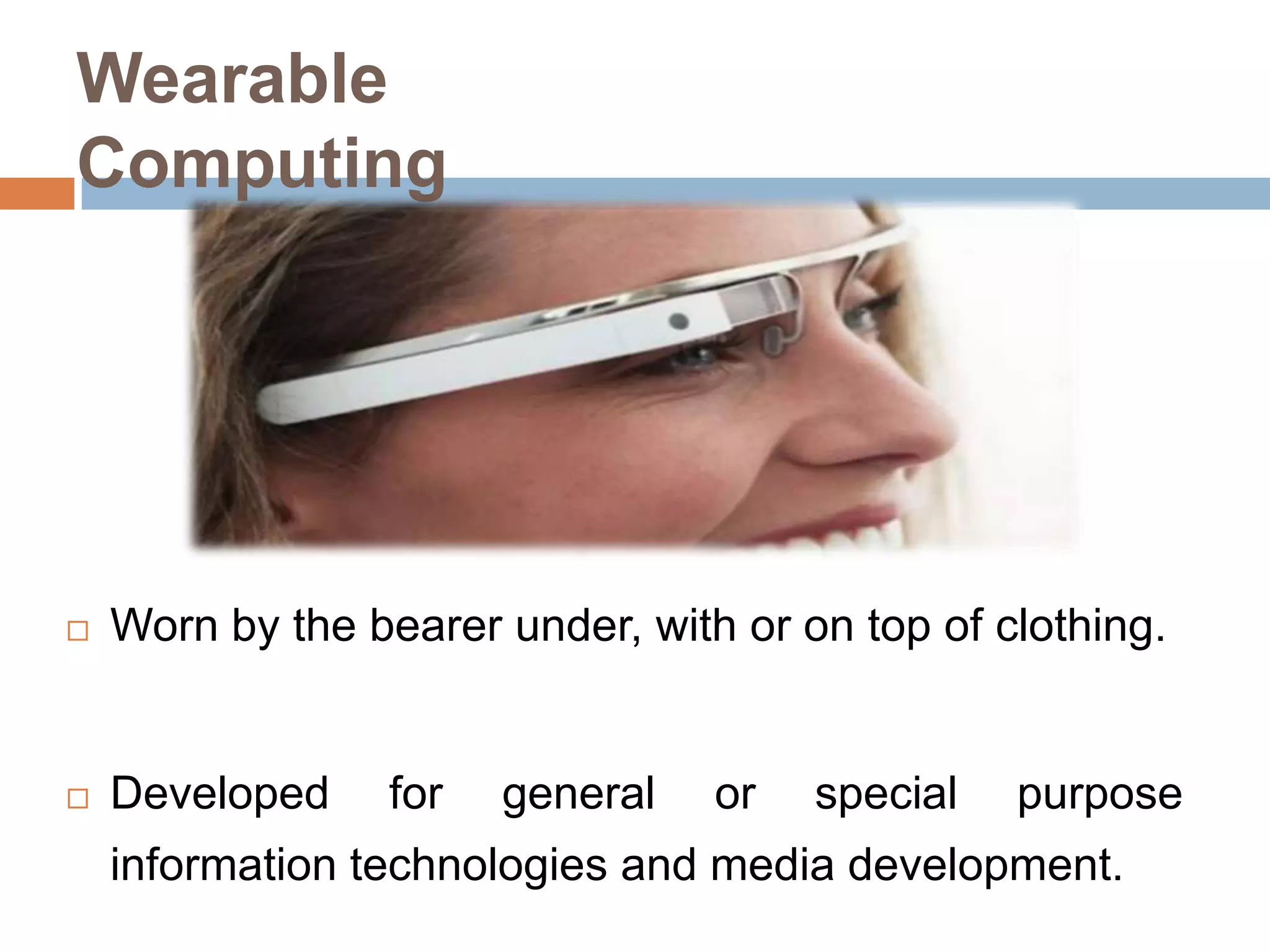
Ambient
Intelligence


Electronic environments that are sensitive and
responsive to the presence of people.



Devices work in concert to support people in
carrying out their everyday life activities.



The
technology
disappears
into
our
surroundings until only the user interface
remains perceivable by users.
Smart
Clothing


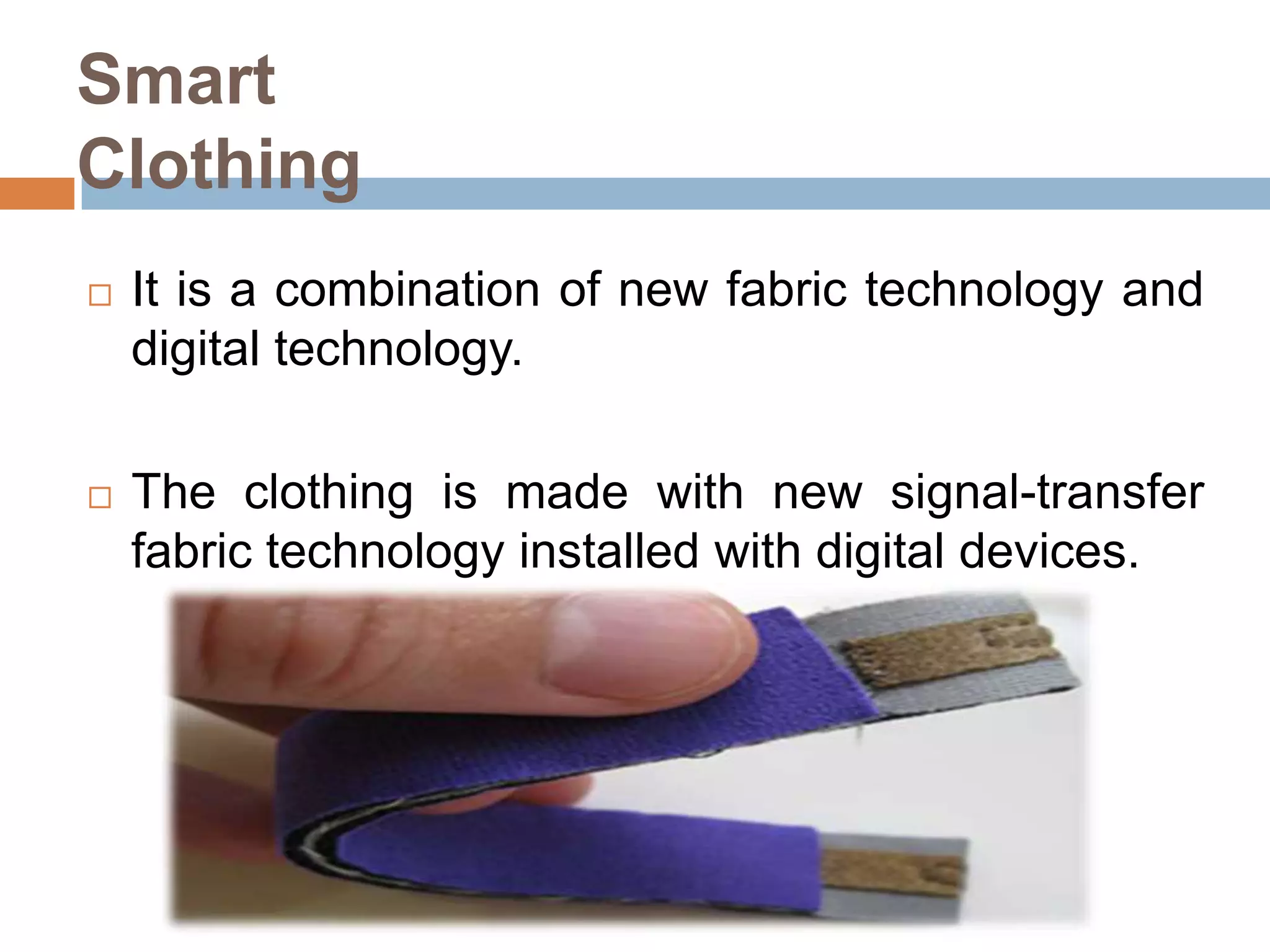
It is a combination of new fabric technology and
digital technology.



The clothing is made with new signal-transfer
fabric technology installed with digital devices.
Smart Grid
Technology


Smart grid is an electrical grid that uses information

and communications technologies to gather and act
on information about the behaviors of suppliers and
consumers, in an automated fashion.



It improves the efficiency, reliability, economics, and
sustainability of the production and distribution of
electricity.
4G
Technology


4G is the fourth generation of cell phone mobile
communication standards.



This

system

provides

mobile

ultra

broadband Internet access with data rates of
300Mbps in mobility to 1Gbps while stationary.


The data speed can make the device run about
its purpose.
Augmented
Reality


Augmented reality is a live, direct or indirect, view of
a physical, real-world environment.



Real-world elements are augmented by generated
sensory input such as sound, video, graphics or
GPS data.
How it works? Design
perspective
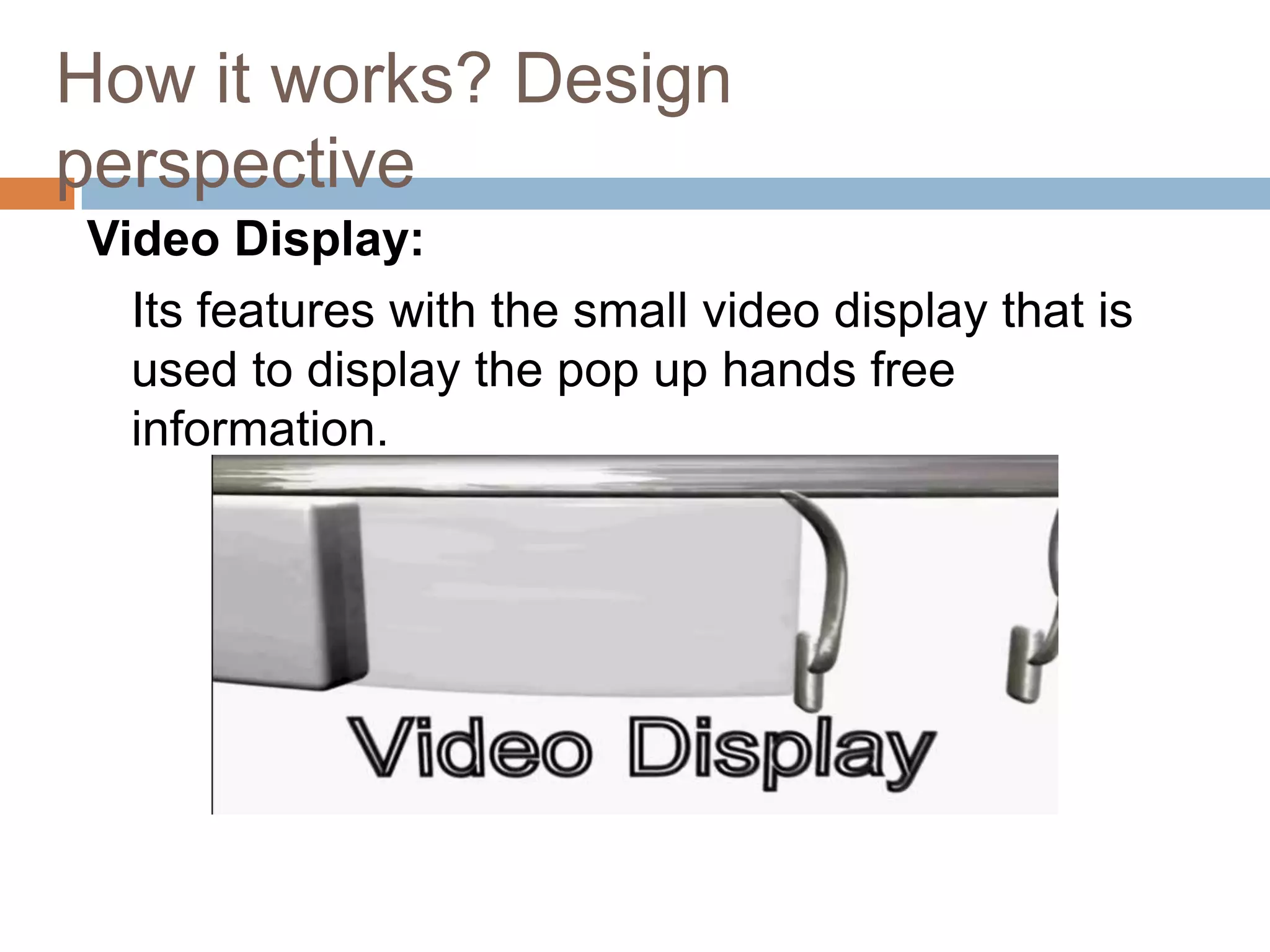
Video Display:
Its features with the small video display that is
used to display the pop up hands free
information.
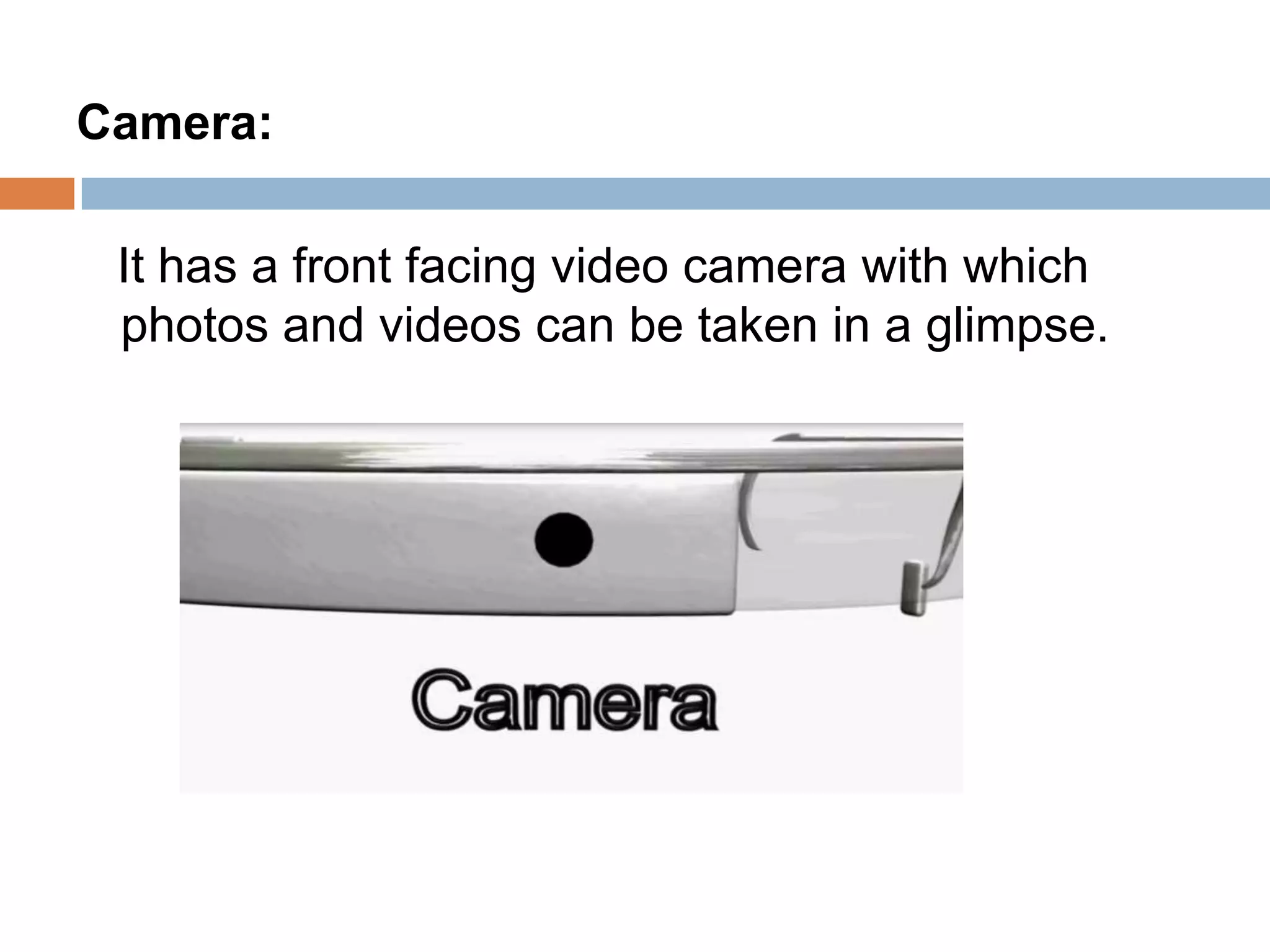
Camera:
It has a front facing video camera with which
photos and videos can be taken in a glimpse.
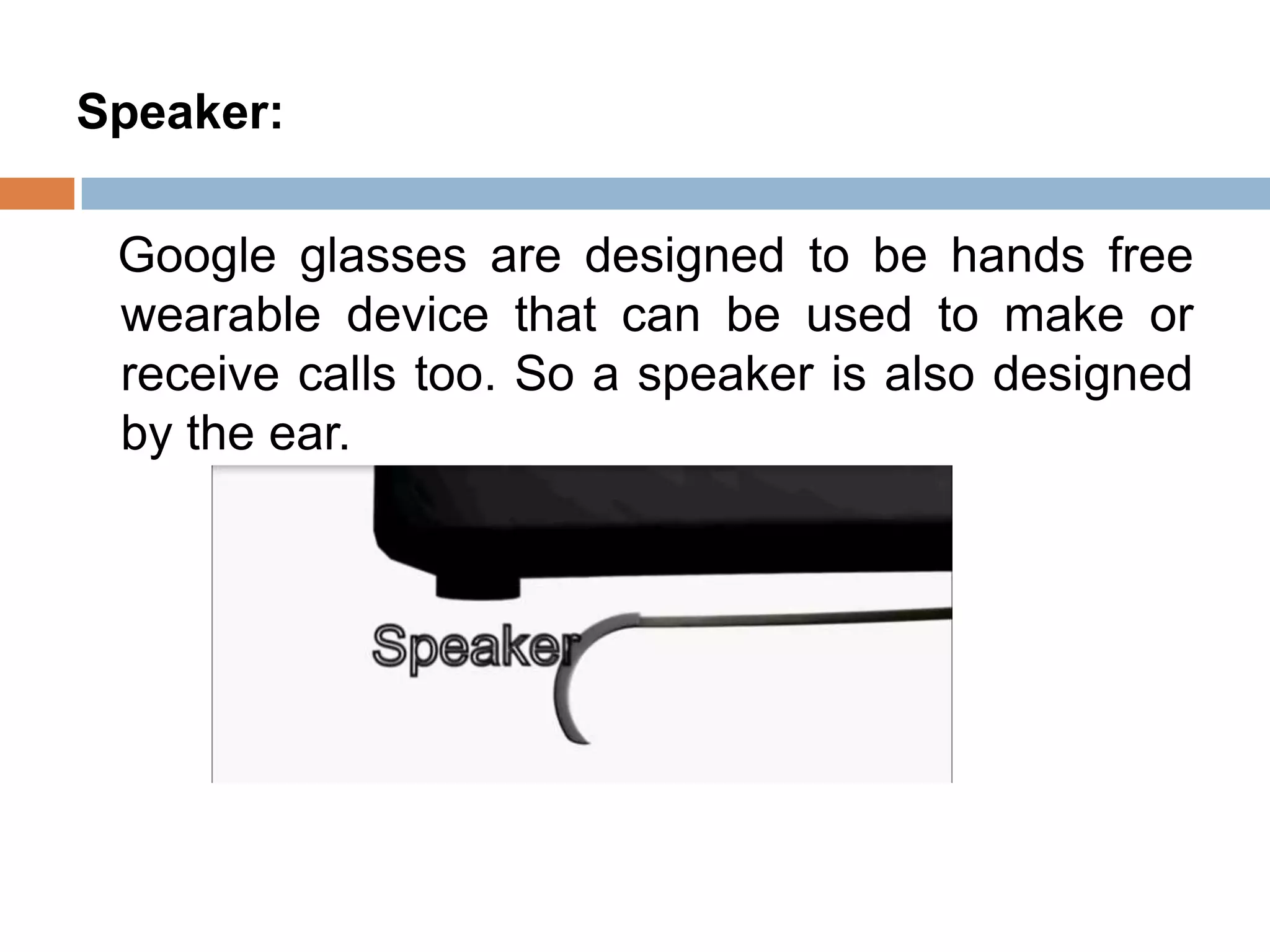
Speaker:
Google glasses are designed to be hands free
wearable device that can be used to make or
receive calls too. So a speaker is also designed
by the ear.
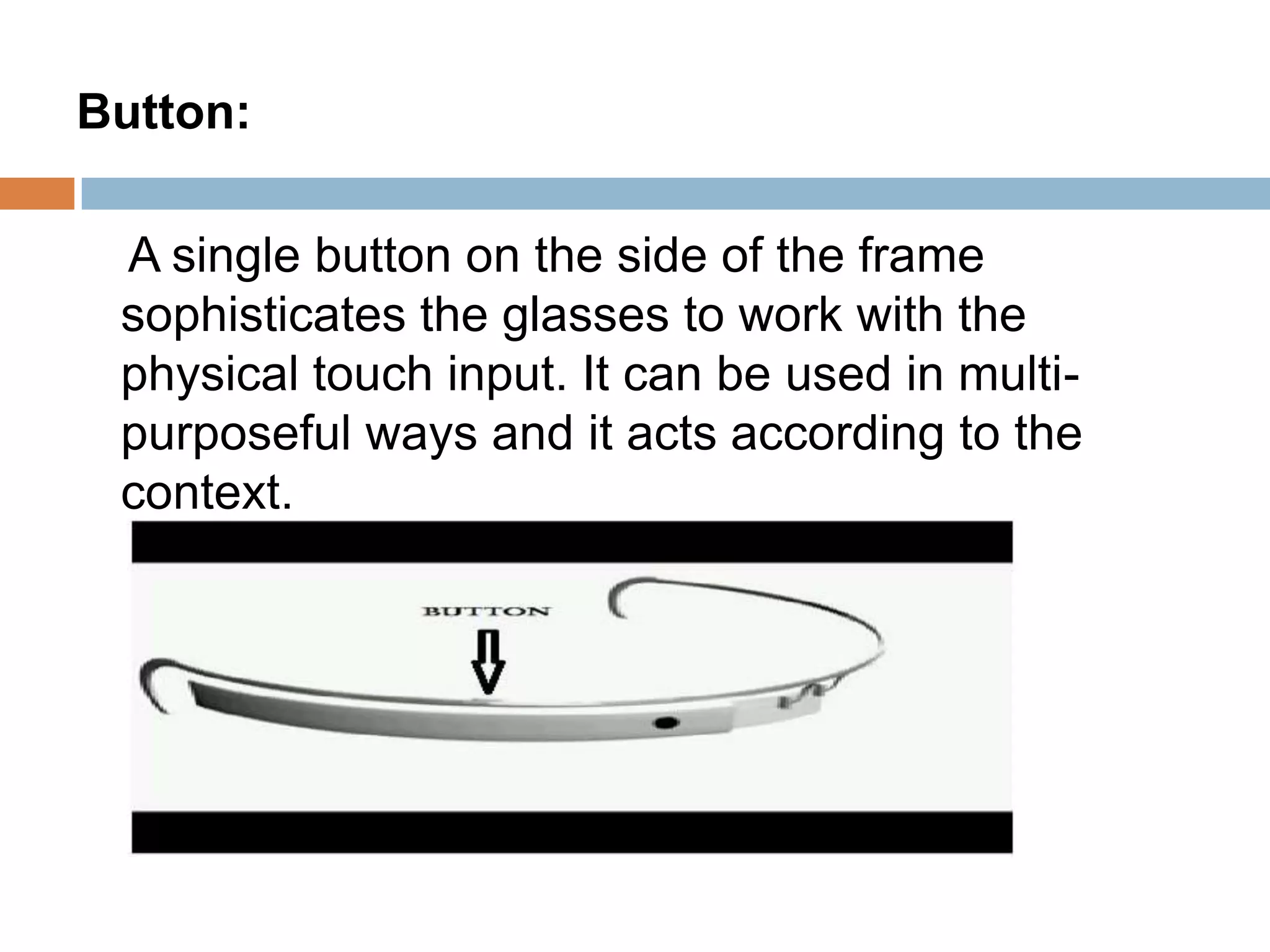
Button:
A single button on the side of the frame
sophisticates the glasses to work with the
physical touch input. It can be used in multipurposeful ways and it acts according to the
context.
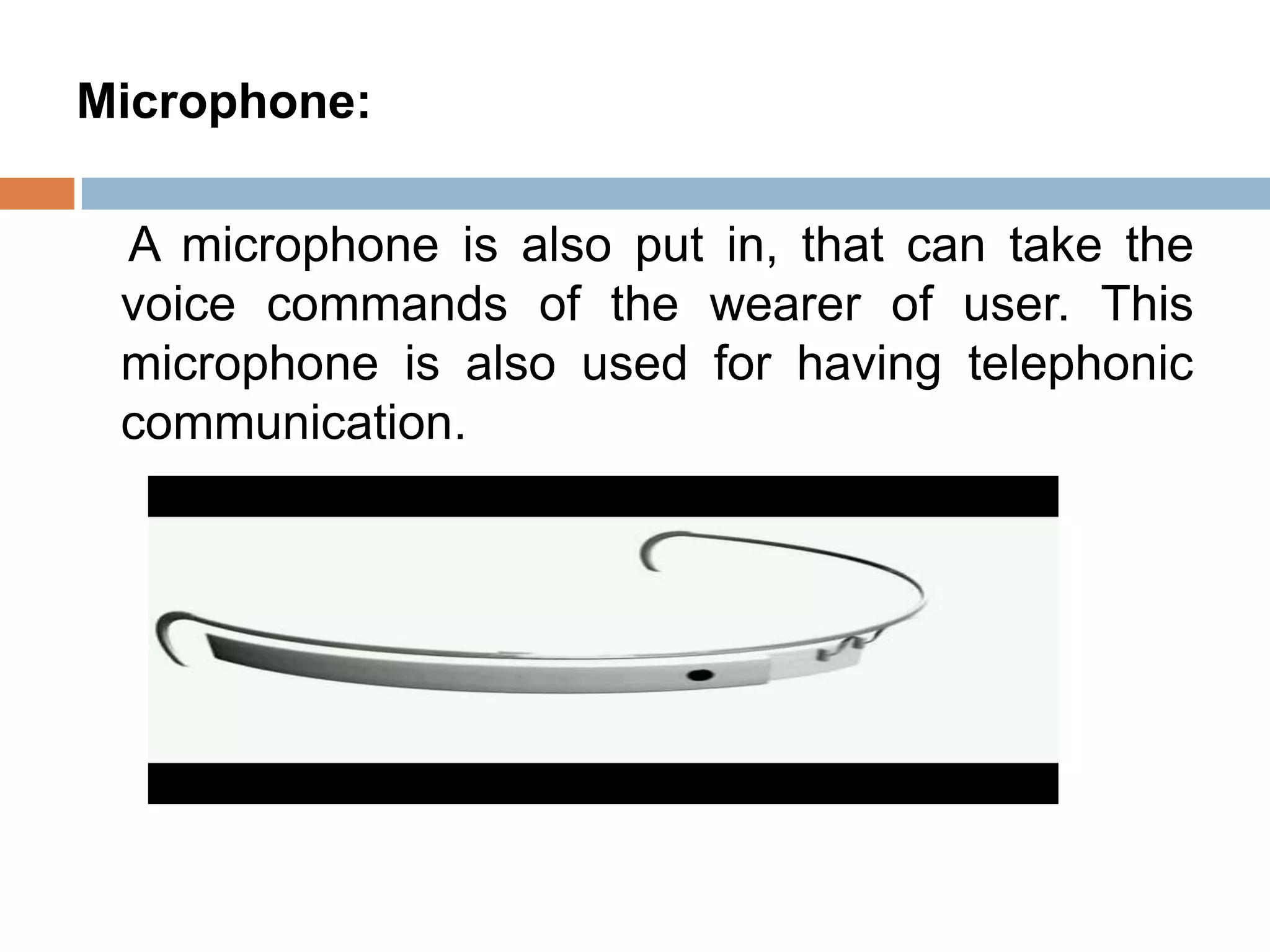
Microphone:
A microphone is also put in, that can take the
voice commands of the wearer of user. This
microphone is also used for having telephonic
communication.
Advantages











Easy to wear and use.
Sensitive and responsive to the presence of
people.
Fast access of maps, documents, videos, chats
and much more.
A new trend for fashion lovers together being an
innovative technology.
A spectacle based computer to reside directly on
your eyes rather than in your pouch or pocket.
A useful technology for all kinds of
handicapped/disabled people.
Disadvantages


Can be easily broken or damaged. Users will
have a tough time taking care of it.



It may lead to accidents while driving, eyestrain
or visual confusion.



The resource for running these glasses is still
unknown. Will there be a battery or it will run
using solar energy?



Privacy of people may breach with new glasses.



Can be used only in metro cities.
Future Scope


Google Glass is as futuristic a gadget we’ve
seen in recent times. It’s limited in scope right
now, but the future, Google believes, is bright
and the device itself is “incredibly compelling”.



Google is trying their hardest to push the Project
Glass through the FCC this year. Reports show
that Google is trying to get the approval by the

FCC this year but there are already several
hundred glasses made for testing internally.
Conclusion


Google

glasses

computers

that

are
use

basically
the

evolving

wearable
familiar

technologies that brings the sophistication and

ease of communication and information access
even for the physically challenged class of
people those literally could not use general way
of palmtops and mobiles.
Thank you!
Any Queries?

Google - Glass

  • 1.
  • 2.
  • 3.
    Introductio n  Project Glass isa research and development program by Google  The intended purpose of Project Glass products  Displaying of information currently available to most smart phones users  Allowing for interaction with the Internet via natural language voice commands.
  • 4.
    Features           Tiny & Powerful Menu Reminders Weather TravelAlerts Google Glass’ Voice Input Take Photos & Videos Get Location On-The-Go Interior Map Easy Sharing
  • 5.
  • 6.
    Technologies Used         Wearable computing Ambient Intelligence Smartclothing Eye Tap technology Smart Grid Technology 4G Technology Android Technology Augmented Reality
  • 7.
    Wearable Computing  Worn by thebearer under, with or on top of clothing.  Developed for general or special purpose information technologies and media development.
  • 8.
    Ambient Intelligence  Electronic environments thatare sensitive and responsive to the presence of people.  Devices work in concert to support people in carrying out their everyday life activities.  The technology disappears into our surroundings until only the user interface remains perceivable by users.
  • 9.
    Smart Clothing  It is acombination of new fabric technology and digital technology.  The clothing is made with new signal-transfer fabric technology installed with digital devices.
  • 10.
    Smart Grid Technology  Smart gridis an electrical grid that uses information and communications technologies to gather and act on information about the behaviors of suppliers and consumers, in an automated fashion.  It improves the efficiency, reliability, economics, and sustainability of the production and distribution of electricity.
  • 11.
    4G Technology  4G is thefourth generation of cell phone mobile communication standards.  This system provides mobile ultra broadband Internet access with data rates of 300Mbps in mobility to 1Gbps while stationary.  The data speed can make the device run about its purpose.
  • 12.
    Augmented Reality  Augmented reality isa live, direct or indirect, view of a physical, real-world environment.  Real-world elements are augmented by generated sensory input such as sound, video, graphics or GPS data.
  • 13.
    How it works?Design perspective Video Display: Its features with the small video display that is used to display the pop up hands free information.
  • 14.
    Camera: It has afront facing video camera with which photos and videos can be taken in a glimpse.
  • 15.
    Speaker: Google glasses aredesigned to be hands free wearable device that can be used to make or receive calls too. So a speaker is also designed by the ear.
  • 16.
    Button: A single buttonon the side of the frame sophisticates the glasses to work with the physical touch input. It can be used in multipurposeful ways and it acts according to the context.
  • 17.
    Microphone: A microphone isalso put in, that can take the voice commands of the wearer of user. This microphone is also used for having telephonic communication.
  • 18.
    Advantages       Easy to wearand use. Sensitive and responsive to the presence of people. Fast access of maps, documents, videos, chats and much more. A new trend for fashion lovers together being an innovative technology. A spectacle based computer to reside directly on your eyes rather than in your pouch or pocket. A useful technology for all kinds of handicapped/disabled people.
  • 19.
    Disadvantages  Can be easilybroken or damaged. Users will have a tough time taking care of it.  It may lead to accidents while driving, eyestrain or visual confusion.  The resource for running these glasses is still unknown. Will there be a battery or it will run using solar energy?  Privacy of people may breach with new glasses.  Can be used only in metro cities.
  • 20.
    Future Scope  Google Glassis as futuristic a gadget we’ve seen in recent times. It’s limited in scope right now, but the future, Google believes, is bright and the device itself is “incredibly compelling”.  Google is trying their hardest to push the Project Glass through the FCC this year. Reports show that Google is trying to get the approval by the FCC this year but there are already several hundred glasses made for testing internally.
  • 21.
    Conclusion  Google glasses computers that are use basically the evolving wearable familiar technologies that bringsthe sophistication and ease of communication and information access even for the physically challenged class of people those literally could not use general way of palmtops and mobiles.
  • 22.
  • 23.