Introduction
In todays corporateenvironment, understanding the Project Management
Life Cycle is crucial for success. This presentation will outline the different
phases and key activities involved, emphasizing their importance and how
they contribute to effective project management.
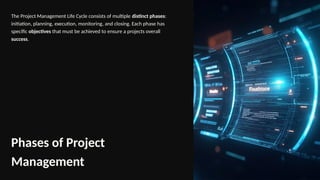
Phases of Project
Management
TheProject Management Life Cycle consists of multiple distinct phases:
initiation, planning, execution, monitoring, and closing. Each phase has
specific objectives that must be achieved to ensure a projects overall
success.
5.
Key Activities inEach Phase
Within each phase, various key activities take place. These
include stakeholder analysis, resource allocation, and risk
management. Understanding these activities is essential for
maintaining a structured and efficient workflow throughout the
project.
6.
Importance of EachPhase
Each phase of the Project Management Life Cycle is vital for
ensuring successful project delivery. They provide clarity and
structure, enabling teams to achieve specific milestones and
foster effective communication among stakeholders at every
stage.
Understanding the significance of each phase helps in
identifying potential risks and challenges, allowing for proactive
management.
Identifying Stakeholders
Identifying stakeholdersis crucial for project success.
Stakeholders can include clients, team members, and any
parties affected by the projects outcome.
A thorough stakeholder analysis helps in understanding their
interests, influence, and needs, allowing for better engagement
and communication strategies.
9.
Communication Strategies
Effective communicationstrategies ensure that everyone involved stays
informed and aligned. This includes regular updates, reports, and feedback
sessions tailored to each stakeholder group.
Utilizing tools and techniques like meetings, newsletters, and collaboration
platforms can enhance stakeholder involvement and satisfaction.
10.
Managing Stakeholder
Expectations
Managing expectationsis essential for maintaining strong
relationships. This involves setting realistic goals, timelines, and
deliverables early in the project.
By frequently communicating progress and addressing
concerns, projects are more likely to meet or exceed
stakeholder satisfaction.
11.
Conclusions
In summary, masteringthe Project Management Life Cycle and
understanding stakeholder engagement are vital for achieving
project success.
Focusing on phases and effective communication can lead to
better outcomes, higher satisfaction, and successful delivery of
project goals.
12.
CREDITS: This presentationtemplate was created by Slidesgo,
and includes icons, infographics & images by Freepik
Thank you!
Do you have any questions?
+00 000 000 000








![Project management [module 1]](https://cdn.slidesharecdn.com/ss_thumbnails/projectmanagementmodule1-200621144500-thumbnail.jpg?width=640&height=640&fit=bounds)


