Project Management in Practice 5th Edition Meredith Solutions Manual
Project Management in Practice 5th Edition Meredith Solutions Manual
Project Management in Practice 5th Edition Meredith Solutions Manual
Project Management in Practice 5th Edition Meredith Solutions Manual
Project Management in Practice 5th Edition Meredith Solutions Manual
1.
Download the fullversion and explore a variety of test banks
or solution manuals at https://testbankmall.com
Project Management in Practice 5th Edition
Meredith Solutions Manual
_____ Follow the link below to get your download now _____
https://testbankmall.com/product/project-management-in-
practice-5th-edition-meredith-solutions-manual/
Access testbankmall.com now to download high-quality
test banks or solution manuals
2.
We have selectedsome products that you may be interested in
Click the link to download now or visit testbankmall.com
for more options!.
Solution Manual for Project Management in Practice, 5th
Edition, Jack R. Meredith, Samuel J. Mantel, Jr. Scott M.
Shafer Margaret M. Sutton
https://testbankmall.com/product/solution-manual-for-project-
management-in-practice-5th-edition-jack-r-meredith-samuel-j-mantel-jr-
scott-m-shafer-margaret-m-sutton/
Solution Manual for Project Management: A Managerial
Approach 10th Edition Meredith
https://testbankmall.com/product/solution-manual-for-project-
management-a-managerial-approach-10th-edition-meredith/
Project Management A Managerial Approach 9th Edition
Meredith Test Bank
https://testbankmall.com/product/project-management-a-managerial-
approach-9th-edition-meredith-test-bank/
Horngrens Financial and Managerial Accounting 5th Edition
Miller-Nobles Solutions Manual
https://testbankmall.com/product/horngrens-financial-and-managerial-
accounting-5th-edition-miller-nobles-solutions-manual/
3.
Mental Health Nursing,6 Ed Test Bank
https://testbankmall.com/product/mental-health-nursing-6-ed-test-bank/
Test Bank for MATH FOR BUSINESS AND FINANCE AN ALGEBRAIC
APPROACH 2nd Edition by Slater
https://testbankmall.com/product/test-bank-for-math-for-business-and-
finance-an-algebraic-approach-2nd-edition-by-slater/
Principles of Pediatric Nursing Caring for Children Ball
5th Edition Test Bank
https://testbankmall.com/product/principles-of-pediatric-nursing-
caring-for-children-ball-5th-edition-test-bank/
Test Bank for Principles of Anatomy and Physiology 15th
Edition by Tortora
https://testbankmall.com/product/test-bank-for-principles-of-anatomy-
and-physiology-15th-edition-by-tortora/
Test Bank for Nursing: A Concept-Based Approach to
Learning, Volume 1: NCCLEB
https://testbankmall.com/product/test-bank-for-nursing-a-concept-
based-approach-to-learning-volume-1-nccleb/
4.
Test Bank forEconomics, 4th Edition: R. Glenn Hubbard
https://testbankmall.com/product/test-bank-for-economics-4th-edition-
r-glenn-hubbard/
5.
1/The World ofProject Management
1-2
among two processes for producing its new model. The proposed project for initiating a new
production process promises to eliminate start-up production problems and improve quality
but may be less flexible for downstream product improvements. A 13 page teaching note is
available for this case (5-692-094).
6.
1/The World ofProject Management
1-3
Harvard: 9-689-073 Plus Development Corp. (B) (Abridged); 9-693-064 (C). These two cases,
normally meant to follow the (A) case (see Chapter 2), describe the need for this corporation to
select between alternative methods of product development. The situation is exacerbated by
competitors’ aggressive actions in the market and mixed results with current development
procedures. A 21 page teaching note is available(5-690-093).
Some readings appropriate to the subject of this chapter are:
J.K. Pinto et al. Lessons for an Accidental Profession (Business Horizons, March-April 1995).
This reading describes the common occurrence of someone suddenly being appointed a project
manager and finding he or she has been inadequately trained for the task. Based on the
authors’ own experiences and interviews with dozens of senior project managers, they distill
twelve guidelines for new project managers. The guidelines run the gamut from project
initiation, through planning, to execution, to close-out. Some are technical, some are
uncommon sense, and many are philosophical, and sometimes political. But they are sage
advice, not only for the novice but for the experienced project manager as well.
1. Cooke-Davies (2002). The real success factors on projects (International Journal of
Project Management, vol. 20, #3, pp 185-190).
This reading uses three questions to question on which factors are critical to project
success. The questions are: ‘‘What factors lead to project management success?’’,
‘‘What factors lead to a successful project?’’ and ‘‘What factors lead to consistently
successful projects?’’ This paper is based on empirical research from more than 70 large
multi-national or national organizations It i identifies 12 factors that are, in one way or
another, critical to project success.
2. Thomas, G & Fernández, W. (2008), Success in IT projects: A matter of definition?
(International Journal of Project Management, 26, 733-742). This reading investigates
how project management success is defined and measured within companies in
different industries. The study was done in Australia and provides an international
perspective on project success. The authors suggest that when success criteria are
formally defined and then measured, IT project outcomes are improved and project
resources are better utilized.
7.
1/The World ofProject Management
1-4
Answers to Review Questions
1. What is the primary role of a project manager?
Managing the tradeoffs among the three project goals (cost, scope, time) is in fact the
primary role of the project manager.
2. Contrast a project from a nonproject.
The difference between a project and a nonproject is not always crystal clear. At base,
however, projects are unique, have a specific deliverable, and have a specific due date while
nonprojects usually do not have all these characteristics.
3. Contrast win-lose negotiation, lose-lose negotiation and win-win negotiation and explain
why the latter is so important in project management.
Win-lose negotiation is like a zero-sum game. Anything one side wins is a loss for the other
side. In win-win negotiation, the outcome is such that both parties gain something from the
interchange.
Win-lose negotiating is dangerous for project managers who will have to deal with the same
parties over and over again. The project manager who forces a functional manager to lose
will have created a permanent enemy.
4. Identify the three goals of a project and describe how the project manager achieves them.
What does it mean for a project to be “overdetermined?”
The three goals of a project are:
1. On time,
2. On budget, and
3. To specification (i.e., including “quality” and “client satisfaction”).
The project manager meets the goals by making “trade-offs.” For example, he/she can
shorten the project duration by using more resources.
An overdetermined project is one that has a fixed budget, fixed delivery time, and fixed
specifications (i.e., all three goals are fixed). In reality, projects must have some flexibility to
allow for chance events. In the case of an overdetermined project, there is no allowance for
any such events.
8.
1/The World ofProject Management
1-5
5. Contrast the two types of project life cycle and discuss why it is important to know which
type the current project is following.
The traditional project life cycle (the S-shaped curve) is concave to the baseline during the
last stages in the project life (i.e., the curve runs parallel to the x-axis). Some projects,
however, have a life cycle curve that is convex to the baseline at the end of the project life
(i.e. the curve runs parallel to the y-axis). This is known as a J-shaped curve).
The main reason one should understand the difference is that resource allocation for the
two types is quite different. (Cf. Chapters 4 and 6.)
6. How does the weighted scoring approach avoid the drawbacks of the NPV approach? Can
the two approaches be combined? How? What weights would be appropriate if they
were combined?
The weighted scoring model allows the introduction of nonmonetary and even qualitative
elements into the selection criteria. It also allows long-run benefits and risks to be
considered.
The two approaches can be combined by including NPV as a criterion in the scoring model.
Criteria weights are always selected with the approval of the organization’s senior policy
makers, but typically the weight on NPV will be quite high if not the highest.
7. What advantages are lost if the sum of the weights in a weighted scoring approach does
not add to 1.0? Why is it suggested that factors with less than 2 percent or 3 percent
impact not be considered in this approach?
If the weights in a scoring model are normalized to sum to 1.0, each individual weight
becomes the percent contribution that criterion makes to the score of whatever is being
considered. This makes it simple and quick to see the relative value of that criterion against
the others.
Dealing with criteria with such small impact on the final choice uses considerable amounts
of the decision makers’ time and effort and contributes little to the choice.
8. Draw a distinction between a project and a program. Why is the distinction important?
A program is a large generalized effort consisting of a coherent, often integrated set of
projects.
The distinction is important because to accomplish a program, it is critical to manage its
constituent projects so that they make an optimum contribution to the overall program.
This is the basic principal behind the creation of a “project portfolio.”
9.
1/The World ofProject Management
1-6
9. Why is it important for a project to have “flexibility”?
Flexibility is needed in every project because projects are carried out in an uncertain world
which often impedes one or more of the project’s goals. This is why projects should not be
“over determined.”
10. Why are R&D projects in a company’s Aggregate Project Plan significantly different in type
from the firm’s Derivative, Breakthrough, and Platform projects?
R&D projects seek to develop new knowledge which hopefully will become the basis for one
or more of the other three types of projects: breakthrough, platform, and derivative.
10.
1/The World ofProject Management
1-7
Suggested Answers to Discussion Questions
11. Contrast the three types of nonnumeric project selection methods. Could any specific
case combine two of them, such as the sacred cow and the operating necessity, or the
comparative benefits and the competitive necessity?
The three types of non-numeric selection models are quite similar in that they have set a
single criterion for choice. They differ in that the criteria are different.
An example of using a combination of the sacred cow and the competitive necessity criteria
might be a case where a project is set up to find a new and more effective advertising
campaign to improve sales for a product suggested by the CEO.
A combination of comparative benefits and the competitive necessity models might be used
to choose the appropriate extensions for an application software program that seems too
limited in its current level of development to maintain its place in the market.
12. What errors in a firm’s project portfolio might the Wheelwright and Clark aggregate
project plan graphically identify?
The method will allow senior management to identify the absence or over/under
representation of any of the four types of projects; derivative, platform, break through, and
R&D. Management can then control the number and direction of each of the types as well
as the types as a set or portfolio. The representation might not just be limited to the
number of projects but also the resource size of the projects, or their timing.
13. You are the project manager of a team of software specialists working on a project to
produce a piece of application software in the field of project management. Give some
examples of things that might go wrong on such a project and the sorts of trade-offs you
might have to make.
Some of the things that might go wrong would include:
o The project could be delayed … and the project manager could respond by
contracting out, at a higher cost, some of the code writing to shorten the duration of
that activity.
11.
1/The World ofProject Management
1-8
o The project could exceed its budget … and the project manager could respond by
negotiating for the removal of some of the less-important program capabilities, that
is, reducing the scope.
14. In Figure 1- 6, what distribution of large and small circles and squares across the four
boxes would characterize a strong, well-positioned product development business? A
weak business?
A well-positioned product development business would generally be characterized by an
appropriate mix of R&D, breakthrough, platform, and derivative projects. Generally
speaking, a strong product development company will have a mix of all four types of
projects with the appropriate mix determined by the organization’s overall business
strategy. For example:
o Organizations that compete by offering a continuous stream of new products based
on the latest technology would likely have a high proportion of breakthrough and
R&D projects, some platform projects, and very few, if any, derivative projects.
o On the other hand, an organization that competes in relatively mature markets on
the basis of costs may have a lower proportion, or no, R&D projects and a higher
proportion of derivative projects.
A weak and poorly-positioned product development business is generally characterized by
too large a proportion of simple derivative projects and a mix of projects that are weakly
linked to its overall business strategy.
12.
1/The World ofProject Management
1-9
15. Give several examples of projects found in your city, region, or country – avoiding those
used as examples in the chapter.
Some projects which might be given as examples include:
Construction of a sports stadium.
Offering a New Parents Workshop at a church.
Building of a large mall or shopping center.
Repaving of streets and highways.
Organizing the homecoming at a local college.
Organizing and conducting a military training exercise.
Conducting a census of the population.
Organizing and holding a political convention, and,
Conducting a bank robbery.
16. For each of the projects identified in the answer to Question 14, is the life cycle for the
project S-shaped or J-shaped?
Construction of a sports stadium – S shaped
New Parents Workshop — S or J shaped
Building of a large mall or shopping center – S shaped
Repaving of streets and highways – S shaped
Organizing the homecoming at a local college – J shaped
Organizing and conducting a military training exercise – S or J shaped
Conducting a census of the population – S shaped
Organizing and holding a political convention – S or J shaped
Conducting a bank robbery – J shaped
13.
1/The World ofProject Management
1-10
17. Construct a list of factors, conditions, and circumstances you think might be important for
a manufacturing firm to evaluate during the project selection process. Do the same for a
computer repair shop.
Manufacturing firm
o Production factors Energy requirements, time required for installation, raw material
usage.
o Marketing factors Potential market size, probable market share, time till target
market share is acquired, estimated life of product.
o Financial factors Profitability, effect on cash flows, time until breakeven.
o Personnel factors Labor requirements, availability of appropriate labor, impact on
working conditions.
o Other factors Impact on environment, meeting government safety standards,
patent protections, impact on our image in the industry.
Similar factors could be identified for the computer repair shop as well as others such as:
o Customer service Time to repair, cost to repair, reputation.
18. How might you use project management in doing a major school work assignment?
The strong emphasis on planning and scheduling will increase the likelihood of finishing a
term project or paper on time. The planning also improves the chance that the project will
be well-structured and have the appropriate content.
14.
1/The World ofProject Management
1-11
Solutions to Problems
19. A four-year financial project is forecast to have net cash inflows of $20,000; $25,000;
$30,000; and $50,000 in the next four years. It will cost $75,000 to implement the project,
payable at the beginning of the project. If the required rate of return is 0.2, conduct a
discounted cash flow calculation to determine the NPV.
In order to answer this question, the student needs to discount the cash flows in years 1
through 4 ($20,000, $25,000, $30,000 and $50,000 respectively) to the present using a 30%
discount rate and compare this value with the initial outflow of $75,000. Using the NPV Excel
formula gives the following analysis:
A B C D E
1 Req Rate of Return 20.0%
2
3 Year Cash Flow
4 0 -$75,000
5 1 $20,000
6 2 $25,000
7 3 $30,000 =B4+NPV(B1,B5:B8)
8 4 $50,000
9 NPV $502
20. A company has established a project team to identify a location for a new manufacturing
facility. Use a weighted scoring model to analyze three candidate locations (A, B, C) for
setting up the new factory. The relative weights for each criterion are shown in the
following table. A score of 1 represents unfavorable, 2 satisfactory, and 3 favorable.
15.
1/The World ofProject Management
1-12
This problem requires that the student set up a matrix as indicated below:
A B C D E F
1 Category Weight A B C
2 Labor costs 20 1 2 3
3 Labor productivity 20 2 3 1
4 Labor supply 10 2 1 3
5 Union relations 10 3 3 2
6 Material supply 10 2 1 1
7 Transport costs 25 1 2 3
8 Infrastructure 5 2 2 2
9
10 Score 165 210 225
11
12
=SUMPRODUCT($B2:$B8,C2:C8)
13
copy to cells D10:E10
14
As shown in the spreadsheet above, location C is the best location based on the weighted
scores (i.e., it has the highest value).
Note: These weights happen to sum to 100 but this is not necessary. Of course, when the
weights are normalized they must sum to 100 except for rounding errors.
21. (a) Compare your answer in Problem 20 to the answer you would have found if you had
used an unweighted, 0-1 scoring model. Assume that a score of 1 means does not qualify
and a 2 or 3 means it does qualify.
As shown below, that would result in a score of five for all three projects.
Location
Category A B C
Labor costs
Labor productivity
Labor supply
x
x
x
x
x
x
Union relations x x x
Material supply
Transport costs
x
x x
Infrastructure x x x
Count 5 5 5
16.
1/The World ofProject Management
1-13
(b) Next, revise the unweighted model by deleting all categories that, as recommended,
have a weight of less than 20 percent. Compare to your answer to (a) above and also
Problem 20. Which method seems best?
Deleting all categories that have a weight of less than 20 percent result in selecting B with a
count of three, as shown below.
Location
Category A B C
Labor costs x x
Labor productivity x x
Transport costs
Count 1
x
3
x
2
22. Using a spreadsheet for Problem 20, find the following: (a) What would be your
recommendation if the weight for the transportation cost went down to 10 and the
weight for union relations went up to 25?
The spreadsheet can be modified by changing the two weightings as follows:
The entry in cell B5 is changed from 10 to 25, and
The entry in cell B7 is changed from 25 to 10.
The result of these changes is changes results in location A having a score of 195, location B a
score of 225, and location C a score of 210. Location B, therefore, is the preferred location.
(b) Suppose location A received a score of 3 for transport cost and location C received a score
of 2 for transport cost. Would your recommendation change under these circumstances?
The spreadsheet can be modified by changing the two evaluations as follows:
The entry in cell C7 is changed from 1 to 3, and
The entry in cell E7 is changed from 3 to 2.
Making these changes results in location A having a score of 215, location B a score of 210, and
location C a score of 200. Location A is, therefore, the preferred location.
17.
1/The World ofProject Management
1-14
(c) The VP of Finance has looked at your scoring model and feels that tax considerations
should be included in the model with a weight of 15. In addition, the VP has scored the
locations on tax considerations as follows: A-3, B-2, and C-1. How does this affect your
recommendation?
The spreadsheet shown in Problem 20 can be modified as shown below by adding a new row
for tax considerations. According to the results shown below, including tax considerations
results in locations B and C both having an identical score of 240.
23. Nina has been asked to lead a team that has been tasked with finding a new location for
a boutique concept her company would like to test. The team has identified four
candidate shopping centers to locate the new boutique in. Some cater to a higher class of
clientele than others, some are in an indoor mall, some have a much greater volume than
others, and, of course, rent varies considerably…
Based on the information provided, Nina believes that Clientele is the most important
factor. We therefore somewhat arbitrarily assign this factor a weight of 100. Next, Rent is
estimated to be 90% as important as Clientele so it is assigned a weight of 90 (100 .90).
The weights for Indoor mall and Volume are 85.5 (90 .95) and 72 (90 .80), respectively,
and are calculated in a similar fashion.
According to the results shown in the spreadsheet below, Nina should select Location 1
since it has the highest score.
18.
1/The World ofProject Management
1-15
A B C D E F
1
2 Location
3 Weight 1 2 3 4
4 Clintele 100 2 3 1 3
5 Rent 90 3 2 1 3
6 Indoor 85.5 3 1 3 1
7 Volume 72 3 2 3 1
8
9 Score 942.5 709.5 662.5 727.5
10
11
12 =SUMPRODUCT($B4:$B7,C4:C7)
13 copy to cells D9:F9
14
24. Using a spreadsheet for Problem 23, determine how Nina’s ability to negotiate a lower
rent at location 3, thereby raising its ranking to “good,” will affect the overall rankings of
the four locations.
Using the spreadsheet for Problem 23 and changing cell E5 from 1 to 3 increases the score of
Location 3 from 662.5 to 842.5 and thus from having the lowest score to the second highest
score.
Note: since the scores for the other three locations are not impacted by this change, the overall
recommendation (location 1) remains unchanged.
19.
1/The World ofProject Management
1-16
Incidents for Discussion Suggested Answers
Incidents for Discussion Included in the Chapter
Broken Welds
Question: What information does Alison need to determine the probable impact of Kelsey’s
proposed project on the other projects in the department?
Alison needs the following information to estimate the cost/benefits of starting Kelsey’s project,
namely:
o An estimate of the rework charges for failed welds and the estimated number of
welds that will have to be redone. Kelsey’s project may stop these costs.
o A rough estimate of the time and resources required to carry out Kelsey’s proposed
project.
o The impact the immediate use of these resources will have on the department’s
other projects over the estimated life of Kelsey’s project.
Question: Should her findings affect her decision about Kelsey’s project? How?
For any current projects delayed, the projects’ benefits may be delayed and this is also a cost
assignable to Kelsey’s project. These costs and benefits should immediately be shown to the
Chief Engineer before proceeding with Kelsey’s project though Kelsey may do some informal
initial planning.
20.
1/The World ofProject Management
1-17
Suggested Case Analyses and Solutions
United Screen Printers
Teaching Purpose: This case provides students with an opportunity to develop an aggregate
project plan and evaluate the current mix of proposed projects. The case also facilitates
relating the aggregate project plan to the project selection criteria. This provides the instructor
an opportunity to reinforce the importance of selecting projects that support the organization’s
overall business strategy. Finally, based on the analysis performed by the students, the case
requires them to consider additional types of projects that should be considered and other
information that would be useful in making project selection decisions.
Question 1: Construct an aggregate project plan for USP.
Extensive Minor
product product
changes changes
Extensive
process
changes
6
2
5
Minor
1
process
changes
1 – New large press
2 – New headquarters
3 – ISO 9000
4 – Formal procedure for mixing inks
5 – 4-color positives
21.
1/The World ofProject Management
1-18
6 – Inkjet printers
The aggregate project plan shows a clear bias towards derivative type projects. Indeed,
projects 1 – 4 will have only a minor impact on the process and negligible if any impact on
the product.
Question 2: What criteria would you recommend USP use in selecting its projects this year?
Perhaps the most important criterion to consider is the extent to which the projects support
the organization’s overall business strategy. The only information given in this short case
related to strategy is that the market seems to be shifting from decals with high levels of
durability to greater emphasis being placed on price and lead times.
Question 3: Based on your recommended criteria and the aggregate project plan, what
projects would you recommend USP fund this year?
We assume that USP is willing to allocate up to 10% of sales for these projects or $700,000.
Since smaller batch sizes translate into shorter lead times and since the inkjet printers are
thought to be more economical for small orders, these printers would seem to be a good fit
with the shift away from durability and toward shorter lead times. Likewise the new large press
with its 50 percent to 100 percent faster processing times and the in-house production of four-
color positives would also help USP reduce its lead times. Finally, the small expense and
reasonably quick payback of the project to develop a formal procedure for mixing inks make it
attractive and may also help reduce lead time. The cost of these four projects is $485,000.
Question: Are there any types of projects you would recommend USP pursue that were not
proposed?
Since these four projects are all primarily derivative type projects, it would likely be worthwhile
for USP to identify one or more platform or breakthrough projects for funding.
Question 4: What, if any, additional information would you want in making your
recommendations? How would you go about obtaining this information?
As noted earlier, the most critical information would be information about USP’s strategy and
its competitive environment. Sources for obtaining this information would include interviews
with senior management, annual reports, and trade organizations. Once this information was
obtained, the alternative projects could be evaluated in terms of how well they support USP’s
overall strategy and its pursuit of a sustainable competitive advantage.
22.
1/The World ofProject Management
1-19
Handstar Inc.
Teaching Purpose: This case requires students to rank a number of candidate projects using
both the NPV approach and the weighted scoring model approach. The case demonstrates how
the NPV approach can be combined with the weighted scoring approach in evaluating projects.
Question 1: Which projects would you recommend Handstar pursue based on the NPV
approach?
The spreadsheet bellow summarizes the NPV calculations for the six projects assuming the
development costs are incurred at the end of year zero and each product has a three year life.
Since the six projects require a total of 13,025 development hours and only 10,000 hours are
available, one or more projects will need to be postponed or eliminated from further
consideration.
If we start with the project with the highest NPV, the Browser project would be selected first
requiring 1,875 hours of development time. Next, the Trip Planner would be selected requiring
an additional 6,250 hours of development time. The project with the next highest NPV is the
Spreadsheet project. However, this project requires 2,500 hours and only 1,875 hours are
available after selecting the Browser and Trip Planner projects. The project with the next
highest NPV is the Calendar/Email project which requires 1,250 hours of development time
leaving 625 hours available. Of the remaining projects, the Portfolio Tracker requires too many
hours while the Expense Report project can be completed with the hours available. Thus,
Browser, Trip Planner, Calendar/Email, and the Expense Report projects would be selected
based on the NPV approach.
For students that have been exposed to optimization and Solver, a better approach for solving
this problem is to set it up as an optimization model where the objective function is to
maximize the total NPV subject to the available hours.
23.
1/The World ofProject Management
1-20
A B C D E F G
1 Discount Rate 12.0%
2 Hourly Rate $52.00 130000
3
4 Calendar/ Expense Portfolio Trip
5 Email Report Tracker Spreadsheet Browser Planner
6 Growth Rate -10.0% 5.0% 5.0% 10.0% 15.0% 5.0%
7 Development Time 1250 400 750 2500 1875 6250
8 Development Cost $65,000 $20,800 $39,000 $130,000 $97,500 $325,000
9
10 Year 0 Cash Flows -$65,000 -$20,800 -$39,000 -$130,000 -$97,500 -$325,000
11 Year 1 Cash Flows $750,000 $250,000 $500,000 $1,000,000 $2,500,000 $1,300,000
12 Year 2 Cash Flows $675,000 $262,500 $525,000 $1,100,000 $2,875,000 $1,365,000
13 Year 3 Cash Flows $607,500 $275,625 $551,250 $1,210,000 $3,306,250 $1,433,250
14
15 NPV $1,406,389 $542,734 $1,087,789 $2,233,058 $6,053,481 $2,628,610
Question 2: Assume the founders weigh a project’s NPV twice as much as both
obtaining/retaining a leadership position and use of the Internet. Use the weighted factor
scoring method to rank these projects. Which projects would you recommend Handstar
pursue?
Data is available for the six projects on these three criteria. Based on the information given in
the question, we will assign a weight of 0.5 to NPV and 0.25 to both obtaining/retaining a
leadership position and use of the Internet. In terms of scoring the options on NPV, a score of 1
was assigned to the projects with NPVs less-than-or-equal-to 1.1 million dollars. Likewise, a
score of 2 was assigned to projects with NPVs that were greater than 1.1 million dollars but
less-than-or-equal-to 2.5 million dollars. Projects with NPVs greater than 2.5 million dollars
were assigned a score of 3. For the other two criteria, projects with low probabilities were
assigned a score of 1, moderate probabilities a score of 2, and high probabilities a score of 3. A
spreadsheet for calculating the weighted scores is shown below.
The only difference with the weighted scoring model is that the Calendar/Email project moves
ahead of the Spreadsheet project. However, the same set of projects will be selected.
A B C D E
1 NPV Leaderhip Internet Score
2 Weight 0.5 0.25 0.25
3
4 Calendar/Email 2 2 2 2
5 Expense Report 1 3 1 1.5
6 Portfolio Tracker 1 3 2 1.75
7 Spreadsheet 2 2 1 1.75
8 Browser 3 1 3 2.5
9 Trip Planner 3 1 3 2.5
24.
1/The World ofProject Management
1-21
Question 3: In your opinion, is hiring an additional software development engineer justified?
After selecting the Browser, Trip Planner, Calendar/Email, and the Expense Report projects, a
total of 225 hours would be available. Hiring an additional software engineer would increase
the number of available hours to 2,725. Since the Spreadsheet project has a higher NPV and
higher score than the Expense report project it would be the next project to select. Given that
its NPV of $2,233,058 greatly exceeds the $133,000 ($52/hour 2500 hours/year) incremental
cost of the new software development engineer, hiring an additional software engineer is
justified. Indeed, the Expense Report’s NPV in excess of $500,000 would appear to justify hiring
a second software development engineer as well.
your Lordship tothe contrary. My lady my mother shall and
will, I doubt not, be as dear unto her [i.e. Lady Jane] as
though she were her own daughter; and for my part I shall
continue her half-father, and more, and all that are in my
house shall be as diligent about her as yourself would wish
accordingly.”
140
To this letter Dorset replied as follows, in a particularly fine
specimen of the strange orthography of those days:—
“My most hearty commendations unto your good lordship
not forgotten. When it hath pleased you by your most gentle
letters to offer me the abode of my daughter at your
lordship’s house, I do as well acknowledge your most friendly
affection towards me and her therein, as also render unto you
most deserved thanks for the same. Nevertheless, considering
the state of my daughter and her tender years, wherein she
shall hardly rule herself as yet without a guide, lest she
should, for lack of a bridle, take too much the head, and
conceive such opinion of herself, that all such good behaviour
as she heretofore hath learned, by the Queen’s and your most
wholesome instructions, should either altogether be quenched
in her, or at the least much diminished, I shall, in most hearty
wise, require your lordship to commit her to the governance
of her mother, by whom for the fear and duty she oweth her,
she shall most easily be ruled and framed towards virtue,
which I wish above all things to be most plentiful in her; and
although your lordship’s good mind, concerning her honest
and godly education be so great, that mine can be no more;
yet weighing that you be destitute of such one as should
correct her as a mistress, and admonish her as a mother, I
persuade myself that you will think the eye and oversight of
my wife shall be in this respect most necessary.”
Then follows a mention of the proposed scheme for uniting the
Lady Jane to the King; and the letter concludes thus:—
27.
“My meaning hereinis not to withdraw any part of my
promise to you for her bestowing; for I assure your Lordship,
I intend, God willing, to use your discreet advice and consent
in that behalf and no less than mine own; only I seek in these
her tender years, wherein she now standeth, either to make
or mar (as the common saying is), the addressing [the
forming] of her mind to humility, soberness, and obedience.
Wherefore, looking upon that fatherly affection which you
bear her, my trust is that your lordship, weighing the
premises, will be content to charge her mother with her,
whose waking eye in respecting her demeanour, shall be, I
hope, no less than you as a friend and I as a father would
wish. And thus wishing your lordship a perfect riddance of all
unquietness and grief of mind, I leave any further to trouble
your lordship. From my house at Bradgate, the 19th of
September.—Your lordship’s to the best of my power,
Henry Dorset”
141
(Endorsed)
“To my very good Lord Admiral: give this.”
With this precious epistle was enclosed another, from the Lady
Frances:—
“And whereas,” says she, “of a friendly and brotherly
good will you wish to have Jane my daughter, continuing still
in your house, I give you most hearty thanks for your gentle
offer, trusting, nevertheless, that, for the good opinion you
have in your sister (Lady Frances herself), you will be content
to charge her with her (i.e. charge Lady Frances with Lady
Jane), who promiseth you, not only to be ready at all times to
account for the ordering of your dear niece [Lady Jane], but
also to use your counsel and advice on the bestowing of her,
whensoever it shall happen. Wherefore, my good brother, my
request shall be, that I may have the oversight of her with
28.
your good willand thereby shall have good occasion to think
that you do trust me in such wise, as is convenient that a
sister be trusted of so loving a brother. And thus my most
hearty commendations not omitted, I wish the whole [or
holy] deliverance of your grief and continuance of your
lordship’s health. From Bradgate, 19th of this September.—
Your loving sister and assured friend,
Frances Dorset”
142
(Endorsed)
“To the right Honourable and my very
good Lord, my Lord Admiral.”
It will be noted that the Lady Frances evinces a quite sisterly
affection for the Lord Admiral, adopting him as her brother; and her
daughter, therefore, was to be considered as his niece.
After this correspondence, the Lady Jane was returned to
Bradgate, whither she proceeded with a semi-regal escort consisting
of not less than forty persons, including Mr. Rous or Rowse,
controller of the Lord Admiral’s household, and Mr. John Harrington,
afterwards prominent at Queen Elizabeth’s Court. On taking their
leave of the young Princess, these gentlemen assured her that all
the maids at Hanworth were expecting her back again. The wily
Dorsets themselves had, indeed, made up their minds she should
return, though in their heart of hearts they had something besides
Lady Jane herself in view. It was somewhere about 20th September
that Lady Jane arrived at Bradgate. On or about the 23rd of that
month the Marquis and his spouse journeyed to London, where they
met Sir William Sharington,
143
Seymour’s âme damnée, and the Lord
High-Admiral himself. These gentlemen had a very secret business to
discuss, the nature of which must now be described. The Dorsets,
not then wealthy people, were deep in debt. Now Seymour was
known to be rich, for, in addition to his own fortune, he had just
inherited that of the Queen, and, so far, his brother had given no
29.
signs of anyintention of confiscating it. The Dorsets, therefore,
intimated to Sharington that he would do well to make Sudeley
understand that if he desired to renew his guardianship of the Lady
Jane, he must agree to give her parents £2000, £500 to be paid
down at once, on account. It should be here remarked that Sudeley,
by voluntarily relinquishing the care of the Lady Jane Grey, had
given up his guardianship, which, by the custom of those times,
gave him more than parental rights over her. It was his desire to
renew his official charge that enabled the Dorsets to make this
extraordinary proposal to sell him their child for what in those days
was considered a large sum of money. When the game was up and
Sudeley in prison, the Dorsets threw the blame of this transaction on
everybody but themselves. The Lord Admiral, asserted Lady Jane’s
father in his deposition before the Privy Council, “was so earnestly in
hand with me and my wife, the Lady Frances, that in the end,
because he would have no nay, we were content that Jane should
return to his house.” Indeed, Sudeley, not content to treat so
important a matter only through the medium of Sharington, himself
appeared at Dorset’s town house and interviewed the Marquis, who
admitted in the above-mentioned deposition that, “At this very time
and place he renewed his promise unto me for the marrying of my
daughter to the King’s Majesty, and he added, ‘If I may get the King
at liberty, I dare warrant you His Majesty will marry no other than
Jane.’”
Whilst Sudeley was thus pretending, if nothing more, that he
was able to marry Jane to the King, could he but get possession of
her, the Marquis of Dorset was inditing a letter to the Lord Protector
which contained a passage referring to some negotiations he was
conducting with His Highness for the marriage of Lady Jane to the
Earl of Hertford, Somerset’s eldest son! “Item, for the maryage of
your graces sune to be had with my doghter Jane, I thynk hyt not
met [meet] to be wrytyn, but I shall at all tymes avouche my sayng.”
Dorset’s cunning must have nearly matched Sudeley’s! Young
Hertford was the lad mentioned in the papers of the time of Queen
Mary as “contracted” to Lady Jane Grey: in later years he married
30.
her sister Katherine.Jane probably made his acquaintance in her
childish days, when the Seymours lived at Whitehall and she was in
residence at the “Bluff King’s” Court under the wing of Katherine
Parr. Hertford was also one of the band of young noblemen selected
as companions for Prince Edward under the tutelage of the learned
Dr. Cheke; and probably had many a romp with Jane, then a merry
little girl. Later on he paid one or two visits to Bradgate, the Lady
Frances conceiving such a strong affection for him that she was
wont to call him her son. Here again the young people must have
been much together, and their childish friendship may have inspired
the Marquis of Dorset with the idea of uniting them in marriage.
However that may be, he certainly got as far as corresponding with
Somerset—though in the profoundest secrecy—about the matter.
Was his caution due to a fear of displeasing Sudeley? What is more
than probable is that the Lord Admiral got wind of the scheme, and
that his desire to get Jane away from her father and his own brother
and nephew was at the bottom of his readiness to pay so heavy a
price to resume her guardianship, for which object he used the
likelihood of her marriage with the King as a bait to catch the
Marquis—who was eventually “jockeyed” by both the Seymours, for
no marriage with either the King or Hertford ever took place.
Whilst Seymour was personally negotiating with the Marquis, the
task of persuading the Marchioness fell to Sharington. “Sir William
[Sharington] travailed as earnestly with my wife,” says Dorset, “to
gain her good-will for the return of our daughter to Lord Thomas
Seymour as he [probably Seymour is meant in this case] did with
me; so as in the end, after long debating and ‘much sticking of our
sides,’ we did agree that my daughter Jane should return to him.”
144
Their bargain with the Admiral struck, the Dorsets hurried back
to Bradgate, whence they incited the dispatch of the following
ingenuous letter:—
“To the Right Honourable and my singular
good lord, the Lord Admiral.
31.
“My duty toyour lordship, in most humble wise
remembered, with no less thanks for the gentle letters which
I received from you. Thinking myself so much bound to your
lordship for your great goodness towards me from time to
time, that I cannot by any means be able to recompense the
least part thereof, I purpose to write a few rude lines to your
lordship, rather as a token to show how much worthier I think
your lordship’s goodness, than to give worthy thanks for the
same, and these my letters will be to testify unto you that,
like as you have been unto me a loving and kind father, so I
shall be always most ready to obey your godly monitions and
good instructions, as becometh one upon whom you have
heaped so many benefits. And thus fearing I should trouble
your lordship too much, I most humbly take leave of your
lordship.—Your most humble servant during my life,
“Jane Graye”
(Endorsed)
“My Lady Jane, the 1st of Oct. 1548.”
With this letter the Lady Frances sent Sudeley another, in which
she again calls him her “very good lord and brother”: Jane considers
him as “a loving and kind father,” and her mother signs herself, “Your
assured and loving sister, Frances Dorset”—most friendly!
It was near Michaelmas when the Lord Admiral, with a numerous
retinue, including several ladies, arrived at Bradgate to carry the girl
back with him to Hanworth. Traces of his return journey may be
found in papers preserved in the Public Library at Leicester, which
inform us that “beer, cold meat, and ale was provided by the Mayor
for my Lady Jane and her escort, proceeding from Bradgate with the
Lord Thomas Seymour, to London.” Sudeley brought the £500 with
him and gave it to the father who, for the sake of filthy lucre, had
not scrupled to hand over his young daughter to a notorious
profligate. Thomas treated the matter jovially, saying “merrily” he
would take no receipt for the money, for “the Lady Jane herself was
32.
in pledge ofthat”; the Marquis, on the other hand, sought to endue
the affair with a more respectable appearance by declaring the cash
was “as it wer for an ernst peny of the favour that he [Sudeley] wold
shewe unto him [Dorset].” To our eyes, there is, and can be, but one
redeeming feature in the whole of this sordid transaction—the fact,
proved by sufficient evidence, that Lady Jane Grey whilst under the
Lord Admiral’s roof was treated not only with respect, but with much
kindness, and that, even allowing for the fact that letters such as
that already quoted were inspired by her parents, she seems to have
been genuinely attached to both Sudeley and his mother.
Had Thomas Seymour contented himself with achieving
eminence in any one legitimate direction—the Navy, for instance—he
might have succeeded in winning both fame and honour. But he
lacked the clearness of judgment and power of reticence necessary
to carry any one of his more nefarious schemes to completion, and
so ended in pitiable failure. Whilst his brother was away fighting in
Scotland, he had striven, and with some success, to ingratiate
himself with the young King. To this end, as we have seen, he lent
him various sums of money. He seized every opportunity of belittling
and even calumniating his brother, the Protector, openly accusing
him of conspiring against Edward’s liberty, all of which the poor little
King was only too eager to believe; for Somerset, with his puritanic
views, had not made the boy’s existence very pleasant to him,
persistently treating him as a little old man, and suppressing all
those amusements and sports which lads, even sickly lads, love so
dearly. It is said that, on one occasion, when he came upon the King
and Barney Fitzpatrick playing cards, he seized them in a fury and
threw them into the fire. He had striven, in a word, to make Edward
look at life as he saw it himself, through smoked Calvinistic glasses
that robbed it of all brightness.
The Duchess of Feria relates that Queen Mary once told her
Edward VI had confessed to her that he was very tired of sermons—
not to be wondered at, since the poor child had to hear one at least
daily on some dogmatic controversy or other, and these dull homilies
often lasted a good two hours. In fact, the royal lad was bored and
33.
“prayed” to death.For more than a year after his accession to the
throne he was compelled to hear a daily Mass, celebrated according
to the old rites but with the Epistle and Gospel said in English.
Interpolated into this Latin service was the inevitable lengthy sermon
preached by men well known for their Reforming zeal, such as
Canon William Barlow of St. Osyth’s, in Essex, who became Bishop
of Chichester in Elizabeth’s reign; Dr. John Taylor; Dr. Redman, a
violent opponent of the doctrine of Transubstantiation; Dr. Thomas
Becken; Dr. Giles Ayre, a bitter enemy of Gardiner; and the
extremely Protestant Dr. Latimer. John Knox, who came to London in
1551, also preached before the King; but by that time the Mass had
been replaced by the services of the first Book of Common Prayer.
Knox was in a very bad temper with the Protector at the time of his
visit, and accused him of paying more attention to the building of his
new house in the Strand than to his (Knox’s) sermons. As time went
on, poor Edward had to listen to controversies in which Cranmer,
Archbishop of Canterbury, Ridley, Bishop of Rochester, and “that
most zealous Papist,” Heath, Bishop of Worcester (afterwards, under
Mary, Archbishop of York), “debated and disputed” on such grave
subjects as Transubstantiation, the Intercession of Saints, Worship of
the Virgin, Prayers for the Dead, Purgatory, etc., and attend sermons
preached in the courtyard of Whitehall Palace, where Gardiner
delivered his last discourse on papal supremacy, which sent him to
the Tower. Contemporary evidence shows exactly how the audience
was grouped round the improvised rostrum built close to the walls of
the palace, so that the King might hear the preacher from an open
window, where he generally sat, notebook in hand, in the company
of the Lord Protector, and of Dr. John Cheke, his tutor. Aged people
of both sexes were ranged on benches close to the palace, whilst
the general congregation, standing, filled up the courtyard. The
learned Nicholas Udall often sat at a desk under the pulpit, taking
shorthand notes of the sermon, and by his means many of the more
notable of these orations have been preserved to this day. John
Knox preached his last sermon before Edward VI from the pulpit at
Whitehall Palace. At many, if not at most, of these pious exercises
Lady Jane Grey, her mother and sister must have assisted, for it was
34.
expected that allthe great ladies of the Court should attend; and
consequently, in one or two old engravings of these interesting
functions, we behold them, wearing their “froze pastes” or coifs,
seated in rows, looking exceedingly sanctimonious, not to say bored.
There are numbers of young children among them, one or two of
whom have evidently fallen into a deep sleep.
Edward, extremely delicate from his birth, slightly deformed,
with one shoulder-blade higher than the other, weak eyes, and
occasional attacks of deafness, suffered terribly, we are told, from
headaches, a fact which causes little surprise, considering the
number of sermons he was forced to attend. The Lord Admiral,
during the brief time he held the King’s favour, altered all this. The
sermons were reduced, the sports and pastimes multiplied. No
wonder, then, that of his two uncles Edward VI preferred Thomas to
Edward!
Hardly was Lady Jane installed at Seymour Place, whither she
was removed from Hanworth as soon as the weather grew cold,
than her guardian set himself to weave not one but half a dozen
fresh intrigues. Once more he planned to marry the Princess
Elizabeth, or, failing her, a little later on, his young ward, Lady Jane.
He even endeavoured to open a fresh correspondence with the
Princess, and met with some success; but the astute damsel made
him a very politic response. However impressed she may have been
by the Admiral’s good looks, she was well aware that he had
compromised her once, and was resolved there should be no second
edition of the Chelsea business. Yet she had the imprudence to send
his Lordship letters through her servants, and, thus encouraged, the
Admiral began to make minute inquiries as to her fortune and the
management of her affairs. He also endeavoured to find out the
amount of the fortunes owned by Lady Jane Grey and Princess Mary,
and, in short, of all the marriageable ladies of the royal family, not
excluding Anne of Cleves. A report of these inquiries coming to the
knowledge of John Russell, the Lord Privy Seal, that functionary
thought it his duty to look into the matter, and seized an opportunity
when riding with the Admiral through the streets of London to ask
35.
him his objectpoint-blank. As they rode past Westminster Hall,
Russell turned to Seymour, saying, “My Lord Admiral, there are
certain rumours bruited of you which I am very sorry to hear.”
“What rumours?” demanded Seymour.
“I have been informed,” replied Russell, “that you mean to marry
either the Lady Mary or the Lady Elizabeth, or else the Lady Jane.”
Sudeley remained silent, and his interlocutor proceeded: “My
Lord, if ye go about any such thing, ye seek the means to undo
yourself, and all those that shall come of you.”
Sudeley, shaking his head, denied ever having had any such
intention; he “had no thought of such an enterprise.” And so, for the
time being, the conversation dropped. But a few days later, when
the Lord Admiral was again riding with his Lordship, he said to
Russell, “Father Russell, you are very suspicious of me; I pray you
tell me who showed you of the marriage that I should attempt,
whereof ye brake with me the other day.”
Russell answered, “I will not tell you the authors of the tale, but
they be your very good friends”; and he advised Seymour “to make
no suit of marriage that way”—meaning with Elizabeth or Mary, or
eventually with Lady Jane.
Nothing daunted, Seymour replied, “It is convenient for them to
marry, and better it were that they were married within the realm
than in any foreign place without the realm; and why might not I, or
another man raised by the King their father, marry one of them?”—in
allusion to the fact that Henry VIII had passed a law legalising the
marriage of a Princess of the Blood with a subject.
Russell warned him honestly, “My Lord, if either you, or any
other within this realm, shall match himself in marriage either with
my Lady Mary or my Lady Elizabeth, he shall undoubtedly,
whatsoever he be, procure unto himself the occasion of his undoing,
and you especially, above all others, being of so near alliance to the
King’s Majesty.” Then, bearing in mind the Lord Admiral’s love of
36.
money, Lord Russellstraightway asked, “And I pray you, what shall
you have with either of them?”
Here Seymour was on his own ground: “He who marries one of
them shall,” he said, “have three thousand pounds a year.”
“My Lord,” responded Russell, “it is not so, for ye may be well
assured that he shall have no more than ten thousand pounds in
money, plate, and goods, and no lands; and what is that to maintain
his charges and estates who matches himself there?”
“They must have three thousand pounds a year also,” said the
Lord of Sudeley.
Thereupon Russell lost his temper, and with some strong
expressions retorted “they should not.”
Seymour, likewise with an oath, asserted “that they should, and
that none should dare to say nay to it.”
Russell answered that he, at least, dared “say nay” to the Lord
Admiral’s greed, “for it was clean against the King’s will.” And so they
parted.
These inquiries about the royal ladies’ fortunes became known to
the Protector, possibly through Russell, and thus the whole intrigue
was brought to light.
Lady Jane at Seymour Place and in the possession of the Lord
Admiral was already a stumbling-block in the way of Somerset’s own
matrimonial schemes for his own son, and the discovery of the
underhand manner in which Thomas had endeavoured to supplant
him in the King’s affections goaded the elder man to fury. But
Sudeley had grown reckless, and he openly defied his all-powerful
brother, and vaunted his determination to oust him at any cost from
his high seat.
145
He boldly set about ingratiating himself with the
yeoman class, which was embittered against Somerset on account of
his exactions; and Dorset, now his willing tool, also strove to secure
a following among the farmers and gentlemen, on bad terms with
the existing Government. The ladies of the Court, who hated the
37.
arrogant Duchess ofSomerset, were flattered into a friendly feeling
for the Lord Admiral and what he was pleased to consider his just
cause. To keep up his influence, he had secretly bought over a
hundred manors and stewardships, and he had arranged with his
scoundrelly friend, Sharington—who, to save his skin, turned traitor
—to secure sufficient ammunition and arms to store Holt Castle, to
which fortress he intended to convey the King. Thanks to this man’s
frauds on the Bristol Mint, my Lord of Sudeley got together money
enough to raise an army of 10,000 men. In addition to all this, he
was in league with no less than four distinct gangs of pirates or
privateers, and had established a sort of dépôt for stolen property in
the Scilly Isles, whither the cargoes of sea-plundered vessels were
taken to await removal to London. Here, then, was an array of
crimes and treasons enough to hang any man, even if he was the
Lord Protector’s brother! One fatal day Thomas made the egregious
mistake of approaching Wriothesley on the subject of obtaining the
Protectorship. He told him Dorset and Pembroke were on his side.
“Beware what you are doing,” replied Wriothesley gravely; “it were
better for you if you had never been born, nay that you were burnt
quick alive, than that you should attempt it.” Sudeley, somewhat
dashed by this rebuff, next sought the Earl of Rutland, and spoke to
him in much the same impudent and imprudent fashion. Rutland,
when his visitor departed, went straight to Wriothesley and told him
what he had learnt. Both agreed to reveal all they knew of the
conspiracy to the Council. Several meetings were held to inquire into
the matter; and at length Somerset summoned his brother to appear
before him. Sudeley sent a flat refusal. Early in the forenoon of 17th
January 1549 Sir Thomas Smith and Sir John Baker proceeded to
Seymour Place, and there arrested the Lord Admiral, who was
conveyed by water to the Tower, after a passionate leave-taking with
his aged mother.
146
To Lady Jane the trial and subsequent execution of her guardian
must have been a matter of intense and painful interest. She was
still his guest at Seymour Place when he was arrested, and she must
have witnessed the tragic parting of the unhappy mother from the
38.
son so remorselesslytorn from her aged arms to meet his doom.
Whatever his crimes and faults, the Lord of Sudeley had been a
good son, and the old Lady Seymour mourned him deeply till she
died of her sorrows, on 18th October in the following year. She was
buried with scant pomp. The King, her grandson, and his Court did
not even put on the customary mourning, on the plea that black
gowns did not really signify respect to the dead, who were best
remembered in the hearts and prayers of those who survived them—
certainly not a popular or contemporary belief, for on the day
following Lady Seymour’s death two State funerals were celebrated
with all those honours which were denied to the remains of the
grandmother of the reigning sovereign. There was probably a
political motive at the back of this want of respect, which may
perhaps be ascribed to the evil influence of Warwick, who, in his
desire to humiliate the Somersets, refused the honours due to the
corpse of the Protector’s mother.
Meanwhile, the destruction of Thomas Seymour was being
prepared with skill and secrecy. Whilst the foredoomed Admiral had
been boasting all over London of his immense influence, his foes,
now that he was in their power, subtly compassed his ruin by buying
witnesses against him and securing the goodwill of his numerous
and venomous enemies. They had long been spreading a rumour
that he had poisoned the late Queen Katherine in order to make an
even higher alliance with one or other of the heiresses to the throne.
His scandalous proceedings with regard to the Princess Elizabeth at
Chelsea and Hanworth, and the unbecoming manner in which he
had regained possession of Lady Jane, were brought up against him.
Lady Tyrwhitt, one of the bedchamber ladies of the late Queen his
wife, was called to give certain damaging evidence, pointing to a
strong suspicion that Seymour had not only been most unkind to the
deceased lady, but had actually poisoned her food during the last
few days of her life, and set up the fever which carried her off within
a week of her child’s birth. Lord Latimer stated that Seymour, when
Queen Katherine had prayers said in his house morning and
afternoon according to the order of the Reformed Church, would get
39.
out of theway, and swear on his oath that “The Book of Common
Prayer was not God’s work at all.” There was a merciless raking up of
misdeeds, true or false, of the man’s earliest youth—as, for instance,
“that, in 1540, a woman who was executed for robbery and child-
murder had declared that the beginning of her evil life was due to
her having been seduced and desolated by Lord Thomas Seymour.”
The Dorsets were summoned from Bradgate to give evidence in the
matter of the wardship of their daughter, and other witnesses were
fetched from different parts of the kingdom to give damaging
testimony.
147
During, though not at, Seymour’s trial, Elizabeth was subjected
to a private inquiry at Hatfield, and personally asked whether Mrs.
Ashley had encouraged her to marry the Admiral. This she declared
she had never done, adding that she did not believe Mrs. Ashley had
said the things attributed to her. The Princess also wrote the Lord
Protector a letter, dated from her house at Hatfield, saying she had
learned that vile rumours regarding her chastity were in circulation,
and that people had even gone so far as to spread abroad that she
was confined in the Tower, being with child by the Lord Admiral. The
story, she protested, was an outrageous slander, and she demanded
that she might be allowed to proceed to Court to disprove these evil
reports. On this momentous occasion, Elizabeth, considering her
youth, displayed no small amount of sagacity and also of that
leonine spirit for which she was afterwards celebrated. When
confronted, however, with Mrs. Ashley’s written evidence, she
blushed to the roots of her hair, and, abashed and breathless,
returned the letter with trembling hands to her inquisitors. Curiously
enough, Elizabeth does not seem to have resented Mrs. Ashley’s
outspoken condemnation of her conduct with the Lord Admiral. On
the contrary, hearing of her arrest, she set to work to save her from
the clutches of the law, declaring the lady had been in her service
many years, and had exerted herself diligently to bring her up in
learning and honesty.
40.
Elizabeth told SirRobert Tyrwhitt, who was sent by the Council
to examine her on the subject of her intimacy with the Lord High-
Admiral, “that voices, she knew, went about London that my Lord
High-Admiral” should marry her, but added, with a smile, “It is but
London news”—evidently London was as much a centre of gossip in
those days as now. A little later she asserted that “she did not wish
to marry him, for she who had had him [meaning Katherine Parr]
was so unfortunate.”
It would appear that Lady Browne (Surrey’s “fair Geraldine”) was
also a friend of Seymour’s, and that he went to her and asked her to
break up her household and come to stay with the Princess
Elizabeth, so that she might keep him posted as to what was going
on in that Princess’s circle. This the lady had agreed to do, but she
was prevented by the sudden illness and death of her old husband,
the famous Master of the Horse, Sir Anthony Browne. Parry,
Elizabeth’s comptroller, seems also to have favoured the Lord
Admiral, although it was mainly owing to him that the revelations
concerning his mistress’s conduct with Seymour were made public.
On one occasion, when Parry was advising the Admiral to leave off
his attempt to court the Princess, he replied that “it mattered little,
for, see you, there has been a talk of late that I should marry the
Lady Jane,” adding, “I tell you this merrily—I tell you this merrily.”
As for the said Admiral, all the world now turned against him,
excepting the late Queen’s brother, the Marquis of Northampton, his
other brother-in-law, Lord Herbert, and his deceased wife’s two
cousins, the Throckmortons, one of whom wrote the following
homely lines on the wretched man’s piteous plight:—
“Thus guiltless he through malice went to pot,
Not answering for himself, not knowing cause.”
No better proof can possibly be quoted in his favour, so far as
the accusation of his having murdered Katherine Parr is concerned,
than the fact that his wife’s closest connections remained his only
friends in his trouble.
41.
Still Thomas Seymourstood out boldly for his innocence. He did
not deny his flirtation with Elizabeth; it was a mere romp between a
man and a child, with no harm in it beyond such as his enemies
chose to impute. But the poor man’s foes proved too much for him,
and on 23rd February he was brought face to face with his accusers,
and condemned by the Council without hearing or defence. The
King, his nephew, seems to have made some effort to save him, but
the Council forced the boy to sign the fatal warrant, which he
delivered with a trembling hand, the tears standing in his eyes, and
this despite the fact that the reference to Seymour’s death in the
King’s Journal contains not a word of regret. Seymour had done him,
personally, no great ill, and appears to have shown him kindness on
more than one occasion. Cranmer, who ever ran with the hare and
hunted with the hounds, hastened to affix his signature to the
document ordering the Admiral’s execution, and this, as Hume
observes, “in contravention of the Canon Law, and in sheer spite.”
The Bishop of Ely informed Seymour that his earthly life was shortly
to be ended, and a Catholic priest was sent to confess him; but he is
said to have refused these ministrations, as well as those of a
Protestant clergyman. He contrived, according to Latimer, to write
letters to the Princesses Mary and Elizabeth denying the accusations
against him, which letters he hid between the leather of one of his
servants’ shoe-soles. Suspected of serving his master too well, the
poor faithful creature was arrested, the letters discovered, and the
unfortunate man hanged without trial.
Without entering into any controversy as to the magnitude of
Thomas Seymour’s guilt, it may be admitted, in fairness to his
brother of Somerset, that, if the misdemeanours of a personal
character attributed to Sudeley rest on the gossiping evidence of
women, the graver charges of collecting stores of arms, raising an
army to strike a blow against his brother, and unscrupulously
attempting to obtain funds even through pirates and notorious
swindlers, do in a measure justify the severity of his punishment and
excuse the infliction of an apparently unnatural and fratricidal
sentence of death. Somerset, with all his faults, had a high sense of
42.
justice and ofthe responsibility of his exalted office. His brother had
offended not only as an ordinary subject of the realm, but as a
trusted servant of the nation, and his treason and unscrupulous
abuse of his position were beyond all pardon. The voice of nature
was stifled in the heart of the statesman, and thus the Duke, with a
tolerably clear conscience, signed a death-warrant which must at the
time have cost him a pang of horror and which has since branded
him as a merciless fratricide.
148
The Lord of Sudeley’s rage against the Council, his brother, and
his enemies in general, when he heard himself condemned, knew no
bounds and admitted of no Christian forgiveness or resignation. He
cursed them one and all with every terrible oath his tongue could
utter. He was beheaded on Tower Hill on 20th March 1549, six
months and some days after the death of Queen Katherine Parr. His
demeanour on the scaffold caused great scandal: he refused to
listen to the pastor deputed to minister to him, and the attendants
had much difficulty in forcing him to kneel to receive the fatal stroke.
He wrestled hard with the executioner, who, being a strong man,
hurled him down on the scaffold and struck off his head at last, after
a cruel hacking, due to his desperate struggles.
For nearly a week after the death of the Admiral, Lady Jane
remained alone with her attendants in the desolate house in the
Strand. Then her father, Lord Dorset, came to London to take her
back with him to Bradgate.
On the Sunday after the execution, Hugh Latimer preached a
sermon at Paul’s Cross which for bitterness and uncharitableness has
never been surpassed. “This I say,” he remarked, “if they ask me
what I think of the Lord Admiral’s death, that he died very
dangerously, irksomely, and horribly.” “He shall be to me,” he
furiously exclaimed, “Lot’s wife as long as I live. He was a covetous
man—a horrible covetous man. I would there were no mo’ in
England. He was an ambitious man. I would there were no mo’ in
England. He was a seditious man—a contemner of the Common
43.
Prayer. I wouldthere were no mo’ in England. He is gone. I would
he had left none behind him.”
The worst charge that posterity can bring against Somerset is
not that he signed his brother’s death-warrant, but that he seized
the dead man’s estates and even his wearing apparel, and despoiled
his orphaned child, the infant daughter of Katherine Parr.
149
Princess Elizabeth learnt the death of the courtier she “loved
most” with a composure singular for so young a lady, simply
remarking that he was over clever—“a man of the greatest wit and
the least judgment.”
44.
T
CHAPTER XI
THE EDUCATIONOF LADY JANE
he extraordinary revival of letters in Italy, France, and
Germany at the close of the fifteenth century did not fail to
influence English education, and especially that of high-born
women. In this department the exclusively classical culture
then in vogue, which barred many subjects now held of far greater
importance, would undoubtedly be deemed unpractical and
excessive for women nowadays. Modern literature, however, was
then in its infancy, and apart from the classics there was little to
read but crude if noble poetry, and some historical, theological, and
legendary works of a very primitive sort. These soon palled,
whereas, to the cultured mind, the classic authors presented, then
as now, an ever-varying and delightful fund of information and
amusement. Science, in the modern acceptation of the word, was in
its infancy, and, in the opinion of the most learned persons of the
day, the secrets of theology and Nature, and those of art as well,
were embodied in the works of the ancients, and above all in the
Holy Scriptures. A knowledge of Greek and Latin was thus supposed
to give the key to all science. It was the fashion, too, for princesses
and women of noble birth to be, or to pose as being, learned; and
notwithstanding the political and religious convulsions of the reign of
Henry VIII, a number of English ladies of the highest rank, following
the example of their French and Italian sisters, devoted their leisure
to studies usually left nowadays to that class of pedantic females
whom we somewhat scornfully dub “blue-stockings.” This practice
45.
was not confinedto women who had embraced the Reformed
tenets. Many Catholics,—the daughter of Sir Thomas More and her
learned friend, Margaret Clement, for instance,—deeply versed in
studies of this description, enjoyed the dialogues of Plato, and may
have laughed over the scorching epigrams of Martial and the
stinging satires of Juvenal in the original, and even recognised their
applicability to the society of their own times. Most of the women
who surrounded Lady Jane Grey were pedants, and even her
shallow-hearted mother had presumably acquired a fair knowledge
of classical literature.
But it was not till the young girl returned to Bradgate, after the
death of Thomas Seymour, that the system of “cramming,” which
was to give her, at the age of seventeen, a reputation as a marvel of
erudition, began in grim earnest.
Dorset, who had been summoned to London to attend the trial
of his quondam friend, the Admiral, as a witness against him, retired
to Bradgate in some despondency after its fatal termination. He and
his wife felt they had been wasting their time over Thomas
Seymour; they were conscious, too, that they were living under a
cloud, for the revelation of their pecuniary interest in the transfer of
their daughter to so notorious a scamp had produced a most
damaging impression on the public mind. But the failure of their
plans had not quenched their ambition. They took their luckless child
back with them, and straightway set about preparing her to occupy
the towering position they felt assured she would sooner or later be
called to fill.
Her education was forthwith entrusted to the celebrated Aylmer,
a native of Leicestershire, whom Elizabeth made Bishop of London,
to reward him for his scathing answer to John Knox’s pamphlet, The
First Blast of the Trumpet against the Monstrous Regiment [i.e.
regimen = régime or government] of Women. Aylmer, at this time a
good-looking man in his early thirties, was, so Bacon tells us,
engaged as tutor to the daughters of the Marquis of Dorset at
Bradgate. The new preceptor was in close correspondence with the
46.
Welcome to ourwebsite – the perfect destination for book lovers and
knowledge seekers. We believe that every book holds a new world,
offering opportunities for learning, discovery, and personal growth.
That’s why we are dedicated to bringing you a diverse collection of
books, ranging from classic literature and specialized publications to
self-development guides and children's books.
More than just a book-buying platform, we strive to be a bridge
connecting you with timeless cultural and intellectual values. With an
elegant, user-friendly interface and a smart search system, you can
quickly find the books that best suit your interests. Additionally,
our special promotions and home delivery services help you save time
and fully enjoy the joy of reading.
Join us on a journey of knowledge exploration, passion nurturing, and
personal growth every day!
testbankmall.com







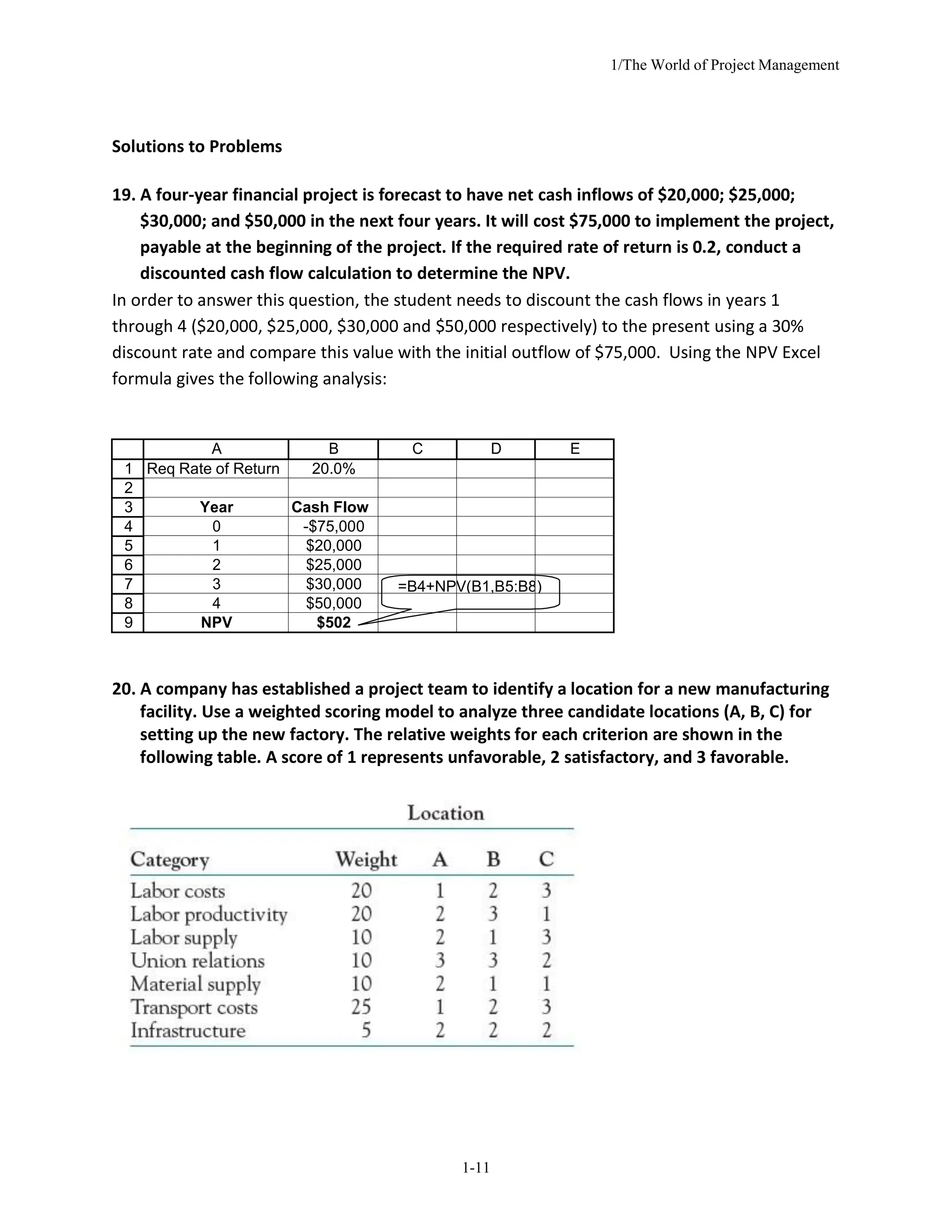
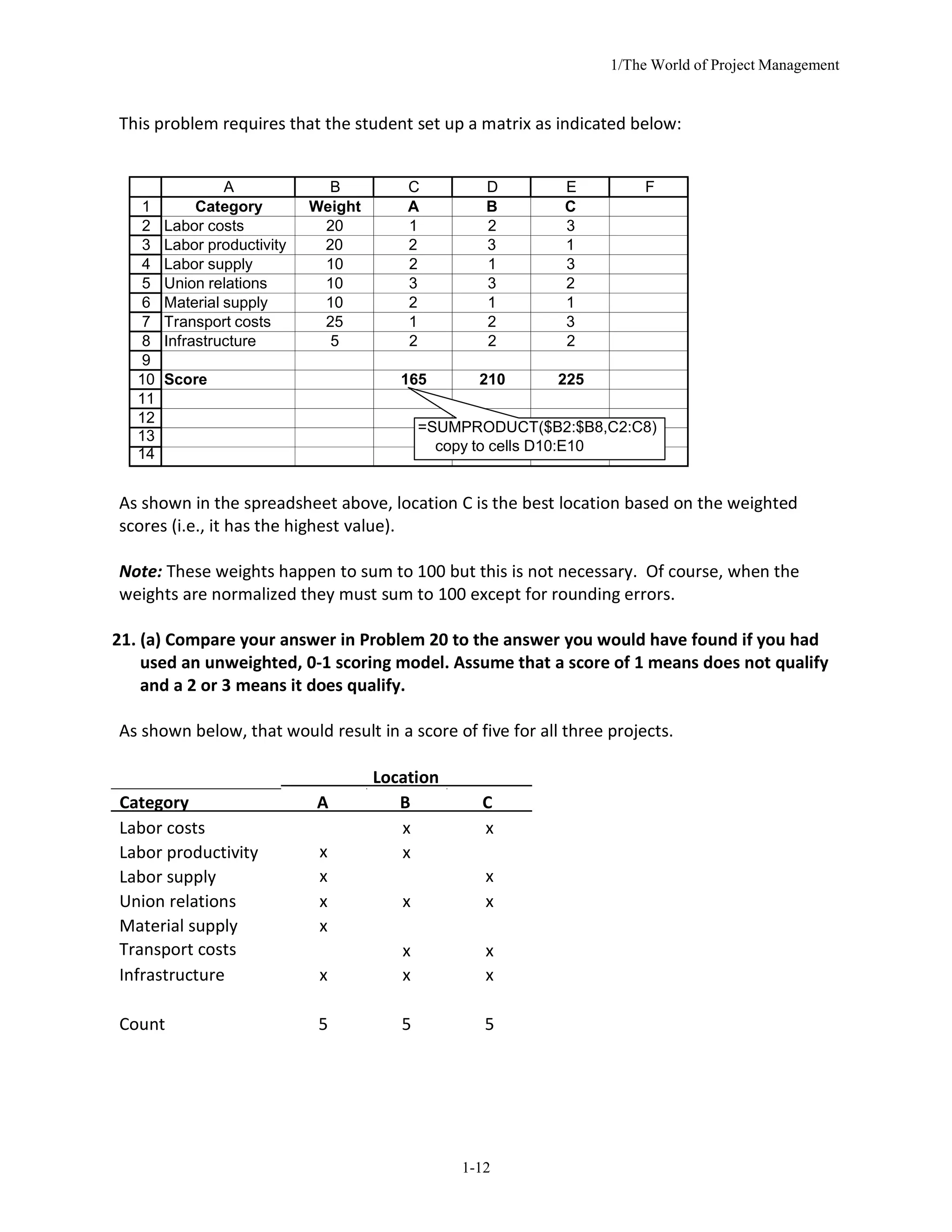
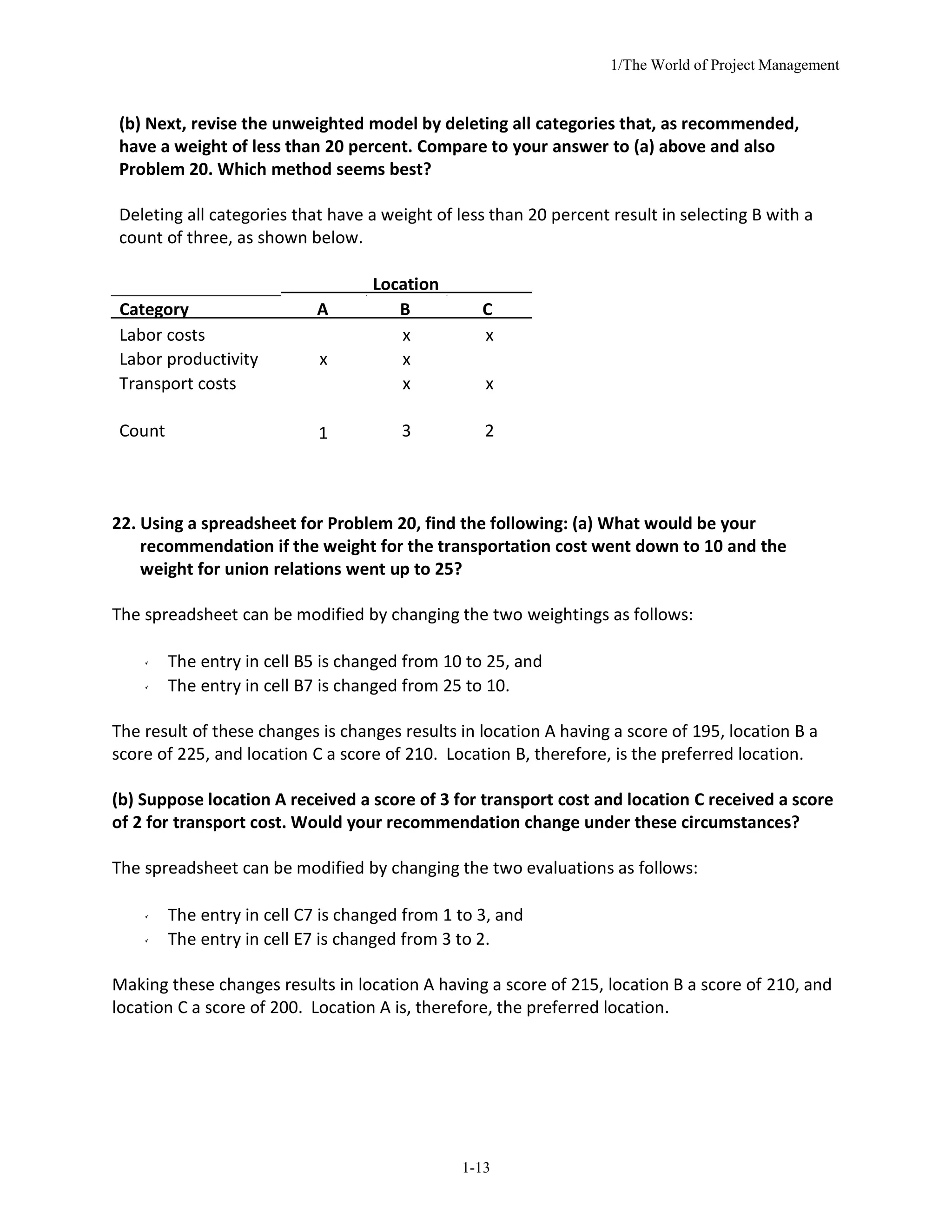
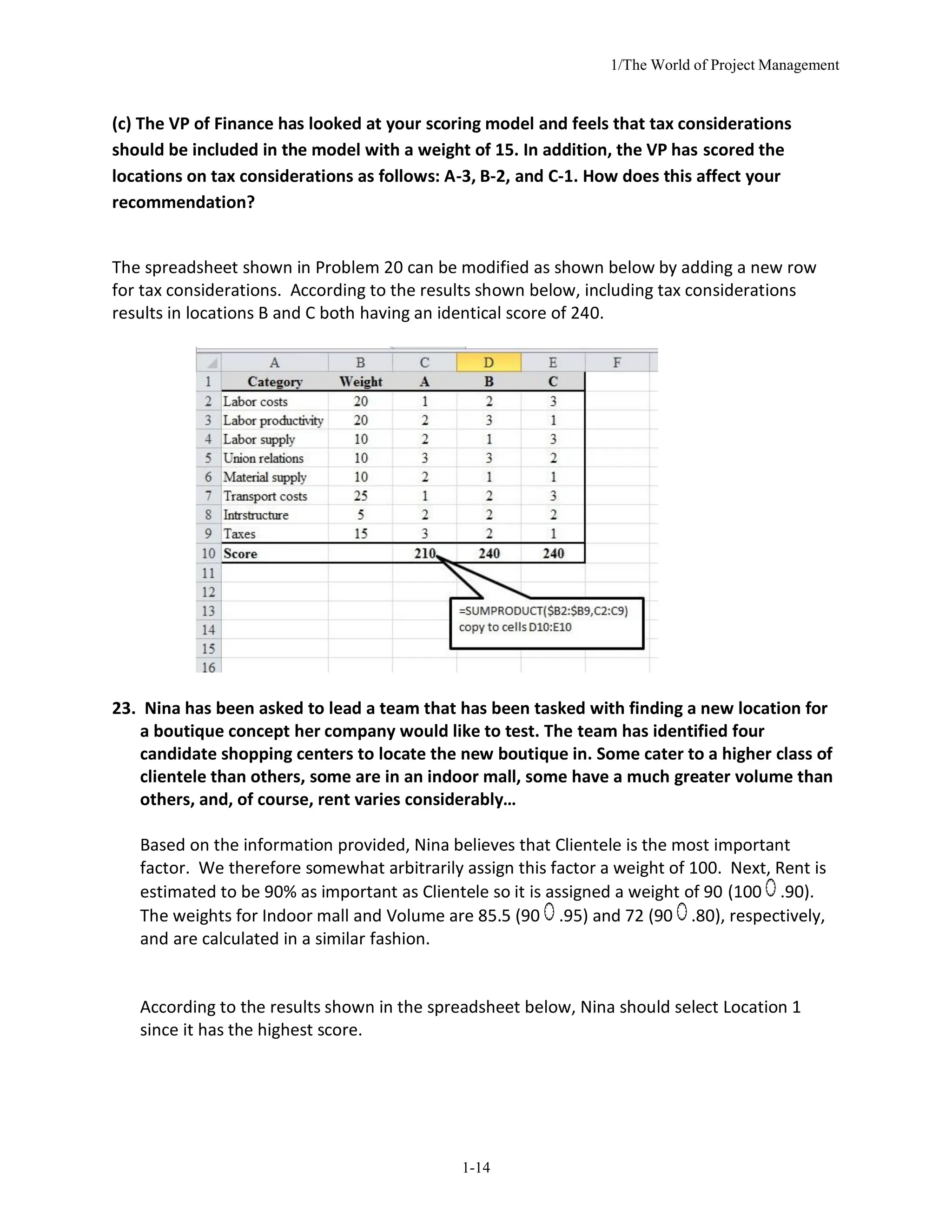
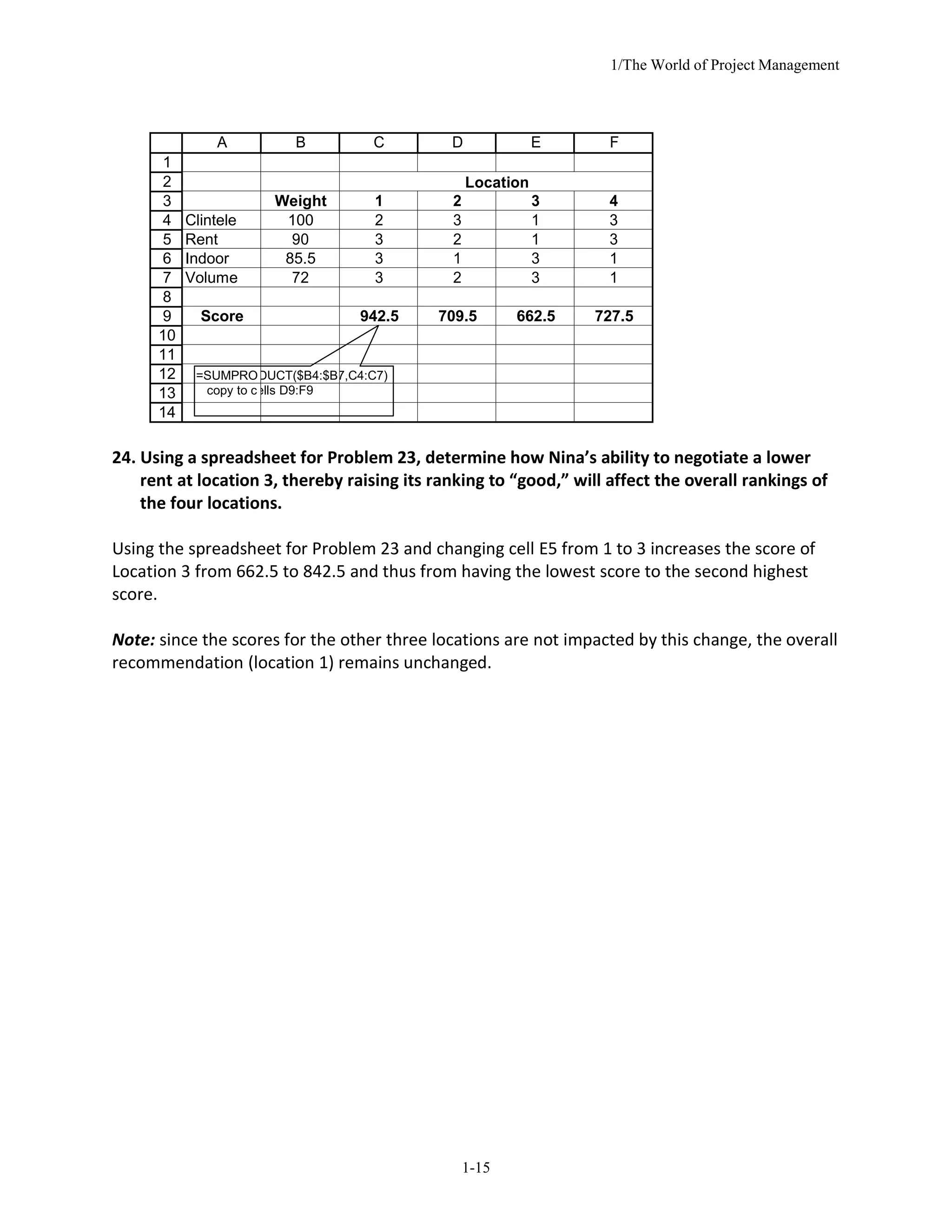
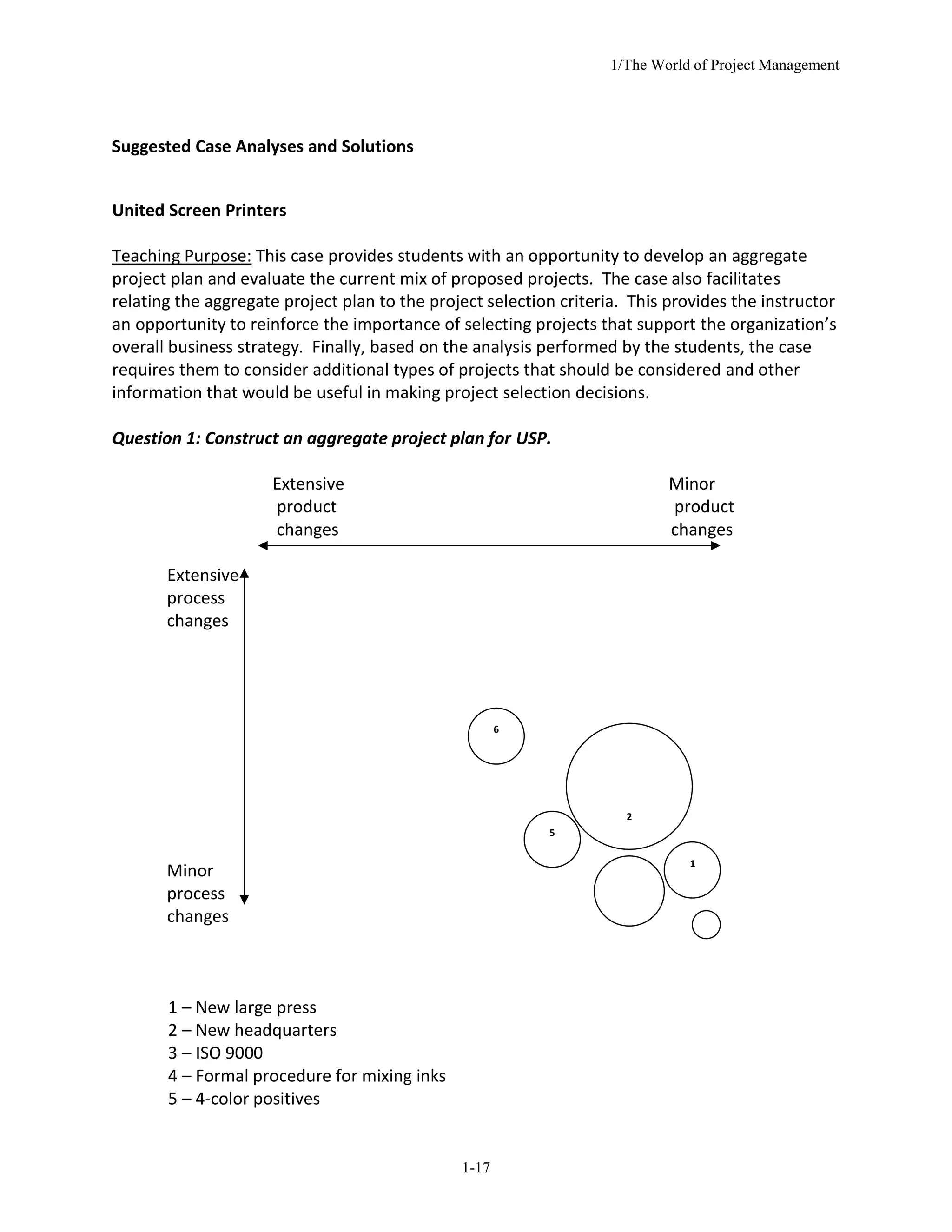




![your Lordship to the contrary. My lady my mother shall and
will, I doubt not, be as dear unto her [i.e. Lady Jane] as
though she were her own daughter; and for my part I shall
continue her half-father, and more, and all that are in my
house shall be as diligent about her as yourself would wish
accordingly.”
140
To this letter Dorset replied as follows, in a particularly fine
specimen of the strange orthography of those days:—
“My most hearty commendations unto your good lordship
not forgotten. When it hath pleased you by your most gentle
letters to offer me the abode of my daughter at your
lordship’s house, I do as well acknowledge your most friendly
affection towards me and her therein, as also render unto you
most deserved thanks for the same. Nevertheless, considering
the state of my daughter and her tender years, wherein she
shall hardly rule herself as yet without a guide, lest she
should, for lack of a bridle, take too much the head, and
conceive such opinion of herself, that all such good behaviour
as she heretofore hath learned, by the Queen’s and your most
wholesome instructions, should either altogether be quenched
in her, or at the least much diminished, I shall, in most hearty
wise, require your lordship to commit her to the governance
of her mother, by whom for the fear and duty she oweth her,
she shall most easily be ruled and framed towards virtue,
which I wish above all things to be most plentiful in her; and
although your lordship’s good mind, concerning her honest
and godly education be so great, that mine can be no more;
yet weighing that you be destitute of such one as should
correct her as a mistress, and admonish her as a mother, I
persuade myself that you will think the eye and oversight of
my wife shall be in this respect most necessary.”
Then follows a mention of the proposed scheme for uniting the
Lady Jane to the King; and the letter concludes thus:—](https://image.slidesharecdn.com/42580-250319165509-fdb749b5/75/Project-Management-in-Practice-5th-Edition-Meredith-Solutions-Manual-26-2048.jpg)
![“My meaning herein is not to withdraw any part of my
promise to you for her bestowing; for I assure your Lordship,
I intend, God willing, to use your discreet advice and consent
in that behalf and no less than mine own; only I seek in these
her tender years, wherein she now standeth, either to make
or mar (as the common saying is), the addressing [the
forming] of her mind to humility, soberness, and obedience.
Wherefore, looking upon that fatherly affection which you
bear her, my trust is that your lordship, weighing the
premises, will be content to charge her mother with her,
whose waking eye in respecting her demeanour, shall be, I
hope, no less than you as a friend and I as a father would
wish. And thus wishing your lordship a perfect riddance of all
unquietness and grief of mind, I leave any further to trouble
your lordship. From my house at Bradgate, the 19th of
September.—Your lordship’s to the best of my power,
Henry Dorset”
141
(Endorsed)
“To my very good Lord Admiral: give this.”
With this precious epistle was enclosed another, from the Lady
Frances:—
“And whereas,” says she, “of a friendly and brotherly
good will you wish to have Jane my daughter, continuing still
in your house, I give you most hearty thanks for your gentle
offer, trusting, nevertheless, that, for the good opinion you
have in your sister (Lady Frances herself), you will be content
to charge her with her (i.e. charge Lady Frances with Lady
Jane), who promiseth you, not only to be ready at all times to
account for the ordering of your dear niece [Lady Jane], but
also to use your counsel and advice on the bestowing of her,
whensoever it shall happen. Wherefore, my good brother, my
request shall be, that I may have the oversight of her with](https://image.slidesharecdn.com/42580-250319165509-fdb749b5/75/Project-Management-in-Practice-5th-Edition-Meredith-Solutions-Manual-27-2048.jpg)
![your good will and thereby shall have good occasion to think
that you do trust me in such wise, as is convenient that a
sister be trusted of so loving a brother. And thus my most
hearty commendations not omitted, I wish the whole [or
holy] deliverance of your grief and continuance of your
lordship’s health. From Bradgate, 19th of this September.—
Your loving sister and assured friend,
Frances Dorset”
142
(Endorsed)
“To the right Honourable and my very
good Lord, my Lord Admiral.”
It will be noted that the Lady Frances evinces a quite sisterly
affection for the Lord Admiral, adopting him as her brother; and her
daughter, therefore, was to be considered as his niece.
After this correspondence, the Lady Jane was returned to
Bradgate, whither she proceeded with a semi-regal escort consisting
of not less than forty persons, including Mr. Rous or Rowse,
controller of the Lord Admiral’s household, and Mr. John Harrington,
afterwards prominent at Queen Elizabeth’s Court. On taking their
leave of the young Princess, these gentlemen assured her that all
the maids at Hanworth were expecting her back again. The wily
Dorsets themselves had, indeed, made up their minds she should
return, though in their heart of hearts they had something besides
Lady Jane herself in view. It was somewhere about 20th September
that Lady Jane arrived at Bradgate. On or about the 23rd of that
month the Marquis and his spouse journeyed to London, where they
met Sir William Sharington,
143
Seymour’s âme damnée, and the Lord
High-Admiral himself. These gentlemen had a very secret business to
discuss, the nature of which must now be described. The Dorsets,
not then wealthy people, were deep in debt. Now Seymour was
known to be rich, for, in addition to his own fortune, he had just
inherited that of the Queen, and, so far, his brother had given no](https://image.slidesharecdn.com/42580-250319165509-fdb749b5/75/Project-Management-in-Practice-5th-Edition-Meredith-Solutions-Manual-28-2048.jpg)
![signs of any intention of confiscating it. The Dorsets, therefore,
intimated to Sharington that he would do well to make Sudeley
understand that if he desired to renew his guardianship of the Lady
Jane, he must agree to give her parents £2000, £500 to be paid
down at once, on account. It should be here remarked that Sudeley,
by voluntarily relinquishing the care of the Lady Jane Grey, had
given up his guardianship, which, by the custom of those times,
gave him more than parental rights over her. It was his desire to
renew his official charge that enabled the Dorsets to make this
extraordinary proposal to sell him their child for what in those days
was considered a large sum of money. When the game was up and
Sudeley in prison, the Dorsets threw the blame of this transaction on
everybody but themselves. The Lord Admiral, asserted Lady Jane’s
father in his deposition before the Privy Council, “was so earnestly in
hand with me and my wife, the Lady Frances, that in the end,
because he would have no nay, we were content that Jane should
return to his house.” Indeed, Sudeley, not content to treat so
important a matter only through the medium of Sharington, himself
appeared at Dorset’s town house and interviewed the Marquis, who
admitted in the above-mentioned deposition that, “At this very time
and place he renewed his promise unto me for the marrying of my
daughter to the King’s Majesty, and he added, ‘If I may get the King
at liberty, I dare warrant you His Majesty will marry no other than
Jane.’”
Whilst Sudeley was thus pretending, if nothing more, that he
was able to marry Jane to the King, could he but get possession of
her, the Marquis of Dorset was inditing a letter to the Lord Protector
which contained a passage referring to some negotiations he was
conducting with His Highness for the marriage of Lady Jane to the
Earl of Hertford, Somerset’s eldest son! “Item, for the maryage of
your graces sune to be had with my doghter Jane, I thynk hyt not
met [meet] to be wrytyn, but I shall at all tymes avouche my sayng.”
Dorset’s cunning must have nearly matched Sudeley’s! Young
Hertford was the lad mentioned in the papers of the time of Queen
Mary as “contracted” to Lady Jane Grey: in later years he married](https://image.slidesharecdn.com/42580-250319165509-fdb749b5/75/Project-Management-in-Practice-5th-Edition-Meredith-Solutions-Manual-29-2048.jpg)
![her sister Katherine. Jane probably made his acquaintance in her
childish days, when the Seymours lived at Whitehall and she was in
residence at the “Bluff King’s” Court under the wing of Katherine
Parr. Hertford was also one of the band of young noblemen selected
as companions for Prince Edward under the tutelage of the learned
Dr. Cheke; and probably had many a romp with Jane, then a merry
little girl. Later on he paid one or two visits to Bradgate, the Lady
Frances conceiving such a strong affection for him that she was
wont to call him her son. Here again the young people must have
been much together, and their childish friendship may have inspired
the Marquis of Dorset with the idea of uniting them in marriage.
However that may be, he certainly got as far as corresponding with
Somerset—though in the profoundest secrecy—about the matter.
Was his caution due to a fear of displeasing Sudeley? What is more
than probable is that the Lord Admiral got wind of the scheme, and
that his desire to get Jane away from her father and his own brother
and nephew was at the bottom of his readiness to pay so heavy a
price to resume her guardianship, for which object he used the
likelihood of her marriage with the King as a bait to catch the
Marquis—who was eventually “jockeyed” by both the Seymours, for
no marriage with either the King or Hertford ever took place.
Whilst Seymour was personally negotiating with the Marquis, the
task of persuading the Marchioness fell to Sharington. “Sir William
[Sharington] travailed as earnestly with my wife,” says Dorset, “to
gain her good-will for the return of our daughter to Lord Thomas
Seymour as he [probably Seymour is meant in this case] did with
me; so as in the end, after long debating and ‘much sticking of our
sides,’ we did agree that my daughter Jane should return to him.”
144
Their bargain with the Admiral struck, the Dorsets hurried back
to Bradgate, whence they incited the dispatch of the following
ingenuous letter:—
“To the Right Honourable and my singular
good lord, the Lord Admiral.](https://image.slidesharecdn.com/42580-250319165509-fdb749b5/75/Project-Management-in-Practice-5th-Edition-Meredith-Solutions-Manual-30-2048.jpg)
![in pledge of that”; the Marquis, on the other hand, sought to endue
the affair with a more respectable appearance by declaring the cash
was “as it wer for an ernst peny of the favour that he [Sudeley] wold
shewe unto him [Dorset].” To our eyes, there is, and can be, but one
redeeming feature in the whole of this sordid transaction—the fact,
proved by sufficient evidence, that Lady Jane Grey whilst under the
Lord Admiral’s roof was treated not only with respect, but with much
kindness, and that, even allowing for the fact that letters such as
that already quoted were inspired by her parents, she seems to have
been genuinely attached to both Sudeley and his mother.
Had Thomas Seymour contented himself with achieving
eminence in any one legitimate direction—the Navy, for instance—he
might have succeeded in winning both fame and honour. But he
lacked the clearness of judgment and power of reticence necessary
to carry any one of his more nefarious schemes to completion, and
so ended in pitiable failure. Whilst his brother was away fighting in
Scotland, he had striven, and with some success, to ingratiate
himself with the young King. To this end, as we have seen, he lent
him various sums of money. He seized every opportunity of belittling
and even calumniating his brother, the Protector, openly accusing
him of conspiring against Edward’s liberty, all of which the poor little
King was only too eager to believe; for Somerset, with his puritanic
views, had not made the boy’s existence very pleasant to him,
persistently treating him as a little old man, and suppressing all
those amusements and sports which lads, even sickly lads, love so
dearly. It is said that, on one occasion, when he came upon the King
and Barney Fitzpatrick playing cards, he seized them in a fury and
threw them into the fire. He had striven, in a word, to make Edward
look at life as he saw it himself, through smoked Calvinistic glasses
that robbed it of all brightness.
The Duchess of Feria relates that Queen Mary once told her
Edward VI had confessed to her that he was very tired of sermons—
not to be wondered at, since the poor child had to hear one at least
daily on some dogmatic controversy or other, and these dull homilies
often lasted a good two hours. In fact, the royal lad was bored and](https://image.slidesharecdn.com/42580-250319165509-fdb749b5/75/Project-Management-in-Practice-5th-Edition-Meredith-Solutions-Manual-32-2048.jpg)

![Elizabeth told Sir Robert Tyrwhitt, who was sent by the Council
to examine her on the subject of her intimacy with the Lord High-
Admiral, “that voices, she knew, went about London that my Lord
High-Admiral” should marry her, but added, with a smile, “It is but
London news”—evidently London was as much a centre of gossip in
those days as now. A little later she asserted that “she did not wish
to marry him, for she who had had him [meaning Katherine Parr]
was so unfortunate.”
It would appear that Lady Browne (Surrey’s “fair Geraldine”) was
also a friend of Seymour’s, and that he went to her and asked her to
break up her household and come to stay with the Princess
Elizabeth, so that she might keep him posted as to what was going
on in that Princess’s circle. This the lady had agreed to do, but she
was prevented by the sudden illness and death of her old husband,
the famous Master of the Horse, Sir Anthony Browne. Parry,
Elizabeth’s comptroller, seems also to have favoured the Lord
Admiral, although it was mainly owing to him that the revelations
concerning his mistress’s conduct with Seymour were made public.
On one occasion, when Parry was advising the Admiral to leave off
his attempt to court the Princess, he replied that “it mattered little,
for, see you, there has been a talk of late that I should marry the
Lady Jane,” adding, “I tell you this merrily—I tell you this merrily.”
As for the said Admiral, all the world now turned against him,
excepting the late Queen’s brother, the Marquis of Northampton, his
other brother-in-law, Lord Herbert, and his deceased wife’s two
cousins, the Throckmortons, one of whom wrote the following
homely lines on the wretched man’s piteous plight:—
“Thus guiltless he through malice went to pot,
Not answering for himself, not knowing cause.”
No better proof can possibly be quoted in his favour, so far as
the accusation of his having murdered Katherine Parr is concerned,
than the fact that his wife’s closest connections remained his only
friends in his trouble.](https://image.slidesharecdn.com/42580-250319165509-fdb749b5/75/Project-Management-in-Practice-5th-Edition-Meredith-Solutions-Manual-40-2048.jpg)

![was not confined to women who had embraced the Reformed
tenets. Many Catholics,—the daughter of Sir Thomas More and her
learned friend, Margaret Clement, for instance,—deeply versed in
studies of this description, enjoyed the dialogues of Plato, and may
have laughed over the scorching epigrams of Martial and the
stinging satires of Juvenal in the original, and even recognised their
applicability to the society of their own times. Most of the women
who surrounded Lady Jane Grey were pedants, and even her
shallow-hearted mother had presumably acquired a fair knowledge
of classical literature.
But it was not till the young girl returned to Bradgate, after the
death of Thomas Seymour, that the system of “cramming,” which
was to give her, at the age of seventeen, a reputation as a marvel of
erudition, began in grim earnest.
Dorset, who had been summoned to London to attend the trial
of his quondam friend, the Admiral, as a witness against him, retired
to Bradgate in some despondency after its fatal termination. He and
his wife felt they had been wasting their time over Thomas
Seymour; they were conscious, too, that they were living under a
cloud, for the revelation of their pecuniary interest in the transfer of
their daughter to so notorious a scamp had produced a most
damaging impression on the public mind. But the failure of their
plans had not quenched their ambition. They took their luckless child
back with them, and straightway set about preparing her to occupy
the towering position they felt assured she would sooner or later be
called to fill.
Her education was forthwith entrusted to the celebrated Aylmer,
a native of Leicestershire, whom Elizabeth made Bishop of London,
to reward him for his scathing answer to John Knox’s pamphlet, The
First Blast of the Trumpet against the Monstrous Regiment [i.e.
regimen = régime or government] of Women. Aylmer, at this time a
good-looking man in his early thirties, was, so Bacon tells us,
engaged as tutor to the daughters of the Marquis of Dorset at
Bradgate. The new preceptor was in close correspondence with the](https://image.slidesharecdn.com/42580-250319165509-fdb749b5/75/Project-Management-in-Practice-5th-Edition-Meredith-Solutions-Manual-45-2048.jpg)



![Project management [module 1]](https://cdn.slidesharecdn.com/ss_thumbnails/projectmanagementmodule1-200621144500-thumbnail.jpg?width=640&height=640&fit=bounds)


