1 Process Redesign Portfolio- Volunteer Orientation
Volunteer Orientation
Orienting new volunteers to the area food bank effectively
Food Bank: Feeding People - Changing Lives
PRM611 Process Redesign Portfolio submitted to Karen Rainford, Ed.D. by Jacob Johnson on February
29, 2016
2 Process Redesign Portfolio- Volunteer Orientation
Portfolio Table of Contents
Contents
Portfolio Table of Contents............................................................................................................. 2
Executive Summary......................................................................................................................... 4
Revised Memo ................................................................................................................................ 6
Revised Proposal............................................................................................................................. 7
Introduction ................................................................................................................................ 7
Background ................................................................................................................................. 7
Volunteer Orientation: Current Process..................................................................................... 7
Proposal for Analysis .................................................................................................................. 8
Conclusion................................................................................................................................... 8
Figures......................................................................................................................................... 8
Figure 1. Timeline for Proposed Analysis and Redesign ........................................................... 8
Figure 2. Schedule of Orientation and Current Occupancy........................................................ 9
Revised Recommendation ............................................................................................................10
Introduction ..............................................................................................................................10
Background ...............................................................................................................................10
“Feeding People- Changing Lives” with Community Support ..................................................10
Volunteer Orientation: Process Prior to the Study...................................................................10
Volunteer Orientation: Issues Observed and Cause for Potential Change ..............................10
Report on Analysis ...................................................................................................................11
Impact of Volunteer Orientation Program ...............................................................................11
Volunteers Signed Up for Orientation vs. Attended Orientation.............................................11
Hours Worked in the Food Bank by Volunteers Annually ........................................................11
Summary of Results ..................................................................................................................12
Recommendations ....................................................................................................................12
Conclusion.................................................................................................................................13
Revision Plan.................................................................................................................................14
Video Screencast...........................................................................................................................14
http://screencast-o-matic.com/watch/cDnFVk1nuK ...............................................................14
Appendix .......................................................................................................................................16
3 Process Redesign Portfolio- Volunteer Orientation
4 Process Redesign Portfolio- Volunteer Orientation
Executive Summary
Food Bank Volunteer Orientation
Mission: To partner with others to feed people in need.
For more than 30 years, the food bank has relied on community volunteers to help
meet its mission of feeding people and changing lives within Southeast Minnesota. All
volunteers are required by the organization to attend volunteer orientation prior to
his or her first scheduled shift in the food bank or in the food pantry. Volunteer
orientation is capped at 30 participants each month (due to staffing constraints). At
present, there is a six-month waiting list.
In the last year, 3,500 community volunteers helped the food bank distribute more
than 10- million pounds of food to over 100,000 families in need within Olmsted
County. Volunteers are essential for program delivery as they allow the food bank to
keep operating costs extremely low. Last year, volunteers accounted for 25 full-time
equivalents (FTE’s) and saved the food bank nearly $275,000 in staffing costs alone.
The Problem:
In 2015, the food bank distributed 1.2 million more pounds of food than in 2014. The
food bank needs more volunteers or staff members to help deliver services.
Example:
In 2015, 750,000 pounds of donated food had to be destroyed because they could not
be picked up in time to be processed by the food bank. Seven potential drivers were
unable to volunteer because they could not attend volunteer orientation. Of those
seven drivers, only one has attended orientation in 2016. Three removed themselves
from the waiting list.
Review and Study:
It was suspected by staff that orientation had become a roadblock. To that end, the
Community Engagement department enlisted the help of an outside agency (Piper
Lovik) to conduct a thorough review and study of the volunteer orientation process.
The observations and analysis concluded that orientation was indeed a barrier. By
making the suggested changes to the program, the food bank is better positioned to
meet the ever -increasing community need. Additionally, the study reported that by
making the recommended changes, the organization could save as much as $50,000 in
operating costs and increased efficiencies.
Summary of Changes:
1. Orientation has been expanded to include 60 participants
2. A group of six veteran volunteers has been trained to join staff to lead the
volunteer orientation and better accommodate the increased size.
3. Volunteer orientation is no longer required for individuals volunteering as a group.
5 Process Redesign Portfolio- Volunteer Orientation
4. Staff who work with volunteer groups have been offered leadership training and
received a 5% increase in their compensation. The cost of this increase was $2,500
and has been covered by a donor who also volunteers in the warehouse.
Results:
To date, there is no waiting list for volunteer orientation. Three new drivers have
been oriented and have picked up over 50,000 pounds of donated food to date.
6 Process Redesign Portfolio- Volunteer Orientation
Revised Memo
To: Karen Doering, Community Engagement Coordinator
From: Jacob Johnson, Director of Development and Communications
Date: January 6, 2016
Subject: Volunteer Orientation
I would like to review the process we have in place to orient new volunteers to the
Food Bank each month. I am suggesting a meeting for us to further discuss this
process.
Background: Annually, the food bank relies on nearly 3,500 community volunteers to
deliver its vital programming to more than 100,000 families in Olmsted County.
Specially, volunteers help individually or as part of a one-time or regular group.
These individuals and groups sort donated food, stock shelves, assist with
administrative duties, give tours, speak on behalf of the food bank, attend trade
shows and help program staff as needed.
Current Process: Individuals who are interested in volunteering at the food bank, call
the main line, navigate the phone directory and then sign up for orientation.
Orientation is offered once a month and has limited occupancy. No volunteer may
work in or on behalf of the food bank without attending the orientation first.
Problems: As orientation is only offered once a month and capped at 30 participants,
class fills up quickly and people are placed on waiting lists for the next month. At the
present time, orientation is booked 6 months in advance. Additionally, the need for
volunteers changes throughout the year with heavy demand during times when schools
are on vacation or break or during holidays. The need for extra help cannot be met
when volunteers are not available to work because they have not been through
orientation and cannot get into an orientation for as many as 6 months from the time
they are willing to help.
Next Steps: Would it be possible to meet for one-hour next week to discuss this
process? Our time together would help me better understand current practices. Use
Heading 2 for subheadings if needed.
7 Process Redesign Portfolio- Volunteer Orientation
Revised Proposal
To: Jennifer Woodford, Chief Executive Officer
Karen Doering, Community Engagement & Volunteer Manager
From: Jacob Johnson, Chief Philanthropy Officer
Date: January 17, 2016
Topic: Volunteer Orientation - Process Redesign Recommendations
Introduction
This document is intended to propose the study of and potential redesign of the Food Bank’s
volunteer orientation program.
Summary of Proposal: This document will outline the food bank’s current volunteer orientation
program. Additionally, contained within this document is a proposal for evaluation and criteria
to be considered when deciding upon a redesign of the current process.
Background
“Feeding People- Changing Lives” with Community Support
Annually, the food bank relies on nearly 3,500 community volunteers to deliver its
vital programming to more than 100,000 families in Olmsted County. Specifically,
volunteers help individually or as part of a one-time or regular group. These
individuals and groups assist as follows to ensure the essential programming of the
food bank is possible:
1. Volunteers sort donated food
2. Stock shelves
3. Assist with administrative duties
4. Give tours
5. Speak on behalf of the food bank
6. Attend trade shows and help program staff as needed.
Volunteer Orientation: Current Process
Individuals who are interested in volunteering at the food bank, call the main line,
navigate the phone directory and then sign up for orientation. Orientation is offered
once a month and has limited occupancy. No volunteer may work in or on behalf of
the food bank without attending the orientation first.
During orientation, volunteers are given a tour, presented with the rules of the food
bank, and introduced to staff who may interact with them on a regular basis or
supervise their volunteer activities. All volunteers must pass a background check and
sign a confidentiality waivers prior to his or her first day of volunteering. At the
conclusion of the two-hour orientation, volunteers are given access to the volunteer
website, create a username and choose a password. Before they leave, they are
asked to sign up online using these tools for their first official volunteer shift.
8 Process Redesign Portfolio- Volunteer Orientation
Proposal for Analysis
Volunteers are essential for the continued success of the food bank and its mission to feed
people and change lives. Please consider supporting a system of review to fully analyze the
current volunteer orientation process. This analysis will collect data and allow the leadership
team to quantify more accurately the orientation program’s impact. It will also shed light on
areas within the program that could benefit from enhanced curriculum and more attention
from the volunteer staff. The results of this analysis will assist the community engagement
office, which includes the volunteer department, as they formulate recommendations to be
made to the board of directors volunteer subcommittee at its annual training and review
meeting in April of 2016.
Conclusion
A successful volunteer program is built upon the volunteer’s initial experiences within the
organization. It is crucial that as the Food Bank’s need for volunteers continues to diversify and
evolve, it provides the necessary access and training to those interested in volunteering. It is
with that in mind, that I suggest we evaluate our current programming and consider the results
of that evaluation process as we set the strategic goals and directives for the coming year.
Figures
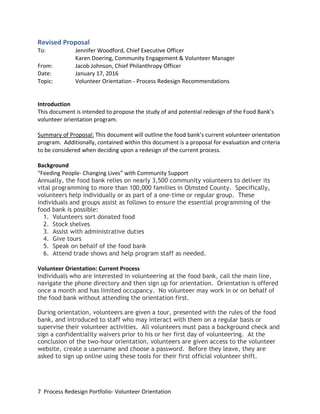
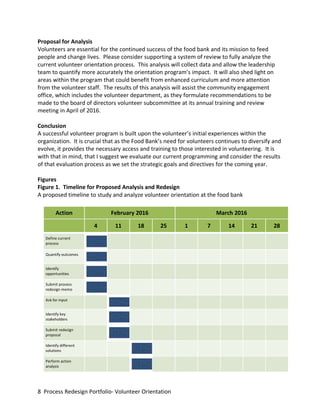
Figure 1. Timeline for Proposed Analysis and Redesign
A proposed timeline to study and analyze volunteer orientation at the food bank
Action February 2016 March 2016
4 11 18 25 1 7 14 21 28
Define current
process
Quantify outcomes
Identify
opportunities
Submit process
redesign memo
Ask for input
Identify key
stakeholders
Submit redesign
proposal
Identify different
solutions
Perform action
analysis
9 Process Redesign Portfolio- Volunteer Orientation
Action February 2016 March 2016
4 11 18 25 1 7 14 21 28
Submit process
redesign report and
recommendations
Revisions to the plan
Process redesign
video created
Final report
generated
Submit redesign
process portfolio
Figure 2. Schedule of Orientation and Current Occupancy
Currently there is a six month waiting list for volunteer orientation participants.
Orientation
February 2016 March 2016
Confirmed Waiting Confirmed Waiting
Participants
30 18 30 24
10 Process Redesign Portfolio- Volunteer Orientation
Revised Recommendation
Introduction
This document is intended to share the findings from a comprehensive study conducted by the
Development and Community Engagement department within the food bank. The purpose of
the study was to determine the level of satisfaction with the current volunteer orientation
process, to analyze the data produced, to make recommendations based upon the findings and
include include industry-wide best practices to adopt organizationally as the food bank’s scope
of volunteer service evolves to meet the increasing community demands. The results of this
study indicate several areas within the current process that could be enhanced to better meet
the organizational needs presently addressed in volunteer orientation.
Background
“Feeding People- Changing Lives” with Community Support
Annually, the food bank relies on nearly 3,500 community volunteers to deliver its
vital programming to more than 100,000 families in Olmsted County. Specifically,
volunteers help individually or as part of a one-time or regular group. These
individuals and groups assist as follows to ensure the essential programming of the
food bank is possible:
1. Volunteers sort donated food
2. Stock shelves
3. Assist with administrative duties
4. Give tours
5. Speak on behalf of the food bank
6. Attend trade shows and help program staff as needed
Volunteer Orientation: Process Prior to the Study
Individuals who are interested in volunteering at the food bank, call the main line,
navigate the phone directory and then sign up for orientation. Orientation is offered
once a month and has limited occupancy. No volunteer may work in or on behalf of
the food bank without attending the orientation first.
During orientation, volunteers are given a tour, presented with the rules of the food
bank, and introduced to staff who may interact with them on a regular basis or
supervise their volunteer activities. All volunteers must pass a background check and
sign a confidentiality waiver prior to his or her first day of volunteering. At the
conclusion of the two-hour orientation, volunteers are given access to the volunteer
website, create a username and choose a password. Before they leave, they are
asked to sign up online using these tools for their first official volunteer shift.
Volunteer Orientation: Issues Observed and Cause for Potential Change
At present, there is a six-month waiting list to attend the food bank’s volunteer
orientation. Due to high visibility within the community and regular media attention,
the food bank has a steady stream of people wanting to volunteer. New volunteer
11 Process Redesign Portfolio- Volunteer Orientation
inquiries surge tremendously during holidays and the food bank cannot presently
process all those interested in volunteering. Often times, volunteers are turned away
or referred to partner organizations who need help. Despite the long waiting list for
orientation and the fact that many interested in volunteering are turned away due to
organizational limitations, the food bank desperately needs new volunteers to fulfill
ever-changing roles. Last fiscal year, the food bank served 20% more clients and
distributed nearly one million pounds more food than the previous year despite
reducing staff size from 32 to 26 FTE’s (Full-time equivalents).
Report on Analysis
Volunteers are essential for the continued success of the food bank and its mission to feed
people and change lives.
Impact of Volunteer Orientation Program
To measure the impact of the current volunteer orientation program, surveys were developed
by a contracted vendor on behalf of the Development and Community Engagement
department. Four surveys were produced for this phase of the study:
1. A survey was produced for potential volunteers to take prior to his or her participation in
Volunteer Orientation at the food bank. This survey was designed to identify common
expectations for new volunteers.
2. A survey was produced to be given to volunteers after his or first volunteer shift in the food
bank. The survey aimed to identify whether volunteer orientation adequately prepared
participants for volunteering at the food bank and to gain feedback on the overall process of
orientation and volunteering.
3. A survey was produced that was given to staff at the food bank who supervise volunteers
regularly. Within the survey, staff were asked to identify current perceived strengths and
weaknesses of volunteer orientation. Staff were also asked to evaluate his or her current
volunteers’ level of preparedness after participating in volunteer orientation.
4. A final survey was prepared for staff to determine the base of organizational knowledge and
level of comfort each team member has interacting and supervising volunteers.
5. A financial review was conducted by by an outside firm to better understand financial costs
associated with the volunteer program and the benefit provided by volunteers to the
organization.
Volunteers Signed Up for Orientation vs. Attended Orientation
Staff reviewed the numbers of volunteers who signed up for orientation and compared the
information to the number of actual orientation attendees. The intent of this component of
the study is to determine whether or not orientation is being adequately capped at 30. See
Figure 2 above.
Hours Worked in the Food Bank by Volunteers Annually
A review was conducted by staff with the aid of outside auditors to determine the impact of
volunteers on the food bank in terms of hours contributed. Each volunteer tracks his or her
own hours within the volunteer online management tool. The tool allows volunteers who have
12 Process Redesign Portfolio- Volunteer Orientation
completed volunteer orientation to sign up online for shifts and it tracks their hours served
based upon their each volunteer’s barcoded
check in and out. Volunteering is tracked by individual and group service and measured in
terms of hours per month. See Figures 4 and 5 in the appendix.
Summary of Results
The results of the surveys indicated that most volunteers expected to be given tours, a history
and trained for their volunteer tasks at the food bank during volunteer orientation. 120
participants participated in the survey and 95% felt their orientation was crucial for their
success while volunteering.
Staff were also surveyed and of the 26 members who participated in the survey, 97% indicated
that they were comfortable supervising volunteers but would like more training in leadership
and management. The most common observation regrading orientation was that new
volunteers were not given the chance to hear from veteran volunteers. This peer-to-peer
opportunity was thought recommended to offer new volunteers better, non-biased information
on the food bank, its clients, volunteer’s typical work duties and evaluations of employed team
members.
Data evaluation revealed that most 96% of volunteers who sign up for orientation actually
attend and that of those who attend, 90% complete more than five volunteer shifts (shifts are
two-hours or more in length). Group volunteers account for the bulk of those who attend
volunteer orientation. Of the 120 volunteers surveyed, 82% were planning to volunteer with a
group.
Recommendations
Based upon the results gathered from the four surveys and the data collected on hours served
and volunteers participating in orientation, three recommendations have been brought
forward within this document for senior leadership’s consideration:
1. Form a volunteer advisory group comprised of veteran volunteers to assist staff in
orientation and trainings
2. Change the volunteer orientation policy and no longer require volunteers to attend
orientation.
3. Provide more training to staff who supervise volunteers
4. Give more responsibility to staff who supervise volunteer groups- make them accountable
for training those volunteers.
5. Consider adding financial compensation for those staff members who supervise groups of
volunteers.
6. Increase the size of each orientation class from 30 participants to 60 participants.
As the food bank is constantly striving to do more with less, increasing the frequency of
volunteer orientation is not advised. Adding more orientation would require more staff to
supervise and train volunteers. Therefore, a two-pronged recommendation is being brought
13 Process Redesign Portfolio- Volunteer Orientation
forward. Based on the findings, it is suggested that the Food Bank change its policy regarding
volunteering. Currently all volunteers must participate in orientation. It is our recommendation
that volunteer groups no longer be required to attend orientation. Rather, groups will be given
a brief orientation when they arrive for their shifts by supervising staff members. Secondly,
orientation class size could be increased to 60 participates if the volunteer coordinator can
identify and train a group of seasoned volunteers to assist her with orientation. Therefore, no
staff member would be expected to handle large groups alone and the food bank would not
have to hire an additional volunteer department team member.
Conclusion
It is crucial that as the Food Bank’s need for volunteers continues to diversify and evolve, it
provides the necessary access and training to those interested in volunteering. By changing the
internal policy of the food bank to allow group participants to volunteer without attending
orientation and increasing the number of participants in orientation, the food bank will be able
to better meet the workflow and expose more community members to the mission of the
organization.
A successful volunteer program is built upon the volunteer’s initial experiences within the
organization. As the board considers methods to further reduce our operating costs, new
volunteers are needed to take the place of former positioned tasks within the company. It is
vital to treat these new volunteers with a high level of customer service and respect. By
increasing their ability to attend orientation and exposure to the critical programming of the
food bank, the organization will be better positioned to continue to address the hunger-related
needs of the community now and into the future.
14 Process Redesign Portfolio- Volunteer Orientation
Revision Plan
Volunteers are an essential part of the daily work flow at the food bank. As a result,
it is critical that the volunteers are adequately oriented and trained for each role
they fulfill. The volunteer orientation program has a great impact on the longevity
of volunteers and each volunteer’s ability to feel successful while helping the staff
and clients of the food bank. Until recently, volunteer orientation had a six-month
waiting list. Many volunteers are waiting to attend orientation despite the increasing
needs of the food bank for more volunteers. Therefore it is essential to present the
findings of this process study as effectively as possible to senior leadership with a the
clear goal of the leadership team changing current practice to allow more effective
access to the food bank by those interested in volunteering.
The data collected by the study team was profound and dense. The depth of the data
has made it difficult to know how much to include. Based on recommendations, it has
been determined that data reflecting more impact to the food bank’s bottom line and
fiscal success will be more impactful. Therefore, historical data that helps illustrate
the financial strain felt by the food bank as a result of not having enough volunteers
to complete tasks in a more timely manner will be included in the report.
Additionally, volunteer and staff survey’s will be conducted by non-staff, third party
researchers to better elicit accurate feedback. Those surveys will also be re-tooled
to be simpler. The simplification of the survey will allow the team to report more
clear, concise findings to members of senior leadership. By making the data more
significant to the bottomline and able to be presented as data points rather than
narratives, the findings of this report will be more likely to trigger change.
Video Screencast
http://screencast-o-matic.com/watch/cDnFVk1nuK
Volunteers are a vital resource for the Food Bank. Without the nearly 3,500 annual volunteers,
the organization would not be able to keep operating costs low (less than four percent) and
distribute nearly 10 million pounds of food annually. As volunteers are such an integral
component of mission delivery and service, the food bank has taken great lengths to ensure
each volunteer is oriented and educated to the fullest extent prior to his or her first day of
service. However, volunteer orientation has become a roadblock in recent years as the demand
for volunteers has increased substantially. Until now, volunteers have been known to wait up
to six months to attend orientation. Historically, Volunteer Orientation is mandatory for every
volunteer in the food bank.
15 Process Redesign Portfolio- Volunteer Orientation
In the screencast (link above), the viewer will learn how one aspect of daily operations at the
food bank has been limiting the organization’s ability to meet its mission. In addition, a brief
overview of entire process redesign that was conducted by the Development and Community
Engagement departments in conjunction with an outside firm, PiperLovik, is presented with
recommendations and process updates. The screencast is brief and can be viewed most
effectively in conjunction with the executive summary of this portfolio.
16 Process Redesign Portfolio- Volunteer Orientation
Appendix
Figures 3 & 4. Individual vs. group volunteers signed up for orientation and hours of service
completed
0
45
90
135
180
Dec Jan Feb March
Individuals Part of group
17 Process Redesign Portfolio- Volunteer Orientation
0
750
1500
2250
3000
Dec Jan Feb March
Indiv. Hrs Grp. Hrs

Process.Redesign.Sample.Jj

  • 1.
    1 Process RedesignPortfolio- Volunteer Orientation Volunteer Orientation Orienting new volunteers to the area food bank effectively Food Bank: Feeding People - Changing Lives PRM611 Process Redesign Portfolio submitted to Karen Rainford, Ed.D. by Jacob Johnson on February 29, 2016
  • 2.
    2 Process RedesignPortfolio- Volunteer Orientation Portfolio Table of Contents Contents Portfolio Table of Contents............................................................................................................. 2 Executive Summary......................................................................................................................... 4 Revised Memo ................................................................................................................................ 6 Revised Proposal............................................................................................................................. 7 Introduction ................................................................................................................................ 7 Background ................................................................................................................................. 7 Volunteer Orientation: Current Process..................................................................................... 7 Proposal for Analysis .................................................................................................................. 8 Conclusion................................................................................................................................... 8 Figures......................................................................................................................................... 8 Figure 1. Timeline for Proposed Analysis and Redesign ........................................................... 8 Figure 2. Schedule of Orientation and Current Occupancy........................................................ 9 Revised Recommendation ............................................................................................................10 Introduction ..............................................................................................................................10 Background ...............................................................................................................................10 “Feeding People- Changing Lives” with Community Support ..................................................10 Volunteer Orientation: Process Prior to the Study...................................................................10 Volunteer Orientation: Issues Observed and Cause for Potential Change ..............................10 Report on Analysis ...................................................................................................................11 Impact of Volunteer Orientation Program ...............................................................................11 Volunteers Signed Up for Orientation vs. Attended Orientation.............................................11 Hours Worked in the Food Bank by Volunteers Annually ........................................................11 Summary of Results ..................................................................................................................12 Recommendations ....................................................................................................................12 Conclusion.................................................................................................................................13 Revision Plan.................................................................................................................................14 Video Screencast...........................................................................................................................14 http://screencast-o-matic.com/watch/cDnFVk1nuK ...............................................................14 Appendix .......................................................................................................................................16
  • 3.
    3 Process RedesignPortfolio- Volunteer Orientation
  • 4.
    4 Process RedesignPortfolio- Volunteer Orientation Executive Summary Food Bank Volunteer Orientation Mission: To partner with others to feed people in need. For more than 30 years, the food bank has relied on community volunteers to help meet its mission of feeding people and changing lives within Southeast Minnesota. All volunteers are required by the organization to attend volunteer orientation prior to his or her first scheduled shift in the food bank or in the food pantry. Volunteer orientation is capped at 30 participants each month (due to staffing constraints). At present, there is a six-month waiting list. In the last year, 3,500 community volunteers helped the food bank distribute more than 10- million pounds of food to over 100,000 families in need within Olmsted County. Volunteers are essential for program delivery as they allow the food bank to keep operating costs extremely low. Last year, volunteers accounted for 25 full-time equivalents (FTE’s) and saved the food bank nearly $275,000 in staffing costs alone. The Problem: In 2015, the food bank distributed 1.2 million more pounds of food than in 2014. The food bank needs more volunteers or staff members to help deliver services. Example: In 2015, 750,000 pounds of donated food had to be destroyed because they could not be picked up in time to be processed by the food bank. Seven potential drivers were unable to volunteer because they could not attend volunteer orientation. Of those seven drivers, only one has attended orientation in 2016. Three removed themselves from the waiting list. Review and Study: It was suspected by staff that orientation had become a roadblock. To that end, the Community Engagement department enlisted the help of an outside agency (Piper Lovik) to conduct a thorough review and study of the volunteer orientation process. The observations and analysis concluded that orientation was indeed a barrier. By making the suggested changes to the program, the food bank is better positioned to meet the ever -increasing community need. Additionally, the study reported that by making the recommended changes, the organization could save as much as $50,000 in operating costs and increased efficiencies. Summary of Changes: 1. Orientation has been expanded to include 60 participants 2. A group of six veteran volunteers has been trained to join staff to lead the volunteer orientation and better accommodate the increased size. 3. Volunteer orientation is no longer required for individuals volunteering as a group.
  • 5.
    5 Process RedesignPortfolio- Volunteer Orientation 4. Staff who work with volunteer groups have been offered leadership training and received a 5% increase in their compensation. The cost of this increase was $2,500 and has been covered by a donor who also volunteers in the warehouse. Results: To date, there is no waiting list for volunteer orientation. Three new drivers have been oriented and have picked up over 50,000 pounds of donated food to date.
  • 6.
    6 Process RedesignPortfolio- Volunteer Orientation Revised Memo To: Karen Doering, Community Engagement Coordinator From: Jacob Johnson, Director of Development and Communications Date: January 6, 2016 Subject: Volunteer Orientation I would like to review the process we have in place to orient new volunteers to the Food Bank each month. I am suggesting a meeting for us to further discuss this process. Background: Annually, the food bank relies on nearly 3,500 community volunteers to deliver its vital programming to more than 100,000 families in Olmsted County. Specially, volunteers help individually or as part of a one-time or regular group. These individuals and groups sort donated food, stock shelves, assist with administrative duties, give tours, speak on behalf of the food bank, attend trade shows and help program staff as needed. Current Process: Individuals who are interested in volunteering at the food bank, call the main line, navigate the phone directory and then sign up for orientation. Orientation is offered once a month and has limited occupancy. No volunteer may work in or on behalf of the food bank without attending the orientation first. Problems: As orientation is only offered once a month and capped at 30 participants, class fills up quickly and people are placed on waiting lists for the next month. At the present time, orientation is booked 6 months in advance. Additionally, the need for volunteers changes throughout the year with heavy demand during times when schools are on vacation or break or during holidays. The need for extra help cannot be met when volunteers are not available to work because they have not been through orientation and cannot get into an orientation for as many as 6 months from the time they are willing to help. Next Steps: Would it be possible to meet for one-hour next week to discuss this process? Our time together would help me better understand current practices. Use Heading 2 for subheadings if needed.
  • 7.
    7 Process RedesignPortfolio- Volunteer Orientation Revised Proposal To: Jennifer Woodford, Chief Executive Officer Karen Doering, Community Engagement & Volunteer Manager From: Jacob Johnson, Chief Philanthropy Officer Date: January 17, 2016 Topic: Volunteer Orientation - Process Redesign Recommendations Introduction This document is intended to propose the study of and potential redesign of the Food Bank’s volunteer orientation program. Summary of Proposal: This document will outline the food bank’s current volunteer orientation program. Additionally, contained within this document is a proposal for evaluation and criteria to be considered when deciding upon a redesign of the current process. Background “Feeding People- Changing Lives” with Community Support Annually, the food bank relies on nearly 3,500 community volunteers to deliver its vital programming to more than 100,000 families in Olmsted County. Specifically, volunteers help individually or as part of a one-time or regular group. These individuals and groups assist as follows to ensure the essential programming of the food bank is possible: 1. Volunteers sort donated food 2. Stock shelves 3. Assist with administrative duties 4. Give tours 5. Speak on behalf of the food bank 6. Attend trade shows and help program staff as needed. Volunteer Orientation: Current Process Individuals who are interested in volunteering at the food bank, call the main line, navigate the phone directory and then sign up for orientation. Orientation is offered once a month and has limited occupancy. No volunteer may work in or on behalf of the food bank without attending the orientation first. During orientation, volunteers are given a tour, presented with the rules of the food bank, and introduced to staff who may interact with them on a regular basis or supervise their volunteer activities. All volunteers must pass a background check and sign a confidentiality waivers prior to his or her first day of volunteering. At the conclusion of the two-hour orientation, volunteers are given access to the volunteer website, create a username and choose a password. Before they leave, they are asked to sign up online using these tools for their first official volunteer shift.
  • 8.
    8 Process RedesignPortfolio- Volunteer Orientation Proposal for Analysis Volunteers are essential for the continued success of the food bank and its mission to feed people and change lives. Please consider supporting a system of review to fully analyze the current volunteer orientation process. This analysis will collect data and allow the leadership team to quantify more accurately the orientation program’s impact. It will also shed light on areas within the program that could benefit from enhanced curriculum and more attention from the volunteer staff. The results of this analysis will assist the community engagement office, which includes the volunteer department, as they formulate recommendations to be made to the board of directors volunteer subcommittee at its annual training and review meeting in April of 2016. Conclusion A successful volunteer program is built upon the volunteer’s initial experiences within the organization. It is crucial that as the Food Bank’s need for volunteers continues to diversify and evolve, it provides the necessary access and training to those interested in volunteering. It is with that in mind, that I suggest we evaluate our current programming and consider the results of that evaluation process as we set the strategic goals and directives for the coming year. Figures Figure 1. Timeline for Proposed Analysis and Redesign A proposed timeline to study and analyze volunteer orientation at the food bank Action February 2016 March 2016 4 11 18 25 1 7 14 21 28 Define current process Quantify outcomes Identify opportunities Submit process redesign memo Ask for input Identify key stakeholders Submit redesign proposal Identify different solutions Perform action analysis
  • 9.
    9 Process RedesignPortfolio- Volunteer Orientation Action February 2016 March 2016 4 11 18 25 1 7 14 21 28 Submit process redesign report and recommendations Revisions to the plan Process redesign video created Final report generated Submit redesign process portfolio Figure 2. Schedule of Orientation and Current Occupancy Currently there is a six month waiting list for volunteer orientation participants. Orientation February 2016 March 2016 Confirmed Waiting Confirmed Waiting Participants 30 18 30 24
  • 10.
    10 Process RedesignPortfolio- Volunteer Orientation Revised Recommendation Introduction This document is intended to share the findings from a comprehensive study conducted by the Development and Community Engagement department within the food bank. The purpose of the study was to determine the level of satisfaction with the current volunteer orientation process, to analyze the data produced, to make recommendations based upon the findings and include include industry-wide best practices to adopt organizationally as the food bank’s scope of volunteer service evolves to meet the increasing community demands. The results of this study indicate several areas within the current process that could be enhanced to better meet the organizational needs presently addressed in volunteer orientation. Background “Feeding People- Changing Lives” with Community Support Annually, the food bank relies on nearly 3,500 community volunteers to deliver its vital programming to more than 100,000 families in Olmsted County. Specifically, volunteers help individually or as part of a one-time or regular group. These individuals and groups assist as follows to ensure the essential programming of the food bank is possible: 1. Volunteers sort donated food 2. Stock shelves 3. Assist with administrative duties 4. Give tours 5. Speak on behalf of the food bank 6. Attend trade shows and help program staff as needed Volunteer Orientation: Process Prior to the Study Individuals who are interested in volunteering at the food bank, call the main line, navigate the phone directory and then sign up for orientation. Orientation is offered once a month and has limited occupancy. No volunteer may work in or on behalf of the food bank without attending the orientation first. During orientation, volunteers are given a tour, presented with the rules of the food bank, and introduced to staff who may interact with them on a regular basis or supervise their volunteer activities. All volunteers must pass a background check and sign a confidentiality waiver prior to his or her first day of volunteering. At the conclusion of the two-hour orientation, volunteers are given access to the volunteer website, create a username and choose a password. Before they leave, they are asked to sign up online using these tools for their first official volunteer shift. Volunteer Orientation: Issues Observed and Cause for Potential Change At present, there is a six-month waiting list to attend the food bank’s volunteer orientation. Due to high visibility within the community and regular media attention, the food bank has a steady stream of people wanting to volunteer. New volunteer
  • 11.
    11 Process RedesignPortfolio- Volunteer Orientation inquiries surge tremendously during holidays and the food bank cannot presently process all those interested in volunteering. Often times, volunteers are turned away or referred to partner organizations who need help. Despite the long waiting list for orientation and the fact that many interested in volunteering are turned away due to organizational limitations, the food bank desperately needs new volunteers to fulfill ever-changing roles. Last fiscal year, the food bank served 20% more clients and distributed nearly one million pounds more food than the previous year despite reducing staff size from 32 to 26 FTE’s (Full-time equivalents). Report on Analysis Volunteers are essential for the continued success of the food bank and its mission to feed people and change lives. Impact of Volunteer Orientation Program To measure the impact of the current volunteer orientation program, surveys were developed by a contracted vendor on behalf of the Development and Community Engagement department. Four surveys were produced for this phase of the study: 1. A survey was produced for potential volunteers to take prior to his or her participation in Volunteer Orientation at the food bank. This survey was designed to identify common expectations for new volunteers. 2. A survey was produced to be given to volunteers after his or first volunteer shift in the food bank. The survey aimed to identify whether volunteer orientation adequately prepared participants for volunteering at the food bank and to gain feedback on the overall process of orientation and volunteering. 3. A survey was produced that was given to staff at the food bank who supervise volunteers regularly. Within the survey, staff were asked to identify current perceived strengths and weaknesses of volunteer orientation. Staff were also asked to evaluate his or her current volunteers’ level of preparedness after participating in volunteer orientation. 4. A final survey was prepared for staff to determine the base of organizational knowledge and level of comfort each team member has interacting and supervising volunteers. 5. A financial review was conducted by by an outside firm to better understand financial costs associated with the volunteer program and the benefit provided by volunteers to the organization. Volunteers Signed Up for Orientation vs. Attended Orientation Staff reviewed the numbers of volunteers who signed up for orientation and compared the information to the number of actual orientation attendees. The intent of this component of the study is to determine whether or not orientation is being adequately capped at 30. See Figure 2 above. Hours Worked in the Food Bank by Volunteers Annually A review was conducted by staff with the aid of outside auditors to determine the impact of volunteers on the food bank in terms of hours contributed. Each volunteer tracks his or her own hours within the volunteer online management tool. The tool allows volunteers who have
  • 12.
    12 Process RedesignPortfolio- Volunteer Orientation completed volunteer orientation to sign up online for shifts and it tracks their hours served based upon their each volunteer’s barcoded check in and out. Volunteering is tracked by individual and group service and measured in terms of hours per month. See Figures 4 and 5 in the appendix. Summary of Results The results of the surveys indicated that most volunteers expected to be given tours, a history and trained for their volunteer tasks at the food bank during volunteer orientation. 120 participants participated in the survey and 95% felt their orientation was crucial for their success while volunteering. Staff were also surveyed and of the 26 members who participated in the survey, 97% indicated that they were comfortable supervising volunteers but would like more training in leadership and management. The most common observation regrading orientation was that new volunteers were not given the chance to hear from veteran volunteers. This peer-to-peer opportunity was thought recommended to offer new volunteers better, non-biased information on the food bank, its clients, volunteer’s typical work duties and evaluations of employed team members. Data evaluation revealed that most 96% of volunteers who sign up for orientation actually attend and that of those who attend, 90% complete more than five volunteer shifts (shifts are two-hours or more in length). Group volunteers account for the bulk of those who attend volunteer orientation. Of the 120 volunteers surveyed, 82% were planning to volunteer with a group. Recommendations Based upon the results gathered from the four surveys and the data collected on hours served and volunteers participating in orientation, three recommendations have been brought forward within this document for senior leadership’s consideration: 1. Form a volunteer advisory group comprised of veteran volunteers to assist staff in orientation and trainings 2. Change the volunteer orientation policy and no longer require volunteers to attend orientation. 3. Provide more training to staff who supervise volunteers 4. Give more responsibility to staff who supervise volunteer groups- make them accountable for training those volunteers. 5. Consider adding financial compensation for those staff members who supervise groups of volunteers. 6. Increase the size of each orientation class from 30 participants to 60 participants. As the food bank is constantly striving to do more with less, increasing the frequency of volunteer orientation is not advised. Adding more orientation would require more staff to supervise and train volunteers. Therefore, a two-pronged recommendation is being brought
  • 13.
    13 Process RedesignPortfolio- Volunteer Orientation forward. Based on the findings, it is suggested that the Food Bank change its policy regarding volunteering. Currently all volunteers must participate in orientation. It is our recommendation that volunteer groups no longer be required to attend orientation. Rather, groups will be given a brief orientation when they arrive for their shifts by supervising staff members. Secondly, orientation class size could be increased to 60 participates if the volunteer coordinator can identify and train a group of seasoned volunteers to assist her with orientation. Therefore, no staff member would be expected to handle large groups alone and the food bank would not have to hire an additional volunteer department team member. Conclusion It is crucial that as the Food Bank’s need for volunteers continues to diversify and evolve, it provides the necessary access and training to those interested in volunteering. By changing the internal policy of the food bank to allow group participants to volunteer without attending orientation and increasing the number of participants in orientation, the food bank will be able to better meet the workflow and expose more community members to the mission of the organization. A successful volunteer program is built upon the volunteer’s initial experiences within the organization. As the board considers methods to further reduce our operating costs, new volunteers are needed to take the place of former positioned tasks within the company. It is vital to treat these new volunteers with a high level of customer service and respect. By increasing their ability to attend orientation and exposure to the critical programming of the food bank, the organization will be better positioned to continue to address the hunger-related needs of the community now and into the future.
  • 14.
    14 Process RedesignPortfolio- Volunteer Orientation Revision Plan Volunteers are an essential part of the daily work flow at the food bank. As a result, it is critical that the volunteers are adequately oriented and trained for each role they fulfill. The volunteer orientation program has a great impact on the longevity of volunteers and each volunteer’s ability to feel successful while helping the staff and clients of the food bank. Until recently, volunteer orientation had a six-month waiting list. Many volunteers are waiting to attend orientation despite the increasing needs of the food bank for more volunteers. Therefore it is essential to present the findings of this process study as effectively as possible to senior leadership with a the clear goal of the leadership team changing current practice to allow more effective access to the food bank by those interested in volunteering. The data collected by the study team was profound and dense. The depth of the data has made it difficult to know how much to include. Based on recommendations, it has been determined that data reflecting more impact to the food bank’s bottom line and fiscal success will be more impactful. Therefore, historical data that helps illustrate the financial strain felt by the food bank as a result of not having enough volunteers to complete tasks in a more timely manner will be included in the report. Additionally, volunteer and staff survey’s will be conducted by non-staff, third party researchers to better elicit accurate feedback. Those surveys will also be re-tooled to be simpler. The simplification of the survey will allow the team to report more clear, concise findings to members of senior leadership. By making the data more significant to the bottomline and able to be presented as data points rather than narratives, the findings of this report will be more likely to trigger change. Video Screencast http://screencast-o-matic.com/watch/cDnFVk1nuK Volunteers are a vital resource for the Food Bank. Without the nearly 3,500 annual volunteers, the organization would not be able to keep operating costs low (less than four percent) and distribute nearly 10 million pounds of food annually. As volunteers are such an integral component of mission delivery and service, the food bank has taken great lengths to ensure each volunteer is oriented and educated to the fullest extent prior to his or her first day of service. However, volunteer orientation has become a roadblock in recent years as the demand for volunteers has increased substantially. Until now, volunteers have been known to wait up to six months to attend orientation. Historically, Volunteer Orientation is mandatory for every volunteer in the food bank.
  • 15.
    15 Process RedesignPortfolio- Volunteer Orientation In the screencast (link above), the viewer will learn how one aspect of daily operations at the food bank has been limiting the organization’s ability to meet its mission. In addition, a brief overview of entire process redesign that was conducted by the Development and Community Engagement departments in conjunction with an outside firm, PiperLovik, is presented with recommendations and process updates. The screencast is brief and can be viewed most effectively in conjunction with the executive summary of this portfolio.
  • 16.
    16 Process RedesignPortfolio- Volunteer Orientation Appendix Figures 3 & 4. Individual vs. group volunteers signed up for orientation and hours of service completed 0 45 90 135 180 Dec Jan Feb March Individuals Part of group
  • 17.
    17 Process RedesignPortfolio- Volunteer Orientation 0 750 1500 2250 3000 Dec Jan Feb March Indiv. Hrs Grp. Hrs