SAFETY AND ITS
IMPORTANCE IN PROCESS
INDUSTRIES
PRESENTATION BY
M . SRI HARSHA
M.TECH - CHEMICAL ENGG ( O. U)
PROFESSION :ASST. MANAGER (CEHS)
SUVEN PHARMACEUTICALS LIMITED
Certified as PROCESS SAFETY ENGINEER from
DuPONT PROCESS SAFETY CONSULTANT
WHAT IS SAFETY ?
•INYOURWORDS
DEFINITIONS :
• SAFETY :
Safety is a procedure or condition to prevent a consequences causes
from hazards and to mitigate the severity of risk
• HAZARD :
A source , situation or act which has the potential to cause personal
injury, property damage, damage to Environment or both
• RISK :
Risk is the combination of likelihood and consequence of an
event that can cause harm
Risk is associated with Hazard. There is no risk without Hazard
ROLE OF CHEMICAL ENGINEER IN SAFETY :
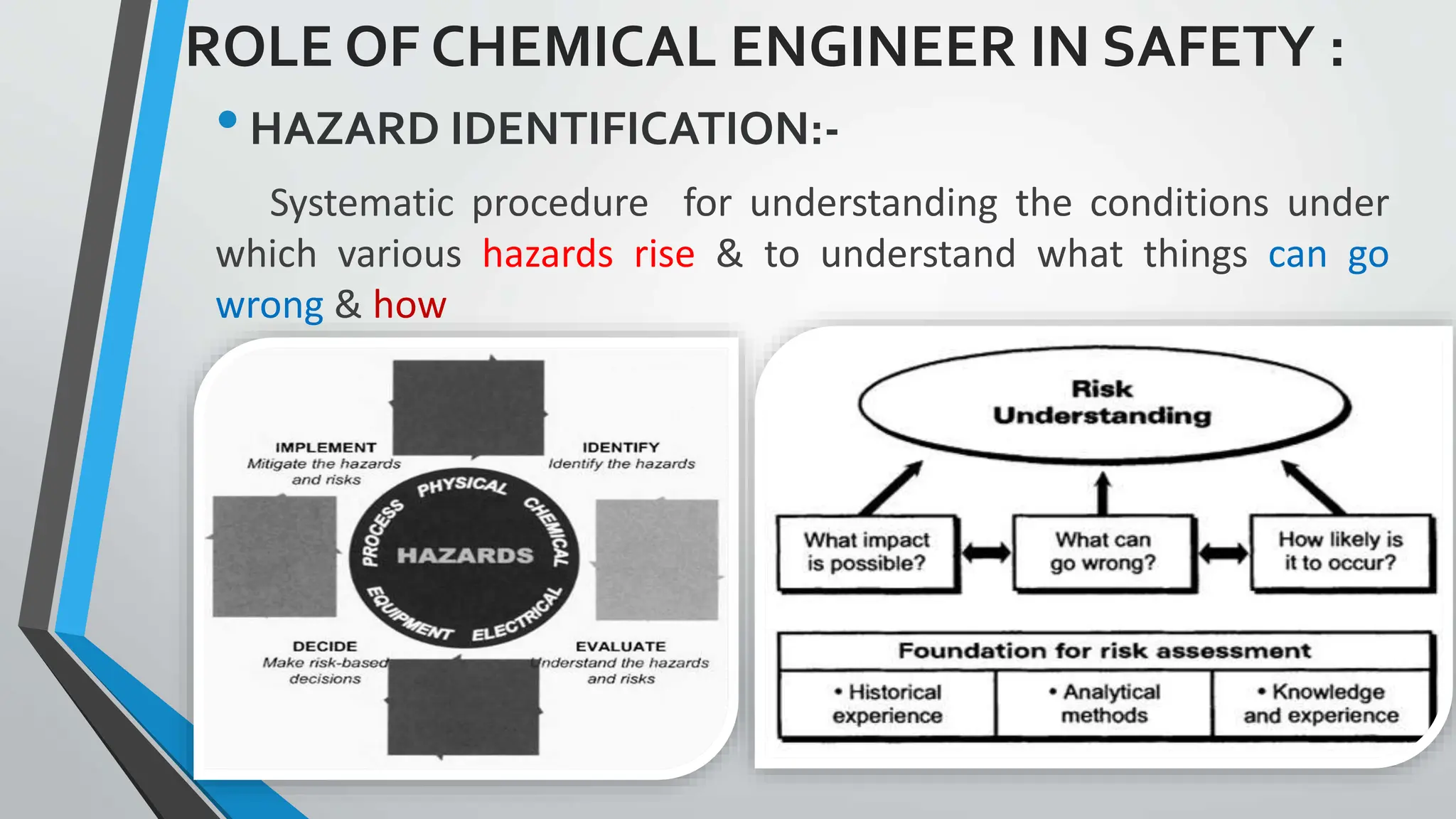
•HAZARD IDENTIFICATION:-
Systematic procedure for understanding the conditions under
which various hazards rise & to understand what things can go
wrong & how
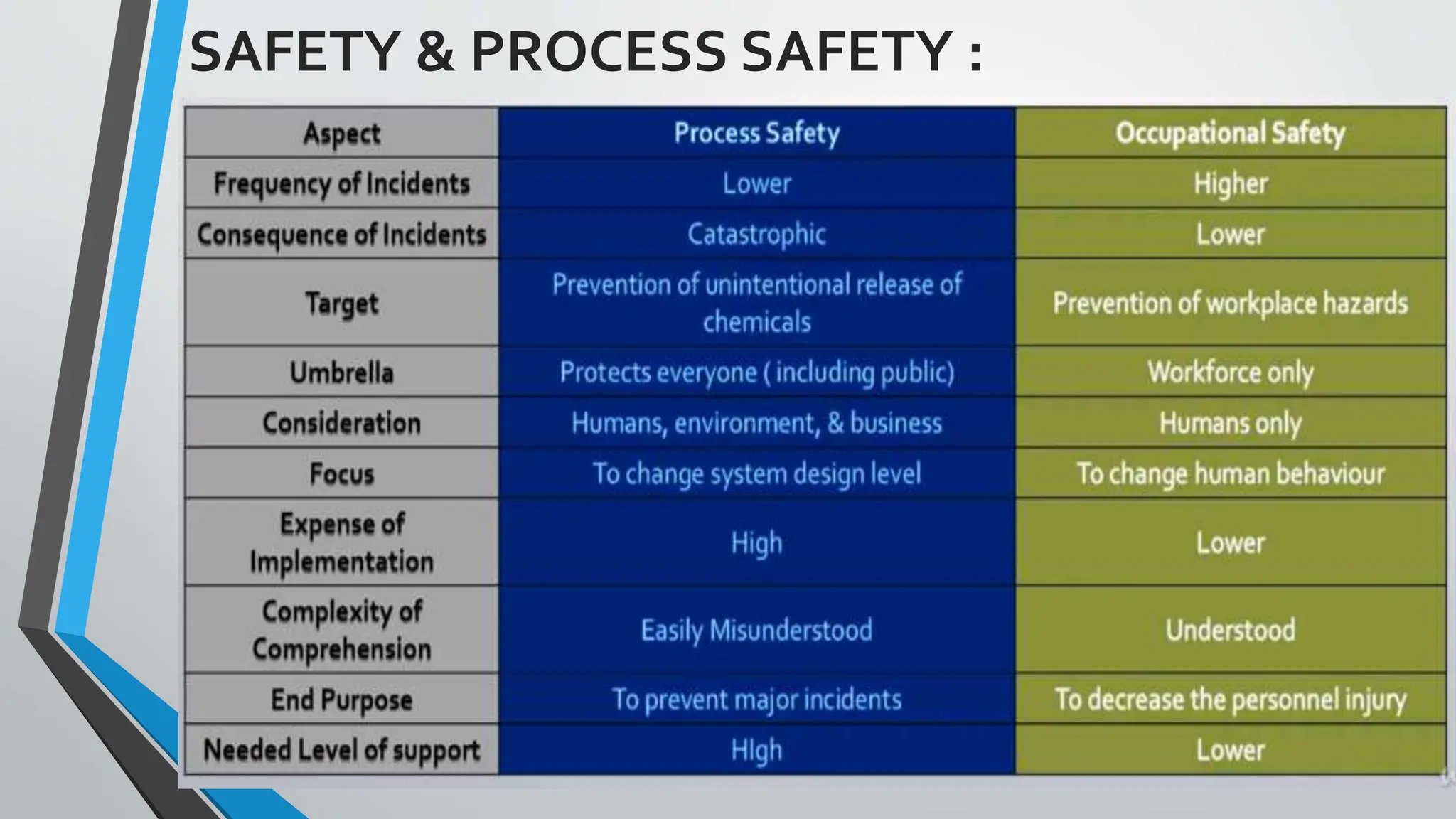
SAFETY & PROCESS SAFETY :
DEVELOPING A SAFE PROCESS by PROCESS
SAFETY
Process safety and engineering
Process safety evolution steps
Desktop screening
Reaction / Thermal Evolution
Powder safety evolution
Powder safety sequence
Application of process safety
Process safety management
What is process safety and engineering?
 Process safety is a engineering and management procedure to identify the Hazards /
risks involved within the well developed process and to implement / recommend
certain measurements to prevent catastrophic events like explosions, toxic release,
fires and fatality /facility damages.
 Process Safety engineering is a methodology / technology to get a knowledge
onprocess parameters limitations, safe operating conditions and to make safe
scale-up procedure in commercial scale.
PROCESS SAFETY AND ENGINEERING
PROCESS SAFETY EVOLUTIONSTEPS:
 Desktop screening :
o MSDS / SDS of individual chemicals involved, approx. thermodynamic kinetics from CHETAH 2.0 , Oxygen
balance.
 Primary or initial level of screening :
o Identification of CPP and its risks levels within the process.
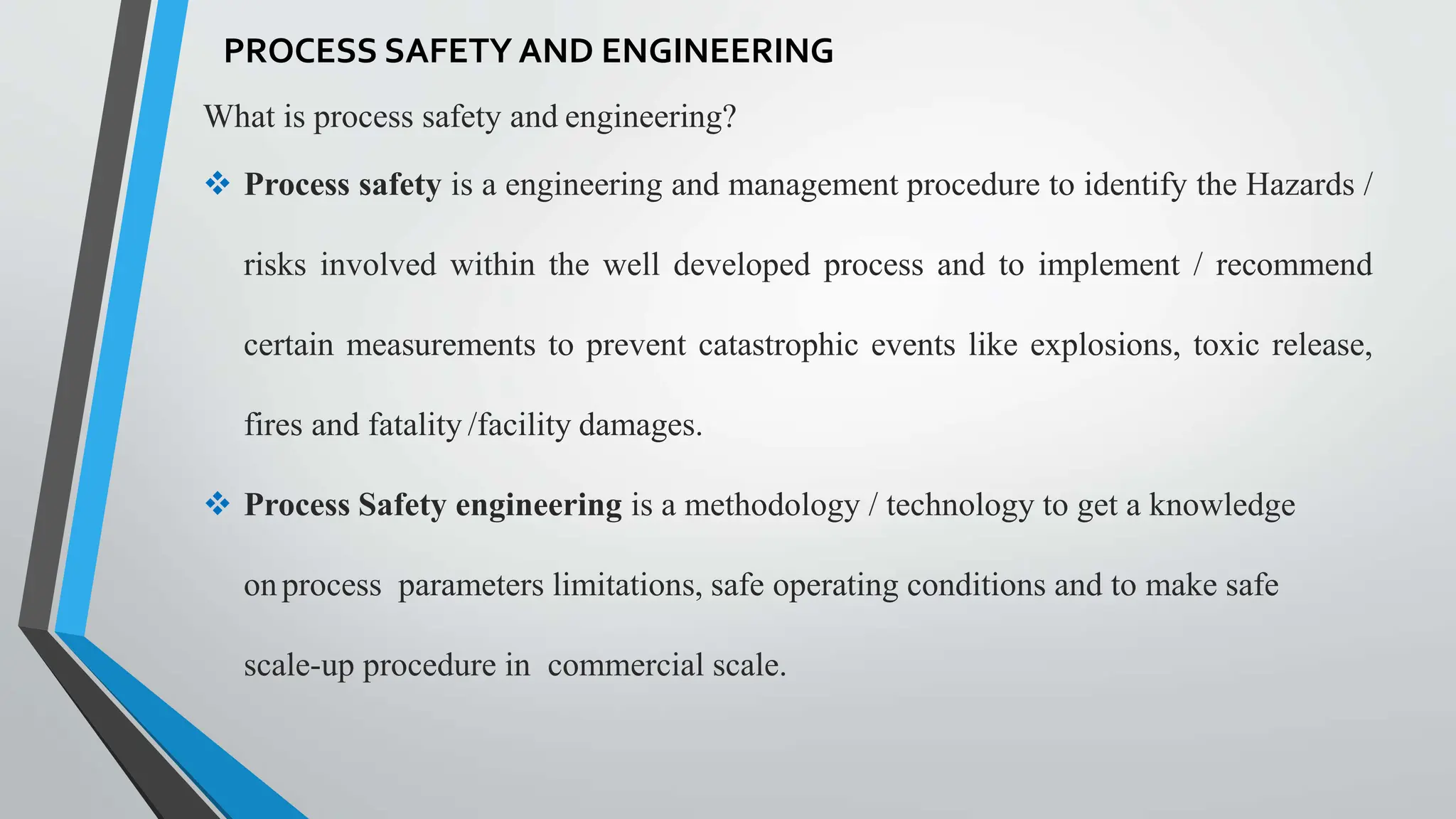
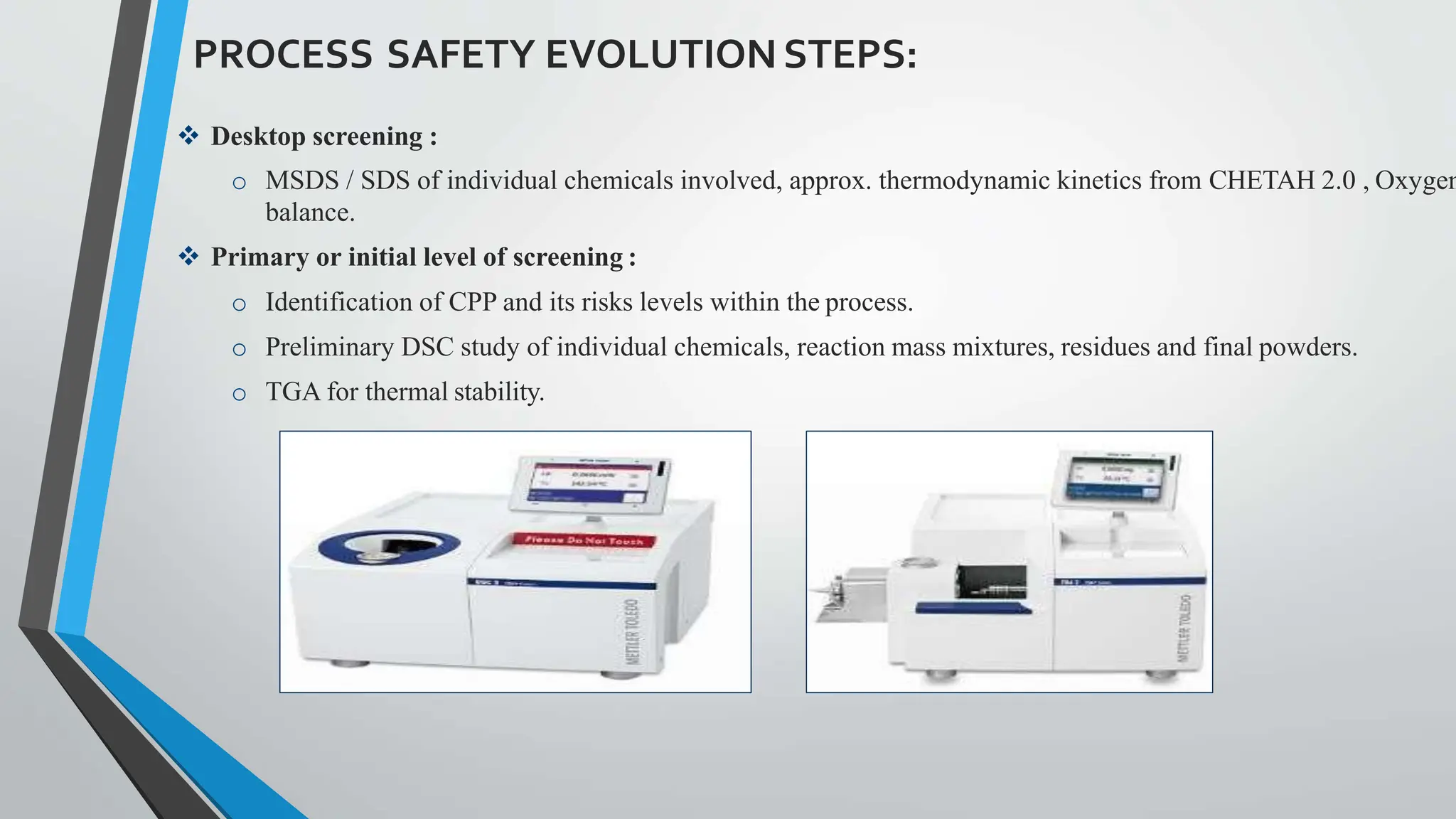
o Preliminary DSC study of individual chemicals, reaction mass mixtures, residues and final powders.
o TGA for thermal stability.
 Reaction / Thermal Evolution:
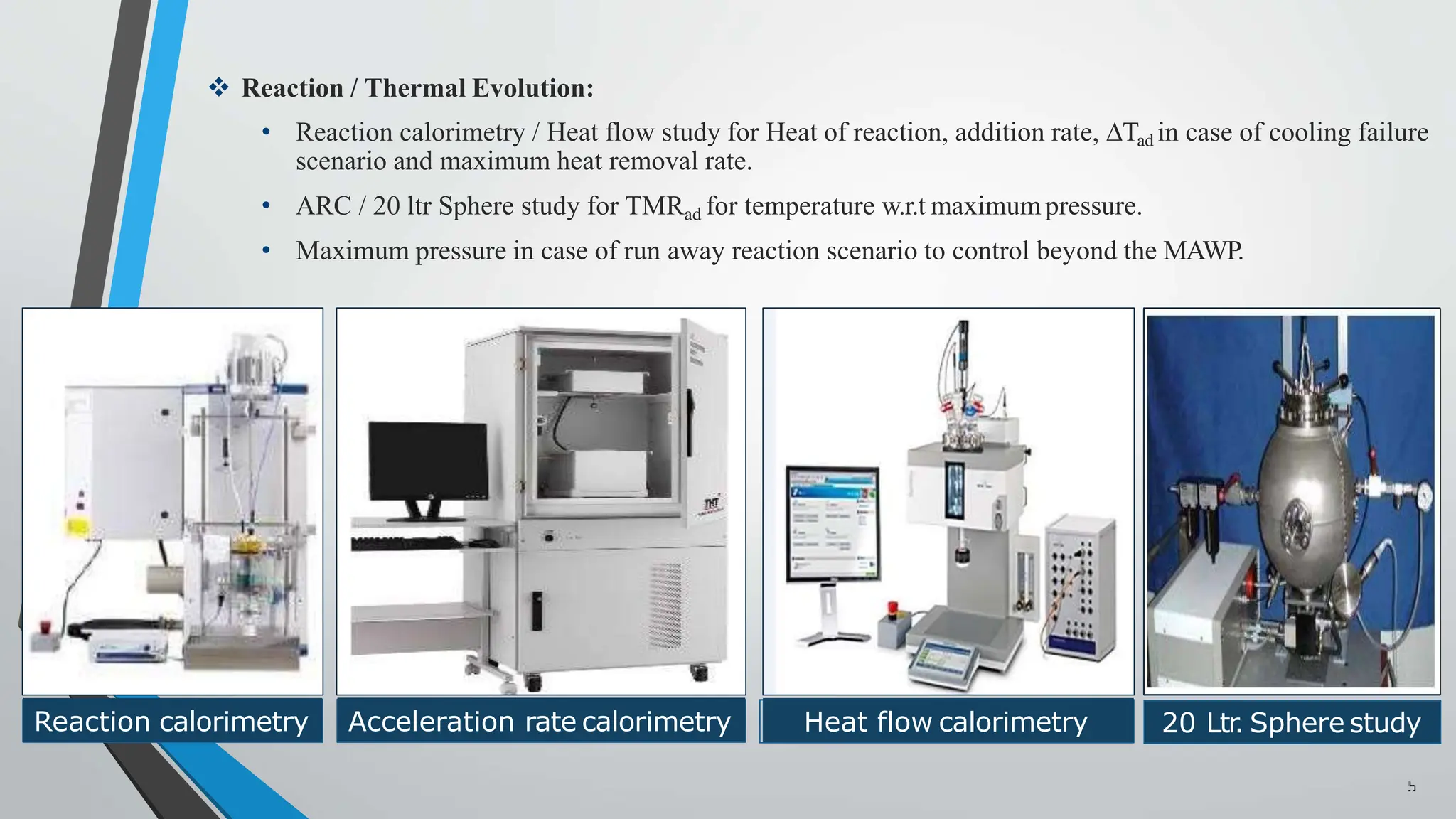
• Reaction calorimetry / Heat flow study for Heat of reaction, addition rate, ∆Tad in case of cooling failure
scenario and maximum heat removal rate.
• ARC / 20 ltr Sphere study for TMRad for temperature w.r.t maximumpressure.
• Maximum pressure in case of run away reaction scenario to control beyond the MAWP.
Reaction calorimetry Acceleration rate calorimetry Heat flow
Heat flow calorimetry 20 Ltr
. Sphere study
 Powder safety Study:
• Is important for safe handling of fine powders / dusts in large scale
• Mitigate the certain risks involved with required safety measurements and controls.
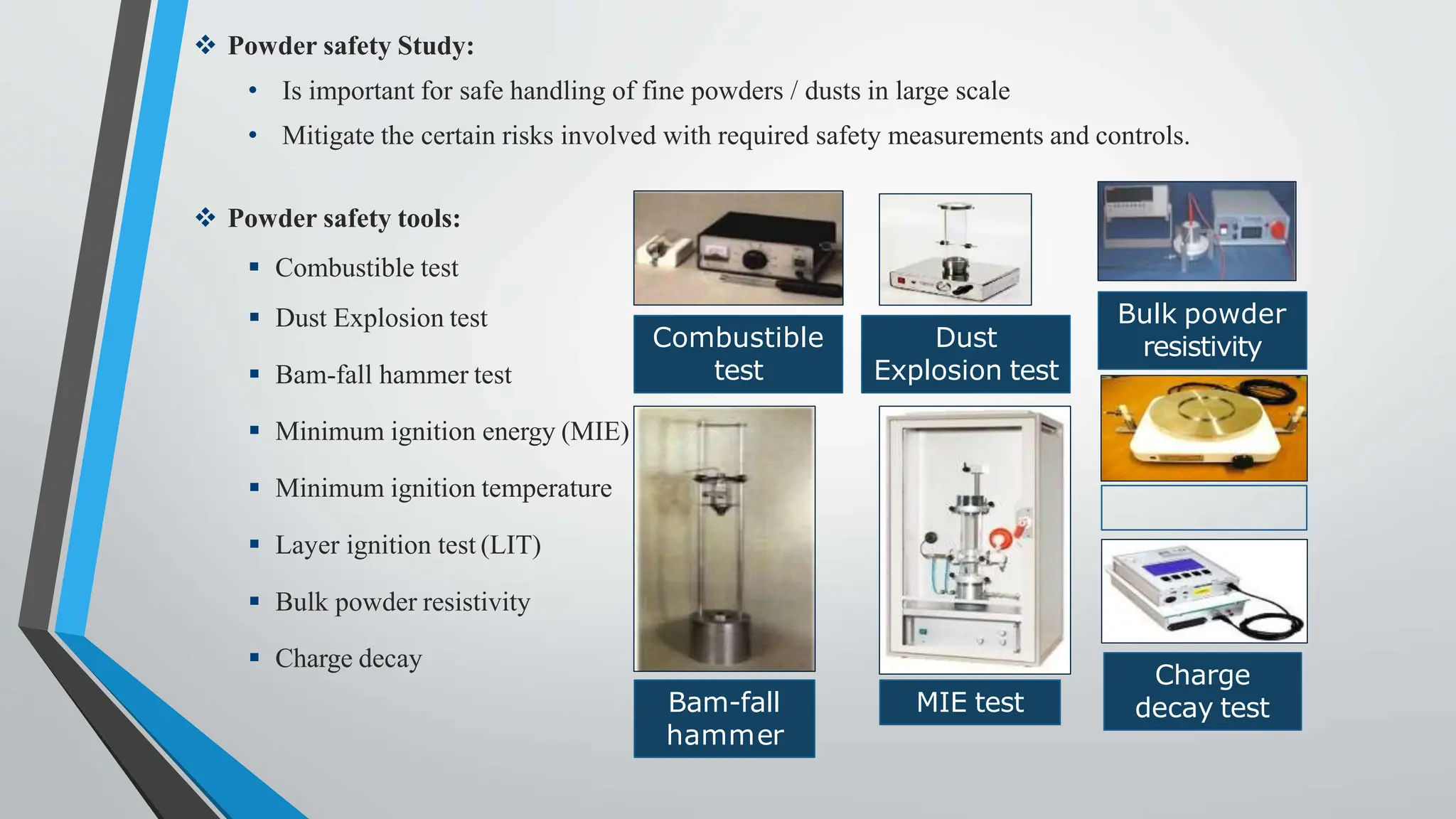
 Powder safety tools:
 Combustible test
 Dust Explosion test
 Bam-fall hammer test
 Minimum ignition energy (MIE)
 Minimum ignition temperature
 Layer ignition test (LIT)
 Bulk powder resistivity
 Charge decay
Bam-fall
hammer
MIE test
Charge
decay test
Combustible
test
Dust
Explosion test
Bulk powder
resistivity
APPLICTION OF PROCESS SAFETY
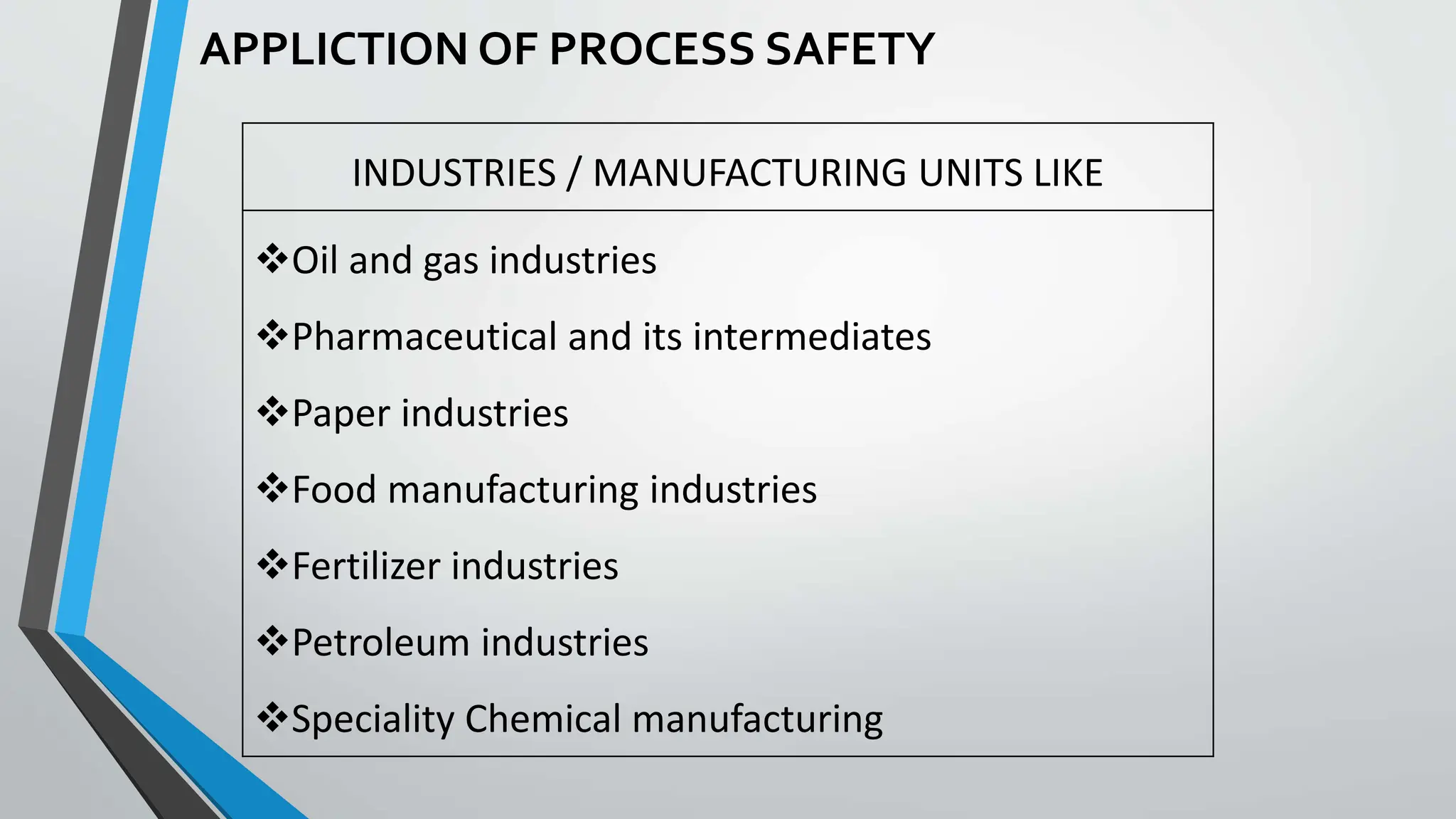
INDUSTRIES / MANUFACTURING UNITS LIKE
Oil and gas industries
Pharmaceutical and its intermediates
Paper industries
Food manufacturing industries
Fertilizer industries
Petroleum industries
Speciality Chemical manufacturing
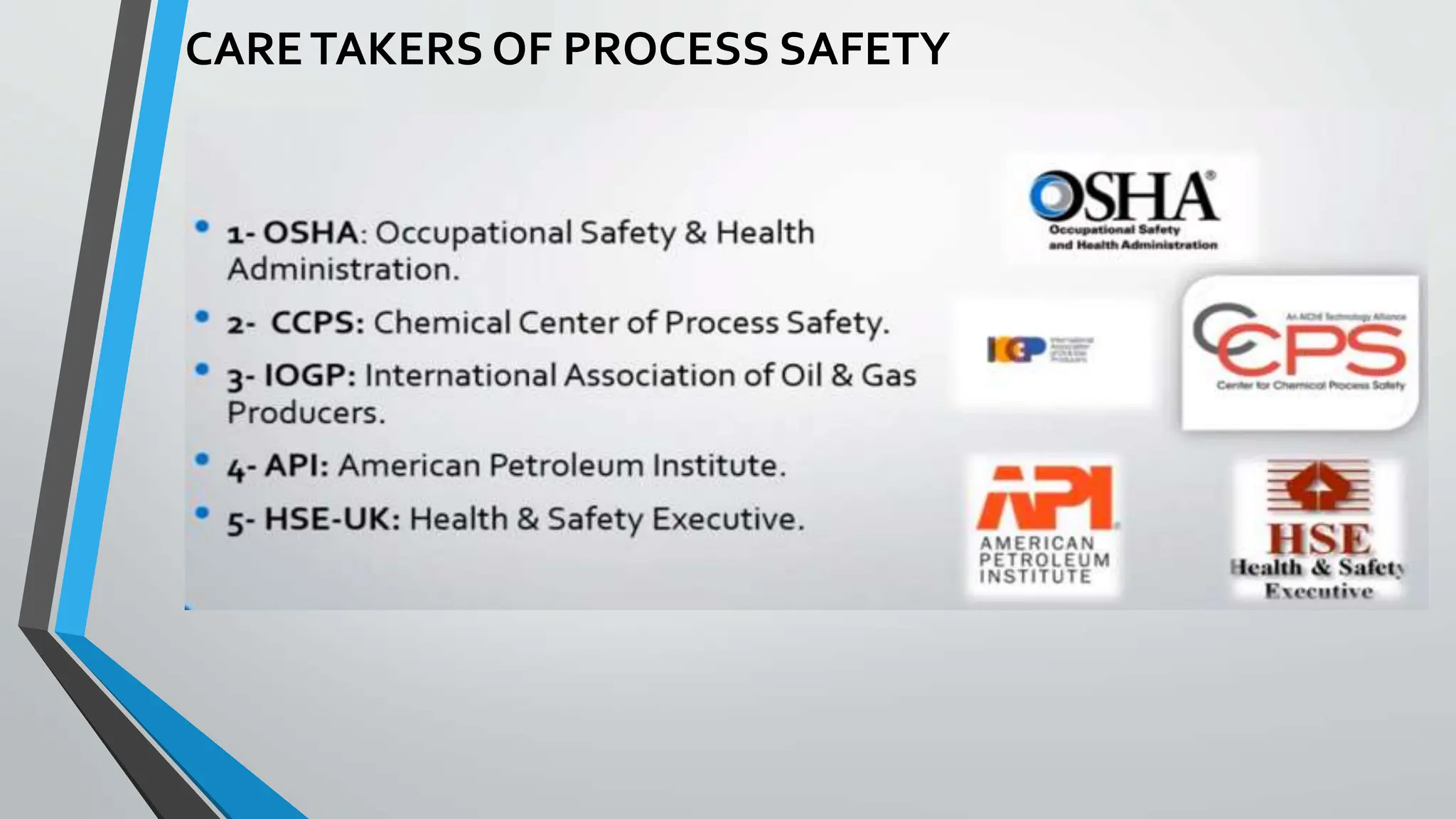
CARETAKERS OF PROCESS SAFETY
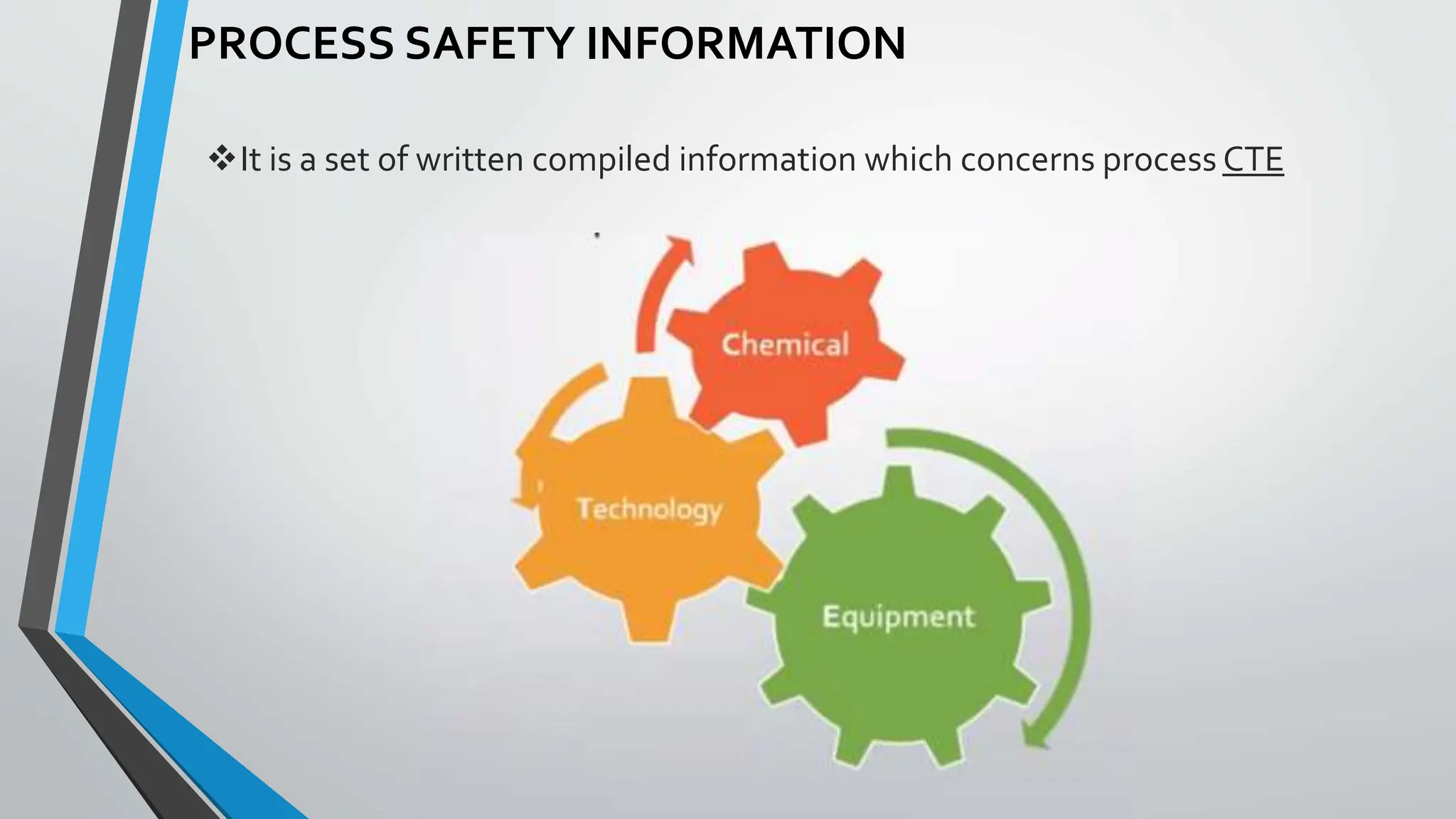
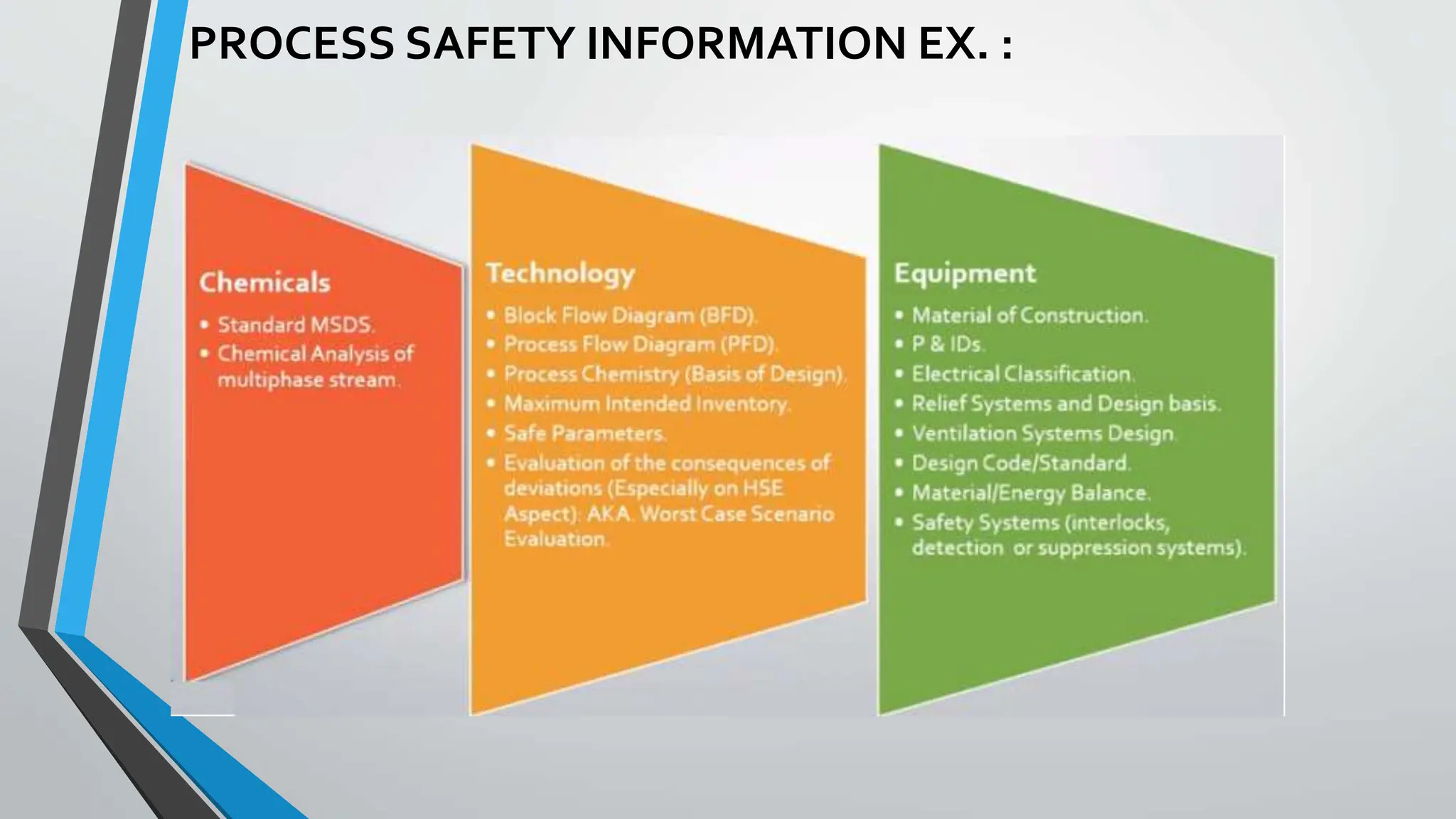
PROCESS SAFETY INFORMATION
It is a set of written compiled information which concerns process CTE
PROCESS SAFETY INFORMATION EX. :
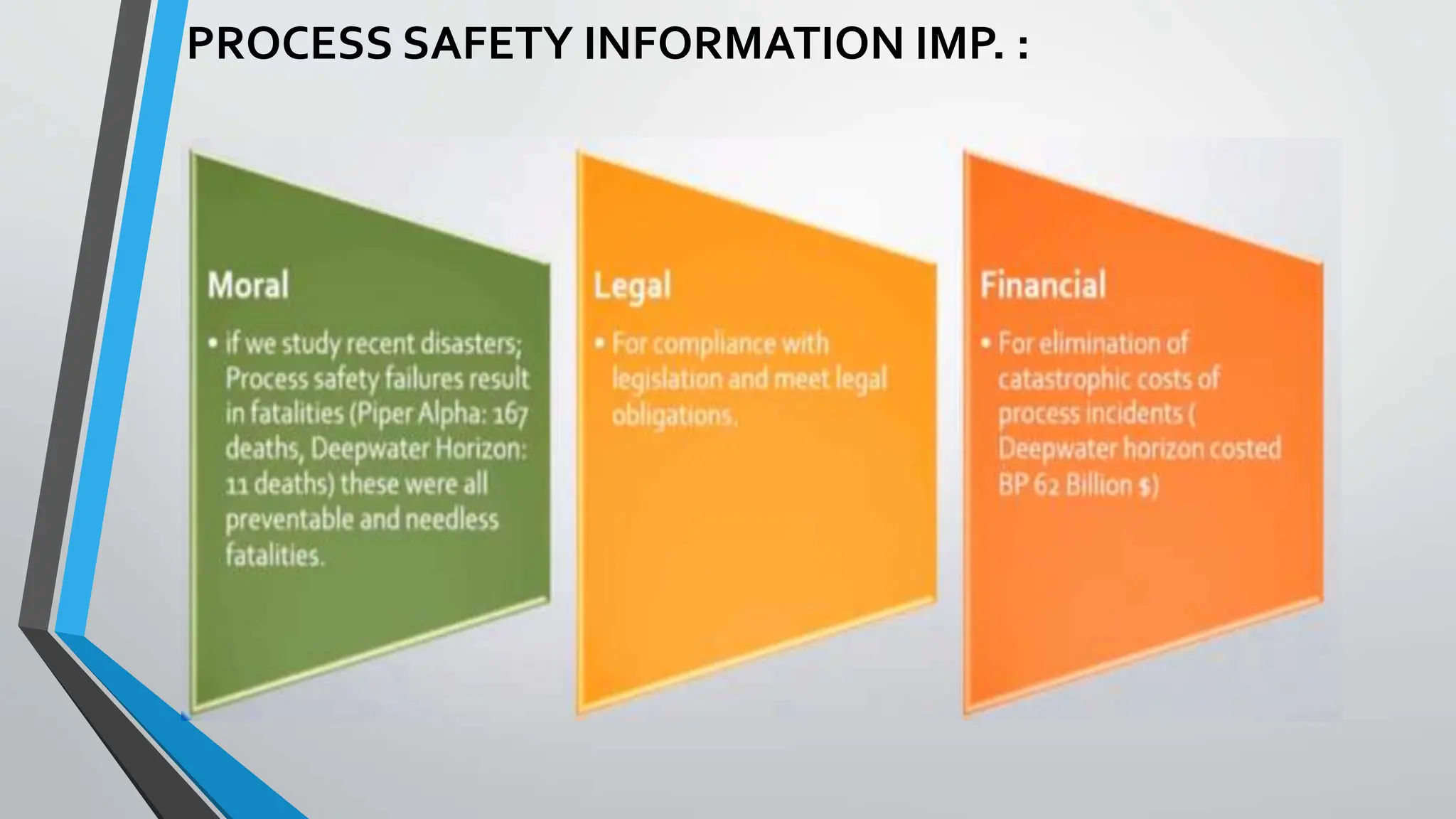
PROCESS SAFETY INFORMATION IMP. :
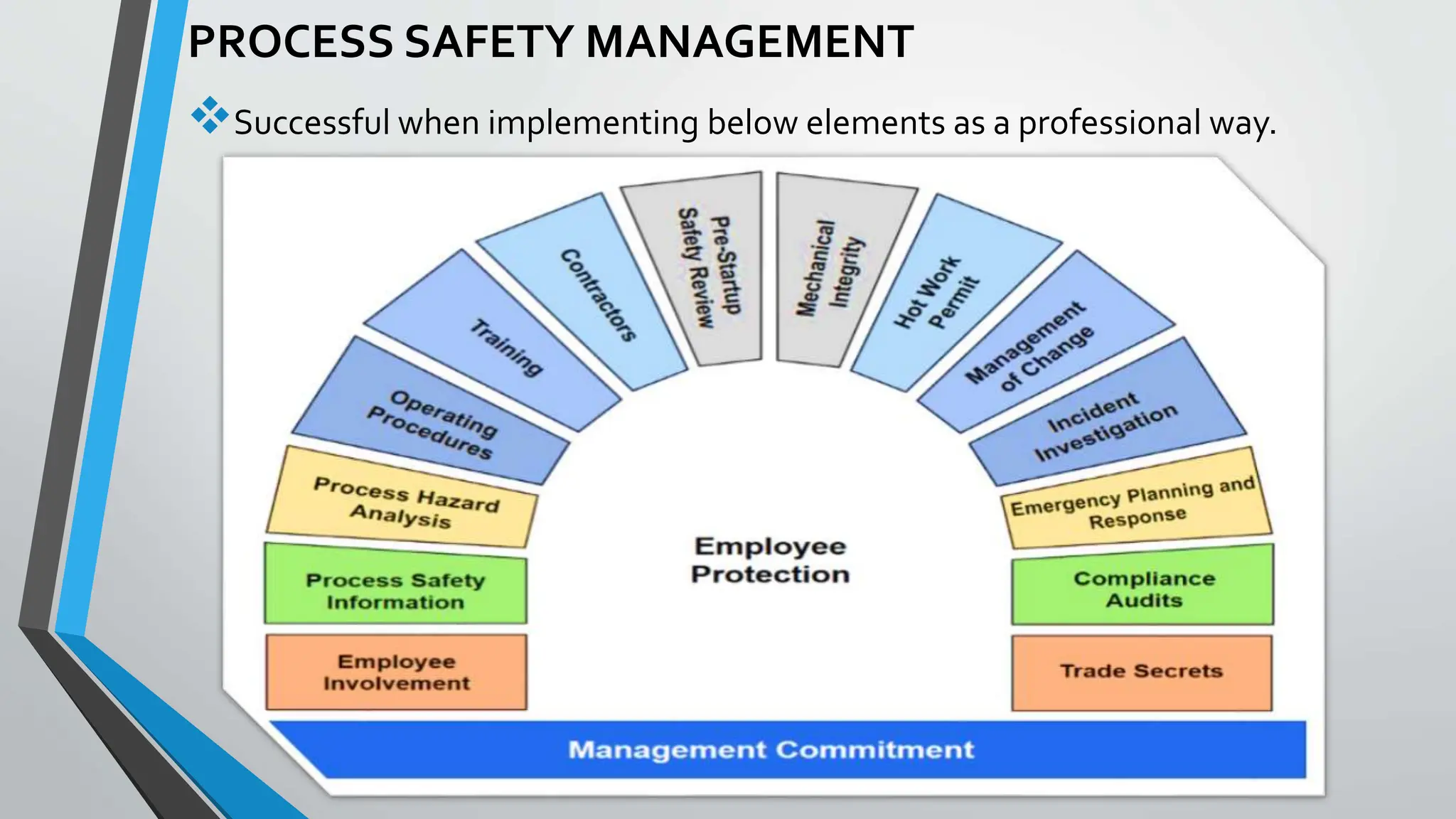
PROCESS SAFETY MANAGEMENT
Successful when implementing below elements as a professional way.
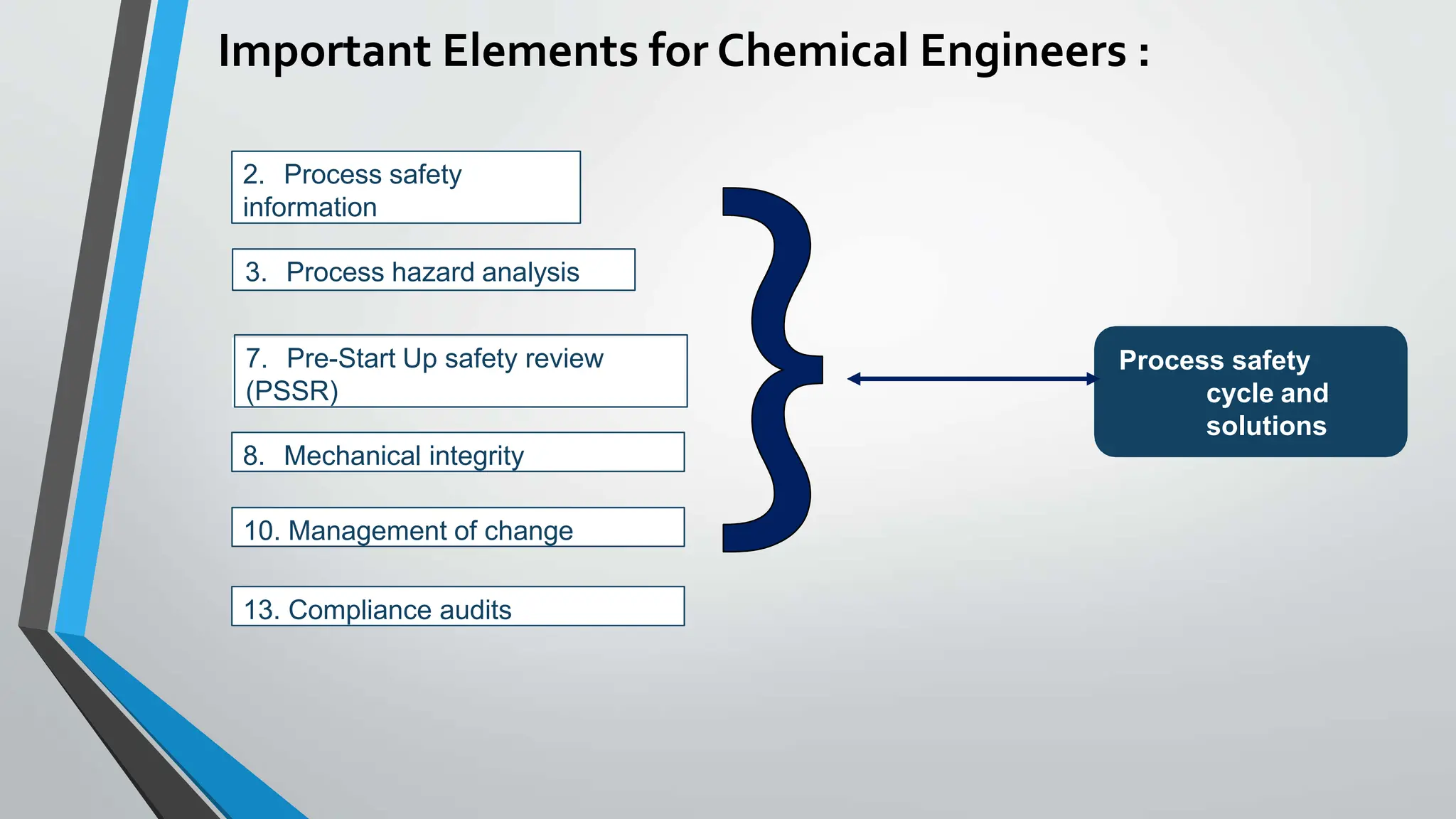
Important Elements for Chemical Engineers :
2. Process safety
information
3. Process hazard analysis
7. Pre-Start Up safety review
(PSSR)
8. Mechanical integrity
10. Management of change
13. Compliance audits
Process safety
cycle and
solutions
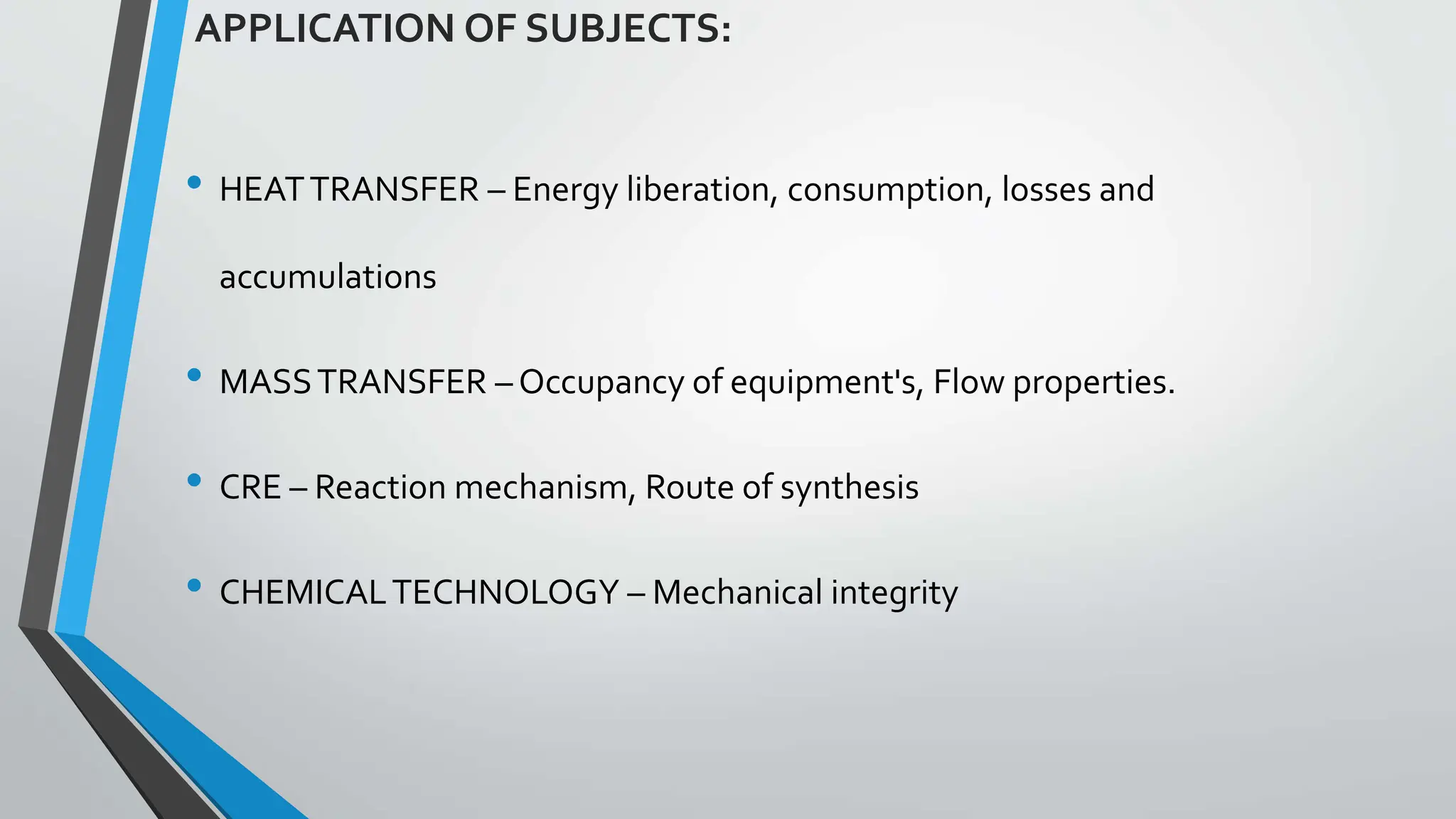
• HEATTRANSFER – Energy liberation, consumption, losses and
accumulations
• MASSTRANSFER – Occupancy of equipment's, Flow properties.
• CRE – Reaction mechanism, Route of synthesis
• CHEMICALTECHNOLOGY – Mechanical integrity
APPLICATION OF SUBJECTS:
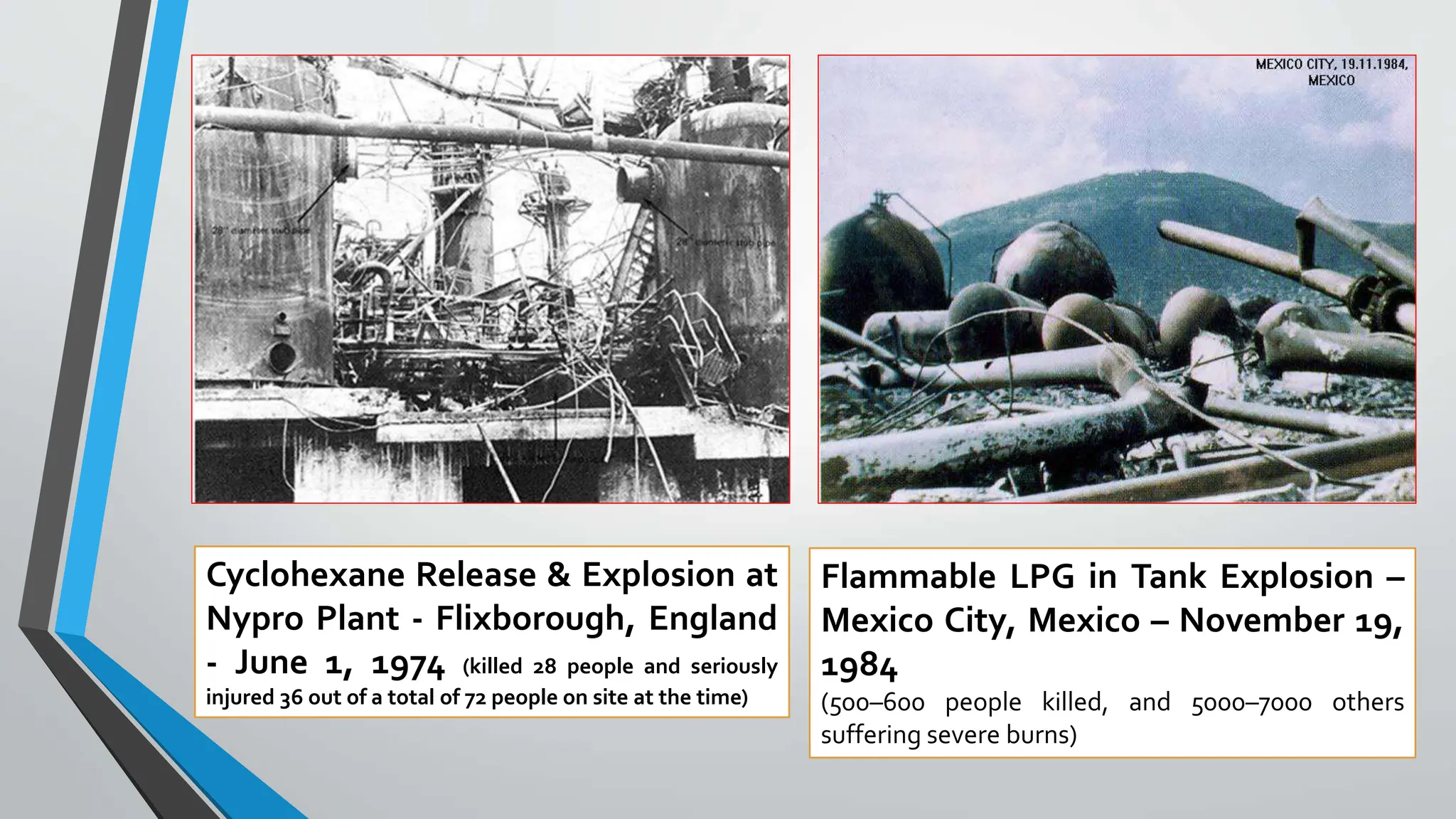
Cyclohexane Release & Explosion at
Nypro Plant - Flixborough, England
- June 1, 1974 (killed 28 people and seriously
injured 36 out of a total of 72 people on site at the time)
Flammable LPG in Tank Explosion –
Mexico City, Mexico – November 19,
1984
(500–600 people killed, and 5000–7000 others
suffering severe burns)
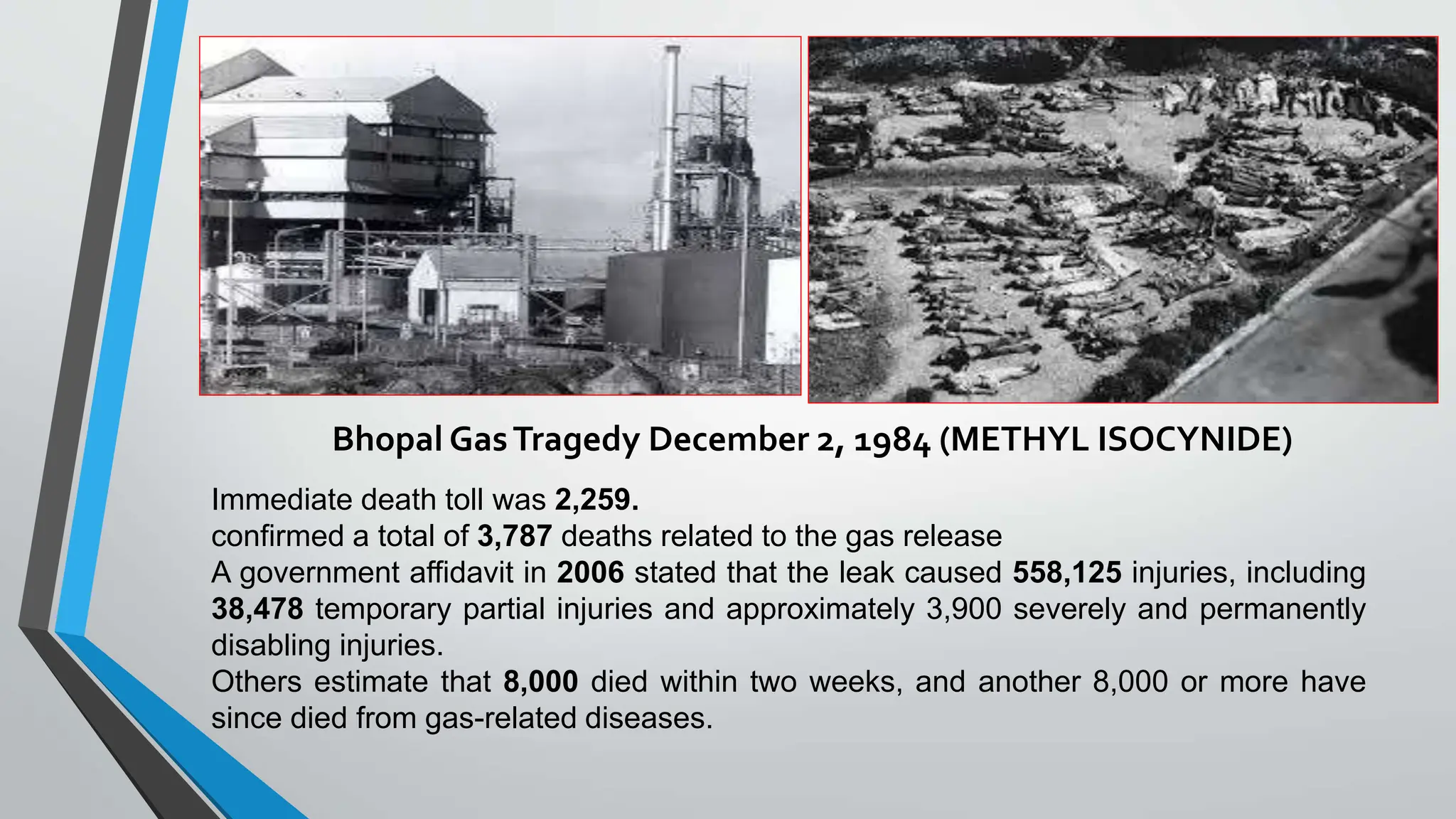
Bhopal GasTragedy December 2, 1984 (METHYL ISOCYNIDE)
Immediate death toll was 2,259.
confirmed a total of 3,787 deaths related to the gas release
A government affidavit in 2006 stated that the leak caused 558,125 injuries, including
38,478 temporary partial injuries and approximately 3,900 severely and permanently
disabling injuries.
Others estimate that 8,000 died within two weeks, and another 8,000 or more have
since died from gas-related diseases.
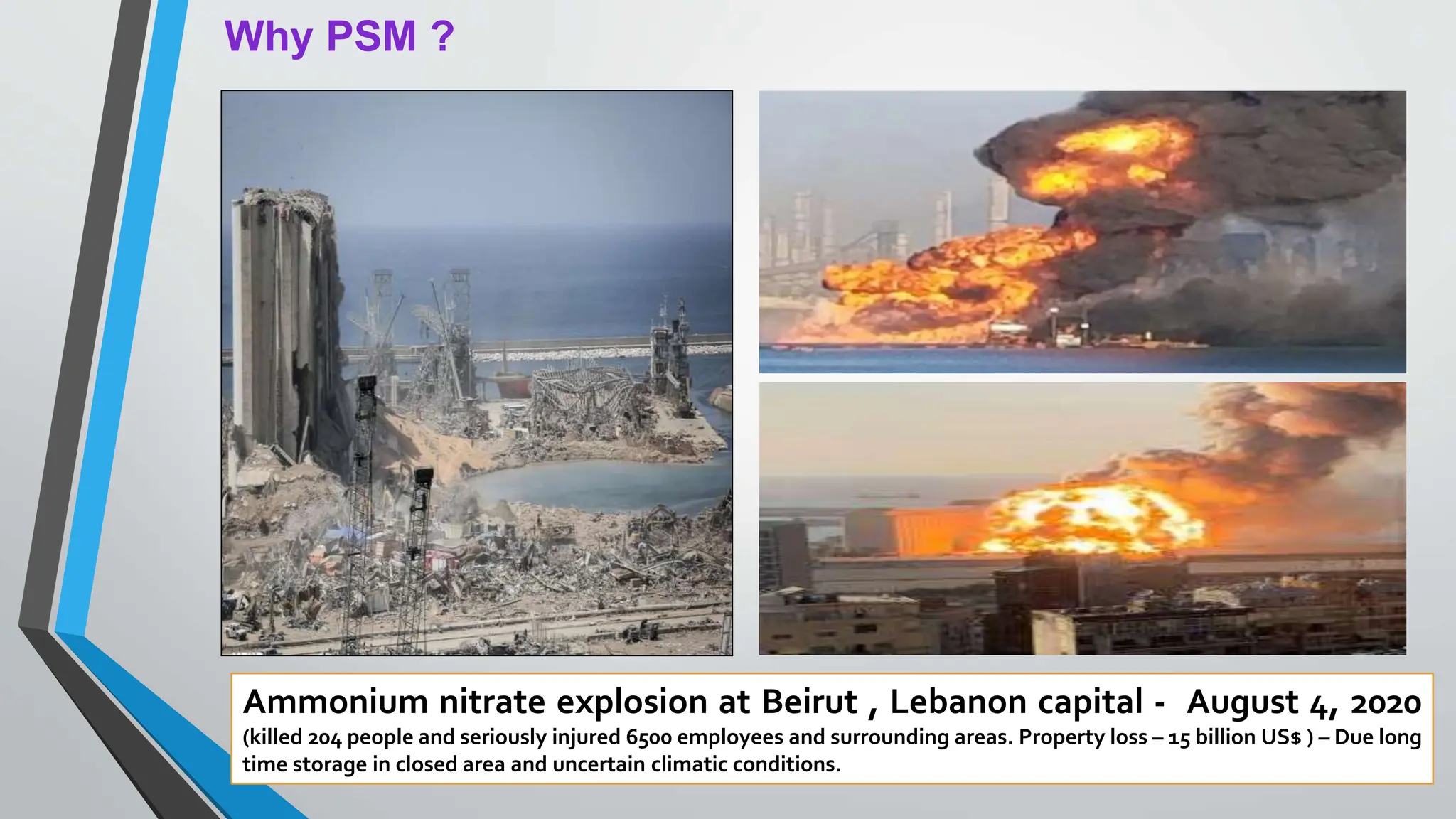
Why PSM ?
Ammonium nitrate explosion at Beirut , Lebanon capital - August 4, 2020
(killed 204 people and seriously injured 6500 employees and surrounding areas. Property loss – 15 billion US$ ) – Due long
time storage in closed area and uncertain climatic conditions.
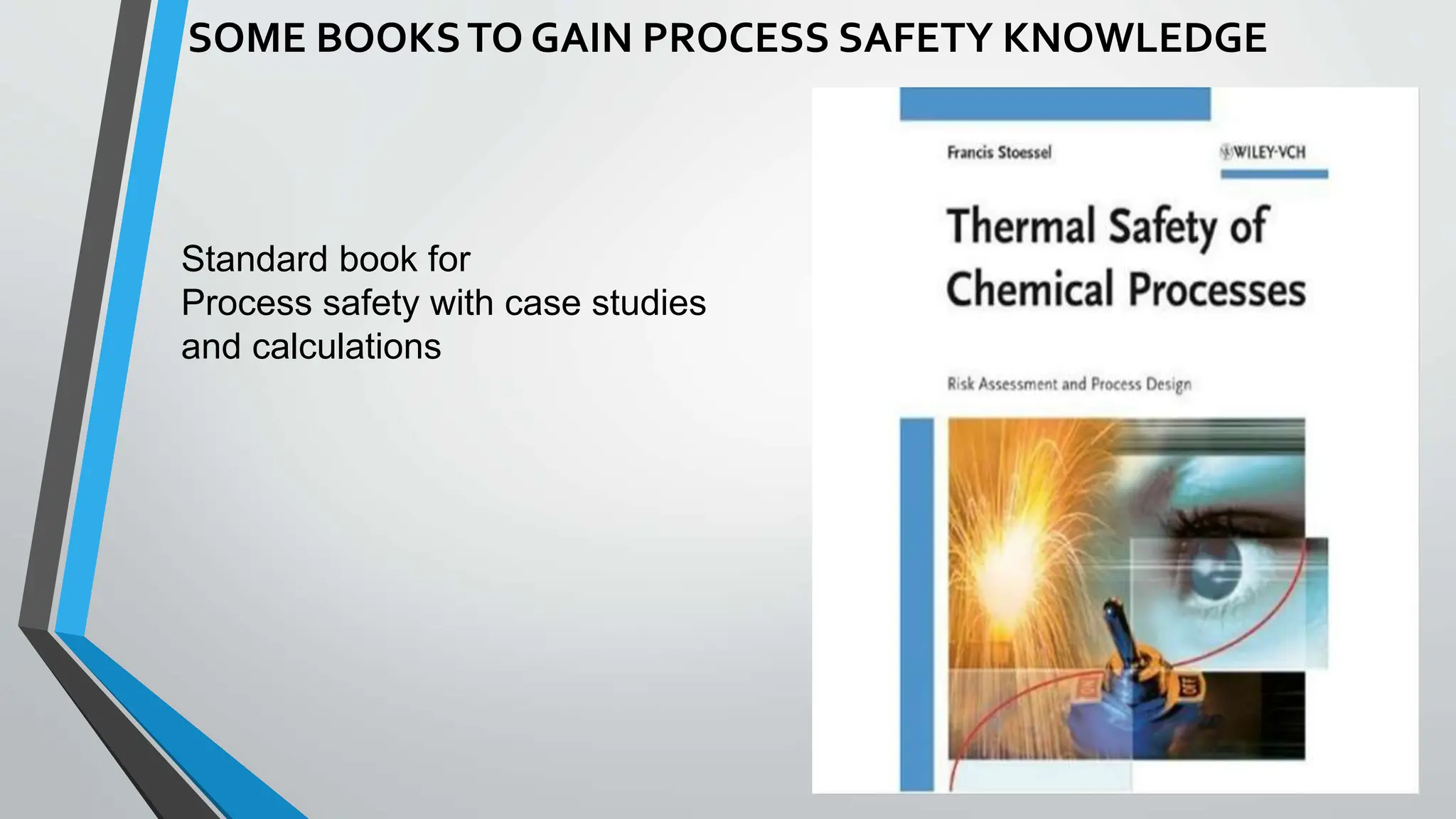
SOME BOOKSTO GAIN PROCESS SAFETY KNOWLEDGE
Standard book for
Process safety with case studies
and calculations
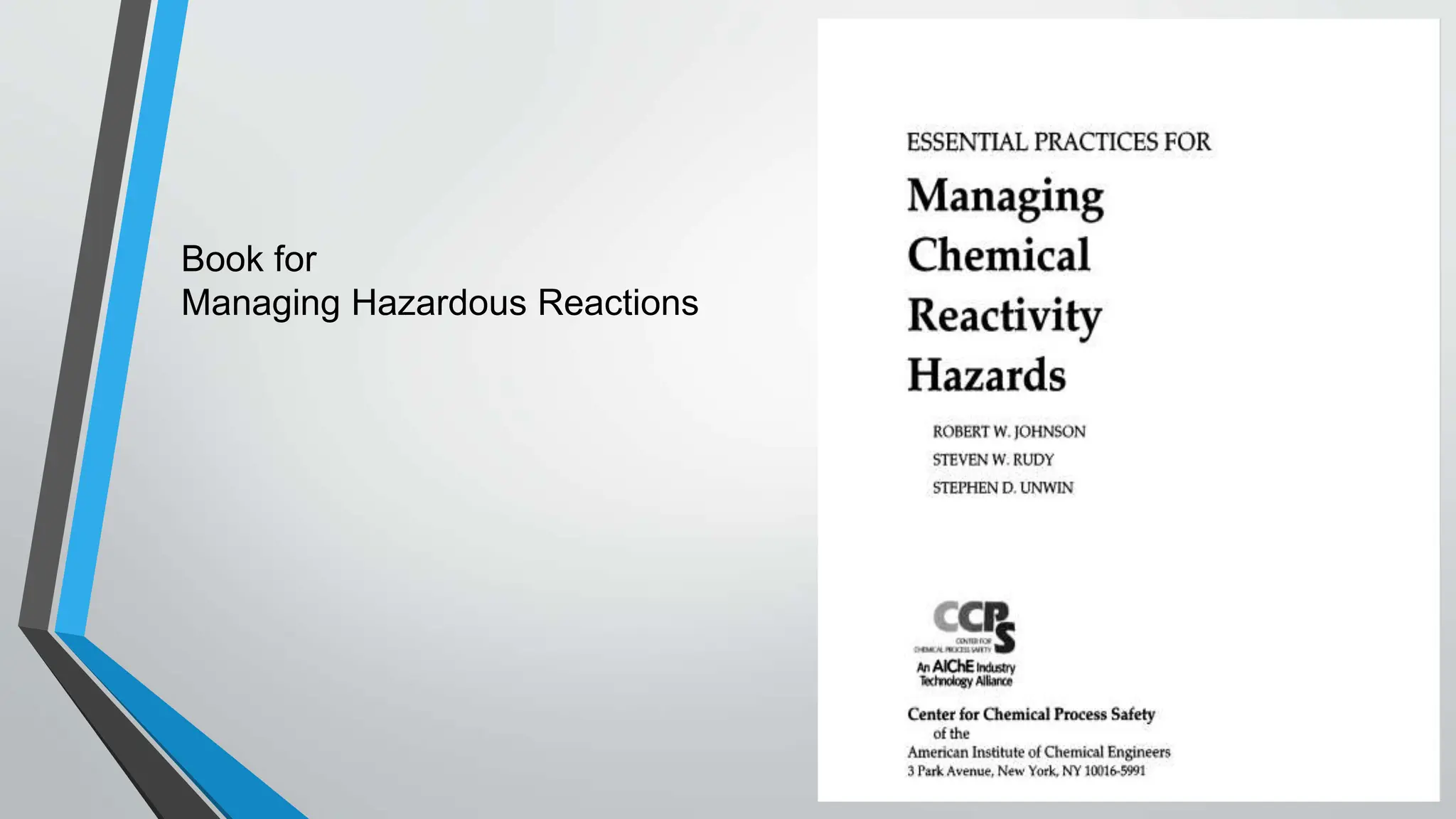
Book for
Managing Hazardous Reactions
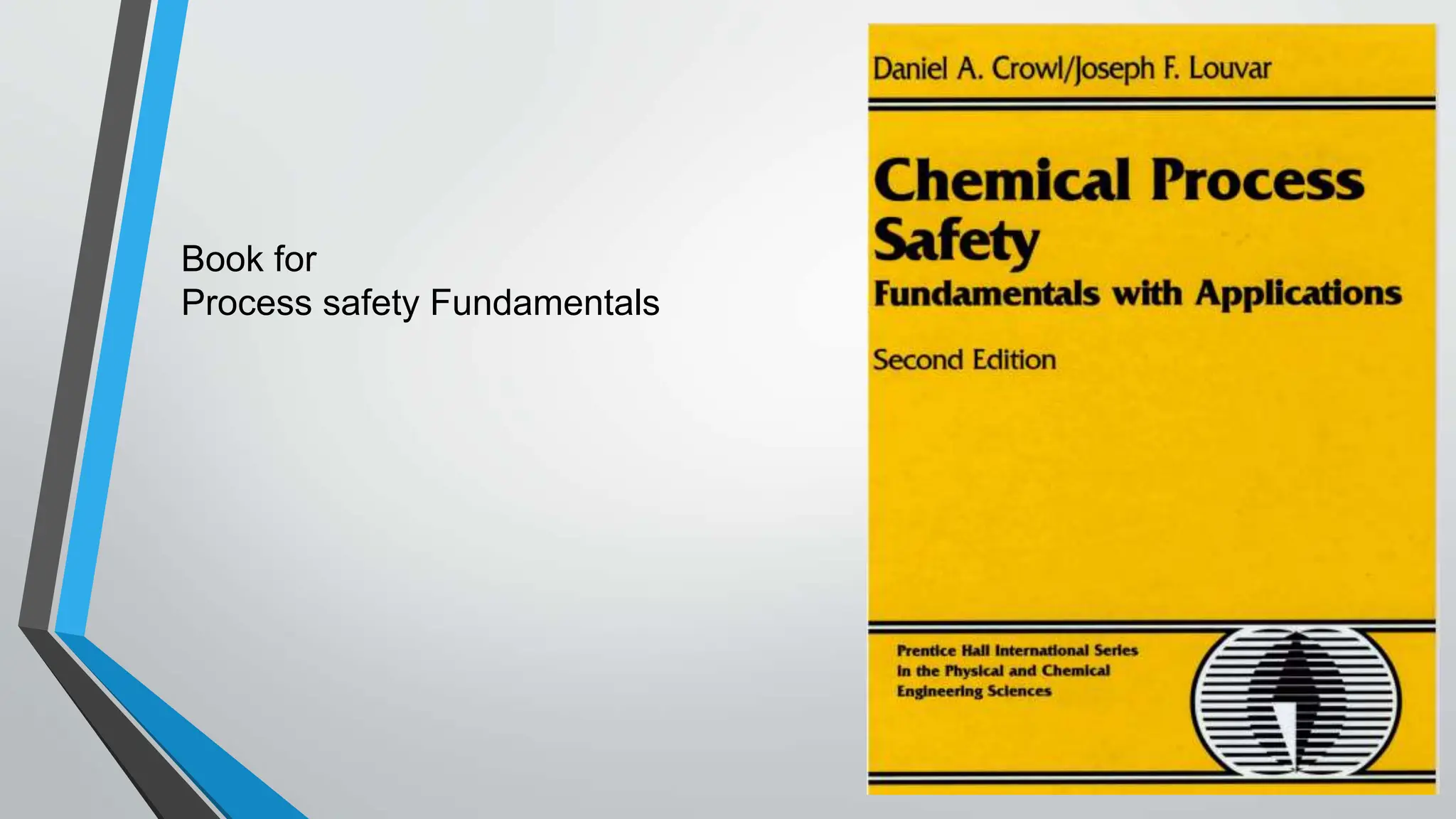
Book for
Process safety Fundamentals
Any

Process Safety, PSM in process industries

  • 1.
    SAFETY AND ITS IMPORTANCEIN PROCESS INDUSTRIES PRESENTATION BY M . SRI HARSHA M.TECH - CHEMICAL ENGG ( O. U) PROFESSION :ASST. MANAGER (CEHS) SUVEN PHARMACEUTICALS LIMITED Certified as PROCESS SAFETY ENGINEER from DuPONT PROCESS SAFETY CONSULTANT
  • 2.
    WHAT IS SAFETY? •INYOURWORDS
  • 3.
    DEFINITIONS : • SAFETY: Safety is a procedure or condition to prevent a consequences causes from hazards and to mitigate the severity of risk • HAZARD : A source , situation or act which has the potential to cause personal injury, property damage, damage to Environment or both • RISK : Risk is the combination of likelihood and consequence of an event that can cause harm Risk is associated with Hazard. There is no risk without Hazard
  • 4.
    ROLE OF CHEMICALENGINEER IN SAFETY : •HAZARD IDENTIFICATION:- Systematic procedure for understanding the conditions under which various hazards rise & to understand what things can go wrong & how
  • 5.
  • 6.
    DEVELOPING A SAFEPROCESS by PROCESS SAFETY Process safety and engineering Process safety evolution steps Desktop screening Reaction / Thermal Evolution Powder safety evolution Powder safety sequence Application of process safety Process safety management
  • 7.
    What is processsafety and engineering?  Process safety is a engineering and management procedure to identify the Hazards / risks involved within the well developed process and to implement / recommend certain measurements to prevent catastrophic events like explosions, toxic release, fires and fatality /facility damages.  Process Safety engineering is a methodology / technology to get a knowledge onprocess parameters limitations, safe operating conditions and to make safe scale-up procedure in commercial scale. PROCESS SAFETY AND ENGINEERING
  • 8.
    PROCESS SAFETY EVOLUTIONSTEPS: Desktop screening : o MSDS / SDS of individual chemicals involved, approx. thermodynamic kinetics from CHETAH 2.0 , Oxygen balance.  Primary or initial level of screening : o Identification of CPP and its risks levels within the process. o Preliminary DSC study of individual chemicals, reaction mass mixtures, residues and final powders. o TGA for thermal stability.
  • 9.
     Reaction /Thermal Evolution: • Reaction calorimetry / Heat flow study for Heat of reaction, addition rate, ∆Tad in case of cooling failure scenario and maximum heat removal rate. • ARC / 20 ltr Sphere study for TMRad for temperature w.r.t maximumpressure. • Maximum pressure in case of run away reaction scenario to control beyond the MAWP. Reaction calorimetry Acceleration rate calorimetry Heat flow Heat flow calorimetry 20 Ltr . Sphere study
  • 10.
     Powder safetyStudy: • Is important for safe handling of fine powders / dusts in large scale • Mitigate the certain risks involved with required safety measurements and controls.  Powder safety tools:  Combustible test  Dust Explosion test  Bam-fall hammer test  Minimum ignition energy (MIE)  Minimum ignition temperature  Layer ignition test (LIT)  Bulk powder resistivity  Charge decay Bam-fall hammer MIE test Charge decay test Combustible test Dust Explosion test Bulk powder resistivity
  • 11.
    APPLICTION OF PROCESSSAFETY INDUSTRIES / MANUFACTURING UNITS LIKE Oil and gas industries Pharmaceutical and its intermediates Paper industries Food manufacturing industries Fertilizer industries Petroleum industries Speciality Chemical manufacturing
  • 12.
  • 13.
    PROCESS SAFETY INFORMATION Itis a set of written compiled information which concerns process CTE
  • 14.
  • 15.
  • 17.
    PROCESS SAFETY MANAGEMENT Successfulwhen implementing below elements as a professional way.
  • 18.
    Important Elements forChemical Engineers : 2. Process safety information 3. Process hazard analysis 7. Pre-Start Up safety review (PSSR) 8. Mechanical integrity 10. Management of change 13. Compliance audits Process safety cycle and solutions
  • 19.
    • HEATTRANSFER –Energy liberation, consumption, losses and accumulations • MASSTRANSFER – Occupancy of equipment's, Flow properties. • CRE – Reaction mechanism, Route of synthesis • CHEMICALTECHNOLOGY – Mechanical integrity APPLICATION OF SUBJECTS:
  • 21.
    Cyclohexane Release &Explosion at Nypro Plant - Flixborough, England - June 1, 1974 (killed 28 people and seriously injured 36 out of a total of 72 people on site at the time) Flammable LPG in Tank Explosion – Mexico City, Mexico – November 19, 1984 (500–600 people killed, and 5000–7000 others suffering severe burns)
  • 22.
    Bhopal GasTragedy December2, 1984 (METHYL ISOCYNIDE) Immediate death toll was 2,259. confirmed a total of 3,787 deaths related to the gas release A government affidavit in 2006 stated that the leak caused 558,125 injuries, including 38,478 temporary partial injuries and approximately 3,900 severely and permanently disabling injuries. Others estimate that 8,000 died within two weeks, and another 8,000 or more have since died from gas-related diseases.
  • 23.
    Why PSM ? Ammoniumnitrate explosion at Beirut , Lebanon capital - August 4, 2020 (killed 204 people and seriously injured 6500 employees and surrounding areas. Property loss – 15 billion US$ ) – Due long time storage in closed area and uncertain climatic conditions.
  • 24.
    SOME BOOKSTO GAINPROCESS SAFETY KNOWLEDGE Standard book for Process safety with case studies and calculations
  • 25.
  • 26.
  • 28.