Process, Memory, and
StorageManagement:
Windows vs. macOS
This presentation explores the fundamental aspects of process,
memory, and storage management in Windows and macOS operating
systems. Designed for computer science students and software
developers, it offers a technical, informative, and comparative
analysis of how each OS handles these critical tasks. We will also
cover the types of kernel found in operating systems, detailing the
pros and cons of each.
by MIRABUENO, Vonn Ryan
2.
Process Management
Windows: Windowsmanages processes by prioritizing tasks
and initiating new ones using system functions like
CreateProcess(). This enables smooth multitasking and
efficient task management.
macOS: Process management in macOS leverages UNIX
commands fork() and exec(). These commands create and
execute new processes concurrently, facilitating the
simultaneous operation of multiple applications. The
system efficiently determines what task should run first.
The use of unique approaches in Windows and macOS demonstrates the divergent philosophies in OS design, with Windows
emphasizing prioritization and macOS focusing on concurrent execution.
3.
Memory Management
Windows: Windowsutilizes virtual memory and paging files
to manage RAM. When physical memory is full, data is
temporarily stored on the hard disk to prevent program
crashes. This ensures stability even with limited RAM
resources.
macOS: MacOS also employs virtual memory but goes a step
further by compressing inactive data in RAM. This
compression saves space and enhances system speed,
allowing more tasks to run concurrently without
compromising performance.
Both operating systems rely on virtual memory, but macOS introduces an added layer of efficiency through RAM
compression, showcasing Apple's focus on optimizing system resources for a smoother user experience.
4.
Storage Management
The contrastin storage management underscores Microsoft's emphasis on versatility and Apple's focus on speed and data
integrity, reflecting different priorities in file system design.
5.
Types of Kernel:
Monolithic,Micro, Hybrid
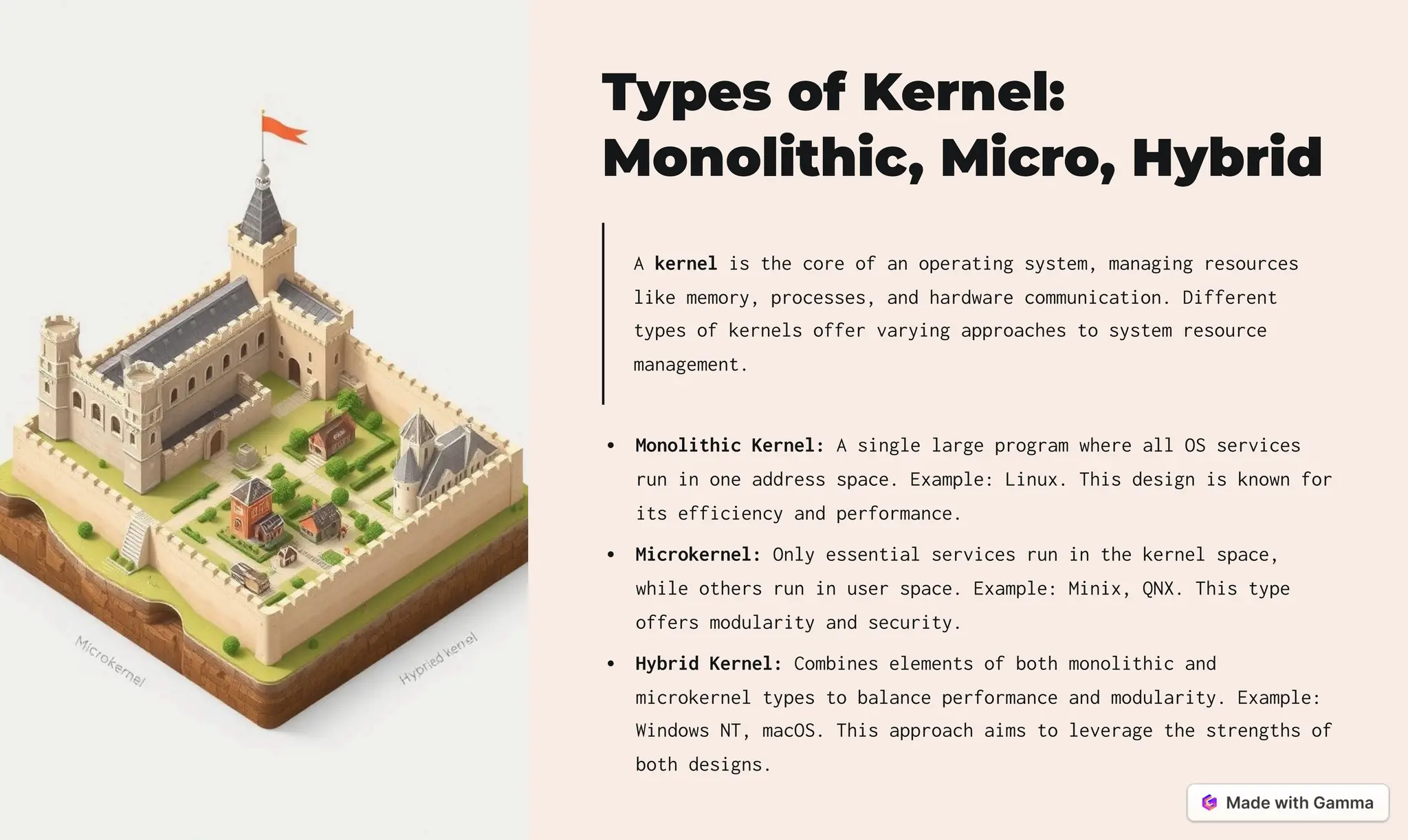
A kernel is the core of an operating system, managing resources
like memory, processes, and hardware communication. Different
types of kernels offer varying approaches to system resource
management.
Monolithic Kernel: A single large program where all OS services
run in one address space. Example: Linux. This design is known for
its efficiency and performance.
Microkernel: Only essential services run in the kernel space,
while others run in user space. Example: Minix, QNX. This type
offers modularity and security.
Hybrid Kernel: Combines elements of both monolithic and
microkernel types to balance performance and modularity. Example:
Windows NT, macOS. This approach aims to leverage the strengths of
both designs.
6.
Key Takeaways andNext
Steps
In conclusion, understanding the process, memory, and storage
management techniques in Windows and macOS is vital for computer
science students and software developers. Windows prioritizes task
management and versatility, while macOS focuses on concurrent
execution and data integrity. The choice of kernel type4monolithic,
micro, or hybrid4also significantly impacts system performance and
security.
As a next step, it's recommended to further explore these topics by
implementing practical examples, experimenting with different
configurations, and staying updated with the latest advancements in
operating system technologies. Hands-on experience will solidify the
understanding of these fundamental concepts.