Problem 14-4A
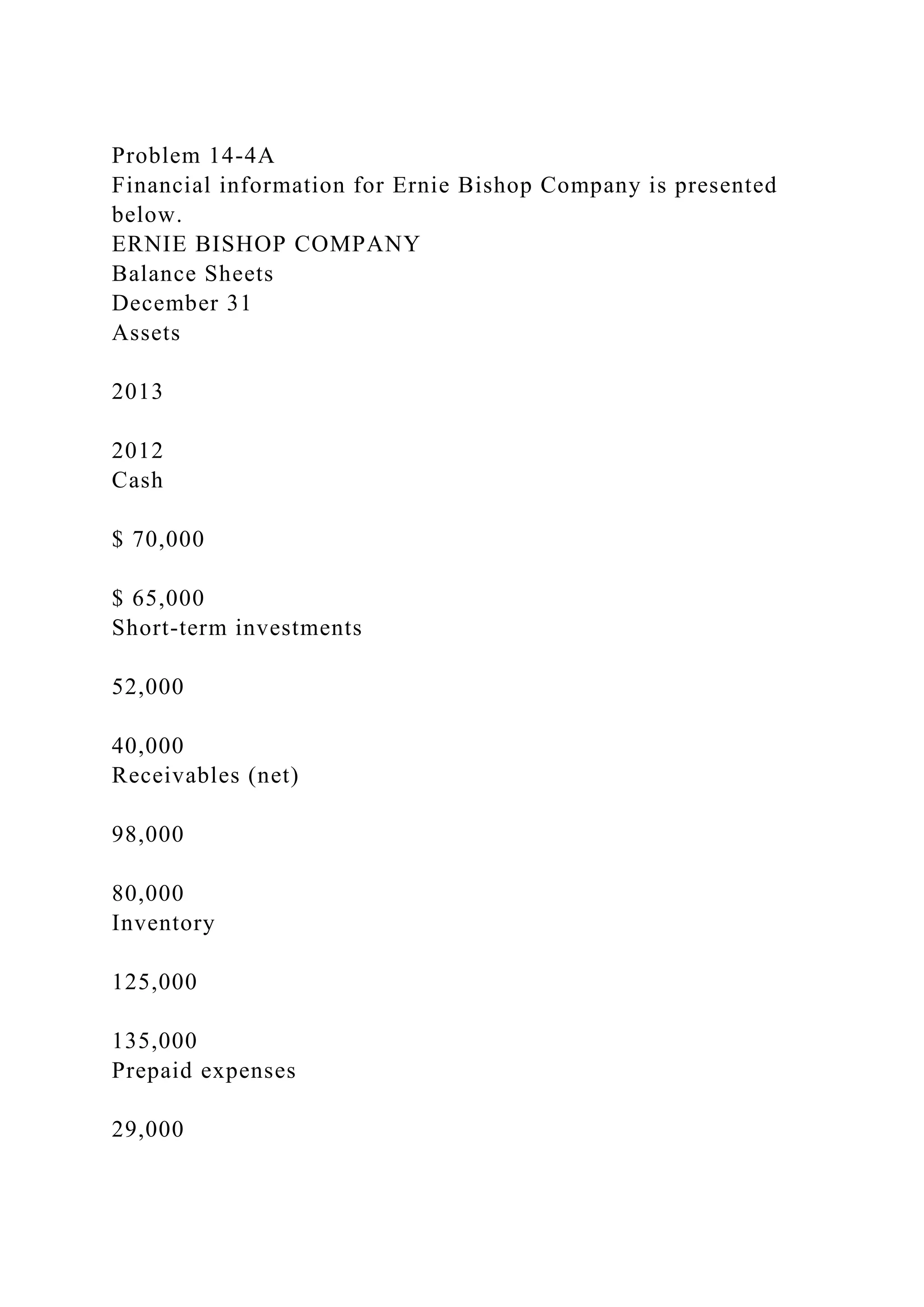
Financial information for Ernie Bishop Company is presented
below.
ERNIE BISHOP COMPANY
Balance Sheets
December 31
Assets
2013
2012
Cash
$ 70,000
$ 65,000
Short-term investments
52,000
40,000
Receivables (net)
98,000
80,000
Inventory
125,000
135,000
Prepaid expenses
29,000
23,000
Land
130,000
130,000
Building and equipment (net)
168,000
175,000
$672,000
$648,000
Liabilities and Stockholders’ Equity
Notes payable
$100,000
100,000
Accounts payable
48,000
42,000
Accrued liabilities
44,000
40,000
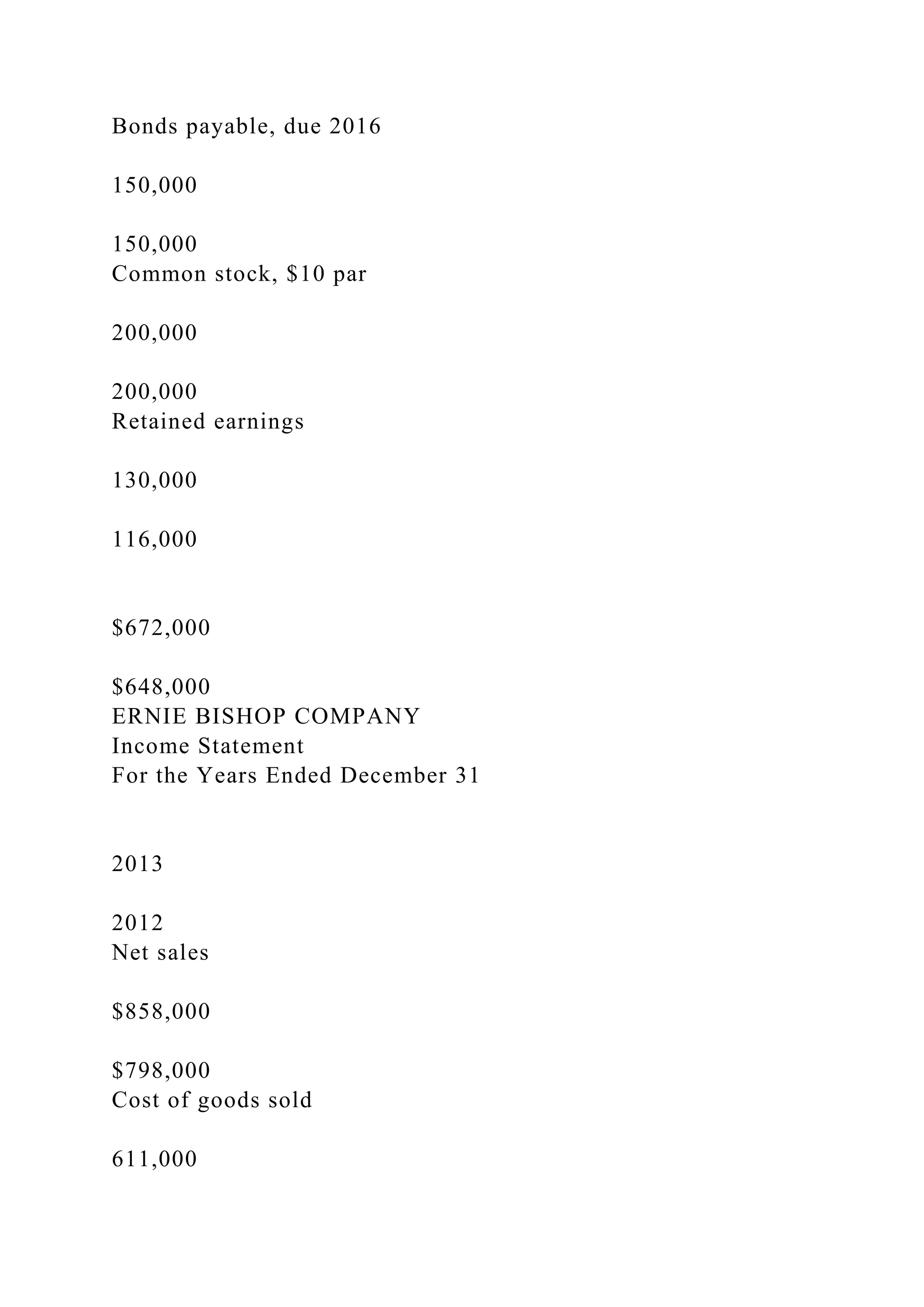
Bonds payable, due 2016
150,000
150,000
Common stock, $10 par
200,000
200,000
Retained earnings
130,000
116,000
$672,000
$648,000
ERNIE BISHOP COMPANY
Income Statement
For the Years Ended December 31
2013
2012
Net sales
$858,000
$798,000
Cost of goods sold
611,000
575,000
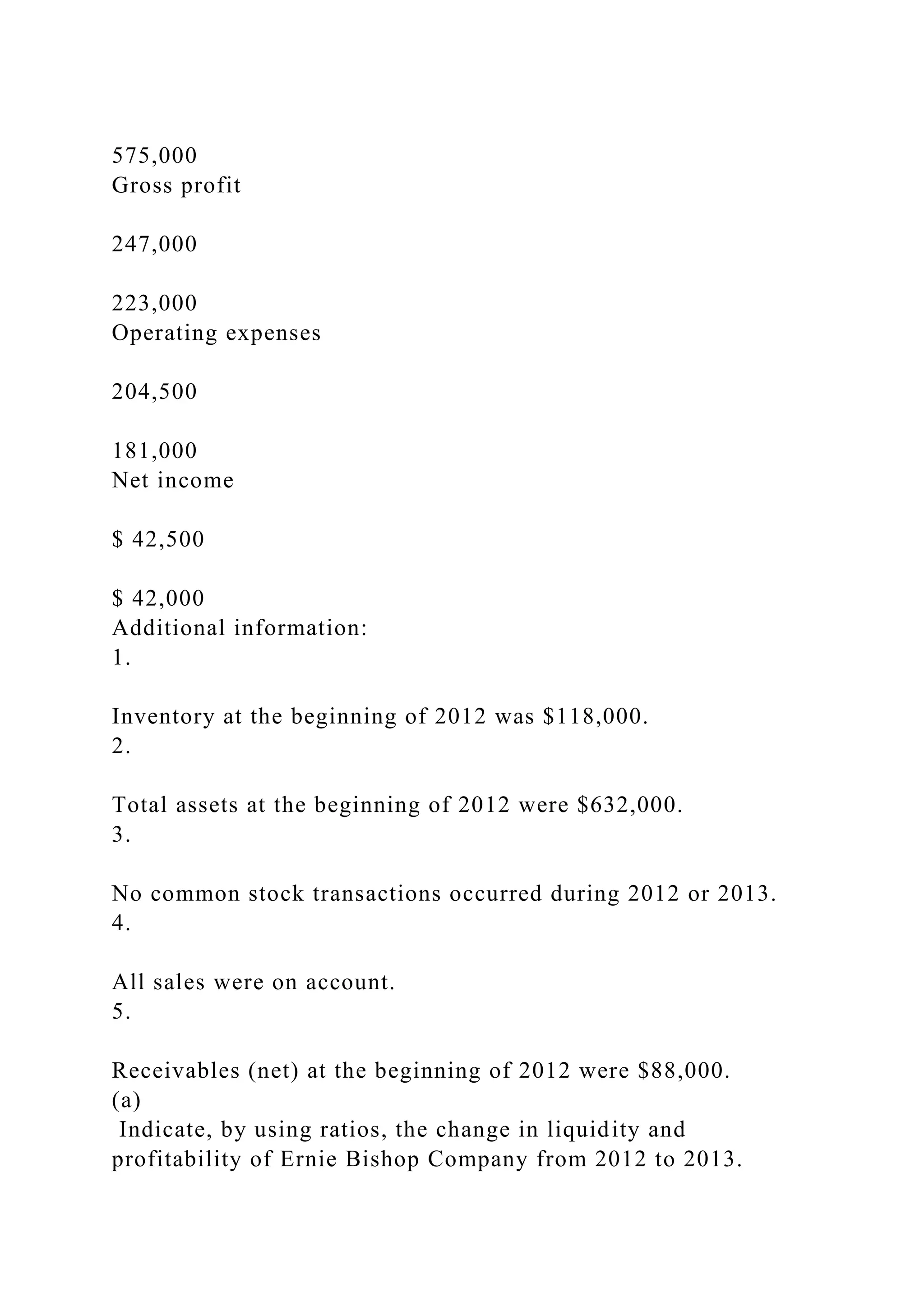
Gross profit
247,000
223,000
Operating expenses
204,500
181,000
Net income
$ 42,500
$ 42,000
Additional information:
1.
Inventory at the beginning of 2012 was $118,000.
2.
Total assets at the beginning of 2012 were $632,000.
3.
No common stock transactions occurred during 2012 or 2013.
4.
All sales were on account.
5.
Receivables (net) at the beginning of 2012 were $88,000.
(a)
Indicate, by using ratios, the change in liquidity and
profitability of Ernie Bishop Company from 2012 to 2013.
(Round Earnings per share to 2 decimal places, e.g. 1.65, and
all others to 1 decimal place, e.g. 6.8 or 6.8% .)
2012
2013
Change
LIQUIDITY
Current
Acid-test
Receivables turnover
Inventory turnover
PROFITABILITY
Profit margin
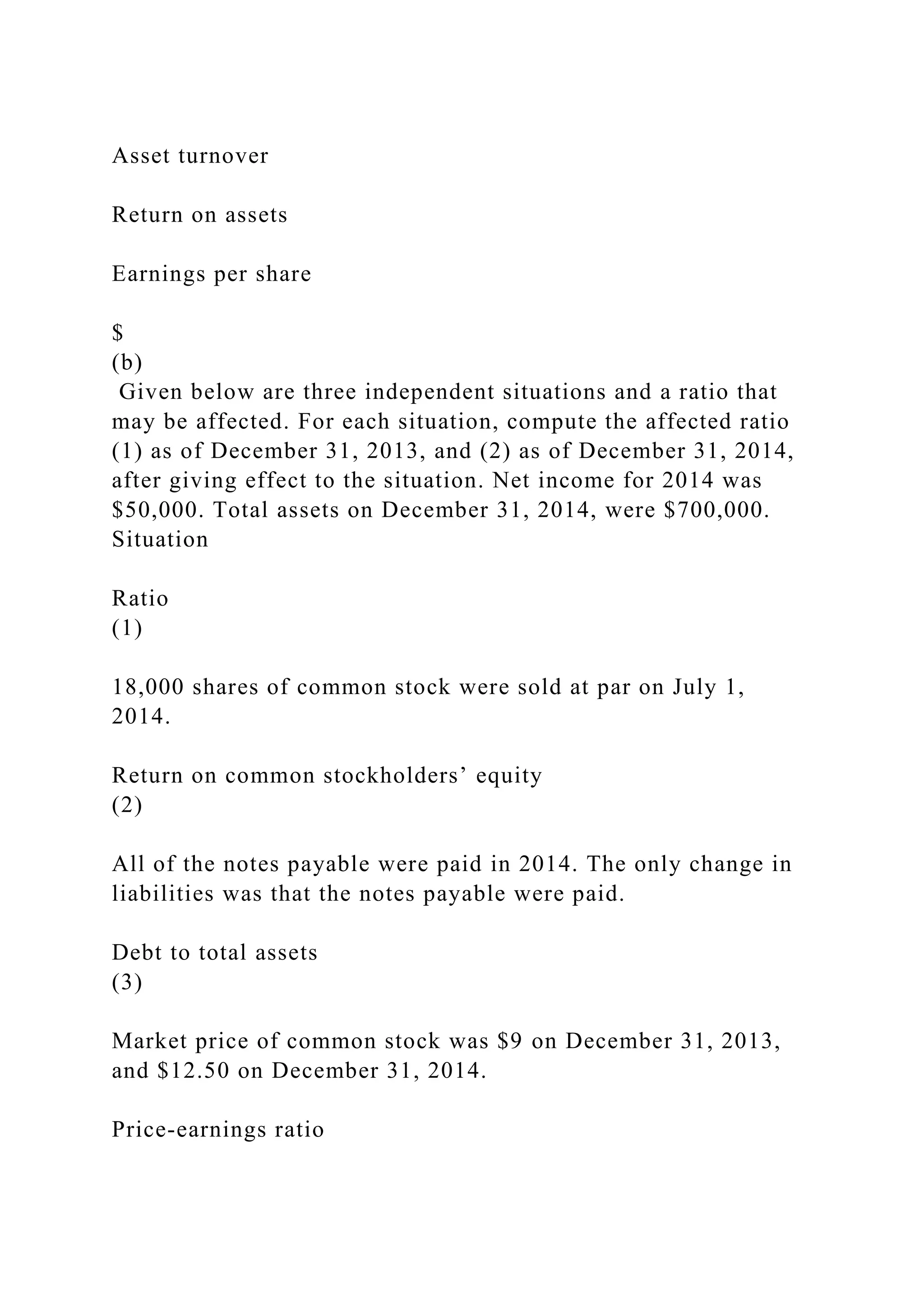
Asset turnover
Return on assets
Earnings per share
$
(b)
Given below are three independent situations and a ratio that
may be affected. For each situation, compute the affected ratio
(1) as of December 31, 2013, and (2) as of December 31, 2014,
after giving effect to the situation. Net income for 2014 was
$50,000. Total assets on December 31, 2014, were $700,000.
Situation
Ratio
(1)
18,000 shares of common stock were sold at par on July 1,
2014.
Return on common stockholders’ equity
(2)
All of the notes payable were paid in 2014. The only change in
liabilities was that the notes payable were paid.
Debt to total assets
(3)
Market price of common stock was $9 on December 31, 2013,
and $12.50 on December 31, 2014.
Price-earnings ratio
2013
2014
Change
Return on common stockholders’ equity
Debt to total assets
Price-earnings ratio
Click if you would like to Show Work for this question:
Open Show Work

Problem 14-4AFinancial information for Ernie Bishop Company is pre.docx

  • 1.
    Problem 14-4A Financial informationfor Ernie Bishop Company is presented below. ERNIE BISHOP COMPANY Balance Sheets December 31 Assets 2013 2012 Cash $ 70,000 $ 65,000 Short-term investments 52,000 40,000 Receivables (net) 98,000 80,000 Inventory 125,000 135,000 Prepaid expenses 29,000
  • 2.
    23,000 Land 130,000 130,000 Building and equipment(net) 168,000 175,000 $672,000 $648,000 Liabilities and Stockholders’ Equity Notes payable $100,000 100,000 Accounts payable 48,000 42,000 Accrued liabilities 44,000 40,000
  • 3.
    Bonds payable, due2016 150,000 150,000 Common stock, $10 par 200,000 200,000 Retained earnings 130,000 116,000 $672,000 $648,000 ERNIE BISHOP COMPANY Income Statement For the Years Ended December 31 2013 2012 Net sales $858,000 $798,000 Cost of goods sold 611,000
  • 4.
    575,000 Gross profit 247,000 223,000 Operating expenses 204,500 181,000 Netincome $ 42,500 $ 42,000 Additional information: 1. Inventory at the beginning of 2012 was $118,000. 2. Total assets at the beginning of 2012 were $632,000. 3. No common stock transactions occurred during 2012 or 2013. 4. All sales were on account. 5. Receivables (net) at the beginning of 2012 were $88,000. (a) Indicate, by using ratios, the change in liquidity and profitability of Ernie Bishop Company from 2012 to 2013.
  • 5.
    (Round Earnings pershare to 2 decimal places, e.g. 1.65, and all others to 1 decimal place, e.g. 6.8 or 6.8% .) 2012 2013 Change LIQUIDITY Current Acid-test Receivables turnover Inventory turnover PROFITABILITY Profit margin
  • 6.
    Asset turnover Return onassets Earnings per share $ (b) Given below are three independent situations and a ratio that may be affected. For each situation, compute the affected ratio (1) as of December 31, 2013, and (2) as of December 31, 2014, after giving effect to the situation. Net income for 2014 was $50,000. Total assets on December 31, 2014, were $700,000. Situation Ratio (1) 18,000 shares of common stock were sold at par on July 1, 2014. Return on common stockholders’ equity (2) All of the notes payable were paid in 2014. The only change in liabilities was that the notes payable were paid. Debt to total assets (3) Market price of common stock was $9 on December 31, 2013, and $12.50 on December 31, 2014. Price-earnings ratio
  • 7.
    2013 2014 Change Return on commonstockholders’ equity Debt to total assets Price-earnings ratio Click if you would like to Show Work for this question: Open Show Work