Principles of Good
Clinical Practice
Jamalludin Ab Rahman MDMPH
Department of Community Medicine
International Islamic University Malaysia
At the end of this lecture you should
be able to
 Describe the history of human research
 Describe evolution of regulations in human
  research
 Define GCP (based on ICH)
 Outline the principles of GCP
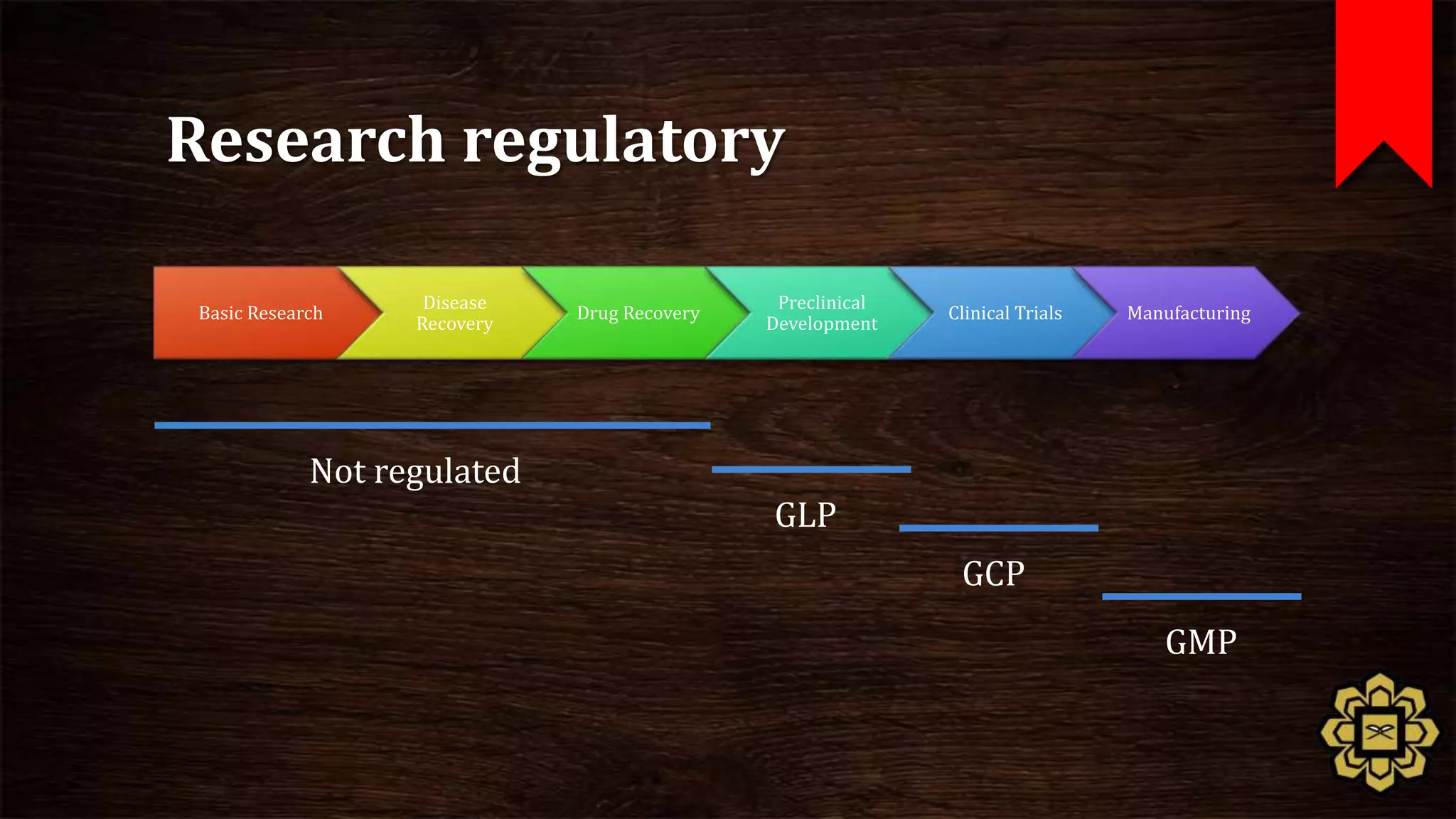
Research regulatory

                    Disease                    Preclinical
 Basic Research               Drug Recovery                  Clinical Trials   Manufacturing
                   Recovery                   Development


             Not regulated
                                              GLP
                                                              GCP
                                                                                  GMP
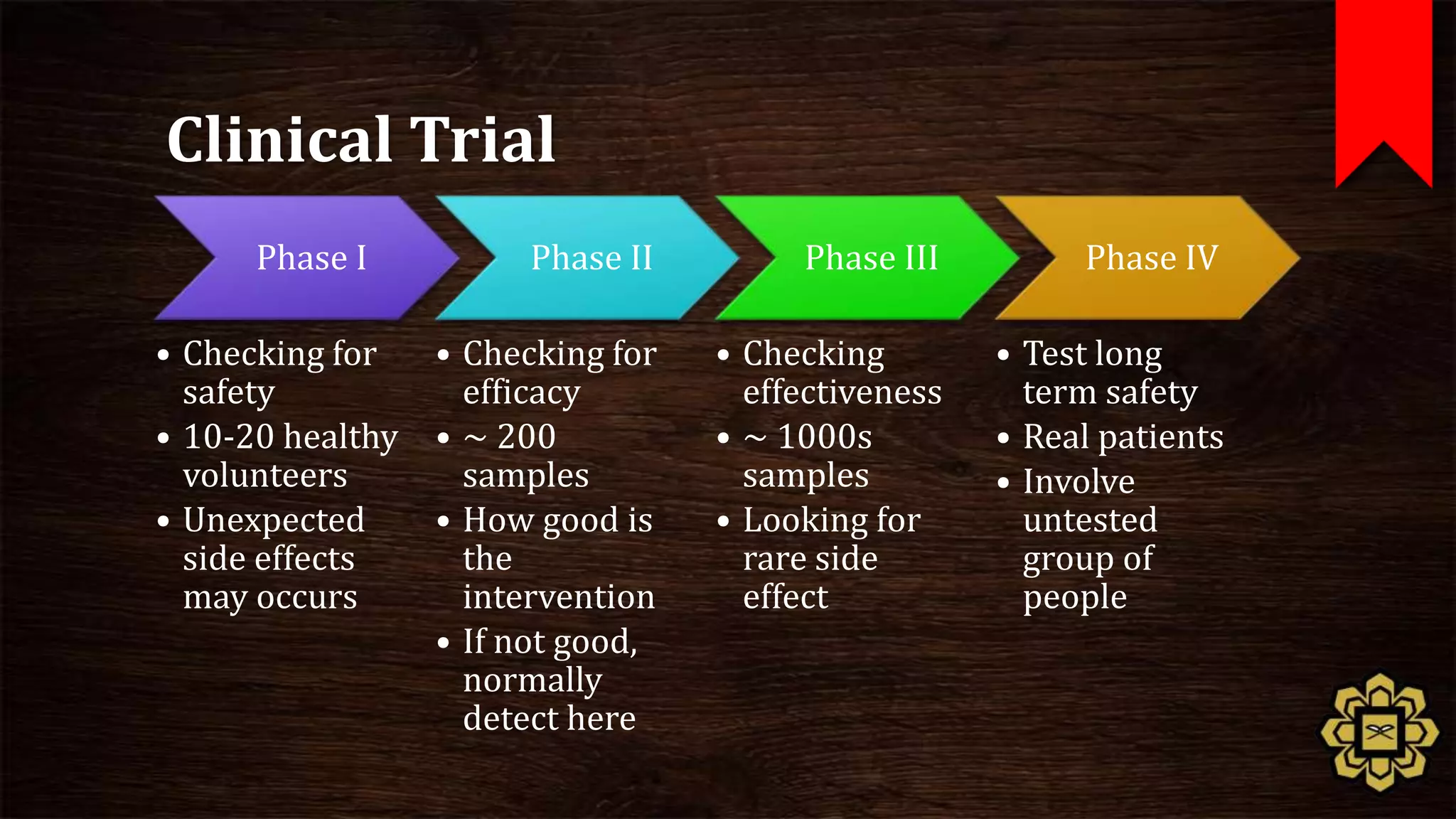
Clinical Trial
      Phase I          Phase II         Phase III         Phase IV

• Checking for    • Checking for   • Checking        • Test long
  safety            efficacy         effectiveness     term safety
• 10-20 healthy   • ~ 200          • ~ 1000s         • Real patients
  volunteers        samples          samples         • Involve
• Unexpected      • How good is    • Looking for       untested
  side effects      the              rare side         group of
  may occurs        intervention     effect            people
                  • If not good,
                    normally
                    detect here
HUMAN RESEARCH & REGULATIONS
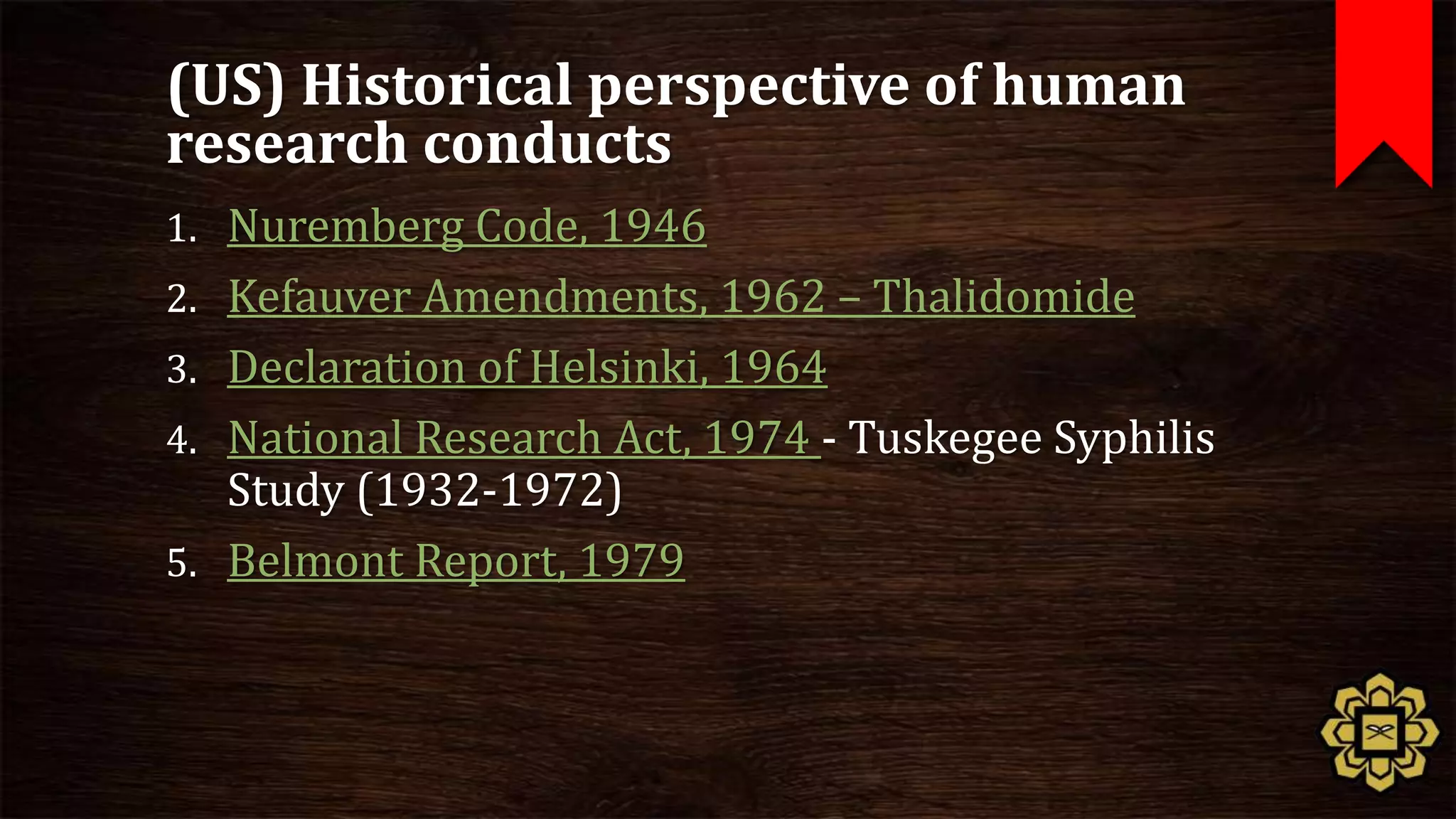
(US) Historical perspective of human
research conducts
1. Nuremberg Code, 1946
2. Kefauver Amendments, 1962 – Thalidomide
3. Declaration of Helsinki, 1964
4. National Research Act, 1974 - Tuskegee Syphilis
   Study (1932-1972)
5. Belmont Report, 1979
Nuremberg Code
 December 9, 1946 - American military tribunal opened criminal
    proceedings against 23 leading German physicians and
    administrators for crimes against humanity – 16 found guilty
   German Physicians conducted medical experiments on thousands
    of camp prisoners without their consent.
   Most of the participants of these experiments died or were
    permanently crippled.
   The Nuremberg Code was established in 1948, stating that "The
    voluntary consent of the human participant is absolutely
    essential,"
   It did not carry the force of law, but the Nuremberg Code was the
    first international document which advocated
    voluntary participation and informed consent.
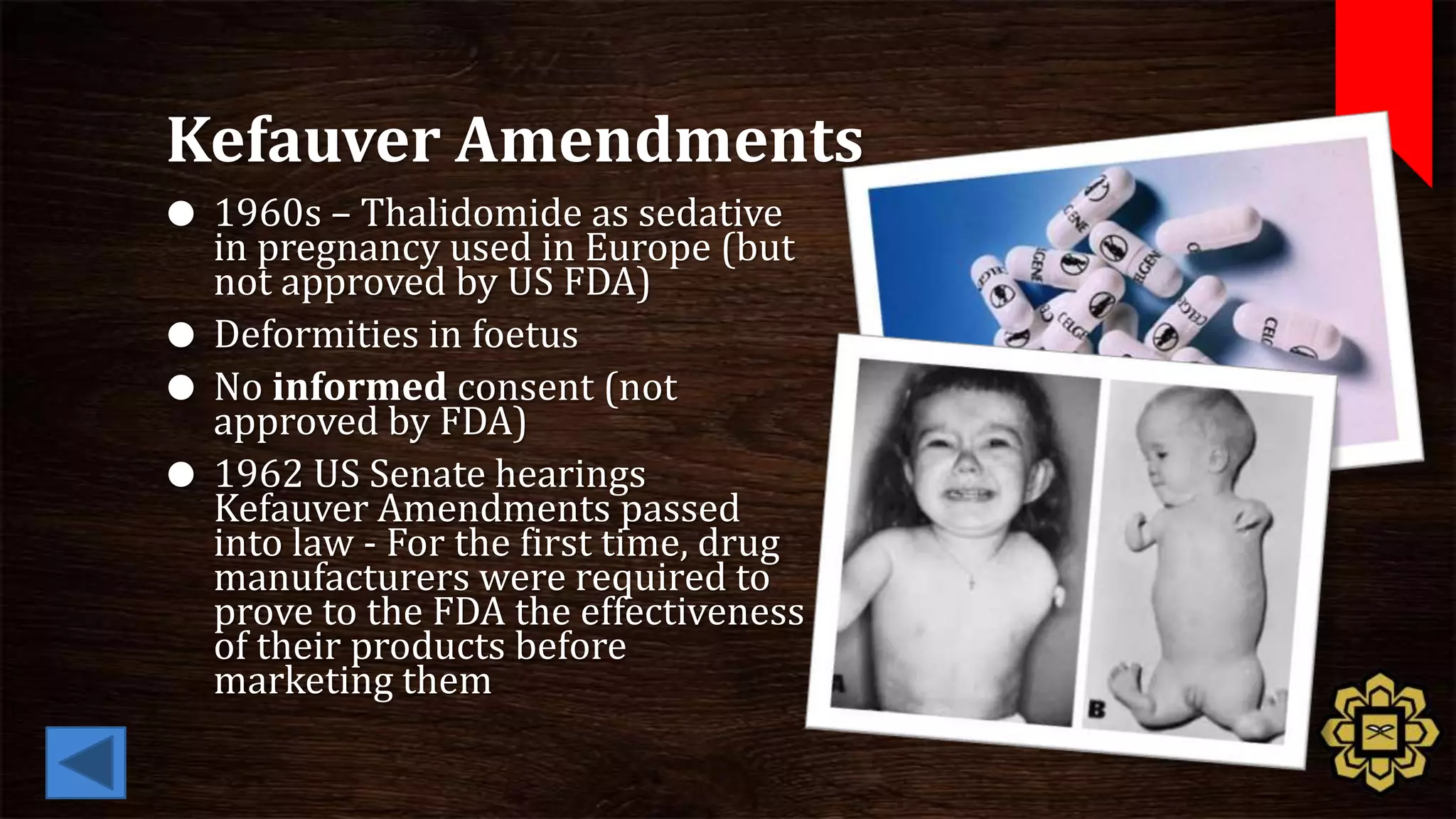
Kefauver Amendments
 1960s – Thalidomide as sedative
  in pregnancy used in Europe (but
  not approved by US FDA)
 Deformities in foetus
 No informed consent (not
  approved by FDA)
 1962 US Senate hearings
  Kefauver Amendments passed
  into law - For the first time, drug
  manufacturers were required to
  prove to the FDA the effectiveness
  of their products before
  marketing them
Declaration of Helsinki
 World Medical Association - recommendations guiding
  medical doctors in biomedical research involving
  human participants
  1.   Research with humans should be based on the results from
       laboratory and animal experimentation
  2.   Research protocols should be reviewed by an independent
       committee prior to initiation
  3.   Informed consent from research participants is necessary
  4.   Research should be conducted by medically/scientifically
       qualified individuals
  5.   Risks should not exceed benefits
 Revised - 1975, 1983, 1989, 1996, 2000, 2002, 2004,
  2008
Tuskegee Syphilis Study
 Study on 600 low income African-American by U.S.
  Public Health Service
 Free medical examination – but not told of diagnosis
 Many died of syphilis
 Stopped in 1973 by the U.S. Department of Health,
  Education, and Welfare
 1974 National Research Act passed - National
  Commission for the Protection of Human Subjects of
  Biomedical and Behavioural Research established
 The commission produce Belmont Report (1979)
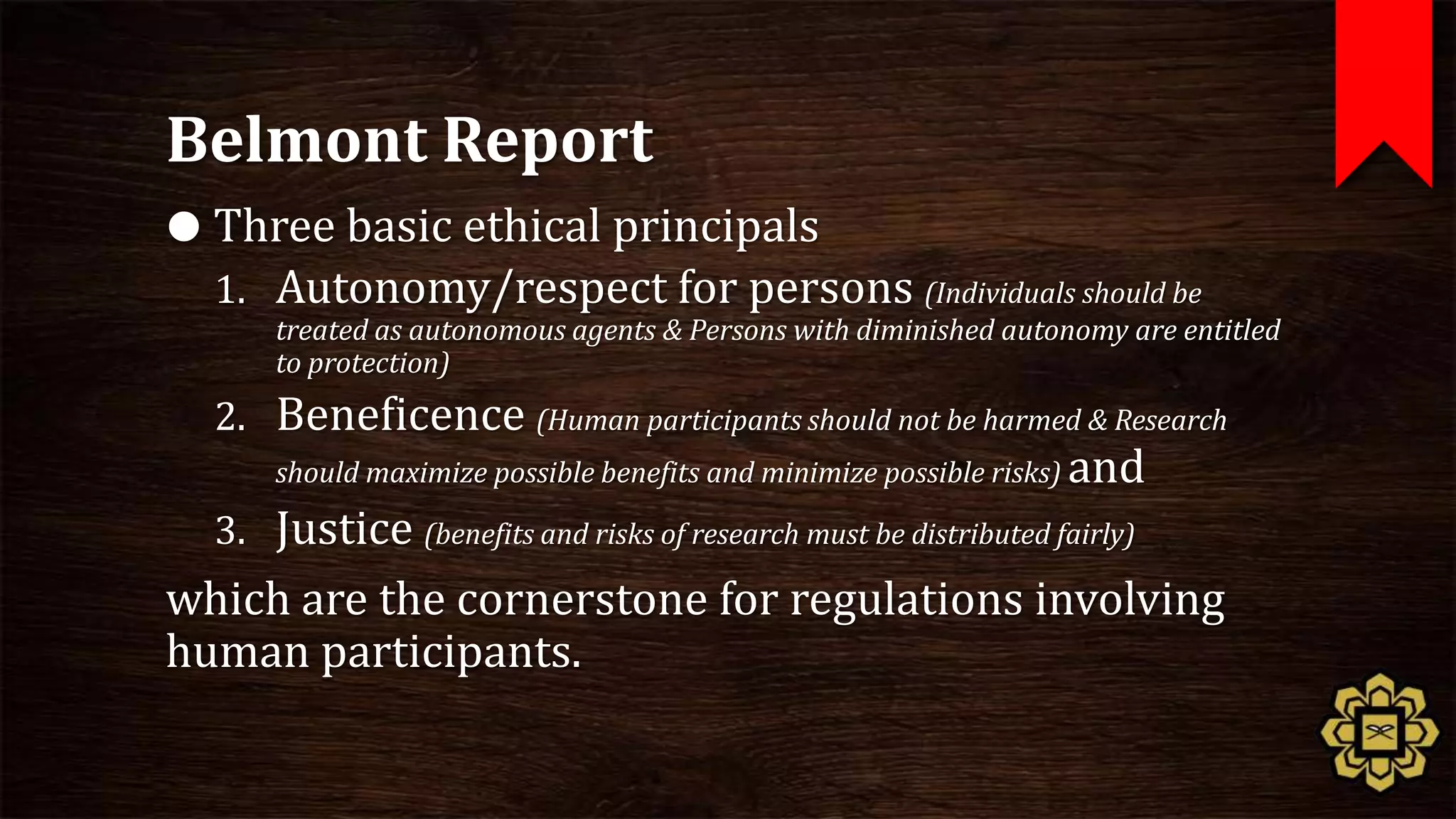
Belmont Report
 Three basic ethical principals
  1. Autonomy/respect for persons (Individuals should be
      treated as autonomous agents & Persons with diminished autonomy are entitled
      to protection)
  2. Beneficence (Human participants should not be harmed & Research
      should maximize possible benefits and minimize possible risks) and

  3. Justice (benefits and risks of research must be distributed fairly)
which are the cornerstone for regulations involving
human participants.
GCP & ICH
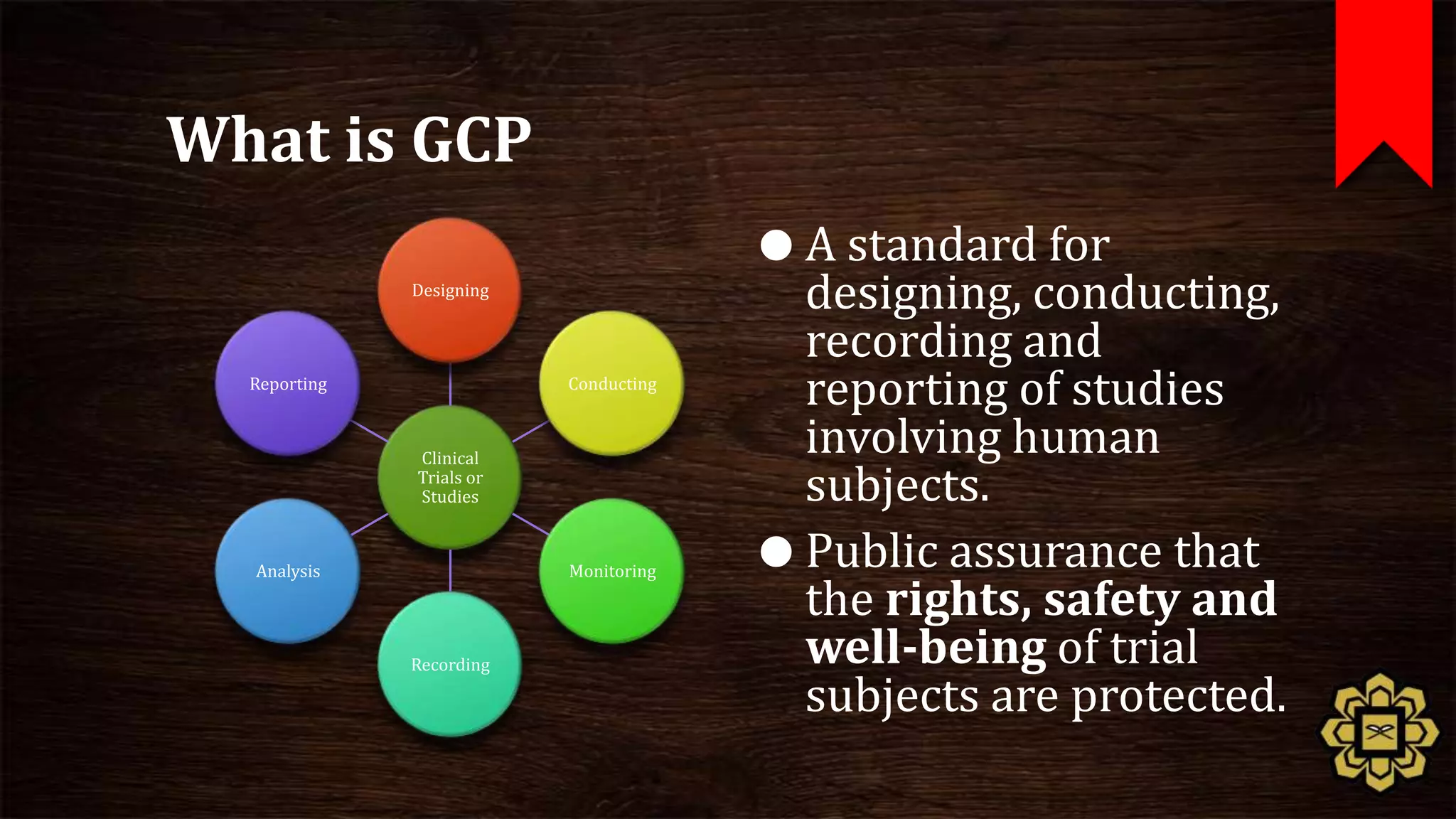
What is GCP
                                        A standard for
              Designing
                                         designing, conducting,
                                         recording and
  Reporting               Conducting
                                         reporting of studies
              Clinical
                                         involving human
              Trials or
              Studies                    subjects.
  Analysis                Monitoring
                                        Public assurance that
                                         the rights, safety and
              Recording                  well-being of trial
                                         subjects are protected.
Evolution of GCP
1930s – US Food Drug & Cosmetic Act
1947 – Nuremberg Code
1962 - Kefauver Amendments (US) (following Thalidomide tragedy)
1964 – Declaration of Helsinki
1974 – National Research Act (US)
1979 - Belmont Report (US)
1986 – England – ABPI Guideline
1987 - France - Bonnes Pratiques Clinique
1989 – Scandinavia - Nordic Guidelines , Good Clinical Trial Practice
1990 – France – Huriet Law
1990 - EC - Good Clinical Practice for Trials on Medicinal Products in the European Community
1992 - WHO Guidelines, Australian Guidelines
1997 – ICH GCP became law in some countries
1999 - Malaysian GCP
GCP in Asia
 Singapore GCP 1998
 Malaysian GCP 1999, 2004, 2011
 Chinese GCP 1999
 Thailand GCP 2000
 Indonesia 2001
What is ICH?
 International Conference on Harmonisation
 Realisation to have independent     evaluation of medical products
    mostly driven by tragedy
   1960-1970s - rapid increase in laws, regulations and guidelines for
    reporting and evaluating the data on safety, quality and efficacy
   Varied from country to country – need to harmonise
   Pioneered by European Community (EC) (now the European Union) in
    1980s
   WHO Conference of Drug Regulatory Authorities (ICDRA), in Paris, in 1989
   ICH was initiated on April 1990, in a meeting hosted by EFPIA (European
    Federation of Pharmaceutical Industries and Associations) in Brussels
   Main outcome - Tripartite ICH Guidelines on Safety, Quality and Efficacy
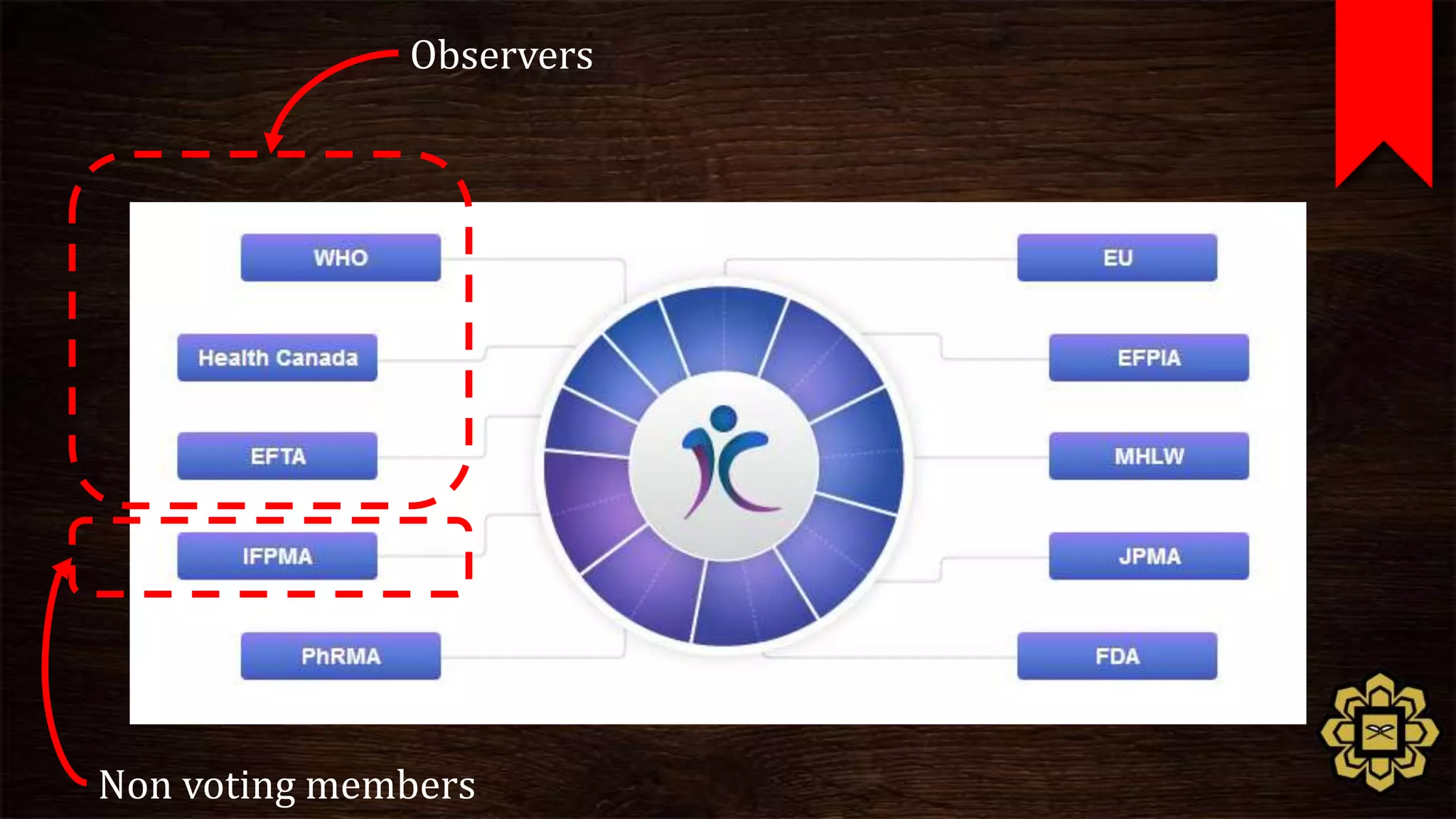
Observers


Non voting members
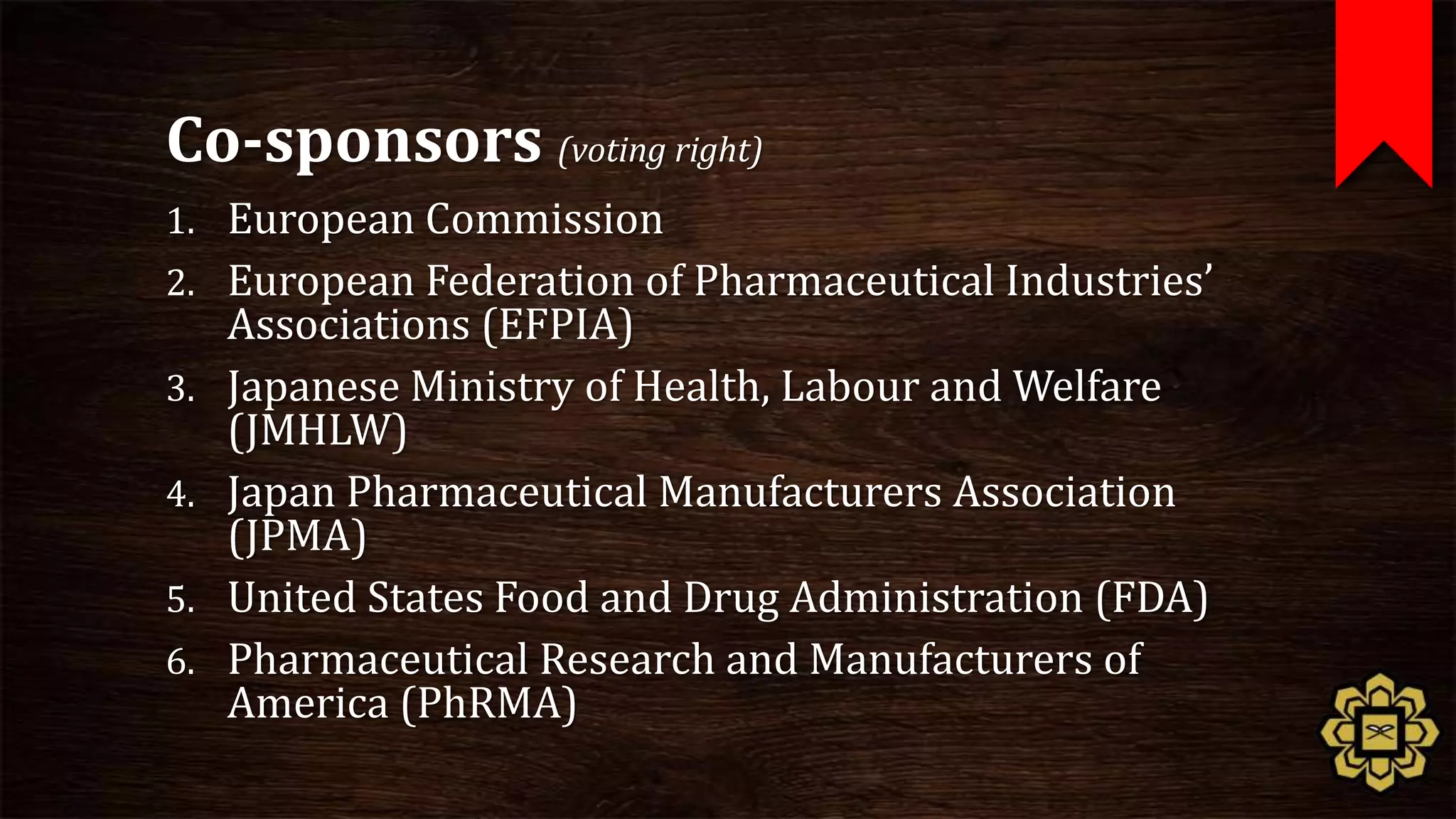
Co-sponsors (voting right)
1. European Commission
2. European Federation of Pharmaceutical Industries’
     Associations (EFPIA)
3.   Japanese Ministry of Health, Labour and Welfare
     (JMHLW)
4.   Japan Pharmaceutical Manufacturers Association
     (JPMA)
5.   United States Food and Drug Administration (FDA)
6.   Pharmaceutical Research and Manufacturers of
     America (PhRMA)
Aims of ICH
1. Unify registration requirements for new products
2. Reduce medicinal product development costs:
   more economical use of animal, human and
   material resources.
3. Accelerate medicinal product licensing times: avoid
   repeat testing in different regions.
4. Increases patent protection times through reducing
   delay in licensing times.
ICH represents
 17 countries comprising
 15% of the world’s population
 90% of the US$ 320 billion global pharmaceutical
  sales of the year 2000
Harmonisation
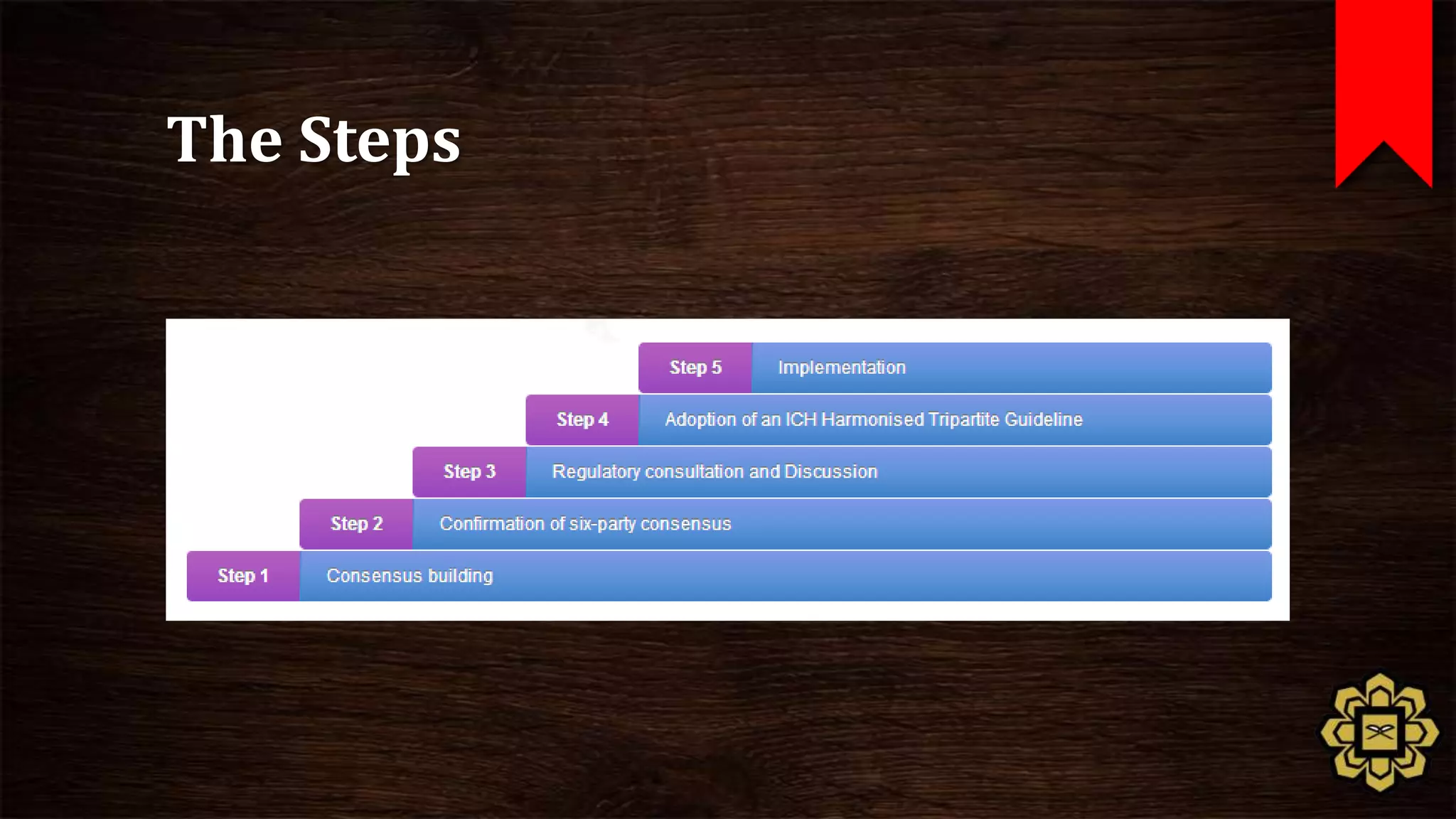
The Steps
Evolution GCP in Malaysia
1997   1st Malaysian Workshop in GCP (Liver Update 96)
1999   May      2nd Workshop in GCP
       June     3rd Workshop in GCP (Liver Update 99)
       August   4th Workshop in GCP Consensus
       Dec      Launch of Malaysian Guidelines 5th
                Workshop in GCP
2004   2nd Malaysian GCP
2011   3rd Malaysian GCP
PRINCIPLES OF ICH GCP
Principles of ICH GCP (Page 8 of E6)
2.1 Clinical trials should be conducted in accordance
with the ethical principles that have their origin in
the Declaration of Helsinki, and that are consistent
with GCP and the applicable regulatory
requirement(s).
2.2 Before a trial is initiated, foreseeable risks and
inconveniences should be weighed against the
anticipated benefit for the individual trial subject and
society. A trial should be initiated and continued only
if the anticipated benefits justify the risks.
Principles of ICH GCP…….
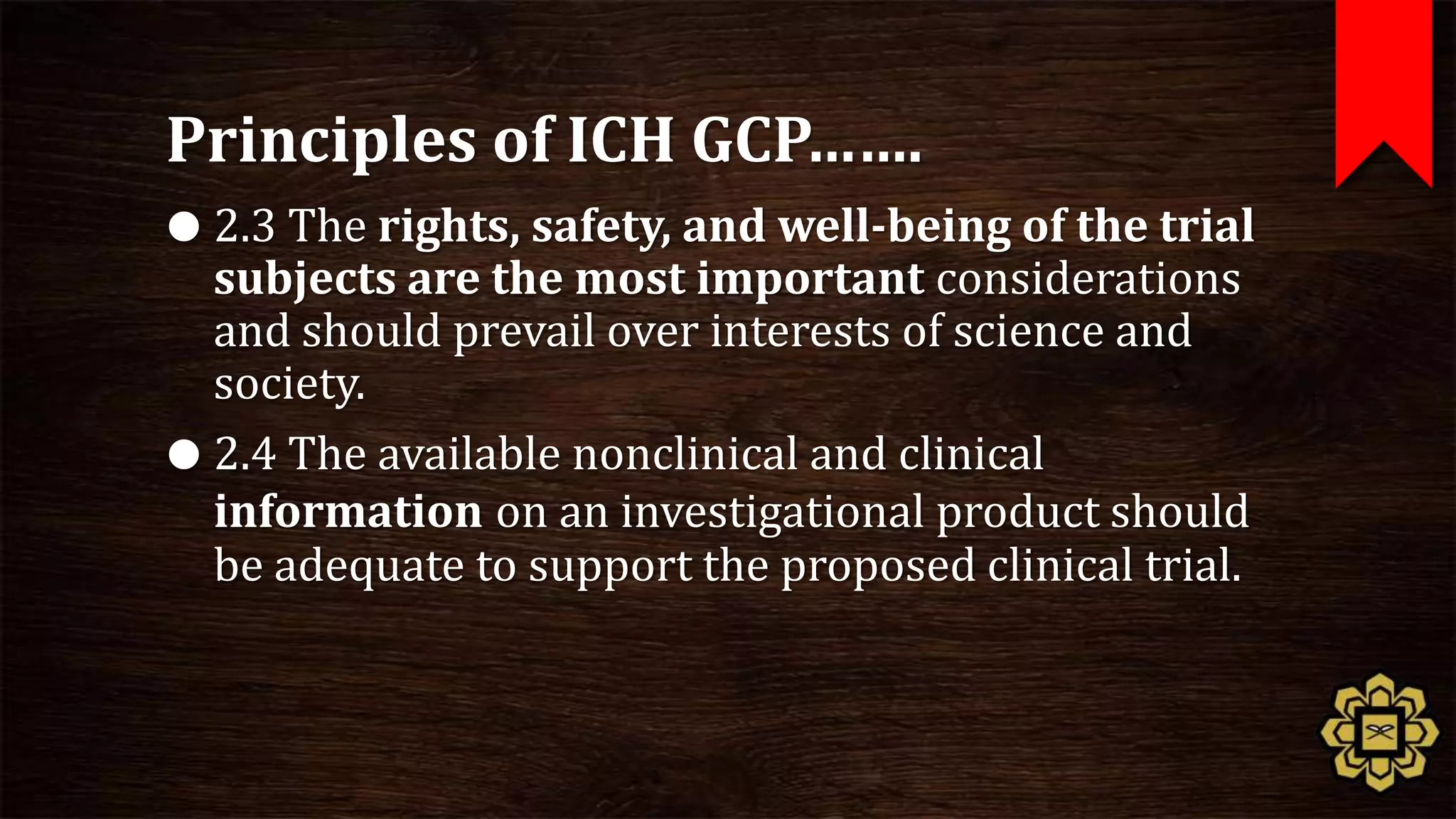
 2.3 The rights, safety, and well-being of the trial
  subjects are the most important considerations
  and should prevail over interests of science and
  society.
 2.4 The available nonclinical and clinical
  information on an investigational product should
  be adequate to support the proposed clinical trial.
Principles of ICH GCP…….
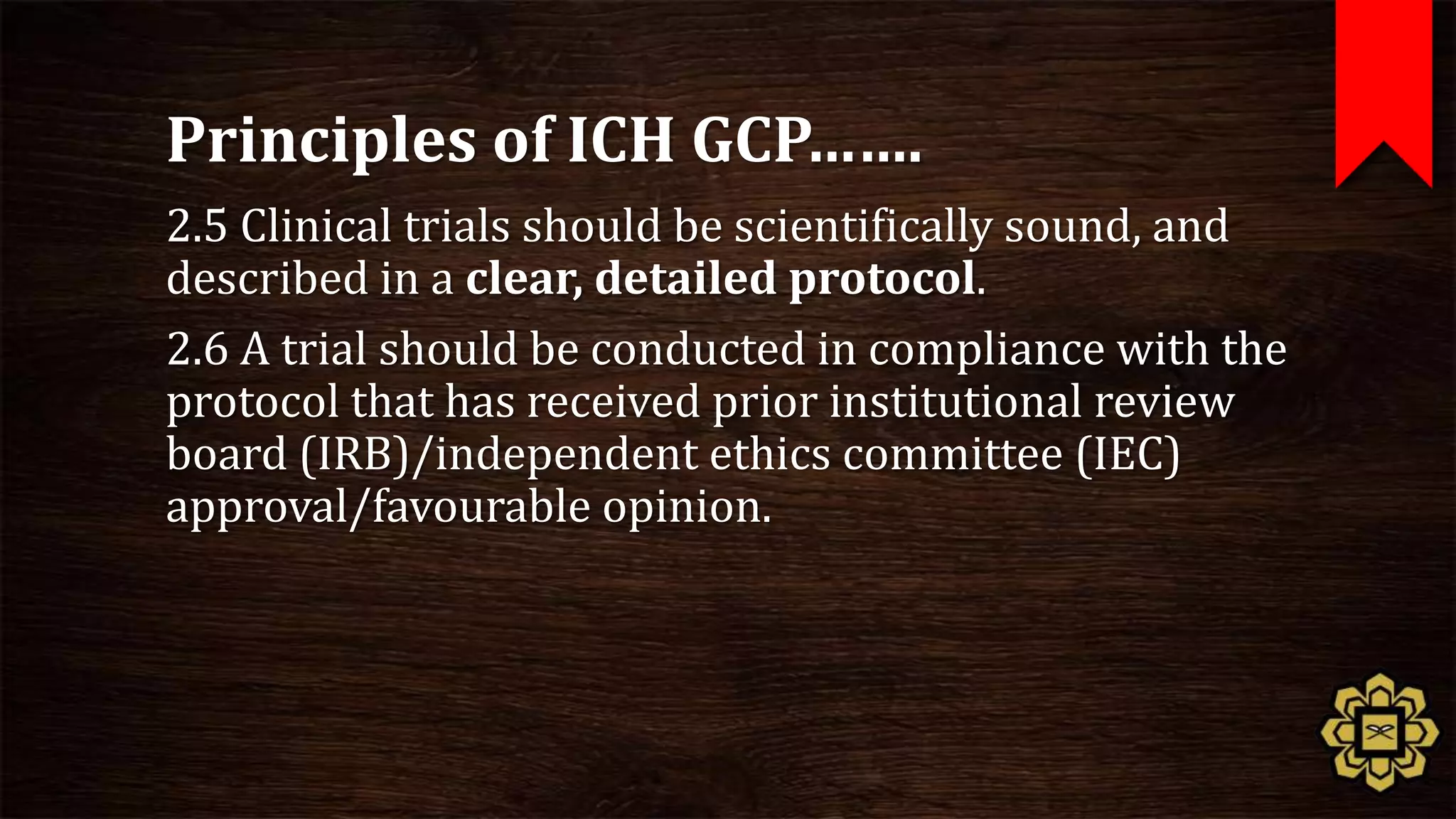
2.5 Clinical trials should be scientifically sound, and
described in a clear, detailed protocol.
2.6 A trial should be conducted in compliance with the
protocol that has received prior institutional review
board (IRB)/independent ethics committee (IEC)
approval/favourable opinion.
Principles of ICH GCP…….
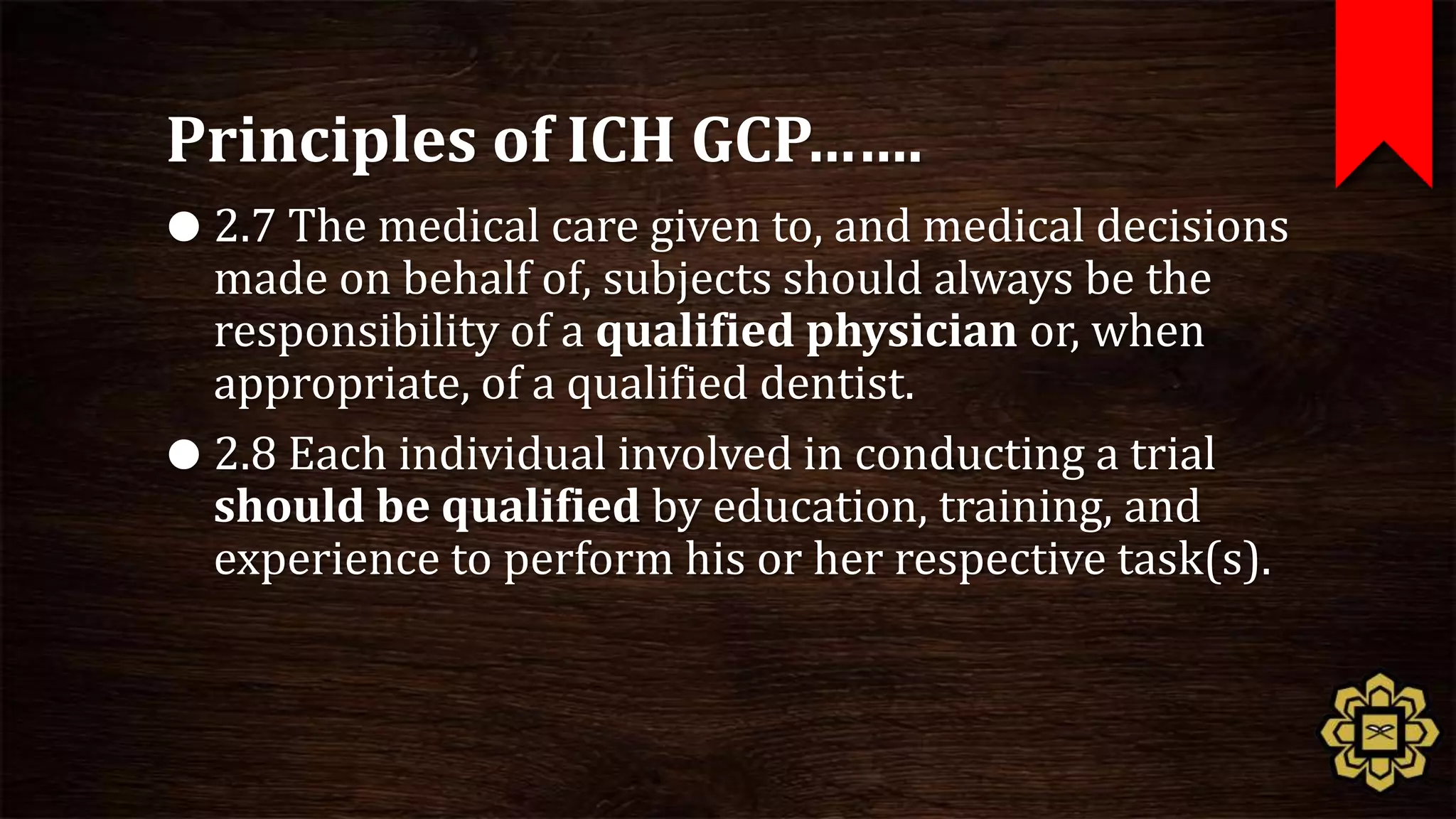
 2.7 The medical care given to, and medical decisions
  made on behalf of, subjects should always be the
  responsibility of a qualified physician or, when
  appropriate, of a qualified dentist.
 2.8 Each individual involved in conducting a trial
  should be qualified by education, training, and
  experience to perform his or her respective task(s).
Principles of ICH GCP…….
2.9 Freely given informed consent should be
obtained from every subject prior to clinical trial
participation.
2.10 All clinical trial information should be recorded,
handled, and stored in a way that allows its accurate
reporting, interpretation and verification.
Principles of ICH GCP…….
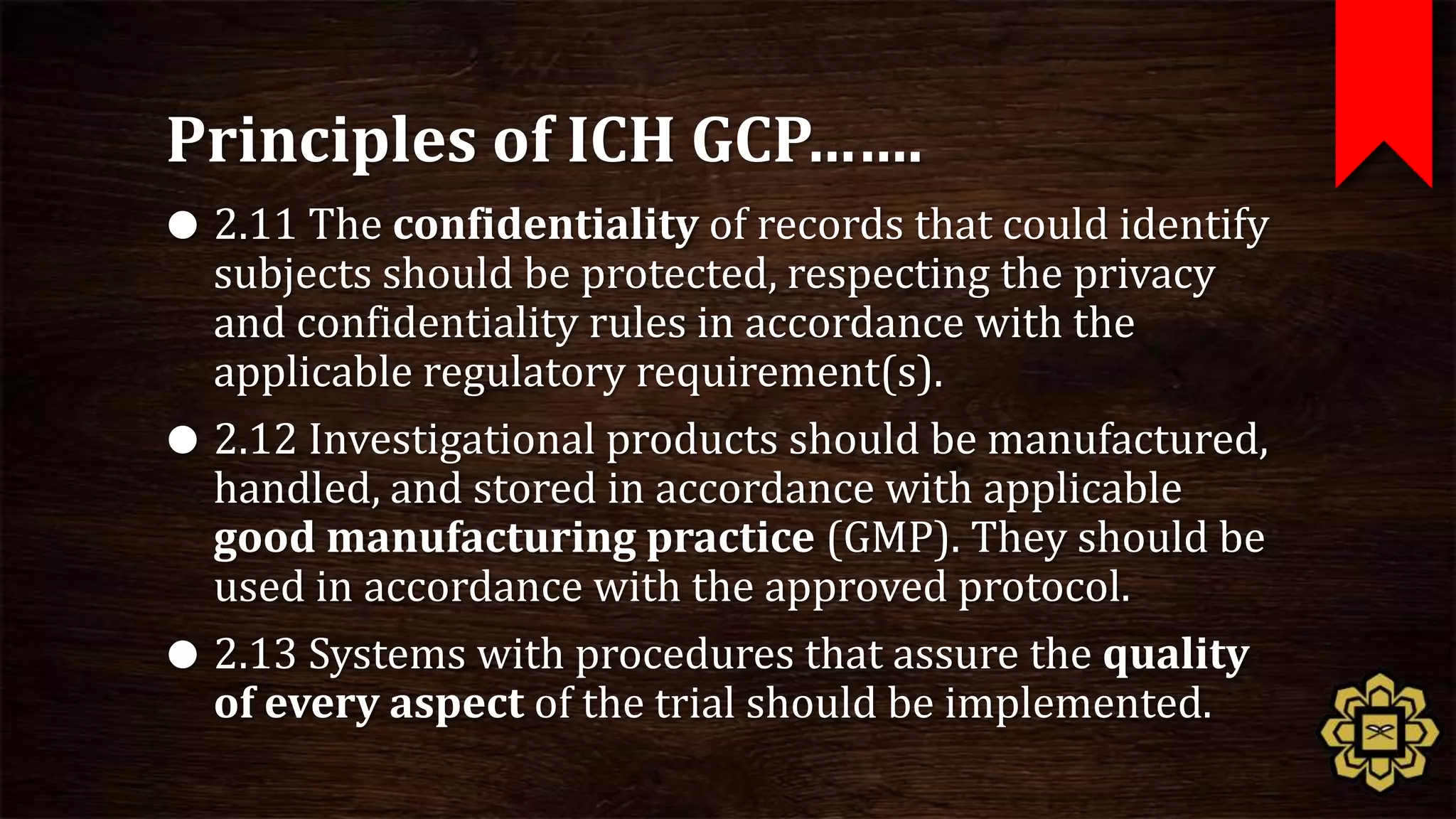
 2.11 The confidentiality of records that could identify
  subjects should be protected, respecting the privacy
  and confidentiality rules in accordance with the
  applicable regulatory requirement(s).
 2.12 Investigational products should be manufactured,
  handled, and stored in accordance with applicable
  good manufacturing practice (GMP). They should be
  used in accordance with the approved protocol.
 2.13 Systems with procedures that assure the quality
  of every aspect of the trial should be implemented.
The summary of the principles
1.    Conduct trials according to GCP
2.    Weigh risks vs. benefits
3.    Subjects wellbeing exceed the science
4.    Have adequate information to justify trial
5.    Write a sound protocol
6.    Receive IRB/IEC approval
7.    Use qualified physicians
8.    Use qualified & trained support staff
9.    Obtain informed consent
10.   Record information appropriately
11.   Confidentiality & data protection
12.   Handle investigational products appropriately
13.   Quality assurance
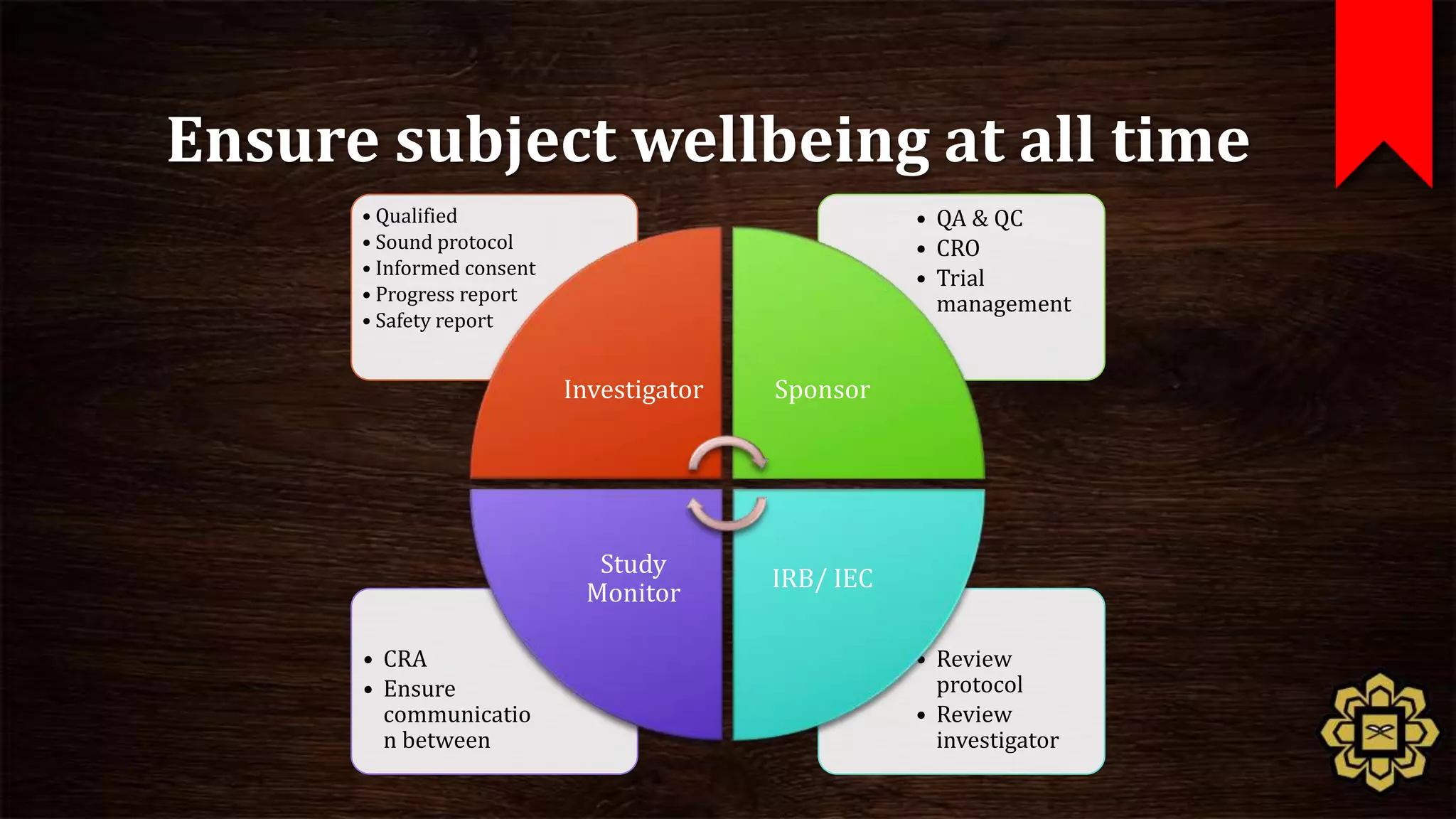
Ensure subject wellbeing at all time
      • Qualified                                    • QA & QC
      • Sound protocol                               • CRO
      • Informed consent
                                                     • Trial
      • Progress report                                management
      • Safety report


                           Investigator   Sponsor


                             Study
                                          IRB/ IEC
                            Monitor

      • CRA                                          • Review
      • Ensure                                         protocol
        communicatio                                 • Review
        n between                                      investigator
THE APPLICATIONS
Source: http://www.asbestos.com/images
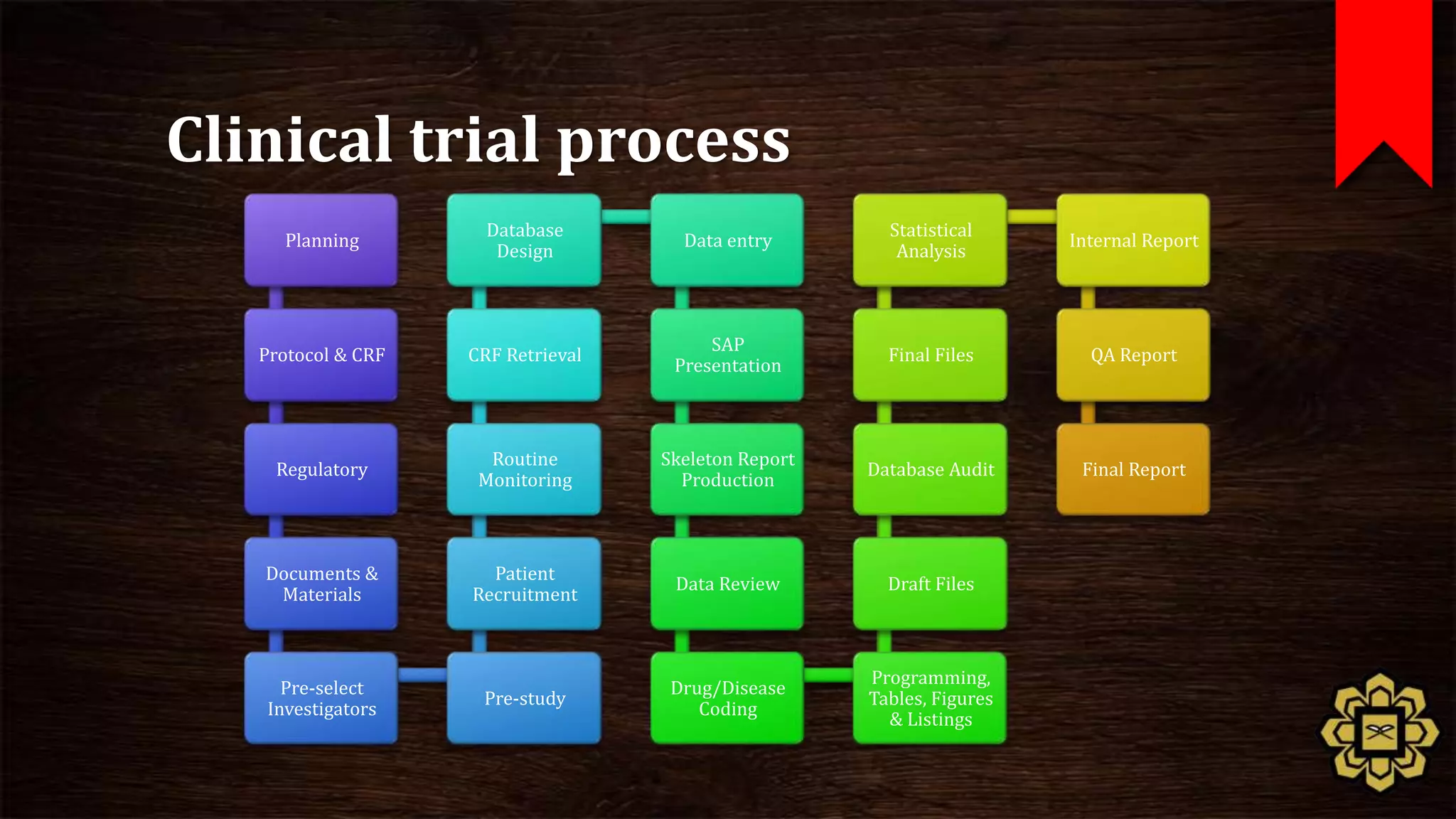
Clinical trial process
                      Database                          Statistical
     Planning                         Data entry                        Internal Report
                       Design                            Analysis


                                         SAP
   Protocol & CRF   CRF Retrieval                       Final Files       QA Report
                                     Presentation


                      Routine       Skeleton Report
    Regulatory                                        Database Audit     Final Report
                     Monitoring       Production


   Documents &        Patient
                                     Data Review        Draft Files
    Materials       Recruitment


                                                      Programming,
     Pre-select                      Drug/Disease
                     Pre-study                        Tables, Figures
   Investigators                        Coding
                                                        & Listings
……the authors note an average
of 4-5 years for a company to
take a new drug from the lab
through enough initial safety
studies in animals to get to
clinical trials. After that, there is
another 7.5 years before a
promising drug makes it to FDA
approval!
all of the other regulatory
steps also happened in
parallel so that they all
finished at the same time,
without eliminating any
steps!

The final result is that the trial
took only 46 days from
protocol submission to
enrolling the first patient on
trial, and only 2 days from
IND approval from the FDA! A
month and a half. Not years,
not six months, but six weeks!
The 5 Purposes of the Law in Medicine,
maqasid al shari’at fi al tibb

1. Protection of ddiin, hifdh al ddiin
2. Protection of life, hifdh al nafs
3. Protection of progeny, hifdh al nasl
4. Protection of the mind, hifdh al ‘aql
5. Protection of wealth, hifdh al mal
Principle of good clinical practice

Principle of good clinical practice

  • 1.
    Principles of Good ClinicalPractice Jamalludin Ab Rahman MDMPH Department of Community Medicine International Islamic University Malaysia
  • 2.
    At the endof this lecture you should be able to  Describe the history of human research  Describe evolution of regulations in human research  Define GCP (based on ICH)  Outline the principles of GCP
  • 3.
    Research regulatory Disease Preclinical Basic Research Drug Recovery Clinical Trials Manufacturing Recovery Development Not regulated GLP GCP GMP
  • 4.
    Clinical Trial Phase I Phase II Phase III Phase IV • Checking for • Checking for • Checking • Test long safety efficacy effectiveness term safety • 10-20 healthy • ~ 200 • ~ 1000s • Real patients volunteers samples samples • Involve • Unexpected • How good is • Looking for untested side effects the rare side group of may occurs intervention effect people • If not good, normally detect here
  • 5.
    HUMAN RESEARCH &REGULATIONS
  • 6.
    (US) Historical perspectiveof human research conducts 1. Nuremberg Code, 1946 2. Kefauver Amendments, 1962 – Thalidomide 3. Declaration of Helsinki, 1964 4. National Research Act, 1974 - Tuskegee Syphilis Study (1932-1972) 5. Belmont Report, 1979
  • 7.
    Nuremberg Code  December9, 1946 - American military tribunal opened criminal proceedings against 23 leading German physicians and administrators for crimes against humanity – 16 found guilty  German Physicians conducted medical experiments on thousands of camp prisoners without their consent.  Most of the participants of these experiments died or were permanently crippled.  The Nuremberg Code was established in 1948, stating that "The voluntary consent of the human participant is absolutely essential,"  It did not carry the force of law, but the Nuremberg Code was the first international document which advocated voluntary participation and informed consent.
  • 8.
    Kefauver Amendments  1960s– Thalidomide as sedative in pregnancy used in Europe (but not approved by US FDA)  Deformities in foetus  No informed consent (not approved by FDA)  1962 US Senate hearings Kefauver Amendments passed into law - For the first time, drug manufacturers were required to prove to the FDA the effectiveness of their products before marketing them
  • 9.
    Declaration of Helsinki World Medical Association - recommendations guiding medical doctors in biomedical research involving human participants 1. Research with humans should be based on the results from laboratory and animal experimentation 2. Research protocols should be reviewed by an independent committee prior to initiation 3. Informed consent from research participants is necessary 4. Research should be conducted by medically/scientifically qualified individuals 5. Risks should not exceed benefits  Revised - 1975, 1983, 1989, 1996, 2000, 2002, 2004, 2008
  • 10.
    Tuskegee Syphilis Study Study on 600 low income African-American by U.S. Public Health Service  Free medical examination – but not told of diagnosis  Many died of syphilis  Stopped in 1973 by the U.S. Department of Health, Education, and Welfare  1974 National Research Act passed - National Commission for the Protection of Human Subjects of Biomedical and Behavioural Research established  The commission produce Belmont Report (1979)
  • 11.
    Belmont Report  Threebasic ethical principals 1. Autonomy/respect for persons (Individuals should be treated as autonomous agents & Persons with diminished autonomy are entitled to protection) 2. Beneficence (Human participants should not be harmed & Research should maximize possible benefits and minimize possible risks) and 3. Justice (benefits and risks of research must be distributed fairly) which are the cornerstone for regulations involving human participants.
  • 12.
  • 13.
    What is GCP  A standard for Designing designing, conducting, recording and Reporting Conducting reporting of studies Clinical involving human Trials or Studies subjects. Analysis Monitoring  Public assurance that the rights, safety and Recording well-being of trial subjects are protected.
  • 14.
    Evolution of GCP 1930s– US Food Drug & Cosmetic Act 1947 – Nuremberg Code 1962 - Kefauver Amendments (US) (following Thalidomide tragedy) 1964 – Declaration of Helsinki 1974 – National Research Act (US) 1979 - Belmont Report (US) 1986 – England – ABPI Guideline 1987 - France - Bonnes Pratiques Clinique 1989 – Scandinavia - Nordic Guidelines , Good Clinical Trial Practice 1990 – France – Huriet Law 1990 - EC - Good Clinical Practice for Trials on Medicinal Products in the European Community 1992 - WHO Guidelines, Australian Guidelines 1997 – ICH GCP became law in some countries 1999 - Malaysian GCP
  • 15.
    GCP in Asia Singapore GCP 1998  Malaysian GCP 1999, 2004, 2011  Chinese GCP 1999  Thailand GCP 2000  Indonesia 2001
  • 16.
    What is ICH? International Conference on Harmonisation  Realisation to have independent evaluation of medical products mostly driven by tragedy  1960-1970s - rapid increase in laws, regulations and guidelines for reporting and evaluating the data on safety, quality and efficacy  Varied from country to country – need to harmonise  Pioneered by European Community (EC) (now the European Union) in 1980s  WHO Conference of Drug Regulatory Authorities (ICDRA), in Paris, in 1989  ICH was initiated on April 1990, in a meeting hosted by EFPIA (European Federation of Pharmaceutical Industries and Associations) in Brussels  Main outcome - Tripartite ICH Guidelines on Safety, Quality and Efficacy
  • 17.
  • 18.
    Co-sponsors (voting right) 1.European Commission 2. European Federation of Pharmaceutical Industries’ Associations (EFPIA) 3. Japanese Ministry of Health, Labour and Welfare (JMHLW) 4. Japan Pharmaceutical Manufacturers Association (JPMA) 5. United States Food and Drug Administration (FDA) 6. Pharmaceutical Research and Manufacturers of America (PhRMA)
  • 19.
    Aims of ICH 1.Unify registration requirements for new products 2. Reduce medicinal product development costs: more economical use of animal, human and material resources. 3. Accelerate medicinal product licensing times: avoid repeat testing in different regions. 4. Increases patent protection times through reducing delay in licensing times.
  • 20.
    ICH represents  17countries comprising  15% of the world’s population  90% of the US$ 320 billion global pharmaceutical sales of the year 2000

  • 21.
  • 22.
  • 23.
    Evolution GCP inMalaysia 1997 1st Malaysian Workshop in GCP (Liver Update 96) 1999 May 2nd Workshop in GCP June 3rd Workshop in GCP (Liver Update 99) August 4th Workshop in GCP Consensus Dec Launch of Malaysian Guidelines 5th Workshop in GCP 2004 2nd Malaysian GCP 2011 3rd Malaysian GCP
  • 24.
  • 25.
    Principles of ICHGCP (Page 8 of E6) 2.1 Clinical trials should be conducted in accordance with the ethical principles that have their origin in the Declaration of Helsinki, and that are consistent with GCP and the applicable regulatory requirement(s). 2.2 Before a trial is initiated, foreseeable risks and inconveniences should be weighed against the anticipated benefit for the individual trial subject and society. A trial should be initiated and continued only if the anticipated benefits justify the risks.
  • 26.
    Principles of ICHGCP…….  2.3 The rights, safety, and well-being of the trial subjects are the most important considerations and should prevail over interests of science and society.  2.4 The available nonclinical and clinical information on an investigational product should be adequate to support the proposed clinical trial.
  • 27.
    Principles of ICHGCP……. 2.5 Clinical trials should be scientifically sound, and described in a clear, detailed protocol. 2.6 A trial should be conducted in compliance with the protocol that has received prior institutional review board (IRB)/independent ethics committee (IEC) approval/favourable opinion.
  • 28.
    Principles of ICHGCP…….  2.7 The medical care given to, and medical decisions made on behalf of, subjects should always be the responsibility of a qualified physician or, when appropriate, of a qualified dentist.  2.8 Each individual involved in conducting a trial should be qualified by education, training, and experience to perform his or her respective task(s).
  • 29.
    Principles of ICHGCP……. 2.9 Freely given informed consent should be obtained from every subject prior to clinical trial participation. 2.10 All clinical trial information should be recorded, handled, and stored in a way that allows its accurate reporting, interpretation and verification.
  • 30.
    Principles of ICHGCP…….  2.11 The confidentiality of records that could identify subjects should be protected, respecting the privacy and confidentiality rules in accordance with the applicable regulatory requirement(s).  2.12 Investigational products should be manufactured, handled, and stored in accordance with applicable good manufacturing practice (GMP). They should be used in accordance with the approved protocol.  2.13 Systems with procedures that assure the quality of every aspect of the trial should be implemented.
  • 31.
    The summary ofthe principles 1. Conduct trials according to GCP 2. Weigh risks vs. benefits 3. Subjects wellbeing exceed the science 4. Have adequate information to justify trial 5. Write a sound protocol 6. Receive IRB/IEC approval 7. Use qualified physicians 8. Use qualified & trained support staff 9. Obtain informed consent 10. Record information appropriately 11. Confidentiality & data protection 12. Handle investigational products appropriately 13. Quality assurance
  • 32.
    Ensure subject wellbeingat all time • Qualified • QA & QC • Sound protocol • CRO • Informed consent • Trial • Progress report management • Safety report Investigator Sponsor Study IRB/ IEC Monitor • CRA • Review • Ensure protocol communicatio • Review n between investigator
  • 33.
  • 34.
  • 35.
    Clinical trial process Database Statistical Planning Data entry Internal Report Design Analysis SAP Protocol & CRF CRF Retrieval Final Files QA Report Presentation Routine Skeleton Report Regulatory Database Audit Final Report Monitoring Production Documents & Patient Data Review Draft Files Materials Recruitment Programming, Pre-select Drug/Disease Pre-study Tables, Figures Investigators Coding & Listings
  • 36.
    ……the authors notean average of 4-5 years for a company to take a new drug from the lab through enough initial safety studies in animals to get to clinical trials. After that, there is another 7.5 years before a promising drug makes it to FDA approval!
  • 37.
    all of theother regulatory steps also happened in parallel so that they all finished at the same time, without eliminating any steps! The final result is that the trial took only 46 days from protocol submission to enrolling the first patient on trial, and only 2 days from IND approval from the FDA! A month and a half. Not years, not six months, but six weeks!
  • 38.
    The 5 Purposesof the Law in Medicine, maqasid al shari’at fi al tibb 1. Protection of ddiin, hifdh al ddiin 2. Protection of life, hifdh al nafs 3. Protection of progeny, hifdh al nasl 4. Protection of the mind, hifdh al ‘aql 5. Protection of wealth, hifdh al mal

Editor's Notes

  • #18 Six co-sponsors (EU, EFPIA, MHLW, JPMA, FDA, PhRMA) has had two seats on the SC. Other parties have a significant interest in ICH and have been invited to nominate Observers to the SC. The three Observers are the World Health Organization (WHO), Health Canada and the European Free Trade Association (EFTA). The IFPMA participates as a non-voting member of the SC.