CLINICAL TRIAL DESIGN
Dr Urmila M. Aswar
Department of Pharmacology, SIOP, Narhe
Classification of CT study
oProof of concept/Feasibility: < 5 subjects or
patients; one site, safety and some
effectiveness, usually investigator-
sponsored study
oPilot study: 20-30 subjects; initial
effectiveness and safety; two sites, usually
investigator-sponsored study
oPivotal study: 50 - 500 subjects; multiple
sites; main supporting study for claims
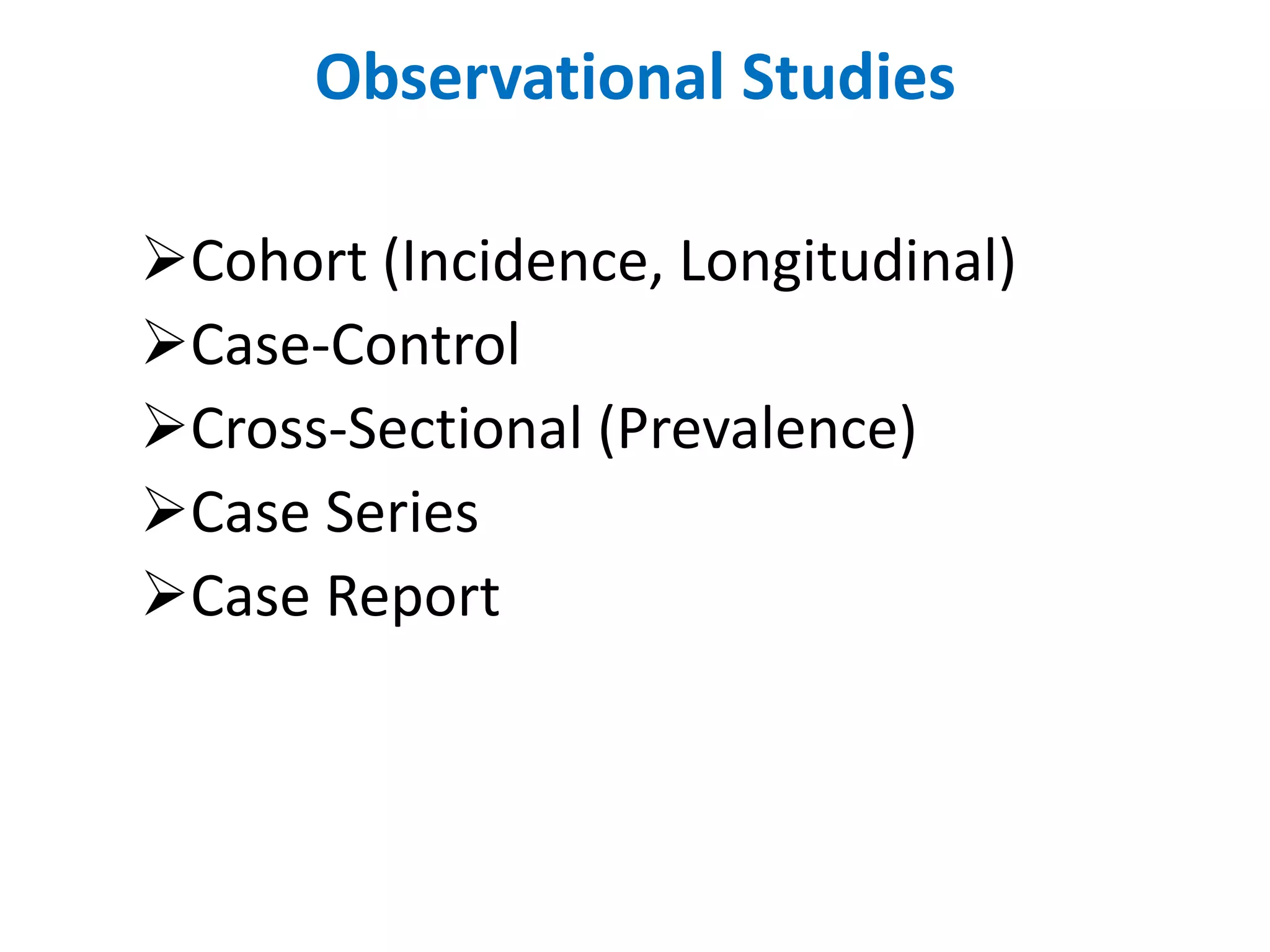
Observational Studies
Cohort (Incidence, Longitudinal)
Case-Control
Cross-Sectional (Prevalence)
Case Series
Case Report
Clinical Trial Design:
Experimental
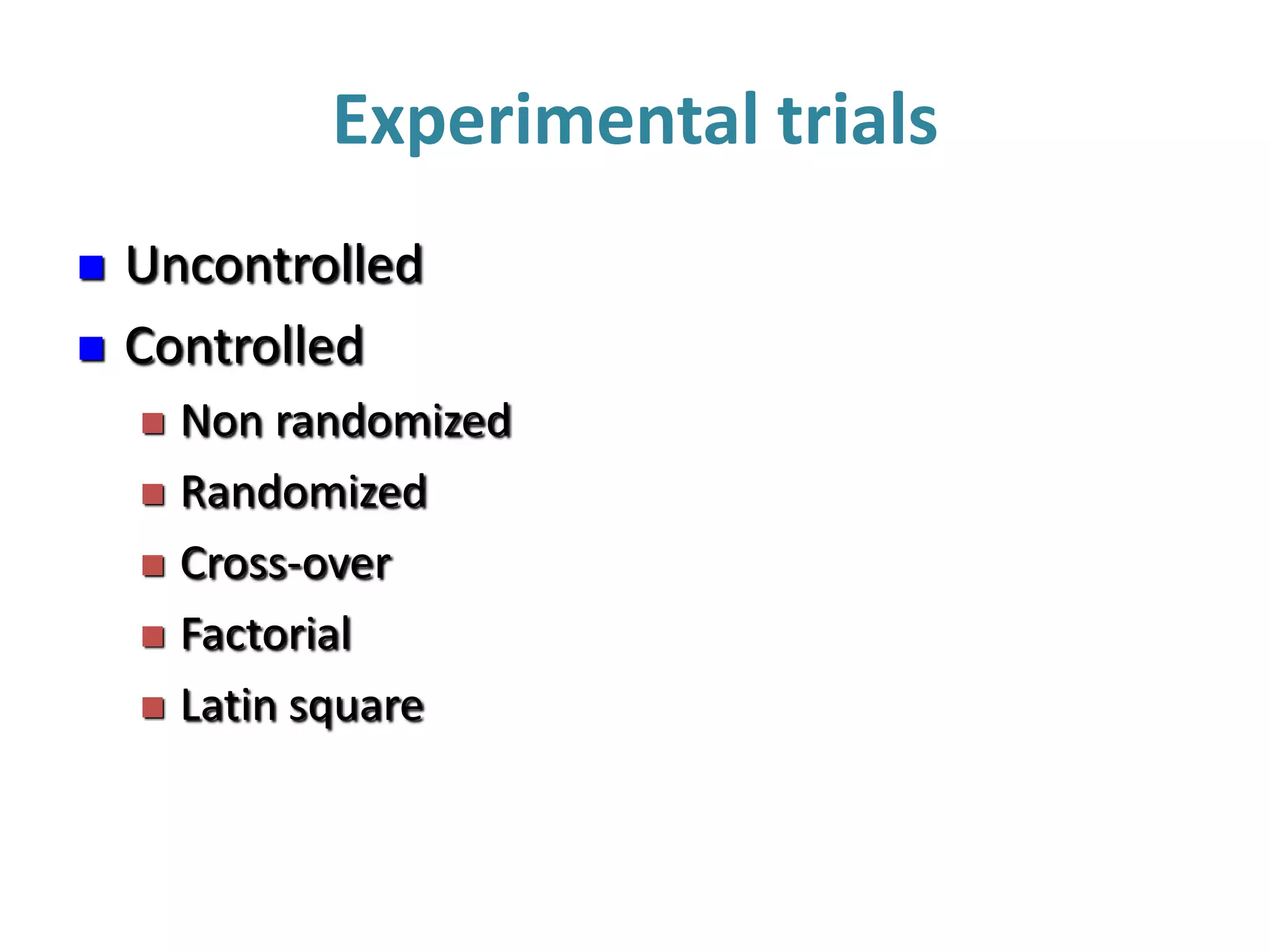
Experimental trials
 Uncontrolled
 Controlled
 Non randomized
 Randomized
 Cross-over
 Factorial
 Latin square
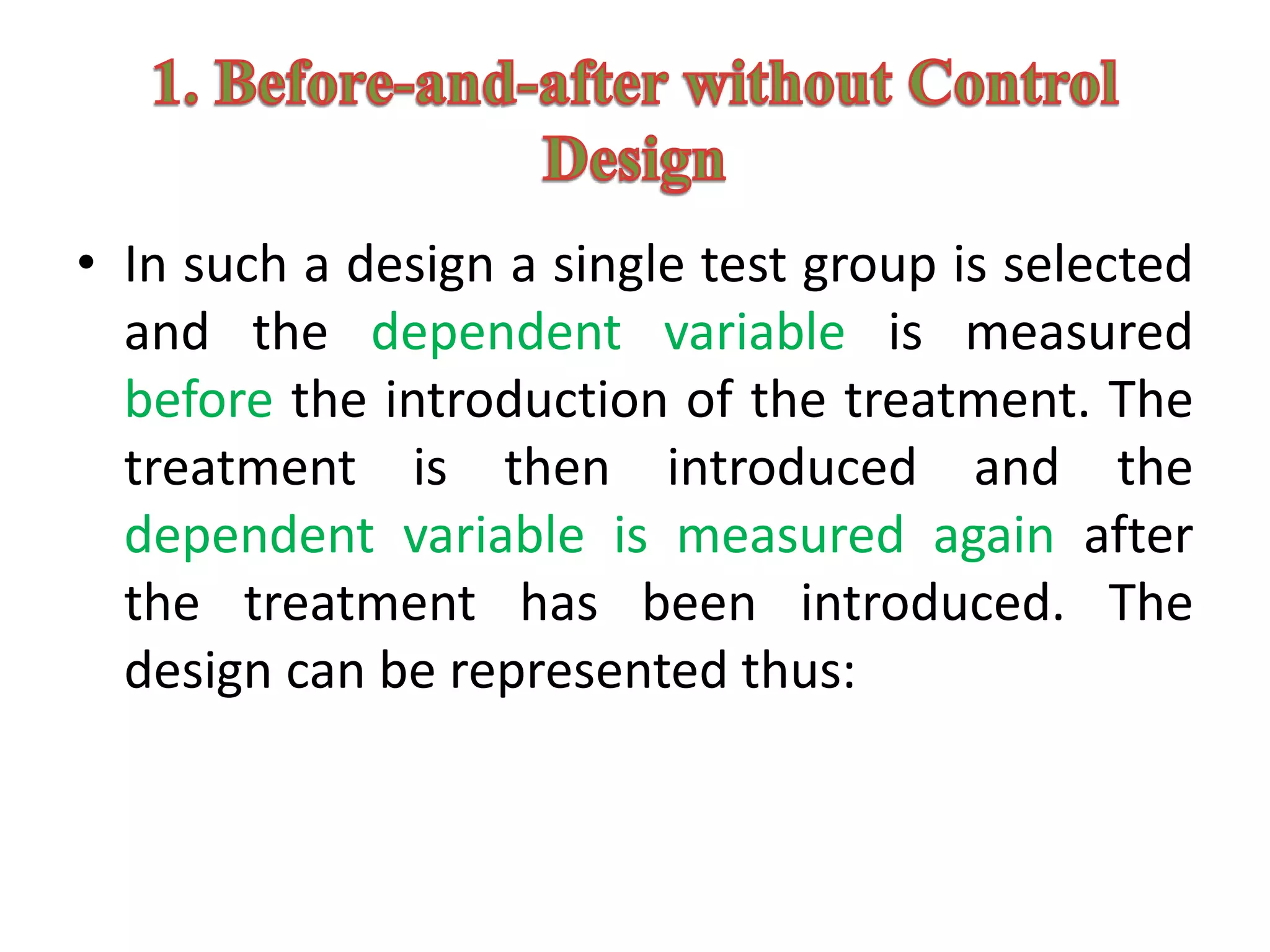
• In such a design a single test group is selected
and the dependent variable is measured
before the introduction of the treatment. The
treatment is then introduced and the
dependent variable is measured again after
the treatment has been introduced. The
design can be represented thus:
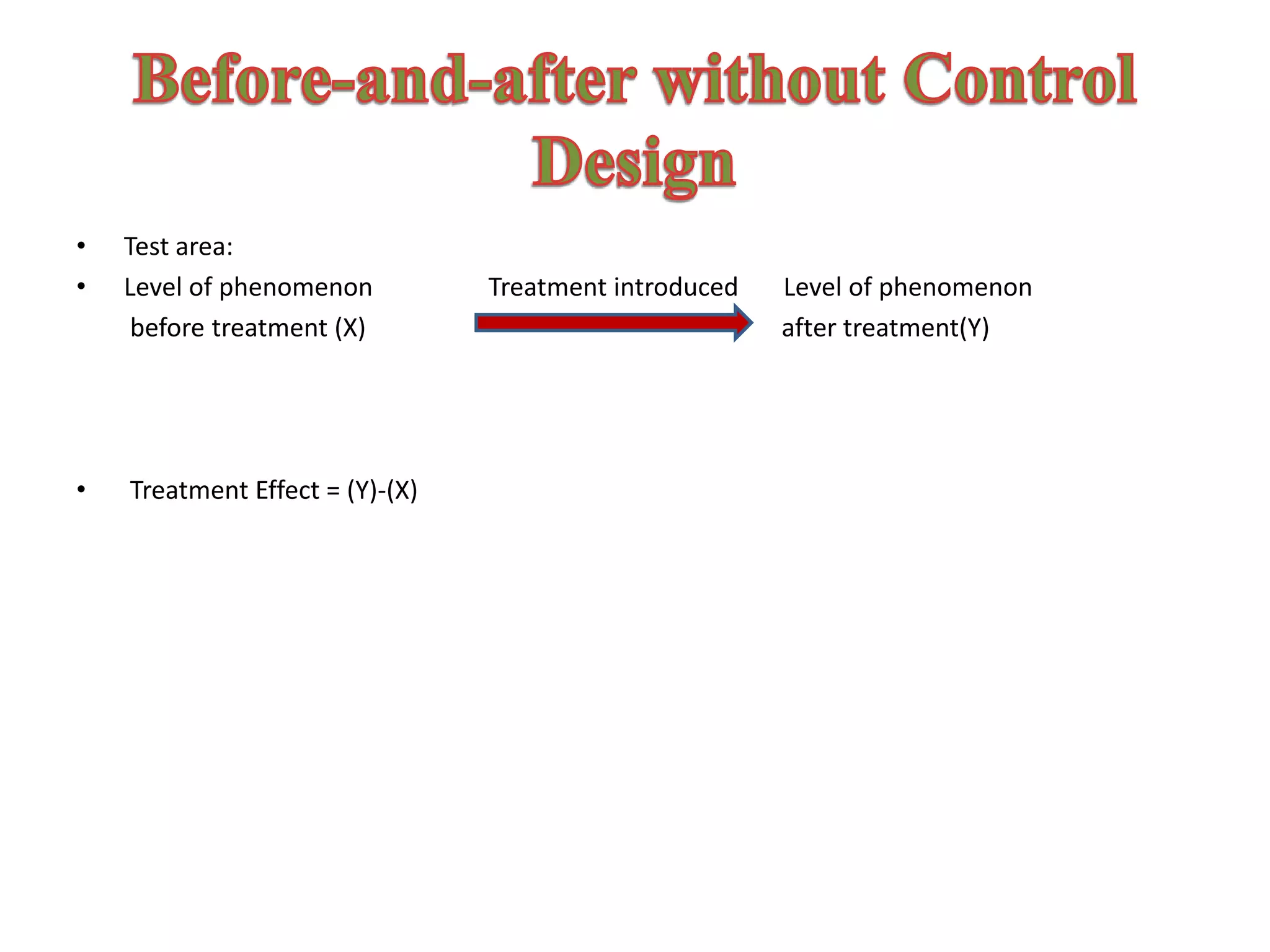
• Test area:
• Level of phenomenon Treatment introduced Level of phenomenon
before treatment (X) after treatment(Y)
• Treatment Effect = (Y)-(X)
8
Non-randomized Trials
• Early studies of new and untried therapies
• Uncontrolled early phase studies where the
standard is relatively ineffective
• Investigations which cannot be done within the
current climate of controversy
WITH CONTROL NON RANDOMISED
STUDIES
• In this design two groups are selected and the
treatment is introduced into the test group
only. The dependent variable is then
measured in both the areas at the same time.
This can be exhibited in the following form:
Test group
Treatment introduced Level of phenomenon after
Control group treatment (Y)
Level of phenomenon
Without treatment (Z)
Treatment Effect = (Y) – (Z)
• In this design two groups are selected and the
dependent variable is measured in both the
group for an identical time-period before the
treatment. The treatment is then introduced
into the test area only, and the dependent
variable is measured in both for an identical
time-period after the introduction of the
treatment.
This design can be shown in this way:
Time Period I Time Period II
Treatment
Test group: Level of phenomenon Level of phenomenon after
before Treatment (X) introduced Treatment (Y)
Control group: Level of phenomenon Level of phenomenon without
without Treatment (A) Treatment (Z)
Treatment Effect = (Y – X) – (Z – A)
RANDOMIZED CONTROLLED TRIALS
Randomized Controlled trials
• 1948 paper entitled "Streptomycin treatment of
pulmonary tuberculosis“
• Randomized control:
• Well-designed RCTs are considered the gold standard
for measuring an intervention’s impact across many
diverse fields of human inquiry, such as education,
welfare and employment, medicine, and psychology
• Large patient study
• Allocation of patient before intervention
• To study efficacy and adverse effects
• Patients are followed at one time
(except procedures, tests, outpatient visits, and follow-
up calls)
• Advantage of proper randomization is that it minimizes
allocation bias, balancing both known and unknown
prognostic factors, in the assignment of treatments.
• Outcomes between the two groups can confidently be
attributed to the intervention and not to other factors.
RCT
• Content
 a control group
 Positive control group
• It eliminates bias in treatment assignment,"
specifically selection bias.
• It facilitates blinding (masking) of the identity of
treatments from investigators, participants, and
assessors.
• It permits the use of probability theory to express
the likelihood that any difference in outcome
between treatment groups merely indicates chance.
Advantages
• Maximize statistical power, especially
in subgroup analyses.
• Minimize selection bias
• Minimize allocation bias
Disadvantages
1. Recruitment
– Hard
2. Acceptability of Randomization Process
– Some physicians will refuse
– Some participants will refuse
3. Administrative Complexity
4.Generalizable Results?
– Participants studied may not represent general study
population.
Types
1. Parallel-group trial
Each participant is randomly assigned to a
group, and all the participants in the group
receive (or do not receive) an intervention.
2. Crossover
Over the time, each participant receives (or
does not receive) an intervention in a random
sequence.
3. Cluster
Pre-existing groups of participants (e.g.,
villages, schools) are randomly selected to
receive (or not receive) an intervention.
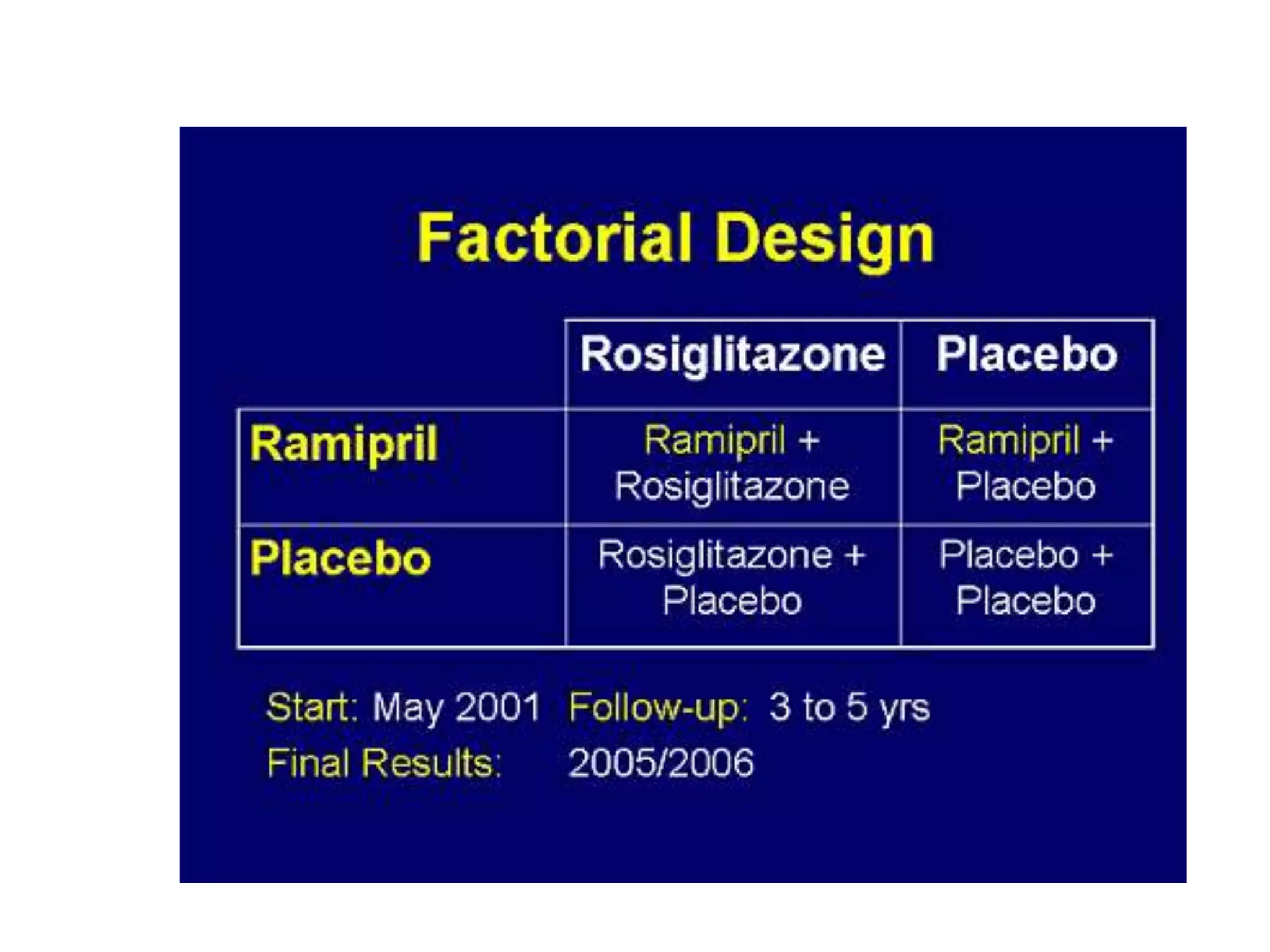
4. Factorial Design
Each participant is randomly assigned to a group that
receives a particular combination of interventions or non-
interventions.
Testing the treatment effects independently or
When the treatments are thought to be complementary
and a specific aim is to investigate the treatment
interactions.
In the simplest case, a 2×2 design is a study when two
treatment factors are involved each with two levels.
(e.g., group 1 receives vitamin X and vitamin Y, group 2
receives vitamin X and placebo Y, group 3 receives placebo
X and vitamin Y, and group 4 receives placebo X and
placebo Y).
5. Latin Square Design
Summary
• Zelen’s design: randomizes the patient before
they give consent.

Clinical trial design

  • 1.
    CLINICAL TRIAL DESIGN DrUrmila M. Aswar Department of Pharmacology, SIOP, Narhe
  • 2.
    Classification of CTstudy oProof of concept/Feasibility: < 5 subjects or patients; one site, safety and some effectiveness, usually investigator- sponsored study oPilot study: 20-30 subjects; initial effectiveness and safety; two sites, usually investigator-sponsored study oPivotal study: 50 - 500 subjects; multiple sites; main supporting study for claims
  • 3.
    Observational Studies Cohort (Incidence,Longitudinal) Case-Control Cross-Sectional (Prevalence) Case Series Case Report
  • 4.
  • 5.
    Experimental trials  Uncontrolled Controlled  Non randomized  Randomized  Cross-over  Factorial  Latin square
  • 6.
    • In sucha design a single test group is selected and the dependent variable is measured before the introduction of the treatment. The treatment is then introduced and the dependent variable is measured again after the treatment has been introduced. The design can be represented thus:
  • 7.
    • Test area: •Level of phenomenon Treatment introduced Level of phenomenon before treatment (X) after treatment(Y) • Treatment Effect = (Y)-(X)
  • 8.
    8 Non-randomized Trials • Earlystudies of new and untried therapies • Uncontrolled early phase studies where the standard is relatively ineffective • Investigations which cannot be done within the current climate of controversy
  • 9.
    WITH CONTROL NONRANDOMISED STUDIES
  • 10.
    • In thisdesign two groups are selected and the treatment is introduced into the test group only. The dependent variable is then measured in both the areas at the same time. This can be exhibited in the following form:
  • 11.
    Test group Treatment introducedLevel of phenomenon after Control group treatment (Y) Level of phenomenon Without treatment (Z) Treatment Effect = (Y) – (Z)
  • 12.
    • In thisdesign two groups are selected and the dependent variable is measured in both the group for an identical time-period before the treatment. The treatment is then introduced into the test area only, and the dependent variable is measured in both for an identical time-period after the introduction of the treatment.
  • 13.
    This design canbe shown in this way: Time Period I Time Period II Treatment Test group: Level of phenomenon Level of phenomenon after before Treatment (X) introduced Treatment (Y) Control group: Level of phenomenon Level of phenomenon without without Treatment (A) Treatment (Z) Treatment Effect = (Y – X) – (Z – A)
  • 14.
  • 15.
    Randomized Controlled trials •1948 paper entitled "Streptomycin treatment of pulmonary tuberculosis“ • Randomized control: • Well-designed RCTs are considered the gold standard for measuring an intervention’s impact across many diverse fields of human inquiry, such as education, welfare and employment, medicine, and psychology • Large patient study
  • 16.
    • Allocation ofpatient before intervention • To study efficacy and adverse effects • Patients are followed at one time (except procedures, tests, outpatient visits, and follow- up calls) • Advantage of proper randomization is that it minimizes allocation bias, balancing both known and unknown prognostic factors, in the assignment of treatments. • Outcomes between the two groups can confidently be attributed to the intervention and not to other factors.
  • 17.
    RCT • Content  acontrol group  Positive control group • It eliminates bias in treatment assignment," specifically selection bias. • It facilitates blinding (masking) of the identity of treatments from investigators, participants, and assessors. • It permits the use of probability theory to express the likelihood that any difference in outcome between treatment groups merely indicates chance.
  • 18.
    Advantages • Maximize statisticalpower, especially in subgroup analyses. • Minimize selection bias • Minimize allocation bias
  • 19.
    Disadvantages 1. Recruitment – Hard 2.Acceptability of Randomization Process – Some physicians will refuse – Some participants will refuse 3. Administrative Complexity 4.Generalizable Results? – Participants studied may not represent general study population.
  • 20.
    Types 1. Parallel-group trial Eachparticipant is randomly assigned to a group, and all the participants in the group receive (or do not receive) an intervention.
  • 22.
    2. Crossover Over thetime, each participant receives (or does not receive) an intervention in a random sequence.
  • 24.
    3. Cluster Pre-existing groupsof participants (e.g., villages, schools) are randomly selected to receive (or not receive) an intervention.
  • 25.
    4. Factorial Design Eachparticipant is randomly assigned to a group that receives a particular combination of interventions or non- interventions. Testing the treatment effects independently or When the treatments are thought to be complementary and a specific aim is to investigate the treatment interactions. In the simplest case, a 2×2 design is a study when two treatment factors are involved each with two levels. (e.g., group 1 receives vitamin X and vitamin Y, group 2 receives vitamin X and placebo Y, group 3 receives placebo X and vitamin Y, and group 4 receives placebo X and placebo Y).
  • 27.
  • 28.
  • 29.
    • Zelen’s design:randomizes the patient before they give consent.