Pricing
Policy
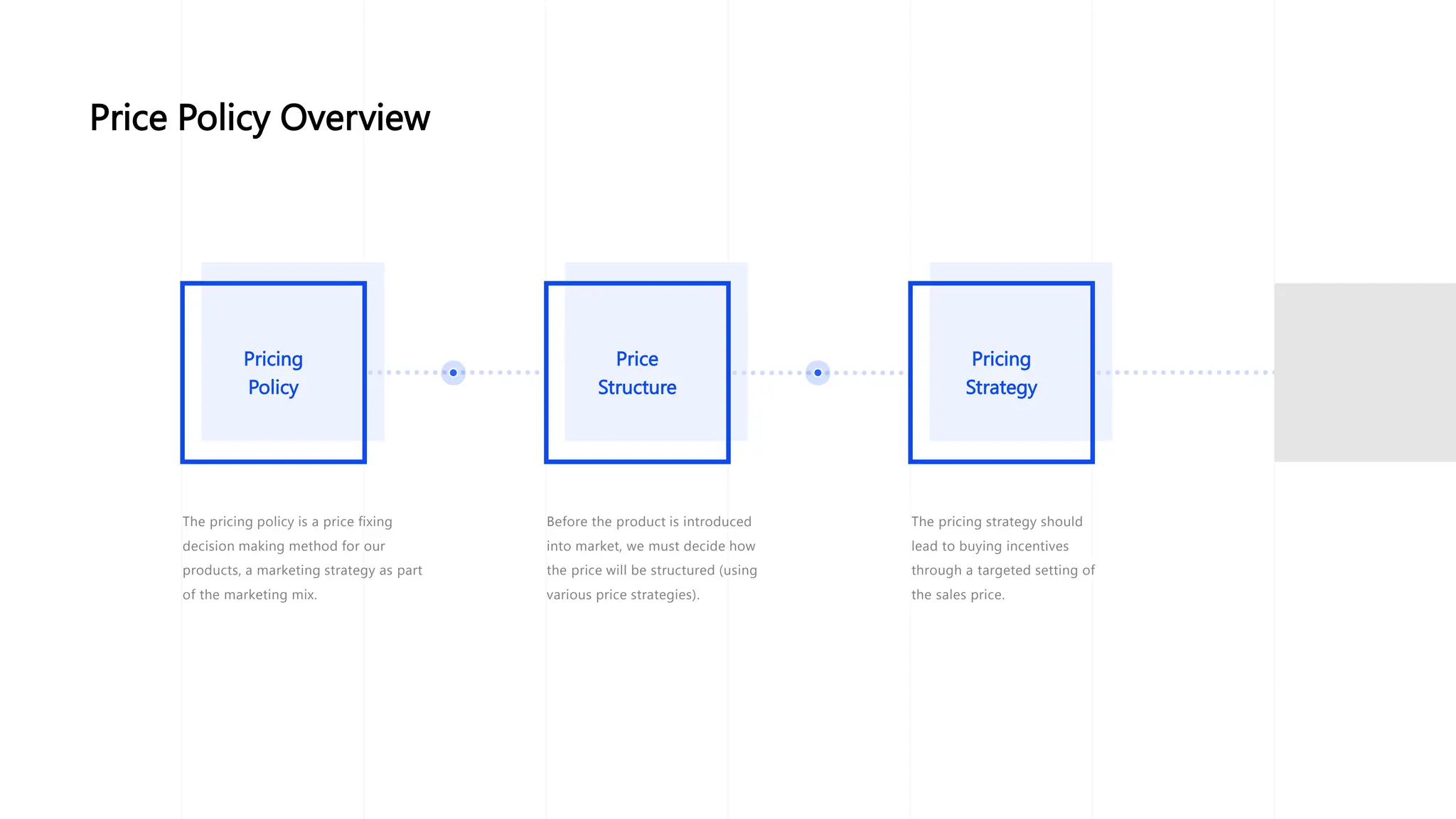
The pricing policy is a price fixing
decision making method for our
products, a marketing strategy as part
of the marketing mix.
Price Policy Overview
Before the product is introduced
into market, we must decide how
the price will be structured (using
various price strategies).
The pricing strategy should
lead to buying incentives
through a targeted setting of
the sales price.
Pricing
Strategy
Price
Structure
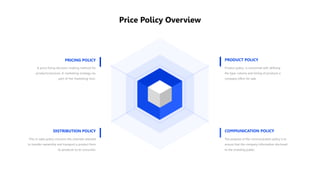
Product policy is concerned with defining
the type, volume and timing of products a
company offers for sale.
PRODUCT POLICY
The purpose of the communication policy is to
ensure that the company information disclosed
to the investing public.
COMMUNICATION POLICY
This or sales policy concerns the channels selected
to transfer ownership and transport a product from
its producer to its consumer.
DISTRIBUTION POLICY
A price fixing decision-making method for
products/services. A marketing strategy (as
part of the marketing mix).
PRICING POLICY
Price Policy Overview
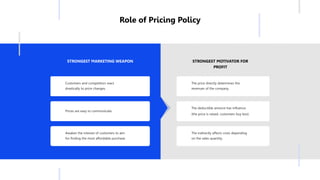
Customers and competitors react
drastically to price changes.
The price directly determines the
revenues of the company.
Prices are easy to communicate.
The deductible amount has influence
(the price is raised, customers buy less).
Awaken the interest of customers to aim
for finding the most affordable purchase.
The indirectly affects costs depending
on the sales quantity,
STRONGEST MARKETING WEAPON STRONGEST MOTIVATOR FOR
PROFIT
Role of Pricing Policy
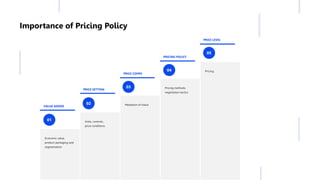
Units, controls,
price conditions
Economic value,
product packaging and
segmentation
01
02 Mediation of Value
03 Pricing methods,
negotiation tactics
04 Pricing
05
Importance of Pricing Policy
VALUE ADDED
PRICE SETTING
PRICE COMM.
PRICING POLICY
PRICE LEVEL
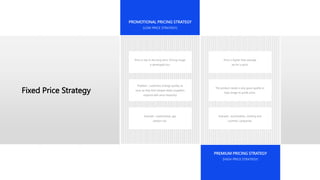
Fixed Price Strategy
PREMIUM PRICING STRATEGY
(HIGH PRICE STRATEGY)
PROMOTIONAL PRICING STRATEGY
(LOW PRICE STRATEGY)
Price is low in the long-term. Pricing image
is developed too.
Problem : customers change quickly as
soon as they find cheaper deals (suppliers
respond with price elasticity)
Example : supermarket, gas
stations etc.
Price is higher than average
set for a price.
The product needs a very good quality or
high image to justify price.
Example : automobiles, clothing and
cosmetic companies.
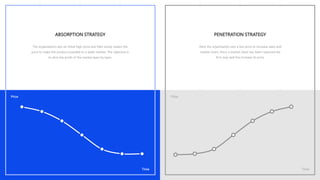
ABSORPTION STRATEGY
The organization sets an initial high price and then slowly lowers the
price to make the product available to a wider market. The objective is
to skim the profit of the market layer by layer.
PENETRATION STRATEGY
Here the organization sets a low price to increase sales and
market share. Once a market share has been captured the
firm may well the increase its price.
Price
Time
Price
Time
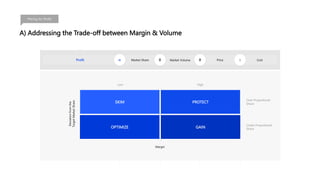
A) Addressing the Trade-off between Margin & Volume
Pricing for Profit
SKIM PROTECT
OPTIMIZE GAIN
High
Low
Over Proportional
Share
Under Proportional
Share
Margin
Deviation
from
the
Target
Market
Share
Profit Market Share Market Volume Price Cost
= X X -
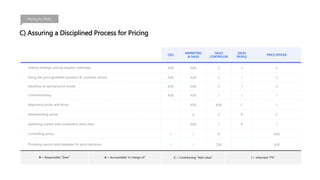
C) Assuring a Disciplined Process for Pricing
Pricing for Profit
CEO
MARKETING
& SALES
SALES
CONTROLLER
SALES
PEOPLE
PRICE OFFICER
Setting strategic pricing targets/ roadmaps A(R) A(R) C I C
Fixing the price guideline (product & customer prices) A(R) A(R) C I C
Deciding on tactical price moves A(R) A(R) C I C
Communicating A(R) A(R) I I I
Approving prices and terms A(R) A(R) C I
Implementing prices A C R C
Gathering market and competitive price data A(R) I R I
Controlling prices I I R A(R)
Providing reports and database for price decisions I I C(R) A/R
R = Responsible “Doer” A = Accountable “in charge of” C = Contributing “Add value“ I = Informed “FYI“
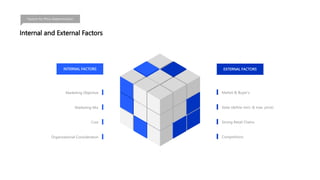
Internal and External Factors
Factors for Price Determination
Marketing Objective
Marketing Mix
Cost
Organizational Consideration
Market & Buyer’s
State (define mini. & max. price)
Strong Retail Chains
Competitions
INTERNAL FACTORS EXTERNAL FACTORS
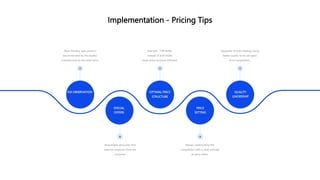
Implementation - Pricing Tips
(Non-binding sales price) Is
recommended by the dealer/
manufacturer as the retail price.
EIA OBSERVATION
Example : 7.99 Dollar
Instead of 8.00 Dollar
basic price structure followed
OPTIMAL PRICE
STRUCTURE
(Opposite of price setting) Using
better quality to be set apart
from competitors.
QUALITY
LEADERSHIP
Reasonable discounts that
raise no suspicion from the
customer.
SPECIAL
OFFERS
Always undercutting the
competition with a clear concept
as price setter.
PRICE
SETTING
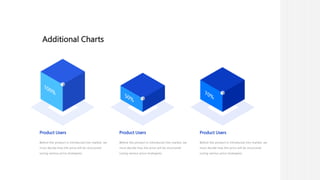
Additional Charts
Product Users
Before the product is introduced into market, we
must decide how the price will be structured
(using various price strategies).
Product Users
Before the product is introduced into market, we
must decide how the price will be structured
(using various price strategies).
Product Users
Before the product is introduced into market, we
must decide how the price will be structured
(using various price strategies).
Get the full version of this presentation
and access our library of hundreds of
corporate resources
Join You Exec Plus today and take your career to
new heights. Receive premium corporate resources
in your inbox every week.
Start today

PricingStratrategy_Free_Stratrategy.pptx

  • 1.
    Pricing Policy The pricing policyis a price fixing decision making method for our products, a marketing strategy as part of the marketing mix. Price Policy Overview Before the product is introduced into market, we must decide how the price will be structured (using various price strategies). The pricing strategy should lead to buying incentives through a targeted setting of the sales price. Pricing Strategy Price Structure
  • 2.
    Product policy isconcerned with defining the type, volume and timing of products a company offers for sale. PRODUCT POLICY The purpose of the communication policy is to ensure that the company information disclosed to the investing public. COMMUNICATION POLICY This or sales policy concerns the channels selected to transfer ownership and transport a product from its producer to its consumer. DISTRIBUTION POLICY A price fixing decision-making method for products/services. A marketing strategy (as part of the marketing mix). PRICING POLICY Price Policy Overview
  • 3.
    Customers and competitorsreact drastically to price changes. The price directly determines the revenues of the company. Prices are easy to communicate. The deductible amount has influence (the price is raised, customers buy less). Awaken the interest of customers to aim for finding the most affordable purchase. The indirectly affects costs depending on the sales quantity, STRONGEST MARKETING WEAPON STRONGEST MOTIVATOR FOR PROFIT Role of Pricing Policy
  • 4.
    Units, controls, price conditions Economicvalue, product packaging and segmentation 01 02 Mediation of Value 03 Pricing methods, negotiation tactics 04 Pricing 05 Importance of Pricing Policy VALUE ADDED PRICE SETTING PRICE COMM. PRICING POLICY PRICE LEVEL
  • 5.
    Fixed Price Strategy PREMIUMPRICING STRATEGY (HIGH PRICE STRATEGY) PROMOTIONAL PRICING STRATEGY (LOW PRICE STRATEGY) Price is low in the long-term. Pricing image is developed too. Problem : customers change quickly as soon as they find cheaper deals (suppliers respond with price elasticity) Example : supermarket, gas stations etc. Price is higher than average set for a price. The product needs a very good quality or high image to justify price. Example : automobiles, clothing and cosmetic companies.
  • 6.
    ABSORPTION STRATEGY The organizationsets an initial high price and then slowly lowers the price to make the product available to a wider market. The objective is to skim the profit of the market layer by layer. PENETRATION STRATEGY Here the organization sets a low price to increase sales and market share. Once a market share has been captured the firm may well the increase its price. Price Time Price Time
  • 7.
    A) Addressing theTrade-off between Margin & Volume Pricing for Profit SKIM PROTECT OPTIMIZE GAIN High Low Over Proportional Share Under Proportional Share Margin Deviation from the Target Market Share Profit Market Share Market Volume Price Cost = X X -
  • 8.
    C) Assuring aDisciplined Process for Pricing Pricing for Profit CEO MARKETING & SALES SALES CONTROLLER SALES PEOPLE PRICE OFFICER Setting strategic pricing targets/ roadmaps A(R) A(R) C I C Fixing the price guideline (product & customer prices) A(R) A(R) C I C Deciding on tactical price moves A(R) A(R) C I C Communicating A(R) A(R) I I I Approving prices and terms A(R) A(R) C I Implementing prices A C R C Gathering market and competitive price data A(R) I R I Controlling prices I I R A(R) Providing reports and database for price decisions I I C(R) A/R R = Responsible “Doer” A = Accountable “in charge of” C = Contributing “Add value“ I = Informed “FYI“
  • 9.
    Internal and ExternalFactors Factors for Price Determination Marketing Objective Marketing Mix Cost Organizational Consideration Market & Buyer’s State (define mini. & max. price) Strong Retail Chains Competitions INTERNAL FACTORS EXTERNAL FACTORS
  • 10.
    Implementation - PricingTips (Non-binding sales price) Is recommended by the dealer/ manufacturer as the retail price. EIA OBSERVATION Example : 7.99 Dollar Instead of 8.00 Dollar basic price structure followed OPTIMAL PRICE STRUCTURE (Opposite of price setting) Using better quality to be set apart from competitors. QUALITY LEADERSHIP Reasonable discounts that raise no suspicion from the customer. SPECIAL OFFERS Always undercutting the competition with a clear concept as price setter. PRICE SETTING
  • 11.
    Additional Charts Product Users Beforethe product is introduced into market, we must decide how the price will be structured (using various price strategies). Product Users Before the product is introduced into market, we must decide how the price will be structured (using various price strategies). Product Users Before the product is introduced into market, we must decide how the price will be structured (using various price strategies).
  • 12.
    Get the fullversion of this presentation and access our library of hundreds of corporate resources Join You Exec Plus today and take your career to new heights. Receive premium corporate resources in your inbox every week. Start today