PREVENTING
PHYSICAL
ACTIVITY INJURY
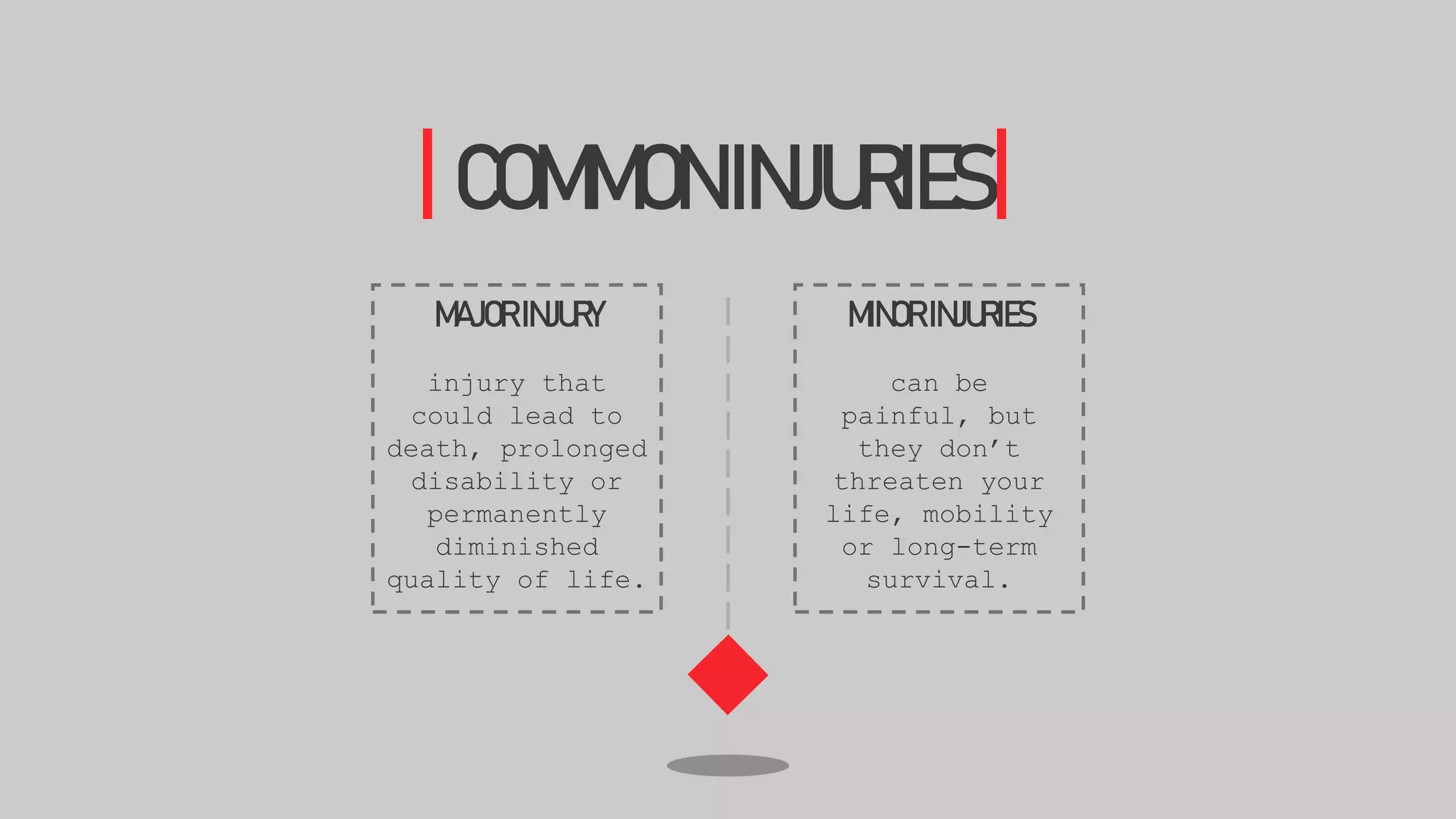
COMMONINJURIES
MAJORINJURY
injury that
could lead to
death, prolonged
disability or
permanently
diminished
quality of life.
MINORINJURIES
can be
painful, but
they don’t
threaten your
life, mobility
or long-term
survival.
MAJORINJURY
Examples of common major injuries that should receive immediate attention.
Compound fractures
Any type of head or eye injury
Stab wounds
Gunshot wounds
Severe or extensive burns
Injures accompanied by chest
pain, paralysis, severe bleeding
or unconsciousness
MINORINJURY
Examples of common minor injuries include the following.
Shallow cuts or abrasions
Sprains and muscle strain
Bruises and skin lesions
Minor burns covering only a
small area of skin
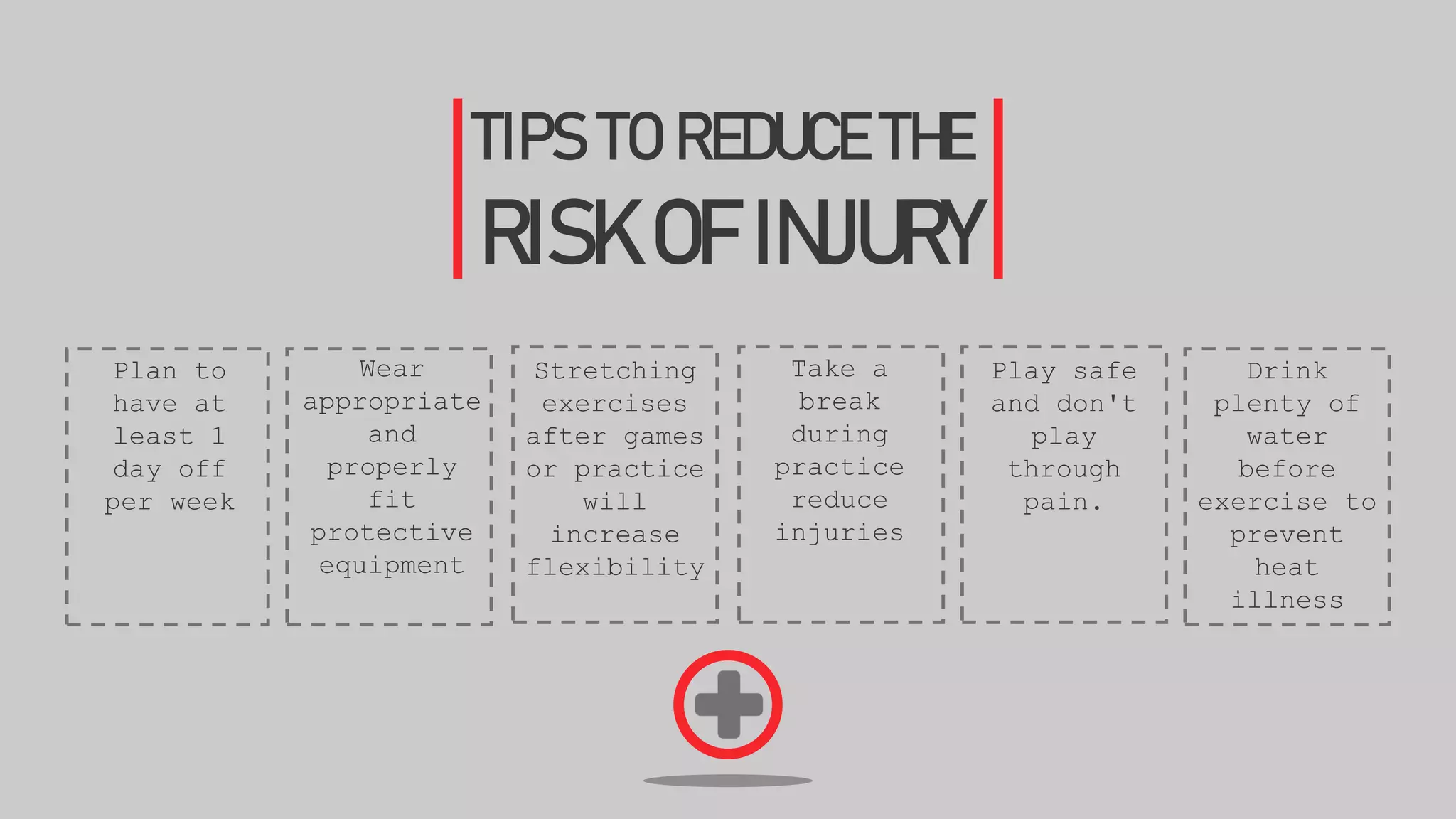
TIPS TO REDUCE THE
RISK OF INJURY
Drink
plenty of
water
before
exercise to
prevent
heat
illness
Plan to
have at
least 1
day off
per week
Wear
appropriate
and
properly
fit
protective
equipment
Stretching
exercises
after games
or practice
will
increase
flexibility
Take a
break
during
practice
reduce
injuries
Play safe
and don't
play
through
pain.
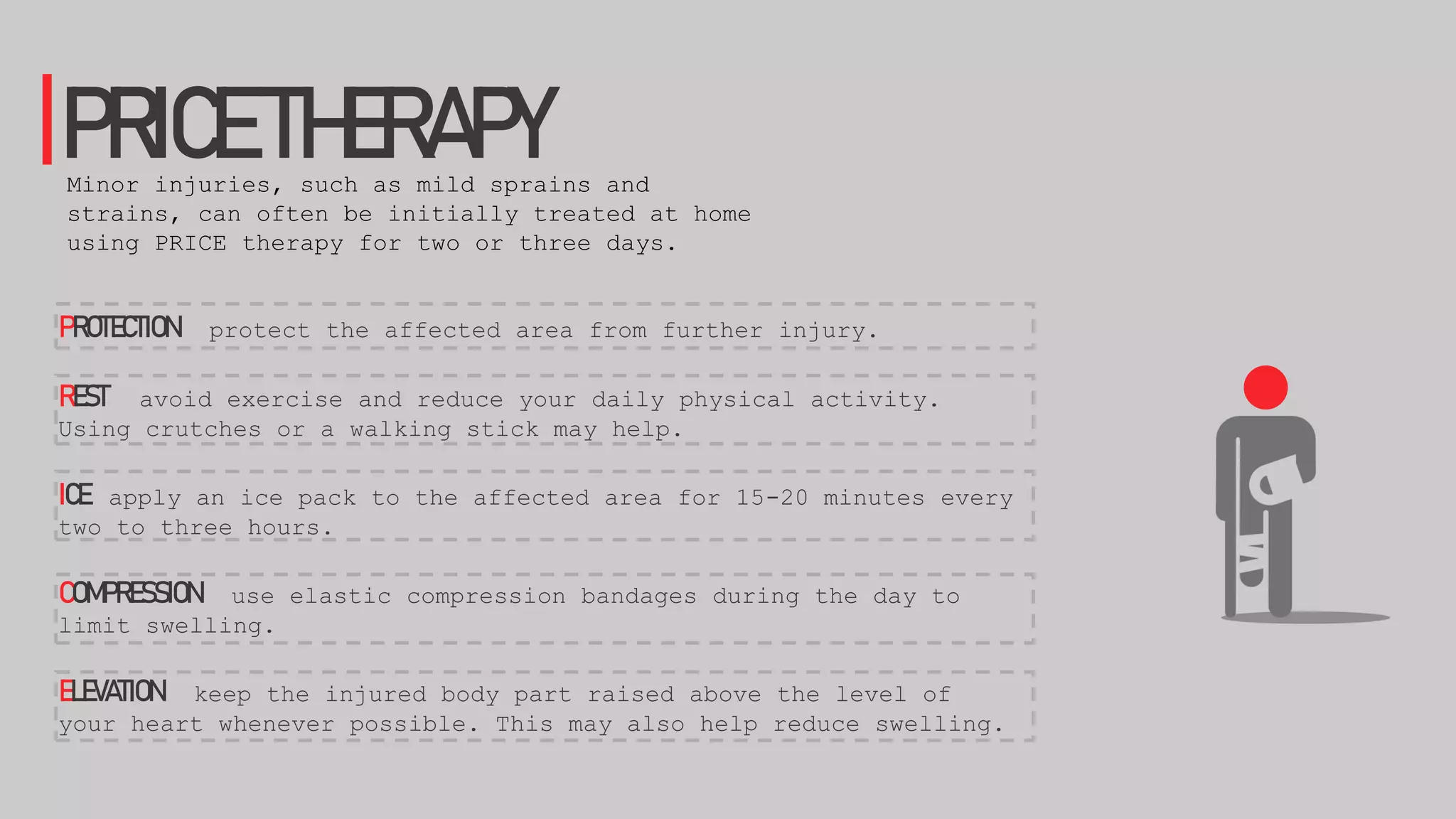
PROTECTION protect the affected area from further injury.
REST avoid exercise and reduce your daily physical activity.
Using crutches or a walking stick may help.
ICE apply an ice pack to the affected area for 15-20 minutes every
two to three hours.
COMPRESSION use elastic compression bandages during the day to
limit swelling.
ELEVATION keep the injured body part raised above the level of
your heart whenever possible. This may also help reduce swelling.
PRICETHERAPYMinor injuries, such as mild sprains and
strains, can often be initially treated at home
using PRICE therapy for two or three days.
THANKYOU

Preventing Physical Injuries

  • 1.
  • 2.
    COMMONINJURIES MAJORINJURY injury that could leadto death, prolonged disability or permanently diminished quality of life. MINORINJURIES can be painful, but they don’t threaten your life, mobility or long-term survival.
  • 3.
    MAJORINJURY Examples of commonmajor injuries that should receive immediate attention. Compound fractures Any type of head or eye injury Stab wounds Gunshot wounds Severe or extensive burns Injures accompanied by chest pain, paralysis, severe bleeding or unconsciousness
  • 4.
    MINORINJURY Examples of commonminor injuries include the following. Shallow cuts or abrasions Sprains and muscle strain Bruises and skin lesions Minor burns covering only a small area of skin
  • 5.
    TIPS TO REDUCETHE RISK OF INJURY Drink plenty of water before exercise to prevent heat illness Plan to have at least 1 day off per week Wear appropriate and properly fit protective equipment Stretching exercises after games or practice will increase flexibility Take a break during practice reduce injuries Play safe and don't play through pain.
  • 6.
    PROTECTION protect theaffected area from further injury. REST avoid exercise and reduce your daily physical activity. Using crutches or a walking stick may help. ICE apply an ice pack to the affected area for 15-20 minutes every two to three hours. COMPRESSION use elastic compression bandages during the day to limit swelling. ELEVATION keep the injured body part raised above the level of your heart whenever possible. This may also help reduce swelling. PRICETHERAPYMinor injuries, such as mild sprains and strains, can often be initially treated at home using PRICE therapy for two or three days.
  • 7.