Electrical Safety Audit
Ensuring Safety, Compliance, and Efficiency
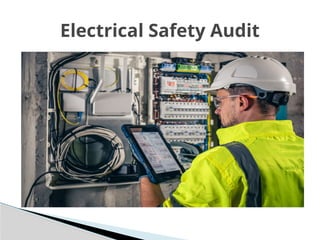
Electrical Safety Audit
What is an Electrical Safety Audit (ESA)?
 A systematic evaluation of the electrical
systems in a facility to ensure they are safe,
compliant, and efficient.
 Helps identify potential electrical hazards and
risks.
Introduction
Why Conduct an Electrical Safety Audit?
 Prevent electrical accidents, fires, and shocks.
 Ensure compliance with regulatory standards
(e.g., IS 732, NFPA 70E).
 Improve operational efficiency and minimize
downtime.
 Safeguard human life and property.
Importance of Electrical Safety
Audits
Key Objectives:
 Identify electrical hazards and risks.
 Assess the condition of electrical installations
and equipment.
 Ensure compliance with safety regulations and
standards.
 Recommend corrective measures and safety
improvements.
Objectives of an Electrical Safety
Audit
Areas Covered:
 Electrical Distribution Systems
 Electrical Panels and Switchgear
 Earthing and Grounding Systems
 Wiring and Cabling
 Equipment and Machinery Safety
 Emergency Systems (e.g., fire alarms, UPS)
 Compliance with Safety Standards
Scope of the Electrical Safety Audit
 Pre-Audit Data Collection: Gather documentation on
existing electrical systems. Review past safety reports
and incident logs.
 Site Inspection:Physical inspection of electrical
installations, equipment, and systems.
 Testing and Measurement:Insulation resistance
testing, earth resistance testing, thermal imaging, etc.
 Risk Assessment:Evaluate potential hazards and
risks.
 Audit Report:Findings, recommendations, and
corrective actions.
Process of Electrical Safety Audit
Common Issues Identified:
 Inadequate earthing/grounding.
 Overloaded electrical circuits.
 Poor insulation or exposed wiring.
 Lack of regular maintenance of electrical
panels.
 Non-compliance with safety standards.
Key Findings in Electrical Safety
Audits
Relevant Standards and Regulations:
 Indian Standards (IS 732)
 National Electrical Code (NEC)
 Occupational Safety and Health Administration
(OSHA)
 National Fire Protection Association (NFPA 70E)
Electrical Safety Standards and
Regulations
Sample Recommendations:
 Implement proper grounding/earthing
systems.
 Regular maintenance of electrical panels and
switchgear.
 Install surge protection devices.
 Conduct periodic thermal imaging for hotspots.
 Train employees on electrical safety
procedures.
Recommendations and Corrective
Actions
Key Benefits:
 Reduced risk of electrical accidents and fires.
 Improved compliance with regulations.
 Enhanced operational efficiency.
 Prolonged equipment lifespan.
 Peace of mind and workplace safety.
Benefits of Electrical Safety Audit
Final Thoughts:
 An Electrical Safety Audit is essential for
ensuring a safe working environment and
regulatory compliance.
 Implementing recommendations can lead to
significant improvements in safety and
operational performance.
Conclusion
For more details visit the page:
https://elion.co.in/the-complete-guide-to-
electrical-safety-audits-what-you-need-to-
know/
Prevent electrical hazards with a thorough electrical safety audit

Prevent electrical hazards with a thorough electrical safety audit

  • 1.
    Electrical Safety Audit EnsuringSafety, Compliance, and Efficiency
  • 2.
  • 3.
    What is anElectrical Safety Audit (ESA)?  A systematic evaluation of the electrical systems in a facility to ensure they are safe, compliant, and efficient.  Helps identify potential electrical hazards and risks. Introduction
  • 4.
    Why Conduct anElectrical Safety Audit?  Prevent electrical accidents, fires, and shocks.  Ensure compliance with regulatory standards (e.g., IS 732, NFPA 70E).  Improve operational efficiency and minimize downtime.  Safeguard human life and property. Importance of Electrical Safety Audits
  • 5.
    Key Objectives:  Identifyelectrical hazards and risks.  Assess the condition of electrical installations and equipment.  Ensure compliance with safety regulations and standards.  Recommend corrective measures and safety improvements. Objectives of an Electrical Safety Audit
  • 6.
    Areas Covered:  ElectricalDistribution Systems  Electrical Panels and Switchgear  Earthing and Grounding Systems  Wiring and Cabling  Equipment and Machinery Safety  Emergency Systems (e.g., fire alarms, UPS)  Compliance with Safety Standards Scope of the Electrical Safety Audit
  • 7.
     Pre-Audit DataCollection: Gather documentation on existing electrical systems. Review past safety reports and incident logs.  Site Inspection:Physical inspection of electrical installations, equipment, and systems.  Testing and Measurement:Insulation resistance testing, earth resistance testing, thermal imaging, etc.  Risk Assessment:Evaluate potential hazards and risks.  Audit Report:Findings, recommendations, and corrective actions. Process of Electrical Safety Audit
  • 8.
    Common Issues Identified: Inadequate earthing/grounding.  Overloaded electrical circuits.  Poor insulation or exposed wiring.  Lack of regular maintenance of electrical panels.  Non-compliance with safety standards. Key Findings in Electrical Safety Audits
  • 9.
    Relevant Standards andRegulations:  Indian Standards (IS 732)  National Electrical Code (NEC)  Occupational Safety and Health Administration (OSHA)  National Fire Protection Association (NFPA 70E) Electrical Safety Standards and Regulations
  • 10.
    Sample Recommendations:  Implementproper grounding/earthing systems.  Regular maintenance of electrical panels and switchgear.  Install surge protection devices.  Conduct periodic thermal imaging for hotspots.  Train employees on electrical safety procedures. Recommendations and Corrective Actions
  • 11.
    Key Benefits:  Reducedrisk of electrical accidents and fires.  Improved compliance with regulations.  Enhanced operational efficiency.  Prolonged equipment lifespan.  Peace of mind and workplace safety. Benefits of Electrical Safety Audit
  • 12.
    Final Thoughts:  AnElectrical Safety Audit is essential for ensuring a safe working environment and regulatory compliance.  Implementing recommendations can lead to significant improvements in safety and operational performance. Conclusion
  • 13.
    For more detailsvisit the page: https://elion.co.in/the-complete-guide-to- electrical-safety-audits-what-you-need-to- know/