Preterm labor
Prepared by : abdulrahman farhad
Supervised by : dr.erteqa
Definition:
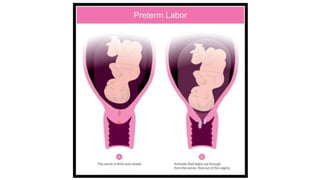
● It is a regular contractions of the uterus that occurs before 37 weeks ( 24 wk -
36 wk+6 days) of gestation and results in cervical dilatation and effacement.
● Extremely preterm: <28 weeks.
● Early preterm: 28-32 weeks.
● Late preterm: 32-37 weeks.
● It may be spontaneous preterm labor or indicated ( fetal and maternal
indications) or it may follow PROM.
Causes:
● Intrauterine infection ( chorioamnionitis).
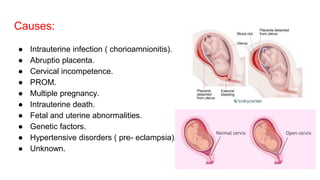
● Abruptio placenta.
● Cervical incompetence.
● PROM.
● Multiple pregnancy.
● Intrauterine death.
● Fetal and uterine abnormalities.
● Genetic factors.
● Hypertensive disorders ( pre- eclampsia).
● Unknown.
Risk factors:
● Modifiable : cigarette smoking,substance abuse,absent prenatal care,short
interpregnancy intervals,anemia,bacteruria/UTI,genital infection,strenuous
work,high stress, pyelonephritis.
● Non-modifiable: African-American race,age <18 or > 40 years,prior preterm
birth,poor nutrition,low pregnancy weight,uterine anomaly or
fibroid,polyhydramnios, premature cervical dilatation (>2 cm) or effacement
(>80%).
● Fetal and placental factors: IUGR , vaginal bleeding, APH,placenta
previa,fetal congenital anomalies.
● Other factors: trauma,bleeding disorders .
Sign and symptoms:
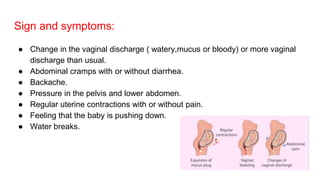
● Change in the vaginal discharge ( watery,mucus or bloody) or more vaginal
discharge than usual.
● Abdominal cramps with or without diarrhea.
● Backache.
● Pressure in the pelvis and lower abdomen.
● Regular uterine contractions with or without pain.
● Feeling that the baby is pushing down.
● Water breaks.
Examination:
● General examination to look for signs of dehydration,systemic infection.
● Vital signs.
● Abdominal examination for uterine contractions,fundal height,lie and presentation
of the baby.
● Gynecological examination: speculum examination for signs of rupture of
membranes,cervical effacement and dilatation,bulging of the membranes,fetal
fibronectin test,culture for ( chlamydia,gonorrhea,group b streptococcus) outer ⅓
of the vagina and perineum.
● Cervical examination : after rupture of the membranes was ruled out,when there is
suspicion of placenta previa.
● Ultrasound examination (abdominal): placental location,amniotic fluid volume,fetal
weight and presentation,fetal well- being.
● Tansvaginal ulstrasound: for placental location and cervical length ,if the
cervical length is < 20 mm and there is contractions this is preterm labor,if it
was 20-30 mm and there is contractions this is probably preterm labor ,if it
was >30 mm preterm labor is very unlikely regardless of the contractions,
transvaginal uss also shows the presence of sludge.
Management:
● Bed rest.
● Hydration.
● Monitoring of the fetal heart/ CTG.
● Tocolytic medications : commonly used medications are calcium channel
blockers( nifedipine),mg sulfate,oxytocin antagonist (atosiban). Less
commonly used drugs are beta
agonists(terbutaline,ritordine,isoxsuprine),prostaglandin
inhibitors(indomethacin,sulindac,ketorolac),nitric oxide donors (
nitroglycerine).
● Corticosteroids: betamethasone or dexamethasone.
● Antibiotics if there is PROM.
Contraindications to tocolytic medications:
● APH.
● Maternal hemodynamic instability.
● Severe pre-eclampsia & eclampsia.
● IUGR.
● Chorioamnionitis.
● Fetal death.
● Fetal anomaly incompatible with life.
● Severe bleeding from any cause.
Prevention:
● Lifestyle modification: smoking cessation,adequate nutrition.
● Treatment of bacterial vaginosis.
● Progesterone.
● Cervical cerclage.
Complications
● Maternal: increased risk of caesarean delivery,complications of tocolytic
medications.
● Fetal : RDS,Intraventricular hemorrhage,NEC,bronchopulmonary
dysplasia,feeding problems( reduced or absence sucking reflex),neonatal
infection& infection,birth
trauma,hypothermia,hypoglycemia,hypocalcemia,hypomagnesemia,hyperbilir
ubinemia ,perinatal asphyxia,long term neurological sequel.
Thank you

Preterm labor.pptx

  • 1.
    Preterm labor Prepared by: abdulrahman farhad Supervised by : dr.erteqa
  • 2.
    Definition: ● It isa regular contractions of the uterus that occurs before 37 weeks ( 24 wk - 36 wk+6 days) of gestation and results in cervical dilatation and effacement. ● Extremely preterm: <28 weeks. ● Early preterm: 28-32 weeks. ● Late preterm: 32-37 weeks. ● It may be spontaneous preterm labor or indicated ( fetal and maternal indications) or it may follow PROM.
  • 4.
    Causes: ● Intrauterine infection( chorioamnionitis). ● Abruptio placenta. ● Cervical incompetence. ● PROM. ● Multiple pregnancy. ● Intrauterine death. ● Fetal and uterine abnormalities. ● Genetic factors. ● Hypertensive disorders ( pre- eclampsia). ● Unknown.
  • 5.
    Risk factors: ● Modifiable: cigarette smoking,substance abuse,absent prenatal care,short interpregnancy intervals,anemia,bacteruria/UTI,genital infection,strenuous work,high stress, pyelonephritis. ● Non-modifiable: African-American race,age <18 or > 40 years,prior preterm birth,poor nutrition,low pregnancy weight,uterine anomaly or fibroid,polyhydramnios, premature cervical dilatation (>2 cm) or effacement (>80%). ● Fetal and placental factors: IUGR , vaginal bleeding, APH,placenta previa,fetal congenital anomalies. ● Other factors: trauma,bleeding disorders .
  • 7.
    Sign and symptoms: ●Change in the vaginal discharge ( watery,mucus or bloody) or more vaginal discharge than usual. ● Abdominal cramps with or without diarrhea. ● Backache. ● Pressure in the pelvis and lower abdomen. ● Regular uterine contractions with or without pain. ● Feeling that the baby is pushing down. ● Water breaks.
  • 8.
    Examination: ● General examinationto look for signs of dehydration,systemic infection. ● Vital signs. ● Abdominal examination for uterine contractions,fundal height,lie and presentation of the baby. ● Gynecological examination: speculum examination for signs of rupture of membranes,cervical effacement and dilatation,bulging of the membranes,fetal fibronectin test,culture for ( chlamydia,gonorrhea,group b streptococcus) outer ⅓ of the vagina and perineum. ● Cervical examination : after rupture of the membranes was ruled out,when there is suspicion of placenta previa. ● Ultrasound examination (abdominal): placental location,amniotic fluid volume,fetal weight and presentation,fetal well- being.
  • 9.
    ● Tansvaginal ulstrasound:for placental location and cervical length ,if the cervical length is < 20 mm and there is contractions this is preterm labor,if it was 20-30 mm and there is contractions this is probably preterm labor ,if it was >30 mm preterm labor is very unlikely regardless of the contractions, transvaginal uss also shows the presence of sludge.
  • 10.
    Management: ● Bed rest. ●Hydration. ● Monitoring of the fetal heart/ CTG. ● Tocolytic medications : commonly used medications are calcium channel blockers( nifedipine),mg sulfate,oxytocin antagonist (atosiban). Less commonly used drugs are beta agonists(terbutaline,ritordine,isoxsuprine),prostaglandin inhibitors(indomethacin,sulindac,ketorolac),nitric oxide donors ( nitroglycerine). ● Corticosteroids: betamethasone or dexamethasone. ● Antibiotics if there is PROM.
  • 11.
    Contraindications to tocolyticmedications: ● APH. ● Maternal hemodynamic instability. ● Severe pre-eclampsia & eclampsia. ● IUGR. ● Chorioamnionitis. ● Fetal death. ● Fetal anomaly incompatible with life. ● Severe bleeding from any cause.
  • 12.
    Prevention: ● Lifestyle modification:smoking cessation,adequate nutrition. ● Treatment of bacterial vaginosis. ● Progesterone. ● Cervical cerclage.
  • 13.
    Complications ● Maternal: increasedrisk of caesarean delivery,complications of tocolytic medications. ● Fetal : RDS,Intraventricular hemorrhage,NEC,bronchopulmonary dysplasia,feeding problems( reduced or absence sucking reflex),neonatal infection& infection,birth trauma,hypothermia,hypoglycemia,hypocalcemia,hypomagnesemia,hyperbilir ubinemia ,perinatal asphyxia,long term neurological sequel.
  • 14.