English Project:
Holiday destinations in Romania.
Studenti:
• Paraschiv Mihai Andrei
• Nitu Teodor
•Profesor:
•Asist. Univ. Mihai Daniel Frumuşelu
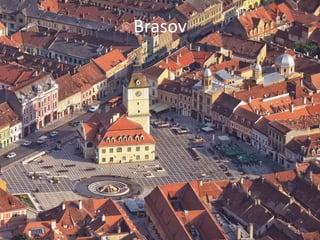
Brasov
Brasov
• Smack in the center of Romania is Brasov, a harmonious
mash-up of traditional charm and modern city life. Ride a
double-decker bus around the city to get your bearings and
see the sites whiz by, then hop off to squeeze down Strada
Sforii, the narrowest street in Europe. Take a day trip to see
the fortified church of Prejmer, the Libearty brown bear
sanctuary, and the deliciously ominous Bran Castle,
otherwise known as Dracula’s Castle.
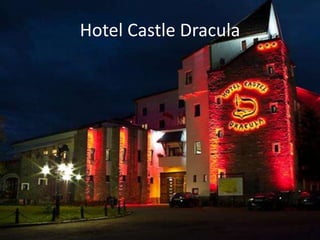
Hotel Castle Dracula
• Positioned roughly on the promontory where the Count's castle would
have stood, Hotel Castle Dracula is lazily Gothic from the outside, but more
interesting within (particularly in reception, where a stuffed hawk, wolf, raven
and ferret watch you signing in). Corridors are lined with cranberry-coloured
carpets and dragon motifs, while rooms are rustically stylish. with bureaus for
writing fraught diaries, and old-fashioned furniture. The apartments are more
vampy with wine-dark walls. Meanwhile, the hotel's Fear Room is a creaky-
stepped, ghosthouse-style crypt, with murals retelling the story of Dracula. The
restaurant is earthy with dishes such as pork suckling and mutton on the bone,
and an outside terrace perfect for summer breakfasts. On a stormy night when
the Pass is whipped by rain, wind rattles the casements and the odd wolf howls
across the valley, the hotel can be genuinely creepy.
• Outside in the car park there's a faded map detailing four colour-coded
walks in the area as well as a sculpture of author Bram Stoker in a glass coffin.
Immediately after is a gathering of stalls hawking snow globes, vampire mugs,
masks, hats and garden gnomes! There’s also tennis and a small ski lift next
door.
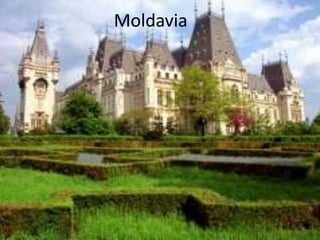
Moldavia
Moldavia
• Less visited than other parts of Romania, Moldavia rewards those intrepid enough
to seek it out: from glorious medieval monasteries to rugged mountains ideal for skiing
and hiking, this singular region combines natural and artistic beauty with plenty of
action.
• Moldavia’s bucolic villages and oddly endearing towns feature some of Romania’s
friendliest locals. Beyond the hinterland’s traditional ways, Moldavian modernity is fully
displayed in Iaşi, Romania's second-largest city and a vibrant student town famous for its
nightlife, shopping and exquisite, varied architecture.
• Within Romania, Moldavia's known for its rolling plains, interrupted only by the
accidental cluster of trees or grazing horse. These sweeping vistas are particularly
hypnotic by evening, when fading sunlight spreads across the land and vast sky,
suffusing both in tones and shapes as rich and varied as Moldavia's monastic art.
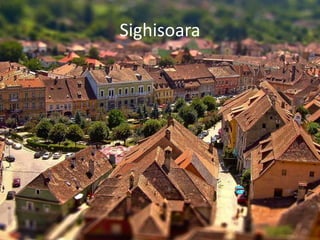
Sighisoara
Sighisoara
• The clock tower of Sighisoarais the grand dame of the city,
reigning tall and proud from atop a central hill. Founded by
Transylvanian Saxons during the 12th century, Sighisoara is listed as
a UNESCO World Heritage Site and features well-preserved
medieval stone streets and structures. Visit fortified churches, climb
the famed Scara Şcolarilor covered staircase, and get goosebumps at
the birthplace of Vlad the Impaler, the inspiration for Bram Stoker’s
terrifying creature, Count Dracula.

Presentation1

  • 1.
    English Project: Holiday destinationsin Romania. Studenti: • Paraschiv Mihai Andrei • Nitu Teodor •Profesor: •Asist. Univ. Mihai Daniel Frumuşelu
  • 2.
  • 3.
    Brasov • Smack inthe center of Romania is Brasov, a harmonious mash-up of traditional charm and modern city life. Ride a double-decker bus around the city to get your bearings and see the sites whiz by, then hop off to squeeze down Strada Sforii, the narrowest street in Europe. Take a day trip to see the fortified church of Prejmer, the Libearty brown bear sanctuary, and the deliciously ominous Bran Castle, otherwise known as Dracula’s Castle.
  • 4.
  • 5.
    Hotel Castle Dracula •Positioned roughly on the promontory where the Count's castle would have stood, Hotel Castle Dracula is lazily Gothic from the outside, but more interesting within (particularly in reception, where a stuffed hawk, wolf, raven and ferret watch you signing in). Corridors are lined with cranberry-coloured carpets and dragon motifs, while rooms are rustically stylish. with bureaus for writing fraught diaries, and old-fashioned furniture. The apartments are more vampy with wine-dark walls. Meanwhile, the hotel's Fear Room is a creaky- stepped, ghosthouse-style crypt, with murals retelling the story of Dracula. The restaurant is earthy with dishes such as pork suckling and mutton on the bone, and an outside terrace perfect for summer breakfasts. On a stormy night when the Pass is whipped by rain, wind rattles the casements and the odd wolf howls across the valley, the hotel can be genuinely creepy. • Outside in the car park there's a faded map detailing four colour-coded walks in the area as well as a sculpture of author Bram Stoker in a glass coffin. Immediately after is a gathering of stalls hawking snow globes, vampire mugs, masks, hats and garden gnomes! There’s also tennis and a small ski lift next door.
  • 6.
  • 7.
    Moldavia • Less visitedthan other parts of Romania, Moldavia rewards those intrepid enough to seek it out: from glorious medieval monasteries to rugged mountains ideal for skiing and hiking, this singular region combines natural and artistic beauty with plenty of action. • Moldavia’s bucolic villages and oddly endearing towns feature some of Romania’s friendliest locals. Beyond the hinterland’s traditional ways, Moldavian modernity is fully displayed in Iaşi, Romania's second-largest city and a vibrant student town famous for its nightlife, shopping and exquisite, varied architecture. • Within Romania, Moldavia's known for its rolling plains, interrupted only by the accidental cluster of trees or grazing horse. These sweeping vistas are particularly hypnotic by evening, when fading sunlight spreads across the land and vast sky, suffusing both in tones and shapes as rich and varied as Moldavia's monastic art.
  • 8.
  • 9.
    Sighisoara • The clocktower of Sighisoarais the grand dame of the city, reigning tall and proud from atop a central hill. Founded by Transylvanian Saxons during the 12th century, Sighisoara is listed as a UNESCO World Heritage Site and features well-preserved medieval stone streets and structures. Visit fortified churches, climb the famed Scara Şcolarilor covered staircase, and get goosebumps at the birthplace of Vlad the Impaler, the inspiration for Bram Stoker’s terrifying creature, Count Dracula.