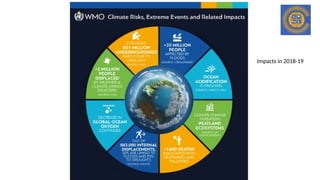
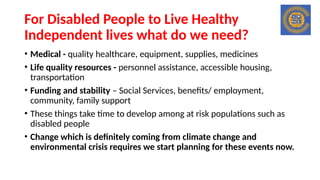
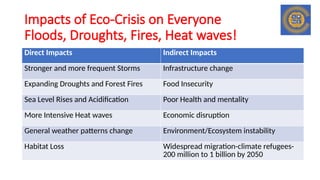
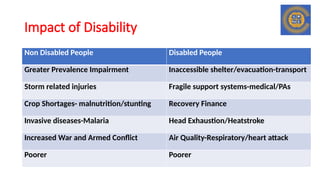
Humanitarian crises and environmental stressors are no longer separate domains. Increasingly, we view environmental breakdown (climate change, resource degradation, pollution, ecosystem collapse) not simply as long-term “environmental problems”, but as drivers of human suffering, displacement, conflict, and vulnerability. At the same time, humanitarian responses – relief, displacement camps, post-disaster rebuilding – often have significant environmental footprints or consequences, and need to integrate environmental considerations for sustainability. The two fields – environment and humanitarian action – are converging in purpose if not yet always in practice.
As the United Nations Environment Programme (UNEP) notes: “the environment is fundamental to humanitarian action for two reasons. First, environmental issues are often underlying and contributing factors to humanitarian crises. Second, humanitarian crises can have negative effects on the environment and exacerbate risk and vulnerability if managed inadequately or addressed too late.”
Meanwhile, the humanitarian sector is explicitly recognising that the climate emergency is a humanitarian emergency.
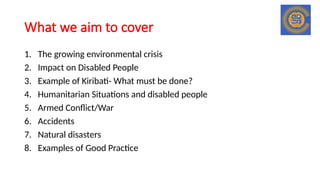
This text will explore: (1) how environmental and humanitarian situations are linked; (2) the major kinds of intersections; (3) key case‐studies illustrating the link; (4) challenges in responding; (5) promising strategies and policy responses; and (6) conclusions and outlook.Humanitarian crises and environmental stressors are no longer separate domains. Increasingly, we view environmental breakdown (climate change, resource degradation, pollution, ecosystem collapse) not simply as long-term “environmental problems”, but as drivers of human suffering, displacement, conflict, and vulnerability. At the same time, humanitarian responses – relief, displacement camps, post-disaster rebuilding – often have significant environmental footprints or consequences, and need to integrate environmental considerations for sustainability. The two fields – environment and humanitarian action – are converging in purpose if not yet always in practice.
As the United Nations Environment Programme (UNEP) notes: “the environment is fundamental to humanitarian action for two reasons. First, environmental issues are often underlying and contributing factors to humanitarian crises. Second, humanitarian crises can have negative effects on the environment and exacerbate risk and vulnerability if managed inadequately or addressed too late.”
Meanwhile, the humanitarian sector is explicitly recognising that the climate emergency is a humanitarian emergency.
This text will explore: (1) how environmental and humanitarian situations are linked; (2) the major kinds of intersections; (3) key case‐studies illustrating the link; (4) challenges in responding; (5) promising strategies and policy responses; and (6) conclusions and outlook.Humanitarian crises and environmental stressors are no longer separate domains. Increasi