Presented by VINAYMANOJ
Biology freework 1
Group 225- I2
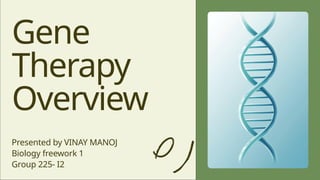
Gene
Therapy
Overview
2.
2
Introduction to Gene
Therapy
Definingthe Concept and Historical Context
Definition
Gene therapy is the process of
altering genes to treat or prevent
diseases, offering innovative
solutions for genetic disorders and
tailored approaches to patient care.
Historical Background
The origins of gene therapy date
back to the early 1970s, evolving
through groundbreaking research
that paved the way for clinical
applications and regulatory
advancements over decades.
Importance
Gene therapy holds the potential
to transform treatments for
both genetic and acquired
diseases, significantly improving
patient outcomes and addressing
previously untreatable conditions.
3.
Basics of
Gene
Therapy
01
02
Genetic Principles
Genesare segments of DNA that encode
instructions for making proteins. Mutations in
these genes can lead to diseases, making gene
therapy a promising approach for treatment.
Traditional Treatments
Unlike traditional treatments that often focus
on symptoms, gene therapy aims to address
the root cause by modifying or replacing faulty
genes, offering a more permanent solution.
4.
Overview
of Gene
Therapy
Types
Comparison
Distinction liesin hereditary implications and
applications.
02
01
03
Germline
Alters genes in reproductive cells, passed to
offspring.
Somatic
Targets non-reproductive cells, affecting the
individual only.
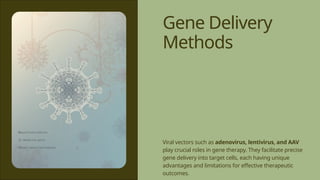
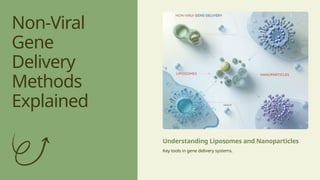
Gene Delivery
Methods
Viral vectorssuch as adenovirus, lentivirus, and AAV
play crucial roles in gene therapy. They facilitate precise
gene delivery into target cells, each having unique
advantages and limitations for effective therapeutic
outcomes.
8
Gene Editing Tools
CRISPR-Cas9,TALENs, and ZFNs
CRISPR-Cas9
CRISPR-Cas9 is a revolutionary tool that allows
precise editing of genes through targeted cuts in
DNA, enabling efficient modifications and
potential therapeutic applications across various
diseases.
TALENs
TALENs (Transcription Activator-Like Effector
Nucleases) offer another approach for gene
editing, employing customizable proteins that
bind to specific DNA sequences, facilitating
precise modifications in gene expression and
genome functionality.
9.
9
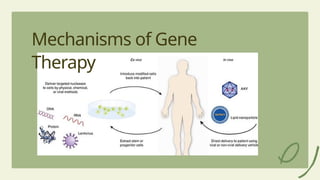
Gene Therapy Approaches
UnderstandingEx Vivo and In Vivo Methods
Ex Vivo Therapy
Ex vivo gene therapy involves
extracting cells from a patient,
modifying them in the laboratory,
and then reinfusing the treated cells
back into the patient, ensuring
targeted action.
In Vivo Therapy
In vivo gene therapy focuses on
delivering therapeutic genes
directly into the patient's body.
This method allows for immediate
action on affected tissues, but
poses unique delivery challenges.
Safety Considerations
Important safety considerations in
gene therapy include monitoring
for immune responses and off-
target effects, ensuring precise
gene modifications, and
maintaining controlled gene
expression to reduce risks.
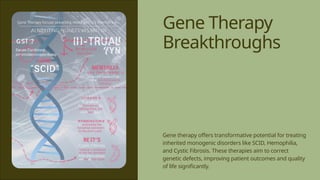
Gene Therapy
Breakthroughs
Gene therapyoffers transformative potential for treating
inherited monogenic disorders like SCID, Hemophilia,
and Cystic Fibrosis. These therapies aim to correct
genetic defects, improving patient outcomes and quality
of life significantly.
12.
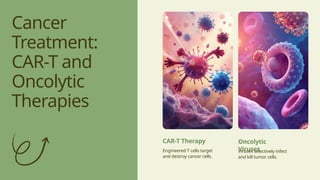
CAR-T Therapy
Engineered Tcells target
and destroy cancer cells.
Oncolytic
Viruses
Viruses selectively infect
and kill tumor cells.
Cancer
Treatment:
CAR-T and
Oncolytic
Therapies
13.
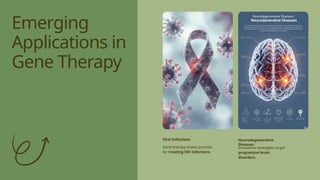
Viral Infections
Gene therapyshows promise
for treating HIV infections.
Neurodegenerative
Diseases
Innovative strategies target
progressive brain
disorders.
Emerging
Applications in
Gene Therapy
15
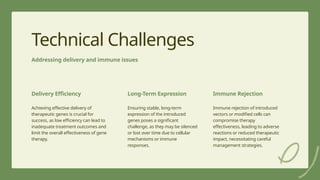
Technical Challenges
Addressing deliveryand immune issues
Delivery Efficiency
Achieving effective delivery of
therapeutic genes is crucial for
success, as low efficiency can lead to
inadequate treatment outcomes and
limit the overall effectiveness of gene
therapy.
Long-Term Expression
Ensuring stable, long-term
expression of the introduced
genes poses a significant
challenge, as they may be silenced
or lost over time due to cellular
mechanisms or immune
responses.
Immune Rejection
Immune rejection of introduced
vectors or modified cells can
compromise therapy
effectiveness, leading to adverse
reactions or reduced therapeutic
impact, necessitating careful
management strategies.
16.
16
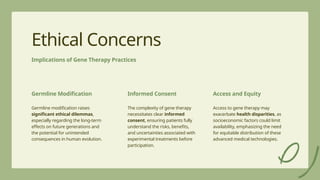
Ethical Concerns
Implications ofGene Therapy Practices
Germline Modification
Germline modification raises
significant ethical dilemmas,
especially regarding the long-term
effects on future generations and
the potential for unintended
consequences in human evolution.
Informed Consent
The complexity of gene therapy
necessitates clear informed
consent, ensuring patients fully
understand the risks, benefits,
and uncertainties associated with
experimental treatments before
participation.
Access and Equity
Access to gene therapy may
exacerbate health disparities, as
socioeconomic factors could limit
availability, emphasizing the need
for equitable distribution of these
advanced medical technologies.
17.
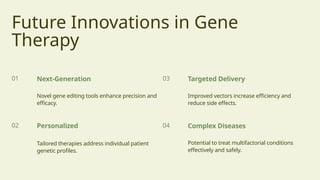
Future Innovations inGene
Therapy
Next-Generation
Novel gene editing tools enhance precision and
efficacy.
Complex Diseases
Potential to treat multifactorial conditions
effectively and safely.
Personalized
Tailored therapies address individual patient
genetic profiles.
01 03
04
02
Targeted Delivery
Improved vectors increase efficiency and
reduce side effects.
18.
1.Naldini, L. (2015).Gene therapy returns to centre stage. Nature,
526(7573), 351-360.
2.Doudna, J. A., & Charpentier, E. (2014). The new frontier of
genome engineering with CRISPR-Cas9. Science, 346(6213).
3.google images
4.chat gpt
5.NIH. (2020). Gene Therapy: Advanced Research and
Development. National Institutes of Health.
6.WHO. (2016). Human Gene Editing: Science, Ethics, and
Governance. World Health Organization.
References for Gene Therapy Presentation





![Gene rx [autosaved]](https://cdn.slidesharecdn.com/ss_thumbnails/generxautosaved-190320072736-thumbnail.jpg?width=640&height=640&fit=bounds)


![Cells and Organs of immune system [Autosaved].pptx](https://cdn.slidesharecdn.com/ss_thumbnails/cellsandorgansofimmunesystemautosaved-260123152717-ea0cb261-thumbnail.jpg?width=640&height=640&fit=bounds)


![Hypothalamus short notes on location, function and disorders by Dr. Neha [PT]...](https://cdn.slidesharecdn.com/ss_thumbnails/hypothalamusbydr-260124142231-2b48143d-thumbnail.jpg?width=640&height=640&fit=bounds)
