Download to read offline


![Presentation for iccms [автосохраненный]](https://image.slidesharecdn.com/presentationforiccms-150703201043-lva1-app6892/75/Presentation-for-iccms-26-2048.jpg)

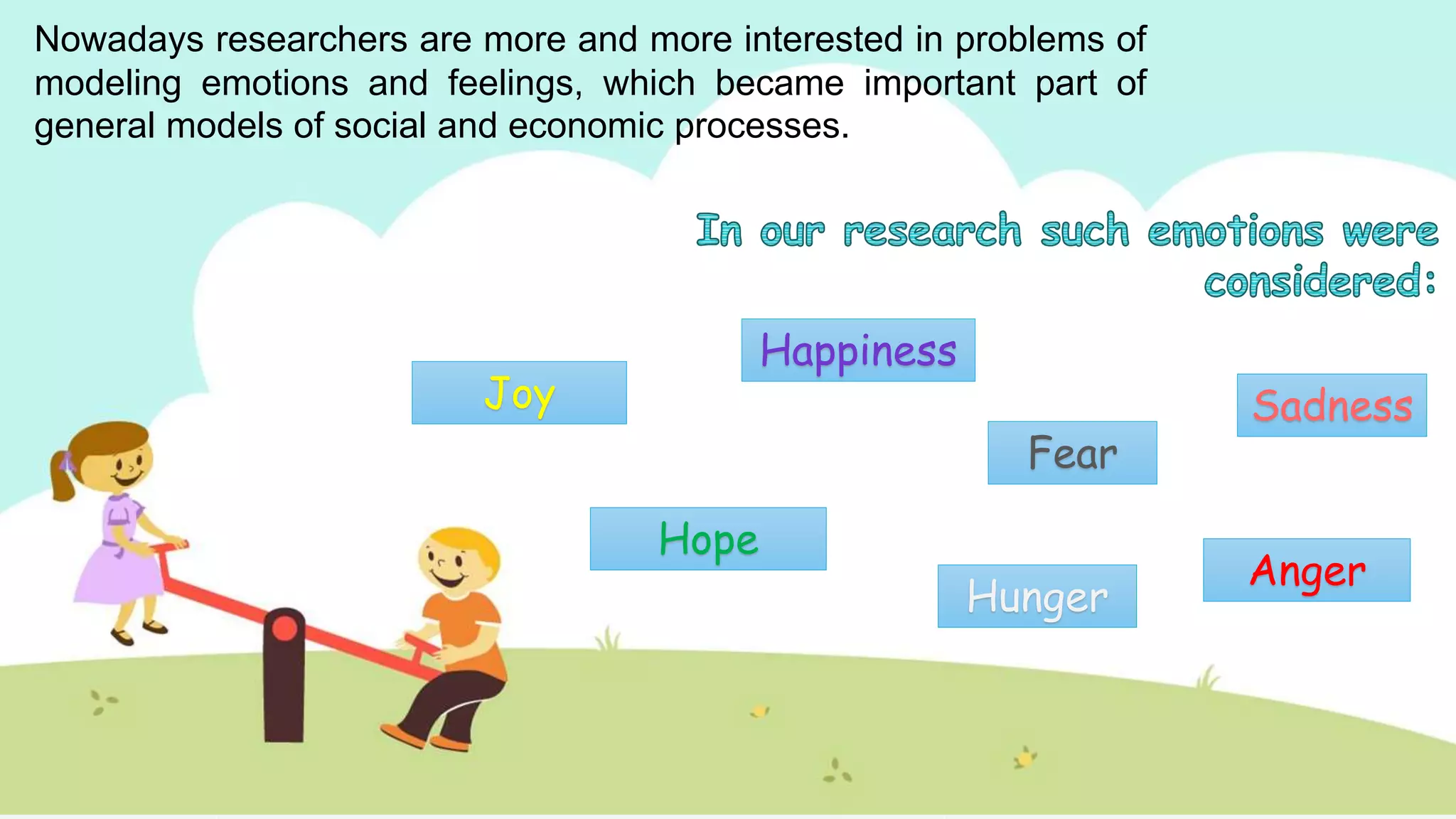
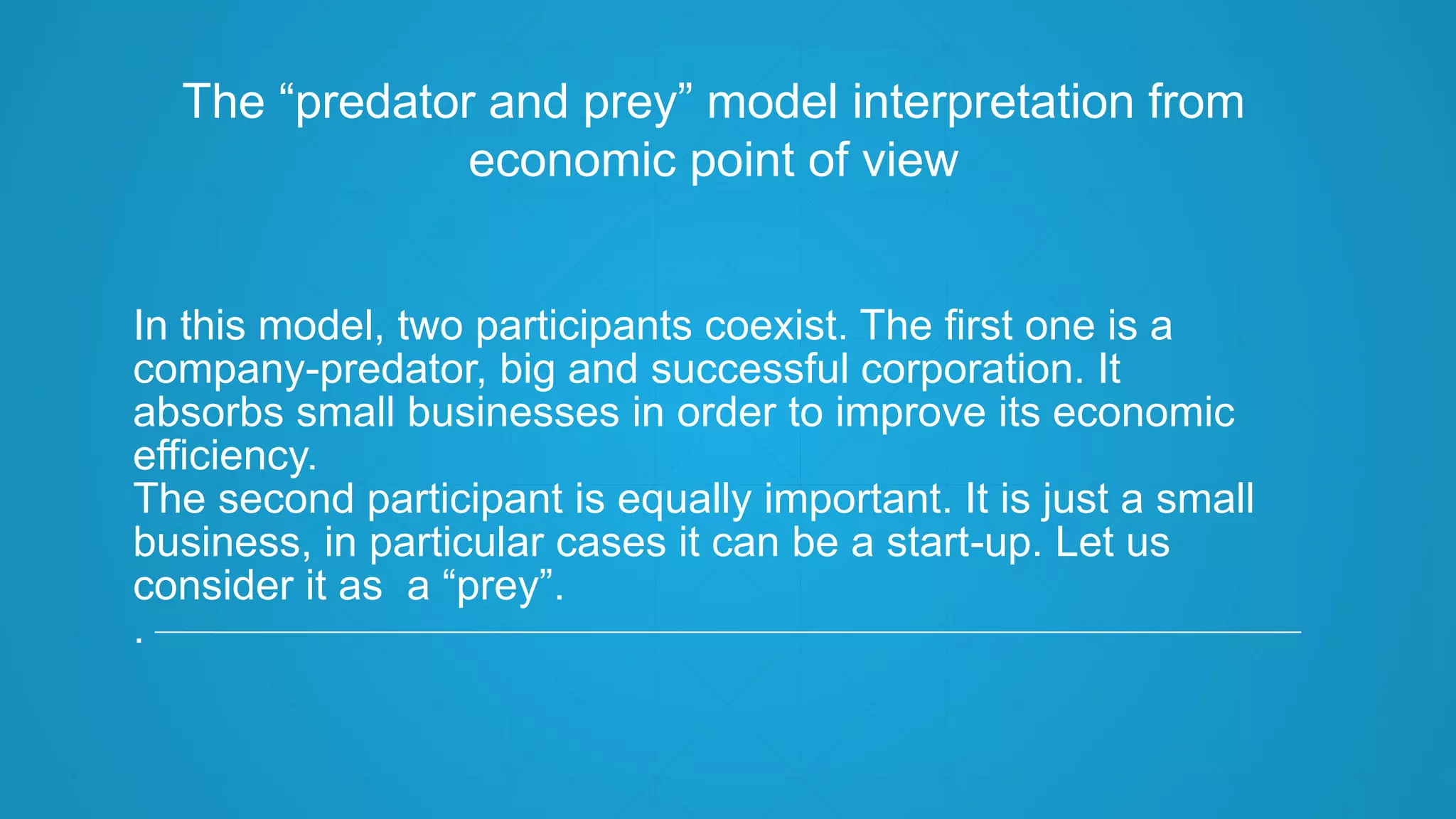
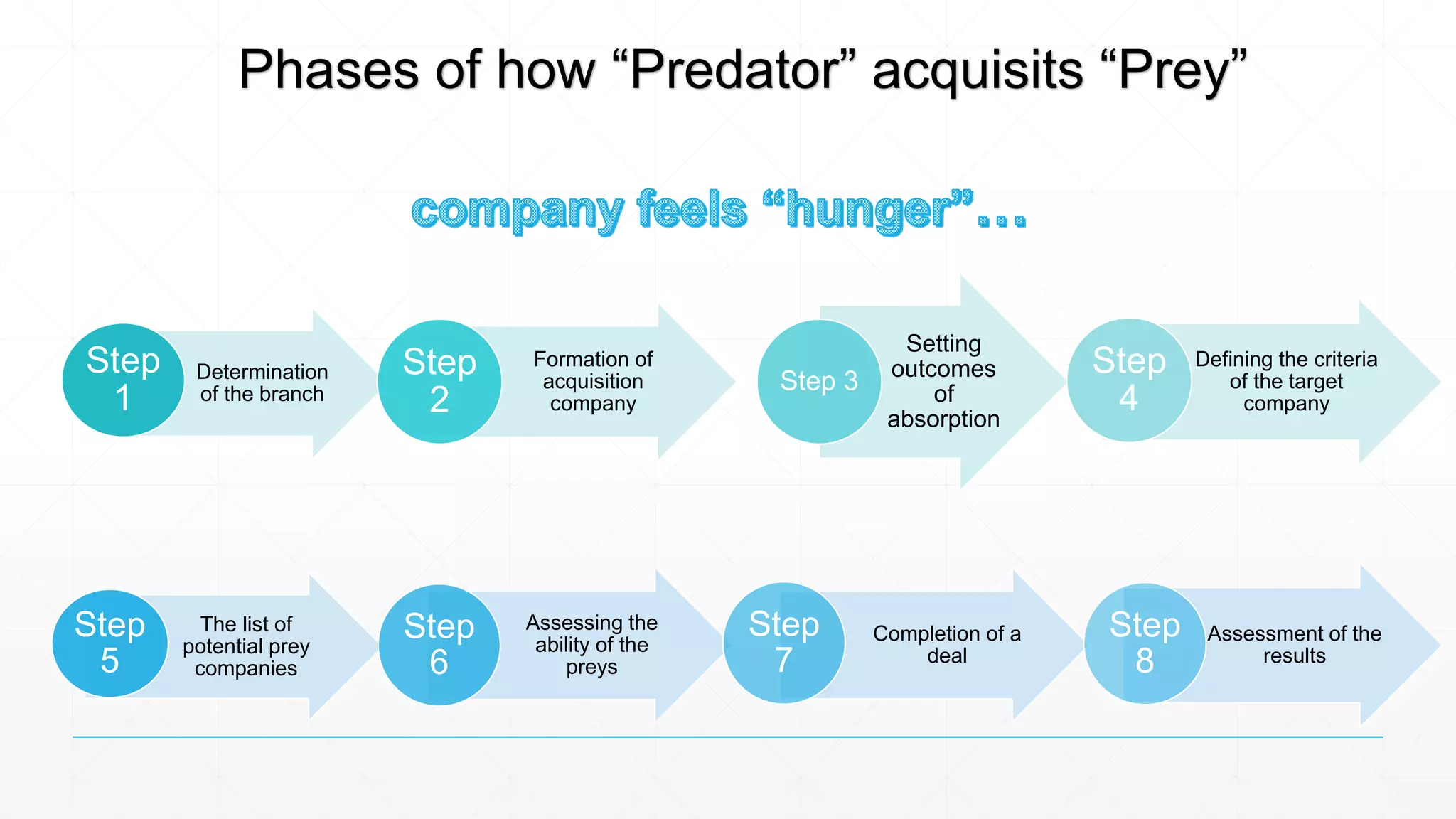
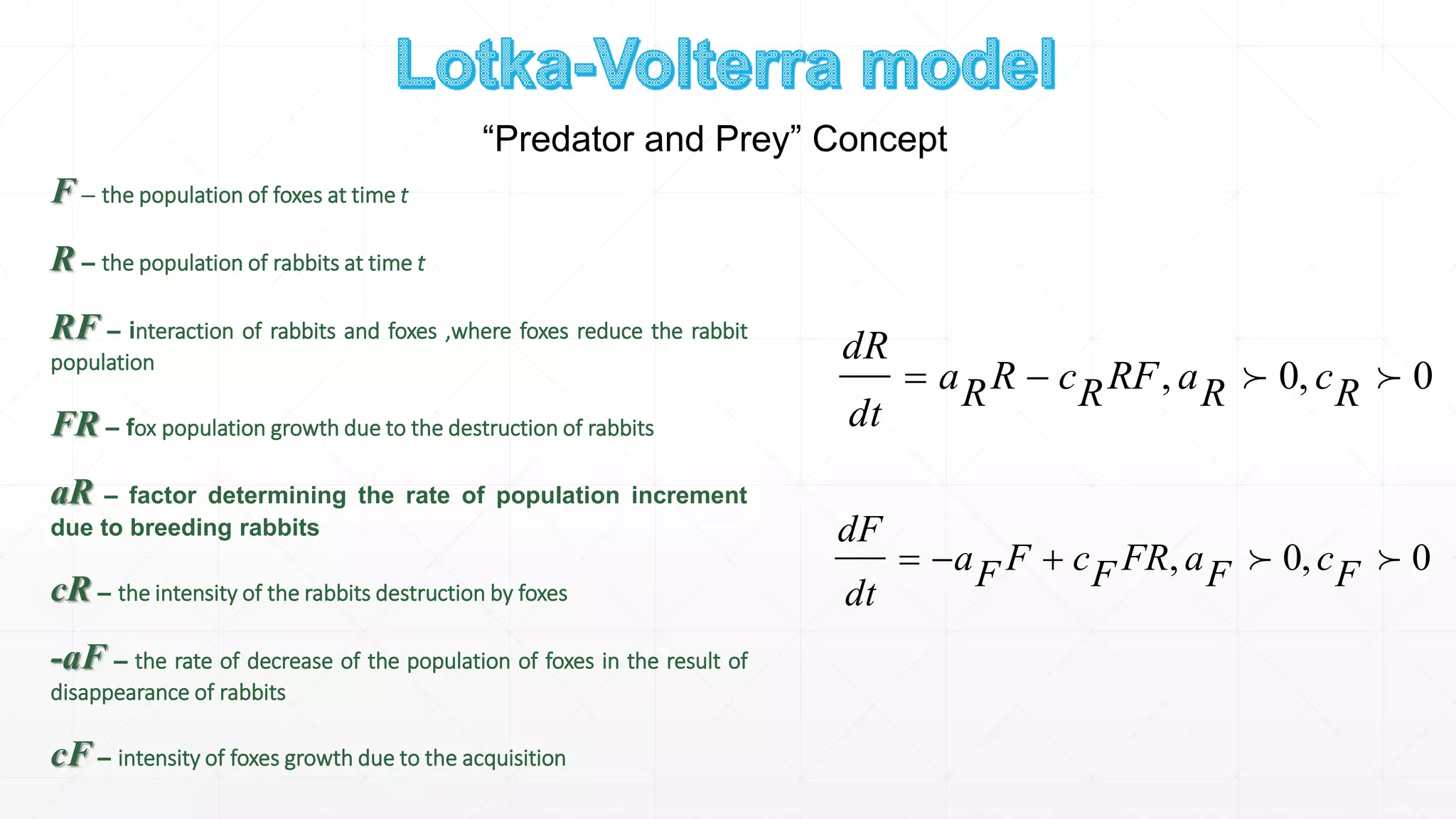
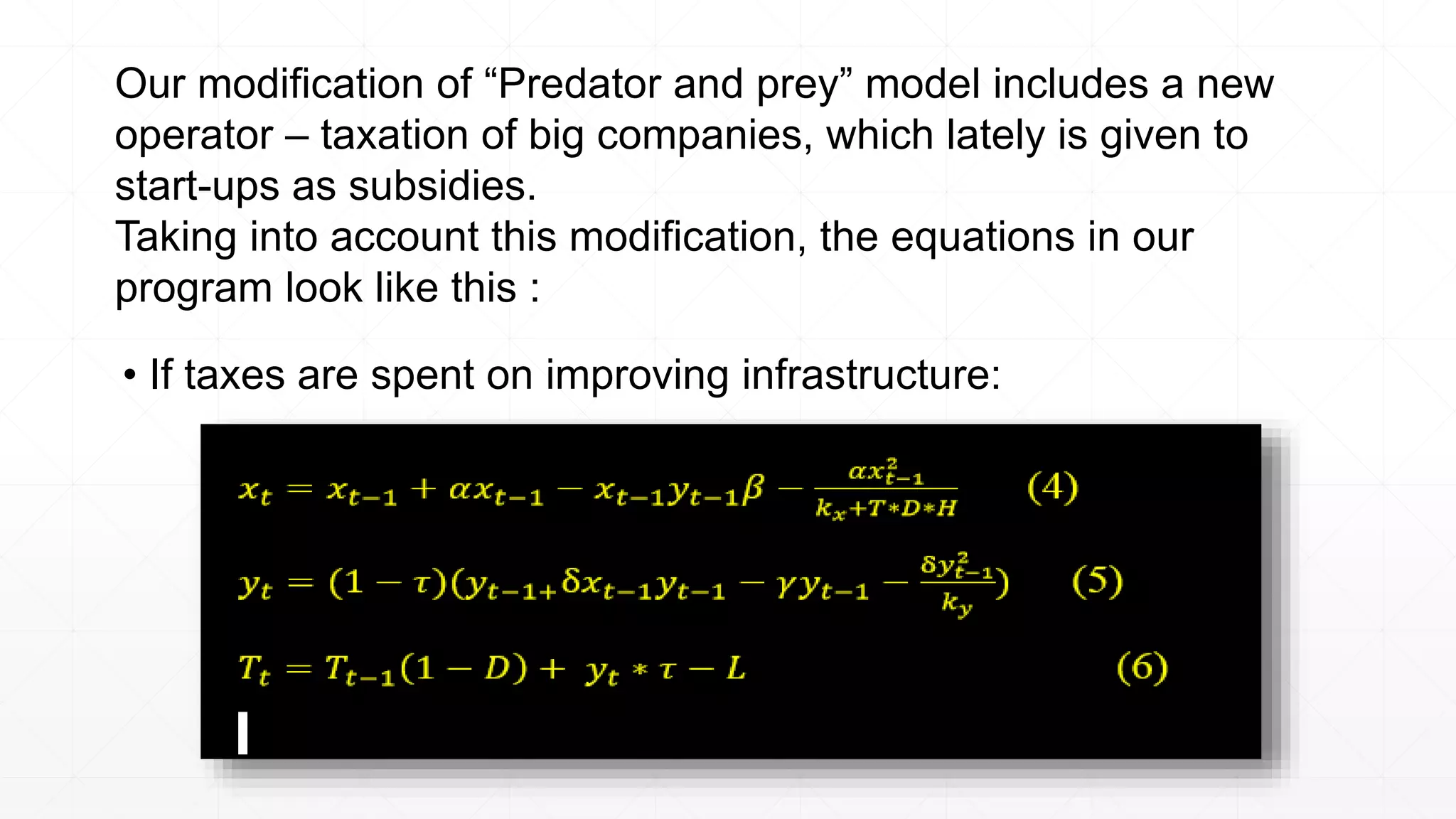
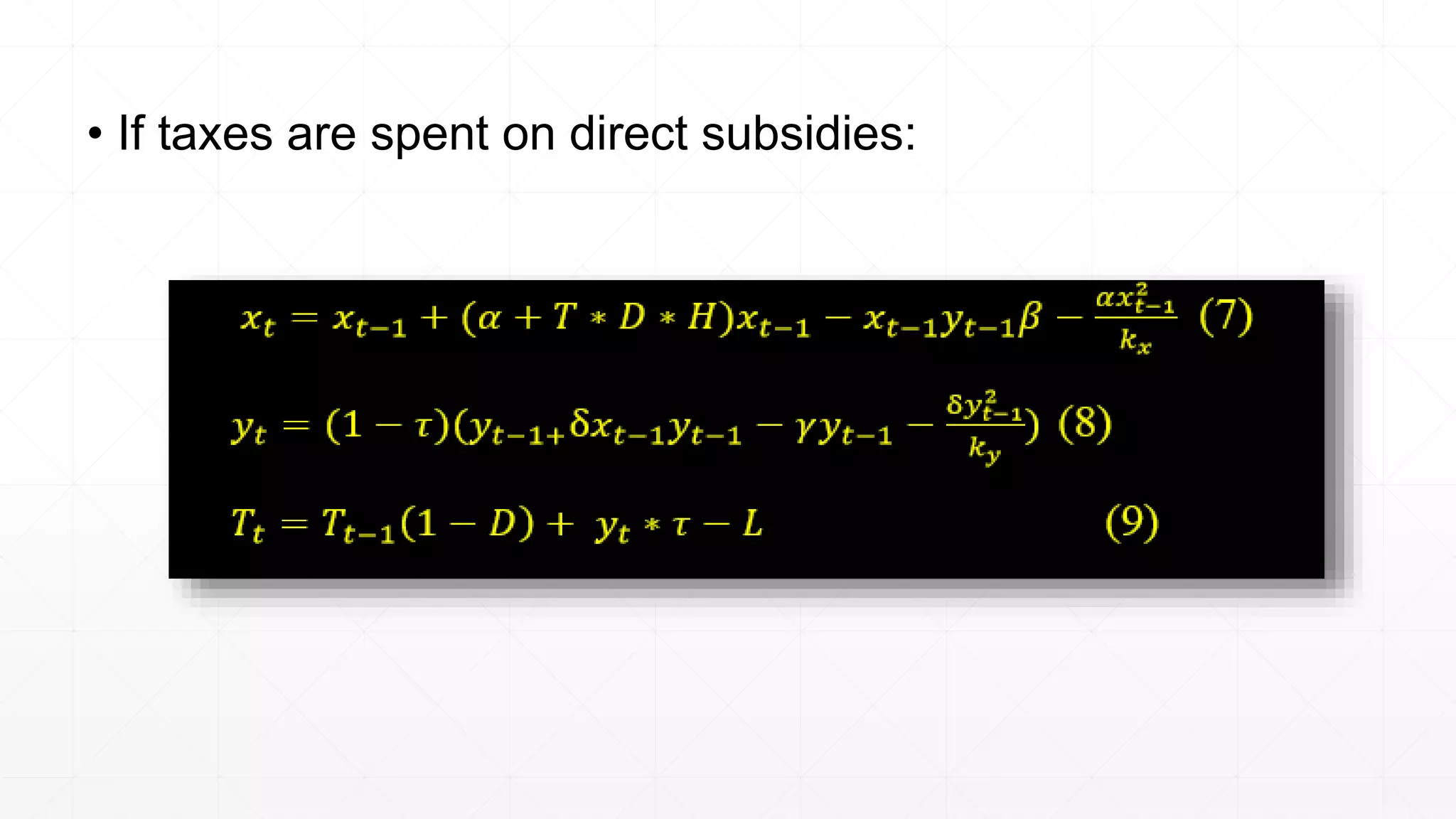
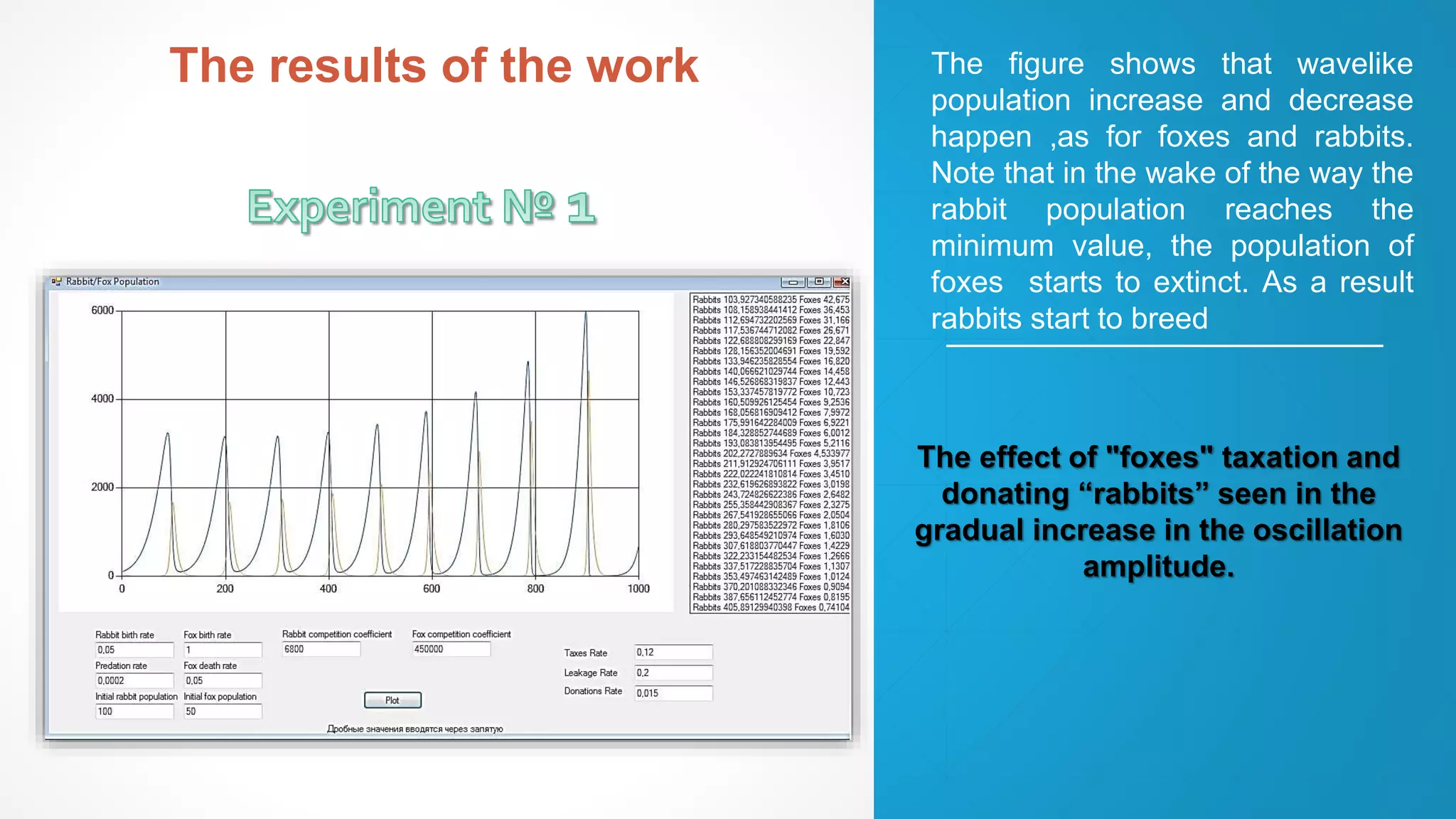
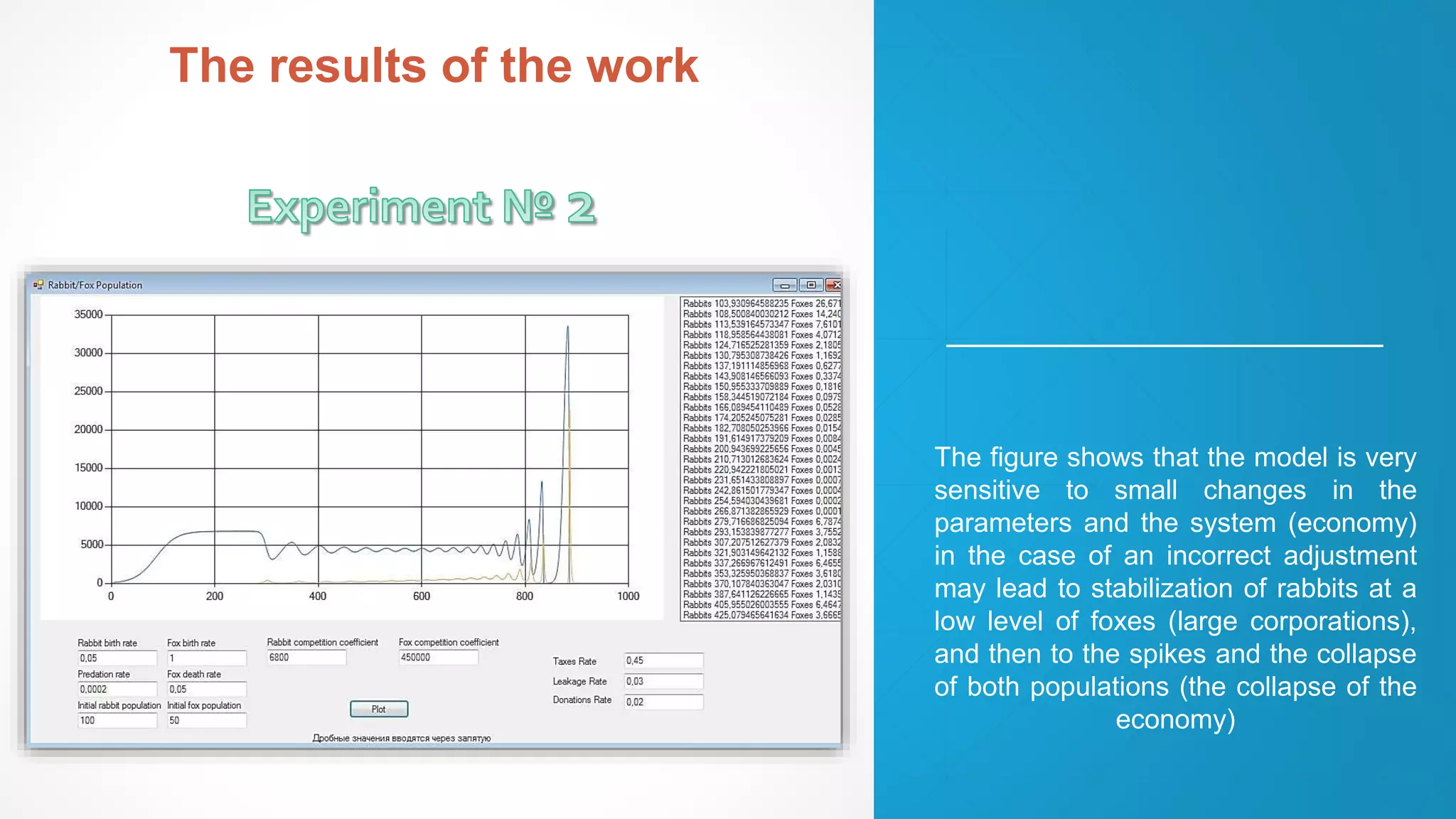
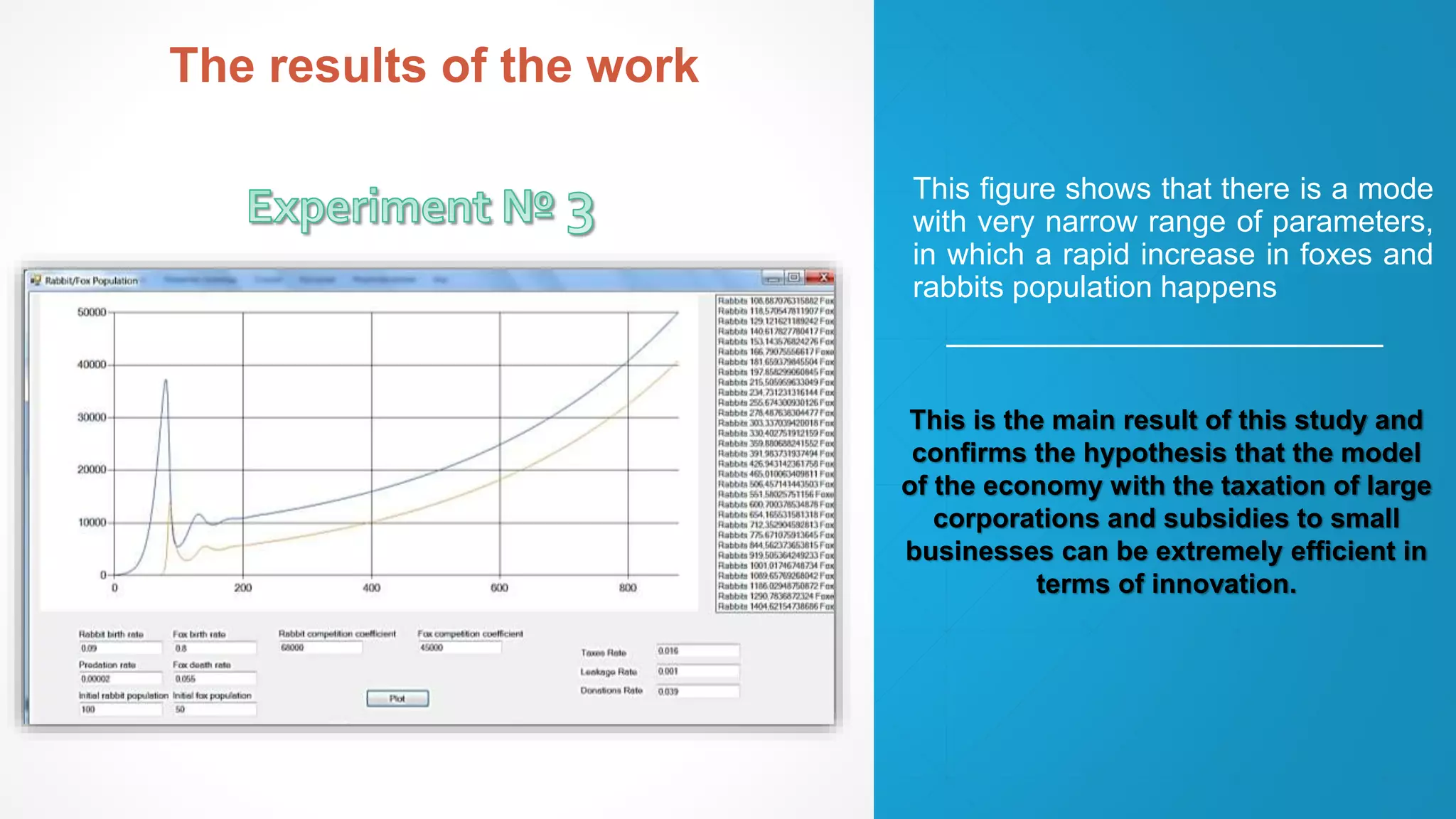
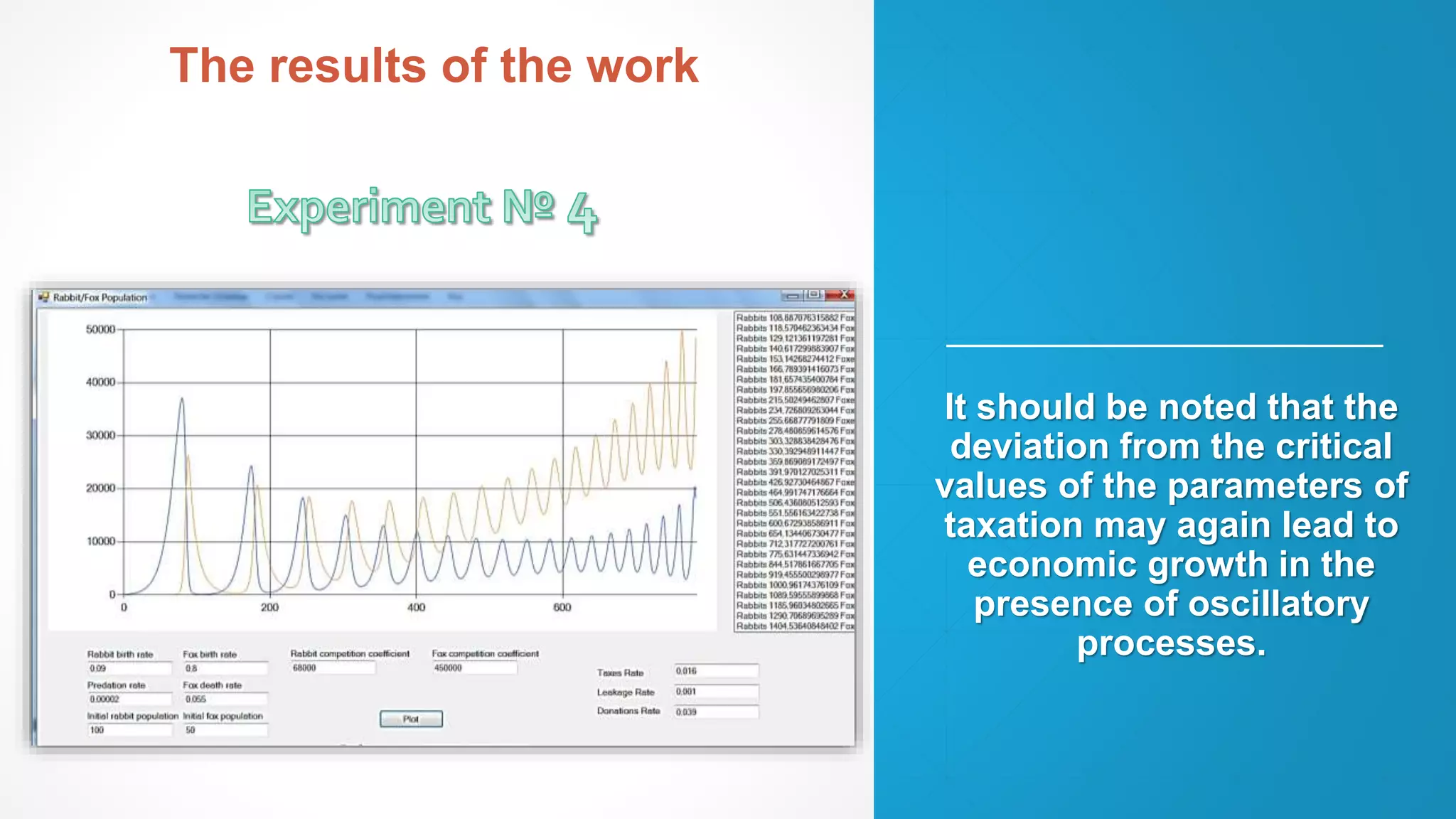
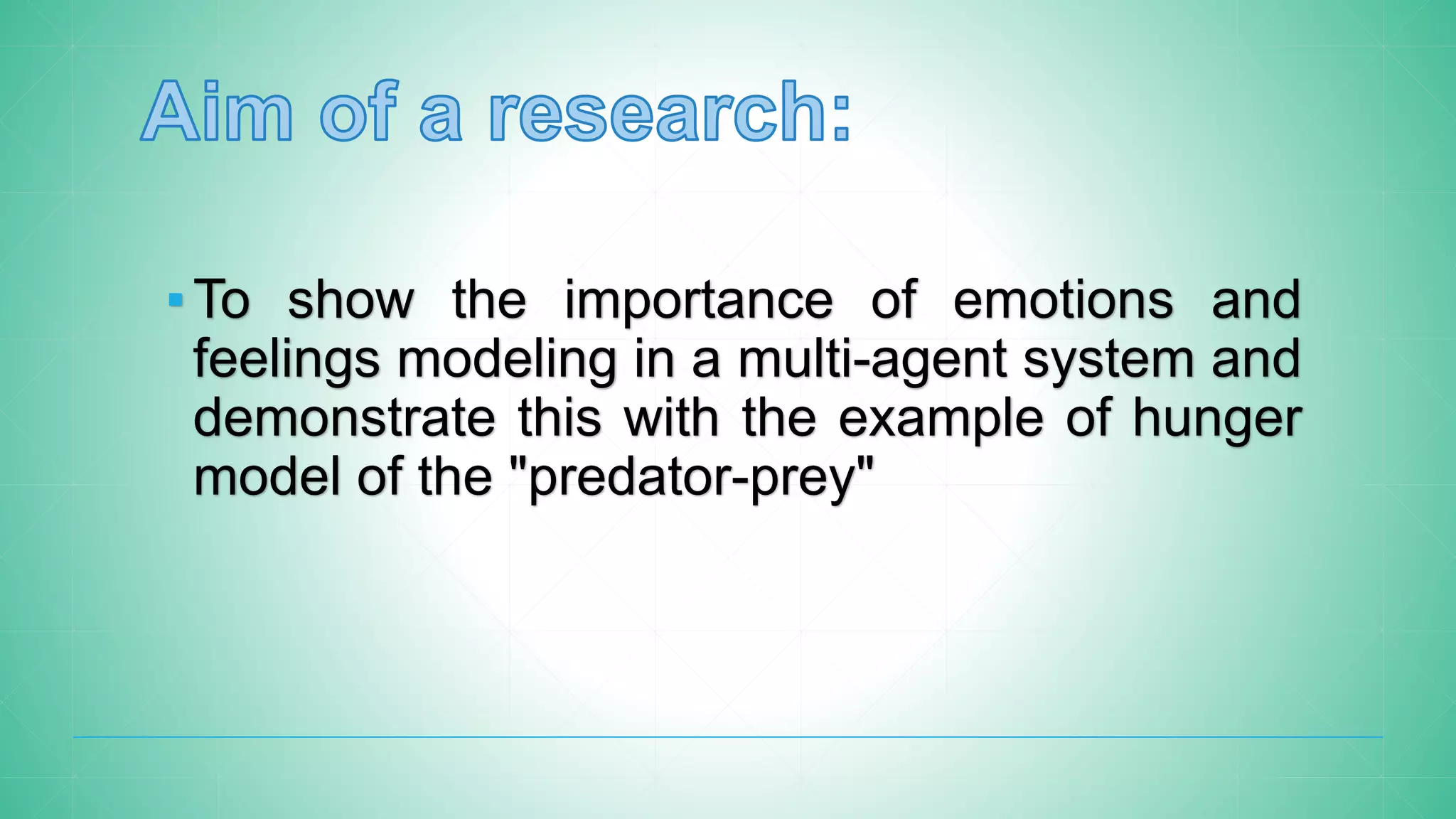
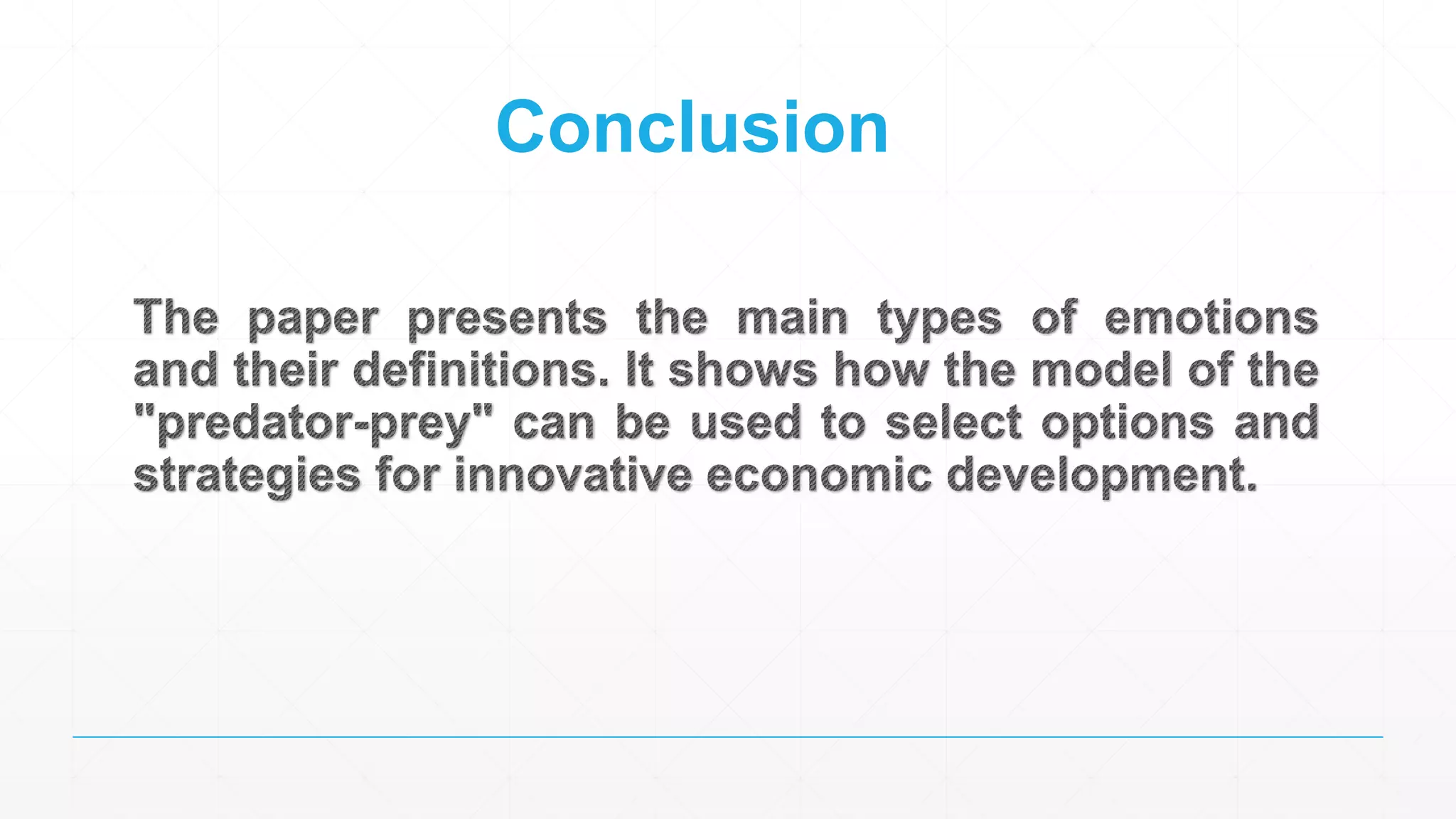
1) The document presents a simulation of innovation processes based on the "predator and prey" model. It discusses modeling emotions and feelings as important parts of social and economic models. 2) It specifically examines "hunger" as a feeling and simulates the satisfying of hunger using the predator and prey algorithm. Large companies are considered predators and startups are prey. 3) The simulation shows that taxing large companies and providing subsidies to startups can significantly increase innovation through population growth oscillations of predators and prey if parameters are within a narrow optimal range. Deviating from this range risks economic instability.
![Presentation for iccms [автосохраненный]](https://cdn.slidesharecdn.com/ss_thumbnails/presentationforiccms-150222140158-conversion-gate02-thumbnail.jpg?width=640&height=640&fit=bounds)


