 ZUNAIR ALI S2019241
 MUHAMMAD ASIM S2019241073
 NAVEED RIAZ S2019241
EPILEPSY:
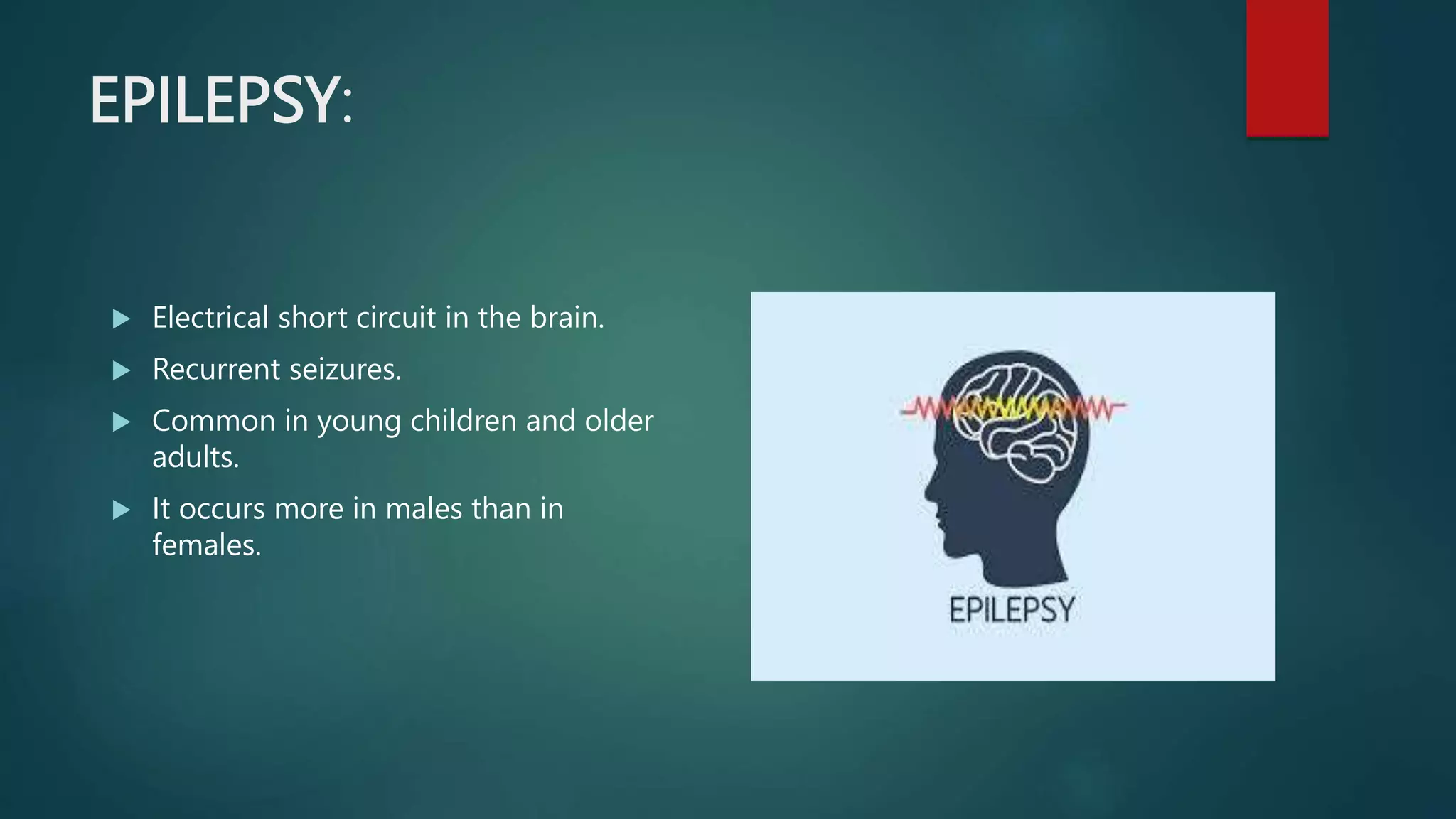
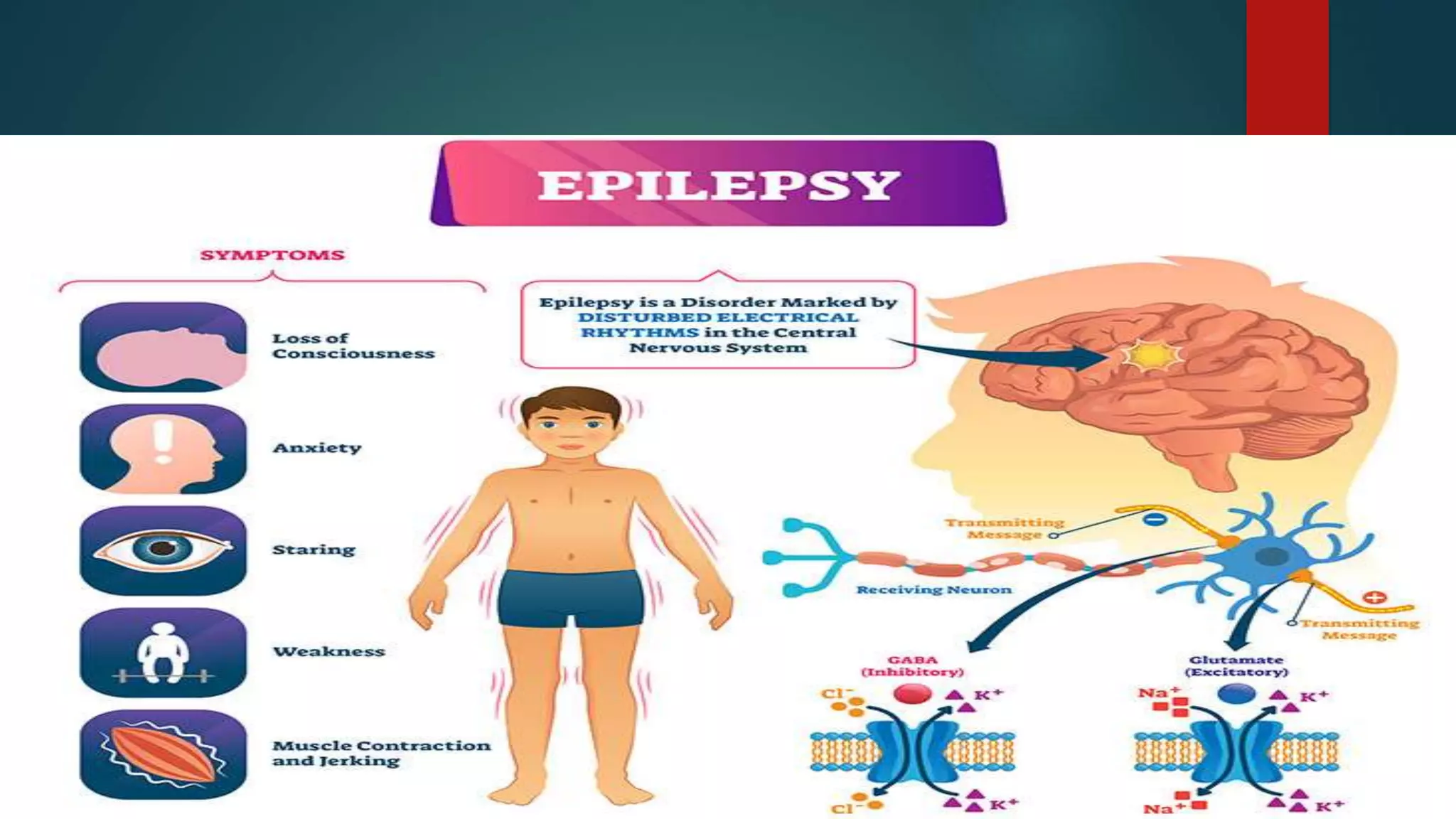
 Electrical short circuit in the brain.
 Recurrent seizures.
 Common in young children and older
adults.
 It occurs more in males than in
females.
TRIGGER FACTORS FOR SEIZURES:
 Vascular(stroke, bleed)
 Infection(meningitis)
 Trauma
 Autoimmune
 Emotional stress
 Idiopathic
 Drug or alcohol ingestion
CLASSIFICATION OF EPILEPSY:
 PARTIAL.
 PRIMARY AND SECONDARY GENERALIZED.
 ABSENCE.
 TONIC CLONIC.
 ATONIC.
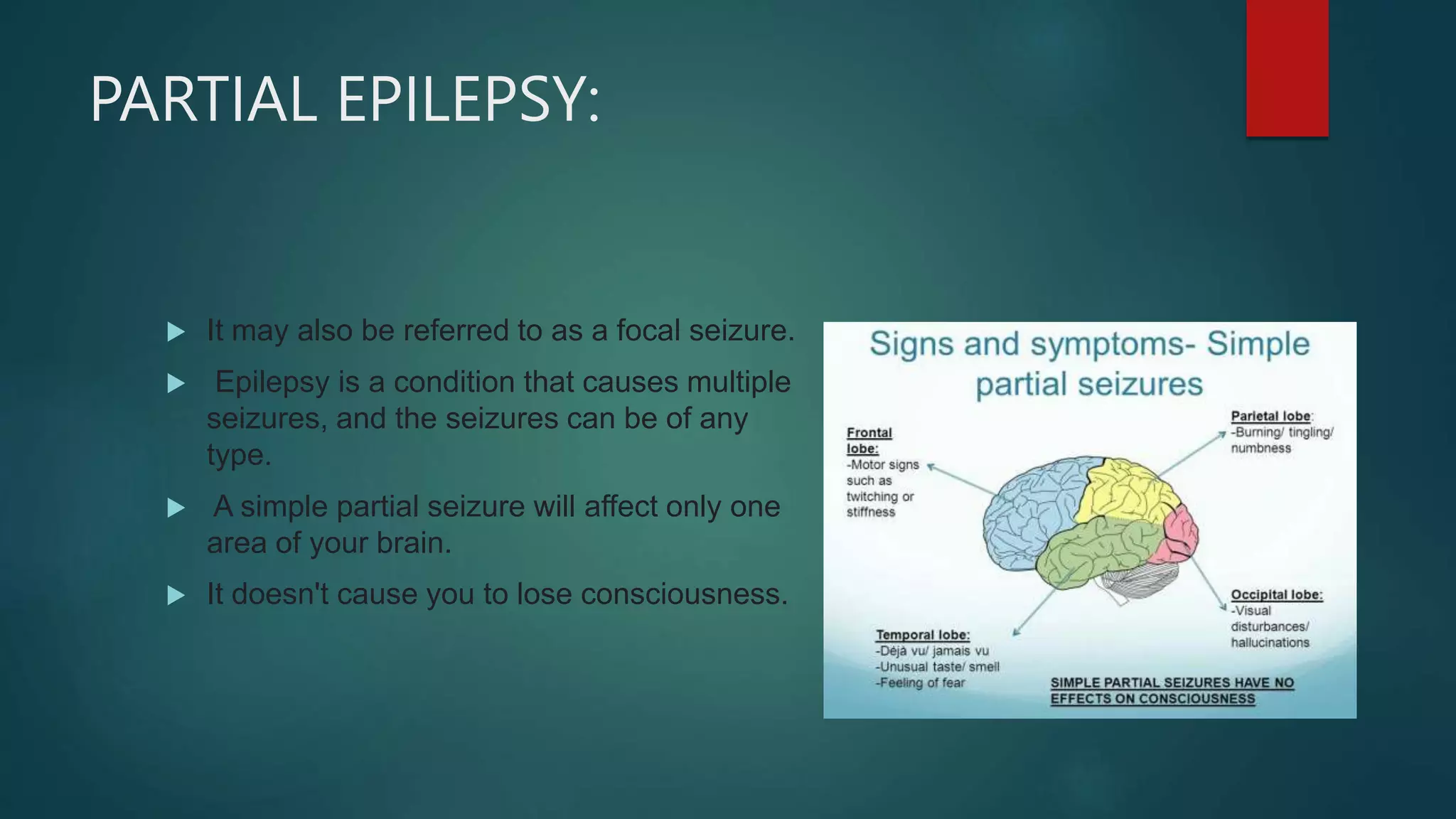
PARTIAL EPILEPSY:
 It may also be referred to as a focal seizure.
 Epilepsy is a condition that causes multiple
seizures, and the seizures can be of any
type.
 A simple partial seizure will affect only one
area of your brain.
 It doesn't cause you to lose consciousness.
BENIGN ROLANDIC EPILEPSY OF CHILDHOOD
 Seizures affect the face and sometimes the body.
 Benign Rolandic epilepsy accounts for about 15% of the cases of
epilepsy in children.
 It's called "Rolandic" because seizures originate in the Rolandic area
of the brain, the area that controls the face.
 Tingling , speaking problem and behavioural problems.
PRIMARY GENERALISED EPILEPSY
 In this both hemisphere involved.
 40% tonic clonic seizure.
 Childhood or adolescence.
CAUSES OF PRIMARY EPILEPSY:
 brain defects
 head trauma
 infectious diseases
 stroke
 brain tumours
 genetic or developmental abnormalities
SECONDARY EPILEPSY:
 Begin in one part of the brain, but then spread to both sides of the brain.
 Genetics
 Metabolic disorders
 Head injury
 Vascular disease
 Infections
 Drugs
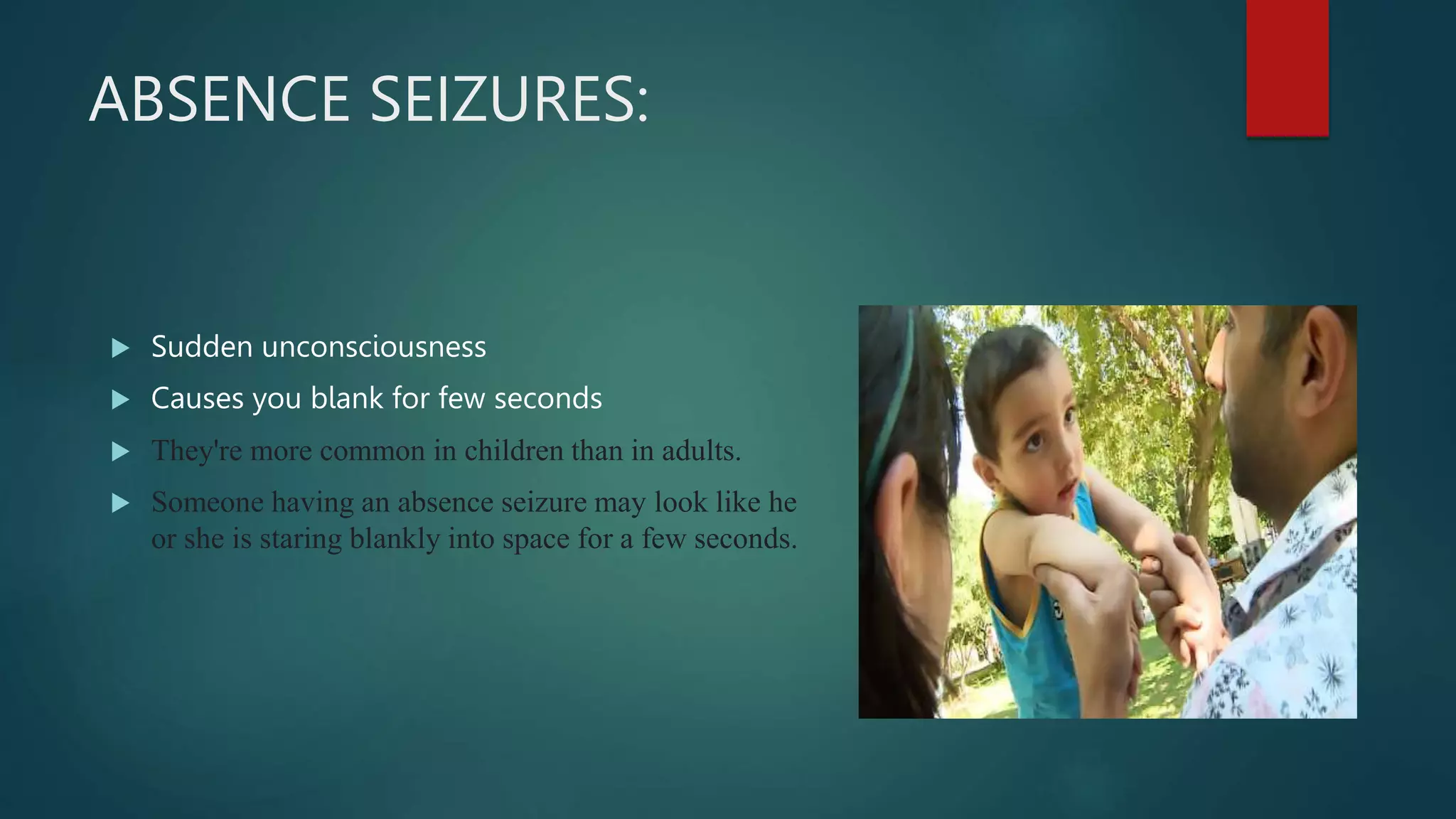
ABSENCE SEIZURES:
 Sudden unconsciousness
 Causes you blank for few seconds
 They're more common in children than in adults.
 Someone having an absence seizure may look like he
or she is staring blankly into space for a few seconds.
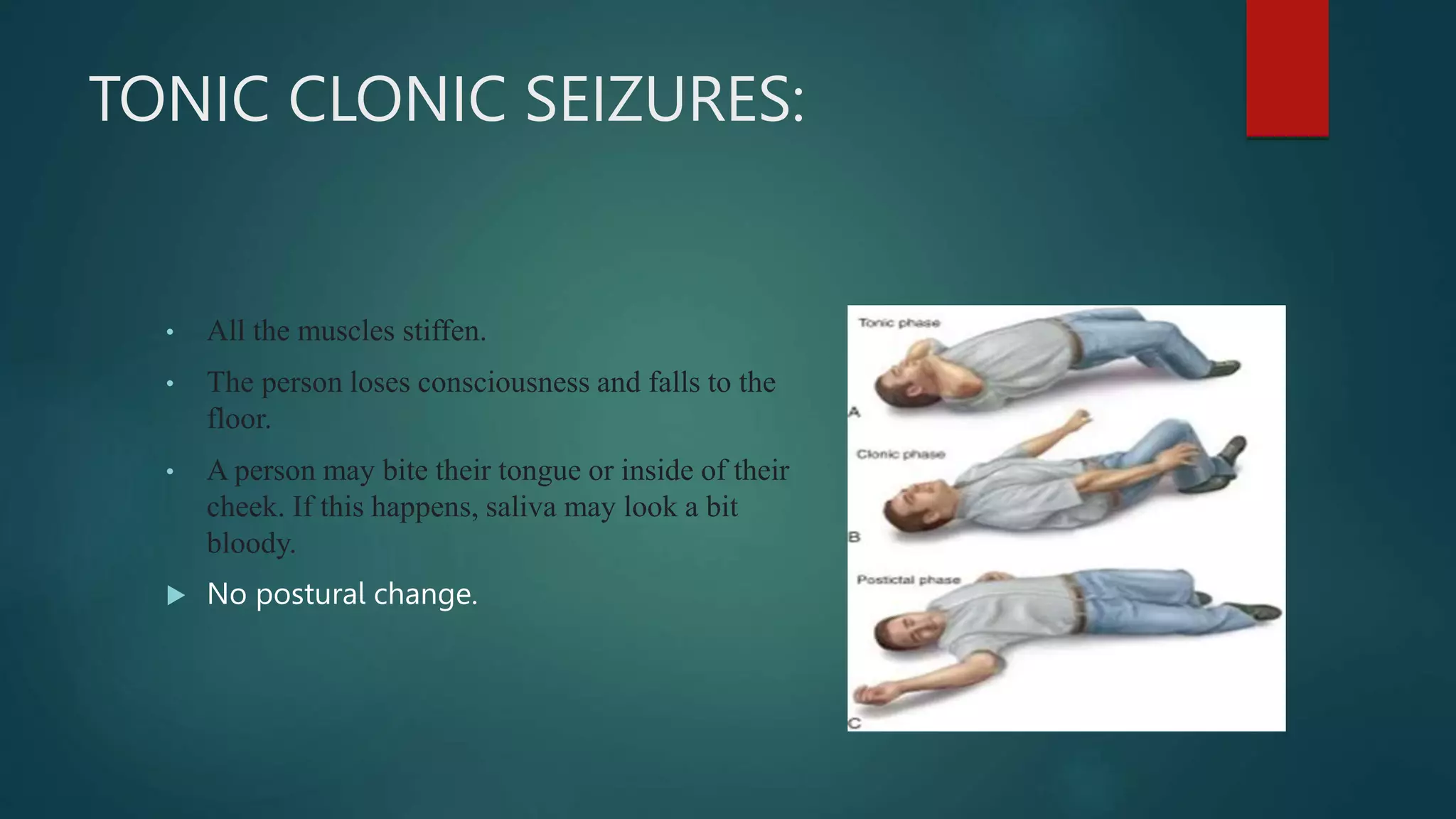
TONIC CLONIC SEIZURES:
• All the muscles stiffen.
• The person loses consciousness and falls to the
floor.
• A person may bite their tongue or inside of their
cheek. If this happens, saliva may look a bit
bloody.
 No postural change.
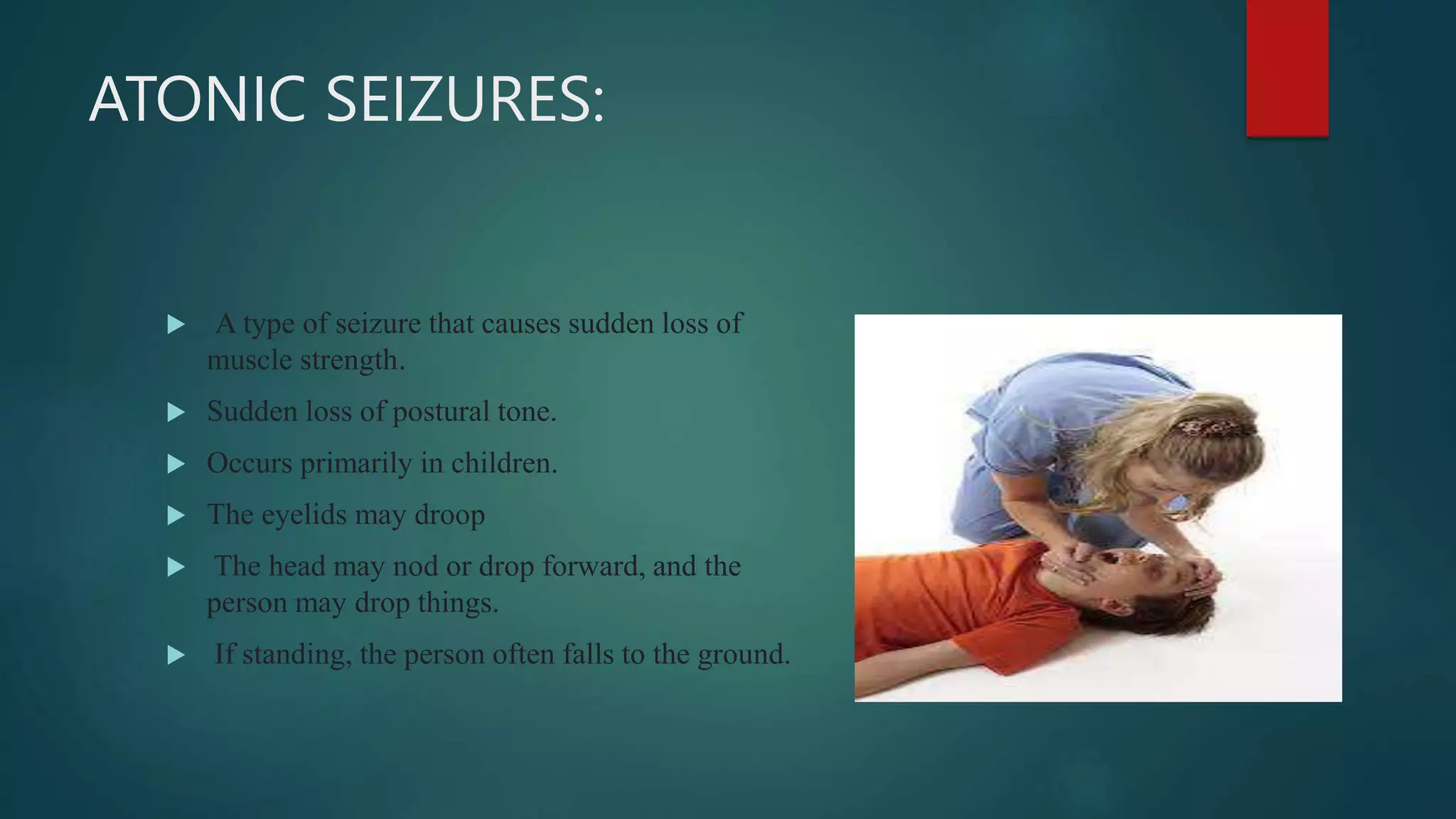
ATONIC SEIZURES:
 A type of seizure that causes sudden loss of
muscle strength.
 Sudden loss of postural tone.
 Occurs primarily in children.
 The eyelids may droop
 The head may nod or drop forward, and the
person may drop things.
 If standing, the person often falls to the ground.
MANAGEMENT OF EPILEPSY:
 Airway
 Iv
 Oxygen
 Move away from danger
 Epilepsy is usually treated with medications,
 but it may also involve surgery, nerve stimulation devices, or special diets,
 depending on your situation and whether or
 not your seizures are controlled with
 medication.
DIAGNOSIS:
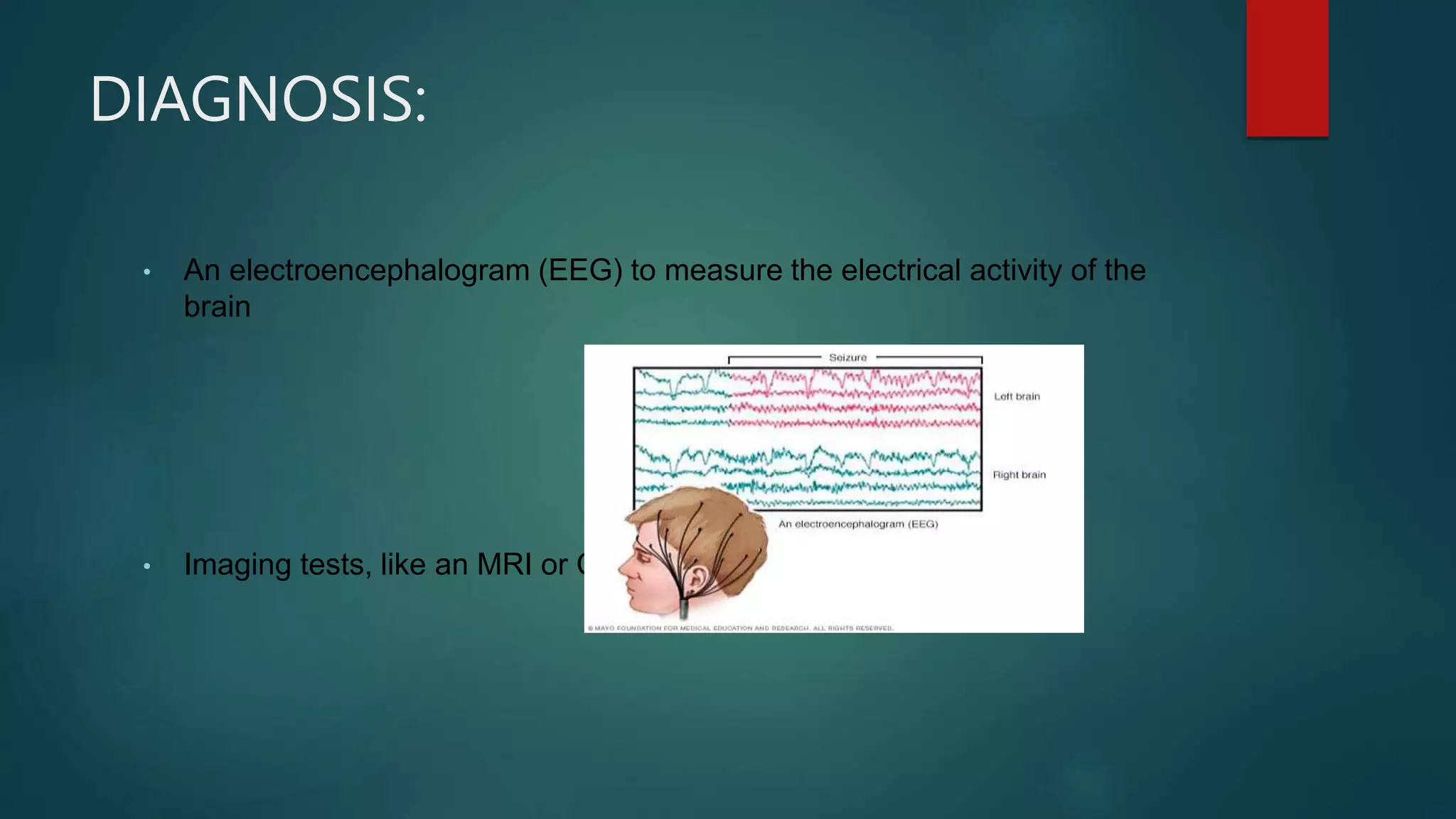
• An electroencephalogram (EEG) to measure the electrical activity of the
brain
• Imaging tests, like an MRI or CT scan, of the head.
• A neurological exam. Your doctor may test your behavior, motor abilities, mental
function and other areas to diagnose your condition and determine the type of
epilepsy you may have.
• Blood tests. Your doctor may take a blood sample to check for signs of infections,
genetic conditions or other conditions that may be associated with seizures.
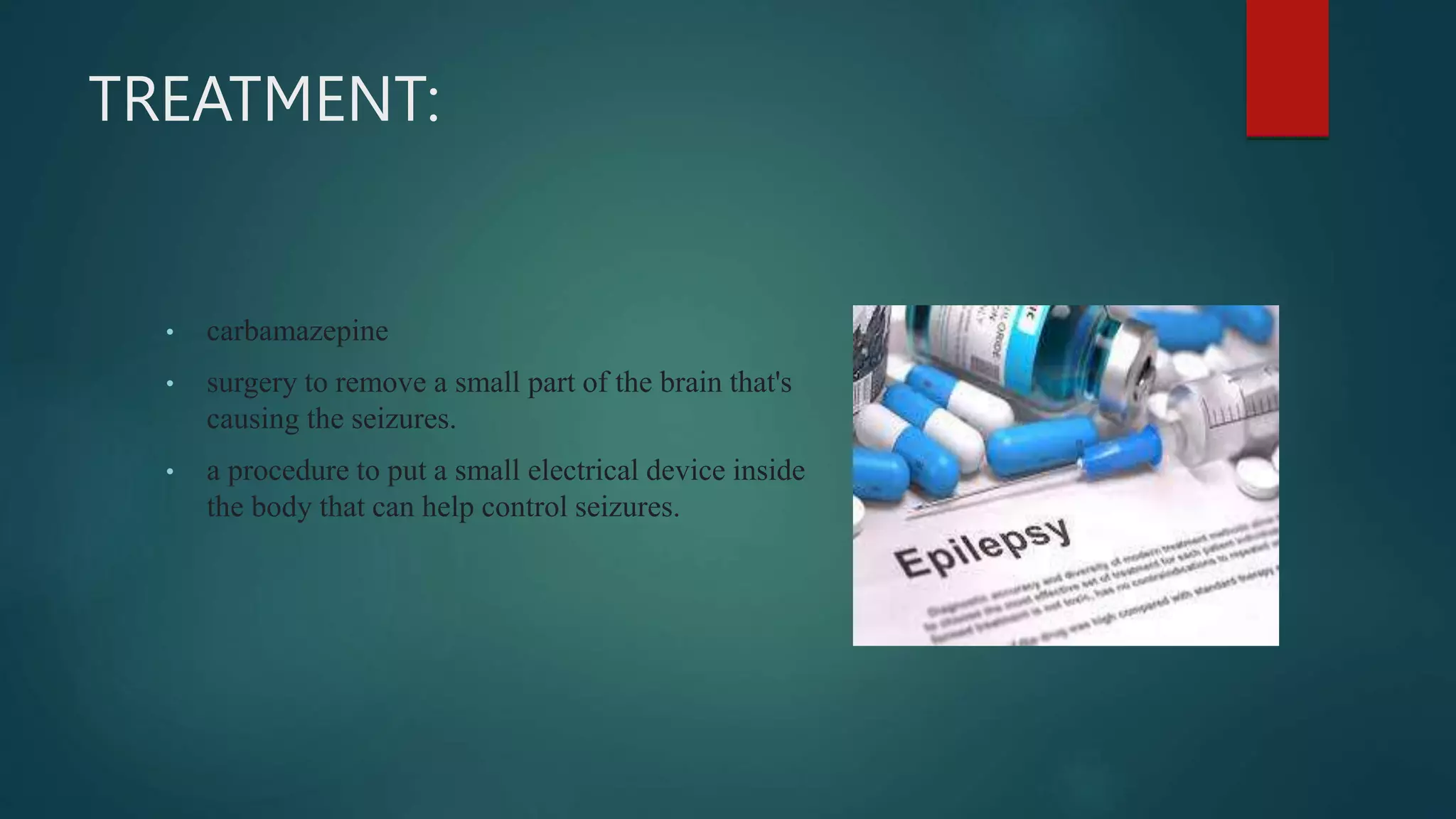
TREATMENT:
• carbamazepine
• surgery to remove a small part of the brain that's
causing the seizures.
• a procedure to put a small electrical device inside
the body that can help control seizures.
EPILEPSY SURGERY:
 For some people surgery can stop or reduce the number of
seizures they have.
 It might be considered if anti-epileptic drugs (AEDs) have not
stopped or significantly reduced the number of seizures a
person has.
 There are different kinds of epilepsy surgery.
 One kind of surgery involves removing a specific area of the
brain which is thought to be causing the seizures.
 Another kind involves separating the part of the brain that is
causing seizures from the rest of the brain.
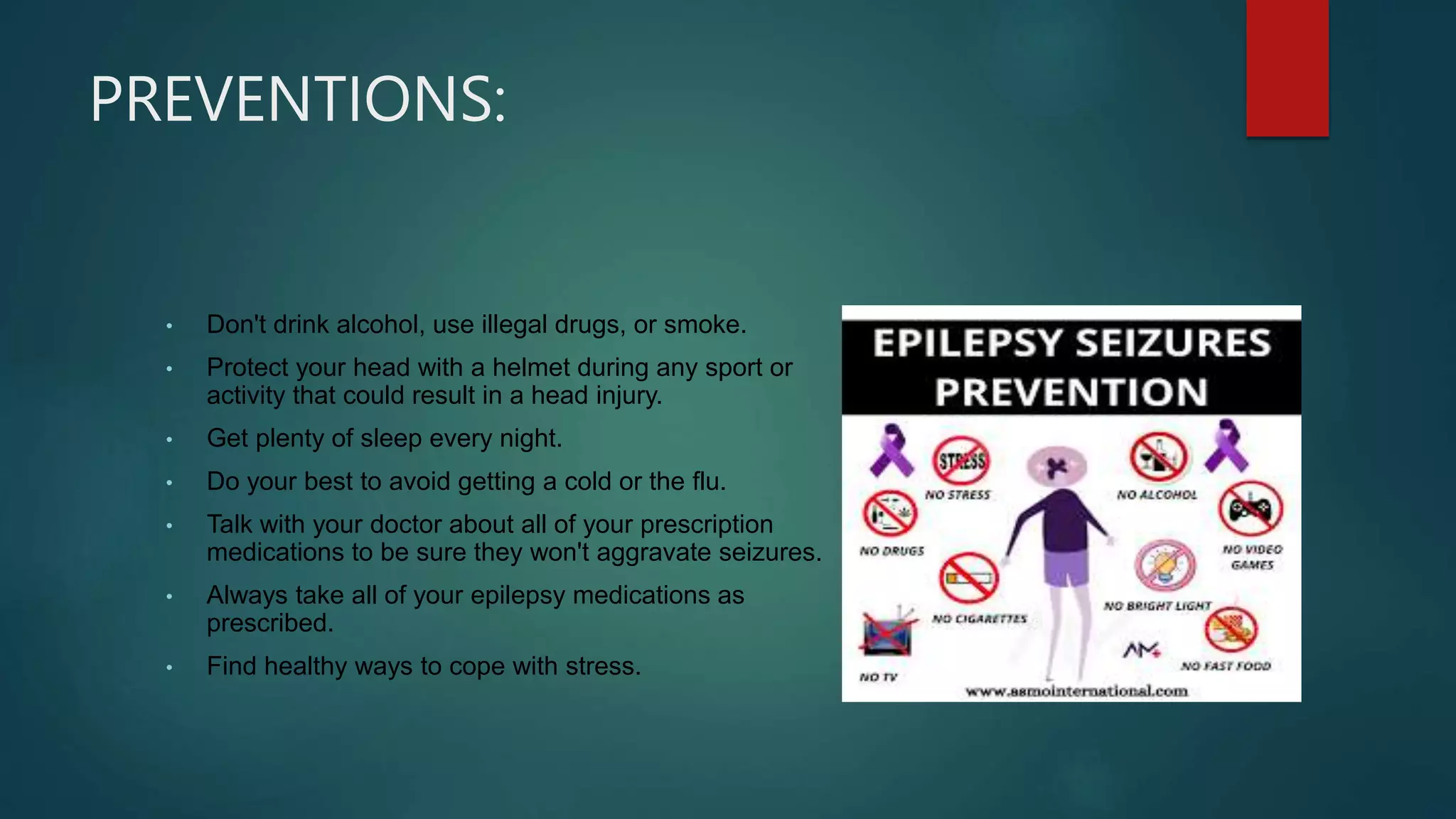
PREVENTIONS:
• Don't drink alcohol, use illegal drugs, or smoke.
• Protect your head with a helmet during any sport or
activity that could result in a head injury.
• Get plenty of sleep every night.
• Do your best to avoid getting a cold or the flu.
• Talk with your doctor about all of your prescription
medications to be sure they won't aggravate seizures.
• Always take all of your epilepsy medications as
prescribed.
• Find healthy ways to cope with stress.

PRESENTATION EPILAPY.pptx

  • 1.
     ZUNAIR ALIS2019241  MUHAMMAD ASIM S2019241073  NAVEED RIAZ S2019241
  • 2.
    EPILEPSY:  Electrical shortcircuit in the brain.  Recurrent seizures.  Common in young children and older adults.  It occurs more in males than in females.
  • 4.
    TRIGGER FACTORS FORSEIZURES:  Vascular(stroke, bleed)  Infection(meningitis)  Trauma  Autoimmune  Emotional stress  Idiopathic  Drug or alcohol ingestion
  • 5.
    CLASSIFICATION OF EPILEPSY: PARTIAL.  PRIMARY AND SECONDARY GENERALIZED.  ABSENCE.  TONIC CLONIC.  ATONIC.
  • 6.
    PARTIAL EPILEPSY:  Itmay also be referred to as a focal seizure.  Epilepsy is a condition that causes multiple seizures, and the seizures can be of any type.  A simple partial seizure will affect only one area of your brain.  It doesn't cause you to lose consciousness.
  • 7.
    BENIGN ROLANDIC EPILEPSYOF CHILDHOOD  Seizures affect the face and sometimes the body.  Benign Rolandic epilepsy accounts for about 15% of the cases of epilepsy in children.  It's called "Rolandic" because seizures originate in the Rolandic area of the brain, the area that controls the face.  Tingling , speaking problem and behavioural problems.
  • 8.
    PRIMARY GENERALISED EPILEPSY In this both hemisphere involved.  40% tonic clonic seizure.  Childhood or adolescence.
  • 9.
    CAUSES OF PRIMARYEPILEPSY:  brain defects  head trauma  infectious diseases  stroke  brain tumours  genetic or developmental abnormalities
  • 10.
    SECONDARY EPILEPSY:  Beginin one part of the brain, but then spread to both sides of the brain.  Genetics  Metabolic disorders  Head injury  Vascular disease  Infections  Drugs
  • 11.
    ABSENCE SEIZURES:  Suddenunconsciousness  Causes you blank for few seconds  They're more common in children than in adults.  Someone having an absence seizure may look like he or she is staring blankly into space for a few seconds.
  • 12.
    TONIC CLONIC SEIZURES: •All the muscles stiffen. • The person loses consciousness and falls to the floor. • A person may bite their tongue or inside of their cheek. If this happens, saliva may look a bit bloody.  No postural change.
  • 13.
    ATONIC SEIZURES:  Atype of seizure that causes sudden loss of muscle strength.  Sudden loss of postural tone.  Occurs primarily in children.  The eyelids may droop  The head may nod or drop forward, and the person may drop things.  If standing, the person often falls to the ground.
  • 14.
    MANAGEMENT OF EPILEPSY: Airway  Iv  Oxygen  Move away from danger
  • 15.
     Epilepsy isusually treated with medications,  but it may also involve surgery, nerve stimulation devices, or special diets,  depending on your situation and whether or  not your seizures are controlled with  medication.
  • 16.
    DIAGNOSIS: • An electroencephalogram(EEG) to measure the electrical activity of the brain • Imaging tests, like an MRI or CT scan, of the head.
  • 17.
    • A neurologicalexam. Your doctor may test your behavior, motor abilities, mental function and other areas to diagnose your condition and determine the type of epilepsy you may have. • Blood tests. Your doctor may take a blood sample to check for signs of infections, genetic conditions or other conditions that may be associated with seizures.
  • 18.
    TREATMENT: • carbamazepine • surgeryto remove a small part of the brain that's causing the seizures. • a procedure to put a small electrical device inside the body that can help control seizures.
  • 19.
    EPILEPSY SURGERY:  Forsome people surgery can stop or reduce the number of seizures they have.  It might be considered if anti-epileptic drugs (AEDs) have not stopped or significantly reduced the number of seizures a person has.  There are different kinds of epilepsy surgery.  One kind of surgery involves removing a specific area of the brain which is thought to be causing the seizures.  Another kind involves separating the part of the brain that is causing seizures from the rest of the brain.
  • 20.
    PREVENTIONS: • Don't drinkalcohol, use illegal drugs, or smoke. • Protect your head with a helmet during any sport or activity that could result in a head injury. • Get plenty of sleep every night. • Do your best to avoid getting a cold or the flu. • Talk with your doctor about all of your prescription medications to be sure they won't aggravate seizures. • Always take all of your epilepsy medications as prescribed. • Find healthy ways to cope with stress.