What Lenders should Know about Commitment Letters


                            © Tassos Efstratiades
                            Attorney at Law
                            tassos@obermayer.com
1
What Lenders should Know about Commitment Letters


     The three methods of starting negotiations with a potential
          borrower for a loan:

     (i)     With the term sheet;
     (ii)    with the Commitment Letter, without negotiating a term sheet
             first;
     (iii)   by going directly into creating loan documents.


2
What Lenders should Know about Commitment Letters


    Where to Start? The term sheet

        The term sheet is a document that outlines the basic business terms
        that the Bank wants to propose
        Typically it includes a paragraph or section that specifically states
        that this document is not an offer and its acceptance by the prospect
        does not create a commitment by the Bank to make the loan
        It may also state that the term sheet is subject of modification by the
        Bank at its sole discretion prior to the execution of a commitment
        letter


3
COMMITMENT LETTERS
    The next step


       The commitment letter is an agreement to provide
       financing upon satisfaction of certain conditions
       outlined in the document. A lot of those conditions
       deal with the due diligence investigation by the
       bank of the borrower, the project to be financed
       and the proposed loan terms. Some of the key
       terms to be included in the commitment letter are
       set forth in the next slide.


4
COMMITMENT LETTERS
    Basic Provisions


      Amount of Credit Facility, type of facility (term loan, line of credit
      etc.), interest rate provisions and term of the loan.
      Default rate and late charges
      Method of disbursement of loan proceeds
      Conditions to closing or initial funding
      Commitment Fee and other Bank fees
      Collateral
      Insurance Requirements
      Default Provisions and Grace Periods
      A reference that customary representations, warranties and
      covenants will be included in the Loan Documents, and all
      other provisions that Bank’s counsel may require.


5
COMMITMENT LETTERS
    Some Special Issues


    1.   Secured v. Unsecured Loan: The commitment letter must make it
         clear that the loan is either unsecured or secured. If the bank
         intends to retain a security interest in the deposit accounts of
         borrower, the loan is not unsecured, even if there is no other
         collateral involved.

    2.   Understanding the Collateral
         a. Real Estate Security
         b. Asset based collateral
         c. Pledge of accounts, stock etc.
         d. Assignments

6
COMMITMENT LETTERS
    Covenants


    a. List of Reporting Covenants
        (i) annual financial statement and interim statements
        (ii) reporting method (GAAP);
        (iiii) tax returns required and when;
        (v) certification of no default and covenant compliance
        (vi) other information pertinent to the particular borrower or loan
        (vii) any other information that the bank may reasonably require.
    b. Financial Covenants (bank specific definitions and covenants)
    c. Reference to customary affirmative covenants
    d. Reference to customary negative covenants (some may be better to
        spell out in the commitment letter, such as change in control)


7
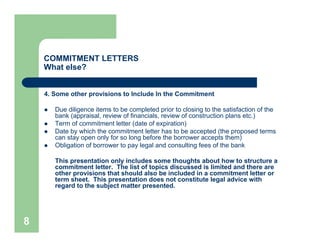
COMMITMENT LETTERS
    What else?


    4. Some other provisions to Include In the Commitment

       Due diligence items to be completed prior to closing to the satisfaction of the
       bank (appraisal, review of financials, review of construction plans etc.)
       Term of commitment letter (date of expiration)
       Date by which the commitment letter has to be accepted (the proposed terms
       can stay open only for so long before the borrower accepts them)
       Obligation of borrower to pay legal and consulting fees of the bank

       This presentation only includes some thoughts about how to structure a
       commitment letter. The list of topics discussed is limited and there are
       other provisions that should also be included in a commitment letter or
       term sheet. This presentation does not constitute legal advice with
       regard to the subject matter presented.


8

Presentation Commitment Letters

  • 1.
    What Lenders shouldKnow about Commitment Letters © Tassos Efstratiades Attorney at Law tassos@obermayer.com 1
  • 2.
    What Lenders shouldKnow about Commitment Letters The three methods of starting negotiations with a potential borrower for a loan: (i) With the term sheet; (ii) with the Commitment Letter, without negotiating a term sheet first; (iii) by going directly into creating loan documents. 2
  • 3.
    What Lenders shouldKnow about Commitment Letters Where to Start? The term sheet The term sheet is a document that outlines the basic business terms that the Bank wants to propose Typically it includes a paragraph or section that specifically states that this document is not an offer and its acceptance by the prospect does not create a commitment by the Bank to make the loan It may also state that the term sheet is subject of modification by the Bank at its sole discretion prior to the execution of a commitment letter 3
  • 4.
    COMMITMENT LETTERS The next step The commitment letter is an agreement to provide financing upon satisfaction of certain conditions outlined in the document. A lot of those conditions deal with the due diligence investigation by the bank of the borrower, the project to be financed and the proposed loan terms. Some of the key terms to be included in the commitment letter are set forth in the next slide. 4
  • 5.
    COMMITMENT LETTERS Basic Provisions Amount of Credit Facility, type of facility (term loan, line of credit etc.), interest rate provisions and term of the loan. Default rate and late charges Method of disbursement of loan proceeds Conditions to closing or initial funding Commitment Fee and other Bank fees Collateral Insurance Requirements Default Provisions and Grace Periods A reference that customary representations, warranties and covenants will be included in the Loan Documents, and all other provisions that Bank’s counsel may require. 5
  • 6.
    COMMITMENT LETTERS Some Special Issues 1. Secured v. Unsecured Loan: The commitment letter must make it clear that the loan is either unsecured or secured. If the bank intends to retain a security interest in the deposit accounts of borrower, the loan is not unsecured, even if there is no other collateral involved. 2. Understanding the Collateral a. Real Estate Security b. Asset based collateral c. Pledge of accounts, stock etc. d. Assignments 6
  • 7.
    COMMITMENT LETTERS Covenants a. List of Reporting Covenants (i) annual financial statement and interim statements (ii) reporting method (GAAP); (iiii) tax returns required and when; (v) certification of no default and covenant compliance (vi) other information pertinent to the particular borrower or loan (vii) any other information that the bank may reasonably require. b. Financial Covenants (bank specific definitions and covenants) c. Reference to customary affirmative covenants d. Reference to customary negative covenants (some may be better to spell out in the commitment letter, such as change in control) 7
  • 8.
    COMMITMENT LETTERS What else? 4. Some other provisions to Include In the Commitment Due diligence items to be completed prior to closing to the satisfaction of the bank (appraisal, review of financials, review of construction plans etc.) Term of commitment letter (date of expiration) Date by which the commitment letter has to be accepted (the proposed terms can stay open only for so long before the borrower accepts them) Obligation of borrower to pay legal and consulting fees of the bank This presentation only includes some thoughts about how to structure a commitment letter. The list of topics discussed is limited and there are other provisions that should also be included in a commitment letter or term sheet. This presentation does not constitute legal advice with regard to the subject matter presented. 8