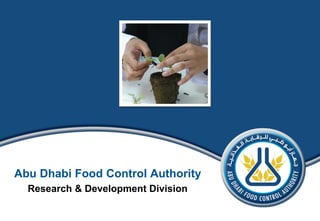
Abu Dhabi Food Control Authority
Research & Development Division
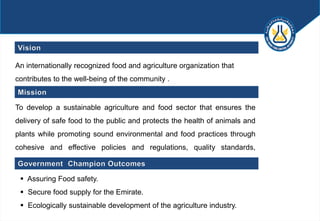
An internationally recognized food and agriculture organization that
contributes to the well-being of the community .
To develop a sustainable agriculture and food sector that ensures the
delivery of safe food to the public and protects the health of animals and
plants while promoting sound environmental and food practices through
cohesive and effective policies and regulations, quality standards,
research and awareness.
 Assuring Food safety.
 Secure food supply for the Emirate.
 Ecologically sustainable development of the agriculture industry.
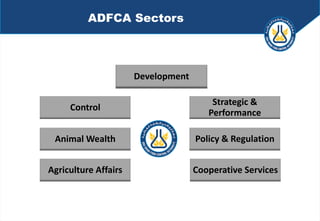
Animal Wealth
Agriculture Affairs
Policy & Regulation
Strategic &
Performance
Development
Cooperative Services
Control
ADFCA Sectors
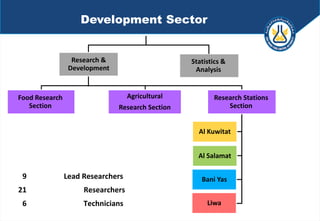
Development Sector
Food Research
Section
Al Kuwitat
Statistics &
Analysis
Al Salamat
Bani Yas
Agricultural
Research Section
Research &
Development
Research Stations
Section
Liwa
9 Lead Researchers
21 Researchers
6 Technicians
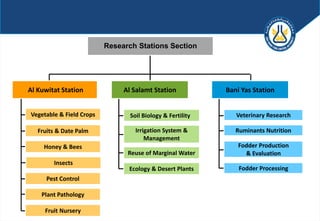
Research Stations Section
Vegetable & Field Crops
Fruits & Date Palm
Honey & Bees
Insects
Al Kuwitat Station
Pest Control
Plant Pathology
Fruit Nursery
Bani Yas Station
Veterinary Research
Ruminants Nutrition
Fodder Production
& Evaluation
Fodder Processing
Soil Biology & Fertility
Irrigation System &
Management
Reuse of Marginal Water
Ecology & Desert Plants
Al Salamt Station
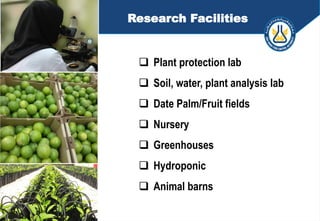
Research Facilities
 Plant protection lab
 Soil, water, plant analysis lab
 Date Palm/Fruit fields
 Nursery
 Greenhouses
 Hydroponic
 Animal barns
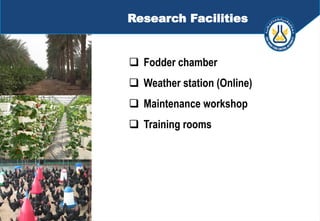
 Fodder chamber
 Weather station (Online)
 Maintenance workshop
 Training rooms
Research Facilities
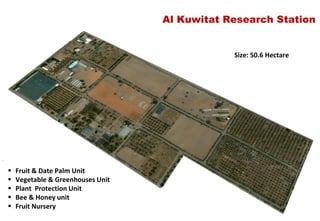
Al Kuwitat Research Station
 Fruit & Date Palm Unit
 Vegetable & Greenhouses Unit
 Plant Protection Unit
 Bee & Honey unit
 Fruit Nursery
Size: 50.6 Hectare
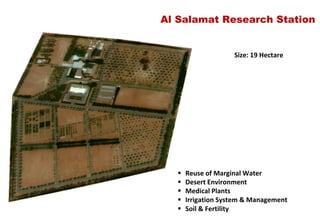
Al Salamat Research Station
 Reuse of Marginal Water
 Desert Environment
 Medical Plants
 Irrigation System & Management
 Soil & Fertility
Size: 19 Hectare
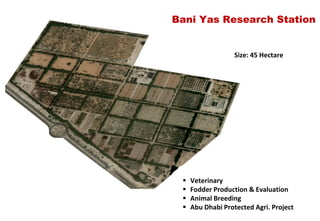
Bani Yas Research Station
 Veterinary
 Fodder Production & Evaluation
 Animal Breeding
 Abu Dhabi Protected Agri. Project
Size: 45 Hectare
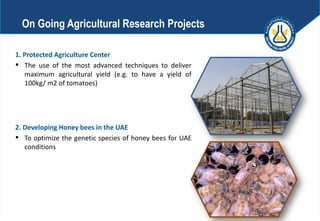
1. Protected Agriculture Center
 The use of the most advanced techniques to deliver
maximum agricultural yield (e.g. to have a yield of
100kg/ m2 of tomatoes)
2. Developing Honey bees in the UAE
 To optimize the genetic species of honey bees for UAE
conditions
On Going Agricultural Research Projects
3. Use of Treated Water in Agriculture
 To investigate the environmental impact of using treated water and to formulate
policies based on results
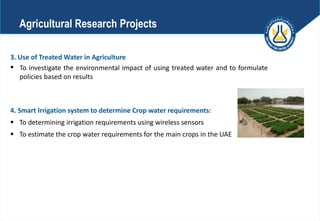
4. Smart Irrigation system to determine Crop water requirements:
 To determining irrigation requirements using wireless sensors
 To estimate the crop water requirements for the main crops in the UAE
Agricultural Research Projects
Food Consumption Survey Initiative:
Food consumption survey to assess the dietary intake of Emiratis using a
24hr recall and food propensity questionnaire.
Objective:
 To provide a basis for the assessment of risks associated with
food-borne chemical hazards.
 To facilitate the design and implementation of a total diet study
 To use exposure assessment to underpin the development of
evidence based food safety and national nutrition policy
 To gain a greater understanding of the nutritional intake of the
Abu Dhabi population for use in the development of food
security policies.
Food Research Projects
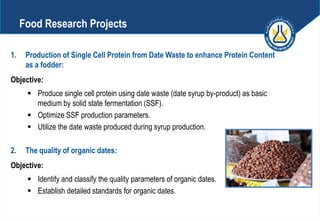
1. Production of Single Cell Protein from Date Waste to enhance Protein Content
as a fodder:
Objective:
 Produce single cell protein using date waste (date syrup by-product) as basic
medium by solid state fermentation (SSF).
 Optimize SSF production parameters.
 Utilize the date waste produced during syrup production.
2. The quality of organic dates:
Objective:
 Identify and classify the quality parameters of organic dates.
 Establish detailed standards for organic dates.
Food Research Projects
3. Validity of yoghurt shelf life
Objective:
 Identify the proper shelf life of plain and fruit flavor yoghurt
 Ensure the food safety and quality through prolong storage period
of (30) days
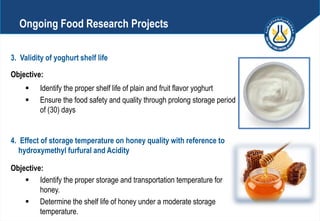
4. Effect of storage temperature on honey quality with reference to
hydroxymethyl furfural and Acidity
Objective:
 Identify the proper storage and transportation temperature for
honey.
 Determine the shelf life of honey under a moderate storage
temperature.
Ongoing Food Research Projects
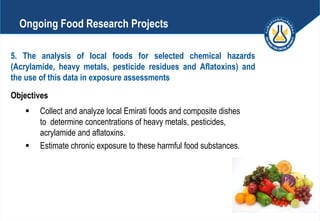
5. The analysis of local foods for selected chemical hazards
(Acrylamide, heavy metals, pesticide residues and Aflatoxins) and
the use of this data in exposure assessments
Objectives
 Collect and analyze local Emirati foods and composite dishes
to determine concentrations of heavy metals, pesticides,
acrylamide and aflatoxins.
 Estimate chronic exposure to these harmful food substances.
Ongoing Food Research Projects
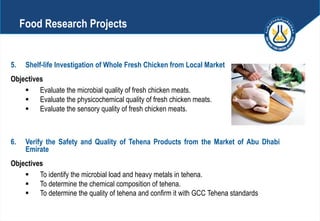
5. Shelf-life Investigation of Whole Fresh Chicken from Local Market
Objectives
 Evaluate the microbial quality of fresh chicken meats.
 Evaluate the physicochemical quality of fresh chicken meats.
 Evaluate the sensory quality of fresh chicken meats.
6. Verify the Safety and Quality of Tehena Products from the Market of Abu Dhabi
Emirate
Objectives
 To identify the microbial load and heavy metals in tehena.
 To determine the chemical composition of tehena.
 To determine the quality of tehena and confirm it with GCC Tehena standards
Food Research Projects
Presentation abu dhabi food control authority

Presentation abu dhabi food control authority

  • 1.
    Abu Dhabi FoodControl Authority Research & Development Division
  • 2.
    An internationally recognizedfood and agriculture organization that contributes to the well-being of the community . To develop a sustainable agriculture and food sector that ensures the delivery of safe food to the public and protects the health of animals and plants while promoting sound environmental and food practices through cohesive and effective policies and regulations, quality standards, research and awareness.  Assuring Food safety.  Secure food supply for the Emirate.  Ecologically sustainable development of the agriculture industry.
  • 3.
    Animal Wealth Agriculture Affairs Policy& Regulation Strategic & Performance Development Cooperative Services Control ADFCA Sectors
  • 4.
    Development Sector Food Research Section AlKuwitat Statistics & Analysis Al Salamat Bani Yas Agricultural Research Section Research & Development Research Stations Section Liwa 9 Lead Researchers 21 Researchers 6 Technicians
  • 5.
    Research Stations Section Vegetable& Field Crops Fruits & Date Palm Honey & Bees Insects Al Kuwitat Station Pest Control Plant Pathology Fruit Nursery Bani Yas Station Veterinary Research Ruminants Nutrition Fodder Production & Evaluation Fodder Processing Soil Biology & Fertility Irrigation System & Management Reuse of Marginal Water Ecology & Desert Plants Al Salamt Station
  • 6.
    Research Facilities  Plantprotection lab  Soil, water, plant analysis lab  Date Palm/Fruit fields  Nursery  Greenhouses  Hydroponic  Animal barns
  • 7.
     Fodder chamber Weather station (Online)  Maintenance workshop  Training rooms Research Facilities
  • 8.
    Al Kuwitat ResearchStation  Fruit & Date Palm Unit  Vegetable & Greenhouses Unit  Plant Protection Unit  Bee & Honey unit  Fruit Nursery Size: 50.6 Hectare
  • 9.
    Al Salamat ResearchStation  Reuse of Marginal Water  Desert Environment  Medical Plants  Irrigation System & Management  Soil & Fertility Size: 19 Hectare
  • 10.
    Bani Yas ResearchStation  Veterinary  Fodder Production & Evaluation  Animal Breeding  Abu Dhabi Protected Agri. Project Size: 45 Hectare
  • 12.
    1. Protected AgricultureCenter  The use of the most advanced techniques to deliver maximum agricultural yield (e.g. to have a yield of 100kg/ m2 of tomatoes) 2. Developing Honey bees in the UAE  To optimize the genetic species of honey bees for UAE conditions On Going Agricultural Research Projects
  • 13.
    3. Use ofTreated Water in Agriculture  To investigate the environmental impact of using treated water and to formulate policies based on results 4. Smart Irrigation system to determine Crop water requirements:  To determining irrigation requirements using wireless sensors  To estimate the crop water requirements for the main crops in the UAE Agricultural Research Projects
  • 14.
    Food Consumption SurveyInitiative: Food consumption survey to assess the dietary intake of Emiratis using a 24hr recall and food propensity questionnaire. Objective:  To provide a basis for the assessment of risks associated with food-borne chemical hazards.  To facilitate the design and implementation of a total diet study  To use exposure assessment to underpin the development of evidence based food safety and national nutrition policy  To gain a greater understanding of the nutritional intake of the Abu Dhabi population for use in the development of food security policies. Food Research Projects
  • 15.
    1. Production ofSingle Cell Protein from Date Waste to enhance Protein Content as a fodder: Objective:  Produce single cell protein using date waste (date syrup by-product) as basic medium by solid state fermentation (SSF).  Optimize SSF production parameters.  Utilize the date waste produced during syrup production. 2. The quality of organic dates: Objective:  Identify and classify the quality parameters of organic dates.  Establish detailed standards for organic dates. Food Research Projects
  • 16.
    3. Validity ofyoghurt shelf life Objective:  Identify the proper shelf life of plain and fruit flavor yoghurt  Ensure the food safety and quality through prolong storage period of (30) days 4. Effect of storage temperature on honey quality with reference to hydroxymethyl furfural and Acidity Objective:  Identify the proper storage and transportation temperature for honey.  Determine the shelf life of honey under a moderate storage temperature. Ongoing Food Research Projects
  • 17.
    5. The analysisof local foods for selected chemical hazards (Acrylamide, heavy metals, pesticide residues and Aflatoxins) and the use of this data in exposure assessments Objectives  Collect and analyze local Emirati foods and composite dishes to determine concentrations of heavy metals, pesticides, acrylamide and aflatoxins.  Estimate chronic exposure to these harmful food substances. Ongoing Food Research Projects
  • 18.
    5. Shelf-life Investigationof Whole Fresh Chicken from Local Market Objectives  Evaluate the microbial quality of fresh chicken meats.  Evaluate the physicochemical quality of fresh chicken meats.  Evaluate the sensory quality of fresh chicken meats. 6. Verify the Safety and Quality of Tehena Products from the Market of Abu Dhabi Emirate Objectives  To identify the microbial load and heavy metals in tehena.  To determine the chemical composition of tehena.  To determine the quality of tehena and confirm it with GCC Tehena standards Food Research Projects