MIDI Analog Synth
ECE Capstone Project
Evan Livingstone
Vincent Fusco
Gabriel Belmonte
Anas Ambri
October 2013

1
Introductions
• Vincent Fusco
• Experienced in electrical design
• Musician
• Evan Livingstone
• Experienced in both electrical design and software
development
• Part of many electrical design competition teams
• Gabriel Belmonte
• Experienced in software development
• Responsible of digital side of the project
• Anas Ambri
• Team Leader
• Responsible of documentation, website development

2
Motivation
• Children and young adults not interested in STEM
fields
• STEM: Science, Technology, Engineering and mathematics
• US ranked 52nd in quality of maths and science education
• More foreign students in engineering grad school than
domestic students (2/3 in US, 51% in Canada) [1][2]

• This is a problem because:
• Science engineering graduates have higher “general
intellectual ability” than non-science graduates [3]
• Feynman's early involvement with radios
• Especially true in an era of integrated circuits
3
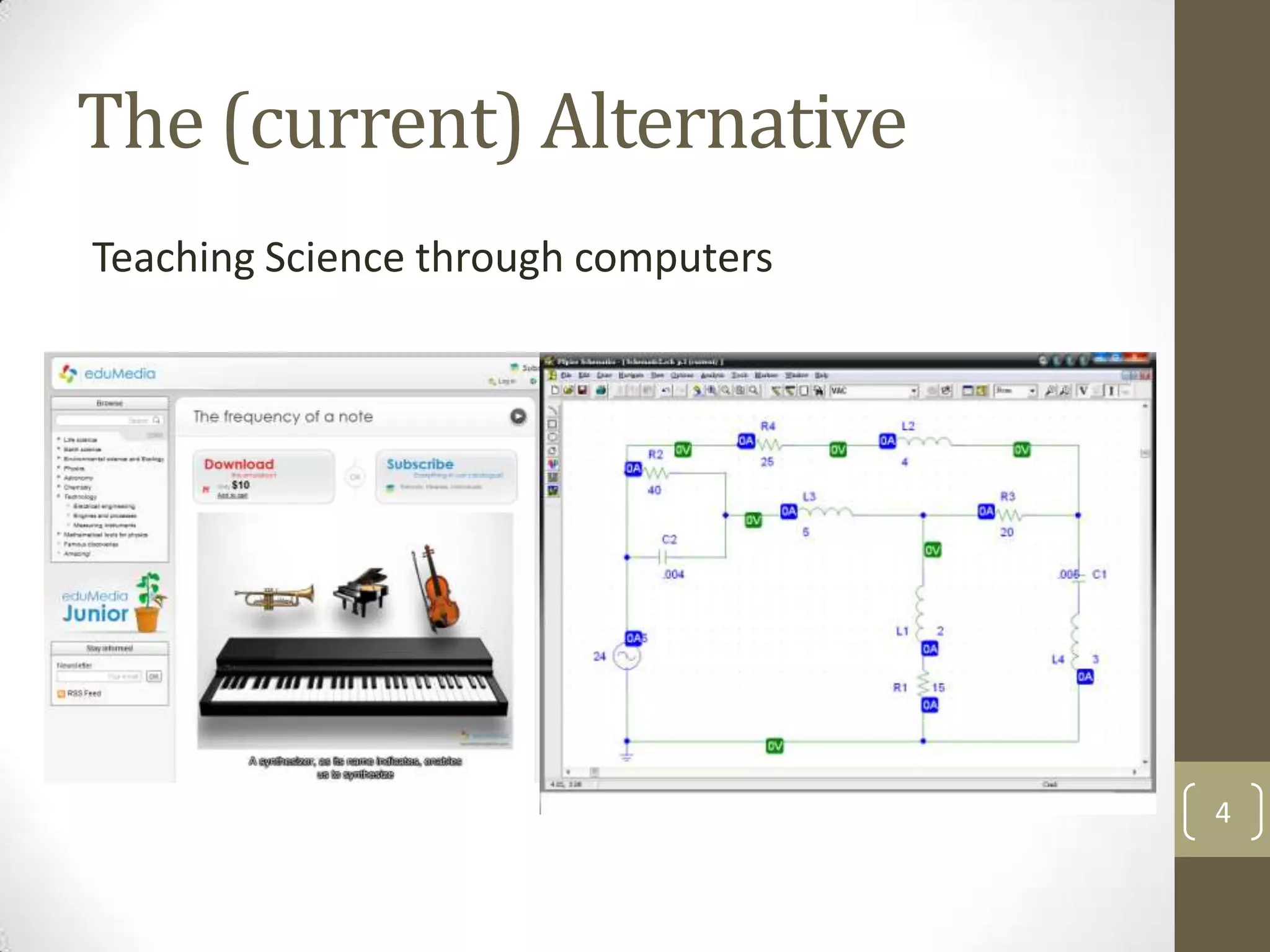
The (current) Alternative
Teaching Science through computers

4
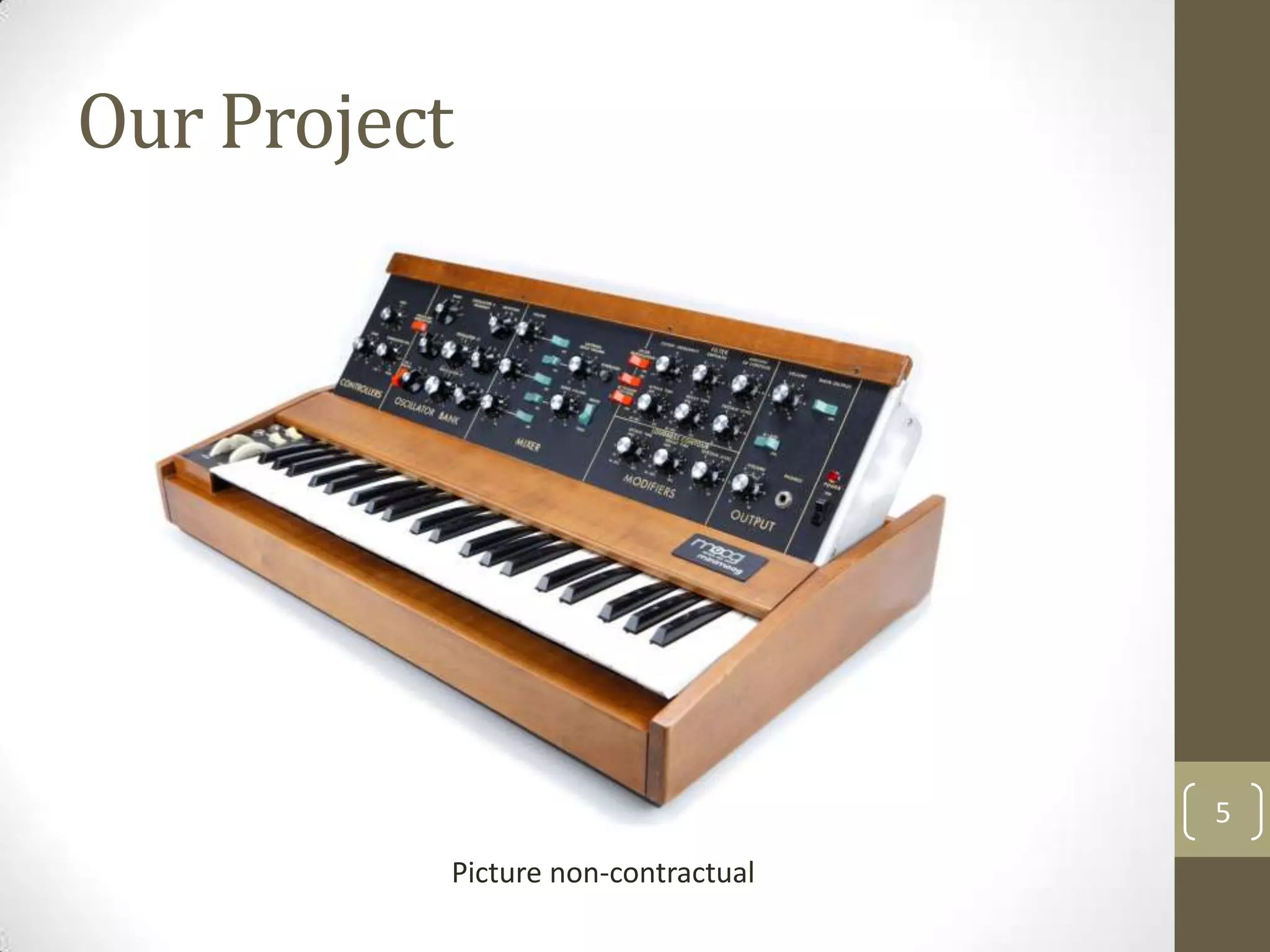
Our Project

5
Picture non-contractual
Existing Products

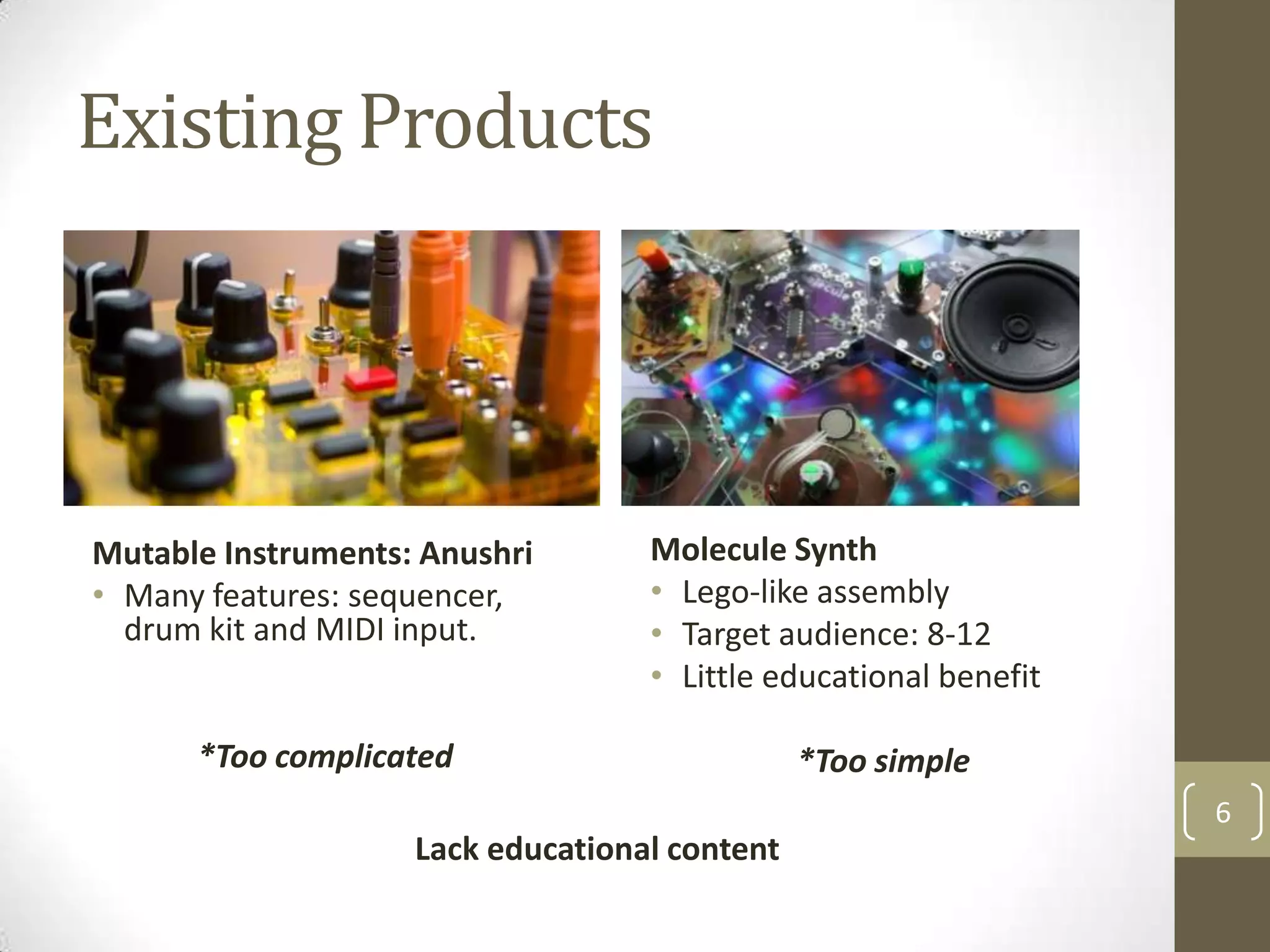
Mutable Instruments: Anushri
• Many features: sequencer,
drum kit and MIDI input.

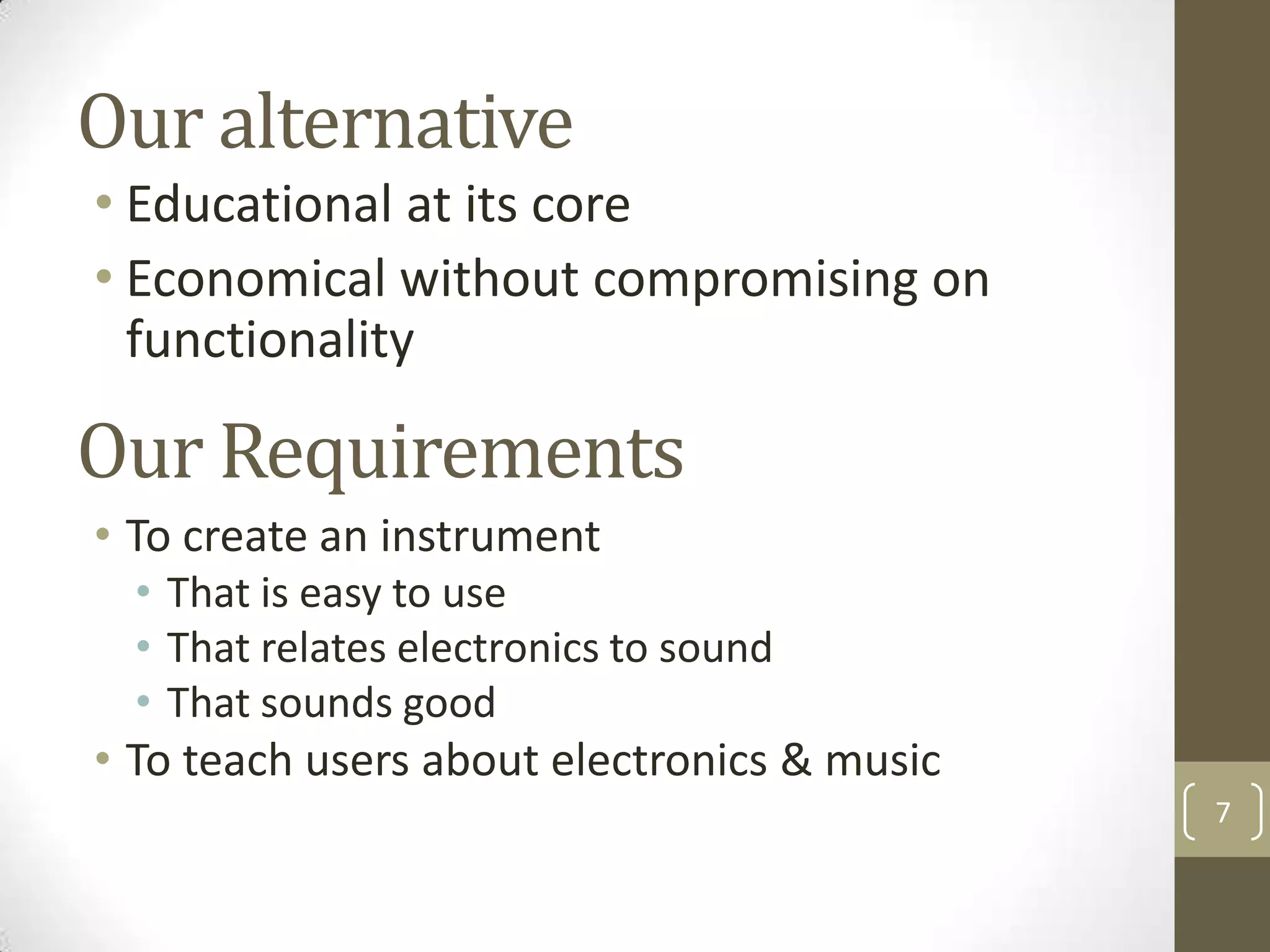
Molecule Synth
• Lego-like assembly
• Target audience: 8-12
• Little educational benefit

*Too complicated

*Too simple
6

Lack educational content
Our alternative
• Educational at its core
• Economical without compromising on
functionality

Our Requirements
• To create an instrument
• That is easy to use
• That relates electronics to sound
• That sounds good

• To teach users about electronics & music
7
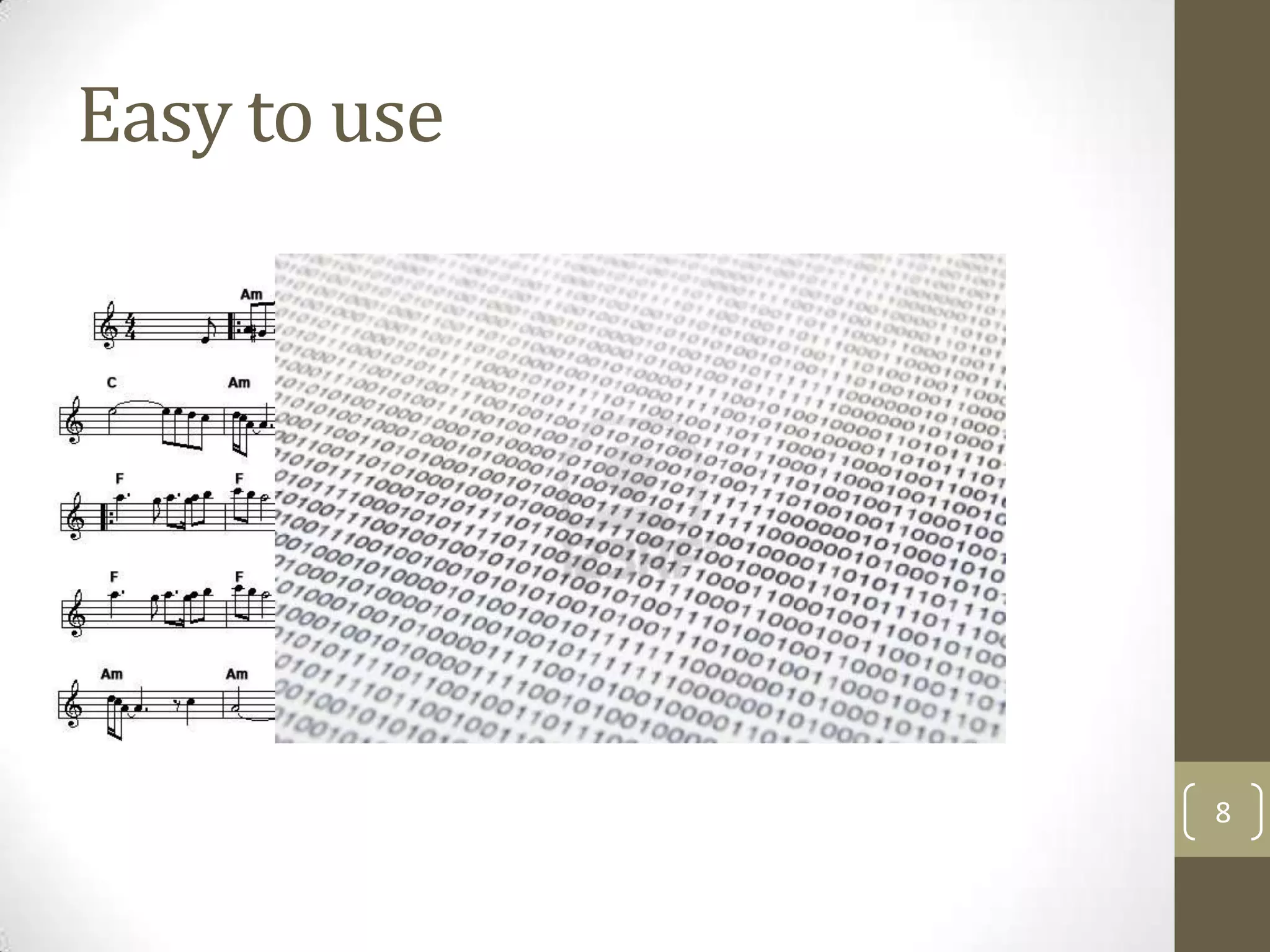
Easy to use

8
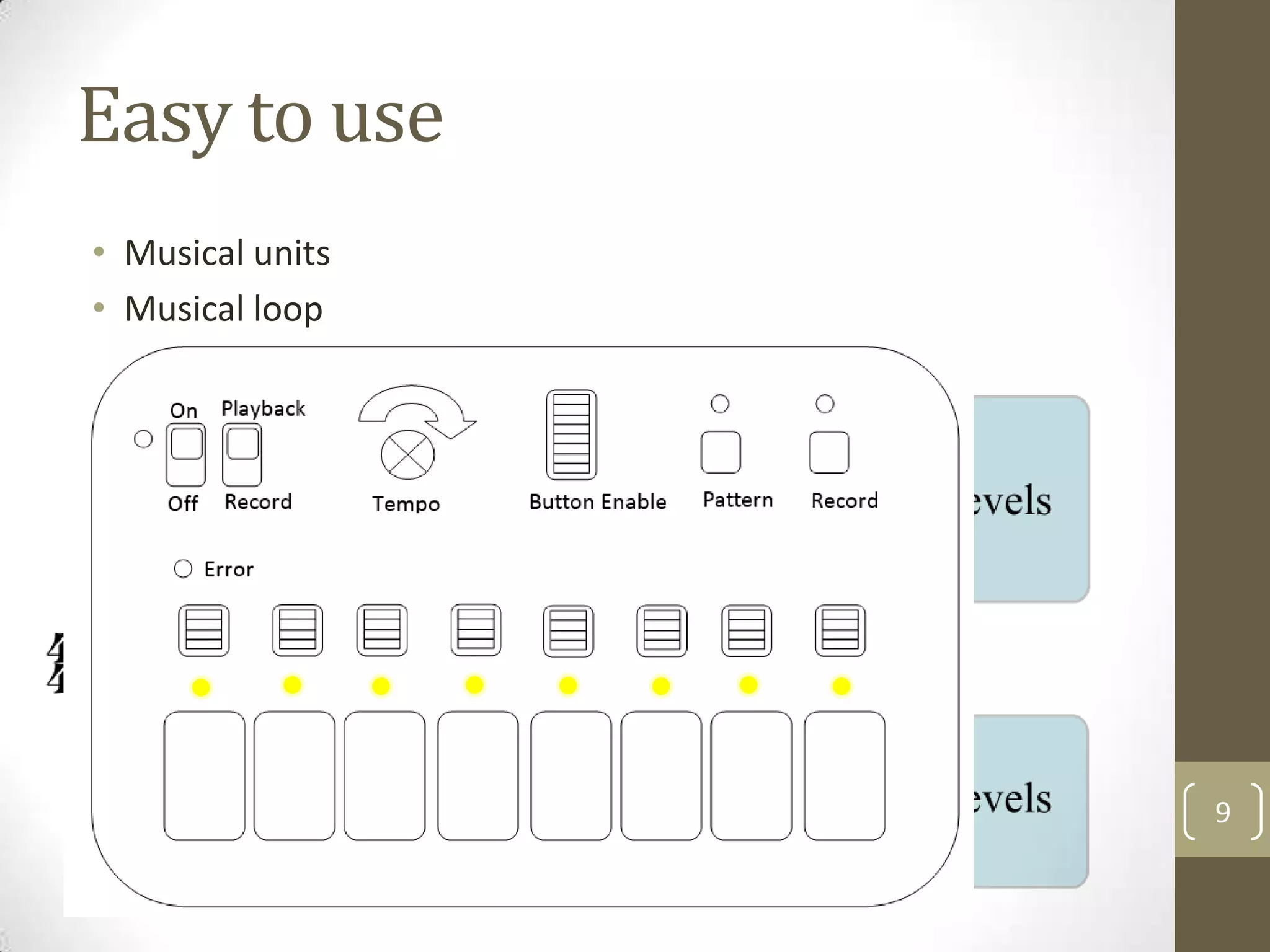
Easy to use
• Musical units
• Musical loop

9
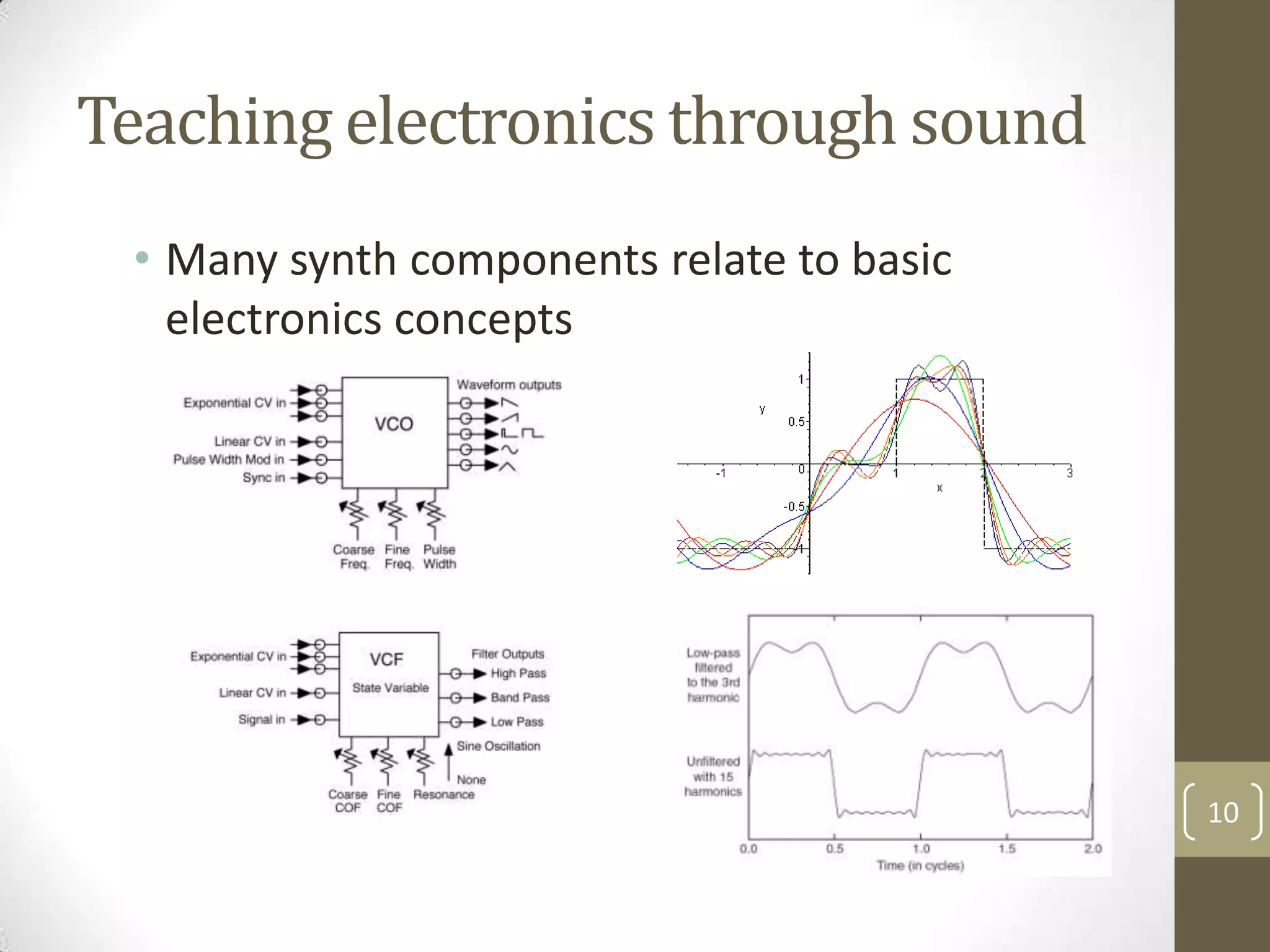
Teaching electronics through sound
• Many synth components relate to basic
electronics concepts

10
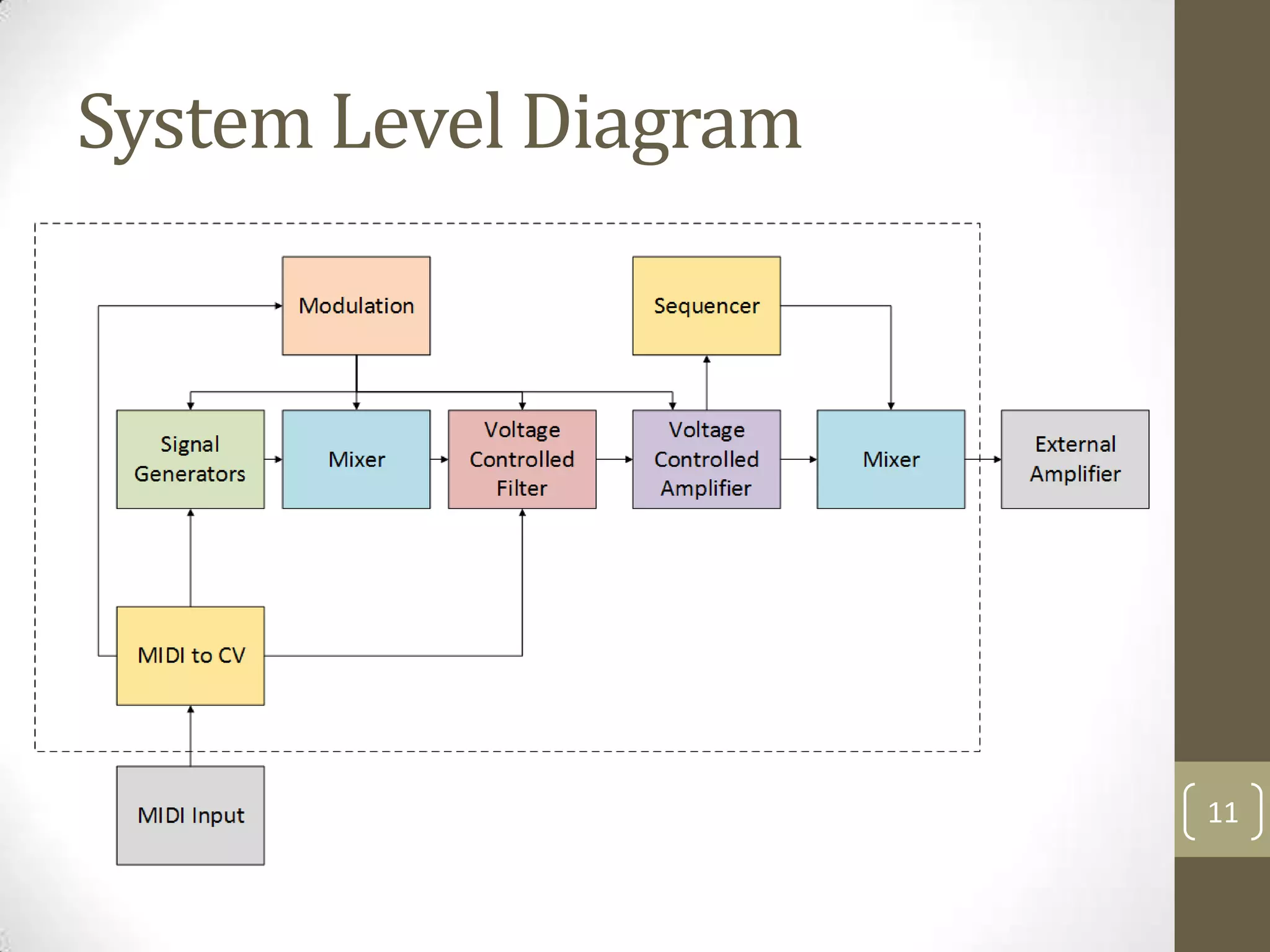
System Level Diagram

11
How to define good sound?
Industry standard for musical applications [4]:

Frequency
control

Amplitude
control
(80 dB gain)

10% error or 0.8 dB
12
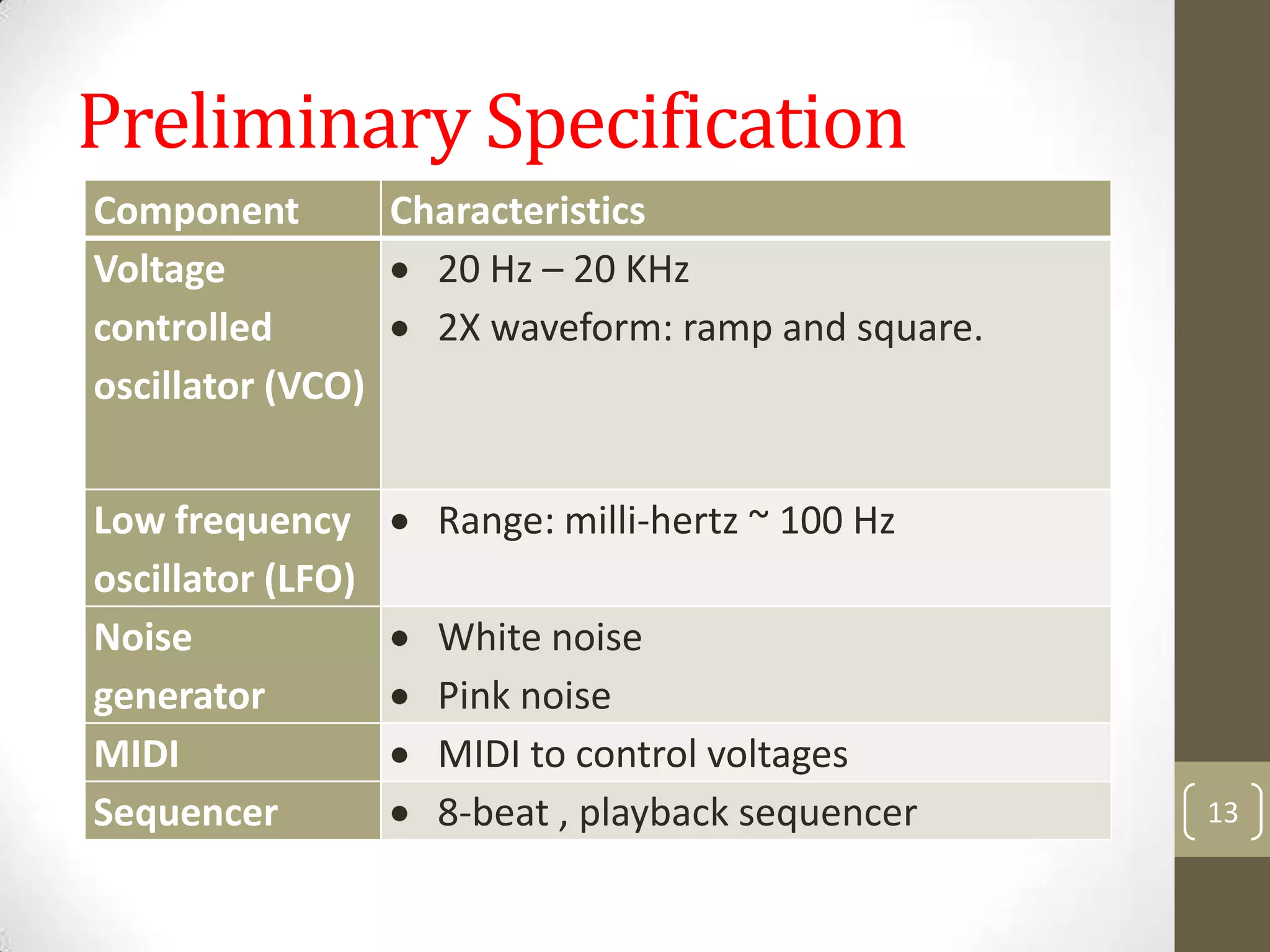
Preliminary Specification
Component
Characteristics
Voltage
20 Hz – 20 KHz
controlled
2X waveform: ramp and square.
oscillator (VCO)
Low frequency
oscillator (LFO)
Noise
generator
MIDI
Sequencer

Range: milli-hertz ~ 100 Hz
White noise
Pink noise
MIDI to control voltages
8-beat , playback sequencer

13
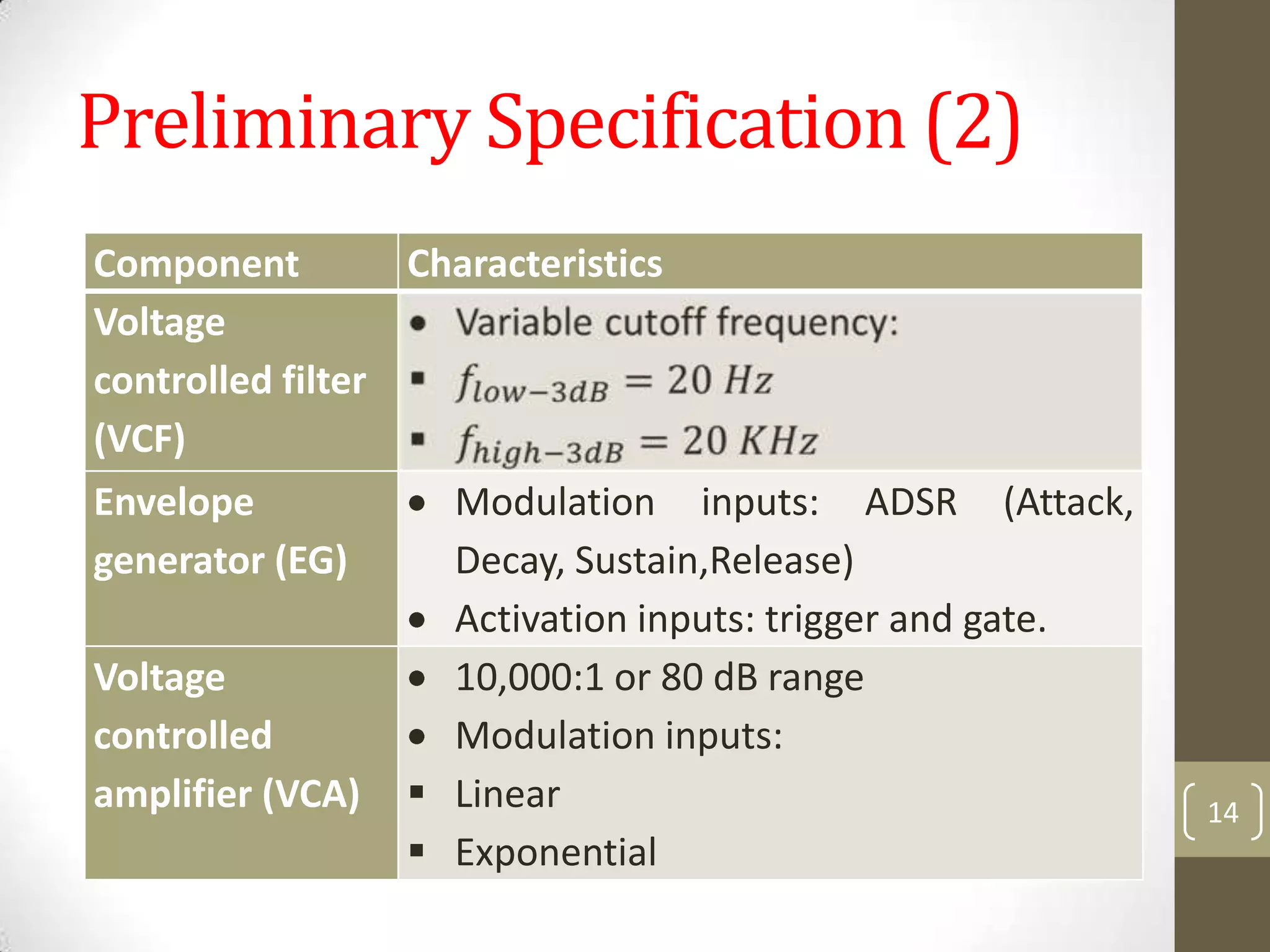
Preliminary Specification (2)
Component
Characteristics
Voltage
controlled filter
(VCF)
Envelope
Modulation inputs: ADSR (Attack,
generator (EG)
Decay, Sustain,Release)
Activation inputs: trigger and gate.
Voltage
10,000:1 or 80 dB range
controlled
Modulation inputs:
amplifier (VCA)  Linear
 Exponential

14
Education
• The education component of the project is twofold:
• Create a user manual
• Create a website to provide support

15
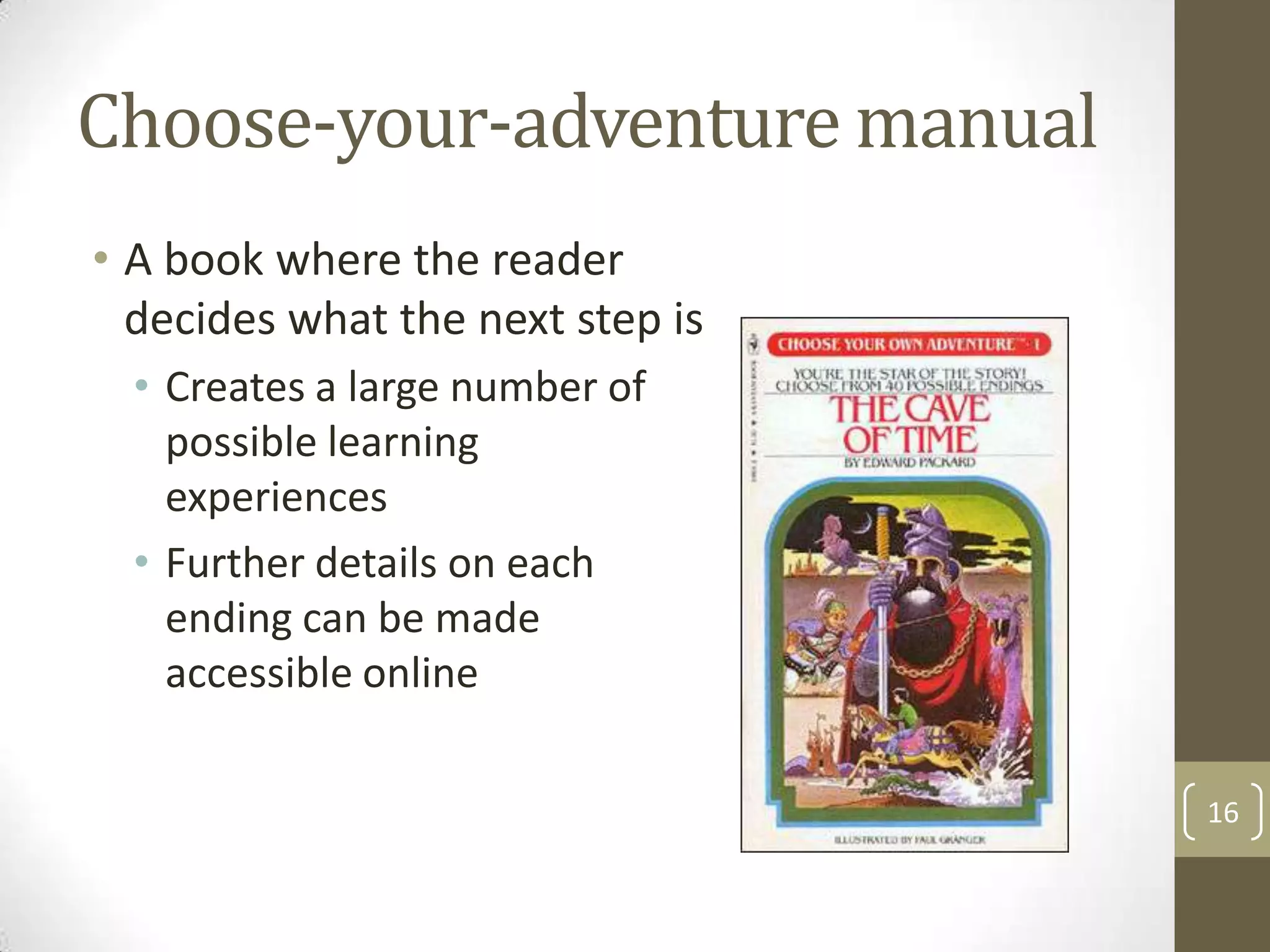
Choose-your-adventure manual
• A book where the reader
decides what the next step is
• Creates a large number of
possible learning
experiences
• Further details on each
ending can be made
accessible online
16
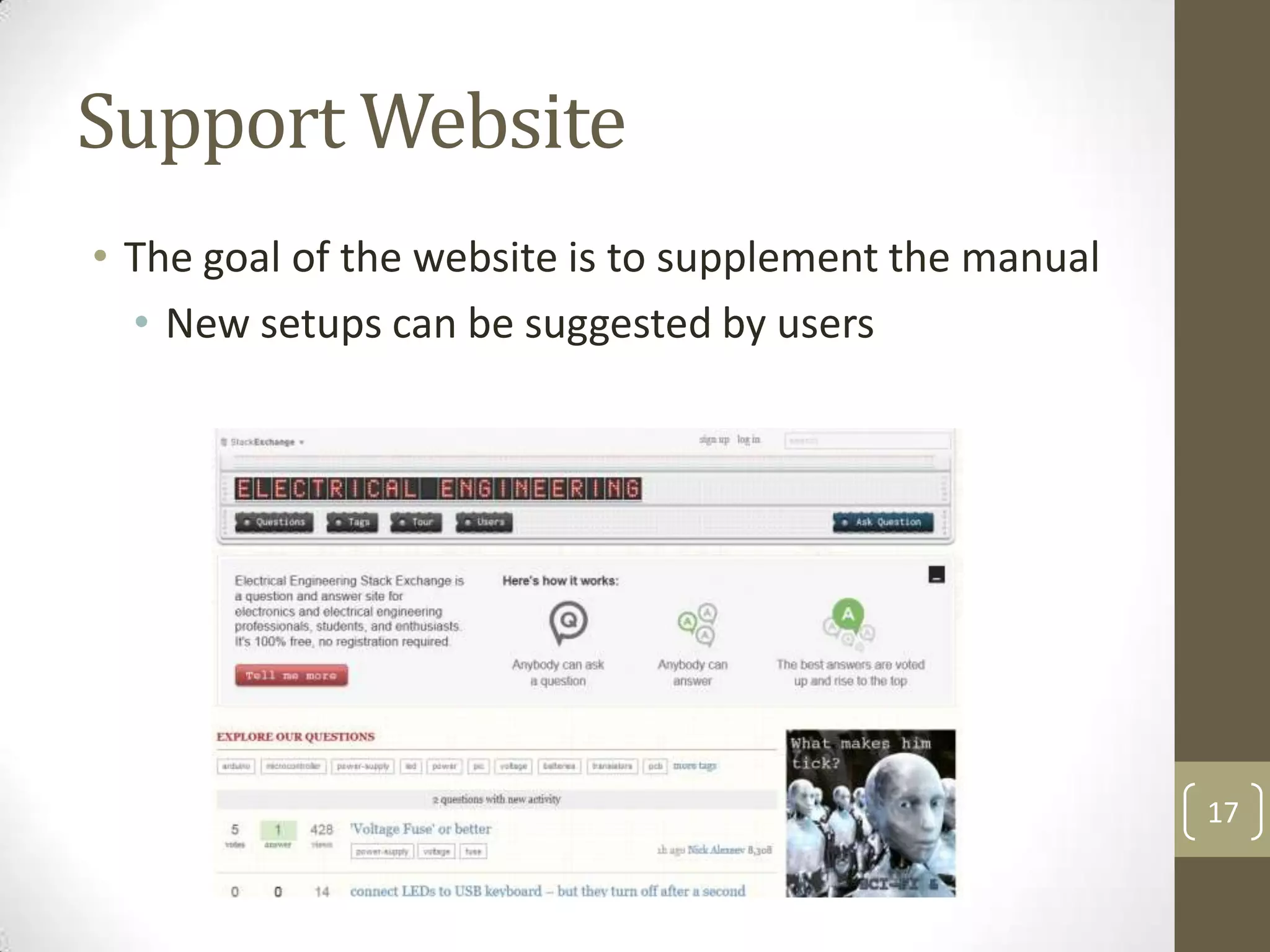
Support Website
• The goal of the website is to supplement the manual
• New setups can be suggested by users

17
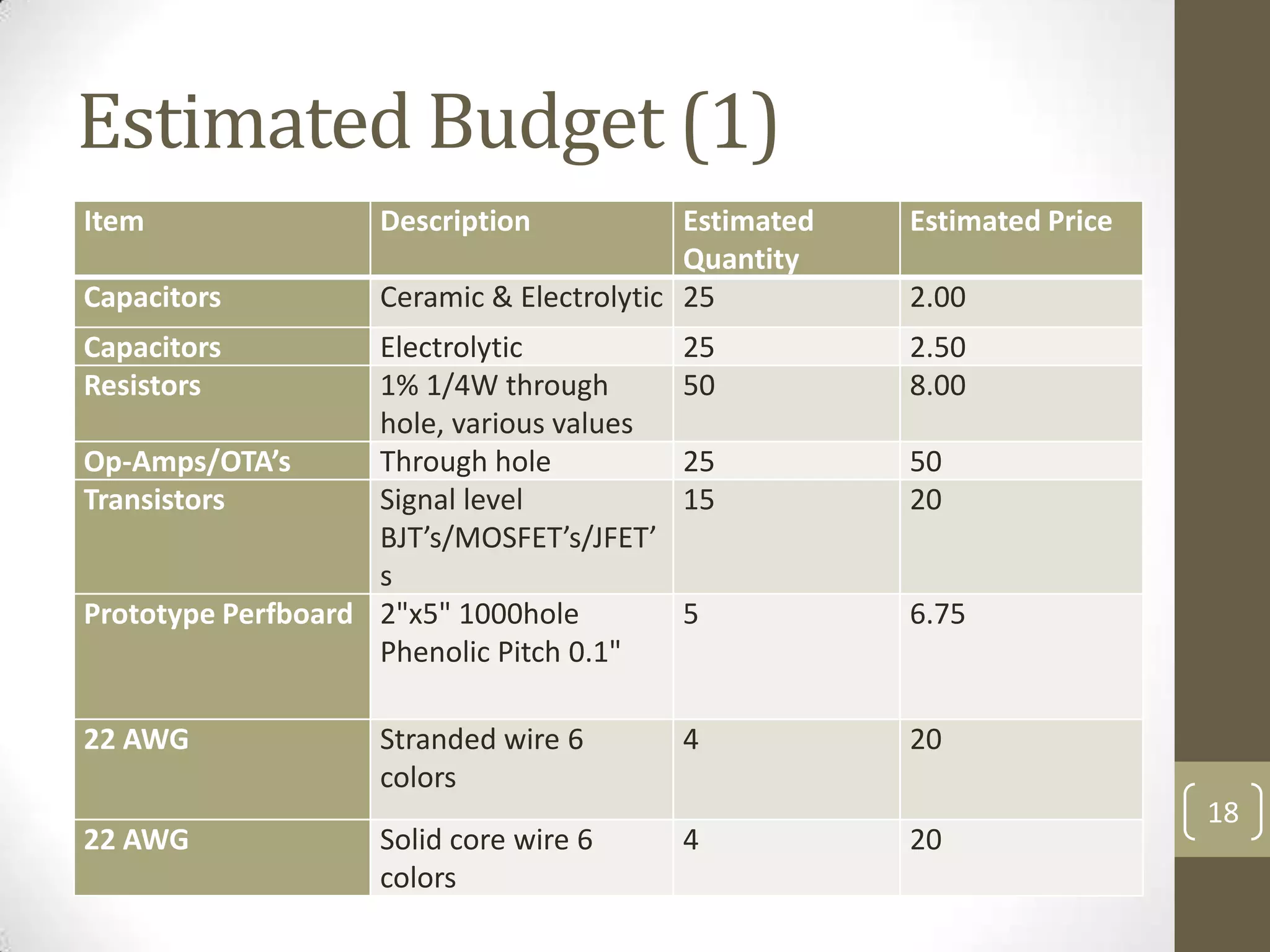
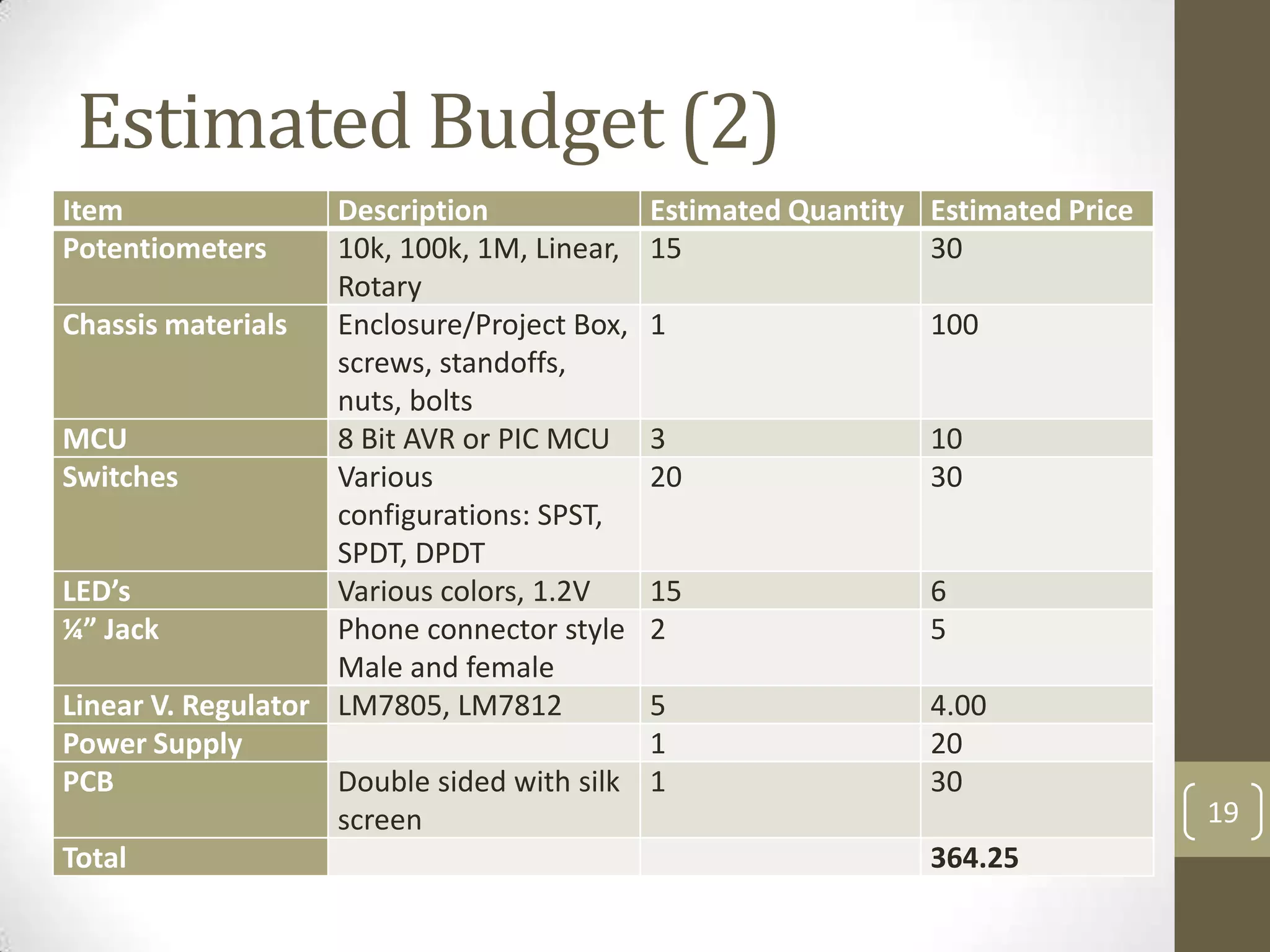
Estimated Budget (1)
Item
Capacitors

Description

Estimated
Quantity
Ceramic & Electrolytic 25

Capacitors
Resistors

Estimated Price
2.00

Electrolytic
1% 1/4W through
hole, various values
Op-Amps/OTA’s
Through hole
Transistors
Signal level
BJT’s/MOSFET’s/JFET’
s
Prototype Perfboard 2"x5" 1000hole
Phenolic Pitch 0.1"

25
50

2.50
8.00

25
15

50
20

5

6.75

22 AWG

4

20

22 AWG

Stranded wire 6
colors
Solid core wire 6
colors

4

20

18
Estimated Budget (2)
Item
Potentiometers

Description
10k, 100k, 1M, Linear,
Rotary
Chassis materials
Enclosure/Project Box,
screws, standoffs,
nuts, bolts
MCU
8 Bit AVR or PIC MCU
Switches
Various
configurations: SPST,
SPDT, DPDT
LED’s
Various colors, 1.2V
¼” Jack
Phone connector style
Male and female
Linear V. Regulator LM7805, LM7812
Power Supply
PCB
Double sided with silk
screen
Total

Estimated Quantity Estimated Price
15
30

1

100

3
20

10
30

15
2

6
5

5
1
1

4.00
20
30
364.25

19
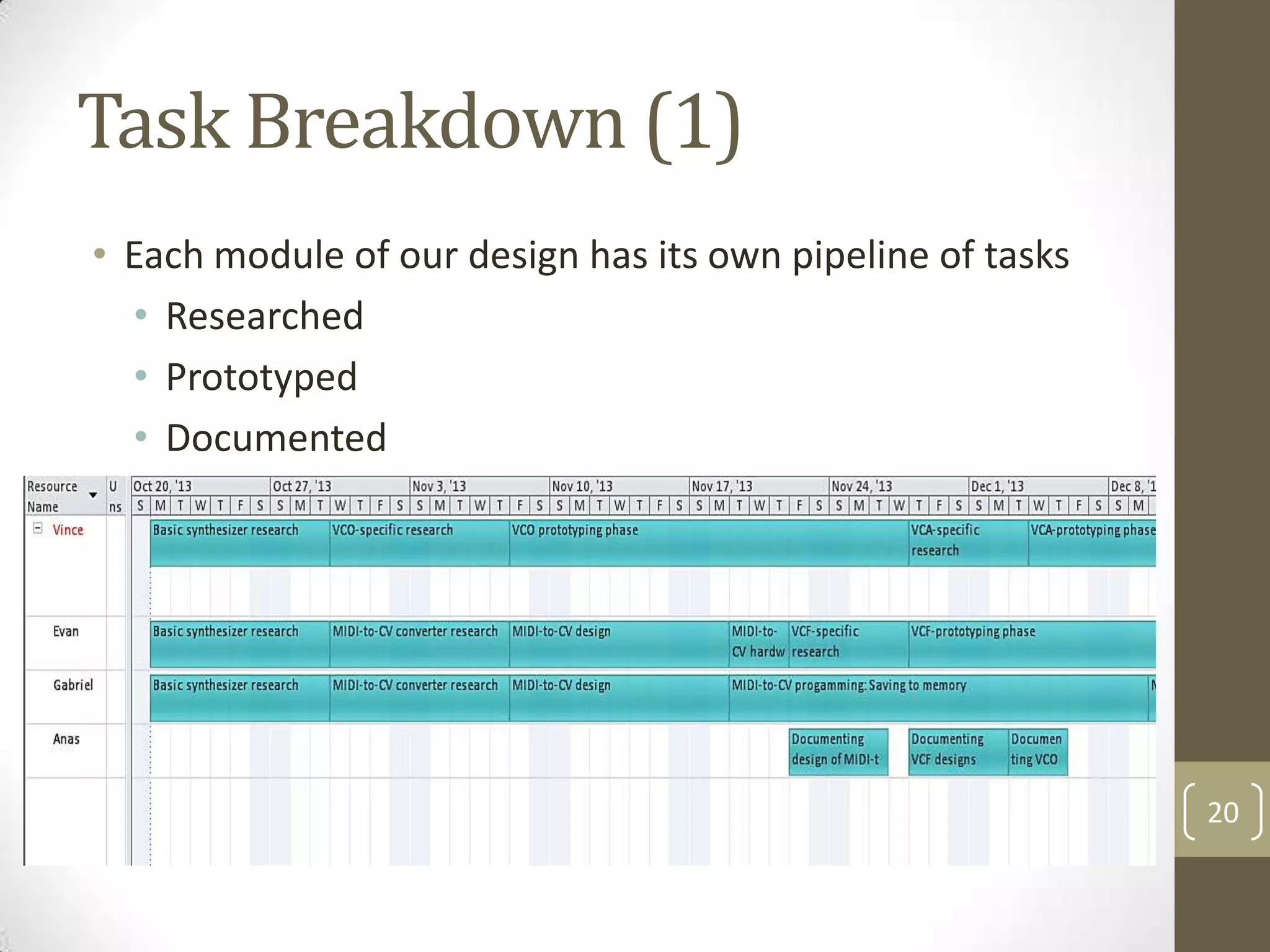
Task Breakdown (1)
• Each module of our design has its own pipeline of tasks
• Researched
• Prototyped
• Documented

20
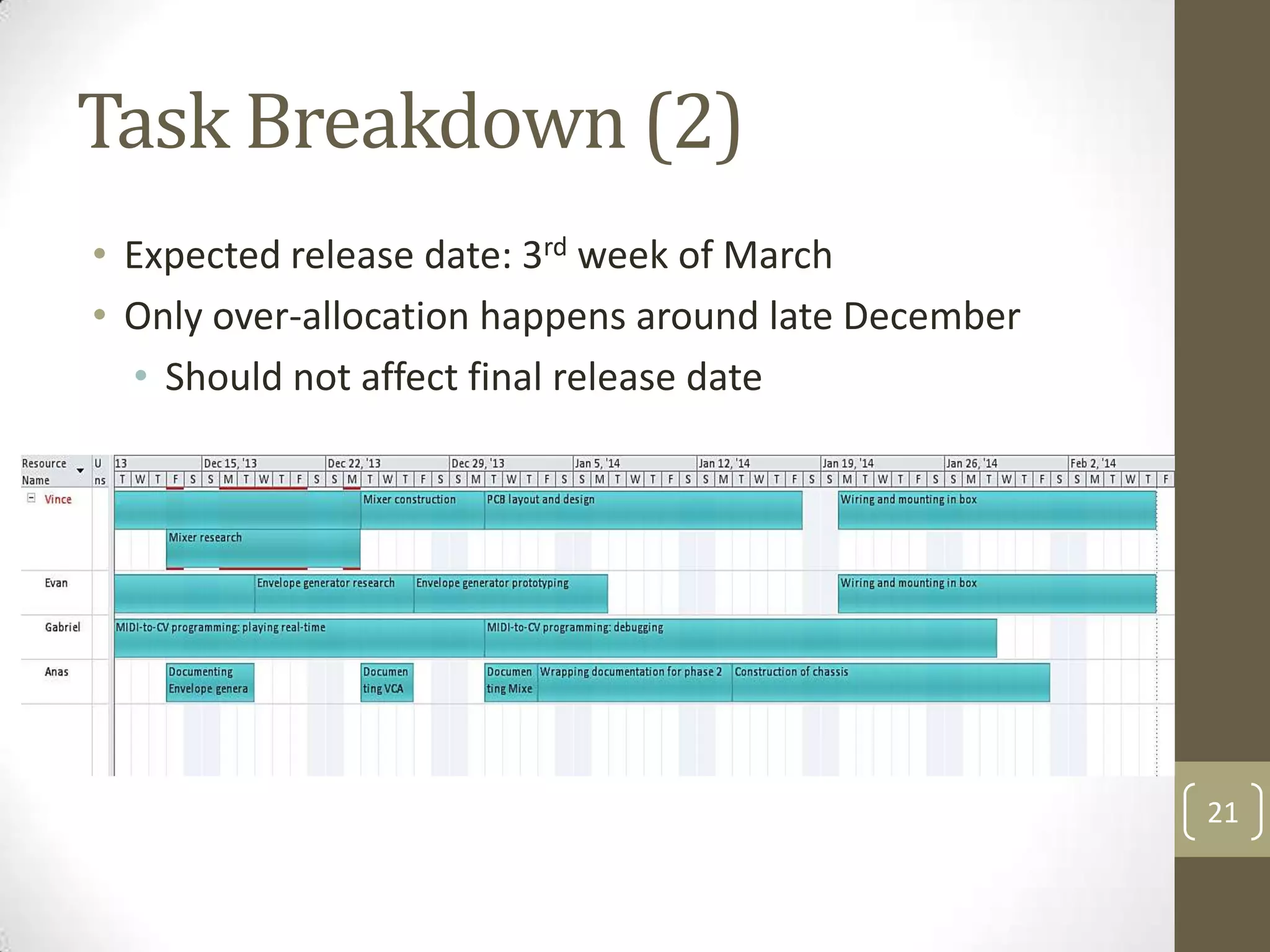
Task Breakdown (2)
• Expected release date: 3rd week of March
• Only over-allocation happens around late December
• Should not affect final release date

21
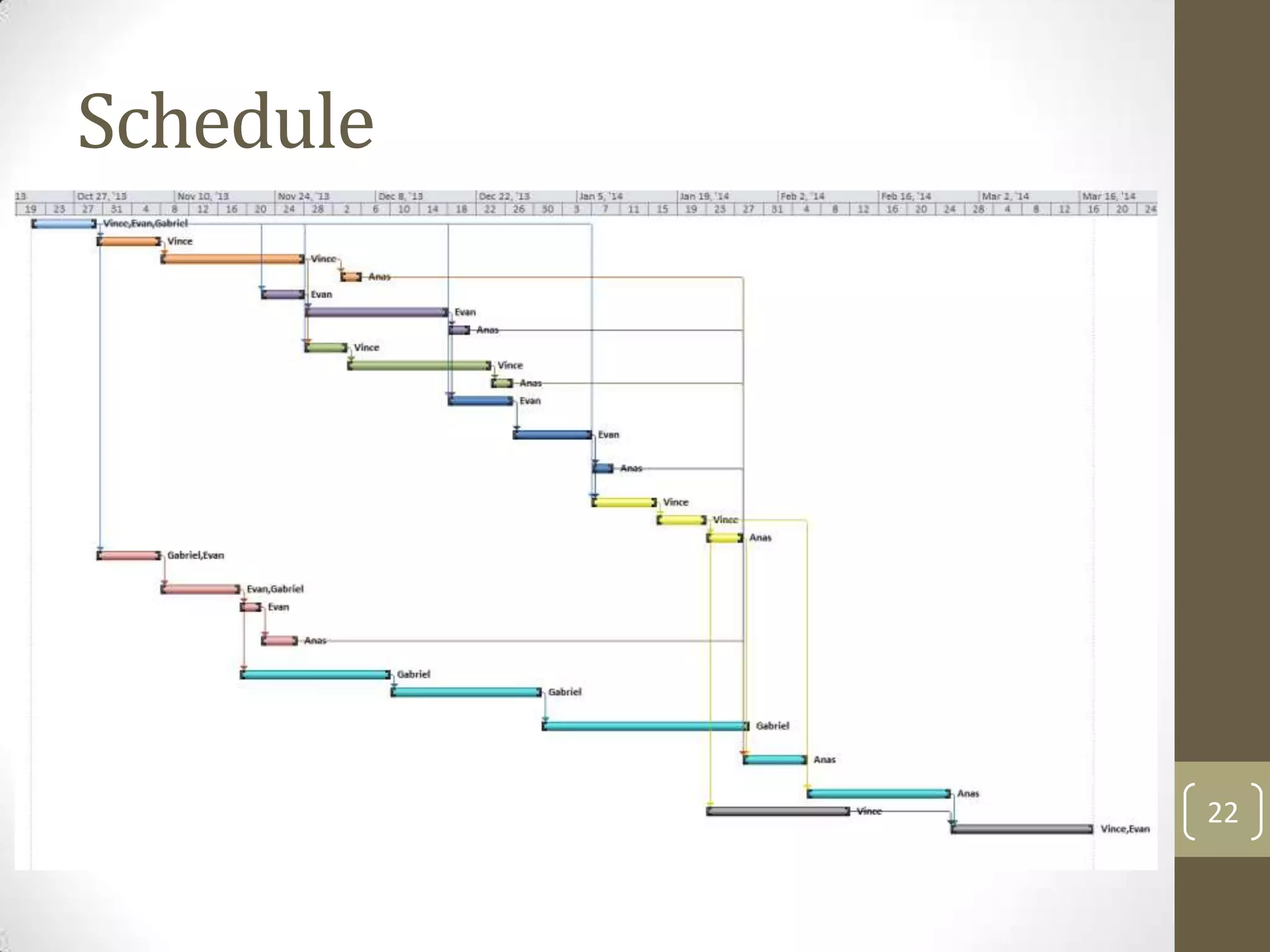
Schedule

22
Summary
• Existing unfulfilled need
• Capable team
• Feasible deadline

Recipe for success!

23
References
• [1] World Economic Forum (2011). The Global
Competitiveness Report 2010-2011.
http://reports.weforum.org/global-competitiveness-20112012/
• [2] Statistics Canada (2011) http://www12.statcan.gc.ca/nhsenm/2011/as-sa/99-012-x/99-012-x2011001-eng.cfm#a4
• [3] Lubinski, David. (2010). Spatial ability and STEM: A sleeping
giant for talent identification and development. In Personality
and Individual Differences 49(344-351).
• [4] H. Chamberlin, Musical Applications of
Microprocessors. 2nd ed., Berkeley: Hayden Publishing
Company, Inc., 1993, pp. 87–215.

24
Thank you!

Questions?
25

Presentation

  • 1.
    MIDI Analog Synth ECECapstone Project Evan Livingstone Vincent Fusco Gabriel Belmonte Anas Ambri October 2013 1
  • 2.
    Introductions • Vincent Fusco •Experienced in electrical design • Musician • Evan Livingstone • Experienced in both electrical design and software development • Part of many electrical design competition teams • Gabriel Belmonte • Experienced in software development • Responsible of digital side of the project • Anas Ambri • Team Leader • Responsible of documentation, website development 2
  • 3.
    Motivation • Children andyoung adults not interested in STEM fields • STEM: Science, Technology, Engineering and mathematics • US ranked 52nd in quality of maths and science education • More foreign students in engineering grad school than domestic students (2/3 in US, 51% in Canada) [1][2] • This is a problem because: • Science engineering graduates have higher “general intellectual ability” than non-science graduates [3] • Feynman's early involvement with radios • Especially true in an era of integrated circuits 3
  • 4.
    The (current) Alternative TeachingScience through computers 4
  • 5.
  • 6.
    Existing Products Mutable Instruments:Anushri • Many features: sequencer, drum kit and MIDI input. Molecule Synth • Lego-like assembly • Target audience: 8-12 • Little educational benefit *Too complicated *Too simple 6 Lack educational content
  • 7.
    Our alternative • Educationalat its core • Economical without compromising on functionality Our Requirements • To create an instrument • That is easy to use • That relates electronics to sound • That sounds good • To teach users about electronics & music 7
  • 8.
  • 9.
    Easy to use •Musical units • Musical loop 9
  • 10.
    Teaching electronics throughsound • Many synth components relate to basic electronics concepts 10
  • 11.
  • 12.
    How to definegood sound? Industry standard for musical applications [4]: Frequency control Amplitude control (80 dB gain) 10% error or 0.8 dB 12
  • 13.
    Preliminary Specification Component Characteristics Voltage 20 Hz– 20 KHz controlled 2X waveform: ramp and square. oscillator (VCO) Low frequency oscillator (LFO) Noise generator MIDI Sequencer Range: milli-hertz ~ 100 Hz White noise Pink noise MIDI to control voltages 8-beat , playback sequencer 13
  • 14.
    Preliminary Specification (2) Component Characteristics Voltage controlledfilter (VCF) Envelope Modulation inputs: ADSR (Attack, generator (EG) Decay, Sustain,Release) Activation inputs: trigger and gate. Voltage 10,000:1 or 80 dB range controlled Modulation inputs: amplifier (VCA)  Linear  Exponential 14
  • 15.
    Education • The educationcomponent of the project is twofold: • Create a user manual • Create a website to provide support 15
  • 16.
    Choose-your-adventure manual • Abook where the reader decides what the next step is • Creates a large number of possible learning experiences • Further details on each ending can be made accessible online 16
  • 17.
    Support Website • Thegoal of the website is to supplement the manual • New setups can be suggested by users 17
  • 18.
    Estimated Budget (1) Item Capacitors Description Estimated Quantity Ceramic& Electrolytic 25 Capacitors Resistors Estimated Price 2.00 Electrolytic 1% 1/4W through hole, various values Op-Amps/OTA’s Through hole Transistors Signal level BJT’s/MOSFET’s/JFET’ s Prototype Perfboard 2"x5" 1000hole Phenolic Pitch 0.1" 25 50 2.50 8.00 25 15 50 20 5 6.75 22 AWG 4 20 22 AWG Stranded wire 6 colors Solid core wire 6 colors 4 20 18
  • 19.
    Estimated Budget (2) Item Potentiometers Description 10k,100k, 1M, Linear, Rotary Chassis materials Enclosure/Project Box, screws, standoffs, nuts, bolts MCU 8 Bit AVR or PIC MCU Switches Various configurations: SPST, SPDT, DPDT LED’s Various colors, 1.2V ¼” Jack Phone connector style Male and female Linear V. Regulator LM7805, LM7812 Power Supply PCB Double sided with silk screen Total Estimated Quantity Estimated Price 15 30 1 100 3 20 10 30 15 2 6 5 5 1 1 4.00 20 30 364.25 19
  • 20.
    Task Breakdown (1) •Each module of our design has its own pipeline of tasks • Researched • Prototyped • Documented 20
  • 21.
    Task Breakdown (2) •Expected release date: 3rd week of March • Only over-allocation happens around late December • Should not affect final release date 21
  • 22.
  • 23.
    Summary • Existing unfulfilledneed • Capable team • Feasible deadline Recipe for success! 23
  • 24.
    References • [1] WorldEconomic Forum (2011). The Global Competitiveness Report 2010-2011. http://reports.weforum.org/global-competitiveness-20112012/ • [2] Statistics Canada (2011) http://www12.statcan.gc.ca/nhsenm/2011/as-sa/99-012-x/99-012-x2011001-eng.cfm#a4 • [3] Lubinski, David. (2010). Spatial ability and STEM: A sleeping giant for talent identification and development. In Personality and Individual Differences 49(344-351). • [4] H. Chamberlin, Musical Applications of Microprocessors. 2nd ed., Berkeley: Hayden Publishing Company, Inc., 1993, pp. 87–215. 24
  • 25.

Editor's Notes

  • #2 <Anas>
  • #3 <Anas or everyone to present themselves>
  • #4 <Vince in rant mode>
  • #5 <Vince: The route that education is taking now is using Computers to introduce students to scientific concepts. Here, you can see the example of a site that attempts to explain the concept of a synthesizer. Although we understand the motivation behind using computers, we do feel that this method is boring, unfulfilling and lacks any hands-on touch. This is why we want to propose …>
  • #6 <Vince: … our analog synthesizer. This is the picture of the minimoog, one of the most popular analog synthesizers. Analog synthesizers are a great way to introduce electronics to young individuals because of their high level of interactivity, simplicity, and the magic of playing sounds. <Need a big “ah” moment> Next, Evan will now explain the existing synths on the market.>
  • #7 <Evan: When researching the markets for existing analog synths, we noticed an interesting pattern:Great functionality, but complicated assemblyEase of assembly, but lack of educational contentHere are two examples of these two extremes. On the left is the Anushri, a kit that comes with a lot of features, including a drum kit, but the level of knowledge needed to simply assemble it is beyond the reach of young individuals. On the other hand, the molecule synth, seen here on the right, is perfect for kids between the age of 8 and 12, but fails miserably at providing any introduction to electronics whatsoever.There seems then to be a sweet spot between these two extremes, and that’s where our solution comes in.
  • #8 <Evan: Our goal is then to create an analog synth that mixes low price, functionality and educational content. The following slides will go into more details on how it will be achieved>
  • #9 <Gabriel> to change to fun to use
  • #10 <Gabriel>to change to fun to use
  • #11 <Vince>
  • #12 <Vince: talks about how the system is designed, the whole “analog from one end to another” speechSynth is essentially composed of 3 things:-Modifiers-Transducers-Generators>
  • #13 <Evan:During delivery give an example for the relative error at different frequencies... otherwise it's a meaningless formula.>
  • #14 <Vince:During delivery give an example for the relative error at different frequencies... otherwise it's a meaningless formula.>
  • #15 <Vince:During delivery give an example for the relative error at different frequencies... otherwise it's a meaningless formula.>
  • #16 <Anas>
  • #17 <Anas>
  • #18 <Anas>
  • #19 <Evan to describe the main big components here>
  • #20 <Evan to describe the main big components here>
  • #21 <Anas>
  • #22 <Anas>
  • #23 <Anas>
  • #24 <Anas>
  • #26 <Anas>