Swami Keshvanand Institute of Technology, Management and Gramothan, Jaipur
Department of Computer Science & Engineering
Industry Training (ITR) Presentation
Topic – Web development
Company – VSD Techno
Submitted by – Garvit Tamra
19ESKCS084
CSE
BG2
Submitted to – Ms. Abha Jain
Index
Introduction
• Web development refers to the
creating, building, and maintaining of
websites. It includes aspects such as
web design, web publishing, web
programming, and database
management. It is the creation of an
application that works over the
internet i.e. websites.
Web Development can be
classified into two ways:
•Frontend Development
•Backend Development
WHY WEB DEVELOPMENT IS IMPORTANT
• Web development and design help to
promote a company’s brand name.
Essentially, if a firm’s website is
accessible via the World Wide Web, the
company is considered operating on a
worldwide scale. This means that a
little-known company may be looked for,
and its items can be delivered to clients
who are far away.
Front-end web
development
Front-end web development is
responsible for the look and feel of a
website. This means how colors,
type, icons, and images appear.
Increasingly, front-end development
has to account for how a website
looks on all devices, from desktop to
tablet to phone. Typical programming
languages include HTML, JavaScript,
and CSS. Front-end developers keep
up with cutting-edge trends in web
design and development to make
sure websites are optimized for users
and search engines — and with
security best practices in mind.
Back-end web development
Back-end web development is
responsible for building and maintaining
the code that runs a website. This code
connects the website to the server and
ensures that data flows properly to the
website and that transactions are
processed correctly. Typical
programming languages include Java
(different from JavaScript), PHP, and
MySQL; newer tools include Python
and Golang. Back-end web developers
can keep up with changes in
technology by participating in
networking communities that share
coding tips and support.
Characteristics of a Successful Website
• Must be Mobile-Responsive
• Must be User-Friendly
• Must Have Top Security
• Website Architecture
• Well-Formatted Content That Is Easy to Scan
The Three Layers of Web Design
• HTML: The Structure Layer
The structure or content layer of a web page is the underlying HTML code of that page.
Just as a house's frame creates a strong foundation upon which the rest of the house is
built, a solid foundation of HTML creates a platform upon which a website can be
created.
Why Should You Separate the Layers?
When you're creating a web page, its structure should be relegated to your
HTML, visual styles to the CSS, and behaviors to scripts.
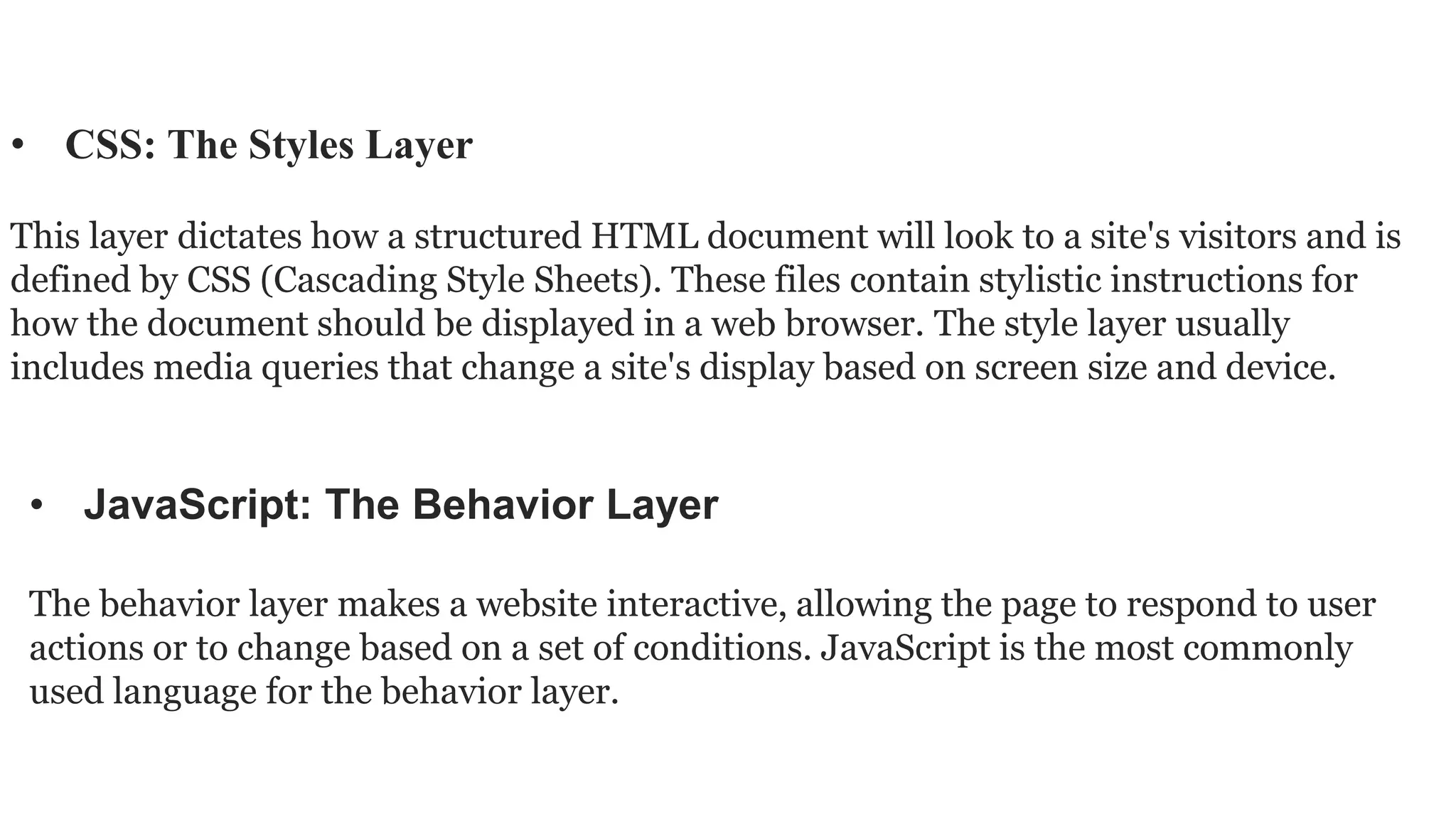
• JavaScript: The Behavior Layer
The behavior layer makes a website interactive, allowing the page to respond to user
actions or to change based on a set of conditions. JavaScript is the most commonly
used language for the behavior layer.
• CSS: The Styles Layer
This layer dictates how a structured HTML document will look to a site's visitors and is
defined by CSS (Cascading Style Sheets). These files contain stylistic instructions for
how the document should be displayed in a web browser. The style layer usually
includes media queries that change a site's display based on screen size and device.
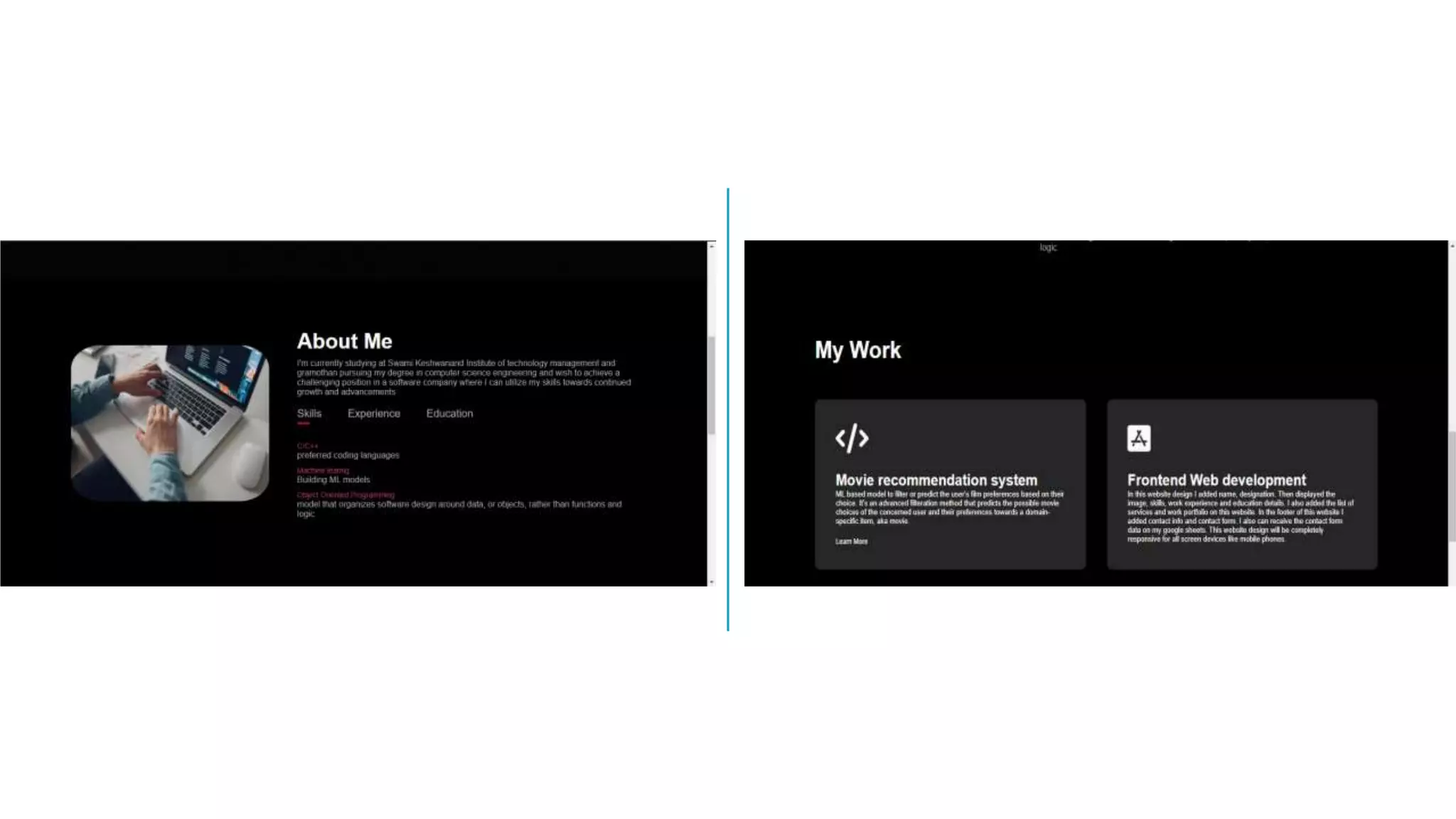
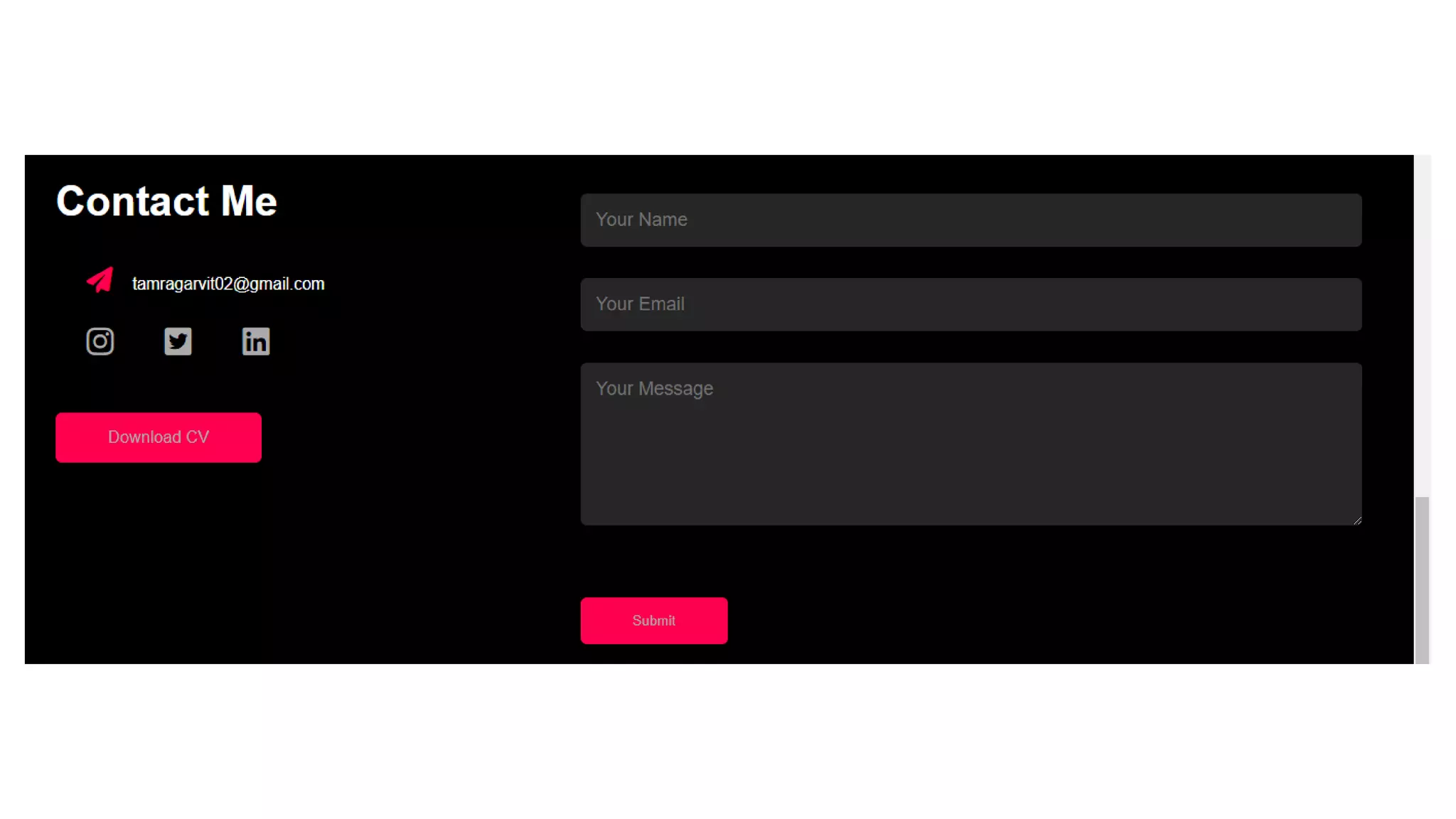
My Project- Portfolio website
My learnings
1. How to put my
knowledge and
skills into practice
2. The benefits of
networking
3. Understanding
workplace culture
4. Enthusiasm is
invaluable
5. Keeping a
journal is great for
personal growth
6. How important
good
communication is
7. The benefits of
taking on
feedback
Certificate
References
www.uow.edu.au
www.thoughtco.com
www.socialmediatoday.com
www.w3schools.com
www.geeksforgeeks.org
Thank You

Presentation 1.pptx

  • 1.
    Swami Keshvanand Instituteof Technology, Management and Gramothan, Jaipur Department of Computer Science & Engineering Industry Training (ITR) Presentation Topic – Web development Company – VSD Techno Submitted by – Garvit Tamra 19ESKCS084 CSE BG2 Submitted to – Ms. Abha Jain
  • 2.
  • 3.
    Introduction • Web developmentrefers to the creating, building, and maintaining of websites. It includes aspects such as web design, web publishing, web programming, and database management. It is the creation of an application that works over the internet i.e. websites. Web Development can be classified into two ways: •Frontend Development •Backend Development
  • 4.
    WHY WEB DEVELOPMENTIS IMPORTANT • Web development and design help to promote a company’s brand name. Essentially, if a firm’s website is accessible via the World Wide Web, the company is considered operating on a worldwide scale. This means that a little-known company may be looked for, and its items can be delivered to clients who are far away.
  • 5.
    Front-end web development Front-end webdevelopment is responsible for the look and feel of a website. This means how colors, type, icons, and images appear. Increasingly, front-end development has to account for how a website looks on all devices, from desktop to tablet to phone. Typical programming languages include HTML, JavaScript, and CSS. Front-end developers keep up with cutting-edge trends in web design and development to make sure websites are optimized for users and search engines — and with security best practices in mind. Back-end web development Back-end web development is responsible for building and maintaining the code that runs a website. This code connects the website to the server and ensures that data flows properly to the website and that transactions are processed correctly. Typical programming languages include Java (different from JavaScript), PHP, and MySQL; newer tools include Python and Golang. Back-end web developers can keep up with changes in technology by participating in networking communities that share coding tips and support.
  • 6.
    Characteristics of aSuccessful Website • Must be Mobile-Responsive • Must be User-Friendly • Must Have Top Security • Website Architecture • Well-Formatted Content That Is Easy to Scan
  • 7.
    The Three Layersof Web Design • HTML: The Structure Layer The structure or content layer of a web page is the underlying HTML code of that page. Just as a house's frame creates a strong foundation upon which the rest of the house is built, a solid foundation of HTML creates a platform upon which a website can be created. Why Should You Separate the Layers? When you're creating a web page, its structure should be relegated to your HTML, visual styles to the CSS, and behaviors to scripts.
  • 8.
    • JavaScript: TheBehavior Layer The behavior layer makes a website interactive, allowing the page to respond to user actions or to change based on a set of conditions. JavaScript is the most commonly used language for the behavior layer. • CSS: The Styles Layer This layer dictates how a structured HTML document will look to a site's visitors and is defined by CSS (Cascading Style Sheets). These files contain stylistic instructions for how the document should be displayed in a web browser. The style layer usually includes media queries that change a site's display based on screen size and device.
  • 9.
  • 12.
    My learnings 1. Howto put my knowledge and skills into practice 2. The benefits of networking 3. Understanding workplace culture 4. Enthusiasm is invaluable 5. Keeping a journal is great for personal growth 6. How important good communication is 7. The benefits of taking on feedback
  • 13.
  • 14.
  • 15.