**Used Car Price Prediction**
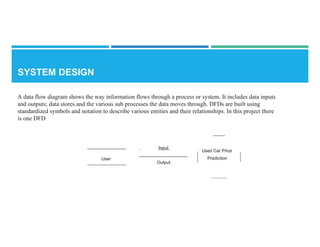
Used car price prediction involves using data-driven models and machine learning techniques to estimate the market value of a used vehicle based on a variety of factors. This process analyzes historical car price data, vehicle specifications, market trends, and other relevant attributes to provide an accurate price forecast. The key factors influencing the price include:
1. **Make and Model**: Different car brands and models have distinct market values. Luxury or high-demand brands tend to have higher resale prices.
2. **Age of the Car**: Generally, newer cars have higher prices. The depreciation rate of a car is a crucial factor in price prediction.
3. **Mileage**: The total distance a car has traveled impacts its price. Lower mileage typically indicates less wear and tear, increasing the car’s value.
4. **Condition of the Car**: Physical and mechanical conditions such as the exterior appearance, interior, and engine health significantly influence the car's resale value.
5. **Location**: The geographical region where the car is being sold can affect the price. Market trends, climate, and demand can vary by location.
6. **Vehicle History**: Whether the car has been in any accidents, has a clean title, or has a history of service can all play a role in the pricing.
7. **Additional Features**: Cars with upgraded features like sunroofs, leather seats, or advanced technology packages typically fetch higher prices.
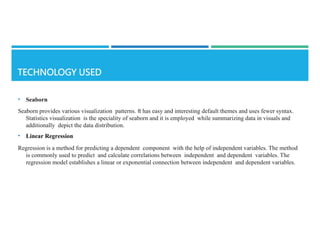
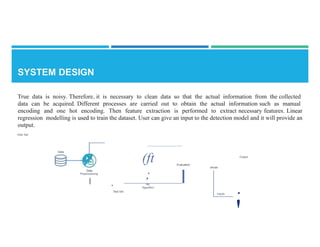
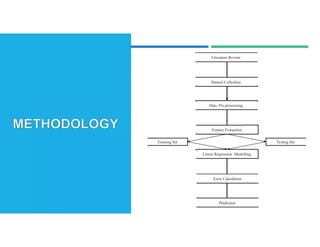
Machine learning models like regression analysis, decision trees, and neural networks are often used to predict the prices, incorporating all these variables into an algorithm that can provide an estimated value based on input data.
These predictive models are valuable for both buyers and sellers, helping them understand the fair market value of used cars and make informed decisions in the car-buying or selling process.


![[1] M. G. Pattabiraman Venkatasubbu, "Used Cars Price Prediction using Supervised Leaming Techniques.," International Journal of
Engineering and Advanced Technology (IJEAT), 2019.
[2] B. I. D. K. Z. M. J. K. Enis Gegic, "Car Price Prediction using Machine Leaming Techniques.," International Burch University,
Sarajevo, Bosnia and Herzegovina, TEM Journal, 2019.
[3] A. W. D. A. K. D. M. V. Laveena D'Costa, "Predicting True Value of Used Car using Multiple Linear Regression Model.,"
International Journal of Recent Technology and Engineering, 2020.
[4] S. Peerun , " Predicting the Price of Second-hand Cars using Artificial Neural Networks.," Proceedings of the Second International
Conference, Nushrah Henna Chummun and Sameerchand Pudaruth, University of Mauritius, Reduit, Mauritius., 2014.
[5] S. Pudaruth, "Predicting the Price of Used Cars using Machine Leaming Techniques.," International Journal of Information &
Computation Technology, Computer Science and Engineering Department, University of Mauritius, Reduit, MAURJTJUS. , 2014.
[6] D. S. S. S. G. S. K. S.E.Viswapriya, "Vehicle Price Prediction using SVM Techniques.," International Journal of Innovative
Technology and Exploring Engineering, 2020.](https://image.slidesharecdn.com/usedcarpriceprediction-250319012840-c3f9292b/85/Predicting-Used-Car-Prices-Using-Machine-Learning-Models-17-320.jpg)