Preanaesthetic medication
Roll NO 100 RIYA
RANJAN
101RIYA TANISHKA
102 SADHANA YADAV
103 SAFFRON GERA
104 SAKSHI
105 SANA AWASHTHI 1
Objectives
Defination
AIM
Drugs used for medication
2
Defination
It is the term applied to the
administration of certain drugs prior to
general anaesthetic agent so as to make
anaesthesia safer
for the patient.
3
AIM
1.Relief of anxiety and apprehension preopera-
tively and to facilitate smooth induction.
2. Amnesia for perioperative events.
3. Supplement analgesic action of the
anaesthetics
and potentiate it so that less anaesthetic is
needed
4
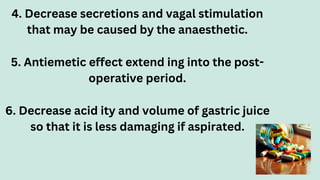
4. Decrease secretions and vagal stimulation
that may be caused by the anaesthetic.
5. Antiemetic effect extend ing into the post-
operative period.
6. Decrease acid ity and volume of gastric juice
so that it is less damaging if aspirated.
5
Drugs used in
preanesthetic
medication
6
Common Drugs:
Diazepam (5–10 mg oral)
Lorazepam (2 mg oral or 0.05 mg/kg i.m.)
Midazolam (IV, short-acting, good amnesic)
Effects:
1.Induce calmness and reduce anxiety
2. Amnesic effect (loss of recall, esp. with lorazepam)
3. Minimal respiratory depression
4. Counteract CNS toxicity of local anesthetics
5. Used with fentanyl for minor procedures (endoscopy, minor
surgery)
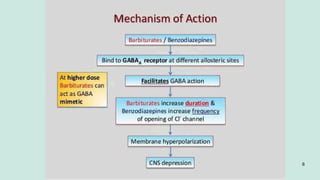
Benzodiazepines (Sedative-
Antianxiety Drugs)
7
8
Common Drugs: 1.Morphine (10 mg i.m.)
2.Pethidine (50–100 mg i.m.) 3.Fentanyl
(IV before induction) Effects: 1.Pre- and
post-operative analgesia 2.Reduce
anxiety & smoothen induction 3.Reduce
anesthetic dose requirement
4.Decrease postoperative restlessness
Opioids
9
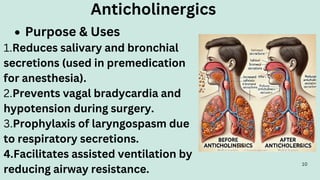
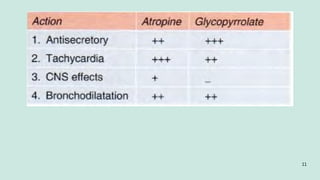
Anticholinergics
Purpose & Uses
1.Reduces salivary and bronchial
secretions (used in premedication
for anesthesia).
2.Prevents vagal bradycardia and
hypotension during surgery.
3.Prophylaxis of laryngospasm due
to respiratory secretions.
4.Facilitates assisted ventilation by
reducing airway resistance.
10
11
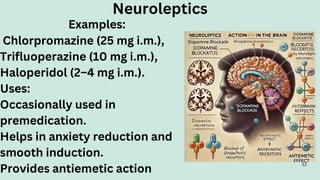
Neuroleptics
Examples:
Chlorpromazine (25 mg i.m.),
Trifluoperazine (10 mg i.m.),
Haloperidol (2–4 mg i.m.).
Uses:
Occasionally used in
premedication.
Helps in anxiety reduction and
smooth induction.
Provides antiemetic action
12
Disadvantages:
*May increase respiratory
depression and hypotension when
combined with anesthetics.
*Can cause involuntary
movements and muscle dystonias
13
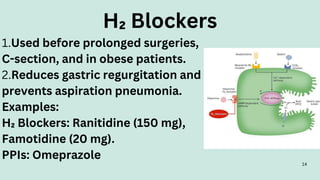
1.Used before prolonged surgeries,
C-section, and in obese patients.
2.Reduces gastric regurgitation and
prevents aspiration pneumonia.
Examples:
H₂ Blockers: Ranitidine (150 mg),
Famotidine (20 mg).
PPIs: Omeprazole
14
H₂ Blockers
15
Given night before and in the morning to
1.increase gastric pH.
2.Reduces gastric acid volume, decreasing
reflux chances.
3.Additional Benefit:
4.Prevents stress ulcers.
Advantages
16
Purpose:
Reduces postoperative vomiting and aspiration risk.
Examples
1.Metoclopramide (10–20 mg i.m.)
Enhances gastric emptying and LES tone.
Reduces risk of reflux.
2. Ondansetron Selective 5-HT₃ blocker.
Highly effective in reducing post-anesthetic nausea &
vomiting.
Antiemetics
17
Thank YOU

preanaesthic medication - required before surgery

  • 1.
    Preanaesthetic medication Roll NO100 RIYA RANJAN 101RIYA TANISHKA 102 SADHANA YADAV 103 SAFFRON GERA 104 SAKSHI 105 SANA AWASHTHI 1
  • 2.
  • 3.
    Defination It is theterm applied to the administration of certain drugs prior to general anaesthetic agent so as to make anaesthesia safer for the patient. 3
  • 4.
    AIM 1.Relief of anxietyand apprehension preopera- tively and to facilitate smooth induction. 2. Amnesia for perioperative events. 3. Supplement analgesic action of the anaesthetics and potentiate it so that less anaesthetic is needed 4
  • 5.
    4. Decrease secretionsand vagal stimulation that may be caused by the anaesthetic. 5. Antiemetic effect extend ing into the post- operative period. 6. Decrease acid ity and volume of gastric juice so that it is less damaging if aspirated. 5
  • 6.
  • 7.
    Common Drugs: Diazepam (5–10mg oral) Lorazepam (2 mg oral or 0.05 mg/kg i.m.) Midazolam (IV, short-acting, good amnesic) Effects: 1.Induce calmness and reduce anxiety 2. Amnesic effect (loss of recall, esp. with lorazepam) 3. Minimal respiratory depression 4. Counteract CNS toxicity of local anesthetics 5. Used with fentanyl for minor procedures (endoscopy, minor surgery) Benzodiazepines (Sedative- Antianxiety Drugs) 7
  • 8.
  • 9.
    Common Drugs: 1.Morphine(10 mg i.m.) 2.Pethidine (50–100 mg i.m.) 3.Fentanyl (IV before induction) Effects: 1.Pre- and post-operative analgesia 2.Reduce anxiety & smoothen induction 3.Reduce anesthetic dose requirement 4.Decrease postoperative restlessness Opioids 9
  • 10.
    Anticholinergics Purpose & Uses 1.Reducessalivary and bronchial secretions (used in premedication for anesthesia). 2.Prevents vagal bradycardia and hypotension during surgery. 3.Prophylaxis of laryngospasm due to respiratory secretions. 4.Facilitates assisted ventilation by reducing airway resistance. 10
  • 11.
  • 12.
    Neuroleptics Examples: Chlorpromazine (25 mgi.m.), Trifluoperazine (10 mg i.m.), Haloperidol (2–4 mg i.m.). Uses: Occasionally used in premedication. Helps in anxiety reduction and smooth induction. Provides antiemetic action 12
  • 13.
    Disadvantages: *May increase respiratory depressionand hypotension when combined with anesthetics. *Can cause involuntary movements and muscle dystonias 13
  • 14.
    1.Used before prolongedsurgeries, C-section, and in obese patients. 2.Reduces gastric regurgitation and prevents aspiration pneumonia. Examples: H₂ Blockers: Ranitidine (150 mg), Famotidine (20 mg). PPIs: Omeprazole 14 H₂ Blockers
  • 15.
    15 Given night beforeand in the morning to 1.increase gastric pH. 2.Reduces gastric acid volume, decreasing reflux chances. 3.Additional Benefit: 4.Prevents stress ulcers. Advantages
  • 16.
    16 Purpose: Reduces postoperative vomitingand aspiration risk. Examples 1.Metoclopramide (10–20 mg i.m.) Enhances gastric emptying and LES tone. Reduces risk of reflux. 2. Ondansetron Selective 5-HT₃ blocker. Highly effective in reducing post-anesthetic nausea & vomiting. Antiemetics
  • 17.