Heuristics of Problem
Solving
Reported By: Jonald B. Rey
Topics to be discussed…
What is a Problem?
What is the heuristics for problem solving?
What is the problem statement?
What is problem solving?
Lets try to take a look….
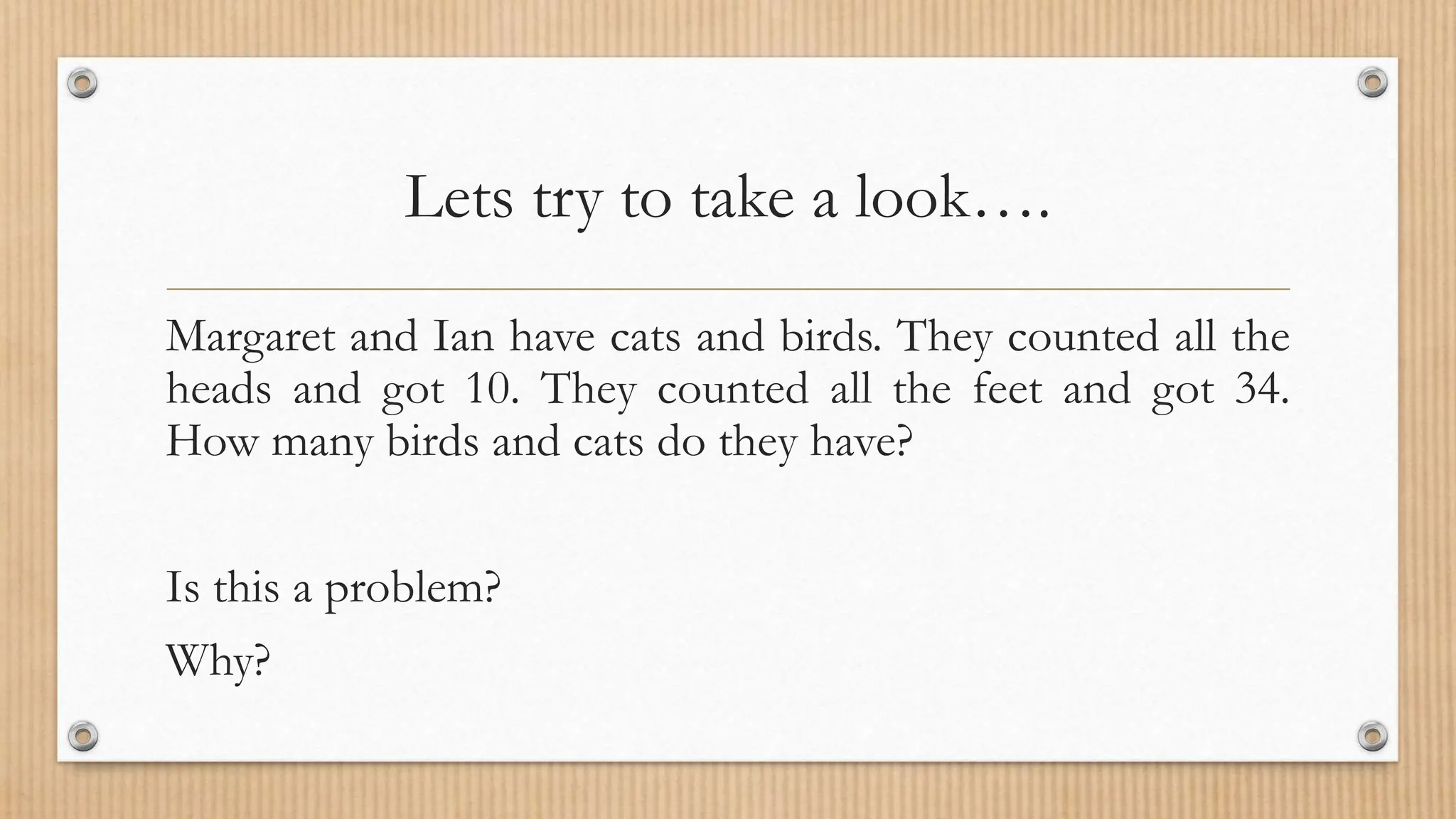
Margaret and Ian have cats and birds. They counted all the
heads and got 10. They counted all the feet and got 34.
How many birds and cats do they have?
Is this a problem?
Why?
So what is a problem?
A problem is a statement or a daily life situation that requires a solution.
A problem exist when a solution is not immediately obvious.
A Situation
Barrier
Initial State Goal State (Answer)
Types of A Problem
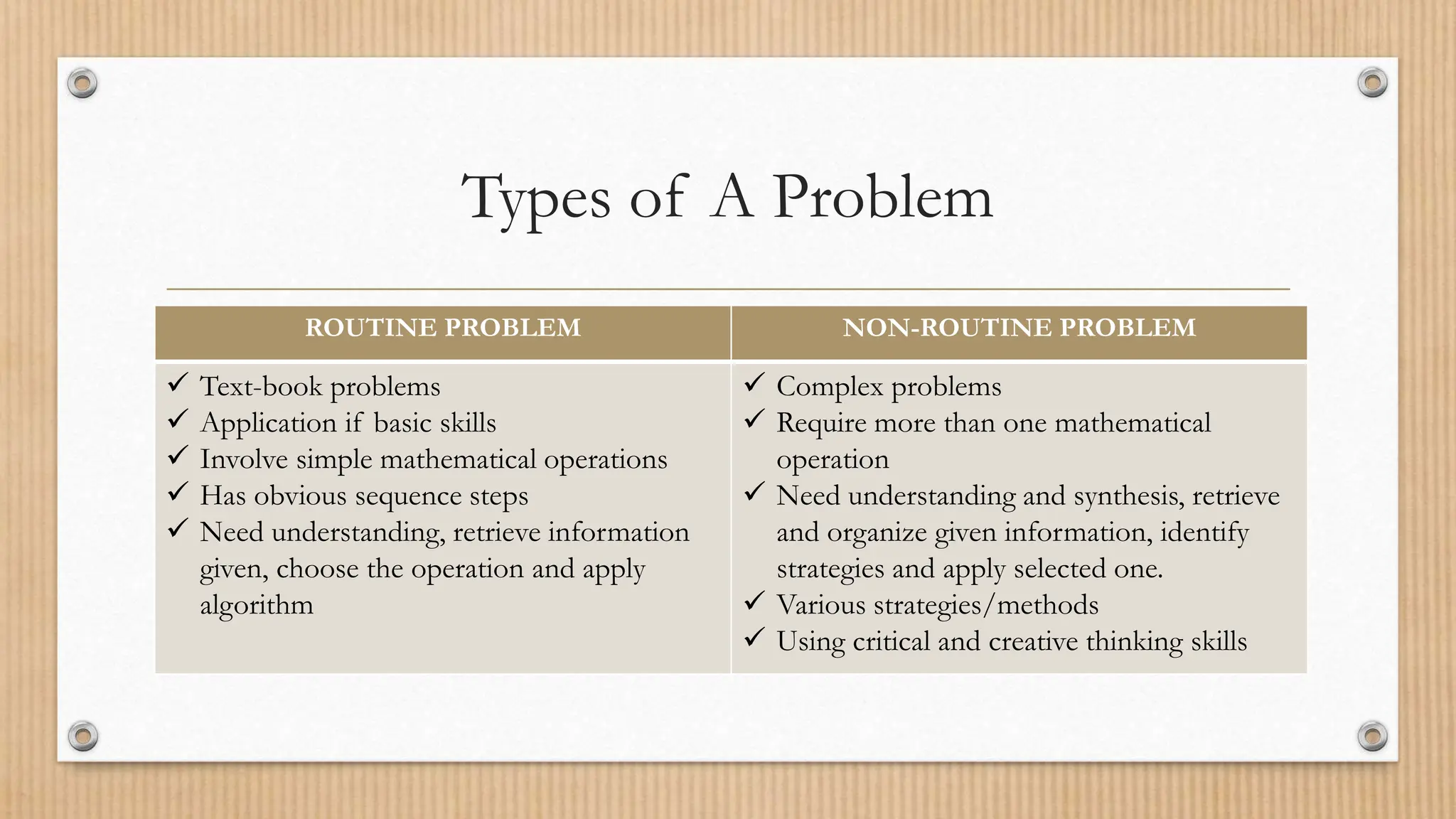
ROUTINE PROBLEM NON-ROUTINE PROBLEM
 Text-book problems
 Application if basic skills
 Involve simple mathematical operations
 Has obvious sequence steps
 Need understanding, retrieve information
given, choose the operation and apply
algorithm
 Complex problems
 Require more than one mathematical
operation
 Need understanding and synthesis, retrieve
and organize given information, identify
strategies and apply selected one.
 Various strategies/methods
 Using critical and creative thinking skills
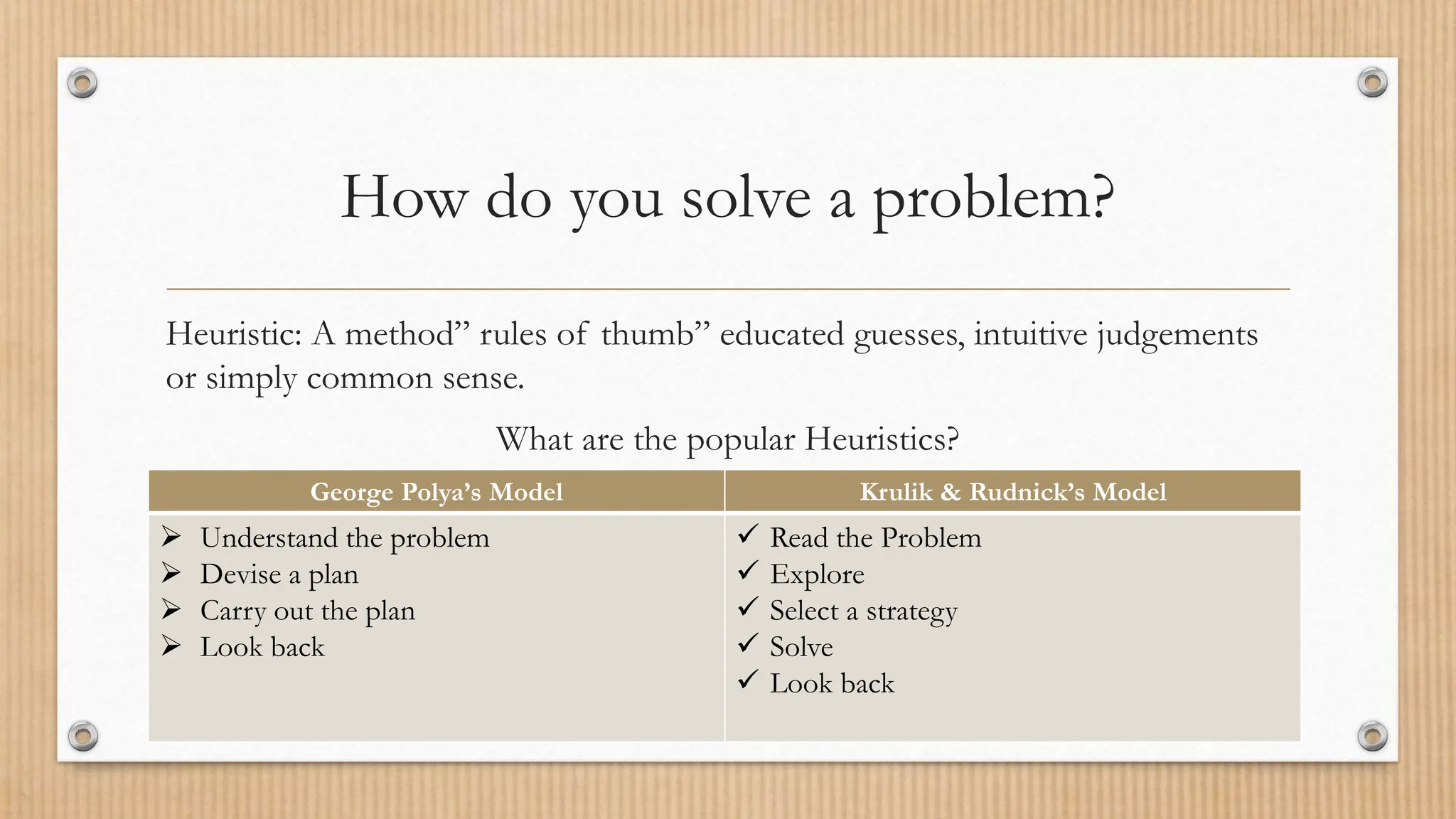
How do you solve a problem?
Heuristic: A method” rules of thumb” educated guesses, intuitive judgements
or simply common sense.
What are the popular Heuristics?
George Polya’s Model Krulik & Rudnick’s Model
 Understand the problem
 Devise a plan
 Carry out the plan
 Look back
 Read the Problem
 Explore
 Select a strategy
 Solve
 Look back
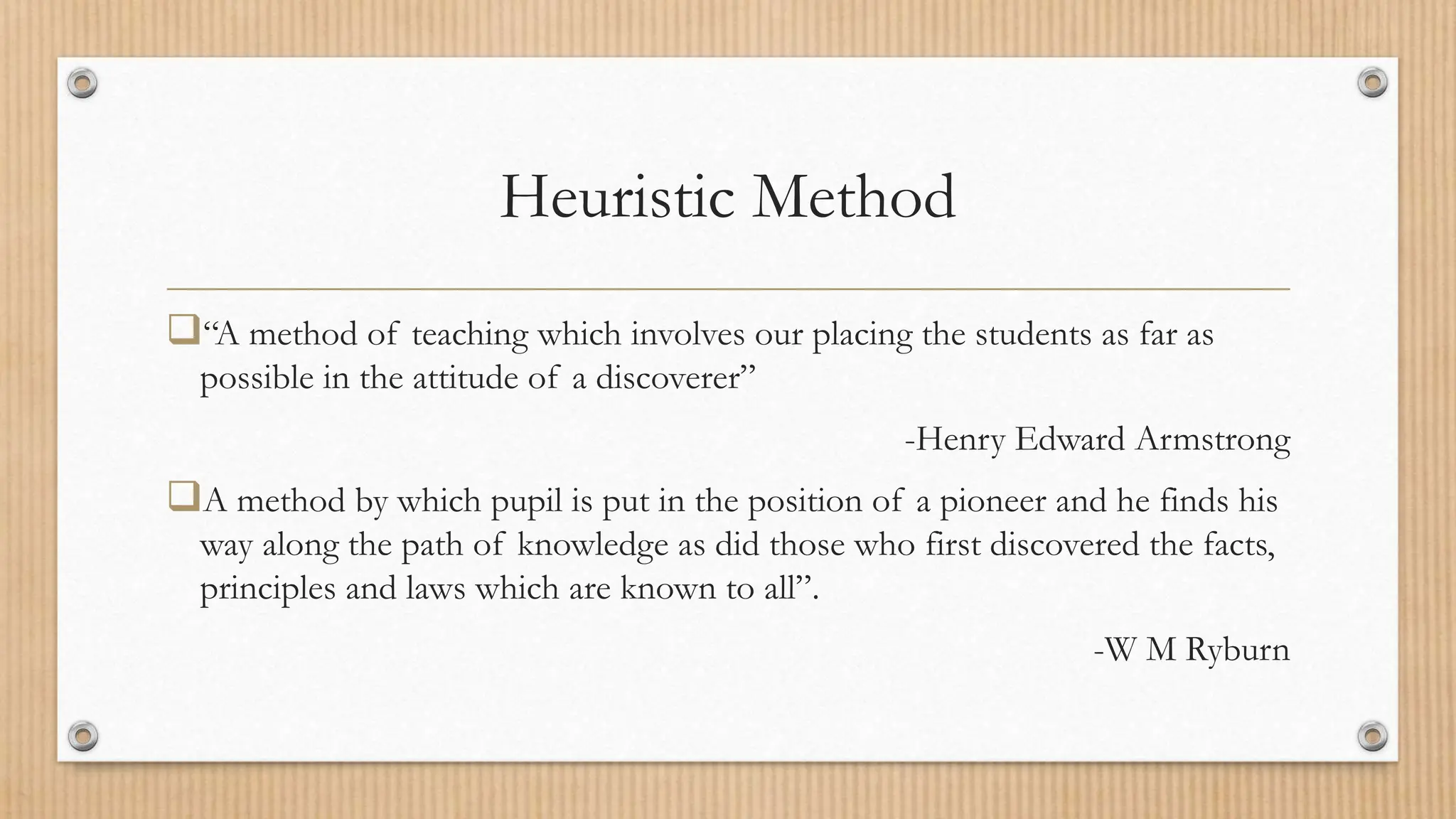
Heuristic Method
“A method of teaching which involves our placing the students as far as
possible in the attitude of a discoverer”
-Henry Edward Armstrong
A method by which pupil is put in the position of a pioneer and he finds his
way along the path of knowledge as did those who first discovered the facts,
principles and laws which are known to all”.
-W M Ryburn
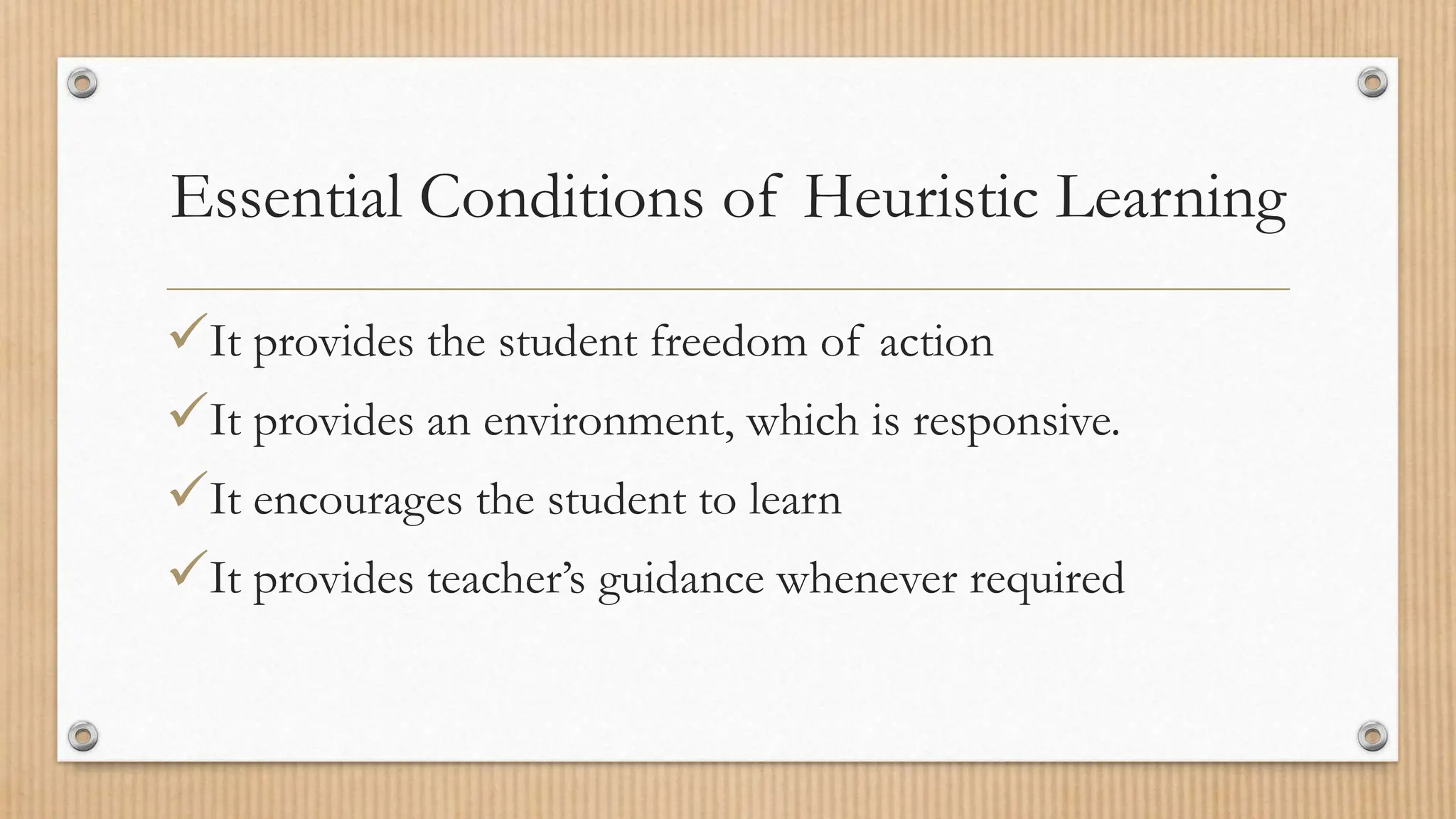
Essential Conditions of Heuristic Learning
It provides the student freedom of action
It provides an environment, which is responsive.
It encourages the student to learn
It provides teacher’s guidance whenever required
Where we can apply?
There is an encouragement for the process of
searching
There is respect for creative thinking
The new ideas are welcomed
Mistakes could be done and at the same time they can
be corrected.
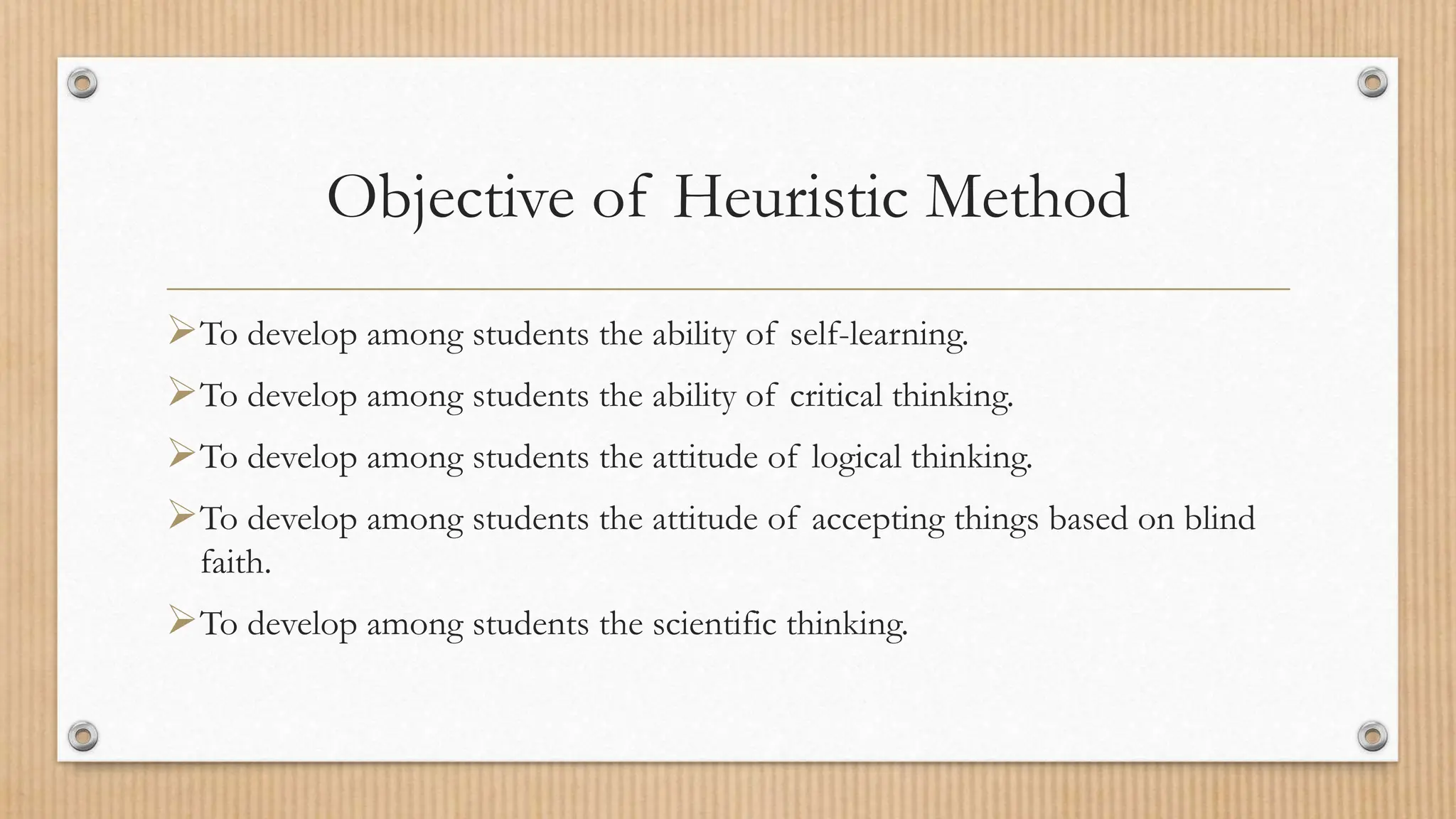
Objective of Heuristic Method
To develop among students the ability of self-learning.
To develop among students the ability of critical thinking.
To develop among students the attitude of logical thinking.
To develop among students the attitude of accepting things based on blind
faith.
To develop among students the scientific thinking.
Principles of Heuristic Method
• Principle of freedom
• Principle of experience
• Principle of activity or learning by doing
• Principles of purposefulness
• Principle of logical thinking
• Principle of play-way
• Principle of individual work
George Polya’s Model
1. Understanding a Problem
A clear understanding of the question and the unknown is essential for
deciding what information is needed( information processing)
To consider which solution strategies and what answers are reasonable.
State the problem in your own words
Decide what unknown is
Decide what information is needed
George Polya’s Model cont.….
The Meaning of the Problem Statement
The ability to understand the crux of the problem; what/which information
is available/not available or relevant/irrelevant? What is task involved
embedded in the problem.
An ability to restate the problem in your own words to ensure a more
successful transition to the next phase.
George Polya’s Model Cont.….
2. Devise a Plan
Analyze various alternative solution strategies
Choose the most appropriate plan
Novice problem solvers might use a relatively inefficient trial &
error approach until something works
George Polya’s Model Cont.….
3. Carryout the Plan
Carrying out the plan devised devise from the previous step
Careful monitoring the solution process to check whether the
plan is executed accurately & whether it is effective.
George Polya’s Model Cont.….
4. Look Back (Review)
Once a solution is obtained, check the results …
Does the solution make sense?
Is it reasonable?
Does it answer the original question?
Decide if there are other solutions
Is there any other way the problem could be solved? Can produce the same answer?
Is there a better way?
Analyze..
Sluggish Progress
A slug fell into a ditch 18 inches deep. Each day the slug moved 6 inches up the wall
of the ditch, only to slip back 3 inches at night. How many days will it take the
sluggish slug to reach the top of the ditch wall?
Given:
The Height of the ditch is 18 inches deep and the movement of the slug per day is 6
inches and slip back 3 inches at night.
6-3 = 3 x 6 = 18.
Answer : 6 days
What thinking process did you go through?
Understand what is the problem?
Process the information related in the problem? What is important/needed?
So what now? What are my alternatives?
Strategizing
Decision making
Implement your decision
Review/Reflect…is there a better way?
Problem Solving
Is a systematic process that uses one’s knowledge, experience, thinking skills and various
strategies in order to solve and make decision.
Problem solving skills or strategy
 Understanding the Problem; understand and represent the problem
 Processing information; selecting or planning the solution
 Finding alternative/strategies
 Decision making; executing the plan
 Review; evaluating the result
 Accept responsibility. Learning from mistakes. Perseverance. Confidence.
END
THANK YOU!

PPT Presentation for Problem Solving Heuristics.pptx

  • 1.
  • 2.
    Topics to bediscussed… What is a Problem? What is the heuristics for problem solving? What is the problem statement? What is problem solving?
  • 3.
    Lets try totake a look…. Margaret and Ian have cats and birds. They counted all the heads and got 10. They counted all the feet and got 34. How many birds and cats do they have? Is this a problem? Why?
  • 4.
    So what isa problem? A problem is a statement or a daily life situation that requires a solution. A problem exist when a solution is not immediately obvious. A Situation Barrier Initial State Goal State (Answer)
  • 5.
    Types of AProblem ROUTINE PROBLEM NON-ROUTINE PROBLEM  Text-book problems  Application if basic skills  Involve simple mathematical operations  Has obvious sequence steps  Need understanding, retrieve information given, choose the operation and apply algorithm  Complex problems  Require more than one mathematical operation  Need understanding and synthesis, retrieve and organize given information, identify strategies and apply selected one.  Various strategies/methods  Using critical and creative thinking skills
  • 6.
    How do yousolve a problem? Heuristic: A method” rules of thumb” educated guesses, intuitive judgements or simply common sense. What are the popular Heuristics? George Polya’s Model Krulik & Rudnick’s Model  Understand the problem  Devise a plan  Carry out the plan  Look back  Read the Problem  Explore  Select a strategy  Solve  Look back
  • 7.
    Heuristic Method “A methodof teaching which involves our placing the students as far as possible in the attitude of a discoverer” -Henry Edward Armstrong A method by which pupil is put in the position of a pioneer and he finds his way along the path of knowledge as did those who first discovered the facts, principles and laws which are known to all”. -W M Ryburn
  • 8.
    Essential Conditions ofHeuristic Learning It provides the student freedom of action It provides an environment, which is responsive. It encourages the student to learn It provides teacher’s guidance whenever required
  • 9.
    Where we canapply? There is an encouragement for the process of searching There is respect for creative thinking The new ideas are welcomed Mistakes could be done and at the same time they can be corrected.
  • 10.
    Objective of HeuristicMethod To develop among students the ability of self-learning. To develop among students the ability of critical thinking. To develop among students the attitude of logical thinking. To develop among students the attitude of accepting things based on blind faith. To develop among students the scientific thinking.
  • 11.
    Principles of HeuristicMethod • Principle of freedom • Principle of experience • Principle of activity or learning by doing • Principles of purposefulness • Principle of logical thinking • Principle of play-way • Principle of individual work
  • 12.
    George Polya’s Model 1.Understanding a Problem A clear understanding of the question and the unknown is essential for deciding what information is needed( information processing) To consider which solution strategies and what answers are reasonable. State the problem in your own words Decide what unknown is Decide what information is needed
  • 13.
    George Polya’s Modelcont.…. The Meaning of the Problem Statement The ability to understand the crux of the problem; what/which information is available/not available or relevant/irrelevant? What is task involved embedded in the problem. An ability to restate the problem in your own words to ensure a more successful transition to the next phase.
  • 14.
    George Polya’s ModelCont.…. 2. Devise a Plan Analyze various alternative solution strategies Choose the most appropriate plan Novice problem solvers might use a relatively inefficient trial & error approach until something works
  • 15.
    George Polya’s ModelCont.…. 3. Carryout the Plan Carrying out the plan devised devise from the previous step Careful monitoring the solution process to check whether the plan is executed accurately & whether it is effective.
  • 16.
    George Polya’s ModelCont.…. 4. Look Back (Review) Once a solution is obtained, check the results … Does the solution make sense? Is it reasonable? Does it answer the original question? Decide if there are other solutions Is there any other way the problem could be solved? Can produce the same answer? Is there a better way?
  • 17.
    Analyze.. Sluggish Progress A slugfell into a ditch 18 inches deep. Each day the slug moved 6 inches up the wall of the ditch, only to slip back 3 inches at night. How many days will it take the sluggish slug to reach the top of the ditch wall? Given: The Height of the ditch is 18 inches deep and the movement of the slug per day is 6 inches and slip back 3 inches at night. 6-3 = 3 x 6 = 18. Answer : 6 days
  • 18.
    What thinking processdid you go through? Understand what is the problem? Process the information related in the problem? What is important/needed? So what now? What are my alternatives? Strategizing Decision making Implement your decision Review/Reflect…is there a better way?
  • 19.
    Problem Solving Is asystematic process that uses one’s knowledge, experience, thinking skills and various strategies in order to solve and make decision. Problem solving skills or strategy  Understanding the Problem; understand and represent the problem  Processing information; selecting or planning the solution  Finding alternative/strategies  Decision making; executing the plan  Review; evaluating the result  Accept responsibility. Learning from mistakes. Perseverance. Confidence.
  • 20.

Editor's Notes

  • #12 Principle of freedom – there be no restrictions that prohibit an agent from saying what he wants to say. Principle of experience – inspires values that help create a shared experience vision within org. by applying consistently across several projects and initiatives. Principle of activity or learning by doing – student engagement and his hands on task oriented process education. Principles of purposefulness Principle of logical thinking Principle of play-way Principle of individual work