Presented By:
Sandeep KumarSunori
Simulated Annealing Based Approach for
Optimization of Surgical Load Distribution
Paper ID: ICDICI 0338
1
2.
2
Abstract-
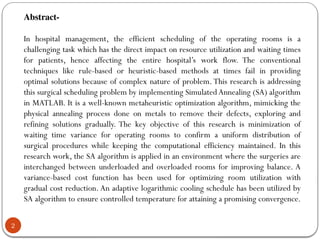
In hospital management,the efficient scheduling of the operating rooms is a
challenging task which has the direct impact on resource utilization and waiting times
for patients, hence affecting the entire hospital’s work flow. The conventional
techniques like rule-based or heuristic-based methods at times fail in providing
optimal solutions because of complex nature of problem. This research is addressing
this surgical scheduling problem by implementing SimulatedAnnealing (SA) algorithm
in MATLAB. It is a well-known metaheuristic optimization algorithm, mimicking the
physical annealing process done on metals to remove their defects, exploring and
refining solutions gradually. The key objective of this research is minimization of
waiting time variance for operating rooms to confirm a uniform distribution of
surgical procedures while keeping the computational efficiency maintained. In this
research work, the SA algorithm is applied in an environment where the surgeries are
interchanged between underloaded and overloaded rooms for improving balance. A
variance-based cost function has been used for optimizing room utilization with
gradual cost reduction. An adaptive logarithmic cooling schedule has been utilized by
SA algorithm to ensure controlled temperature for attaining a promising convergence.
3.
3
RESEARCH METHODOLOGY
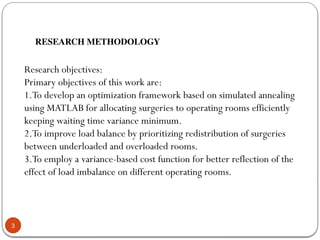
Research objectives:
Primaryobjectives of this work are:
1.To develop an optimization framework based on simulated annealing
using MATLAB for allocating surgeries to operating rooms efficiently
keeping waiting time variance minimum.
2.To improve load balance by prioritizing redistribution of surgeries
between underloaded and overloaded rooms.
3.To employ a variance-based cost function for better reflection of the
effect of load imbalance on different operating rooms.
4.
4
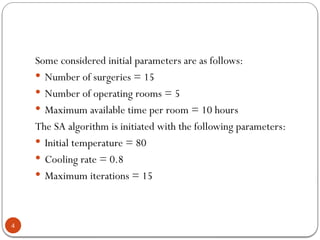
Some considered initialparameters are as follows:
Number of surgeries = 15
Number of operating rooms = 5
Maximum available time per room = 10 hours
The SA algorithm is initiated with the following parameters:
Initial temperature = 80
Cooling rate = 0.8
Maximum iterations = 15
5.
5
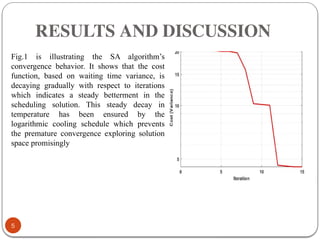
Fig.1 is illustratingthe SA algorithm’s
convergence behavior. It shows that the cost
function, based on waiting time variance, is
decaying gradually with respect to iterations
which indicates a steady betterment in the
scheduling solution. This steady decay in
temperature has been ensured by the
logarithmic cooling schedule which prevents
the premature convergence exploring solution
space promisingly
RESULTS AND DISCUSSION
6.
6
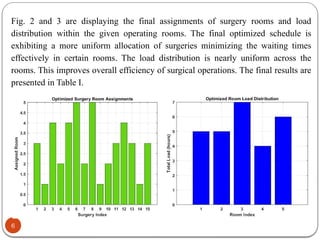
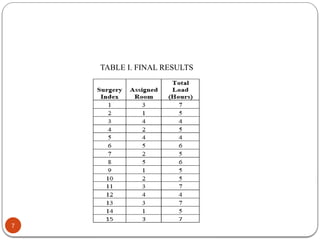
Fig. 2 and3 are displaying the final assignments of surgery rooms and load
distribution within the given operating rooms. The final optimized schedule is
exhibiting a more uniform allocation of surgeries minimizing the waiting times
effectively in certain rooms. The load distribution is nearly uniform across the
rooms. This improves overall efficiency of surgical operations. The final results are
presented in Table I.
Conclusion
8
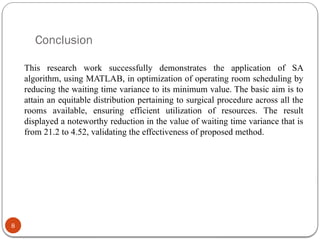
This research worksuccessfully demonstrates the application of SA
algorithm, using MATLAB, in optimization of operating room scheduling by
reducing the waiting time variance to its minimum value. The basic aim is to
attain an equitable distribution pertaining to surgical procedure across all the
rooms available, ensuring efficient utilization of resources. The result
displayed a noteworthy reduction in the value of waiting time variance that is
from 21.2 to 4.52, validating the effectiveness of proposed method.
9.
9
REFERENCES
[1]. S. Hashtarkhaniet al., "An ExplainableAI Data Pipeline for Multi-Level Survival
Prediction of Breast Cancer Patients Using Electronic Medical Records and Social
Determinants of Health Data," 2024 IEEE International Conference on Big Data
(BigData),Washington, DC, USA, 2024, pp. 8661-8664.
[2]. S. D. Gharge, J. Musale, P. More, S. D. Khade, C. S.Thakare andA. J. Maneri,
"Chat-bot Health-CareApplication usingArtificial Intelligence," 2024 MITArt, Design
andTechnology School of Computing International Conference (MITADTSoCiCon),
Pune, India, 2024, pp. 1-7.
[3]. B.Wen, R. Norel, J. Liu,T. Stappenbeck, F. Zulkernine and H. Chen, "Leveraging
Large Language Models for Patient Engagement:The Power of ConversationalAI in
Digital Health," 2024 IEEE International Conference on Digital Health (ICDH),
Shenzhen, China, 2024, pp. 104-113.
[4]. S. Ding andV. Raman, "Harness the Power of GenerativeAI in Healthcare with
AmazonAI/ML Services," 2024 IEEE 12th International Conference on Healthcare
Informatics (ICHI), Orlando, FL, USA, 2024, pp. 490-492.
[5]. P. Nazareth, G. B. Nikhil, G. Chirag, N. R. Prathik and P. Pratham, "Exploring the
Efficacy of Mental Health Care Chatbots:A Comprehensive Review," 2024 15th
International Conference on Computing Communication and NetworkingTechnologies
(ICCCNT), Kamand, India, 2024, pp. 1-6.
10.
10
[6]. N.Almtireen,H.Altaha,A.Alissa, M. Ryalat and H. Elmoaqet, "AI-Driven MobileApp for
Personalized Health Monitoring," 2024 22nd International Conference on Research and Education
in Mechatronics (REM),Amman, Jordan, 2024, pp. 338-342.
[7]. P. Jayant, E.Vincent, Mohana, M. Moharir andA. K.A R, "Smart Health Monitoring and
Anomaly Detection Using Internet ofThings (IoT) andArtificial Intelligence (AI)," 2024 Second
International Conference on Intelligent Cyber Physical Systems and Internet ofThings (ICoICI),
Coimbatore, India, 2024, pp. 479-485.
[8]. S.A.Alimour and M.Alrabeei, "A Novel Model for DigitalTwins in Mental Health:The
Biopsychosocial AI-Driven DigitalTwin (BADT) Framework," 2024 11th International Conference
on Software Defined Systems (SDS), Gran Canaria, Spain, 2024, pp. 6-10.
[9]. H. Raza, D. Rathee, R.Amorim and M. Fasli, "Optimizing Patient Care Pathways: Impact
Analysis of anAI-Assisted Smart Referral System for Musculoskeletal Services," 2024 IEEE
International Conference on Digital Health (ICDH), Shenzhen, China, 2024, pp. 68-72.
[10]. B. U. Maheswari,A. Dixit andA. K. Karn, "Machine LearningAlgorithm for Maternal Health
Risk Classification with SMOTE and ExplainableAI," 2024 IEEE 9th International Conference for
Convergence inTechnology (I2CT), Pune, India, 2024, pp. 1-6.
11.
11
[11]. P.Nazareth, G. B. Nikhil, G. Chirag and N. R. Prathik, "YouMatter:A Conversational
AI Powered Mental Health Chatbot," 2024 15th International Conference on Computing
Communication and NetworkingTechnologies (ICCCNT), Kamand, India, 2024, pp. 1-7.
[12]. R. Manoj and N. G, "A Comprehensive Investigation on Leveraging GenerativeAI and
Large Language Models in the Healthcare Domain," 2024 IEEE 12th Region 10
HumanitarianTechnology Conference (R10-HTC), Kuala Lumpur, Malaysia, 2024, pp. 1-6.
[13]. B. P. Prathaban, R. Subash,A.A and L. G, "AI based Mental HealthAssisted Chatbot
System," 2024 International Conference on Power, Energy, Control andTransmission
Systems (ICPECTS), Chennai, India, 2024, pp. 1-6.
[14]. S. Jain, S. K. Sunori,A. Mittal and P. Juneja, "Cuckoo Search Algorithm Based
Intrusion Detection System of Cybersecurity," ICMCSI, Goathgaun, Nepal, 2025, pp. 157-
161.
[15]. S. K. Sunori, S. Jain,A. Mittal and P. Juneja, "Congestion Control in HybridWireless
Networks using PSO andACOTechniques," ICMCSI, Goathgaun, Nepal, 2025, pp. 46-52.

![9
REFERENCES
[1]. S. Hashtarkhani et al., "An ExplainableAI Data Pipeline for Multi-Level Survival
Prediction of Breast Cancer Patients Using Electronic Medical Records and Social
Determinants of Health Data," 2024 IEEE International Conference on Big Data
(BigData),Washington, DC, USA, 2024, pp. 8661-8664.
[2]. S. D. Gharge, J. Musale, P. More, S. D. Khade, C. S.Thakare andA. J. Maneri,
"Chat-bot Health-CareApplication usingArtificial Intelligence," 2024 MITArt, Design
andTechnology School of Computing International Conference (MITADTSoCiCon),
Pune, India, 2024, pp. 1-7.
[3]. B.Wen, R. Norel, J. Liu,T. Stappenbeck, F. Zulkernine and H. Chen, "Leveraging
Large Language Models for Patient Engagement:The Power of ConversationalAI in
Digital Health," 2024 IEEE International Conference on Digital Health (ICDH),
Shenzhen, China, 2024, pp. 104-113.
[4]. S. Ding andV. Raman, "Harness the Power of GenerativeAI in Healthcare with
AmazonAI/ML Services," 2024 IEEE 12th International Conference on Healthcare
Informatics (ICHI), Orlando, FL, USA, 2024, pp. 490-492.
[5]. P. Nazareth, G. B. Nikhil, G. Chirag, N. R. Prathik and P. Pratham, "Exploring the
Efficacy of Mental Health Care Chatbots:A Comprehensive Review," 2024 15th
International Conference on Computing Communication and NetworkingTechnologies
(ICCCNT), Kamand, India, 2024, pp. 1-6.](https://image.slidesharecdn.com/ppticdici-250905165053-982f40d7/85/PPT-ICDICI-conference-present-processing-9-320.jpg)
![10
[6]. N.Almtireen, H.Altaha,A.Alissa, M. Ryalat and H. Elmoaqet, "AI-Driven MobileApp for
Personalized Health Monitoring," 2024 22nd International Conference on Research and Education
in Mechatronics (REM),Amman, Jordan, 2024, pp. 338-342.
[7]. P. Jayant, E.Vincent, Mohana, M. Moharir andA. K.A R, "Smart Health Monitoring and
Anomaly Detection Using Internet ofThings (IoT) andArtificial Intelligence (AI)," 2024 Second
International Conference on Intelligent Cyber Physical Systems and Internet ofThings (ICoICI),
Coimbatore, India, 2024, pp. 479-485.
[8]. S.A.Alimour and M.Alrabeei, "A Novel Model for DigitalTwins in Mental Health:The
Biopsychosocial AI-Driven DigitalTwin (BADT) Framework," 2024 11th International Conference
on Software Defined Systems (SDS), Gran Canaria, Spain, 2024, pp. 6-10.
[9]. H. Raza, D. Rathee, R.Amorim and M. Fasli, "Optimizing Patient Care Pathways: Impact
Analysis of anAI-Assisted Smart Referral System for Musculoskeletal Services," 2024 IEEE
International Conference on Digital Health (ICDH), Shenzhen, China, 2024, pp. 68-72.
[10]. B. U. Maheswari,A. Dixit andA. K. Karn, "Machine LearningAlgorithm for Maternal Health
Risk Classification with SMOTE and ExplainableAI," 2024 IEEE 9th International Conference for
Convergence inTechnology (I2CT), Pune, India, 2024, pp. 1-6.](https://image.slidesharecdn.com/ppticdici-250905165053-982f40d7/85/PPT-ICDICI-conference-present-processing-10-320.jpg)
![11
[11]. P. Nazareth, G. B. Nikhil, G. Chirag and N. R. Prathik, "YouMatter:A Conversational
AI Powered Mental Health Chatbot," 2024 15th International Conference on Computing
Communication and NetworkingTechnologies (ICCCNT), Kamand, India, 2024, pp. 1-7.
[12]. R. Manoj and N. G, "A Comprehensive Investigation on Leveraging GenerativeAI and
Large Language Models in the Healthcare Domain," 2024 IEEE 12th Region 10
HumanitarianTechnology Conference (R10-HTC), Kuala Lumpur, Malaysia, 2024, pp. 1-6.
[13]. B. P. Prathaban, R. Subash,A.A and L. G, "AI based Mental HealthAssisted Chatbot
System," 2024 International Conference on Power, Energy, Control andTransmission
Systems (ICPECTS), Chennai, India, 2024, pp. 1-6.
[14]. S. Jain, S. K. Sunori,A. Mittal and P. Juneja, "Cuckoo Search Algorithm Based
Intrusion Detection System of Cybersecurity," ICMCSI, Goathgaun, Nepal, 2025, pp. 157-
161.
[15]. S. K. Sunori, S. Jain,A. Mittal and P. Juneja, "Congestion Control in HybridWireless
Networks using PSO andACOTechniques," ICMCSI, Goathgaun, Nepal, 2025, pp. 46-52.](https://image.slidesharecdn.com/ppticdici-250905165053-982f40d7/85/PPT-ICDICI-conference-present-processing-11-320.jpg)



![[DSC Europe 23][DigiHealth] Dimitrios Kalogeropoulos A Sustainable Future for...](https://cdn.slidesharecdn.com/ss_thumbnails/3xzq6p1qtg65y98lodrk-dimitrios-231130112725-689fcaa2-thumbnail.jpg?width=640&height=640&fit=bounds)


