Heat Transfer: Conduction
and Convection
After going through this module, you are expected to:
1. observe heat transfer between objects;
2. identify the different methods of heat transfer;
3. explain and compare how conduction and convection
occur; and
4. cite the practical application of heat transfer.
PRETEST
Choose the letter of the best answer. Write your answer on a
separate sheet of paper.
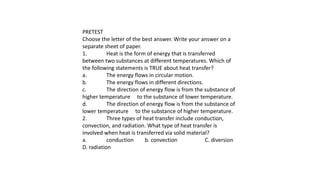
1. Heat is the form of energy that is transferred
between two substances at different temperatures. Which of
the following statements is TRUE about heat transfer?
a. The energy flows in circular motion.
b. The energy flows in different directions.
c. The direction of energy flow is from the substance of
higher temperature to the substance of lower temperature.
d. The direction of energy flow is from the substance of
lower temperature to the substance of higher temperature.
2. Three types of heat transfer include conduction,
convection, and radiation. What type of heat transfer is
involved when heat is transferred via solid material?
a. conduction b. convection C. diversion
D. radiation
3. Chocolate candy in your hand will eventually melt as
heat is conducted from your hand to the chocolate. How does
conduction occur?
a. It occurs when two objects with the same
temperature are in direct contact.
b. It occurs when two objects with different
temperature are placed near each other.
c. It occurs when two things with different temperature
are in direct contact and energy flows from colder object to
hotter object at the point of contact.
d. It occurs when materials with different temperature
touch each other and energy directly transfers from the hotter
object to the colder object at the point of contact.
4. How does convection occur?
a. It occurs when heat is transferred by the movement
of solids.
b. It occurs when heat is transferred by the movement
of gases only.
c. It occurs when heat is transferred by the movement
of liquids only.
d. It occurs when heat is transferred by the movement
of liquids or gases.
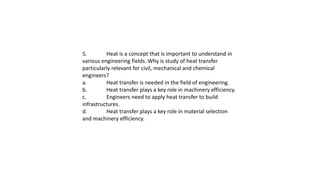
5. Heat is a concept that is important to understand in
various engineering fields. Why is study of heat transfer
particularly relevant for civil, mechanical and chemical
engineers?
a. Heat transfer is needed in the field of engineering.
b. Heat transfer plays a key role in machinery efficiency.
c. Engineers need to apply heat transfer to build
infrastructures.
d. Heat transfer plays a key role in material selection
and machinery efficiency.
RECAP
Direction: Fill in each blank with a correct word found in the
box to review your past lesson in science.
liquid temperature increase gas thermal
Heat is the form of energy that is transferred between systems
or objects with different (1) __________. It is also referred to
as heat energy or (2) ________ energy. Fast moving particles
‘excite’ nearby particles. If heated sufficiently, the movement of
particles in a solid (3) ___________ and overcome the bonds
that hold the particles together. The substance changes its
state from solid to (4) __________. If the movement of the
particles increases further in liquid, then a stage is reached
where the substance changes into a (5) ________ .
LESSON
Temperature and heat are not the same thing because
temperature is a measure of how hot something is; and heat is
a measure of the thermal energy contained in an object.
Temperature is measured in 0C (Degree Celsius) while heat
energy is measured in J (Joules).
Heat energy can flow by conduction, convection or radiation. It
always flows from a region of high temperature to a region of
low temperature
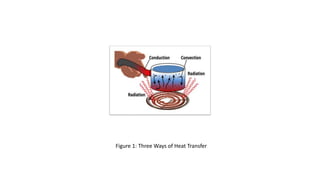
There are three (3) types of thermal energy transfer or
commonly called as heat transfer: Conduction, convection, and
radiation. Conduction is the transfer of heat from one
substance to another by direct contact. Convection is a transfer
of heat through a fluid (liquid or gas) caused by a molecular
motion. And radiation is transmitted in the form of rays or
waves or particles.
Observe the illustration in figure 1 below.
Figure 1: Three Ways of Heat Transfer
Conduction in solids
The atoms of a solid are held together by chemical bonds. The
atoms are fixed in place but are free to vibrate. When part of a
solid absorbs heat energy the atoms vibrate faster and with
bigger amplitude. These vibrations pass from atom to atom
transferring heat energy as they do so. This process happens in
all solids when heated but is a slow process.
Conduction in Metals
Some of the electrons in a piece of metal can leave their atoms
and move about in the metal as free electrons. The parts of the
metal atoms left behind are now positively charged metal ions.
When the free electrons absorb heat energy, they move much
faster. As they move through the metal, free electrons crash
into metal ions.
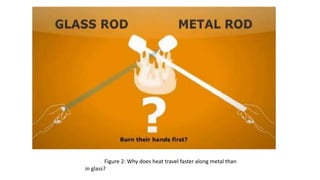
Observe the illustration in figure 2 below. Two kids are roasting
marshmallows. Who will burn their hands first, the kid using a
wooden stick or the one holding a metal rod? Why? You will
learn more about heat transfer in our activity and discussion
today.
Figure 2: Why does heat travel faster along metal than
in glass?
Why does heat travel faster along metal than in glass? In metals
(and minerals and crystals) the atoms are arranged in parallel
rows while in glass they are all mixed up. Metals conduct
electricity because some electrons become detached from
atoms and are free to move throughout the metals. Glass is a
very poor heat conductor. It has one of the lowest possible
heat conductions a solid (without air trapped in it) can possibly
have, this is mostly due to its lack of ordered crystal structure.
Since it's an insulator, the electronic contribution to the
thermal conductivity is very small.
Convection in Fluids
Heat can be transferred in liquids or gases by convection.
Liquids and gases are fluids because they can be made to flow.
The particles in these fluids can move from place to place.
Convection occurs when particles with a lot of heat energy in a
liquid or gas move and take the place of particles with less heat
energy.
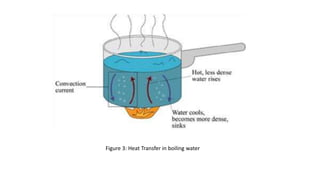
Figure 3: Heat Transfer in boiling water
Look at the figure above. How does heat transfer occur in
boiling water? The water particles at the bottom of the pot are
hotter than the particles at the top. Hot water molecule is less
dense so it rises while cold water molecule which is denser
sinks. The movement of particles continues until all particles
are heated. The continuous rising of hot particles and sinking of
cold particles create convection current in water.

ppt heattransfer.pptx

  • 1.
  • 2.
    After going throughthis module, you are expected to: 1. observe heat transfer between objects; 2. identify the different methods of heat transfer; 3. explain and compare how conduction and convection occur; and 4. cite the practical application of heat transfer.
  • 3.
    PRETEST Choose the letterof the best answer. Write your answer on a separate sheet of paper. 1. Heat is the form of energy that is transferred between two substances at different temperatures. Which of the following statements is TRUE about heat transfer? a. The energy flows in circular motion. b. The energy flows in different directions. c. The direction of energy flow is from the substance of higher temperature to the substance of lower temperature. d. The direction of energy flow is from the substance of lower temperature to the substance of higher temperature. 2. Three types of heat transfer include conduction, convection, and radiation. What type of heat transfer is involved when heat is transferred via solid material? a. conduction b. convection C. diversion D. radiation
  • 4.
    3. Chocolate candyin your hand will eventually melt as heat is conducted from your hand to the chocolate. How does conduction occur? a. It occurs when two objects with the same temperature are in direct contact. b. It occurs when two objects with different temperature are placed near each other. c. It occurs when two things with different temperature are in direct contact and energy flows from colder object to hotter object at the point of contact. d. It occurs when materials with different temperature touch each other and energy directly transfers from the hotter object to the colder object at the point of contact. 4. How does convection occur? a. It occurs when heat is transferred by the movement of solids. b. It occurs when heat is transferred by the movement of gases only. c. It occurs when heat is transferred by the movement of liquids only. d. It occurs when heat is transferred by the movement of liquids or gases.
  • 5.
    5. Heat isa concept that is important to understand in various engineering fields. Why is study of heat transfer particularly relevant for civil, mechanical and chemical engineers? a. Heat transfer is needed in the field of engineering. b. Heat transfer plays a key role in machinery efficiency. c. Engineers need to apply heat transfer to build infrastructures. d. Heat transfer plays a key role in material selection and machinery efficiency.
  • 6.
    RECAP Direction: Fill ineach blank with a correct word found in the box to review your past lesson in science. liquid temperature increase gas thermal Heat is the form of energy that is transferred between systems or objects with different (1) __________. It is also referred to as heat energy or (2) ________ energy. Fast moving particles ‘excite’ nearby particles. If heated sufficiently, the movement of particles in a solid (3) ___________ and overcome the bonds that hold the particles together. The substance changes its state from solid to (4) __________. If the movement of the particles increases further in liquid, then a stage is reached where the substance changes into a (5) ________ .
  • 7.
    LESSON Temperature and heatare not the same thing because temperature is a measure of how hot something is; and heat is a measure of the thermal energy contained in an object. Temperature is measured in 0C (Degree Celsius) while heat energy is measured in J (Joules). Heat energy can flow by conduction, convection or radiation. It always flows from a region of high temperature to a region of low temperature
  • 8.
    There are three(3) types of thermal energy transfer or commonly called as heat transfer: Conduction, convection, and radiation. Conduction is the transfer of heat from one substance to another by direct contact. Convection is a transfer of heat through a fluid (liquid or gas) caused by a molecular motion. And radiation is transmitted in the form of rays or waves or particles. Observe the illustration in figure 1 below.
  • 9.
    Figure 1: ThreeWays of Heat Transfer
  • 10.
    Conduction in solids Theatoms of a solid are held together by chemical bonds. The atoms are fixed in place but are free to vibrate. When part of a solid absorbs heat energy the atoms vibrate faster and with bigger amplitude. These vibrations pass from atom to atom transferring heat energy as they do so. This process happens in all solids when heated but is a slow process.
  • 11.
    Conduction in Metals Someof the electrons in a piece of metal can leave their atoms and move about in the metal as free electrons. The parts of the metal atoms left behind are now positively charged metal ions. When the free electrons absorb heat energy, they move much faster. As they move through the metal, free electrons crash into metal ions. Observe the illustration in figure 2 below. Two kids are roasting marshmallows. Who will burn their hands first, the kid using a wooden stick or the one holding a metal rod? Why? You will learn more about heat transfer in our activity and discussion today.
  • 12.
    Figure 2: Whydoes heat travel faster along metal than in glass?
  • 13.
    Why does heattravel faster along metal than in glass? In metals (and minerals and crystals) the atoms are arranged in parallel rows while in glass they are all mixed up. Metals conduct electricity because some electrons become detached from atoms and are free to move throughout the metals. Glass is a very poor heat conductor. It has one of the lowest possible heat conductions a solid (without air trapped in it) can possibly have, this is mostly due to its lack of ordered crystal structure. Since it's an insulator, the electronic contribution to the thermal conductivity is very small.
  • 14.
    Convection in Fluids Heatcan be transferred in liquids or gases by convection. Liquids and gases are fluids because they can be made to flow. The particles in these fluids can move from place to place. Convection occurs when particles with a lot of heat energy in a liquid or gas move and take the place of particles with less heat energy.
  • 15.
    Figure 3: HeatTransfer in boiling water
  • 16.
    Look at thefigure above. How does heat transfer occur in boiling water? The water particles at the bottom of the pot are hotter than the particles at the top. Hot water molecule is less dense so it rises while cold water molecule which is denser sinks. The movement of particles continues until all particles are heated. The continuous rising of hot particles and sinking of cold particles create convection current in water.