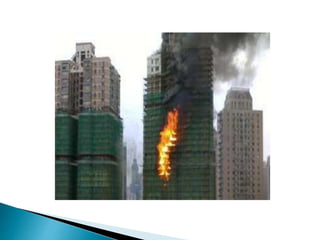
 Caused by exposure to or contanct
with flame, hot liquid, semi- liduid
(steam) and hot objective.
 Example: residential fire, exposure to
auto mobile accidents, cooking
accidents.
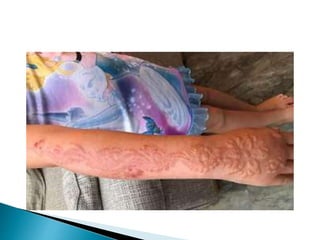
Caused by the tissue contact with
strong acids, alkalis, or organic
compounds.
Example: most common example is
house hold cleansing agent.
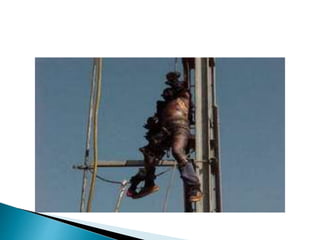
 Electrical burns are caused by the an
exogenous electrical shock. The heat
is generated by the electrical energy
as it passes through the body
 Caused by the protracted exposure to
uv light, radiation therapy, tunning
booths, radio active substance and x-
ray
 INHALATION injury may be upper
airway and incar injury in minutes to
hours or may involves the lower
airway and causes acute respiratory
distress syndrome.
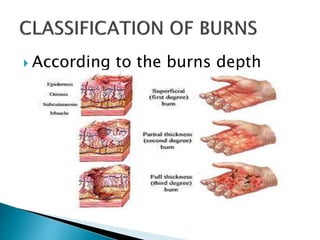
 According to the burns depth
 According to the burn severity:
1.Minor burns: all first degree
burns as well as second degree
burns that involves less than 10%
of the body surface usually are
classified as minor burns.
2.Moderate burns: burns involving
the hands, feet, face, or genitals
second degree burns involving
more than 10% of the body
surface area.
Superficial partial thickness burns
of the head, hands, feet of
perineum, suspected child abuse,
concomitant trauma, and
significant pre exciting disease.
3.Severe burns: burn surface
involvement of 25% body surface
area. All one third degree burns
are classified as moderate or
more often as severe.
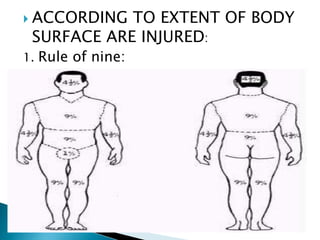
 ACCORDING TO EXTENT OF BODY
SURFACE ARE INJURED:
1. Rule of nine:
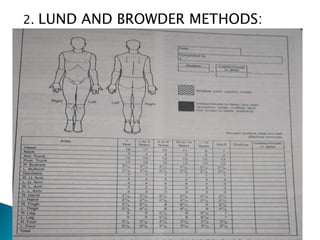
2. LUND AND BROWDER METHODS:
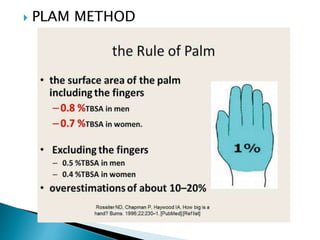
 PLAM METHOD
 Before burns are treated, the burning
agent must stopped Especially
clothing.
 Hospitalization is sometimes
necessary for optimal care of burns.
Ex; severely burned arm or leg above
the level of heart to prevent swelling is
more easily accommodated in
hospitals.
 Burns centers in hospitals that are
specially equipped and staffed to care
for burn victems.
 If the skin is not broken, run cool
water over the burned area or soak it
in cool water bath.
 Reassure the victim and keep calm.
 Cover the burn with sterile non
adhesive bandage.
 Protect burn from friction and
pressure.
 Over the counter pain medications
may be used to help relieve pain, that
also help to reduced inflammation and
swelling.
 Make sure the victim is breathing. If
the breathing has stopped or the
victim airway is blocked then open
airway and if necessary begin CPR.
 Do not use blanket or towel.
 Avoid breaking blisters.
 Do not apply ointment, butter,
medications, fluffy cotton dressing
ice, adhesive bandages, cream, oil, or
any household remedy to burns.
 Do not allow the burn to become
contaminated. Avoid breathing and
coughing on burned area.
 Do not disturbed blisters or dead skin.
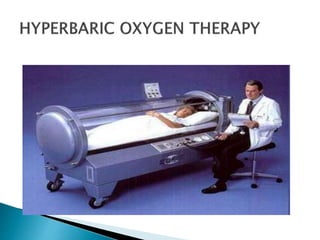
 1. Emergency periods or immediate phase.
a. Hyperbaric oxygen therapy
b. fluid management
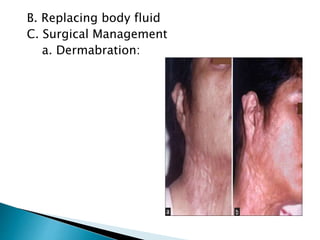
B. Replacing body fluid
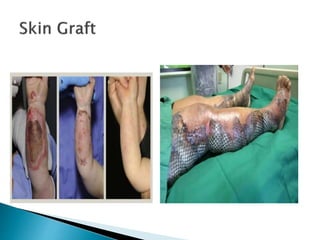
C. Surgical Management
a. Dermabration:
ppt burns.pptx

ppt burns.pptx

  • 2.
     Caused byexposure to or contanct with flame, hot liquid, semi- liduid (steam) and hot objective.  Example: residential fire, exposure to auto mobile accidents, cooking accidents.
  • 4.
    Caused by thetissue contact with strong acids, alkalis, or organic compounds. Example: most common example is house hold cleansing agent.
  • 6.
     Electrical burnsare caused by the an exogenous electrical shock. The heat is generated by the electrical energy as it passes through the body
  • 8.
     Caused bythe protracted exposure to uv light, radiation therapy, tunning booths, radio active substance and x- ray
  • 10.
     INHALATION injurymay be upper airway and incar injury in minutes to hours or may involves the lower airway and causes acute respiratory distress syndrome.
  • 11.
     According tothe burns depth
  • 12.
     According tothe burn severity: 1.Minor burns: all first degree burns as well as second degree burns that involves less than 10% of the body surface usually are classified as minor burns. 2.Moderate burns: burns involving the hands, feet, face, or genitals second degree burns involving more than 10% of the body surface area.
  • 13.
    Superficial partial thicknessburns of the head, hands, feet of perineum, suspected child abuse, concomitant trauma, and significant pre exciting disease. 3.Severe burns: burn surface involvement of 25% body surface area. All one third degree burns are classified as moderate or more often as severe.
  • 14.
     ACCORDING TOEXTENT OF BODY SURFACE ARE INJURED: 1. Rule of nine:
  • 15.
    2. LUND ANDBROWDER METHODS:
  • 16.
  • 17.
     Before burnsare treated, the burning agent must stopped Especially clothing.  Hospitalization is sometimes necessary for optimal care of burns. Ex; severely burned arm or leg above the level of heart to prevent swelling is more easily accommodated in hospitals.
  • 18.
     Burns centersin hospitals that are specially equipped and staffed to care for burn victems.
  • 19.
     If theskin is not broken, run cool water over the burned area or soak it in cool water bath.  Reassure the victim and keep calm.  Cover the burn with sterile non adhesive bandage.  Protect burn from friction and pressure.
  • 20.
     Over thecounter pain medications may be used to help relieve pain, that also help to reduced inflammation and swelling.  Make sure the victim is breathing. If the breathing has stopped or the victim airway is blocked then open airway and if necessary begin CPR.  Do not use blanket or towel.  Avoid breaking blisters.
  • 21.
     Do notapply ointment, butter, medications, fluffy cotton dressing ice, adhesive bandages, cream, oil, or any household remedy to burns.  Do not allow the burn to become contaminated. Avoid breathing and coughing on burned area.  Do not disturbed blisters or dead skin.
  • 22.
     1. Emergencyperiods or immediate phase. a. Hyperbaric oxygen therapy b. fluid management
  • 24.
    B. Replacing bodyfluid C. Surgical Management a. Dermabration: