www.cdf1.com 800.443.1920
Presented by
Bob Buchenan
Iris Kennedy
Liners & Flexible Packaging
for the Petroleum Industry
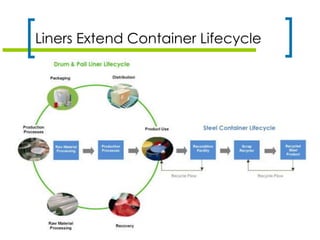
Liners Extend Container Lifecycle
Liner Benefits for Petroleum Market
 Provides product protection = product purity
 Offers source and waste reduction
 Reduces time and expense of cleaning and/or replacing containers
 Promotes reuse of your container, keeping containers out of the waste
system
 Recyclable
 Ships flat, nested or vented for economical storage and shipping
 Reduces use of fuel and greenhouse gas emissions
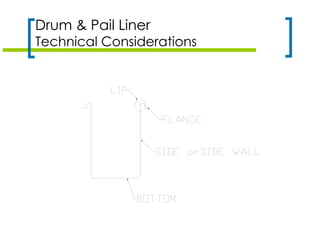
Drum & Pail Liner
Technical Considerations
Types of Drum & Pail Liners
 Thermoformed
 Blow Molded
 Heat Sealed or Blown Film
 Anti-Static
 NFPA-99
 Mil-Spec
 Conductive
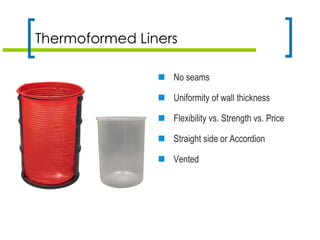
Thermoformed Liners
 No seams
 Uniformity of wall thickness
 Flexibility vs. Strength vs. Price
 Straight side or Accordion
 Vented
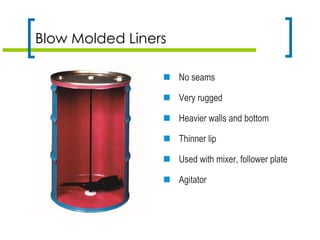
Blow Molded Liners
 No seams
 Very rugged
 Heavier walls and bottom
 Thinner lip
 Used with mixer, follower plate
 Agitator
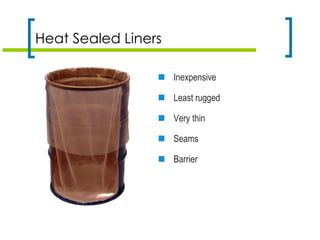
Heat Sealed Liners
 Inexpensive
 Least rugged
 Very thin
 Seams
 Barrier
 Reduces cleaning costs
 First time use every time
 Primary containment in most applications
 Should be multi-ply construction
IBC Liner
Technical Considerations
IBC Liner
Technical Considerations
 Type of Intermediate Bulk Container
 Re-usable
 One Way
 Corrugated
 Type of Dispensing
 Lower dispensing valve
 Dip tube
 Viscosity of Product
 Inflation assisted dispensing
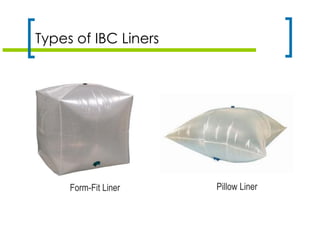
Types of IBC Liners
Form-Fit Liner Pillow Liner
Form-Fit Liner
 Easy to fill, using either top or bottom filling applications
 Designed to accommodate high-speed fills; the auto unfold feature
minimizes bag handling during fill
 Squared bottom eliminates the need
for a cassette in many cases
 No pockets or folds trapping residual
product while emptying
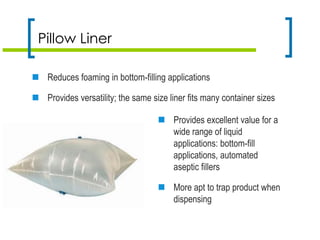
Pillow Liner
 Reduces foaming in bottom-filling applications
 Provides versatility; the same size liner fits many container sizes
 Provides excellent value for a
wide range of liquid
applications: bottom-fill
applications, automated
aseptic fillers
 More apt to trap product when
dispensing
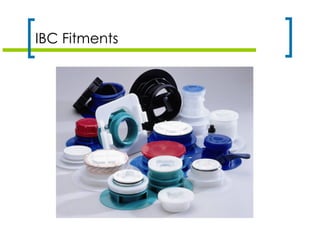
IBC Fitments
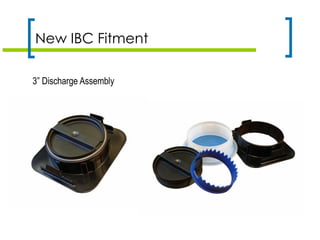
New IBC Fitment
3” Discharge Assembly
Innovations
 Bag-In-Box
 Bottle-In-Cage Liner
 Insert-in-a-Box
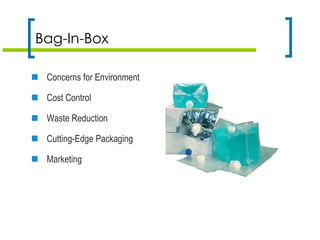
Bag-In-Box
 Concerns for Environment
 Cost Control
 Waste Reduction
 Cutting-Edge Packaging
 Marketing
Bag-In-Box
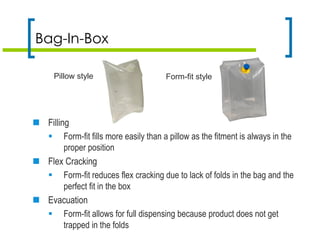
 Filling
 Form-fit fills more easily than a pillow as the fitment is always in the
proper position
 Flex Cracking
 Form-fit reduces flex cracking due to lack of folds in the bag and the
perfect fit in the box
 Evacuation
 Form-fit allows for full dispensing because product does not get
trapped in the folds
Form-fit stylePillow style
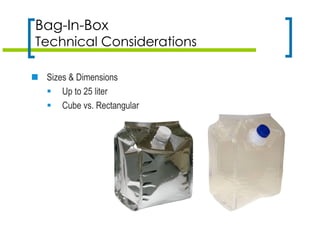
 Sizes & Dimensions
 Up to 25 liter
 Cube vs. Rectangular
Bag-In-Box
Technical Considerations
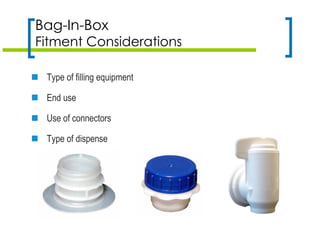
 Type of filling equipment
 End use
 Use of connectors
 Type of dispense
Bag-In-Box
Fitment Considerations
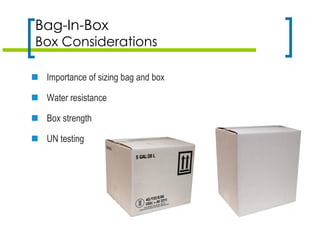
 Importance of sizing bag and box
 Water resistance
 Box strength
 UN testing
Bag-In-Box
Box Considerations
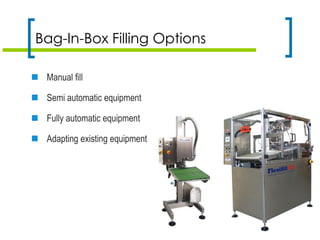
 Manual fill
 Semi automatic equipment
 Fully automatic equipment
 Adapting existing equipment
Bag-In-Box Filling Options
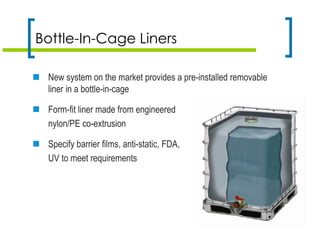
Bottle-In-Cage Liners
 New system on the market provides a pre-installed removable
liner in a bottle-in-cage
 Form-fit liner made from engineered
nylon/PE co-extrusion
 Specify barrier films, anti-static, FDA,
UV to meet requirements
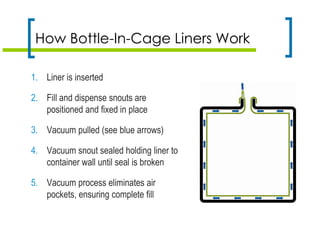
How Bottle-In-Cage Liners Work
1. Liner is inserted
2. Fill and dispense snouts are
positioned and fixed in place
3. Vacuum pulled (see blue arrows)
4. Vacuum snout sealed holding liner to
container wall until seal is broken
5. Vacuum process eliminates air
pockets, ensuring complete fill
Insert-in-a-Box
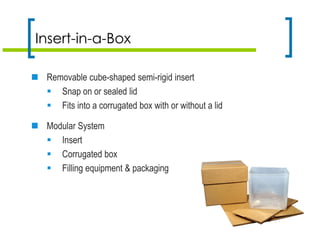
 Removable cube-shaped semi-rigid insert
 Snap on or sealed lid
 Fits into a corrugated box with or without a lid
 Modular System
 Insert
 Corrugated box
 Filling equipment & packaging
Insert-in-a-Box
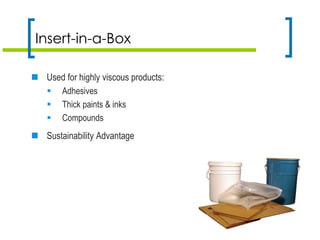
 Used for highly viscous products:
 Adhesives
 Thick paints & inks
 Compounds
 Sustainability Advantage
Summary
 Sustainability
 Innovation
 Future of Packaging
Appendix
Drum & Pail
Thing to consider when deciding what type of liner is most appropriate:
1. How much rigidity do you need from the liner?
Are you going to be using a follower plate?
Are you going to be using a mixer inside the drum?
2. Are you going to be filling with the lid on the drum?

Liners and Flexible Packaging for the Petroleum Industry

  • 1.
    www.cdf1.com 800.443.1920 Presented by BobBuchenan Iris Kennedy Liners & Flexible Packaging for the Petroleum Industry
  • 2.
  • 3.
    Liner Benefits forPetroleum Market  Provides product protection = product purity  Offers source and waste reduction  Reduces time and expense of cleaning and/or replacing containers  Promotes reuse of your container, keeping containers out of the waste system  Recyclable  Ships flat, nested or vented for economical storage and shipping  Reduces use of fuel and greenhouse gas emissions
  • 4.
    Drum & PailLiner Technical Considerations
  • 5.
    Types of Drum& Pail Liners  Thermoformed  Blow Molded  Heat Sealed or Blown Film  Anti-Static  NFPA-99  Mil-Spec  Conductive
  • 6.
    Thermoformed Liners  Noseams  Uniformity of wall thickness  Flexibility vs. Strength vs. Price  Straight side or Accordion  Vented
  • 7.
    Blow Molded Liners No seams  Very rugged  Heavier walls and bottom  Thinner lip  Used with mixer, follower plate  Agitator
  • 8.
    Heat Sealed Liners Inexpensive  Least rugged  Very thin  Seams  Barrier
  • 9.
     Reduces cleaningcosts  First time use every time  Primary containment in most applications  Should be multi-ply construction IBC Liner Technical Considerations
  • 10.
    IBC Liner Technical Considerations Type of Intermediate Bulk Container  Re-usable  One Way  Corrugated  Type of Dispensing  Lower dispensing valve  Dip tube  Viscosity of Product  Inflation assisted dispensing
  • 11.
    Types of IBCLiners Form-Fit Liner Pillow Liner
  • 12.
    Form-Fit Liner  Easyto fill, using either top or bottom filling applications  Designed to accommodate high-speed fills; the auto unfold feature minimizes bag handling during fill  Squared bottom eliminates the need for a cassette in many cases  No pockets or folds trapping residual product while emptying
  • 13.
    Pillow Liner  Reducesfoaming in bottom-filling applications  Provides versatility; the same size liner fits many container sizes  Provides excellent value for a wide range of liquid applications: bottom-fill applications, automated aseptic fillers  More apt to trap product when dispensing
  • 14.
  • 15.
    New IBC Fitment 3”Discharge Assembly
  • 16.
  • 17.
    Bag-In-Box  Concerns forEnvironment  Cost Control  Waste Reduction  Cutting-Edge Packaging  Marketing
  • 18.
    Bag-In-Box  Filling  Form-fitfills more easily than a pillow as the fitment is always in the proper position  Flex Cracking  Form-fit reduces flex cracking due to lack of folds in the bag and the perfect fit in the box  Evacuation  Form-fit allows for full dispensing because product does not get trapped in the folds Form-fit stylePillow style
  • 19.
     Sizes &Dimensions  Up to 25 liter  Cube vs. Rectangular Bag-In-Box Technical Considerations
  • 20.
     Type offilling equipment  End use  Use of connectors  Type of dispense Bag-In-Box Fitment Considerations
  • 21.
     Importance ofsizing bag and box  Water resistance  Box strength  UN testing Bag-In-Box Box Considerations
  • 22.
     Manual fill Semi automatic equipment  Fully automatic equipment  Adapting existing equipment Bag-In-Box Filling Options
  • 23.
    Bottle-In-Cage Liners  Newsystem on the market provides a pre-installed removable liner in a bottle-in-cage  Form-fit liner made from engineered nylon/PE co-extrusion  Specify barrier films, anti-static, FDA, UV to meet requirements
  • 24.
    How Bottle-In-Cage LinersWork 1. Liner is inserted 2. Fill and dispense snouts are positioned and fixed in place 3. Vacuum pulled (see blue arrows) 4. Vacuum snout sealed holding liner to container wall until seal is broken 5. Vacuum process eliminates air pockets, ensuring complete fill
  • 25.
    Insert-in-a-Box  Removable cube-shapedsemi-rigid insert  Snap on or sealed lid  Fits into a corrugated box with or without a lid  Modular System  Insert  Corrugated box  Filling equipment & packaging
  • 26.
    Insert-in-a-Box  Used forhighly viscous products:  Adhesives  Thick paints & inks  Compounds  Sustainability Advantage
  • 27.
  • 28.
    Appendix Drum & Pail Thingto consider when deciding what type of liner is most appropriate: 1. How much rigidity do you need from the liner? Are you going to be using a follower plate? Are you going to be using a mixer inside the drum? 2. Are you going to be filling with the lid on the drum?